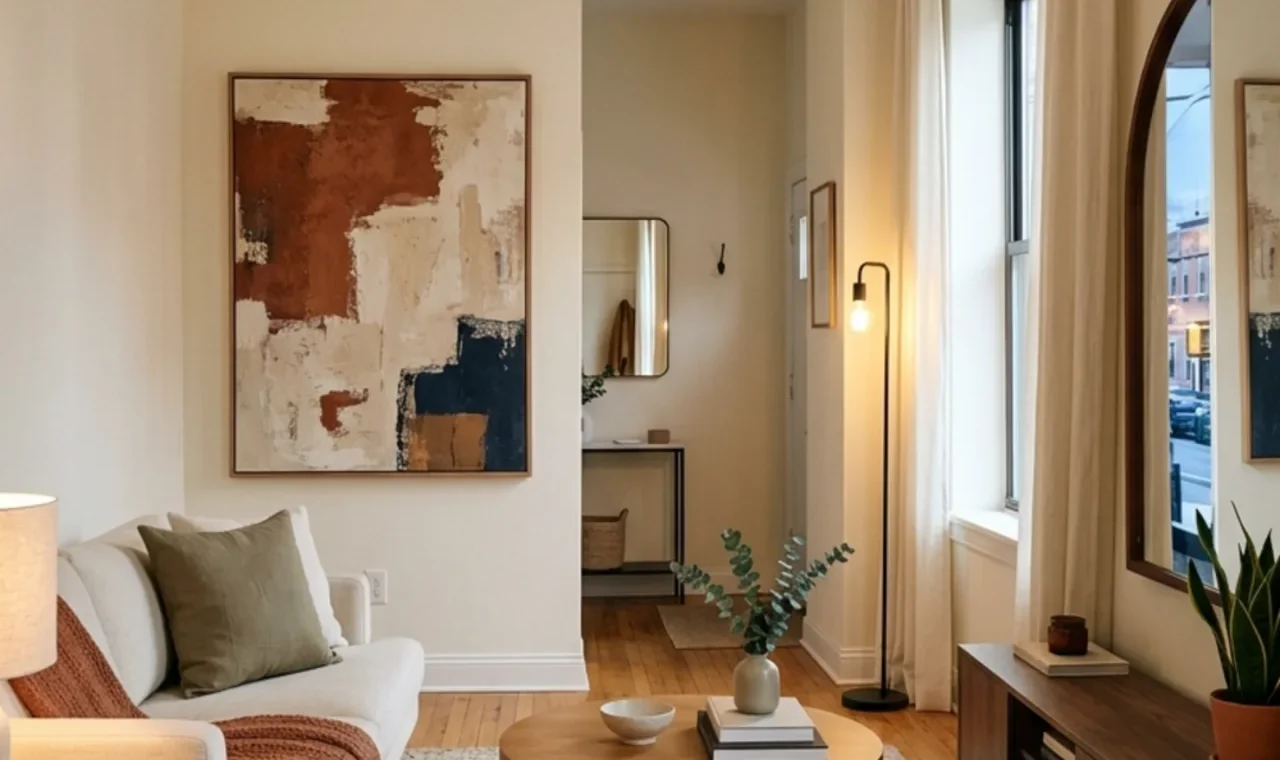
Small apartment decor ideas work best when they improve the way the room feels without asking you to renovate someone else’s property.
A rental can look more expensive without marble counters, custom millwork, or designer furniture. The biggest changes usually come from scale, lighting, curtains, rugs, mirrors, storage, and the way you edit the room.
I would not try to make a small apartment look “luxury” by filling it with shiny gold decor, oversized furniture, or too many decorative objects. That usually makes the room feel smaller.
Instead, I would focus on details that make the apartment look calmer and more intentional: a properly sized rug, curtains hung higher, warm layered lighting, one large mirror, fewer but better-looking accessories, and furniture that leaves enough floor visible.
This guide includes practical measurements, rough U.S. cost ranges, setup steps, pros, cons, and renter-friendly alternatives for every idea. The goal is not to make the apartment look staged. It is to make a normal rental feel brighter, larger, cleaner, and more polished while still being easy to live in.
If your living room is the tightest part of the apartment, start with Small Living Room Ideas for more layout-specific advice.
What Makes a Small Rental Feel More Expensive?
The expensive-looking part usually has less to do with price than with visual order.
Rooms often feel more polished when:
- furniture is the right scale
- the rug is large enough
- curtains are hung correctly
- lighting comes from more than one source
- colors repeat in a controlled way
- surfaces are not overcrowded
- storage is mostly hidden
- artwork is scaled to the wall
- hardware and finishes do not fight each other
- the room has one or two strong focal points
A small apartment also feels bigger when your eye can move through it without stopping at clutter.
That means visible floor matters.
So do clear walkways.
A compact sofa with six inches of breathing room around it may look better than a larger sectional pressed against every wall.
Benjamin Moore’s color overview is useful when comparing warm whites, soft neutrals, and muted accent colors before you commit to paint or removable wall treatments.
Before You Decorate, Measure the Room and the Walkways
Do not start with decor.
Start with the floor plan.
Measure:
- wall lengths
- window width and height
- door swings
- closet doors
- sofa depth
- bed footprint
- dining area
- main walkway
- outlet locations
- radiator or vent locations
Try to preserve around 24–30 inches of comfortable walking space on the main routes where possible.
For living rooms, the distance between a sofa and coffee table often feels comfortable around 16–18 inches, depending on the table shape.
For dining areas, allow enough room for chairs to pull out without blocking the main path.
The apartment does not need to follow perfect showroom measurements. It just needs to be easy to move through.
If the apartment is very compact, the site’s Small Apartment Bedroom Ideas and Small Apartment Kitchen Ideas can help with room-specific planning.
1. Hang Curtains Higher and Wider Than the Window
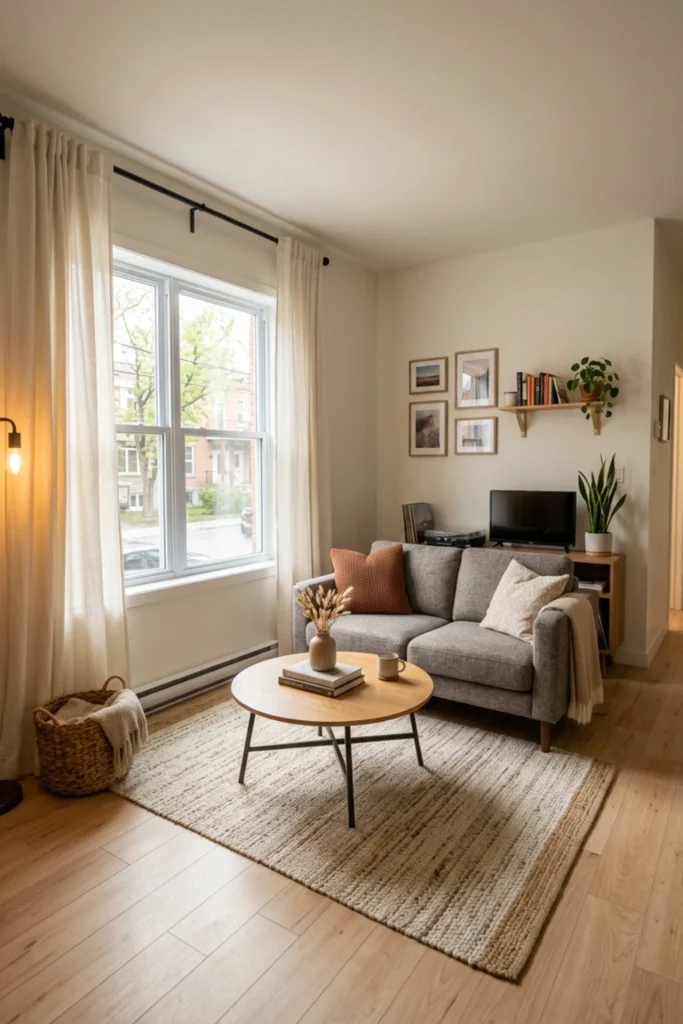
Curtains can make a rental look more finished faster than almost any small decor item.
The biggest improvement is usually placement.
Instead of mounting the rod directly on the window frame, hang it higher and extend it beyond the sides so the window looks larger.
Size and requirements: Mount the rod around 4–8 inches above the window where the wall allows it and extend it around 6–12 inches beyond each side. Combined curtain width often looks fuller around 1.5–2 times the rod width.
Method and cost: Measure from the proposed rod height to just above the floor before buying panels. If your lease limits drilling, use a renter-approved mounting solution appropriate for the wall and curtain weight. A basic curtain setup may cost around $80–$350 per window.
Pros: Makes ceilings look taller; makes windows look wider; adds softness and privacy.
Cons: Wrong curtain length looks sloppy; heavy panels can reduce light; some rentals limit hardware changes.
2. Use One Large Rug Instead of Several Small Rugs
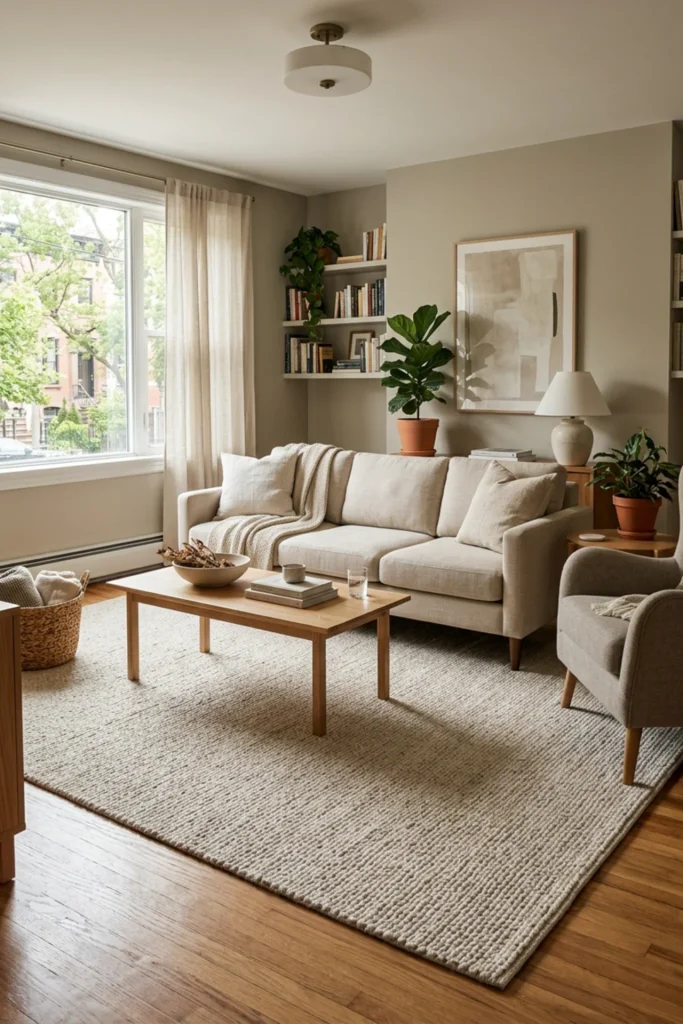
A properly sized rug can make a small living room feel more complete and surprisingly larger.
Tiny rugs visually divide the floor into smaller pieces.
One larger rug connects the sofa, chair, and coffee table into a single zone.
Size and requirements: In many apartment living rooms, 6 by 9 feet or 8 by 10 feet works well. Try to get at least the front legs of the main seating onto the rug.
Method and cost: Tape the rug size on the floor before ordering. Make sure doors still open and that the rug does not create a trip point. A good apartment-size rug may cost $150–$800+.
Pros: Makes the room feel more unified; softens rental flooring; adds color and texture.
Cons: Larger rugs cost more; pale rugs show stains; thick rugs may interfere with doors.
3. Add One Oversized Mirror to Reflect Light
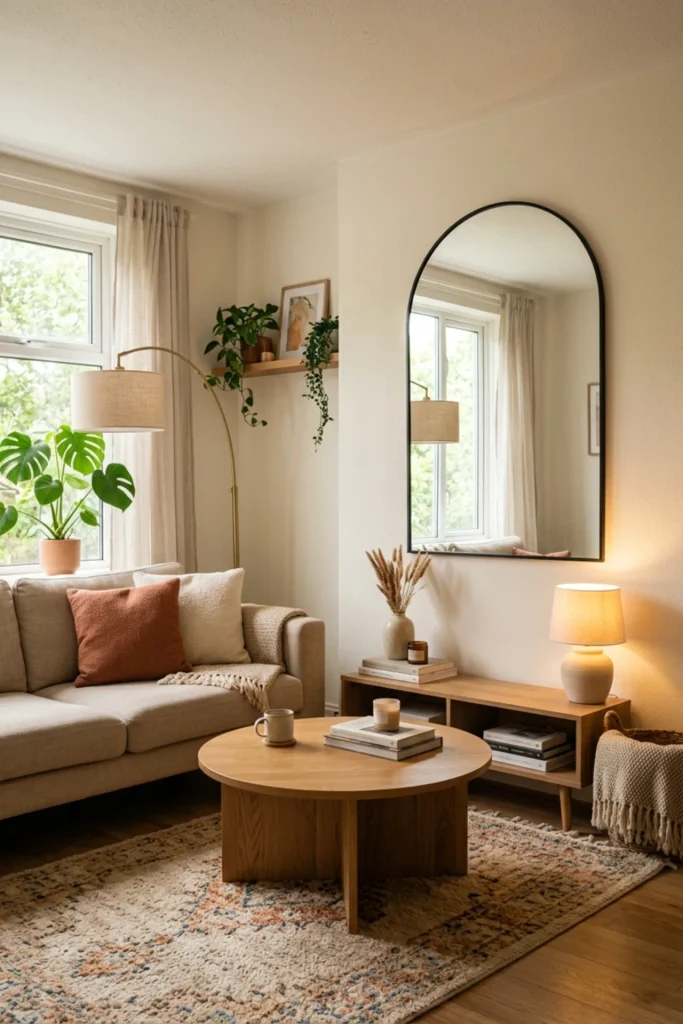
A large mirror can make a small apartment feel brighter and more open when it reflects a window or another well-lit part of the room.
I would rather use one large mirror than several small ones.
A simple wood, black, or aged-brass frame looks cleaner.
Size and requirements: A mirror around 28–40 inches wide works in many apartments. If using it above a console, keep it slightly narrower than the furniture. Heavy mirrors need suitable wall fixing.
Method and cost: Tape the mirror outline on the wall before buying. Check what it will reflect. A large mirror may cost $120–$700+.
Pros: Reflects light; creates depth; adds a polished focal point.
Cons: Heavy mirrors require secure mounting; poor placement reflects clutter; oversized frames can feel visually heavy.
4. Use Warm White Walls Instead of Stark White
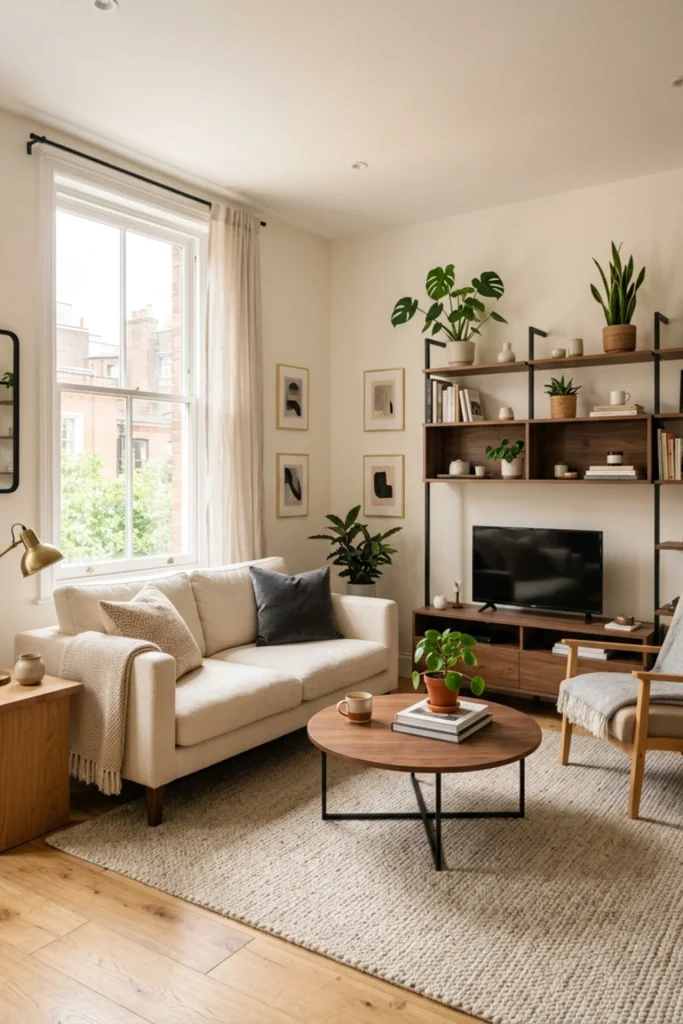
Not every rental allows paint, but if yours does, warm white can make the apartment feel softer and more expensive.
Cold blue-white walls can make inexpensive flooring and basic cabinetry look harsher.
Warm white, cream, or pale greige is usually more forgiving.
Size and requirements: Test a large sample in several parts of the apartment. Check it in morning light, afternoon light, and under evening bulbs.
Method and cost: Paint one wall first if you are uncertain. DIY supplies for a small room may cost $100–$350. Professional painting may cost $500–$1,800+, depending on wall condition and location.
Pros: Softens builder-grade finishes; works with most furniture; helps rooms flow together.
Cons: Rental approval may be required; warm whites can look yellow under some bulbs; repainting at move-out may be necessary.
5. Layer Three Light Sources in the Living Room
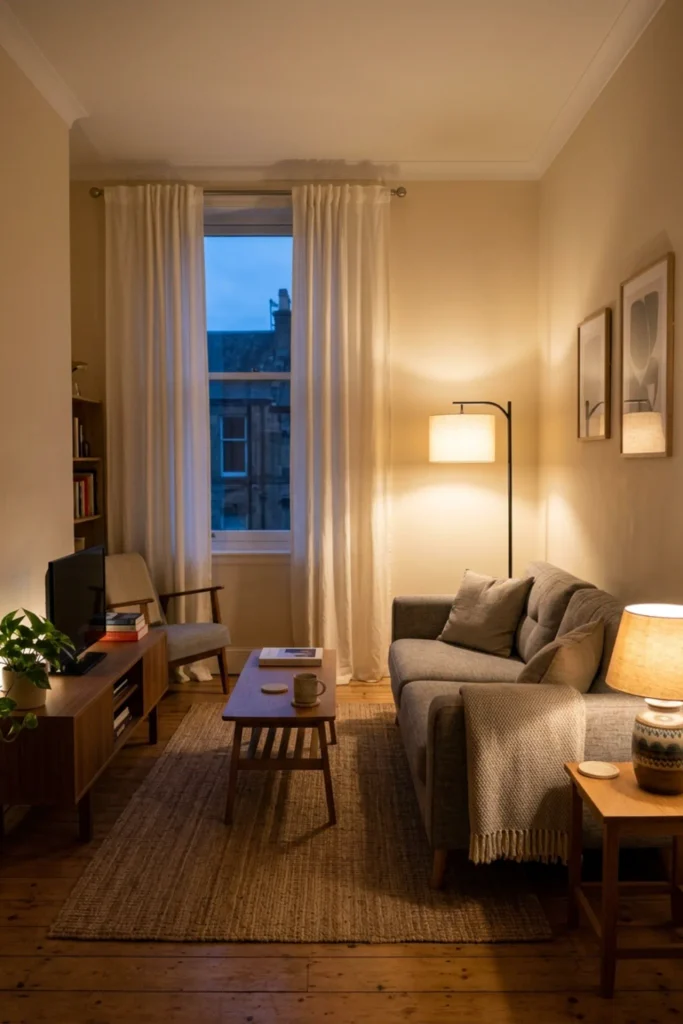
One ceiling light rarely makes a rental look expensive.
Layered lighting creates depth.
Use one floor lamp, one table lamp, and one secondary light such as a wall sconce, shelf light, or small accent lamp.
Size and requirements: Warm light around 2700K–3000K is a good starting point. Check outlet locations before buying lamps so cords do not cross walkways.
Method and cost: Replace cool bulbs first. Then add one floor lamp and one table lamp in the darkest areas. A basic layered lighting setup may cost $100–$500.
Pros: Makes the room feel warmer; improves nighttime mood; gives more control over brightness.
Cons: Multiple lamps need outlets; cords need managing; low-quality bulbs can shift color between fixtures.
6. Choose Furniture With Visible Legs
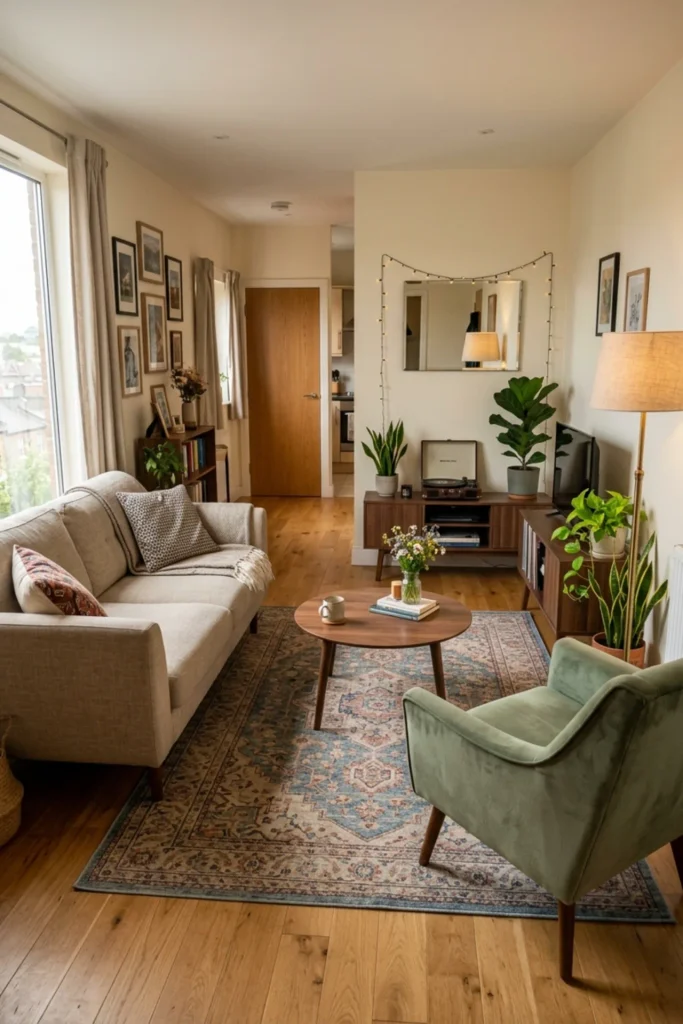
Furniture that sits slightly above the floor can make a small apartment feel less heavy.
Sofas, media consoles, chairs, and nightstands with visible legs allow more floor to remain visible.
That visual continuity helps the room breathe.
Size and requirements: Look for furniture with around 4–8 inches of visible clearance under the frame if the design allows it. Keep legs stable and appropriate for the furniture weight.
Method and cost: When replacing one major piece, prioritize scale and visible floor instead of buying a larger storage-heavy option. A sofa may cost $700–$2,500+; smaller casegoods may cost $150–$800+.
Pros: Makes the room look lighter; easier to clean under; works well in compact layouts.
Cons: Less hidden storage; exposed floor shows dust; very thin legs can look cheap if poorly made.
7. Use a Round Coffee Table to Improve Circulation
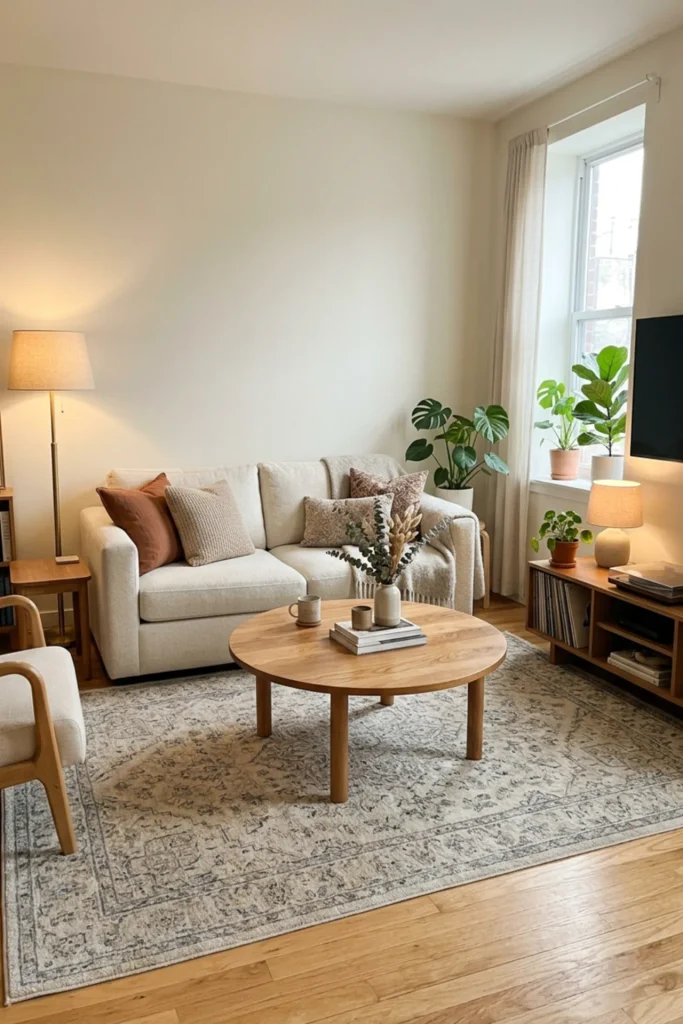
Round tables are useful in small rentals because there are no sharp corners sticking into the walkway.
They also soften rooms full of rectangular architecture.
A simple wood, stone-look, or glass-topped table can feel more expensive than a cluttered oversized rectangle.
Size and requirements: Around 30–36 inches in diameter works in many small living rooms. Keep around 16–18 inches between the sofa and table where possible.
Method and cost: Tape the circle on the floor before buying. Use cardboard if you want to test the height. Round coffee tables may cost $120–$700+.
Pros: Easier circulation; visually soft; works with compact sofas.
Cons: Less surface area than some rectangular tables; large round tables still take floor space; pedestal bases can reduce foot room.
8. Use a Low Media Console Instead of a Tall TV Unit
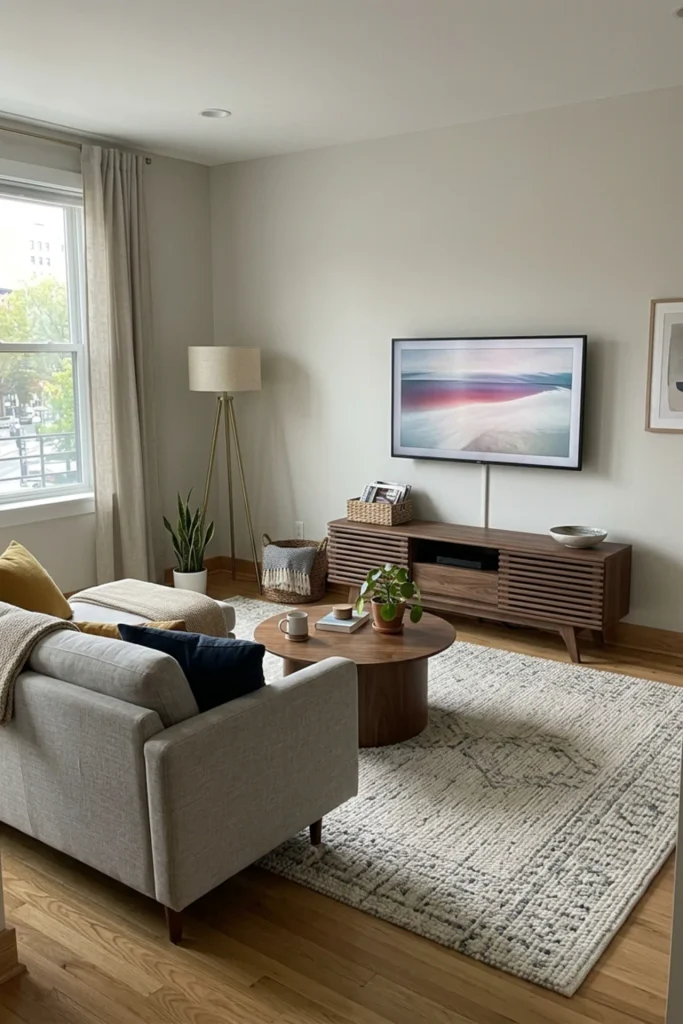
A low media console makes the wall feel wider and keeps the visual weight lower in the room.
Tall bulky units can make a small apartment feel closed in.
Choose one with closed storage so cords and small devices stay hidden.
Size and requirements: A console around 60–72 inches wide and 14–18 inches deep works in many apartment living rooms, but match it to the wall and TV.
Method and cost: Tape the unit footprint and TV outline before buying. A simple low console may cost $250–$1,200+.
Pros: Keeps the room visually open; adds storage; makes the TV wall look more intentional.
Cons: Low units may not hold much; deep consoles reduce walkway space; open shelving can create clutter.
If your TV wall needs more help, see TV Wall Design Ideas.
9. Use Matching Frames for a Cleaner Gallery Wall
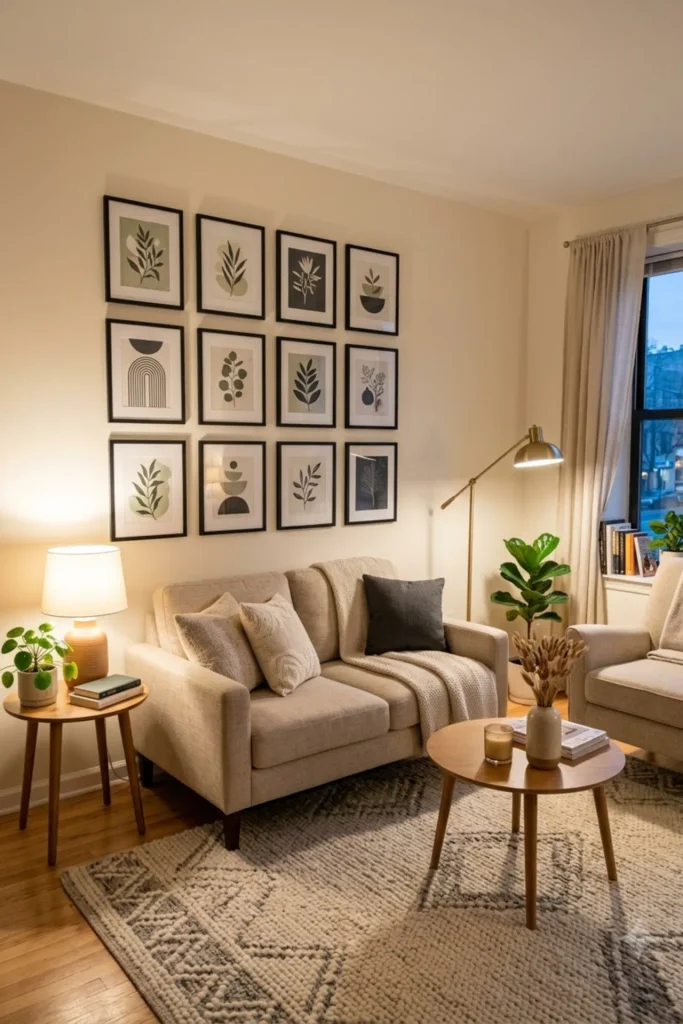
A gallery wall can work in a small apartment, but too many frame colors and sizes often make the room feel busy.
Use two or three frame sizes in the same finish.
Warm wood, black, or muted brass all work.
Size and requirements: Keep the gallery within roughly 60%–75% of the sofa or console width if it sits above furniture. Maintain consistent spacing, often around 2–3 inches between frames.
Method and cost: Lay the frames on the floor first or tape paper templates on the wall. A small gallery setup may cost $100–$500+.
Pros: Adds personality; visually organized; easy to update later.
Cons: Too many frames make a small wall busy; alignment takes time; drilling may be restricted in rentals.
10. Use One Sculptural Lamp Instead of Several Small Decor Pieces
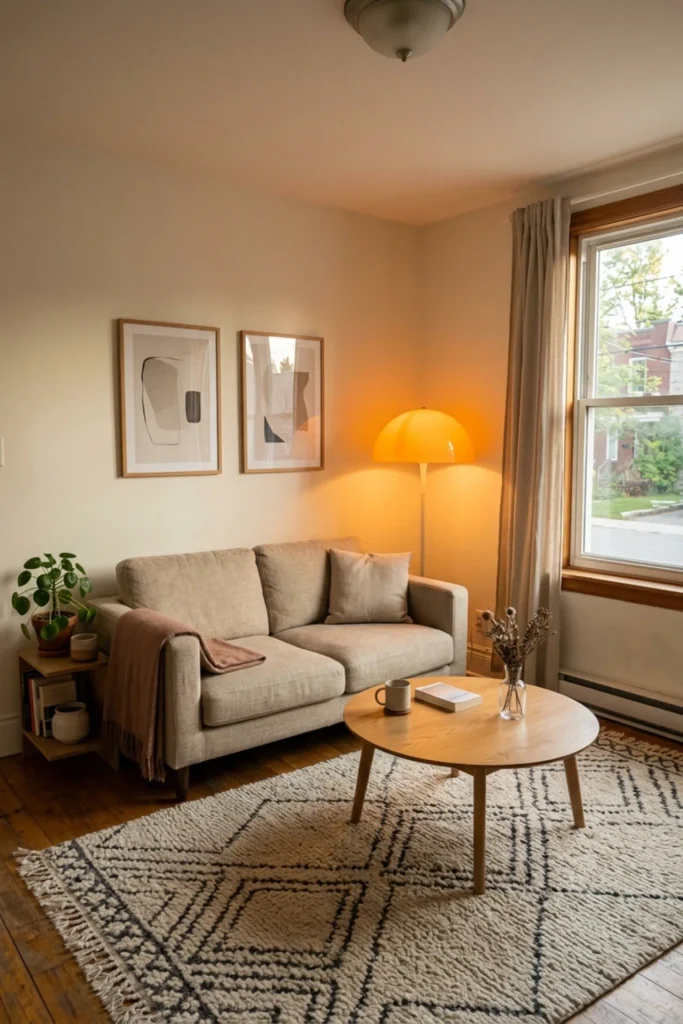
A good lamp can act as both lighting and decor.
That is useful in a small apartment because one object does two jobs.
Think soft globe, mushroom, arc, pleated shade, or simple ceramic lamp.
Size and requirements: A table lamp base around 6–9 inches wide works on many side tables. Floor lamps often range around 58–70 inches high. Check ceiling height and shade clearance.
Method and cost: Choose the lamp after the furniture is in place. A sculptural lamp may cost $80–$500+.
Pros: Adds personality without extra clutter; useful light; can become a focal point.
Cons: Trendy lamps can date; large bases take space; some sculptural designs are less practical than they look.
11. Use Closed Storage for Everyday Clutter
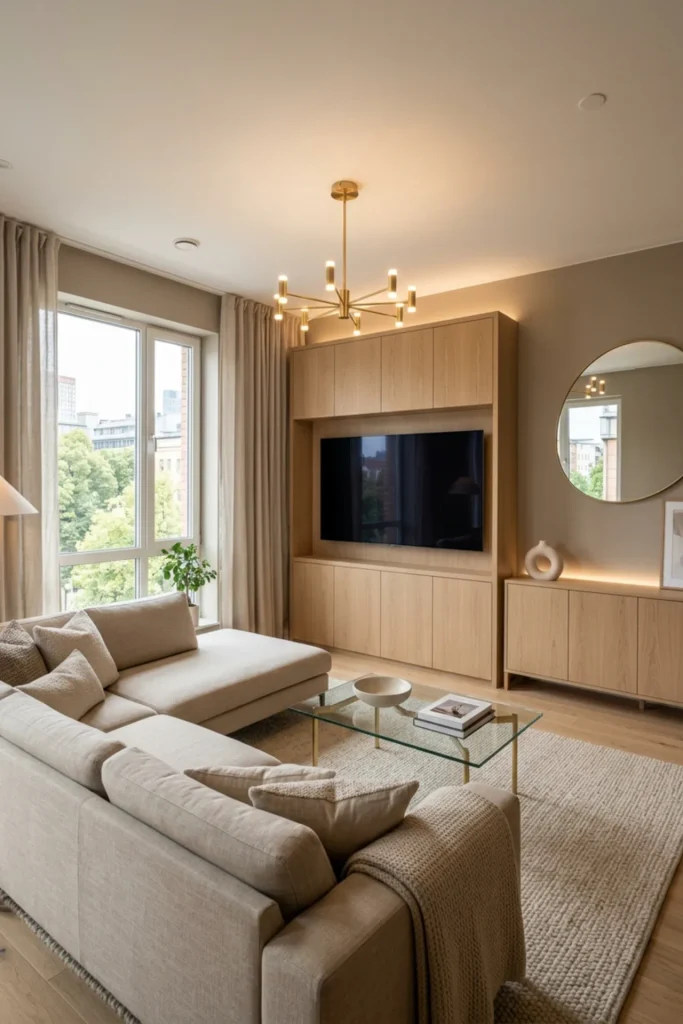
Expensive-looking apartments usually have fewer visible objects.
That does not mean owning less. It often means storing more behind doors.
Use closed media units, under-bed bins, drawers, baskets inside cabinets, and slim storage pieces.
Size and requirements: Measure the inside of cabinets before buying organizers. For narrow rooms, keep storage depth as shallow as practical.
Method and cost: Remove visible clutter first, group it by use, then decide what storage is actually needed. A basic closed-storage update may cost $100–$600.
Pros: Makes the apartment feel calmer; easier cleaning; surfaces look more expensive when they are not overloaded.
Cons: Extra storage furniture still takes space; hidden clutter can become disorganized; custom storage is expensive.
For more practical systems, browse Home Organization.
12. Use a Tall Narrow Bookcase Instead of a Wide One
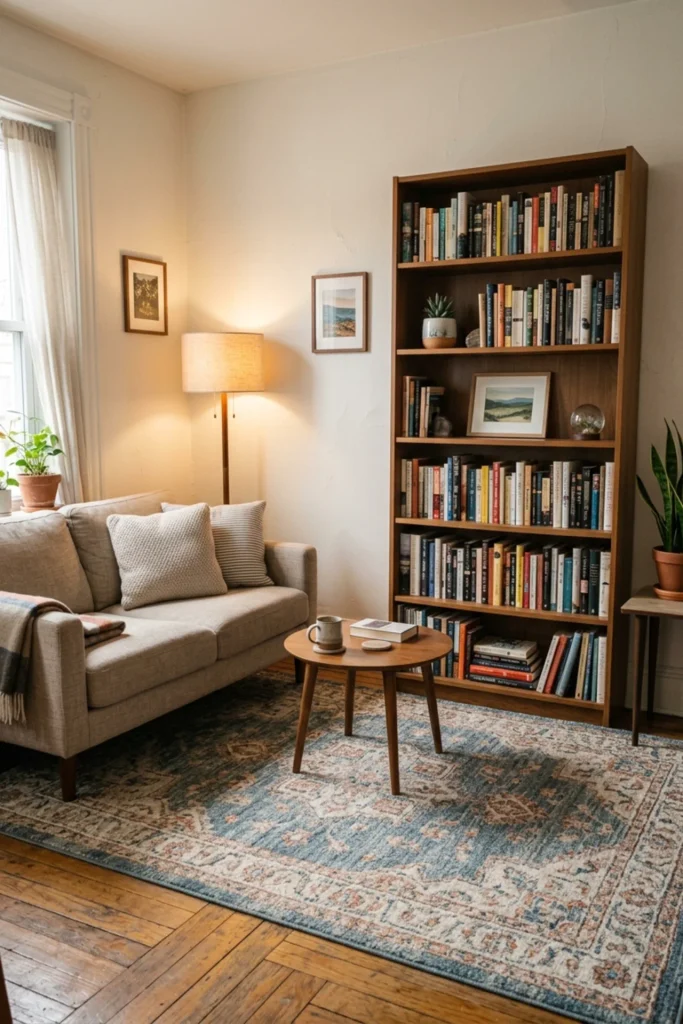
Vertical storage uses wall height while protecting floor space.
A tall narrow bookcase or shelving unit can hold books and a few decor pieces without taking over the room.
Keep the shelves mostly functional.
Size and requirements: A unit around 24–30 inches wide and 10–12 inches deep works well in many small apartments. Measure ceiling height and nearby door swings.
Method and cost: Tape the footprint and full height on the wall before ordering. Tall shelving may cost $150–$700+.
Pros: Adds useful storage; draws the eye upward; saves wall width.
Cons: Tall furniture can feel heavy; open shelves collect dust; tip-over safety matters.
The U.S. Consumer Product Safety Commission’s Anchor It! guidance is useful for general furniture tip-over prevention.
13. Keep the Dining Area Light and Compact
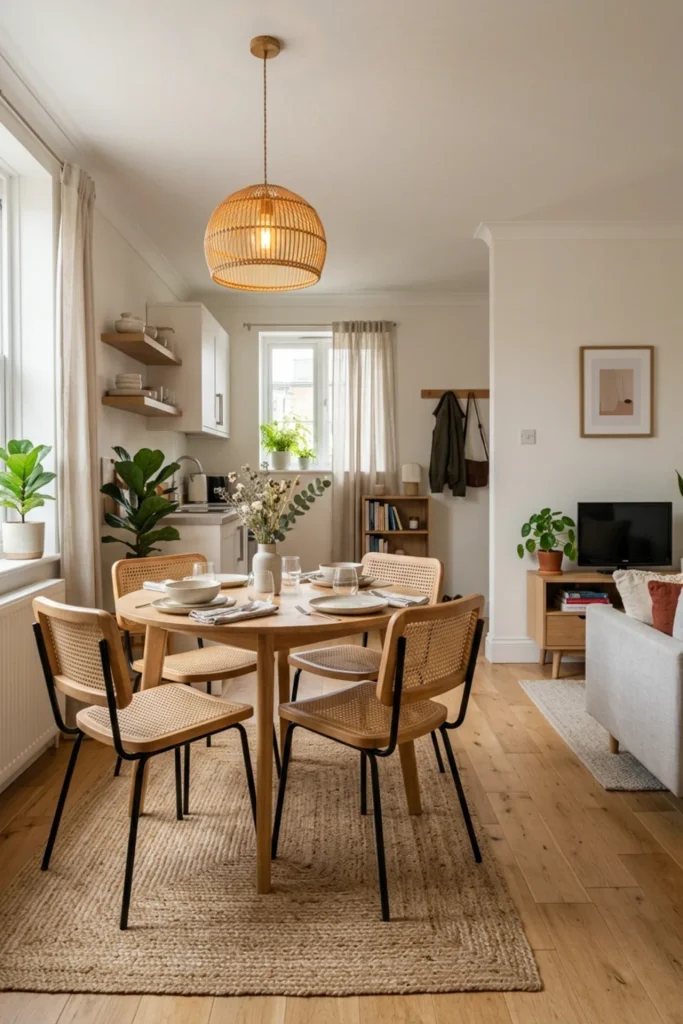
A small dining area can feel expensive when the furniture is properly scaled.
A round pedestal table, slim wood table, or glass-topped table often works better than a bulky rectangular set.
Keep chair backs open or visually light.
Size and requirements: A round table around 36–42 inches in diameter works for many small dining areas. Allow around 24 inches of table edge per person as a practical starting point and check chair pull-out space.
Method and cost: Tape the full table and chair positions before buying. A small dining set may cost $400–$1,800+.
Pros: Makes the dining area feel intentional; improves circulation; works well in open-plan apartments.
Cons: Small tables limit entertaining; pedestal bases vary in comfort; glass shows fingerprints.
14. Add a Narrow Entry Console or Floating Shelf
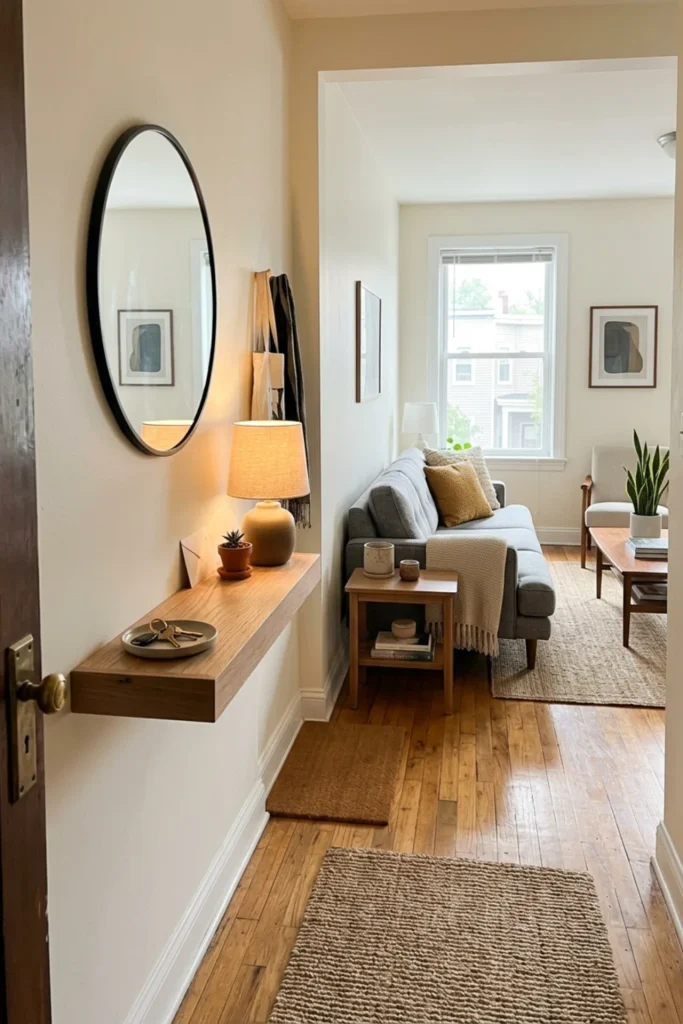
An entry area looks more polished when keys, mail, and small everyday items have a place to land.
You do not need a full foyer.
A slim console or shallow floating shelf can create the effect.
Size and requirements: Keep depth around 8–14 inches in a narrow entry. Preserve the main walking path. A wall-mounted shelf must use suitable fixings.
Method and cost: Tape the depth on the floor before adding anything. A small console may cost $120–$600+; a simple shelf may cost less.
Pros: Makes the entrance feel intentional; adds storage; small footprint.
Cons: Can become a clutter surface; narrow furniture may feel unstable; wall mounting may not be rental-friendly.
15. Repeat One Wood Tone Across the Apartment
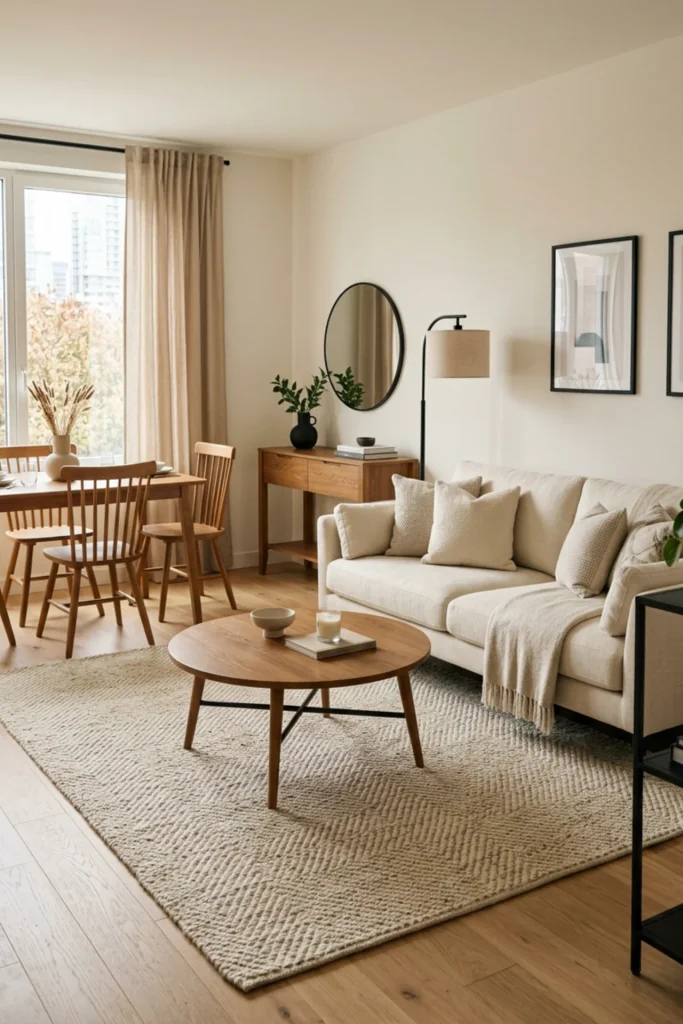
Too many wood tones can make a small rental feel visually messy.
You do not need everything to match perfectly, but repeating one main wood family helps the rooms connect.
Warm oak, walnut, or medium brown are easy to repeat.
Size and requirements: Let one main wood tone appear in two or three visible places, such as the coffee table, media console, and dining chairs.
Method and cost: Do not replace everything. Start with the most visible piece and use smaller accents to repeat the tone. Cost may be $0–$800+, depending on whether you are restyling or replacing furniture.
Pros: Makes the apartment feel coordinated; helps open-plan spaces flow; reduces visual noise.
Cons: Exact matches are difficult; too much of one wood can feel flat; some rental floors may clash with your preferred tone.
16. Use Larger Art Instead of Many Tiny Pieces
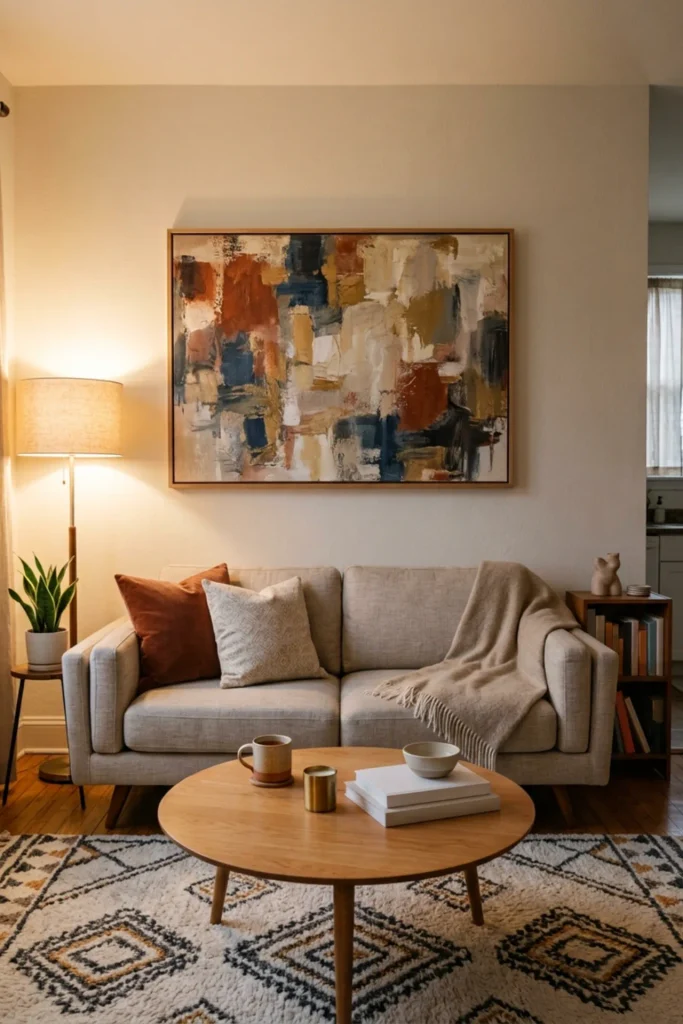
One large artwork often makes a rental look more intentional than six unrelated small prints.
Large art also gives the eye a focal point.
Choose something that supports the room palette without matching every cushion.
Size and requirements: Above a sofa or console, art around 60%–75% of the furniture width is a useful starting point. Use appropriate hanging hardware for the frame weight.
Method and cost: Tape the art size on the wall before ordering. A large framed print may cost $120–$700+.
Pros: Strong focal point; less visual clutter; makes the room feel finished.
Cons: Large frames can be expensive; heavy pieces require secure mounting; rental walls may limit options.
17. Use Removable Hardware or Small Fixture Upgrades
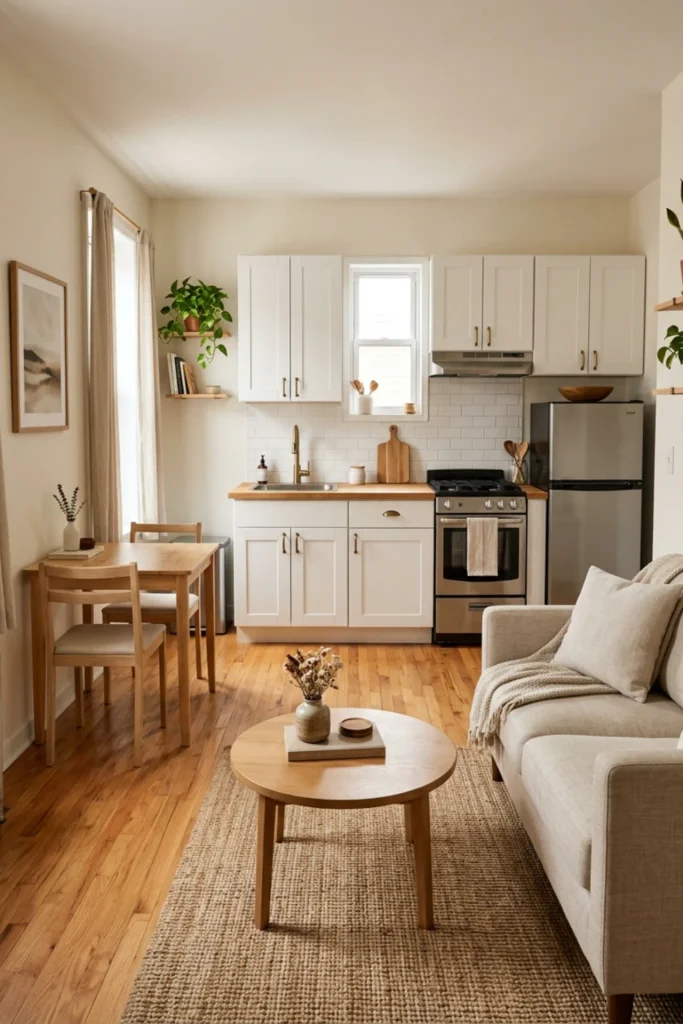
Builder-grade hardware can make a rental look cheaper than it needs to.
If your lease allows it, changing a few cabinet pulls or replacing a removable lamp shade can improve the room quickly.
Keep the original hardware in a labeled bag so it can be reinstalled before moving out.
Size and requirements: Match existing cabinet-hole spacing whenever possible. Check lease terms before changing anything fixed.
Method and cost: Replace only the most visible hardware first. A small hardware update may cost $40–$250.
Pros: High visual impact for little money; reversible; easy DIY.
Cons: Some landlords do not allow changes; mismatched holes create extra work; cheap finishes scratch quickly.
18. Keep Kitchen Counters Mostly Clear
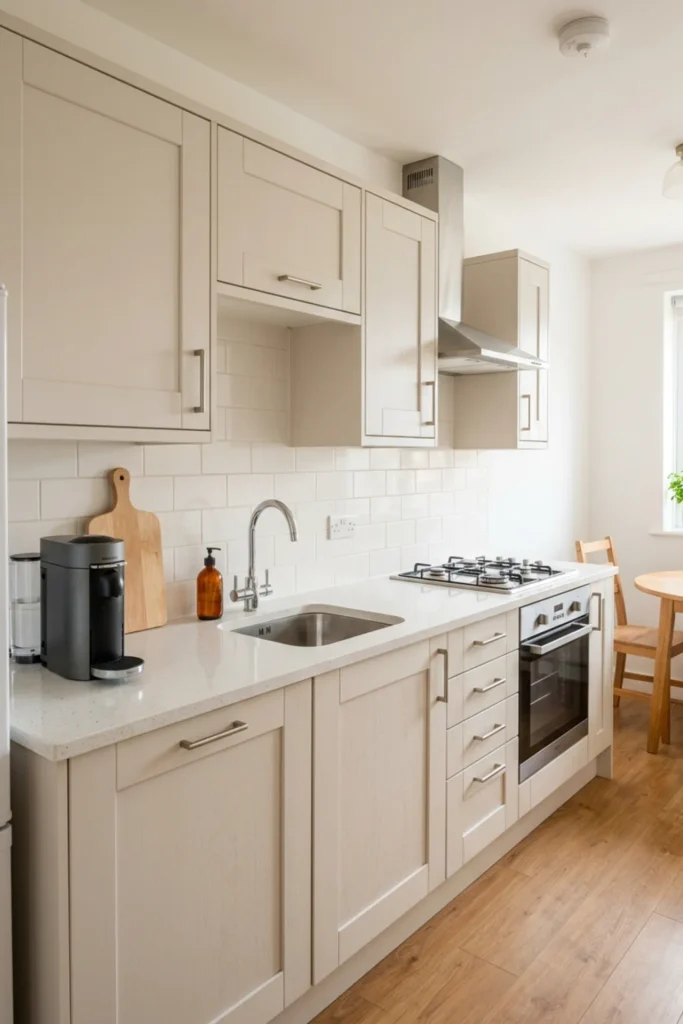
A small apartment kitchen looks more expensive when the counter is visible.
Do not leave every small appliance, cutting board, jar, and utensil on display.
Keep daily essentials out and store the rest.
Size and requirements: Aim to keep around 30%–40% of the main prep counter visually clear. Do not block outlets, vents, or appliance openings.
Method and cost: Remove everything from the counter, then return only daily-use items. Add closed cabinet storage if needed. Cost: $0–$200.
Pros: Makes the kitchen feel larger; easier cleaning; rental counters look better when they are visible.
Cons: Requires enough storage; daily appliances may be annoying to move; minimalist counters can feel plain without warmth.
For more room-specific ideas, see Small Apartment Kitchen Ideas.
19. Use the Balcony as an Extra Visual Room
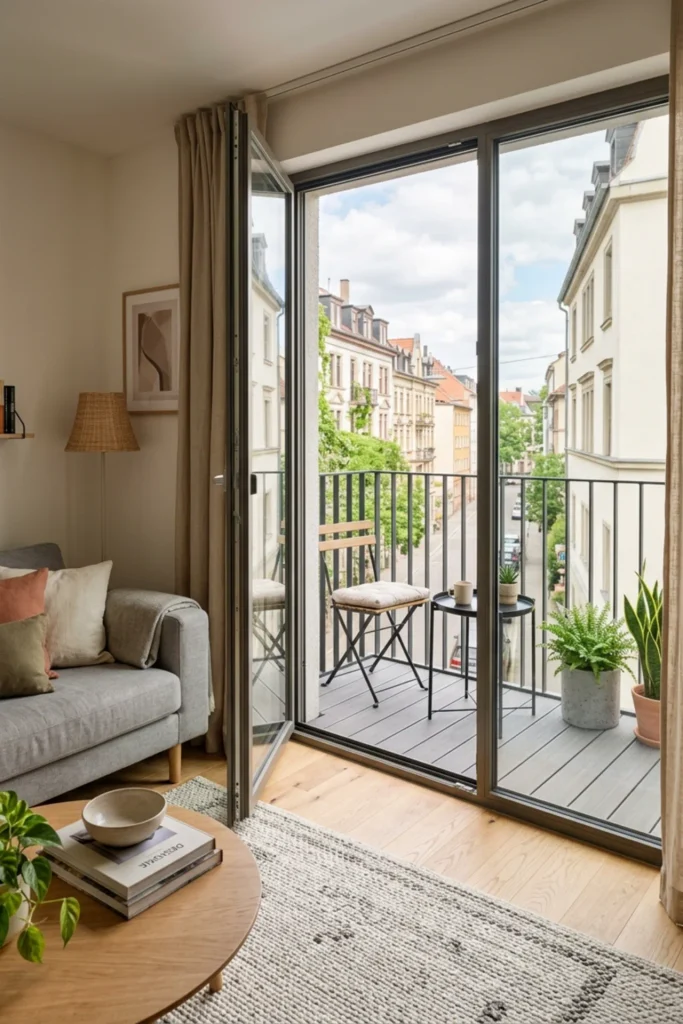
If your apartment has a balcony, make it feel connected to the interior.
Even when the balcony is small, one chair, a compact table, and one or two plants can extend the visual depth of the apartment.
Keep the balcony uncluttered.
Size and requirements: Preserve a clear path to the door. Compact chairs may be around 22–28 inches wide. Check balcony load limits, weather exposure, building rules, and railing safety.
Method and cost: Start with one chair and one small table before adding plants or decor. A basic balcony refresh may cost $150–$700+.
Pros: Extends the usable feel of the apartment; adds greenery and light; makes the interior feel less boxed in.
Cons: Weather limits use; outdoor furniture needs maintenance; building rules may restrict items.
For more ideas, see Small Apartment Balcony Ideas.
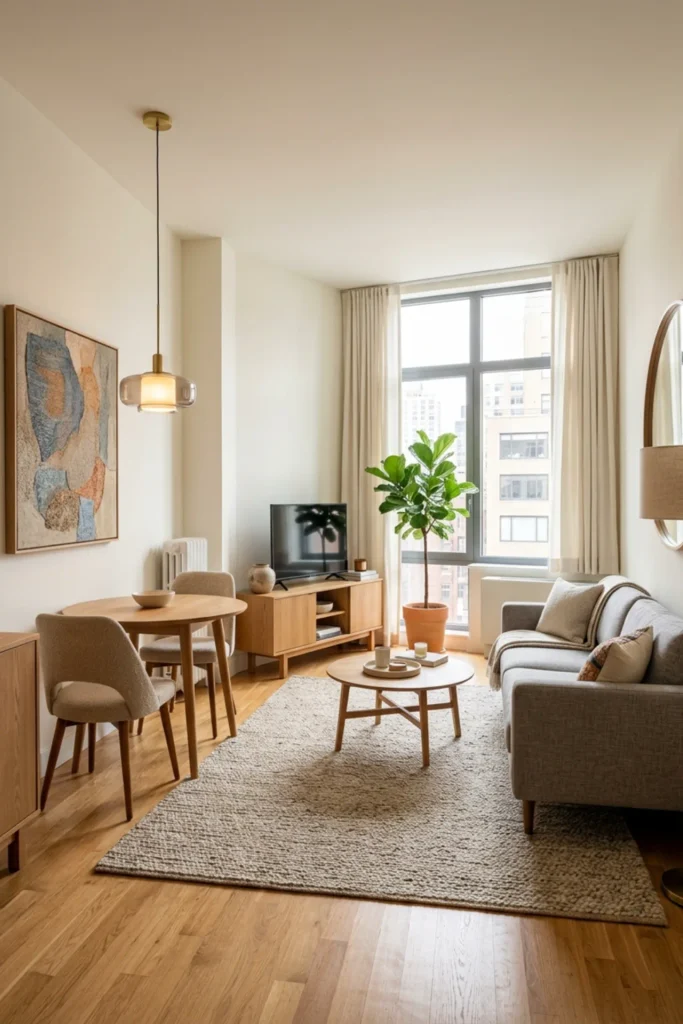
20. Edit Every Room Until It Feels Calm
The final expensive-looking move is not buying something.
It is removing what the room does not need.
If every table, wall, shelf, windowsill, and counter is styled, the apartment will feel smaller no matter how much the furniture costs.
Let some areas stay empty.
Size and requirements: Keep around 30%–40% of major surfaces visually open. Leave some wall space blank. Protect the main walking path in every room.
Method and cost: Remove all loose decor from one room. Add back only the pieces that improve the space or serve a purpose. Cost: $0.
Pros: Makes the apartment feel larger; costs nothing; improves cleaning and visual flow.
Cons: Minimal styling can feel unfinished if the room lacks texture; editing does not fix poor lighting or oversized furniture.
A Practical 10-Step Small Apartment Decorating Plan
If I were decorating a rental from scratch, I would use this order:
- Measure every main room and walkway.
- Decide which room needs the biggest visual improvement.
- Fix lighting before buying lots of decor.
- Choose the main rug size.
- Choose furniture based on scale, not showroom photos.
- Hang curtains higher and wider.
- Add one large mirror or artwork.
- Solve closed storage.
- Repeat one wood tone and one metal finish.
- Remove anything that makes the apartment feel crowded.
This sequence usually makes the space look more intentional without spending money on details too early.
Approximate Budget by Update Level
You can make a rental look better at several budget levels.
Low-cost refresh: $200–$800
- Curtains
- Better bulbs
- One lamp
- Hardware
- Small rug
- Large artwork
- Decor edit
Mid-range update: $1,000–$4,000
- Larger rug
- Coffee table
- Media console
- Mirror
- Curtains
- Lighting
- Entry console
- Storage furniture
Full apartment refresh: $4,000–$12,000+
- Sofa
- Dining set
- Bedroom furniture
- Rugs
- Lighting
- Curtains
- Storage
- Artwork
- Balcony setup
- Professional painting where allowed
Designer furniture, custom curtains, premium rugs, original art, and professional installation can push the total much higher.
What I Would Spend More On
I would spend more on the sofa, rug, mattress, curtains, and lighting.
Those pieces affect the apartment every day.
I would spend less on small decorative objects.
One good floor lamp and one properly sized rug can do more for a room than ten decorative trays and vases.
If the budget is limited, I would improve the living room first because it usually has the biggest visual impact.
Common Mistakes I Would Avoid
The first mistake is buying oversized furniture because it looked good in a large inspiration photo.
The second is using tiny rugs.
Another mistake is hanging curtains directly on the window frame when the wall allows a higher and wider placement.
I would also avoid too many small decor objects. They make surfaces look busy and can make a rental feel cheaper rather than more expensive.
Do not ignore lighting. Cool overhead bulbs can flatten even a well-decorated room.
Tall storage furniture should be secured appropriately, and mirrors or artwork should use wall fixings suited to their weight.
Finally, do not make permanent changes without checking your lease. A renter-friendly upgrade is only useful if it does not create a problem when you move out.
Final Thoughts
Small apartment decor ideas that make a rental feel bigger and more expensive are usually about proportion, light, and restraint.
Hang the curtains higher. Use a larger rug. Add one mirror. Keep the furniture light enough that some floor remains visible. Use warm layered lighting at night. Hide everyday clutter. Repeat a few finishes instead of introducing a new one in every room.
You do not need to make the apartment look like a luxury hotel.
It should still feel like a home.
The best version is a rental that feels brighter, calmer, easier to move through, and more intentional without requiring a renovation you cannot take with you.
Disclosure: Some visuals are AI-assisted design concepts created for inspiration. Always confirm furniture dimensions, wall-fixing requirements, rental restrictions, electrical compatibility, product stability, balcony rules, manufacturer instructions, and installation requirements before making changes in your apartment. Cost ranges are approximate U.S. planning figures and vary by location, labor, materials, shipping, and product quality.
About the Author
Ali Hamza — Founder & Editor
Hi, I’m Ali Hamza, and Styled Room Living is my personal home decor project. I don’t have a formal background in interior design. I started this website because home makeovers are something I genuinely enjoy looking at and learning about.
Most of the ideas shared here are not projects I have personally built. When I put a guide together, I try to separate an idea that only looks good in a photograph from one that could actually be useful in a normal home. Will it fit? Is it easy to clean? Does it require drilling? Can it be adjusted for a smaller budget? These are the questions I keep in mind while working on an article.
Some images on the website are AI-assisted design concepts used to explain an idea more clearly. They are meant for inspiration, not as exact construction plans. Please check measurements, materials, prices, weight limits, electrical details, rental requirements, and installation instructions before trying anything in your own home.
I’m still learning as the website grows, and I know every home works differently. My purpose with Styled Room Living is simply to collect useful home ideas, explain them in plain language, and help readers find something they can adapt to their own space.
Read more about Ali Hamza →
2 comments