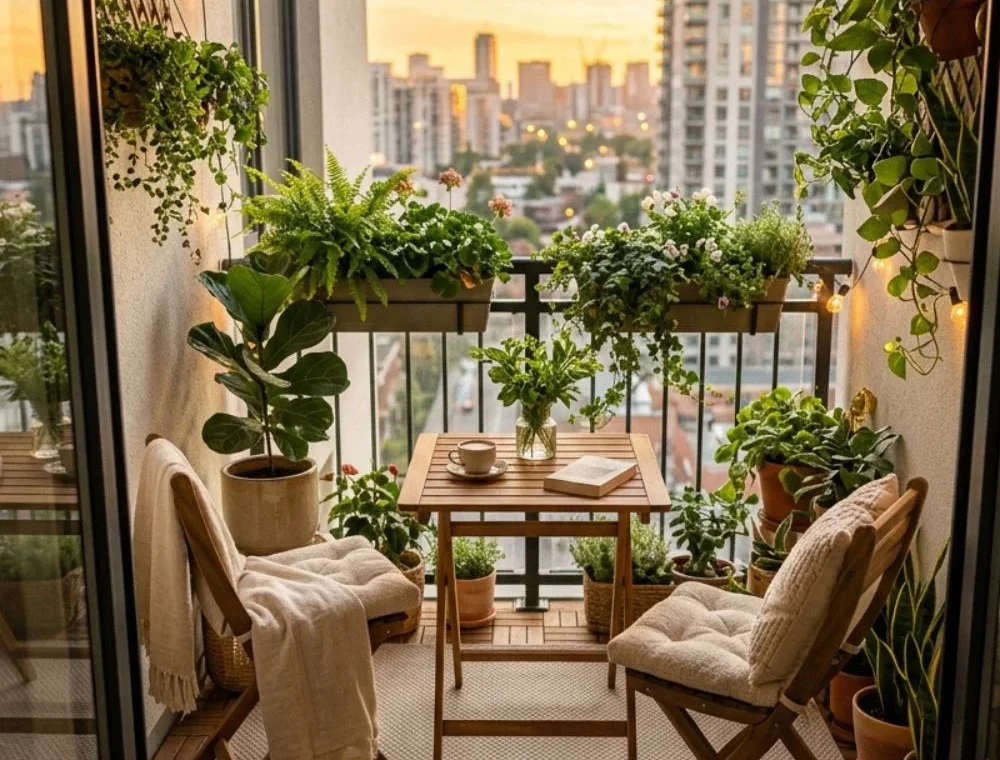
Small apartment balcony ideas often look effortless in photographs. A chair sits beside a perfect plant, the lights glow at sunset, and nothing seems affected by rain, wind, dust, or a door that opens into the space.
A real balcony is less forgiving. It may be long and narrow, exposed to strong sun, overlooked by neighbors, or barely deep enough for one chair. The best makeover begins by accepting those limits instead of hiding them.
For this guide, my strongest choices are a green plant wall, a comfortable reading nook, and folding furniture. Each one gives the balcony a clear purpose while protecting valuable floor space. They can also be adjusted for different budgets and apartment rules.
I am less enthusiastic about a floor-cushion lounge and a small water feature. Both can look relaxing, but cushions need frequent moving and fountains add cleaning, electrical, and water concerns. I have kept them in the list with honest warnings because they may still suit a protected balcony and a careful owner.
Decide whether you want a place for morning tea, reading, gardening, or quiet evenings. A clear purpose makes it easier to reject items that would only crowd the balcony.
Start With Rules, Weather, and Real Measurements
Measure the full width and depth of the balcony, then measure the doorway. A chair that fits the floor may still be impossible to carry through the apartment or turn around near the door.
Mark the planned furniture with painter’s tape or flattened cardboard. Open the balcony door fully and walk from inside to the railing. Keep the main route clear rather than forcing yourself to step around a table every day.
Do not assume that every visible surface can hold weight. Railings, walls, ceilings, and privacy panels belong to the building structure. Ask management or the owner before drilling, hanging planters, adding a fixed table, or covering a railing.
Check these five conditions before shopping:
- Sun: Notice where direct light falls in the morning and afternoon.
- Rain: Look for wet corners, splash zones, and the direction water travels.
- Wind: Lightweight pots, screens, rugs, and cushions may move suddenly.
- Drainage: Never cover a drain with flooring, fabric, or a planter.
- Privacy: Identify the one direction that actually needs screening.
Electrical items need extra caution outdoors. Use lights and cords specifically rated for outdoor conditions, keep connections dry, and follow the maker’s directions. The U.S. Consumer Product Safety Commission advises that cords used outside should be designed for outdoor use and should not be covered by rugs.
Renters should ask before making permanent changes. Apartment owners still need to follow building rules. Reversible designs make cleaning and seasonal storage easier for both groups.
A Quick Comparison of the 15 Balcony Ideas
Use this table to narrow the options before buying anything.
| Idea | Best for | Floor space | Rental potential | Main trade-off |
|---|---|---|---|---|
| Breakfast corner | Tea and small meals | Medium | Good with freestanding pieces | Can narrow the doorway |
| Outdoor rug | Softer look and comfort | Low | Very good | Needs drying after rain |
| Plant wall | Greenery without floor clutter | Low | Good with freestanding trellis | Water, weight, and sunlight |
| String lights | Evening atmosphere | None | Good with approved clips | Outdoor electrical safety |
| Bamboo screen | Privacy | None | Possible if securely tied inside | Wind pressure and building rules |
| Compact sofa | Longer sitting | High | Good if freestanding | Can dominate a tiny space |
| Floor cushions | Low casual seating | Medium | Very good | Rain, dust, and daily storage |
| Slim bar table | Dining or laptop use | Low–medium | Depends on mounting | Railing and walkway clearance |
| Railing planters | Flowers without floor pots | None | Depends on building rules | Falling and dripping risk |
| Reading nook | Quiet one-person retreat | Low–medium | Very good | Needs shade and comfort |
| Coastal mood | Light visual style | Varies | Very good | Can become overly themed |
| Water feature | Gentle sound | Low | Limited | Electricity, cleaning, and spills |
| Herb garden | Useful edible plants | Low–medium | Very good | Light and watering needs |
| Folding furniture | Flexible daily use | Low when stored | Excellent | Needs safe storage when folded |
| Evening retreat | Relaxing after sunset | Varies | Very good | Too many accessories create clutter |
1. Create a Tiny Breakfast Corner
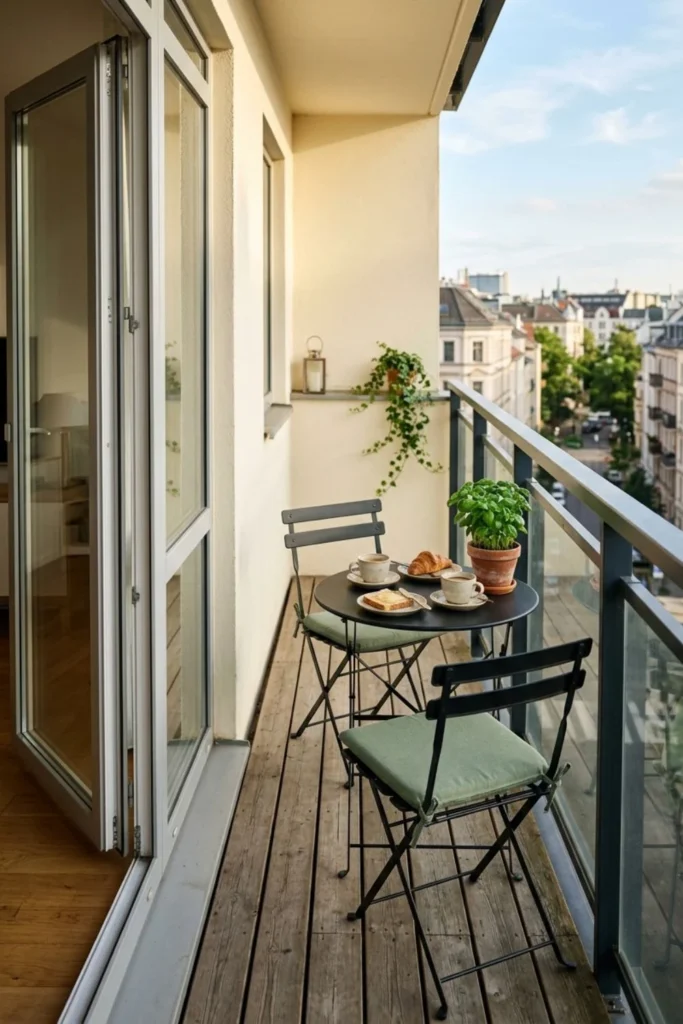
A small table and one or two chairs can turn an empty balcony into a place you use before the day becomes busy. The setup works best when breakfast or tea is already part of your routine.
Round tables are easier to move around because they have no sharp corners. A square folding table can be better when it needs to sit flat against a wall. The right shape depends on the door and walkway, not the trend shown in a photograph.
Test the table with real objects. Two cups, two plates, and a small serving bowl need more room than one decorative mug. Sit in both chairs and make sure nobody is trapped between the table and railing.
Choose outdoor-safe metal or sealed wood. Thin cushions improve comfort but should be easy to carry indoors. One small pot or lantern is enough; the table needs to remain useful.
Good choice when: the balcony has enough depth for a chair to pull back safely.
Skip it when: the open door already uses most of the available floor.
2. Soften the Floor With an Outdoor Rug
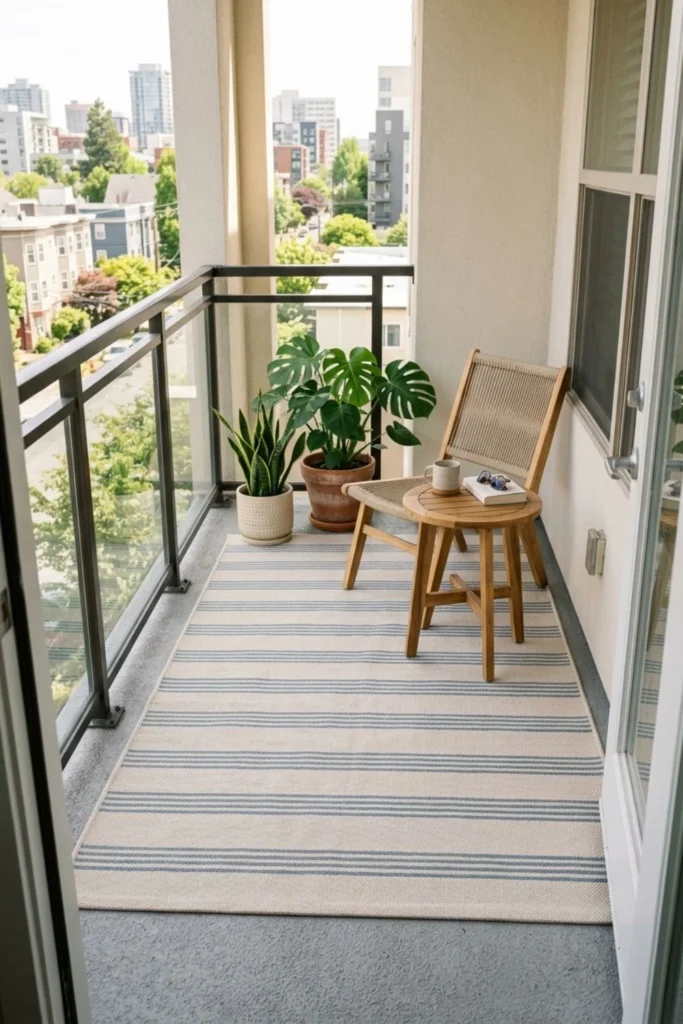
An outdoor rug can make concrete or tile feel less bare without adding bulky furniture. It also creates a clear visual zone around a chair or table.
Measure the door clearance before choosing thickness. A rug that catches under the door will become annoying quickly. Flat woven designs are usually easier to sweep and dry than deep indoor-style piles.
Leave the drain uncovered and keep a visible border around the rug. After heavy rain, lift it so both sides and the balcony floor can dry. Trapped moisture may lead to odor, stains, or a slippery surface.
Stripes running along a narrow balcony can guide the eye through the space. A calm solid or small pattern works when plants and cushions already add color.
The rug should not hide a damaged or uneven floor. Report cracks, loose tiles, or drainage problems to building management instead of covering them.
3. Build a Green Plant Wall
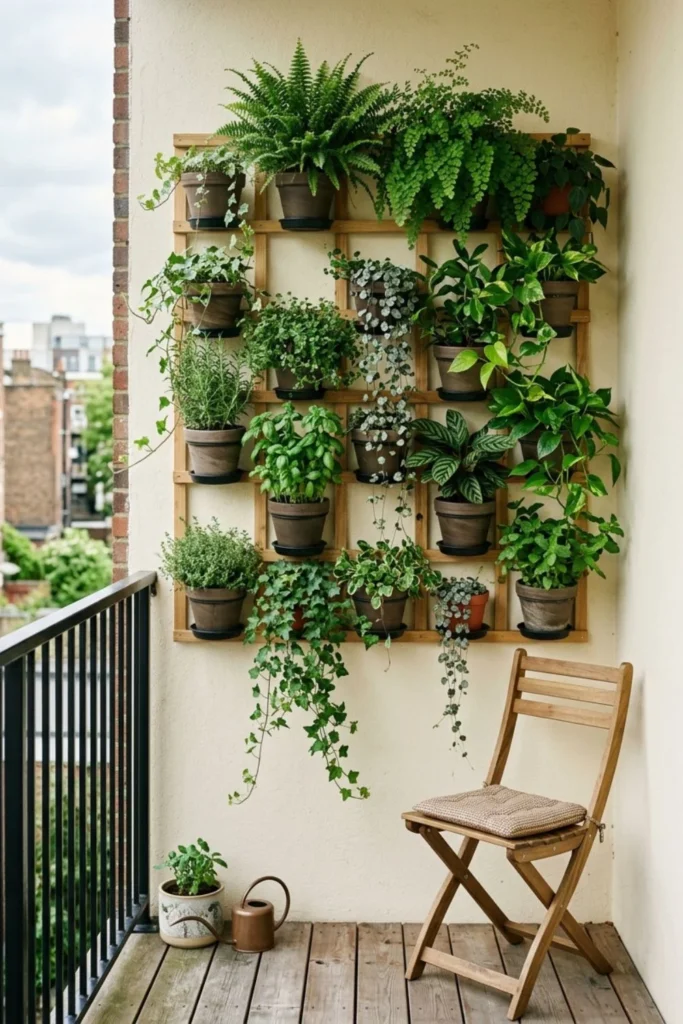
A green plant wall is my first choice because it adds life and privacy without filling the center of the balcony. It can soften a plain wall and make the view from inside the apartment more enjoyable too.
The safest renter-friendly version is often a freestanding outdoor trellis or narrow plant stand placed against a suitable wall. This avoids drilling and allows the whole arrangement to move during bad weather.
Choose plants after watching the sunlight for several days. A bright south- or west-facing balcony may need sun-tolerant plants, while a shaded balcony needs a different group. Local weather matters more than the plant list in a general makeover article.
Keep larger pots low and lighter pots higher. Use drip trays and water slowly so nothing runs onto a neighbor’s balcony. Check whether the combined weight of wet soil, pots, shelves, and water is suitable for the stand and location.
Do not fill every level on the first day. Begin with three to five healthy plants and leave room for growth. A few plants that suit the conditions will look better than a dense wall struggling with the wrong light.
For a calm mix, combine one upright plant, one soft leafy plant, and one controlled trailing plant. Make sure all plants are appropriate for children or pets who can access the balcony.
Why it ranks highly: it provides greenery, a focal point, and some screening while preserving the walkway.
4. Add One Line of Warm String Lights
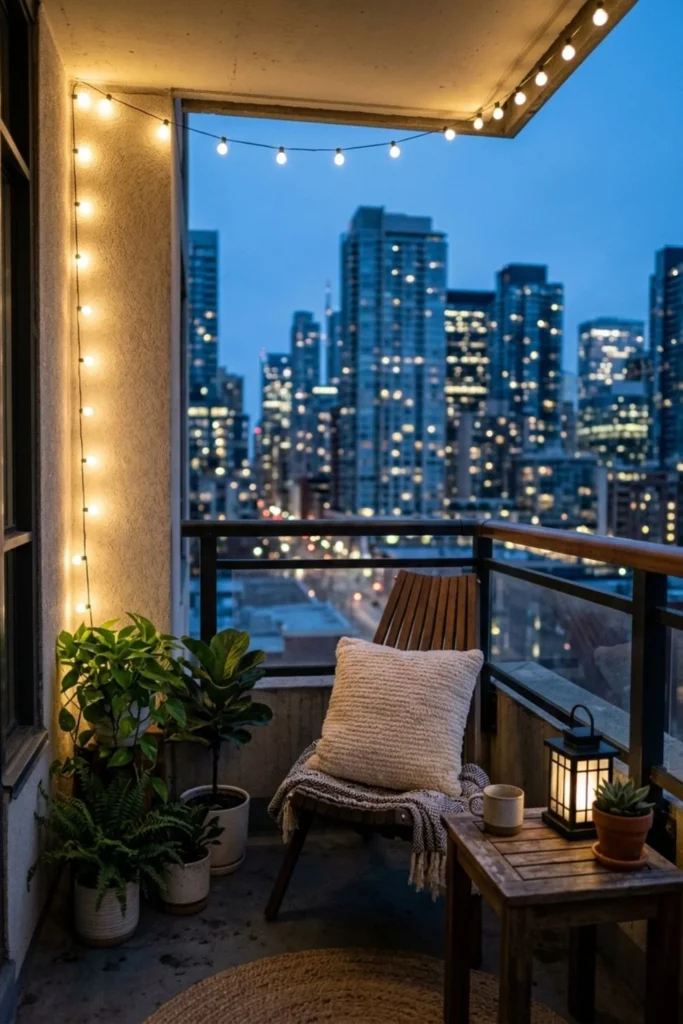
Warm lights can make a small balcony feel inviting after sunset, but more strands do not always create a better result. One clean line is usually enough to define the edge of the space.
Only use lights marked for outdoor use. Follow their installation instructions and keep plugs and connections protected from water. Battery or solar options may reduce the need for a cord, but they still need secure mounting.
Attach lights inside the balcony, never where they can hang over the railing. Avoid loose loops that catch in the wind. Do not run a power cord beneath the outdoor rug or across the doorway.
Choose steady warm white rather than flashing colors if the goal is a quiet retreat. A small rechargeable outdoor lamp can provide focused reading or table light without covering the whole balcony in bulbs.
Check the lights after strong wind and turn them off when the balcony is unattended. Atmosphere should never come before safe wiring and secure placement.
5. Create Privacy With a Bamboo Screen
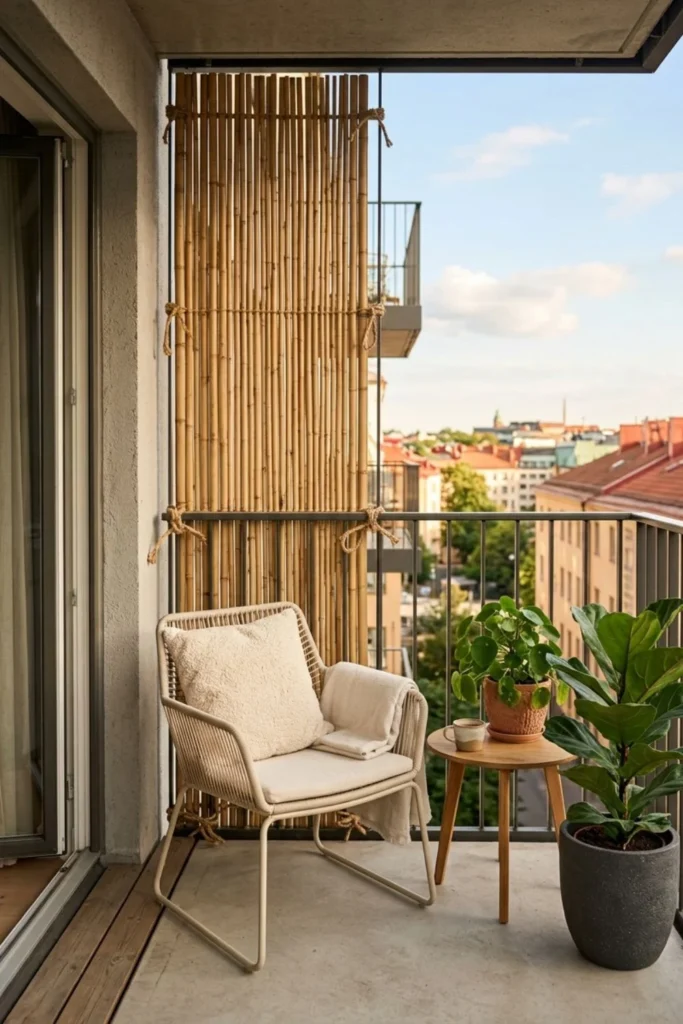
A bamboo or reed screen can make a close apartment balcony feel more comfortable. It works best when it blocks one distracting view rather than wrapping every side.
Before buying, confirm whether railing covers are allowed. A screen changes how wind passes through the balcony and may place extra pressure on the railing or ties.
Keep it fully inside the railing and attach it at several points according to the product and building rules. Loose corners can flap, tear, or become a hazard. A tall freestanding screen is not automatically safer because wind can overturn it.
Start with the lowest height that provides useful privacy while preserving air and daylight. Pairing the screen with a plant wall can soften the look, but avoid adding so much material that the space feels closed.
Renters should choose a system that can be removed without damage and should still get permission where required. Apartment owners need the same building approval when the railing is shared exterior property.
6. Choose a Compact Outdoor Sofa
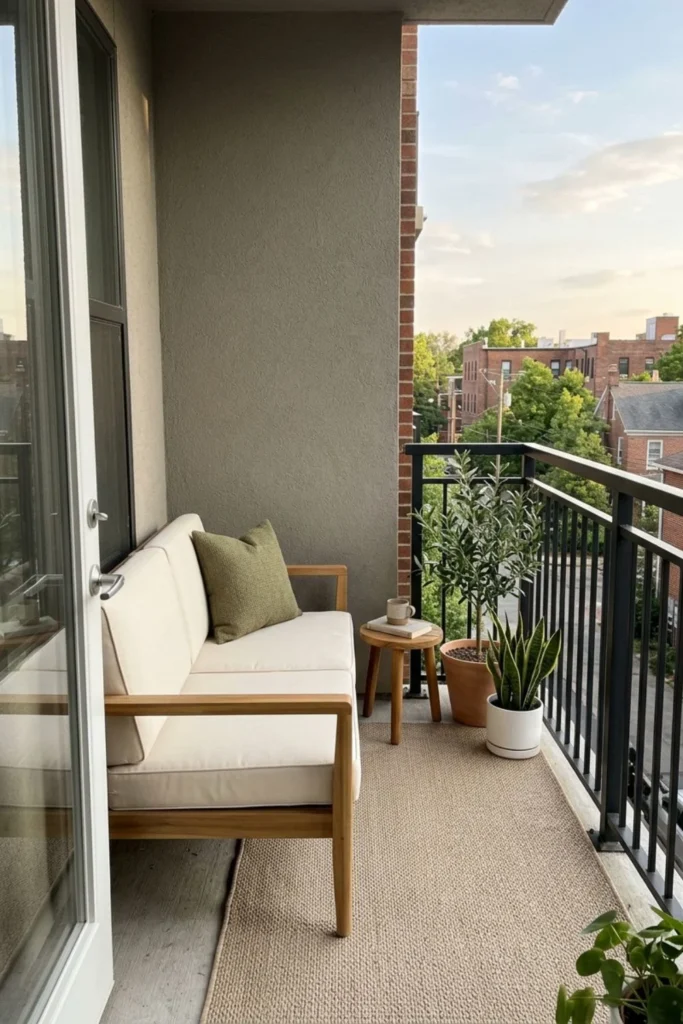
A two-seat outdoor sofa is comfortable, yet it can easily become the only thing that fits. Measure the frame, arms, and cushion depth rather than trusting the product label “compact.”
Use cardboard to mark the full sofa on the floor. Sit within the outline and check the path to the door. There should be room for knees, feet, and a small surface for a drink.
A raised frame keeps more floor visible and makes sweeping easier. Weather-resistant cushions with removable covers are more practical than many decorative pillows. One lumbar cushion may be enough.
Storage benches can be useful, but do not assume the inside will stay dry. Only store items that are suitable for the conditions, and avoid turning the seat into a heavy box that is difficult to move.
If the sofa leaves no open floor, choose one supportive chair instead. Comfort comes from the right seat, not from copying an outdoor living-room layout.
7. Think Carefully About a Floor-Cushion Lounge
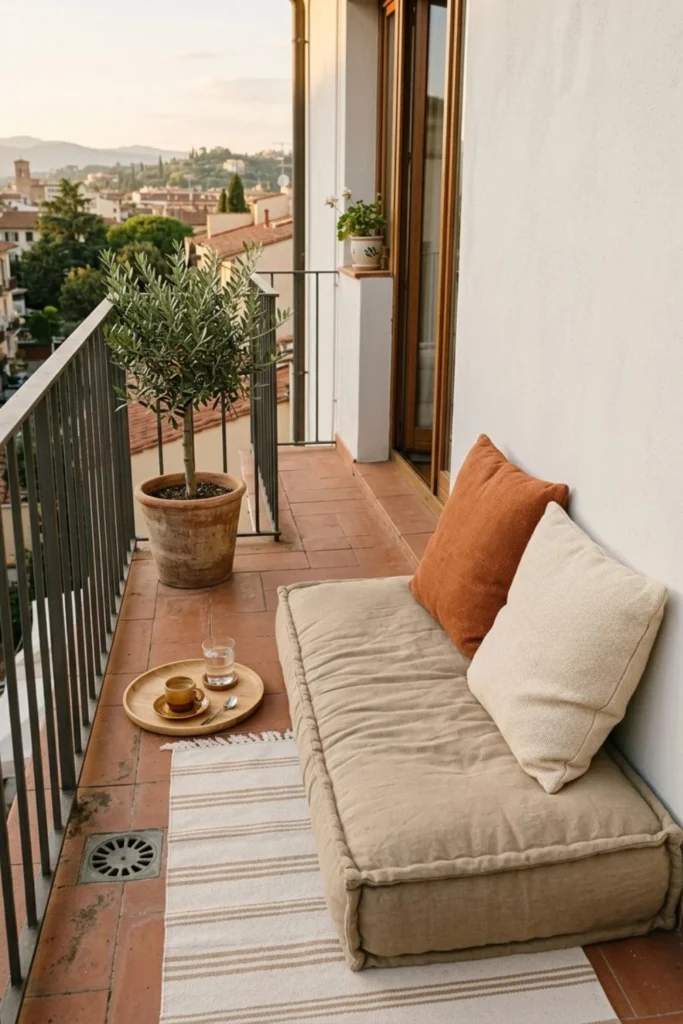
A floor-cushion lounge looks relaxed and works without permanent installation. It is also one of my lower-priority choices because the fabric sits close to dust, rainwater, heat, and the drain.
This setup makes the most sense on a covered balcony where cushions can be carried indoors after every use. Washable, outdoor-rated covers and a dry storage spot near the door are essential.
Do not place cushions directly against a damp wall. Keep the drain clear and lift the rug or base after use. A pallet-style platform also needs inspection, smooth edges, an outdoor-safe finish, and enough airflow underneath.
Low seating may be uncomfortable for anyone with knee or back problems. Try sitting at a similar height indoors before buying several cushions.
Choose this idea because you genuinely enjoy floor seating, not because the image looks bohemian. For most small balconies, a folding chair is easier to keep clean and use every day.
8. Use a Slim Balcony Bar Table
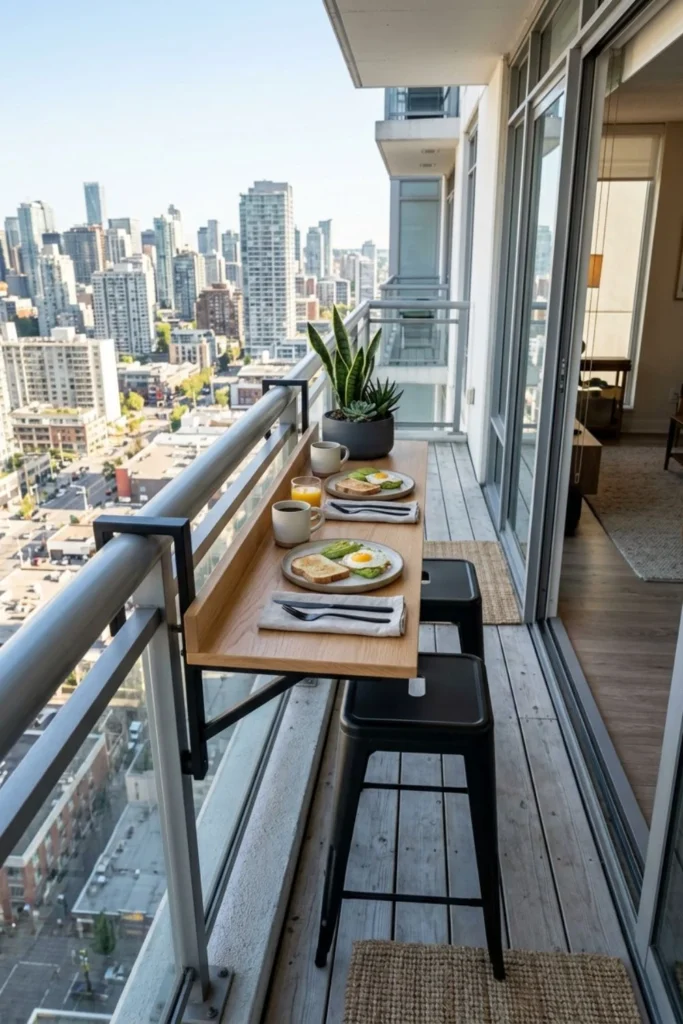
A narrow table can turn the railing side into a breakfast or laptop area while leaving the center more open. Freestanding designs are easiest to assess because they do not depend on the railing.
Railing-mounted tables require building permission and hardware made for the exact railing shape. They must remain inside the balcony and should never affect the railing’s safe use.
Check the table depth with a plate and your elbows. A surface that is too shallow may only work for a cup, while a deeper top can block the walkway. Stools should slide underneath or fold away.
Keep glass, electronics, and loose objects away from the outer edge, especially in wind. Remove everything when the balcony is not in use.
This idea suits a long, narrow balcony better than a square one. If the best view is from the side wall, a small folding table may provide a more comfortable direction to sit.
9. Add Color With Secure Railing Planters
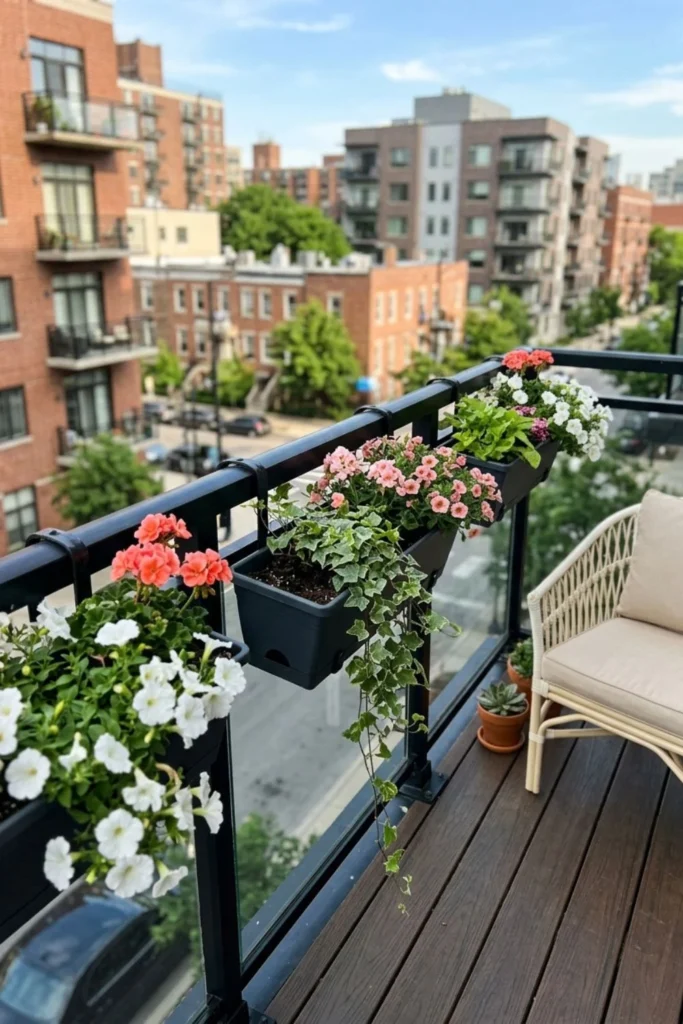
Railing planters lift flowers off the floor and bring color closer to eye level. The visual result can be cheerful, but safe mounting is non-negotiable.
Use planters and brackets designed for the railing size. Keep them on the inside unless building rules explicitly allow another installation. Add secondary security where the manufacturer or building requires it.
Wet soil is heavier than dry soil. Do not overfill boxes or attach more containers simply because there is open railing. Check brackets regularly and move planters before severe weather.
Use trays or self-watering containers to reduce dripping. Water slowly and make sure overflow cannot reach people or property below.
Two or three compatible colors create a calmer display than many unrelated flowers. Match plants to sunlight and wind, then remove damaged leaves so the limited group stays healthy.
10. Design a Calm Reading Nook
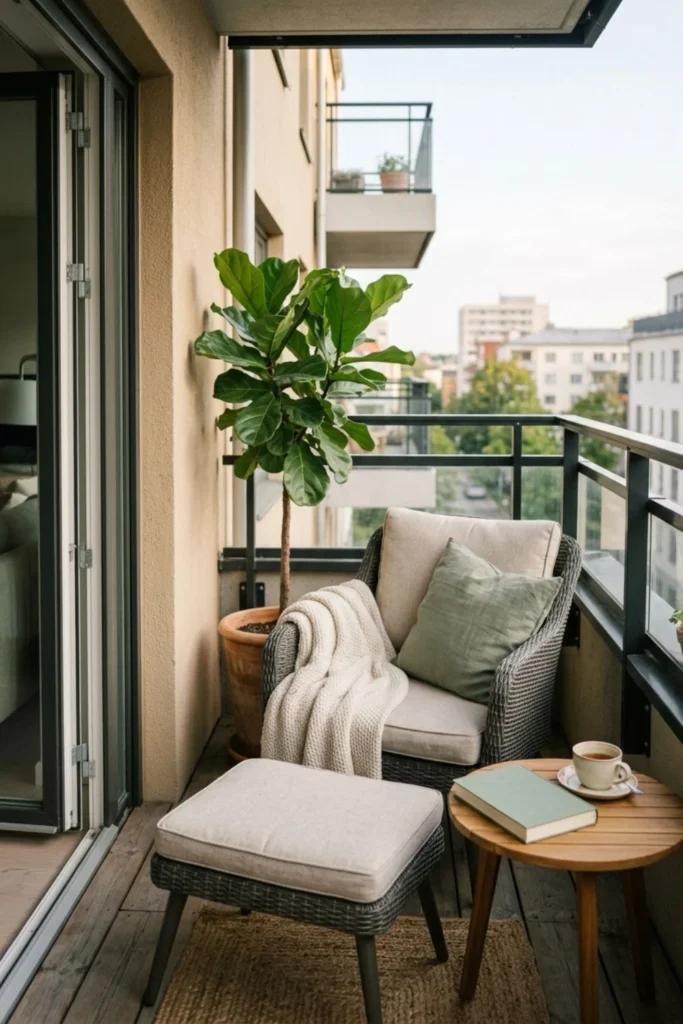
A reading nook is my second top choice because one good chair can give the balcony a clear purpose. It does not require a complete furniture set, and it can work in a corner that is too small for dining.
Start with back support rather than appearance. Sit in the chair before buying when possible. Check seat height, arm position, and whether your feet rest comfortably.
Place the chair where light is gentle during the time you expect to read. If afternoon sun makes the spot uncomfortable, move the chair or use an approved, securely fitted shade solution. A loose umbrella is risky in windy conditions.
Add only what helps the activity:
- A small stable table for a drink
- A footstool that can also serve as a table
- One plant that suits the light
- A rechargeable outdoor-rated lamp
- A washable throw carried indoors after use
Books should stay inside. Weather, dust, and sudden rain can damage them quickly. Carry one book out with your drink rather than creating outdoor book storage.
Face the chair toward the open sky, a plant wall, or the least busy view. This small decision can make the nook feel more private without adding another screen.
11. Bring In a Light Coastal Mood
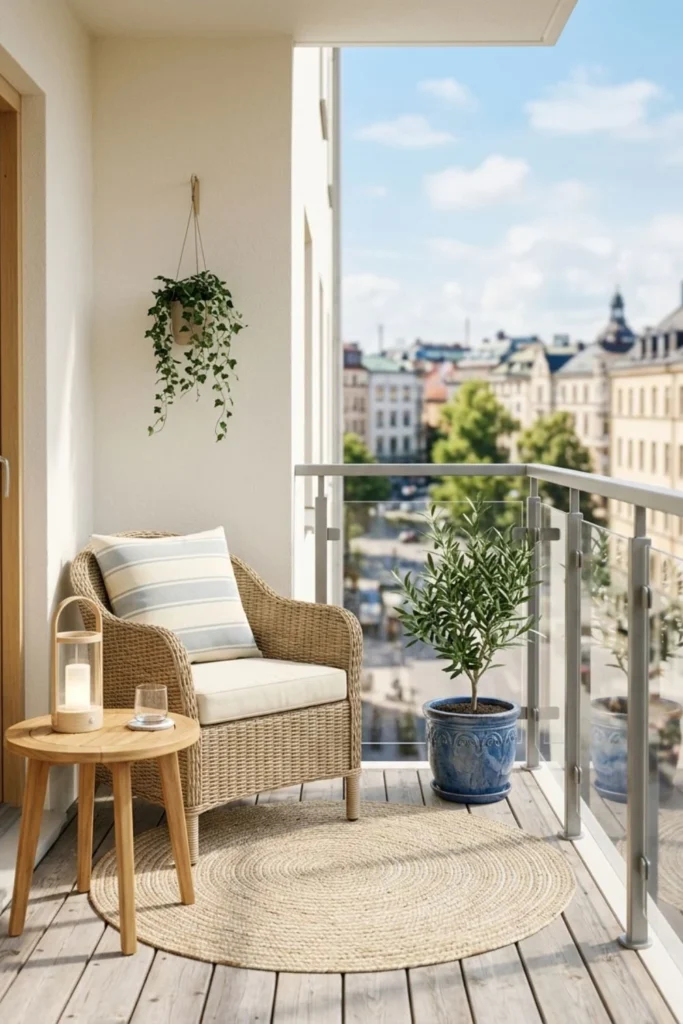
Coastal style can make a balcony feel bright without needing an ocean view. Use warm white, sandy beige, faded blue, and natural-looking outdoor materials.
The palette matters more than themed decorations. A striped cushion, pale planter, and woven outdoor rug are enough. Shell signs, anchors, and many blue accessories may turn a calm idea into a costume.
Choose weather-resistant materials rather than indoor wicker or untreated wood. Light colors show dirt sooner, so removable covers and washable surfaces are important.
This style works nicely with a breakfast corner or reading nook. Keep the furniture layout practical first, then add color through one or two replaceable items.
If your balcony is dusty or exposed to heavy rain, a natural mid-tone fabric may be easier to maintain than bright white.
12. Decide Whether a Water Feature Is Worth It
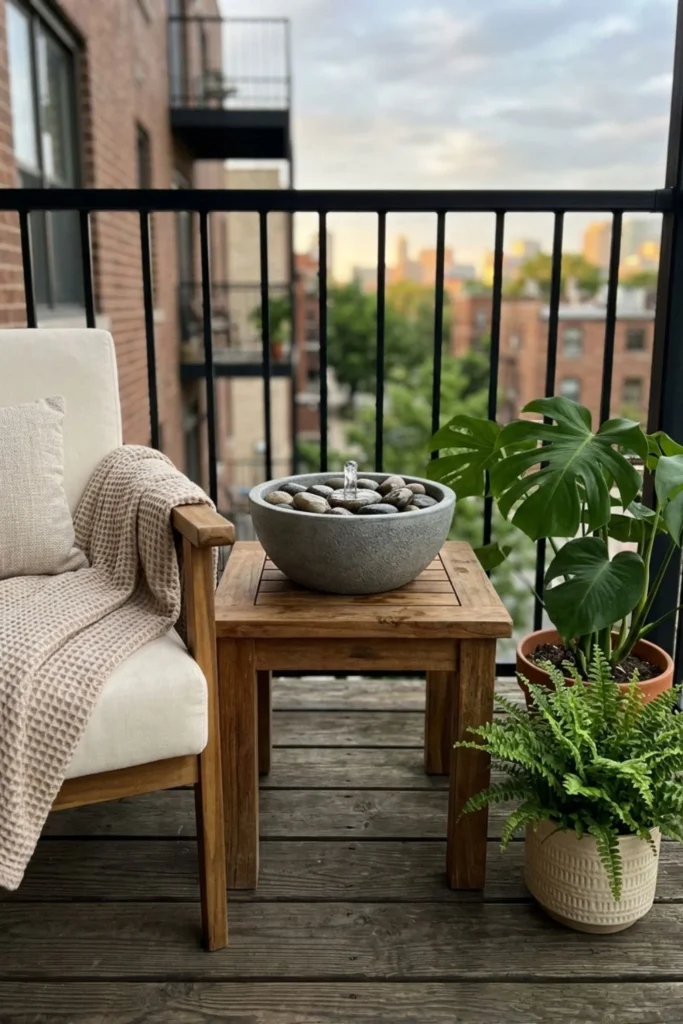
A small fountain may soften some background noise, but it is my second lower-priority idea. It adds a motor, water, cleaning, and possibly an electrical connection to an already exposed space.
Before buying, check building rules and confirm there is a safe, dry power arrangement. Use only equipment intended for the location and follow every manufacturer instruction. Never improvise an indoor cord for outdoor use.
The fountain needs a stable surface and should not splash onto the floor. Even a small amount of water can create a slippery patch. Children and pets also change the safety decision.
Standing water requires cleaning, and the pump may sound louder than expected in a quiet space. A fountain that is not maintained can quickly become less relaxing than the traffic noise it was meant to cover.
If you mainly want a calm mood, try leafy plants, a wind-safe textured screen, or quiet background audio from inside the apartment first. Choose the fountain only when you are willing to manage it regularly.
13. Grow a Small Herb Garden
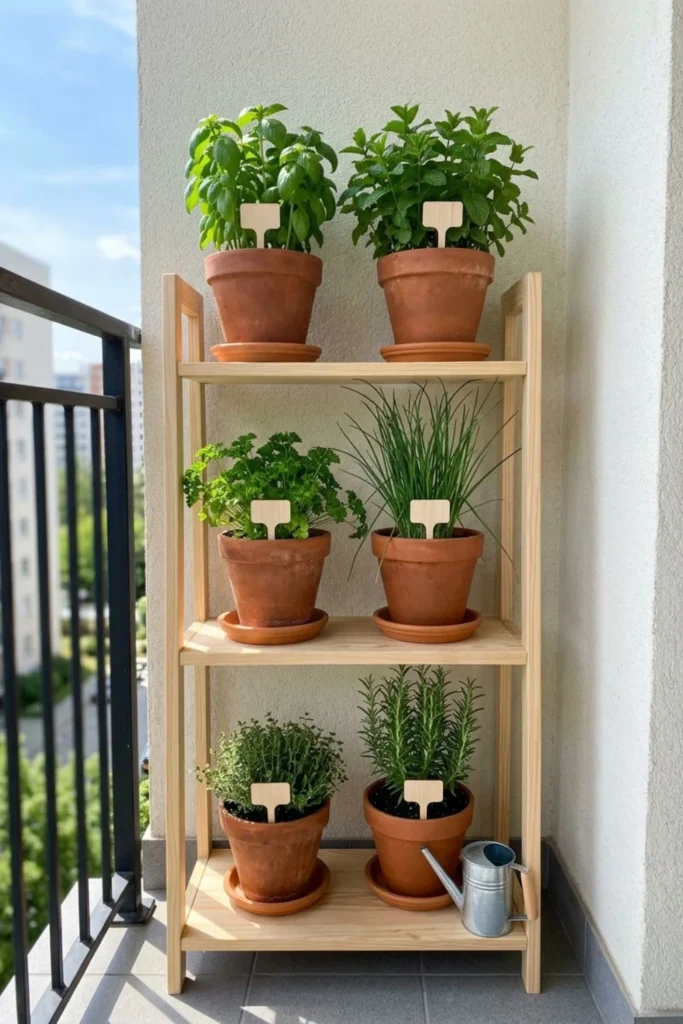
An herb garden gives the balcony color, scent, and a useful connection to the kitchen. It works best when the plants match the available light rather than a fixed online list.
Begin with two or three herbs you already cook with. Separate pots make it easier to respond to different water needs. Mint, for example, is easier to control in its own container.
Use pots with drainage holes and trays. Do not allow water to collect on the floor or drip below. A narrow freestanding shelf can use vertical space without attaching anything to the railing.
Place the most-used herbs at a comfortable height. Check soil more often during hot or windy weather because small pots can dry quickly.
Only eat plants you can identify and that were grown for culinary use. If pets or children access the balcony, confirm that every plant is suitable for them.
A garden does not need to look full immediately. Healthy growth over time will make three practical pots more attractive than a crowded shelf of struggling plants.
14. Make the Space Flexible With Folding Furniture
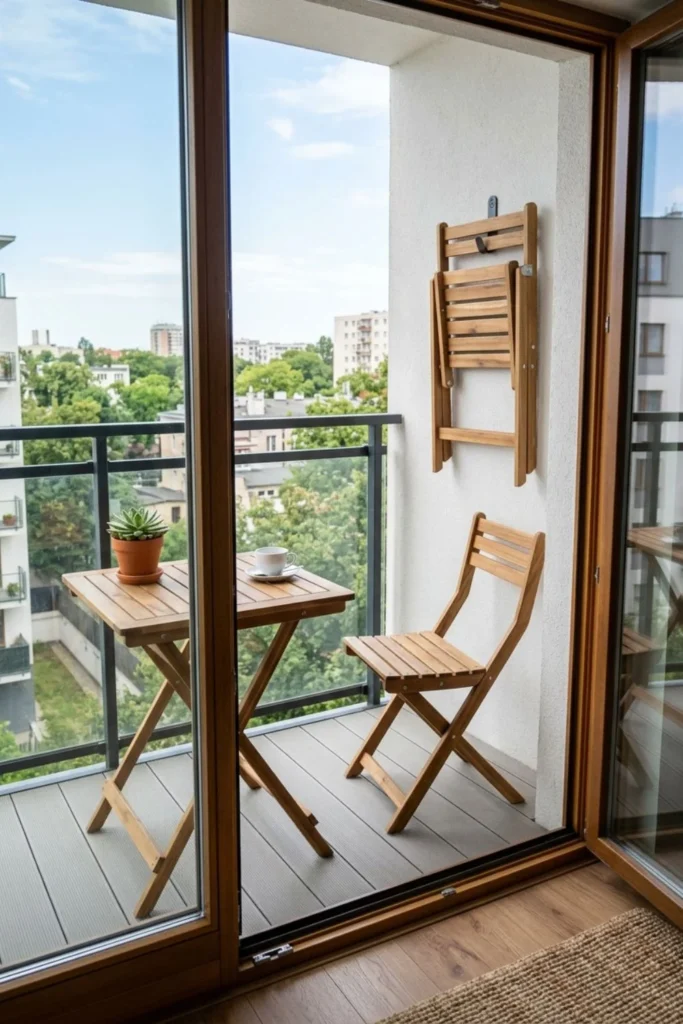
Folding furniture is my third top choice because a small balcony may need to serve more than one purpose. A table can open for breakfast, a second chair can come out for a guest, and the floor can clear again afterward.
Choose outdoor pieces with sturdy hinges and a clear locking position. Open and close them several times before buying if possible. The action should feel controlled rather than loose or difficult.
Plan where folded pieces will go. Leaning them against the railing is not safe, and an unapproved wall hook may not be allowed. A slim storage gap beside a solid wall or an indoor closet may be the better answer.
One chair and one small table may be enough for daily use. Store the second chair until it is needed. This keeps the balcony from being permanently arranged for a guest who rarely visits.
For renters, freestanding folding furniture offers change without drilling. Apartment owners also benefit because the balcony remains easier to clean and prepare for bad weather.
The design can still feel polished. Sealed light wood looks warm, black metal feels modern, and a neutral fabric seat adds comfort. The important feature is how easily the pieces disappear when the space needs to change.
15. Create a Simple Evening Retreat
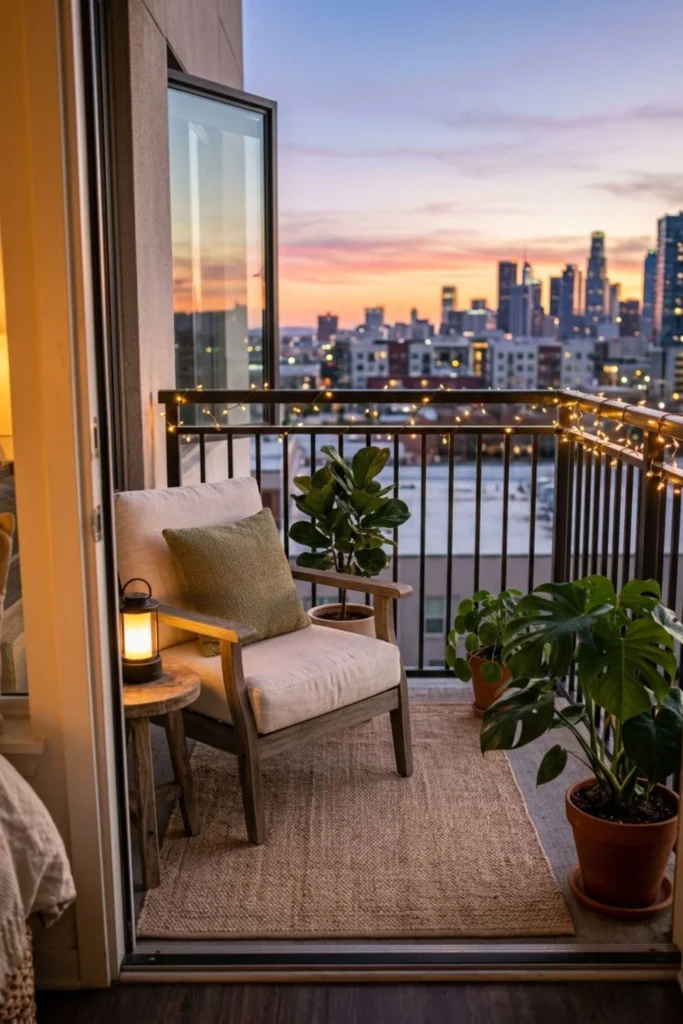
An evening retreat combines a comfortable seat, low light, and one pleasant view. It does not require every cozy accessory at once.
Begin with the chair you already selected for reading or breakfast. Add one outdoor-rated light source and a small table. Let the plant wall or railing planters provide the decoration.
A washable rug can soften the floor, but it should not cover a cord or drain. Bring throws and loose cushions indoors after use.
Choose one restrained color group, such as cream, olive, and warm wood. Repeating the same tones across a cushion, pot, and lamp creates calm without filling the balcony.
Turn lights off and remove loose items when you leave. A beautiful evening setup should take only a few minutes to close down safely.
The Three Ideas I Would Choose First
My first choice is the green plant wall because it changes both the balcony and the view from the room inside. A freestanding version can add greenery and soften a blank wall without using the center of the floor.
The reading nook comes next. It needs only one genuinely comfortable chair, a small surface, and the right direction to face. This is a realistic way to make the balcony part of daily life instead of a space used only for photographs.
I would also choose folding furniture because flexibility is valuable in a small apartment. The same balcony can hold breakfast in the morning and provide open floor later without storing a permanent dining set outdoors.
These choices can also work together. A folding chair can face a plant wall for reading, while a small table opens only when needed. The result has greenery, purpose, and flexibility without becoming crowded.
Two Ideas I Would Treat as Optional
The floor-cushion lounge makes sense only when the balcony is protected and the cushions can be moved and stored easily. If daily setup feels like a chore, the space may stop being used.
The water feature is even more dependent on conditions. It needs safe power, stable placement, regular cleaning, and building approval. Plants and a comfortable chair can often create calm with less maintenance.
Optional does not mean bad. It means the idea should earn its place through real use rather than appearance alone.
Keep the Balcony Safe, Clean, and Easy to Use
A five-minute weekly reset prevents a small balcony from becoming outdoor storage. Sweep the floor, wipe the table, remove dead leaves, and return indoor items to their place.
Use this simple routine:
- After wind: check screens, lights, brackets, pots, and folded furniture.
- After rain: lift rugs, dry cushions, empty trays, and check the drain.
- Every week: inspect plants and remove anything loose or damaged.
- Every month: clean behind stands and furniture where leaves collect.
- Before severe weather: bring light furniture, cushions, and loose decor indoors.
Do not store cardboard boxes, damaged furniture, or unused household items on the balcony. They take up the space needed for safe movement and may not withstand weather.
Leave some empty floor visible. Empty space is not a missing decoration; it is what allows the door to open, the balcony to dry, and a person to sit without feeling surrounded.
Final Thoughts
The most useful small apartment balcony ideas respect the size, weather, building rules, and daily habits of the person living there. A makeover should make the space easier to use, not harder to maintain.
Start by measuring and choosing one purpose. For greenery, use a carefully planned plant wall. For quiet time, build the layout around one supportive reading chair. For a balcony that changes throughout the day, choose folding furniture and decide where it will be stored.
Add privacy, lighting, rugs, or planters only after the main layout works. Treat floor cushions and water features as optional extras that require the right conditions and regular care.
A tiny balcony does not need to imitate a hotel terrace. When it offers a clear path, a comfortable place to sit, and one view you enjoy, it can already feel like a small break from the rest of the day.
Written and reviewed by Ali Hamza | Styled Room Living
Disclosure: Some visuals are AI-assisted design concepts created for inspiration. Always confirm measurements, materials, load limits, building rules, and installation requirements for your home.