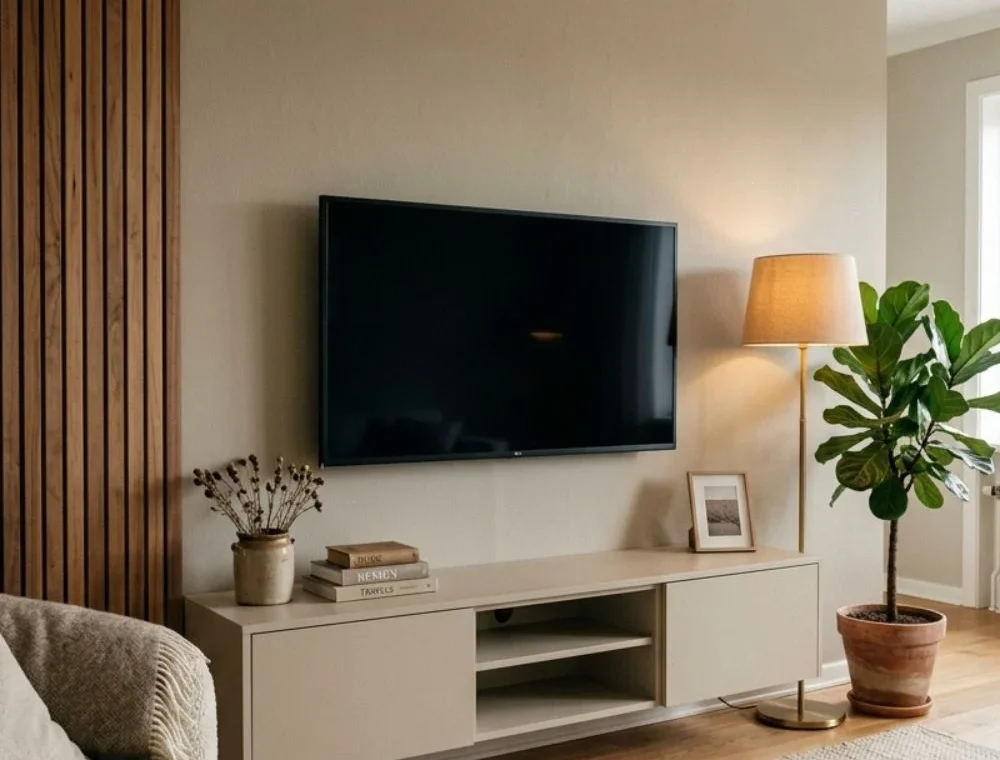
TV wall design ideas can make a living room feel calmer, but only when the wall works well after the photo is taken. A nice panel cannot fix a screen that is too high. A slim cabinet is not useful if the game console inside keeps getting hot. Hidden wires are not a success if you have to break the wall whenever a cable needs changing.
Written and reviewed by Ali Hamza | Styled Room Living
That is why I would begin with comfort, safety, and storage—not decoration. Stand in the room, notice where people walk, and sit in the seat you use most. Then decide where the TV belongs. Once that part feels right, paint, wood, shelves, and lighting become much easier to choose.
I also do not think every popular Pinterest TV wall belongs in a real home. Large stone slabs, glowing curves, and floor-to-ceiling cabinets can look impressive in a tall luxury room. In an average living room, the same features may cost a lot, gather dust, or make the space feel smaller.
Among these 19 ideas, my strongest choices are a simple floating console, a safe plan for wires and devices, and a light TV wall for a small living room. These three solve problems most homes actually have. The fireplace wall and the full “calm luxury” wall are weaker choices for many people because they can bring extra cost, heat, high screen placement, and difficult installation.
Use this list as a menu, not a shopping order. Pick one useful base idea and one finish you truly like. Your wall does not need every trend at the same time.
Start with the TV, Wall, and Viewing Position
Before buying panels or a new console, mark the TV shape on the wall with removable painter’s tape. Sit on the sofa for a few minutes and look at the center of that shape. If you lift your chin or feel pressure in your neck, the planned position is probably too high.
Check the view from the side seats too. A beautiful centered wall is not much help if the person in the corner chair sees only glare. Look at the wall in morning daylight and again after sunset. This simple check can reveal window reflections before you drill any holes.
Measure these five things:
- The full wall width and height
- The TV width, height, and weight
- The distance from the main seat
- The depth of the walking path
- The position of outlets, vents, and wall studs or solid supports
Next, list the devices that must live near the screen. You may need space for a router, streaming box, game console, soundbar, or charging cable. Every device needs a reachable cable route, and some need open space for airflow.
For child safety, treat a television and tall storage as real furniture hazards. The U.S. Consumer Product Safety Commission’s Anchor It guidance says TVs should be mounted or secured correctly, and a TV on furniture should sit on a sturdy unit designed to support it. Follow the TV, mount, cabinet, and fixing instructions for your exact products.
How I Would Compare These TV Wall Design Ideas
A good wall should answer more than “Does it look modern?” I would judge every option with five simple questions:
- Is the screen comfortable to watch? Style should not push it above a natural viewing position.
- Can the wall hold the weight? Decorative panels do not replace solid mounting support.
- Can heat escape? Media devices, lights, and fireplaces all need the space required by their makers.
- Can I reach the cables later? Internet equipment and screens change. A sealed wall can become an expensive problem.
- Can I clean it without a struggle? Deep grooves and crowded shelves look less exciting after they begin collecting dust.
Budget also matters. Paint and a suitable low console can create a more convincing result than cheap panels spread over the whole wall. Spend first on secure installation, sensible storage, and cable planning. Add the decorative finish only after those parts are settled.
1. Choose a Simple Floating TV Console
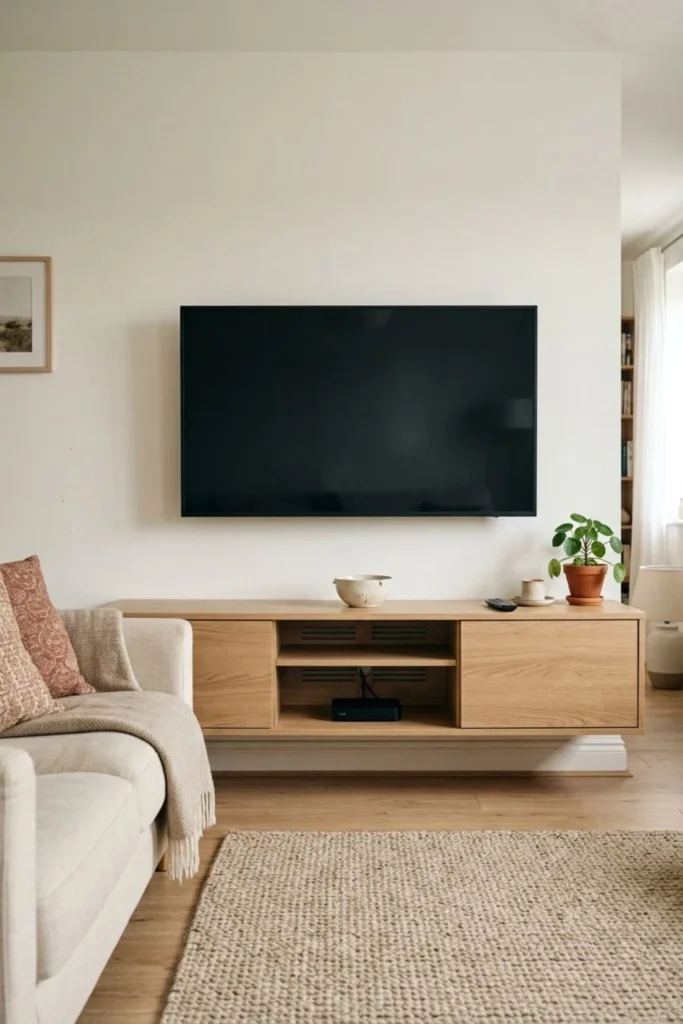
This is my first choice because it makes a visible difference without turning the whole room into a building project. A floating console gives the TV a clear base, hides everyday clutter, and leaves more floor visible. That open strip can make a normal living room feel lighter.
The console should usually look wider than the screen, not like a tiny shelf under a large black rectangle. Before ordering, place tape on the wall to show the cabinet width and depth. Open an imaginary door with your hand and check that it will not hit a nearby chair or block the walking path.
Inside, I would choose closed storage for remotes and small items, plus one ventilated section for equipment that makes heat. A game console should not be packed into a tight cupboard simply to keep the wall neat. Leave the clearances required by the device maker.
The wall and fixings must support the loaded cabinet, not only its empty weight. Plates, devices, books, and children pulling on an edge can change the load. If the wall type or fixing point is uncertain, ask a qualified installer.
A true floating cabinet is not the only answer. In a rental or a home with an unsuitable wall, use a low console with slim recessed legs. From normal standing height, it can still look light while placing most of the weight safely on the floor.
For styling, keep the top simple:
- One low bowl or small vase
- A single stack of two books
- One object with a soft, rounded shape
- Plenty of empty space below the screen
I would skip tall candles, branches, or frames that cover the bottom of the TV. The strongest version of this idea is quiet, useful, and easy to live with.
2. Add Warm Wood Slat Panels
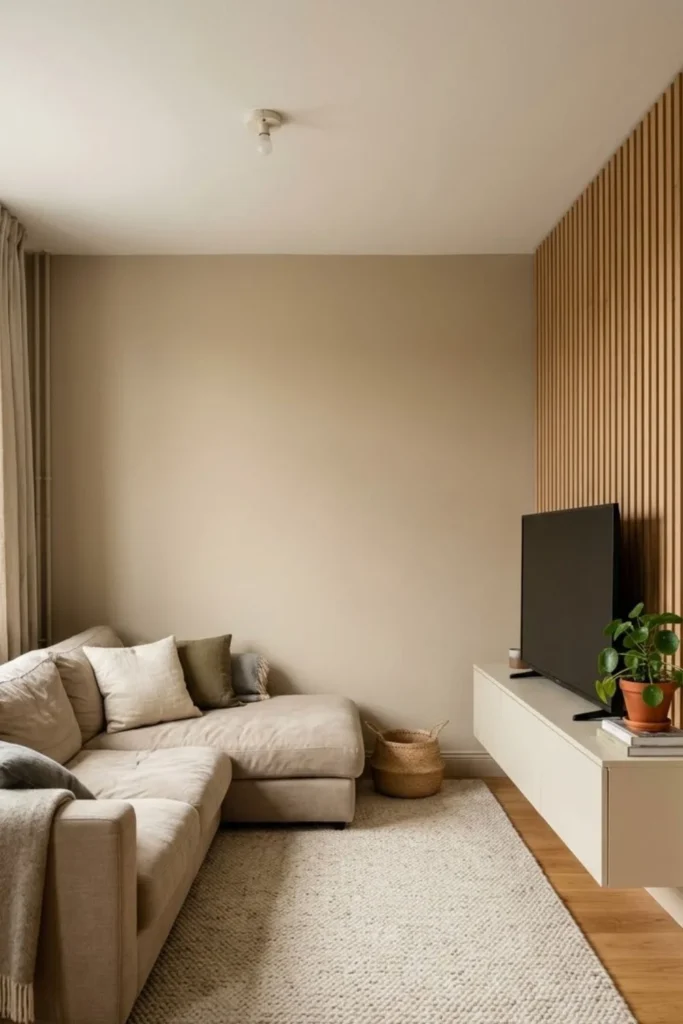
Wood slats add warmth and vertical lines, but a full grooved wall can feel busy. I prefer a smaller section beside the TV, with the screen on calm paint. Repeat the wood once in the console or coffee table.
Check a sample in daylight and under your evening bulbs; pale oak may turn yellow, while walnut can become very dark. Choose lines you can dust easily. Plan panel edges, outlets, cables, and the mount first. Decorative slats may not support a TV, so the bracket must reach the correct structure behind them.
3. Use a Soft Beige Textured Wall
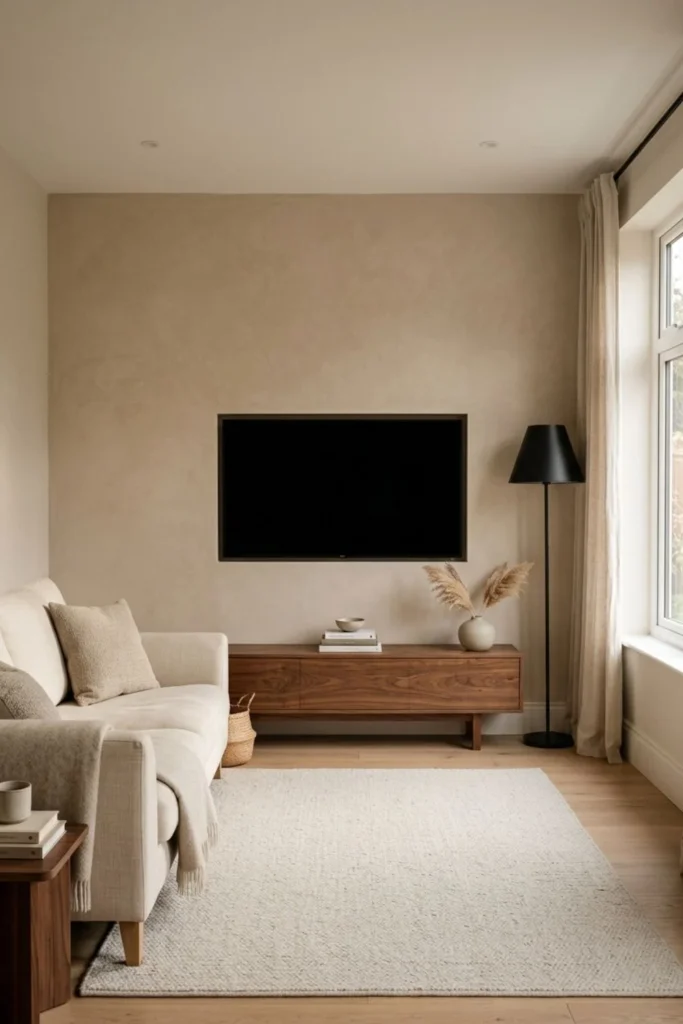
A warm beige, taupe, or greige wall softens the contrast of a black screen. It is also easier to change than permanent panels, making it a sensible first makeover.
I would keep the texture fine. Deep ridges collect dust and fight with moving pictures. Test a large sample for two days because beige can look pink, yellow, or gray in different light. Finish with a walnut console, one lamp, and open space rather than extra wall decor.
4. Try Neat Fluted Wall Panels
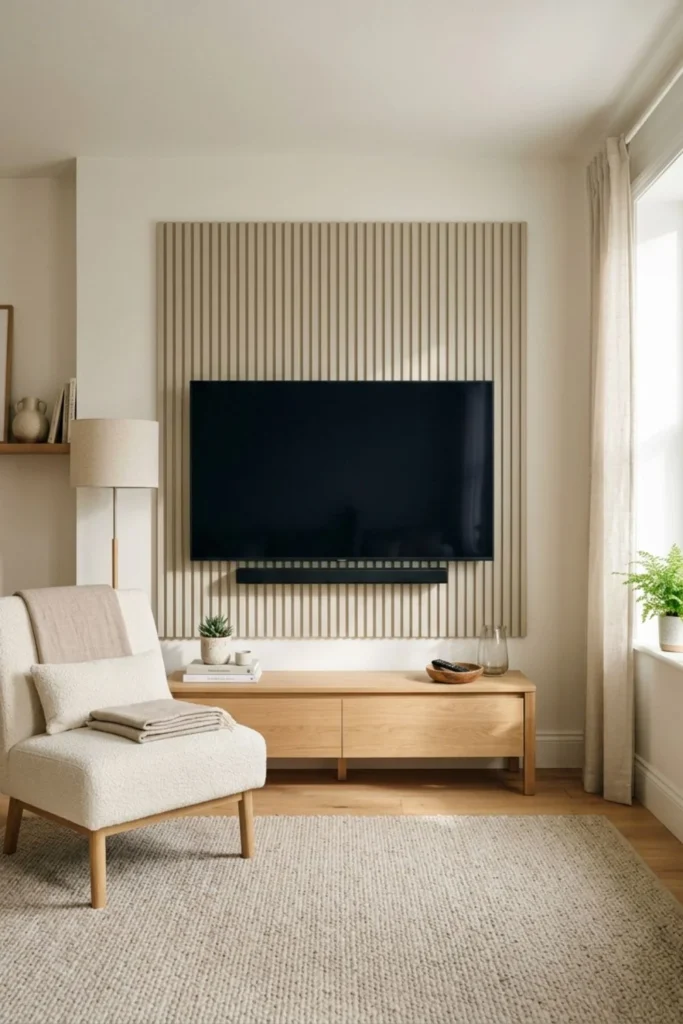
Fluted panels can make a simple wall feel finished. Use one clean rectangle or a narrow section beside the TV, then keep art and shelves limited.
Measure where every line will meet the screen and console. I like warm white, pale greige, muted sage, or natural wood; dark fluting can feel heavy in a small room. Plan cables and outlets before fitting it. The mount may need to pass through the panel into solid support because the decorative surface may not carry the TV.
5. Build Low Storage Across the Wall
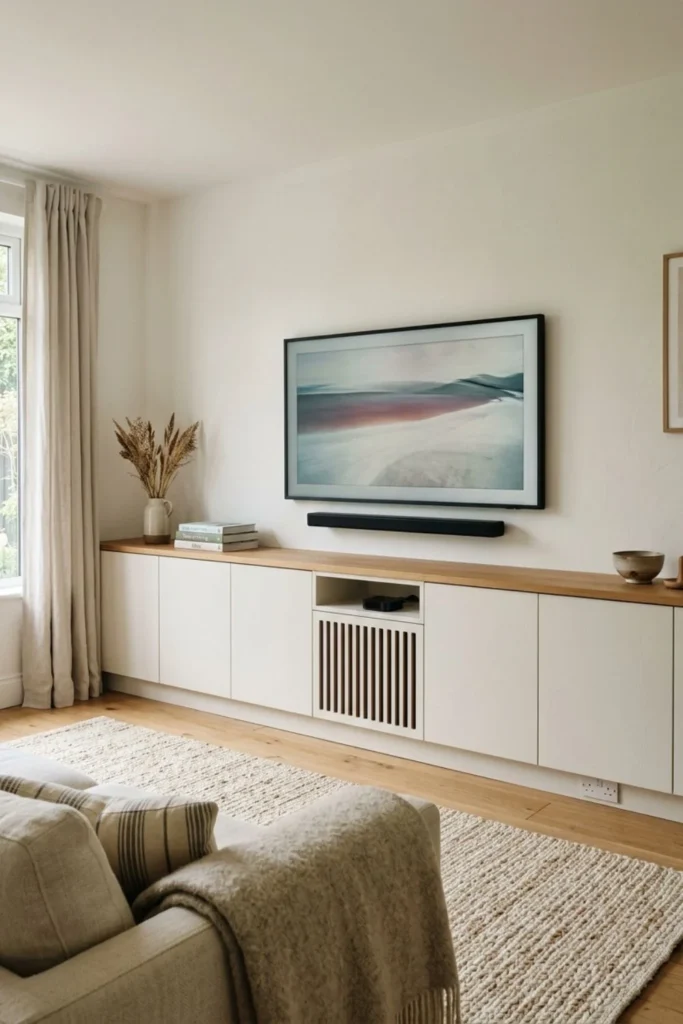
Long low cabinets can hold games, toys, blankets, and media items while making a narrow room appear wider. Measure what you need to store before choosing the depth; extra-deep units can steal walking space.
Use doors for clutter and one ventilated opening for active devices. Keep vents, radiators, sockets, and skirting access clear, and test every door in the room plan. I would display only two or three low objects on top. The unit works best when it removes mess instead of creating a longer surface to fill.
6. Style Asymmetrical Floating Shelves
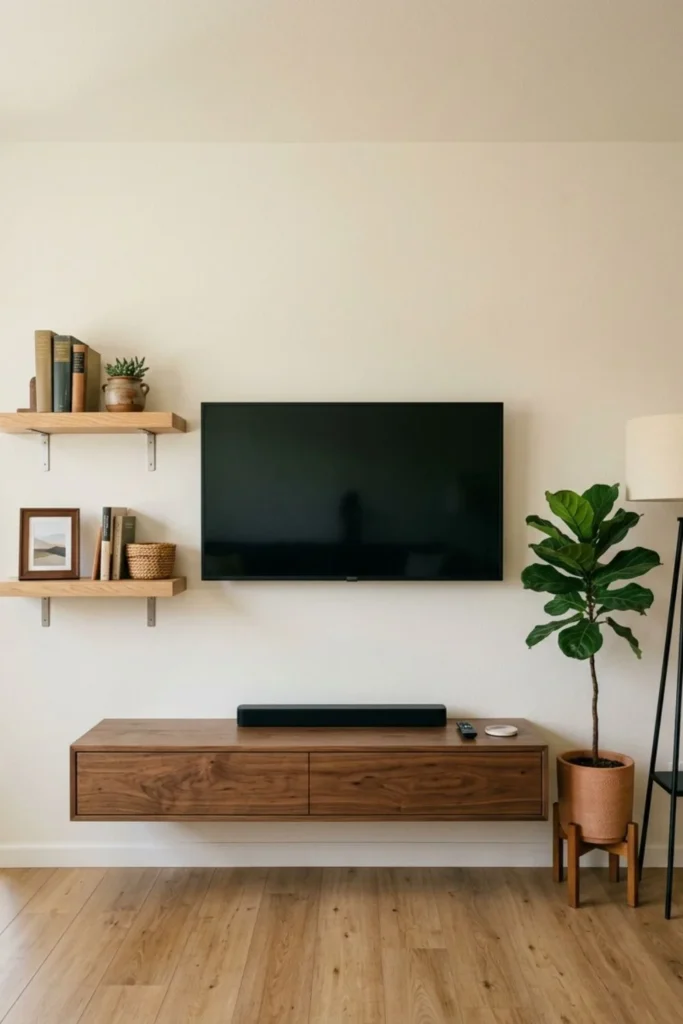
When the TV cannot be centred, two shelves on one side can balance a plant or floor lamp on the other. Match their finish to one material already in the room.
Keep a clear border around the screen and use only a few books, one ceramic piece, and a personal photo. Check the fixings and stated load, and place heavy or breakable objects lower. The layout may look relaxed, but it should not depend on an overloaded floating shelf.
7. Frame the TV with Tall Cabinets
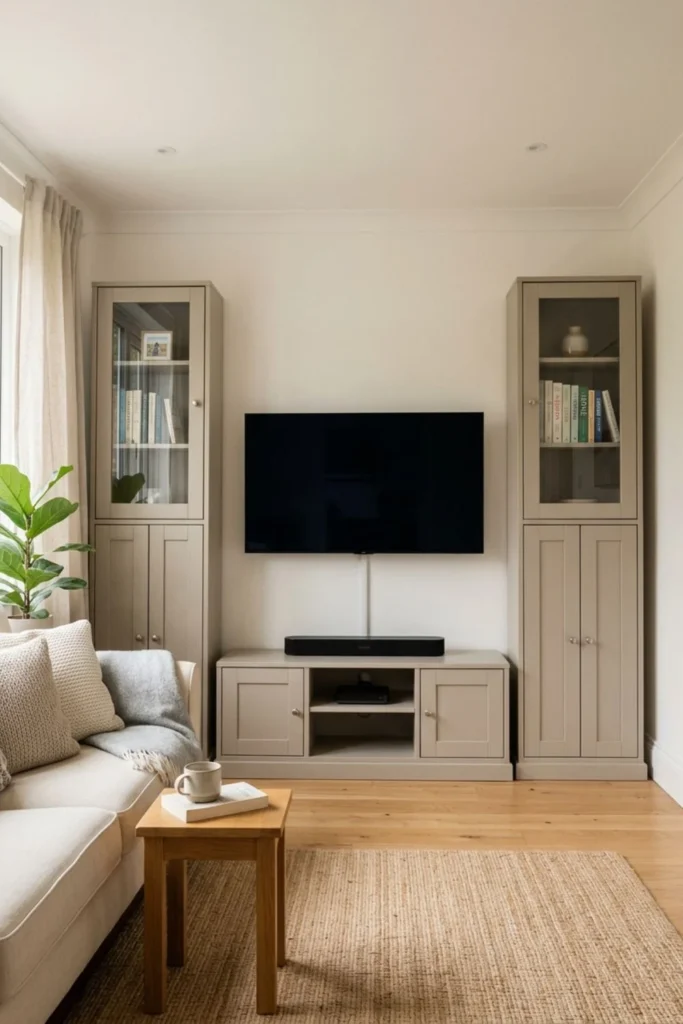
Tall cabinets suit a wider family room that needs storage, but leave enough space around the television for airflow and a future replacement. A tight opening quickly feels boxed in.
I would use simple doors in the wall color, with solid lower storage and only a few open upper shelves. Glass adds reflections and cleaning. Secure tall units correctly, keep heavier items low, and avoid tempting toys at the top. In a narrow room, shallow light cabinets feel kinder than dark towers.
8. Create a Dark Charcoal Feature Wall
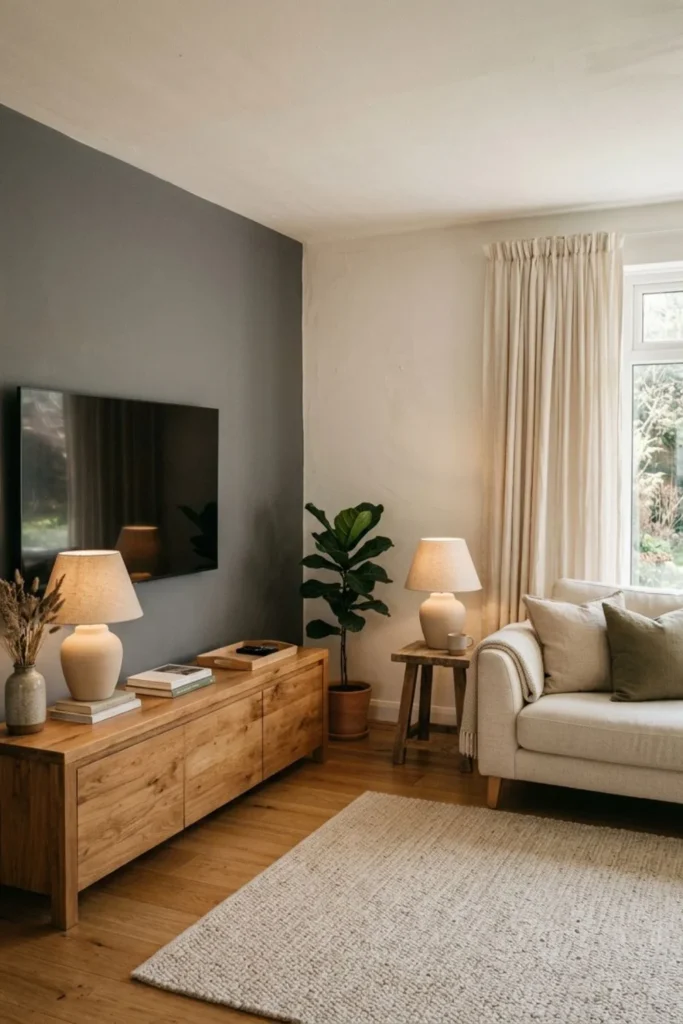
Soft charcoal helps a powered-off black TV blend into the wall. Keep nearby surfaces and the ceiling light, then add warm wood and pale fabric for balance.
Test a large paint sample if daylight is limited. Use a shaded lamp, but check its reflection from the sofa. I would avoid black shelves and a crowd of dark objects; the goal is a cozy background, not a heavy entertainment cave.
9. Add a Soft Limewash or Plaster Finish
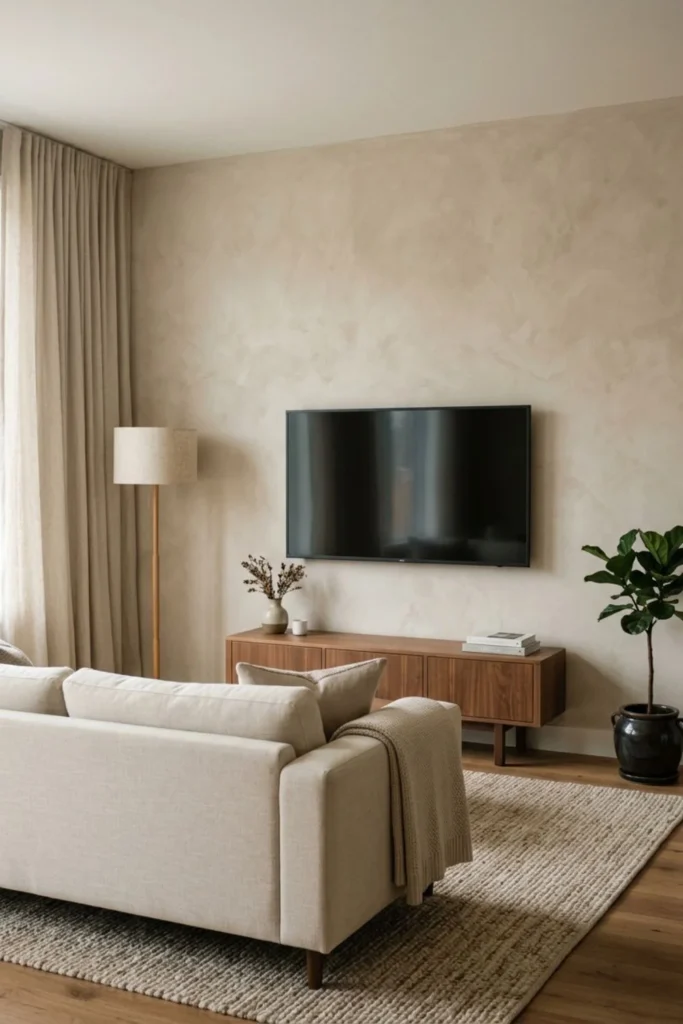
Limewash and plaster-look finishes give sand, mushroom, or warm gray walls gentle movement. Some are simple paints, while true lime or plaster may need special preparation.
Ask what suits your wall and whether it can be wiped or repaired. Test the finish on a board because every brush or trowel mark remains visible. Pair it with one low wood console and quiet fabric. It should add warmth from across the room, not act like a dramatic photo backdrop.
10. Use Realistic Stone-Look Panels
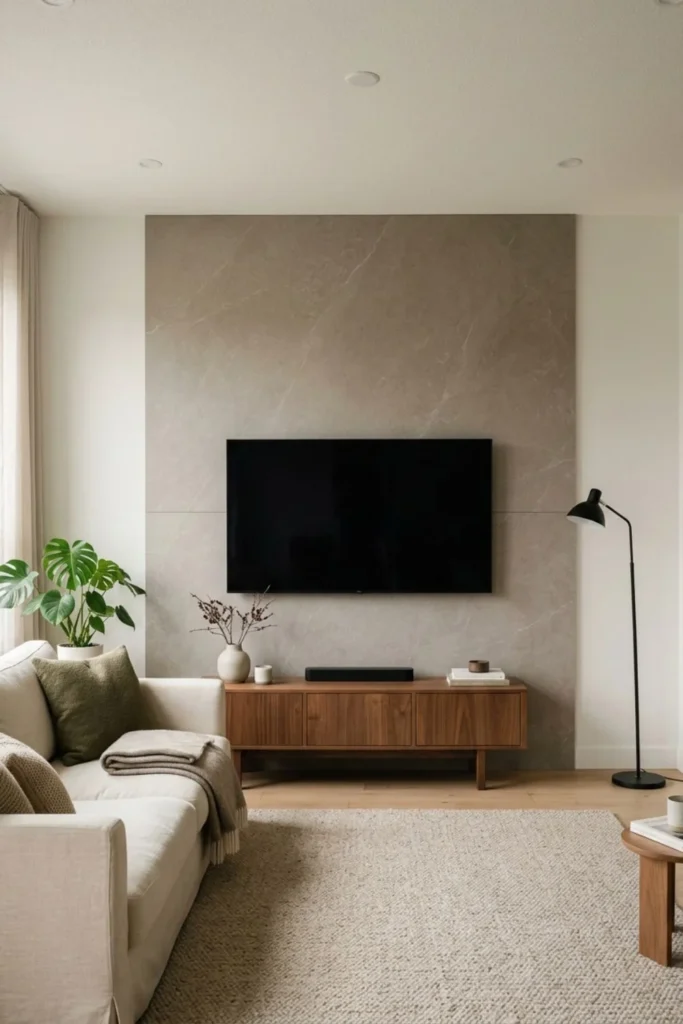
Stone creates a strong centre, so I would use one calm matte panel with gentle lines. Shiny or highly veined surfaces reflect lamps and compete with the screen.
Large slabs can be heavy and difficult to cut. Confirm the wall, adhesive, joints, and mounting method for the actual product; the TV bracket still needs proper structural support. Pair the panel with plain wood or paint. On a limited budget, a careful paint finish often looks more honest than a thin plastic marble copy.
11. Combine the TV Wall with a Fireplace
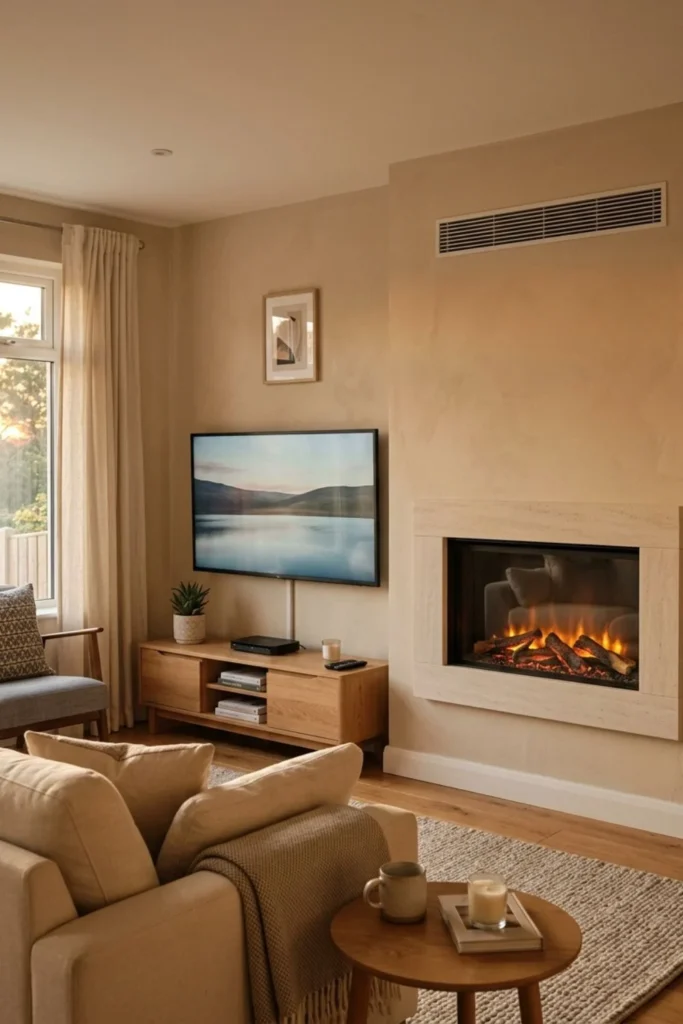
This is one of my weaker choices for most ordinary homes. A fireplace under the TV can force the screen too high, and the wall must deal with heat, ventilation, wiring, combustible materials, and two different sets of installation rules.
The Pinterest image does not tell you the fireplace model, heat output, wall construction, or clearance behind the finish. That missing information matters more than the pretty stone or glowing flame.
A side-by-side arrangement is often easier to watch because the television can stay lower. Even then, both features need their required space, access, and safe support. Follow the fireplace and television manufacturers’ instructions, and use qualified fireplace, electrical, and mounting professionals where needed.
I would only choose this plan when the room layout truly benefits from it and the full installation can be confirmed before decoration begins. If the screen position feels uncomfortable or the heat requirements are unclear, put the TV on another wall. A separate fireplace and TV can still look connected through one paint color or repeated wood finish.
12. Hide Wires and Devices the Safe Way
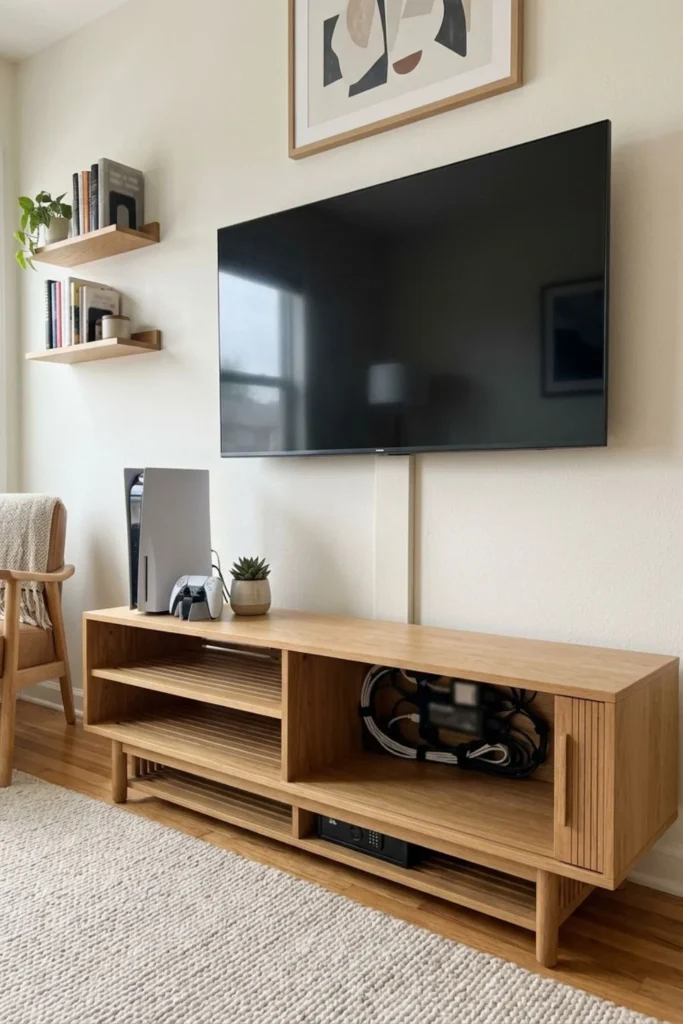
This is my second strongest recommendation because clean wiring changes the whole wall. More importantly, a cable plan makes devices easier to use, cool, replace, and repair.
Plan it before the TV or panels go up. Write down every connection you need:
- TV power
- Soundbar power and signal
- Internet or antenna connection
- Streaming box
- Game console
- HDMI cables
- Spare route for a future device
Place devices where their remote, ventilation, and service access will still work. A small open shelf inside the console is often better than a fully sealed cupboard. Do not pack power adapters into a tight pile or block air openings to make the photo look tidy.
Use cable clips, sleeves, or a paintable surface raceway when they are suitable for the products and your wall. Surface covers are not a design failure. They are easy to inspect and change, which can make them smarter than a sealed hidden route.
Never push an ordinary flexible power cord through a wall just because the hole is hidden. Electrical rules and approved products vary by location. If a new outlet or in-wall power solution is needed, ask a qualified electrician and follow local requirements.
Leave a gentle service loop where the equipment maker allows it, label both ends of important cables, and avoid sharp bends. Keep leads away from hot surfaces, pinching doors, and walking paths.
When children can reach the area, secure cords and the TV so they cannot be pulled. A good hidden-wire setup should pass one simple test: you can explain where every cable goes and reach it without damaging the finished wall.
13. Add Gentle Backlighting Behind the TV
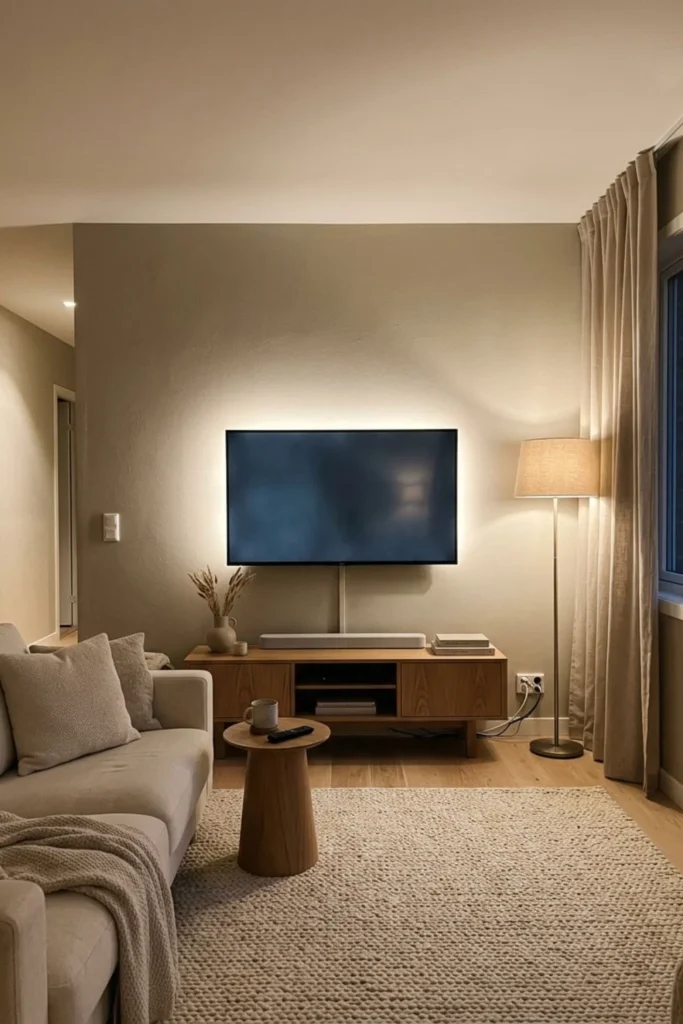
Soft backlighting can reduce the contrast between a bright screen and a dark room. Choose one steady white light, keep its dots or strip hidden from the sofa, and add a normal floor lamp so the room is not black.
Follow the product instructions for placement, power, and ventilation. Route its lead with the cable plan without blocking air openings. I would skip rainbow colors and lights under every shelf; one even glow feels calmer and is easier to maintain.
14. Design a TV Wall for a Small Living Room
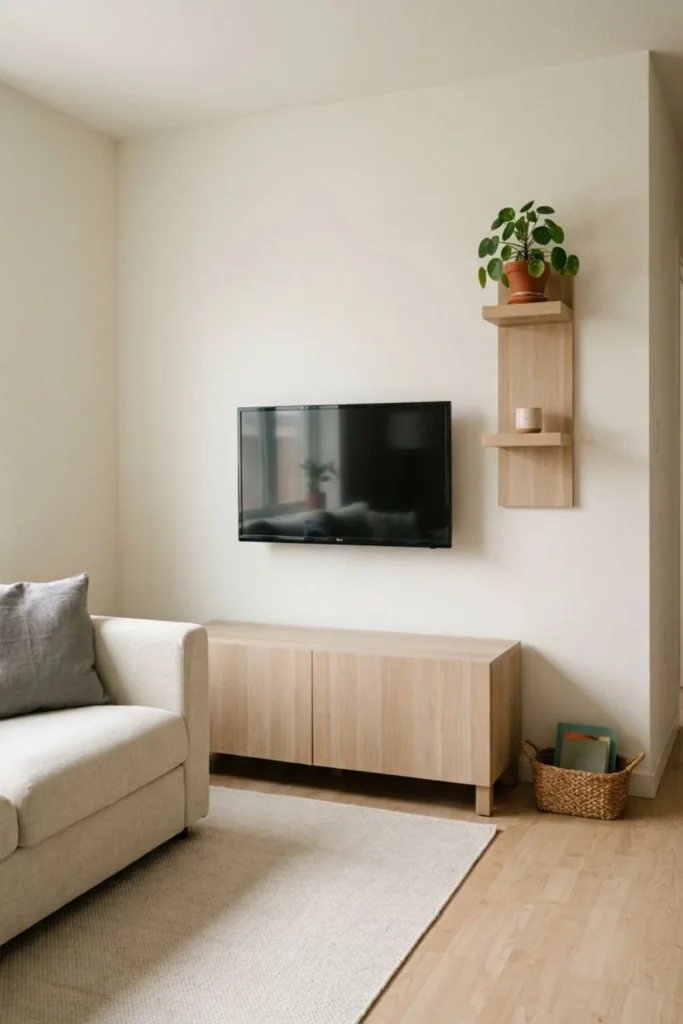
This is my third strongest choice because a small room benefits from restraint more than any luxury feature. The aim is not to make the wall look larger in a photo. It is to protect real walking space and make daily viewing comfortable.
Start with the TV size and sofa position. A very large screen can dominate a short viewing distance, while a tiny screen may be hard to see. Use the manufacturer’s guidance and test a taped outline from your normal seat.
Choose a shallow console, preferably with useful closed storage. A wall-mounted unit can expose more floor, but a narrow floor-standing console may be simpler and safer for your wall. Both can look modern.
Use one calm wall treatment:
- Warm white or soft greige paint
- A narrow wood panel on one side
- A small fluted section
- One light texture with little contrast
I would avoid thick stone panels, deep cabinets, two tall towers, and shelves wrapping around the screen. These features can reduce the room visually and physically.
Measure the path between the console and coffee table. Open cabinet doors in your plan. Check whether someone carrying a tray or laundry basket can walk through without turning sideways.
Keep only one medium plant or lamp beside the unit. Closed storage should hold loose remotes and cables, while the top remains mostly empty. If a mirror is nearby, test it for screen glare before fixing it.
Photographs often use wide-angle lenses that make compact rooms appear bigger. Trust your tape measure, not the image. A simple wall with correct proportions will feel more polished than a crowded “luxury” setup squeezed into limited space.
15. Make a Corner TV Wall Feel Balanced
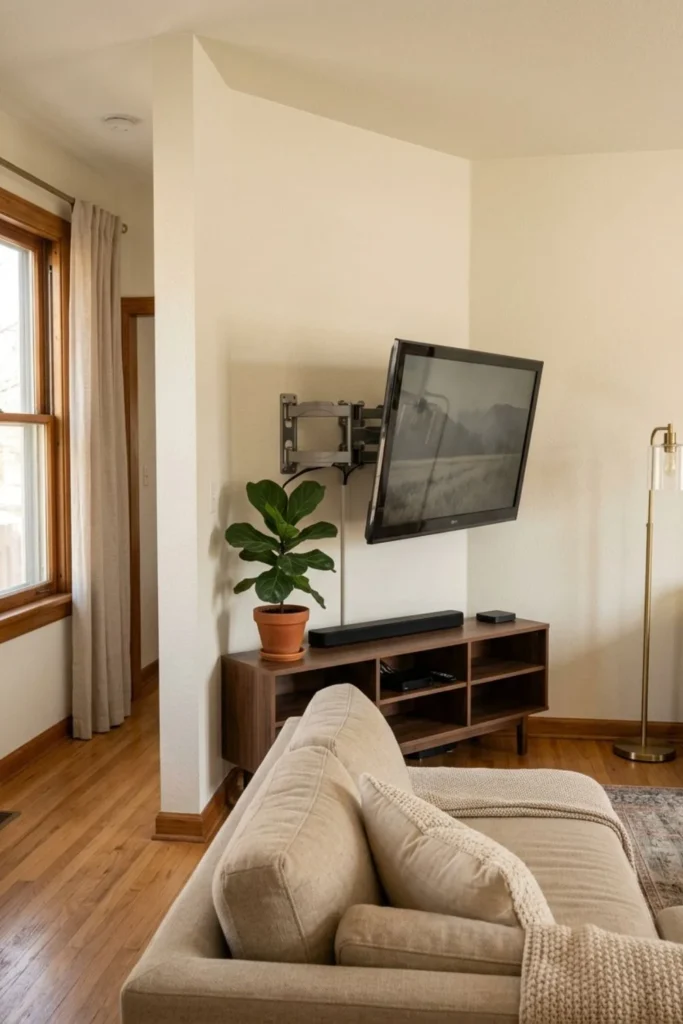
A corner can be the right choice when doors or windows interrupt the main walls. Use a suitable corner console or an adjustable mount, then test the angle from each regular seat.
Make sure the screen cannot strike curtains, furniture, or the wall. Cables need controlled extra length so they do not stretch or pinch, and devices need air in the tighter space. One plant or floor lamp can balance the open side without crowding the corner.
16. Blend the TV into a Gallery Wall
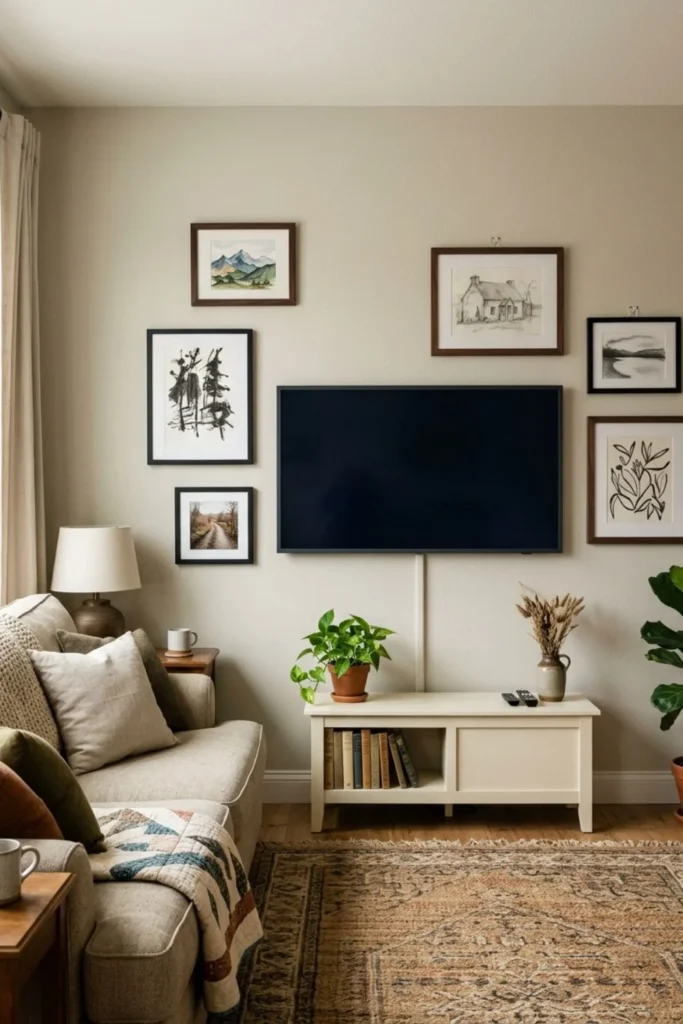
A gallery wall works best when the pictures mean something to you. Lay frames on the floor, then tape paper shapes to the wall and keep a clear border around the screen.
Use a limited frame palette and choose family photographs, travel pictures, or art you enjoy. I would avoid many tiny prints that cannot be seen from the sofa. Fix every frame safely, especially heavy glass. The arrangement should look pleasant when the TV is off without making viewing tiring.
17. Decorate the TV Wall with Plants
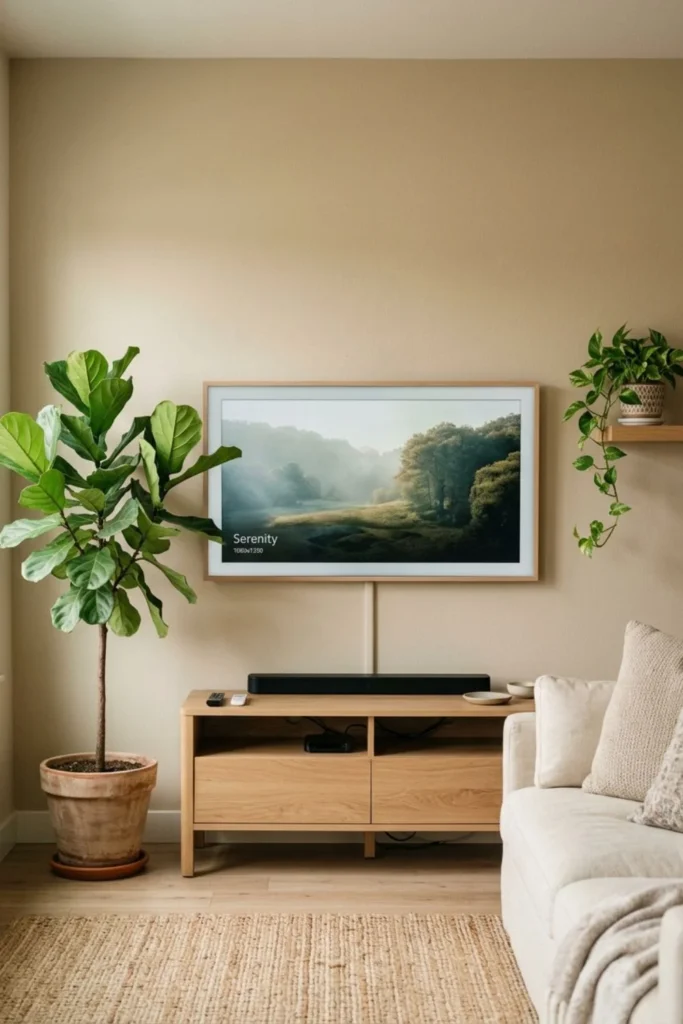
One medium floor plant and one small shelf plant can soften the hard edges of a TV wall. Choose them for the room’s actual daylight and check safety around children or pets.
Use waterproof saucers and keep water, leaves, and soil away from electronics, vents, controls, and cables. If the room is too dark, one believable artificial plant is better than several unhealthy pots. Plants should support the wall, not turn it into a crowded indoor jungle.
18. Create a Rental-Friendly TV Wall
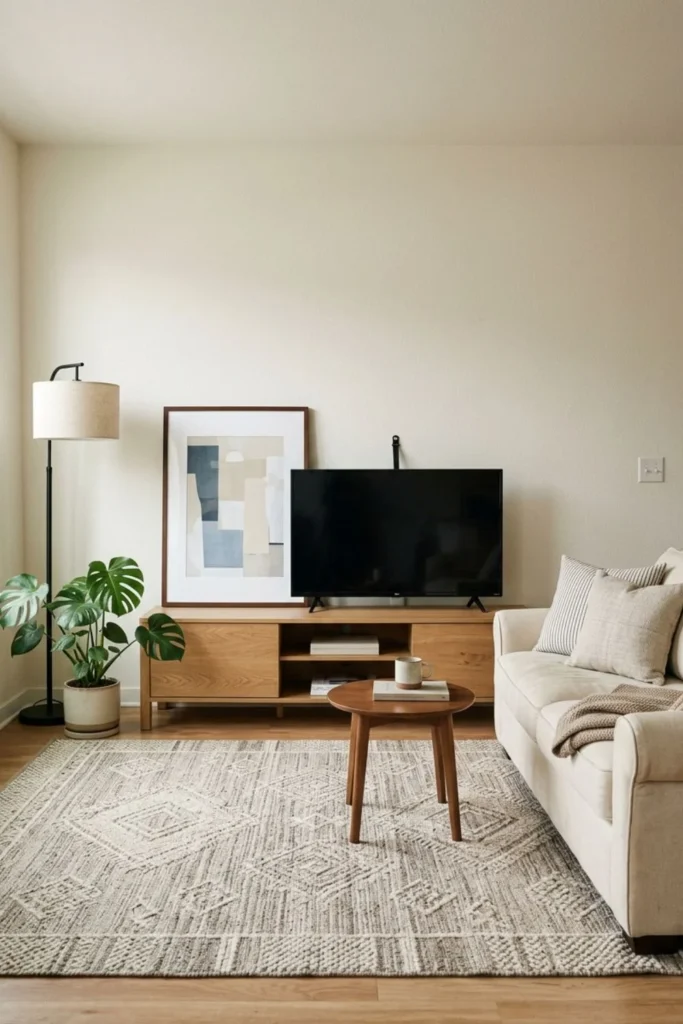
Renters can use a sturdy low console, floor lamp, plant, rug, and tidy surface cable cover instead of permanent panels. If mounting is not allowed, place the TV on its correct stand and follow the maker’s anti-tip instructions.
Check the rental agreement before drilling or using adhesive; “removable” products can still damage paint. Choose furniture that can work in another home. A safe, balanced group of movable pieces is more honest and useful than trying to imitate a built-in wall.
19. Build a Calm Luxury TV Wall
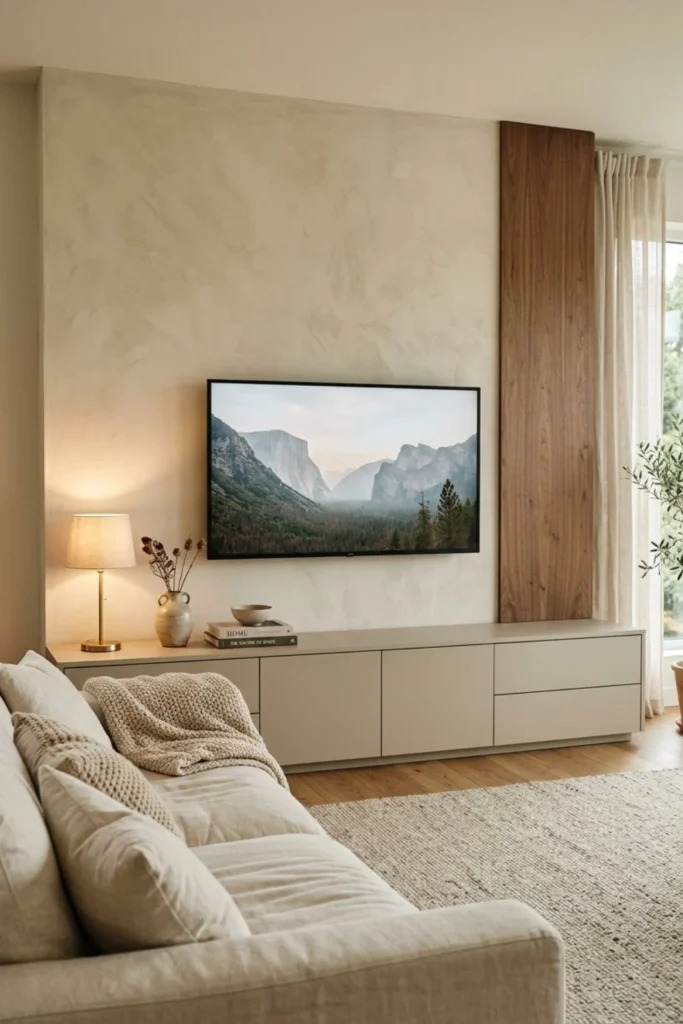
This is another weaker choice when “luxury” means copying an expensive staged room. Giant slabs, custom curves, hidden doors, and many LED lines need skill, maintenance, and a budget that the photograph does not show.
A calmer approach is to borrow one detail. Choose a good walnut console, a soft plaster finish, or one matte stone-look panel. Combine it with simple paint and useful storage.
I would spend on secure mounting, accurate cabinet work, quiet hinges, cable access, and materials that look good in your actual light. Those details create quality every day. Gold trim and glowing edges cannot hide doors that do not line up or devices that overheat.
Limit the wall to two main finishes and one small metal accent. Leave room around the screen and keep the styling low. Real luxury feels calm because nothing is fighting for attention.
If the room is small or the budget is tight, skip the full custom wall. A well-sized console, carefully painted background, and warm lamp can look more genuine than a cheap copy of a large designer installation.
The Three Changes I Would Make First
If the current TV area feels messy, do not start by covering the wall. I would make changes in this order:
- Fix the viewing position. Test the height and angle from the main sofa.
- Create a safe cable and device plan. Decide where power, signal cables, and hot equipment will go.
- Add the right console. Choose useful storage with a width and depth that suit the room.
Only then would I choose paint, wood, fluting, or a small amount of stone. This order protects the budget because the decorative finish will not need to be removed when an outlet or mount must move.
For many homes, the final design can be simple: soft greige paint, a wide low console, a correctly supported TV, one lamp, and hidden but reachable wires. That combination is not boring. It is flexible, easy to clean, and friendly to future changes.
Two Ideas I Would Treat as Optional
The fireplace wall and the full luxury wall can both work, but neither should be treated as a standard upgrade.
Choose a TV-and-fireplace wall only after viewing height, heat, ventilation, materials, wiring, and product instructions have been checked. If one requirement forces a poor screen position, the layout is not worth copying.
Choose a luxury wall only when the materials, labor, and future access fit the budget. Ask how the TV will be replaced, how the cables will be reached, and how a broken light strip will be repaired.
A strong room does not need either feature. Good proportions and useful storage will usually improve daily life more.
Keep the TV Wall Safe and Easy to Maintain
Dust can block air openings and collect inside slats, fluting, and media shelves. Use the cleaning method recommended for the screen and each wall finish. Never spray cleaner directly onto electronics.
Every few months, look behind the console. Remove unused cables, check for damaged cords, and make sure adapters are not trapped under objects. Keep air routes open around devices.
Check wall fixings and anti-tip hardware according to product directions, especially after moving furniture. CPSC guidance also recommends keeping cords out of children’s reach and placing heavier objects lower.
Leave some spare room for change. A future TV, router, or game system may have a different shape. Reachable cables and adjustable shelving will save time later.
Finally, look at the wall when the TV is off. If the shelves feel crowded, remove a few things. If the wall feels cold, add one warm lamp or repeat a wood tone from elsewhere in the room. Small corrections often work better than another permanent feature.
Final Thoughts
The best TV wall design ideas begin with how the room is used. A comfortable screen position, secure support, reachable wiring, device airflow, and a clear path through the room matter more than a dramatic background.
My first choices remain the simple floating console, a safe hidden-wire plan, and a restrained layout for a small living room. They solve visible problems without making the wall difficult to change.
Wood slats, fluting, textured paint, plants, or soft light can then add character. Pick one or two, not all of them. Treat the fireplace and full luxury wall as optional projects that need more planning and professional input.
A modern TV wall should feel believable when the camera is gone. Keep it calm, useful, safe, and suited to your actual home. That is the version you are most likely to enjoy every day.
Disclosure: Some visuals are AI-assisted design concepts created for inspiration. Always confirm measurements, materials, load limits, building rules, electrical safety, furniture stability, child and pet safety, heat and fireplace clearances, ventilation, and installation requirements for your home.