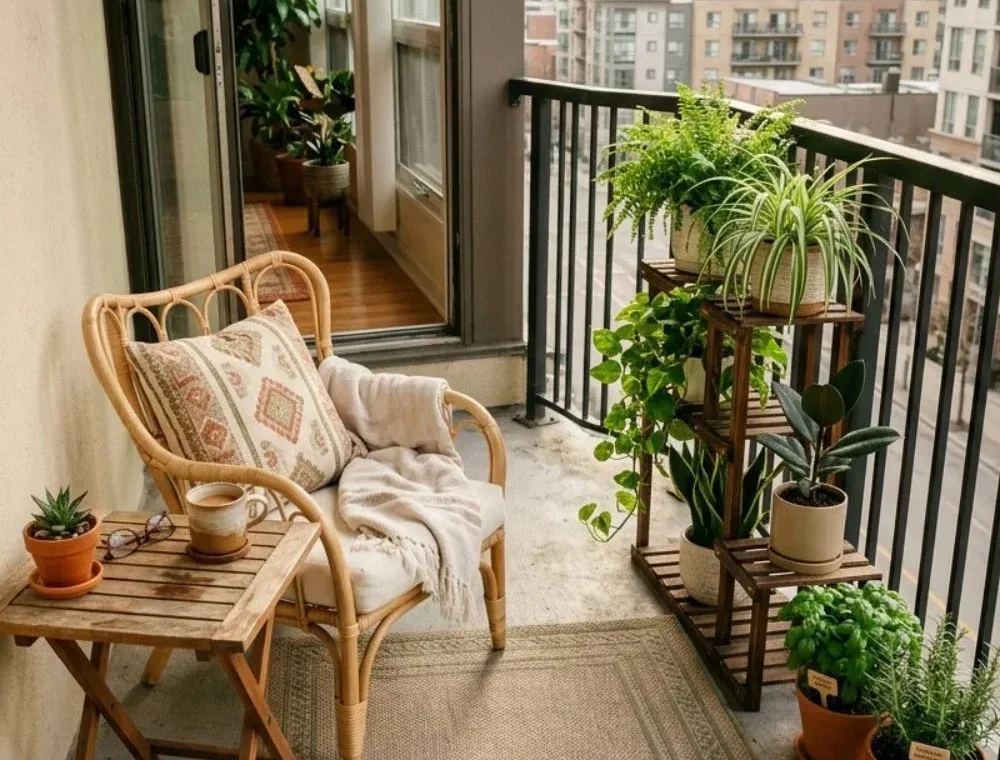
Small Balcony Makeover with Plants usually goes wrong for one simple reason: people buy the plants before they understand the balcony. A cart full of pots looks exciting at the garden center. Back home, the door hits a planter, the chair blocks the drain, and the sun turns out to be much stronger than expected.
A better makeover starts with the conditions you already have. That means measuring the floor, watching the light, noticing the wind, and checking the building rules. Plants are living parts of the room, not green accessories that can be placed anywhere.
My strongest ideas are one comfortable chair, a tiered green corner, and a small herb garden in the sunniest spot. These choices give the balcony a purpose, use height without covering every wall, and provide plants you may actually use.
I’m more cautious about railing planters and electric string lights. Both can work, but only with the right approval, secure products, and weather-safe installation. A planter falling outside the railing or an indoor-rated cord left in rain isn’t a small decorating mistake.
The ideas below suit renters, apartment owners, pet households, and anyone trying to improve a narrow outdoor space without rebuilding it. If you need more layout inspiration before choosing plants, the guide to small apartment balcony ideas is a useful companion.
Plan a Small Balcony Makeover with Plants Before Buying
Measure the floor length and width, then draw the balcony as a simple rectangle. Add the full door swing, railing, drain, outlet, wall lights, air-conditioning equipment, and any area that building management says must stay clear.
Mark furniture and pots on the floor with painter’s tape. Aim to preserve a main path around 30 to 36 inches wide where the space allows. A narrower existing balcony may not reach that range, but the door, drain, and exit route still need to work without moving furniture.
Watch the balcony at several times over two clear days. Write down where direct sun falls and for how long. University of Minnesota Extension notes that many vegetables and flowers need at least six hours of sun, while shade plants need a different plan.
Also check wind after sunset and during poor weather. A balcony several floors up may feel calm near the door but rough at railing height. Illinois Extension recommends stable containers and warns that exposed balconies are especially prone to plants tipping in wind.
Before shopping, confirm:
- The building or lease rules for drilling, railing boxes, screens, lights, and visible changes
- Balcony weight limits with the building owner, manager, or qualified professional
- Whether water can drain without dripping onto neighbors
- The exact plant names and pet safety
- Where cushions, lights, and tender plants will go during storms or winter
The USDA Plant Hardiness Zone Map can help U.S. readers choose perennials for winter temperatures, but it doesn’t replace the balcony’s own sun, heat, and wind conditions.
A Realistic Balcony Makeover Budget
These are rough U.S. planning ranges for decorating an existing safe balcony. They do not include structural repair, waterproofing, railing replacement, or building a new balcony.
| Makeover level | Typical contents | Rough cost |
|---|---|---|
| Simple start | One chair, two or three pots, potting mix, small table | $200–$600 |
| Comfortable setup | Better seating, five to eight plants, rug, storage, lighting | $600–$1,500 |
| Polished small balcony | Durable furniture, larger pots, privacy planting, coordinated textiles | $1,500–$3,500+ |
If the balcony needs structural, railing, electrical, or waterproofing work, stop treating it as a decor project. Angi’s 2026 balcony cost guide shows how quickly professional work can reach thousands of dollars.
1. Begin with One Comfortable Chair
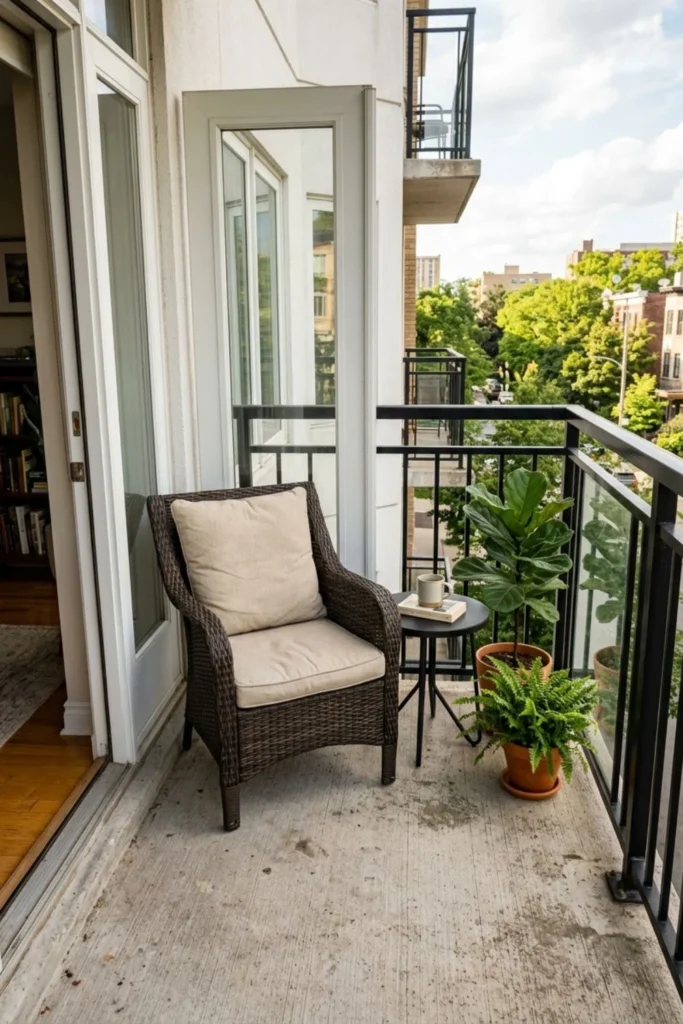
One good chair is a stronger starting point than a tiny sofa squeezed against the railing. Place it where you can sit without moving pots and where the back doesn’t block the door. A chair gives the balcony a clear purpose before plants start filling the floor.
- Size and requirements: Allow roughly 26 to 32 inches wide and 28 to 36 inches deep, plus legroom. Choose one outdoor-rated chair and one compact side table.
- Method and cost: Tape the footprint, test the view, then add the table on the less windy side. Budget $100–$450 including one weather-ready cushion.
- Pros: Comfortable, easy to rearrange, and realistic for a narrow balcony.
- Cons: Seats one person and still needs dry storage for the cushion in severe weather.
I would choose a chair with open legs rather than a bulky solid base. More visible floor usually makes a small balcony feel calmer.
2. Add a Compact Two-Seat Bistro Set
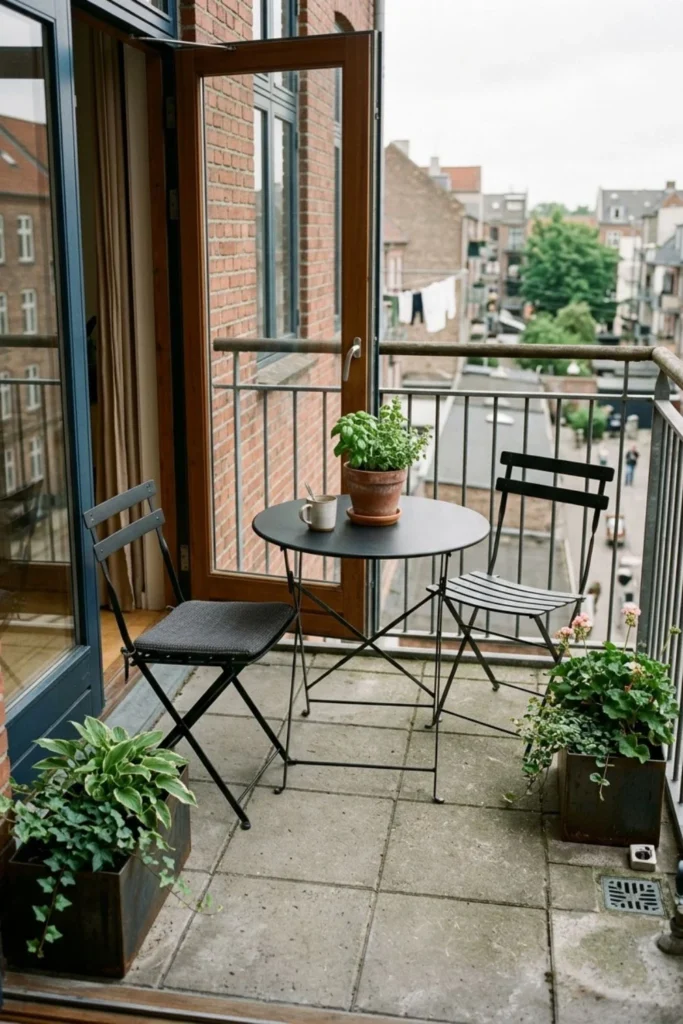
A bistro set works when two people will genuinely use the balcony. Round tables are easier to move around, while square tables can sit neatly against a wall. Avoid buying from a wide-angle product photo without checking the chair depth.
- Size and requirements: A 24- to 30-inch table with two chairs usually needs an area around 5 by 6 feet for comfortable use. Measure chairs both open and tucked in.
- Method and cost: Mark all three pieces, open the door, and pull both chairs out before ordering. Expect $180–$700 for an outdoor-rated set.
- Pros: Supports coffee, meals, and conversation without built-in work.
- Cons: Can dominate a very narrow balcony and may rattle or move in strong wind.
Folding chairs are useful, but only if you have somewhere sensible to store them.
3. Build a Green Corner with Tiered Plants
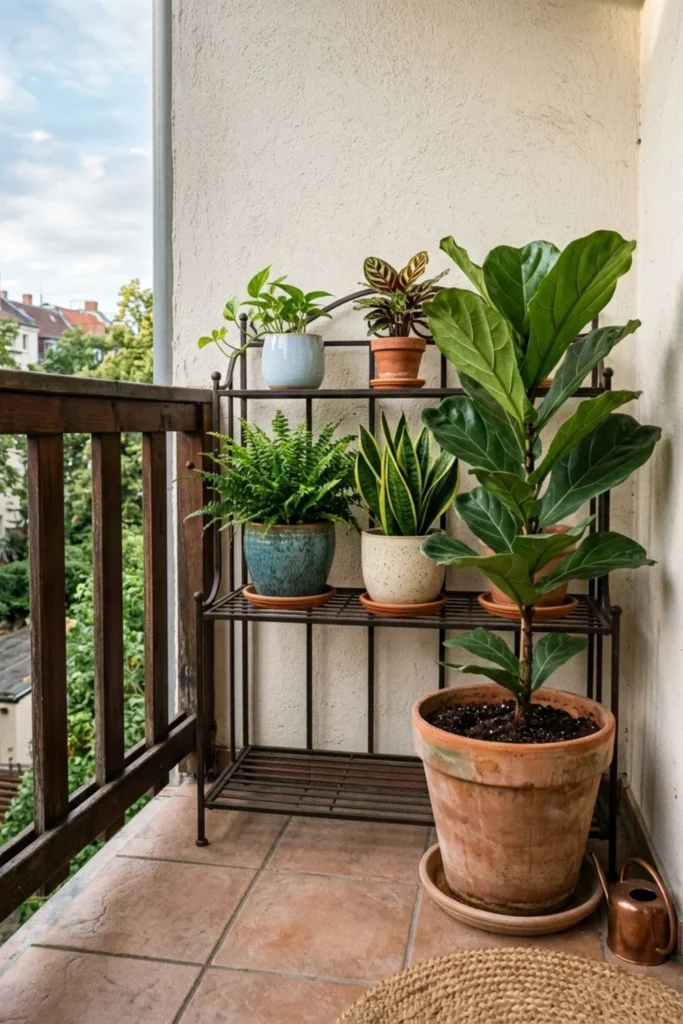
A tiered corner is my favorite plant-led idea because it creates depth without lining every railing with pots. Use three levels: one floor pot, one middle shelf, and one smaller plant above. The empty space around the group makes the leaves easier to notice.
- Size and requirements: Reserve a corner around 24 to 36 inches wide. Use a stable two- or three-tier outdoor stand and three to five plants with similar light needs.
- Method and cost: Put the heaviest pot on the floor, medium pots in the middle, and the lightest pot above. Keep leaves clear of the route. Budget $120–$600.
- Pros: Uses height well, simplifies watering, and creates a strong focal point.
- Cons: Shelves can shade lower plants, collect dirt, or become unstable when overloaded.
Check the stand’s load limit and secure tall growth before windy weather. Larger pots usually dry more slowly than tiny ones, but wet soil also adds weight.
4. Be Careful with Railing Planters
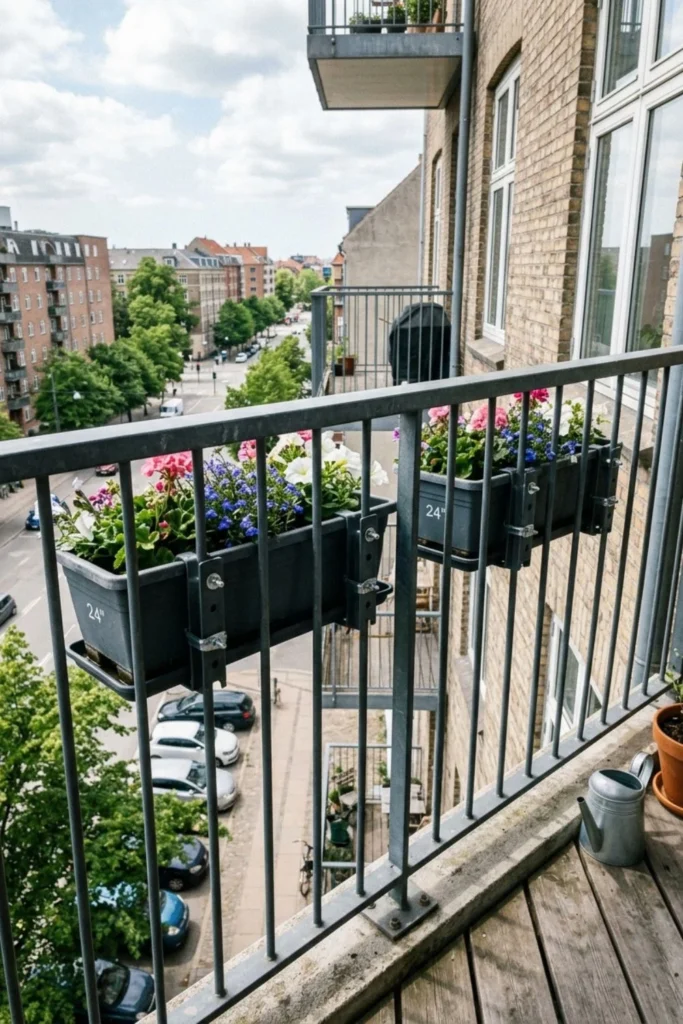
Railing planters save floor space, yet they are one of my weaker recommendations. Building rules may ban them, and a loose box can endanger people below. Never place an ordinary pot on top of a ledge or hang a planter outside the railing just for a cleaner photograph.
- Size and requirements: Choose a purpose-made box around 18 to 30 inches long with brackets made for the exact railing shape. Keep the entire planter inside the balcony unless written rules allow otherwise.
- Method and cost: Get approval, follow the bracket instructions, add secondary restraint when required, and test drainage. Budget $60–$300 for one or two secure boxes.
- Pros: Frees floor space and places flowers near useful light.
- Cons: Wind exposure, falling risk, dripping water, and building restrictions make it unsuitable for many apartments.
When approval is uncertain, use a low floor planter against the inner railing instead.
5. Grow Herbs in the Sunniest Spot
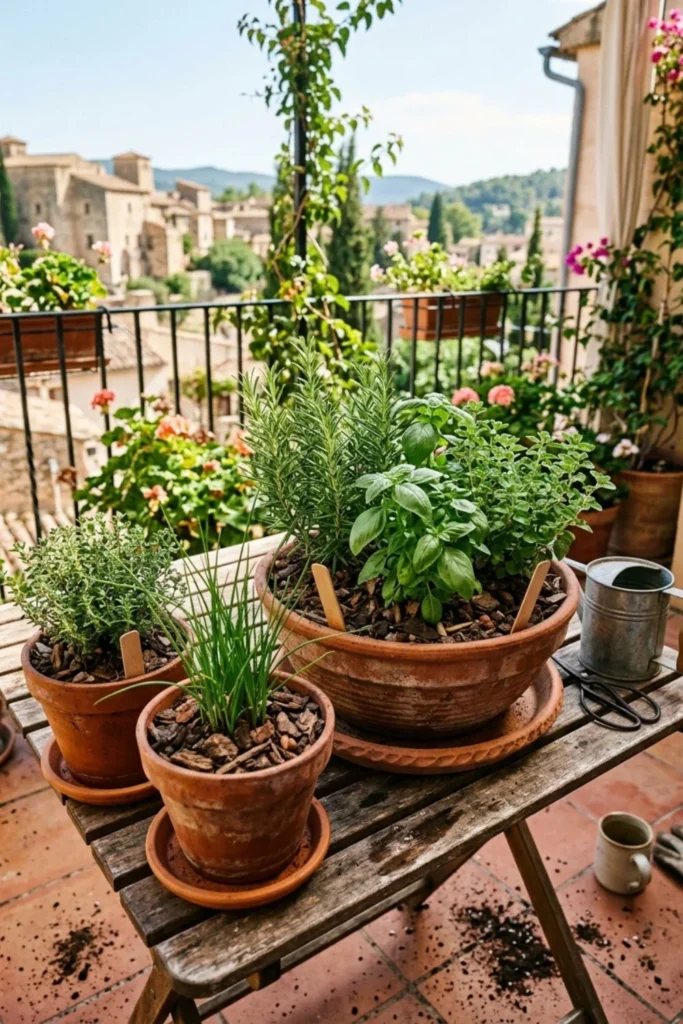
An herb garden is my third strong idea because it gives the plants a job beyond decoration. Basil, parsley, thyme, chives, oregano, and compact rosemary are easier to manage than a balcony full of large vegetables, provided their light and climate needs match the space.
- Size and requirements: Most herbs need at least 6 to 8 inches of soil depth; taller herbs may need 10 inches. Illinois Extension says a 12-inch pot can hold about three or four compatible herbs.
- Method and cost: Use containers with drainage holes and loose potting mix, group herbs with similar water needs, and place them in the measured sunny zone. Budget $50–$220.
- Pros: Useful harvest, pleasant scent, and easy seasonal replacement.
- Cons: Small pots dry quickly, some herbs dislike intense afternoon heat, and mixed pots may have conflicting water needs.
The detailed Illinois Extension herb guide is worth checking before mixing varieties.
6. Create Privacy with Tall Potted Plants
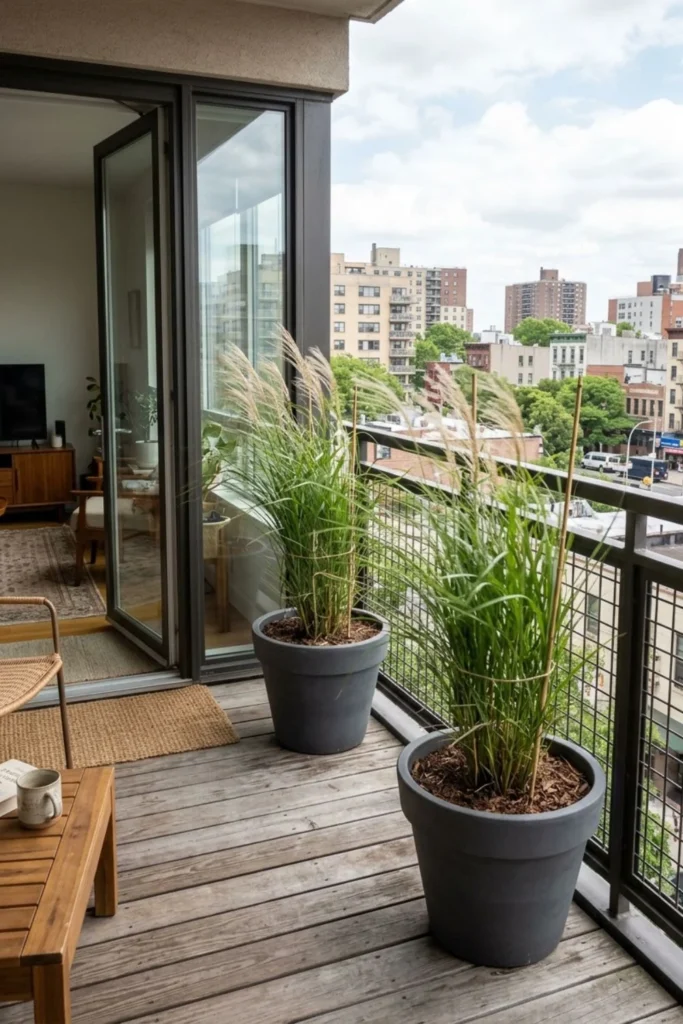
Tall plants can soften a direct view without covering the balcony in plastic screening. The difficult part is wind: a narrow pot holding a top-heavy plant behaves like a sail. Choose plants for mature size, climate, light, and building rules.
- Size and requirements: Start with two pots 16 to 22 inches wide placed on the floor inside the railing. Use broad, stable containers and plants that remain manageable in pots.
- Method and cost: Check load and drainage, position the pots near structural edges only with approval, then use suitable supports. Budget $200–$900 for two planted containers.
- Pros: Living privacy, softer views, and seasonal shade.
- Cons: High wet weight, frequent watering, wind damage, and winter storage can become demanding.
I would leave gaps between plants rather than building a solid green wall. Air and daylight still need to move.
7. Add a Slim Vertical Plant Stand
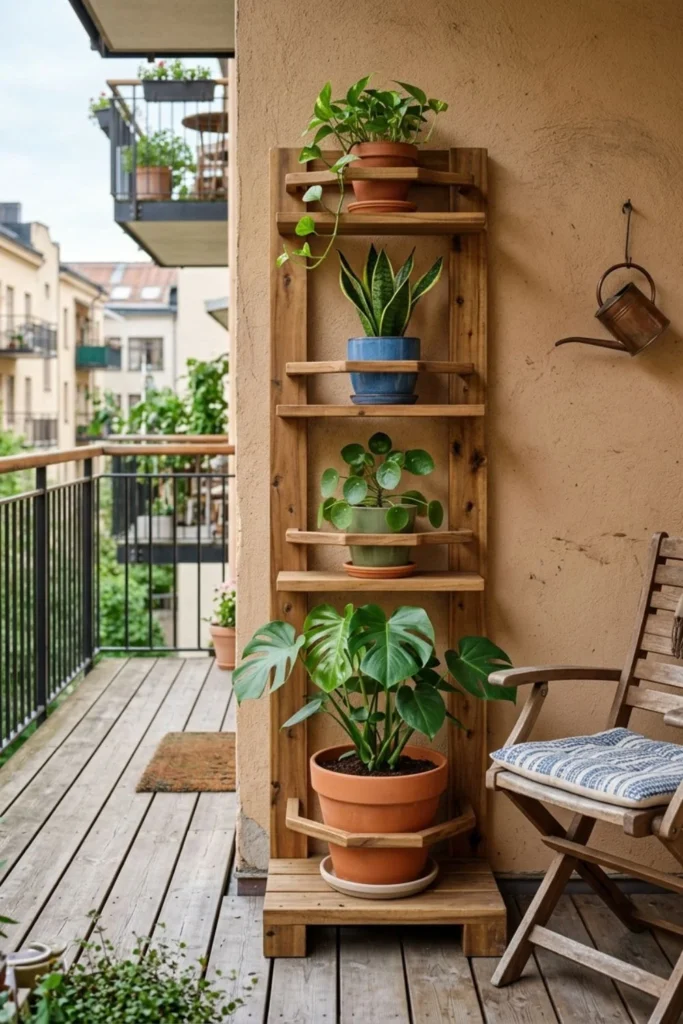
A vertical stand is useful on a blank wall when floor width is limited. Choose a freestanding model with a wide base or a wall-fixed system approved by the building. Deep ladder shelves often project farther than expected once pots are added.
- Size and requirements: Look for a stand around 18 to 30 inches wide and 8 to 14 inches deep. Use three to five lightweight pots and respect every shelf’s load rating.
- Method and cost: Place heavier pots low, keep trays under drainage holes, and anchor the stand as directed. Expect $80–$400.
- Pros: Adds greenery without spreading pots across the floor.
- Cons: Upper pots can dry faster, lower plants may lose light, and unstable stands are risky in wind.
A simple wood-and-plant wall can echo the natural look in these minimalist boho wall decor ideas without copying indoor materials that can’t handle rain.
8. Hang Plants Safely from a Wall
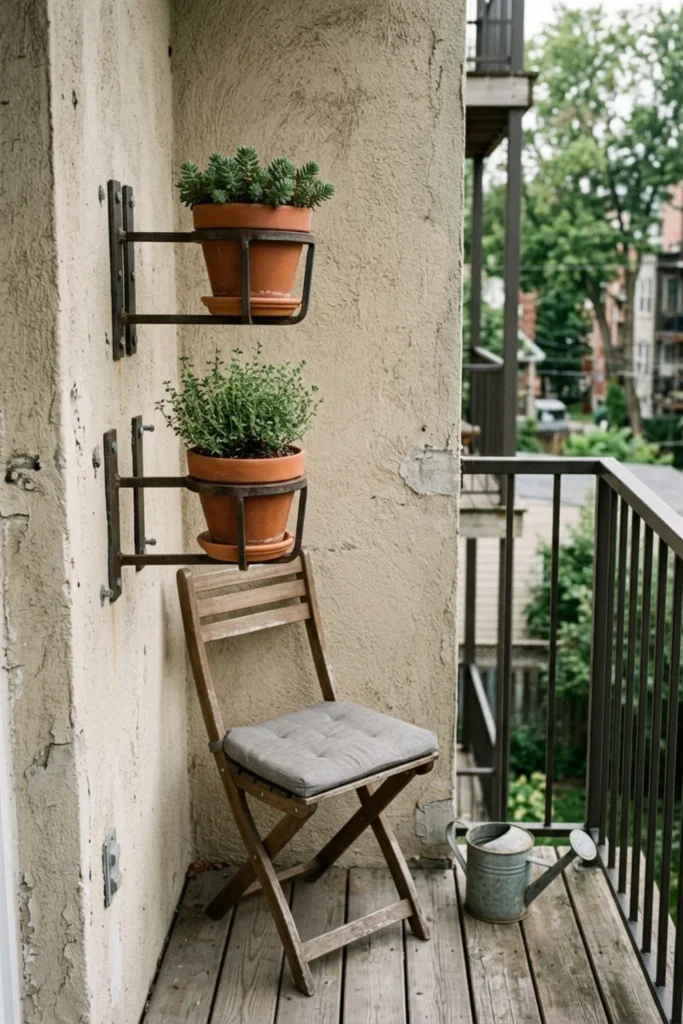
Wall planters work best on a sheltered side wall, not above chairs or outside the railing. Renters need written permission before drilling, and adhesive hooks should never hold a wet, heavy pot unless the maker approves that exact surface and load.
- Size and requirements: Use two or three pots around 5 to 8 inches wide. Confirm wall type, bracket rating, wet plant weight, and a safe height for watering.
- Method and cost: Mark wall supports, install exterior-rated hardware, add pots, then water lightly and check for movement. Budget $80–$450, including professional fitting if required.
- Pros: Saves floor space and brings leaves closer to eye level.
- Cons: Drilling restrictions, falling risk, wall stains, and awkward watering limit where it can be used.
For rentals, a stable freestanding plant stand is usually the more honest “damage-light” option.
9. Choose a Foldable Balcony Table
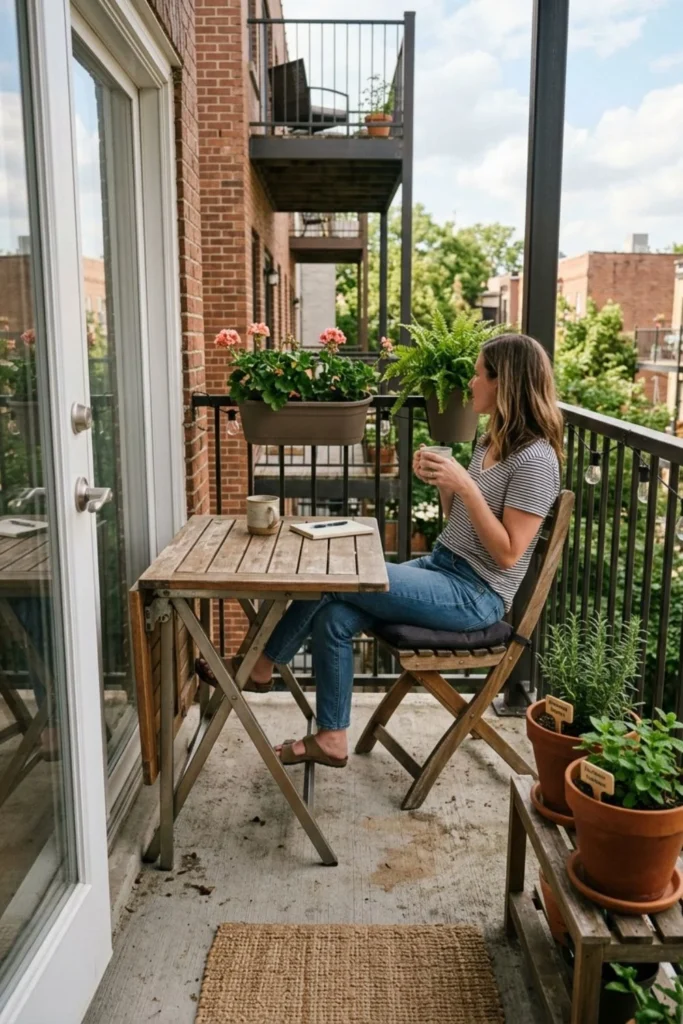
A foldable table gives you a work or dining surface without keeping it open all day. Wall-mounted versions need permission and secure structure; freestanding folding tables are easier for renters and can move indoors during storms.
- Size and requirements: A top around 18 by 24 inches suits one person; 24 by 30 inches is more useful for two. Keep at least 24 inches of chair space on the seating side.
- Method and cost: Tape the table open and closed, confirm the door path, then choose weather-rated hinges and locks. Budget $90–$450.
- Pros: Flexible, compact, and useful for meals, a laptop, or potting small plants.
- Cons: Hinges need care, wall-fixed models can damage rentals, and lightweight tables may shift in wind.
Close it when not in use, but don’t let nearby pots block the folding movement.
10. Soften the Floor with an Outdoor Rug
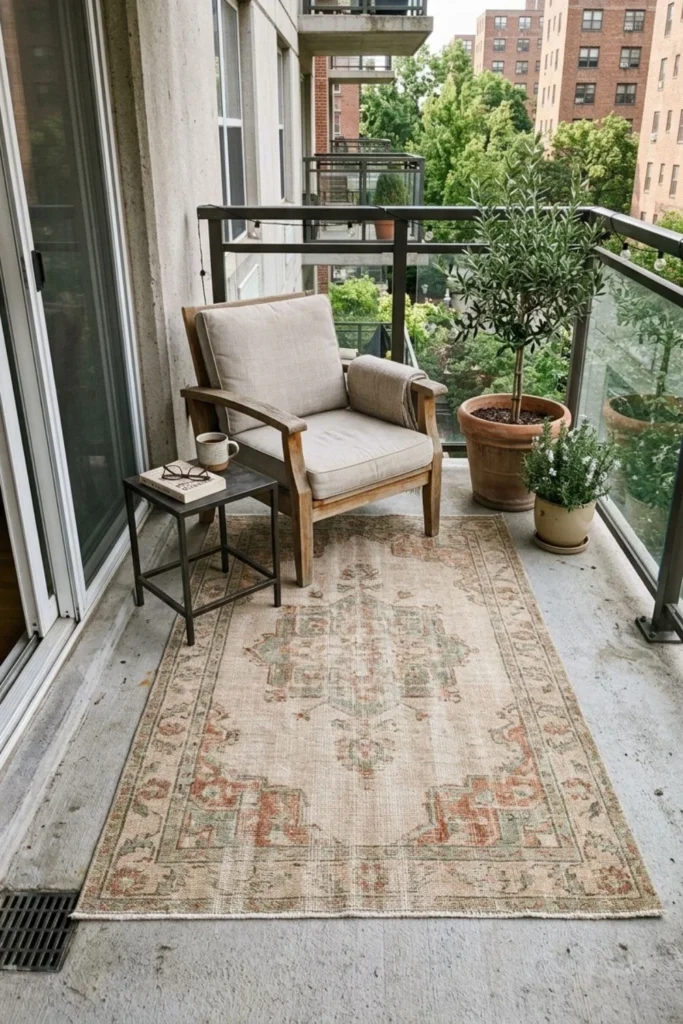
An outdoor rug can make concrete or tile feel less bare, but it must not cover the drain or trap water. A low-pile woven design in beige, muted green, rust, or blue will hide normal marks better than a pale indoor-style rug.
- Size and requirements: A 3-by-5-foot rug works beside one chair; 4 by 6 feet may suit a bistro set. Keep 3 to 6 inches away from drains and door tracks.
- Method and cost: Clean and dry the floor, add an outdoor-rated non-slip pad if permitted, then check drying after rain. Budget $60–$320.
- Pros: Adds color, comfort, and a clear seating zone.
- Cons: Needs lifting and cleaning, may fade, and can hold moisture on poorly drained floors.
Never glue a rug over a waterproof balcony surface without approved instructions.
11. Think Twice About Outdoor String Lights
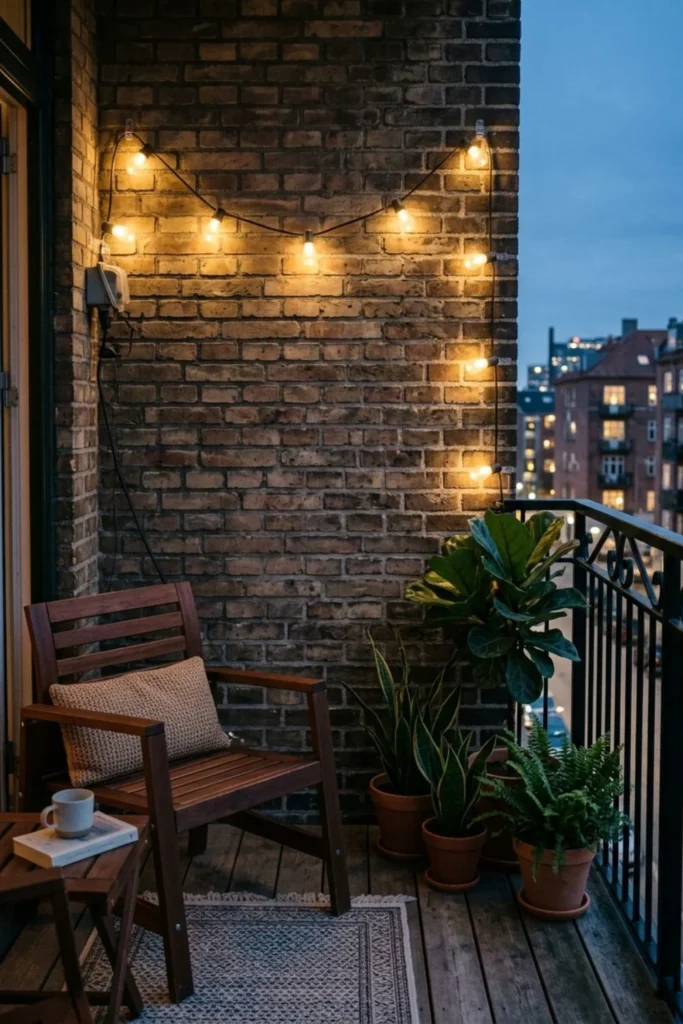
String lights photograph well, but they are my second weak idea because electricity, rain, cords, doors, and building rules must all agree. Solar or battery lighting may be simpler, though even those products need to be outdoor-rated and secured against wind.
- Size and requirements: One 10- to 20-foot set is enough for most small balconies. Use exterior-rated lights, approved supports, and a protected power source when required.
- Method and cost: Get permission, inspect the cord, keep connections off the floor, and remove the set if damaged. Budget $30–$200, or more if an electrician adds a suitable outlet.
- Pros: Warm evening atmosphere with little floor space.
- Cons: Weather exposure, cord hazards, neighbor complaints, and maintenance make poor installations unsafe.
CPSC advises using outdoor-certified lights and a GFCI-protected receptacle. I would choose one soft strand, not a curtain of blinking lights.
12. Add Sage Green Through Small Accents
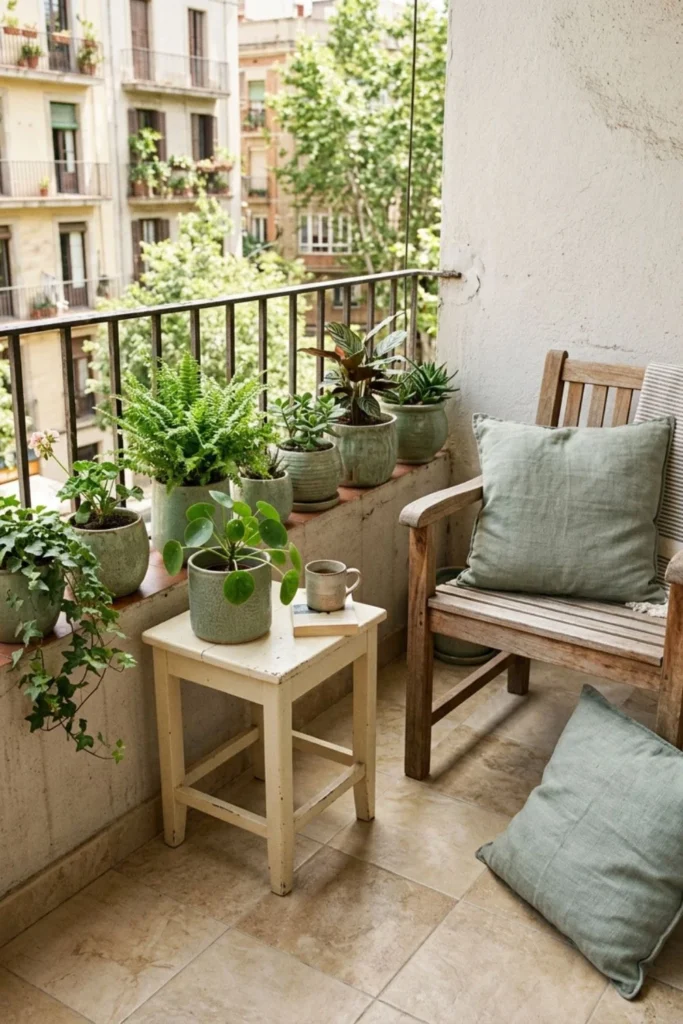
Sage works well outdoors because it relates to leaves without trying to match them exactly. Use it on two cushions, one small table, or a plant pot. Keep larger pieces in wood, cream, charcoal, or rattan so the balcony doesn’t turn into a single-color set.
- Size and requirements: Choose two or three sage accents, not every item. Outdoor fabric with removable covers is more useful than indoor linen.
- Method and cost: Compare samples in direct sun, repeat the color on opposite sides, and keep actual plant greens varied. Budget $50–$280.
- Pros: Easy seasonal update and a calm link between furniture and foliage.
- Cons: Fabric can fade, pale sage shows dirt, and too much matching looks staged.
The same color-balancing idea appears in these sage green living and dining room ideas, but outdoor materials need different care.
13. Group Terracotta Pots for Natural Warmth
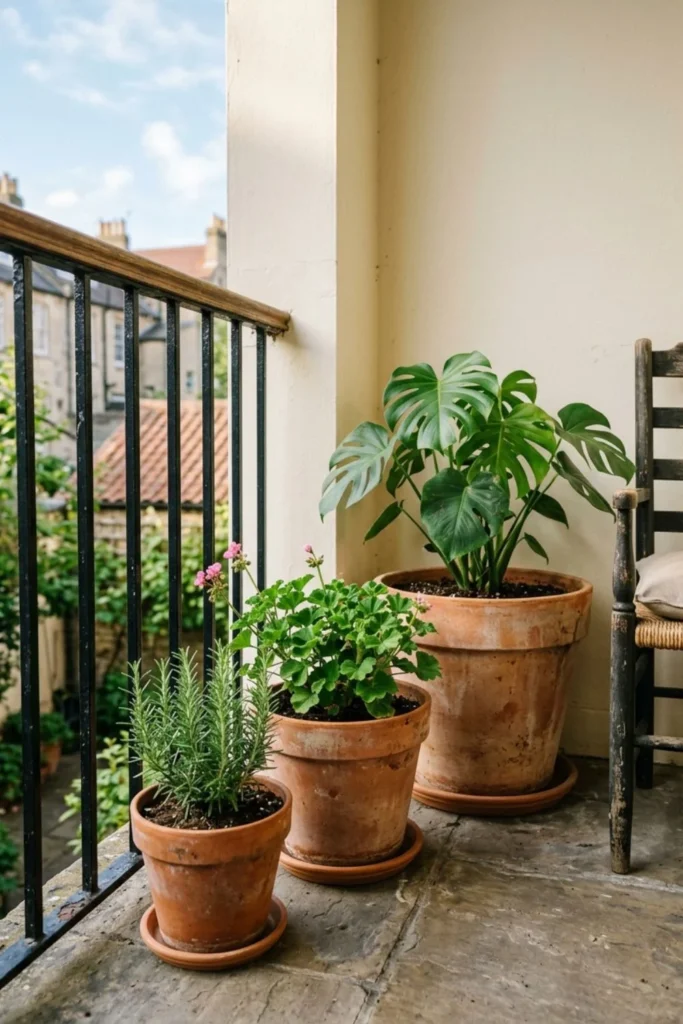
Terracotta looks relaxed because each pot develops its own marks. A group of three is usually enough on a small balcony. Use different heights while keeping the clay tone related, and place saucers beneath pots where the surface needs protection.
- Size and requirements: Combine pots around 8, 12, and 16 inches wide. Confirm total wet weight and choose plants that suit porous clay.
- Method and cost: Put the largest pot at the back, check drainage, lift pots slightly if required, and rotate them for even growth. Budget $70–$350 including plants and mix.
- Pros: Natural color, breathable material, and easy visual grouping.
- Cons: Clay dries quickly, stains, chips, and may crack in freezing climates.
Fiberglass or resin pots in a warm clay color are lighter alternatives when balcony load or moving is a concern.
14. Keep a Shaded Balcony White and Green
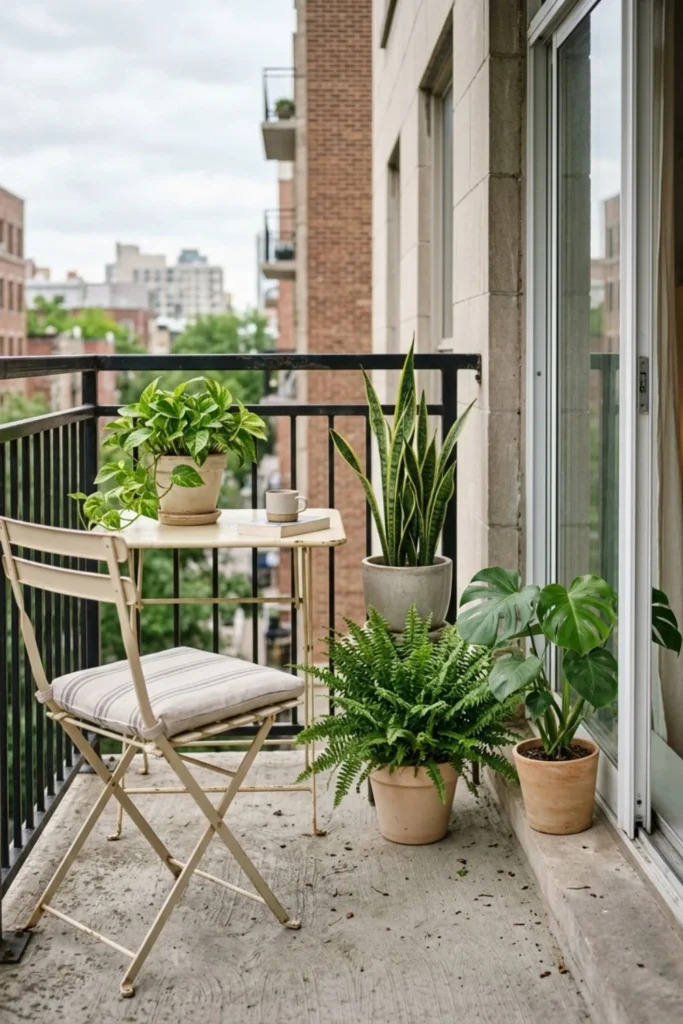
A shaded balcony can still feel fresh with warm-white furniture, cream planters, and plants chosen for indirect light. Avoid buying sun-loving plants merely because their tags show colorful flowers. Leaves with different shapes provide enough interest.
- Size and requirements: Use one light chair, one narrow table, and three to five shade-suitable plants. Leave at least one-third of the floor visually open.
- Method and cost: Test the light, choose washable outdoor finishes, then arrange the tallest plant away from the door. Budget $250–$900.
- Pros: Brightens a dim space and uses a simple palette.
- Cons: Pale surfaces show grime, and poor plant selection still leads to weak growth.
Warm white is kinder than a harsh blue-white finish, especially beside gray concrete.
15. Add a Compact Outdoor Storage Bench
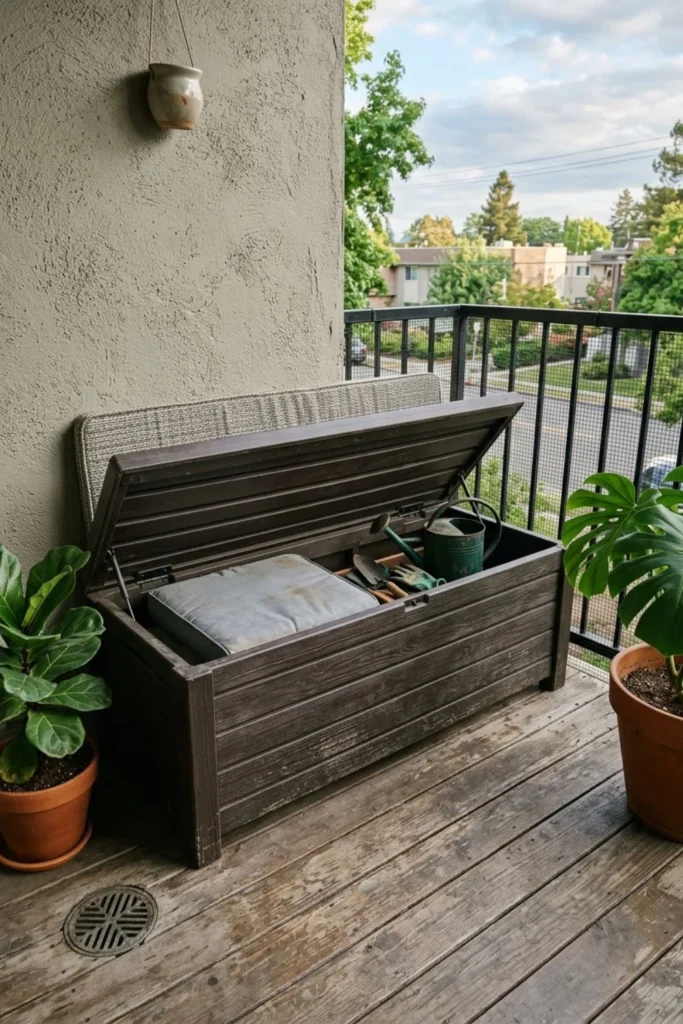
A storage bench can hide watering tools, empty pots, and outdoor cushions while providing another seat. It only works if the lid opens freely and the unit doesn’t narrow the path. Never store chemicals where children or pets can reach them.
- Size and requirements: Look for a bench around 36 to 48 inches wide, 16 to 20 inches deep, and 17 to 19 inches high. Choose outdoor-rated material and a safe lid support.
- Method and cost: Tape the footprint and open-lid zone, confirm drainage and ventilation, then place it against a solid wall. Budget $220–$1,000.
- Pros: Combines seating and hidden storage.
- Cons: Uses more depth than a chair, can collect moisture, and may become a box of forgotten items.
Store only what belongs outdoors and review the contents each season.
16. Make a Balcony Reading Corner
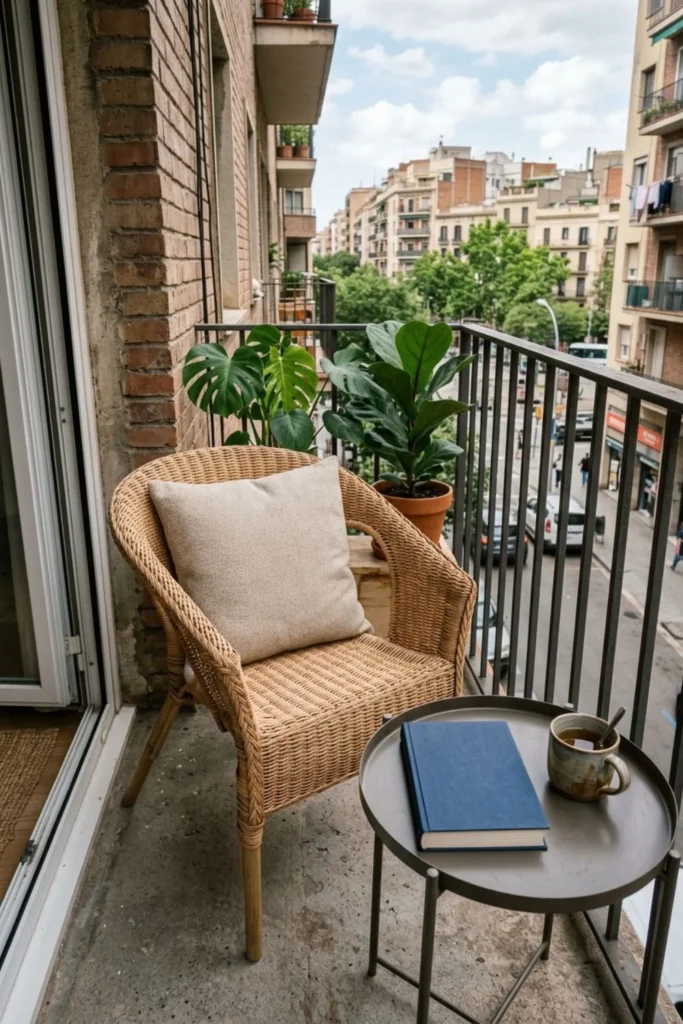
A reading corner needs shade, back support, and somewhere to set a drink more than it needs extra decor. Use the comfortable chair from idea one, one side table, and plants placed beside rather than in front of the view.
- Size and requirements: Reserve roughly 3 by 4 feet for the chair, legroom, and a 12- to 16-inch side table. Add one outdoor cushion and one light throw stored indoors.
- Method and cost: Test the chair for 20 minutes, check glare and wind, then add two plants behind or beside it. Budget $180–$750.
- Pros: Gives the balcony a clear daily purpose and needs little furniture.
- Cons: Direct sun, street noise, or poor back support may make the idea less useful than it looks.
For more seating-scale thinking, the cozy reading nook guide offers useful indoor comparisons.
17. Set Up a Tiny Dining Nook
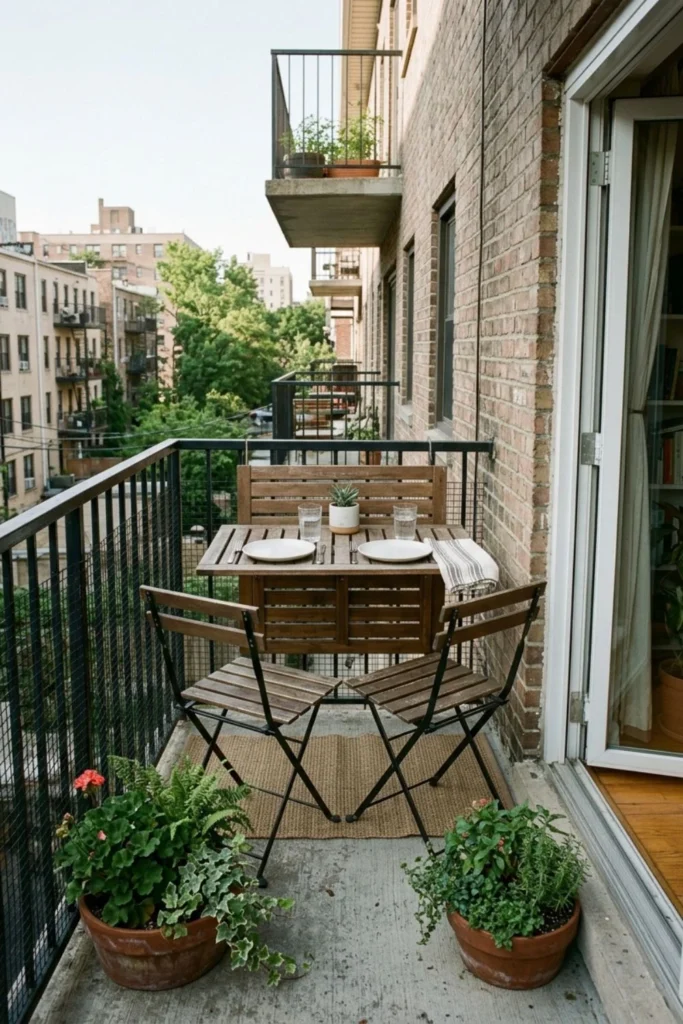
A dining nook works best for people who already enjoy eating outside. A wall-side table wastes less space than a deep round table, and stackable or folding chairs can disappear when not needed.
- Size and requirements: Plan at least 24 inches of table width per person and roughly 30 inches behind a pulled-out chair where possible. Use one small table and two chairs.
- Method and cost: Mark the dining position, carry a plate through the door, and confirm both chairs can move safely. Budget $300–$1,000.
- Pros: Makes the balcony useful for breakfast and simple meals.
- Cons: Takes more floor area, needs frequent cleaning, and may be uncomfortable in wind or strong sun.
Keep plants around the edges rather than squeezing pots between chair legs.
18. Add Seasonal Color with Flowering Plants
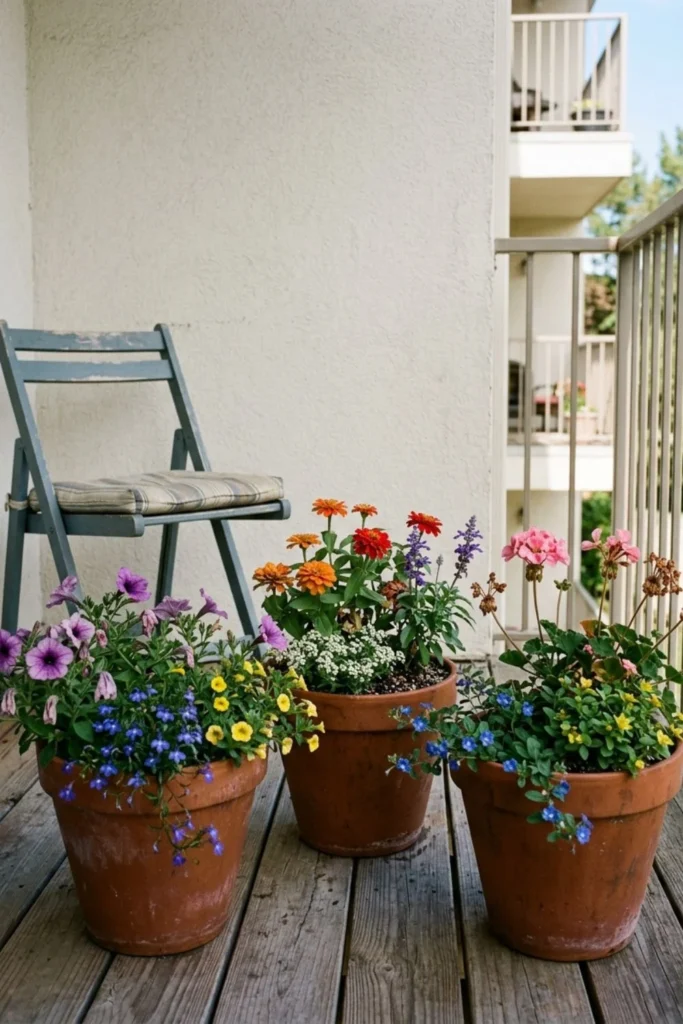
Flowers are easiest to manage when you choose a small seasonal group instead of expecting one arrangement to bloom all year. Select varieties for the measured sun and local climate, then leave enough room for mature growth.
- Size and requirements: Use two or three flowering containers, usually 10 to 14 inches wide, with drainage and matching light needs.
- Method and cost: Check the USDA zone and local nursery advice, plant with suitable mix, remove spent flowers when required, and replace seasonal plants honestly. Budget $60–$300 per season.
- Pros: Adds color quickly and supports seasonal change.
- Cons: Repeated cost, watering, deadheading, and short bloom periods require realistic expectations.
Do not pack young plants tightly for an instant photo. They need space to reach their listed mature width.
19. Put the Best Ideas into One Balanced Plan
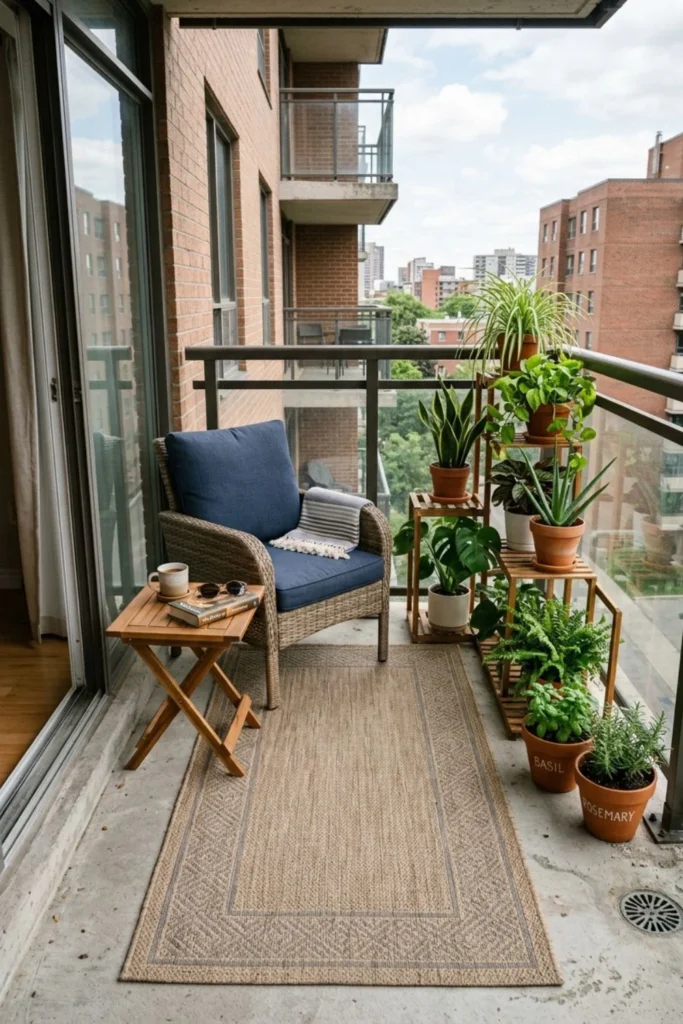
For a typical narrow balcony, I would combine one chair, a foldable table, a three-level plant corner, two herb pots, and a small rug. That is enough to create comfort and greenery without covering the railing or drain.
- Size and requirements: This plan suits roughly 35 to 60 square feet, depending on door and shape. Use one chair, one table, five to seven plants, and one rug.
- Method and cost: Place furniture first, protect the path, add the heaviest pots low, then finish with textiles. Budget $700–$2,000.
- Pros: Balanced seating, planting, storage, and easy future changes.
- Cons: Still needs seasonal care, cushion storage, and regular editing as plants grow.
The goal isn’t to use all 19 ideas. It’s to choose the few that solve your balcony’s real problems.
What I Would Choose at Three Budget Levels
With $200 to $500, I would buy one comfortable chair, a small table, two 12-inch pots, healthy plants suited to the light, and proper potting mix. I would clean the floor and stop there for a month before adding anything else.
With $600 to $1,500, I would add a stable tiered stand, five to seven plants, an outdoor rug, and useful herb pots. I would spend on larger stable containers before decorative lights.
With $1,500 to $3,500, I would choose durable seating, a compact storage bench, two large privacy pots if the balcony can support them, and better weather-ready fabric. I still wouldn’t fill every wall or railing.
My spending order would be:
- Approval, safety, drainage, and weight checks
- One comfortable seat and clear path
- Healthy plants chosen for real light and climate
- Stable pots and suitable potting mix
- A table or storage that supports daily use
- Rug, color, and lighting after the basics work
Keep Plants, Furniture, and Neighbors Safe
Container plants need drainage, but balcony water must not pour onto people or property below. Use saucers where appropriate, empty standing water, and follow building rules. Never block the drain with a rug, storage box, or plant tray.
Use potting mix rather than dense garden soil. Penn State Extension recommends a soilless mix for container vegetables because it balances drainage and moisture while avoiding the weight and compaction of straight garden soil.
Check soil with a finger rather than watering every pot on the same schedule. Small pots may need daily attention in hot weather, while a shaded large pot can stay wet much longer. Move stressed plants instead of buying more for the same bad position.
If cats or dogs use the balcony, check the exact plant name in the ASPCA plant database. Remember that “non-toxic” doesn’t mean a pet should be encouraged to chew it.
Bring loose cushions, light furniture, watering cans, and small pots indoors before strong winds. Check brackets, stands, hooks, lights, and railings regularly. Do not tie items to emergency equipment or alter the railing without approval.
Finally, leave enough room to care for everything. If you can’t reach a pot without leaning over a railing or stepping around unstable furniture, the layout needs fewer plants.
Final Thoughts
A useful Small Balcony Makeover with Plants begins with fewer pieces than most inspiration photos suggest. One comfortable chair, a stable plant corner, and herbs suited to the sun can make the balcony feel personal without creating a maintenance problem.
Measure first, buy plants slowly, and watch how the space behaves through heat, rain, and wind. When the door opens freely and every pot can be watered safely, the balcony is already doing its job.
Written and reviewed by Ali Hamza | Styled Room Living
Disclosure: Some visuals are AI-assisted design concepts created for inspiration. Always confirm measurements, materials, load limits, and installation requirements for your home.
Safety and cost note: Confirm balcony load limits, building and rental rules, railing and wall safety, drainage, plant suitability, pet safety, weather exposure, electrical safety, and furniture stability before starting. Costs are rough U.S. planning estimates and may vary by location, labor, materials, delivery, permits, and project conditions.