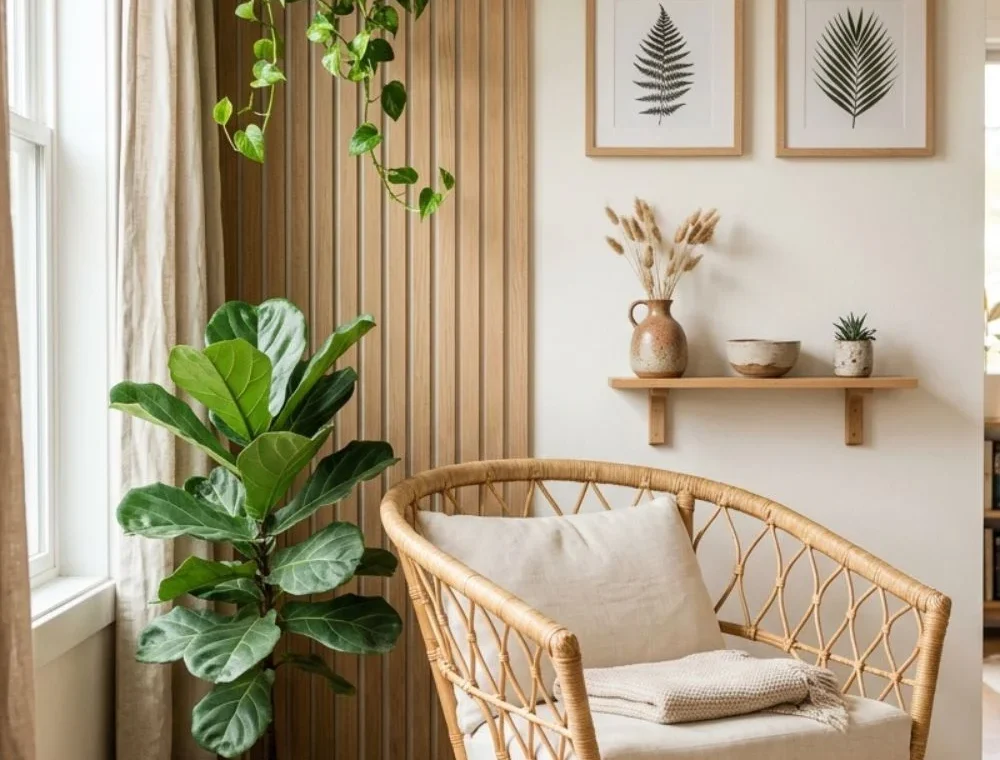
Minimalist Boho Wall Decor Ideas should make a room warmer without covering every empty inch. The style works because it mixes two useful ideas: boho brings texture and personality, while minimalism gives each piece room to breathe.
The difficult part is knowing when to stop. A basket, mirror, plant, textile, shelf, gallery wall, and wood panels may all look lovely alone. Put them on one wall, however, and the calm mood disappears.
I would begin with the furniture already in the room. A wall above a sofa needs a different plan from a narrow entry or bedroom. Measure the open area, check the wall material, and choose one main feature before shopping for smaller pieces.
These 21 ideas are not equally useful. Ideas 1, 5, and 17 are my strongest choices because they give you a clear layout, flexible styling, and a strong link to the furniture. Ideas 8 and 14 are the weakest because macrame collects dust and depends on a sound hanging point, while repeated sun, moon, and arch shapes can quickly look like a theme set.
The cost ranges are rough 2026 U.S. estimates, not quotes. Frame size, material, wall type, delivery, and labor change the real total.
Check the Wall Before Hanging Anything
Identify the wall first. Drywall, plaster, brick, concrete, tile, and paneling need different fixings. A drywall hook may fail in another material.
Measure the wall width and height, then note switches, outlets, vents, thermostats, doors, and furniture. Use removable tape or paper templates to mark the full outer shape of the display. Live with the outline for a day before making holes.
Follow this simple safety check:
- Weigh each frame, mirror, shelf, plant, and decoration.
- Use hardware rated for the wall type and full loaded weight.
- Find studs or solid support where the product instructions require them.
- Check for possible wires or pipes before drilling.
- Keep heavy or breakable pieces away from beds, play areas, and busy seats.
- Never assume an adhesive strip can hold a shelf, mirror, or textured object.
For plaster walls, Angi’s practical guide suggests choosing hardware by both wall material and object weight; it moves from light hooks to anchors, molly bolts, or toggle bolts as loads rise. Use the manufacturer’s instructions rather than treating those numbers as universal. See its plaster-wall hanging guide.
If a U.S. home was built before 1978, drilling, sanding, or repairing painted surfaces may disturb lead-based paint. The EPA advises finding out whether lead is present and using lead-safe methods or a certified professional. Read its lead-safe DIY guidance or follow the equivalent rules in your country.
Photograph detected studs or services before covering the marks. Keep the hardware packaging for its load limit and removal method.
A Realistic Wall-Decor Budget
A wall can feel finished with three inexpensive frames, or it can become a custom carpentry project. Choose the project level before small purchases slowly grow into a large bill.
| Project level | What it may include | Rough planning cost |
|---|---|---|
| Simple DIY update | Three prints, ready-made frames, basket, or small textile | $100–$500 |
| Styled feature wall | Better frames, picture ledge, mirror, paint, and installation | $500–$1,500 |
| Custom wall treatment | Large artwork, slat panels, built shelves, specialty finish, or professional fitting | $1,500–$5,000+ |
HomeGuide lists many custom picture-framing projects around $50 to $500 per piece, while ready-made frames cost less. Its picture-framing cost guide explains the main price factors.
Keep a 10% to 15% buffer for anchors, patching, paint touch-ups, delivery, or professional help. I would spend on safe hanging and one meaningful main piece before buying several small decorations to fill gaps.
1. Create a Simple Botanical Gallery Wall
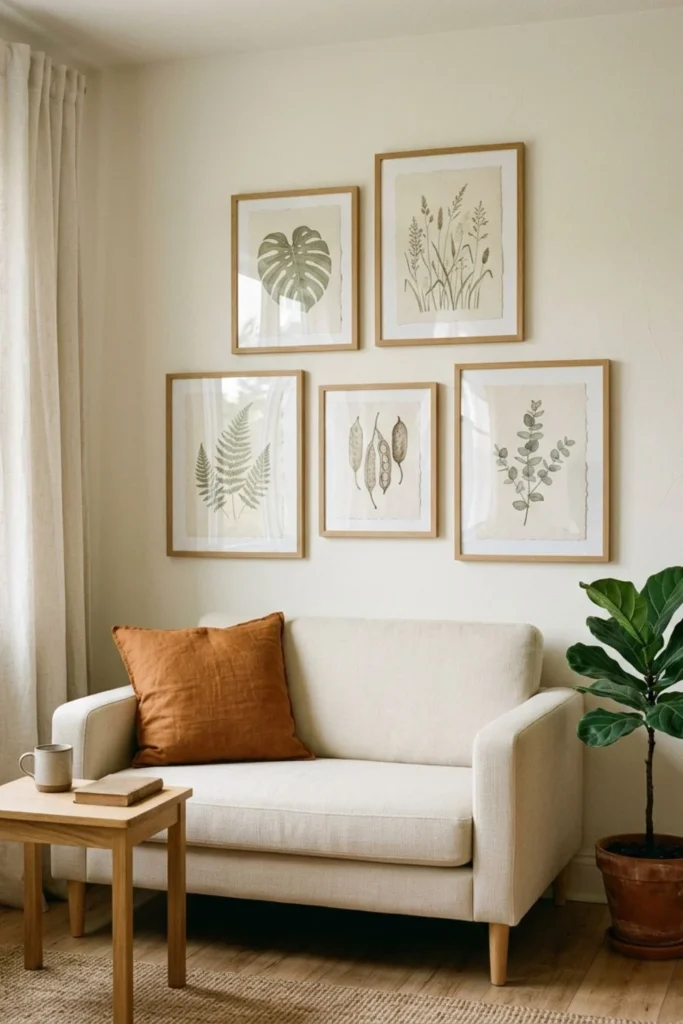
This is my first top choice because it can be personal, affordable, and easy to change. Use three or five pieces rather than covering the wall with a dozen tiny frames. Mix a leaf drawing with a landscape photo or pressed plant so the display does not look like one store-bought set.
Lay the frames on the floor first. Keep roughly 2 to 3 inches between nearby pieces and build one loose rectangle. For a wall without furniture, a center around 57 to 60 inches from the floor is a useful eye-level starting point, but adjust it for your household and room.
Above furniture, relate the whole group to the piece below. A display around 60% to 75% of the furniture width often feels balanced. Use paper templates and mark every hook position before drilling.
A simple gallery may cost $100 to $600 using prints and ready-made frames. Custom framing can push it to $300 to $1,500 or more. I would choose calm gaps and personal images over perfect matching leaves.
2. Add One Large Woven Wall Basket
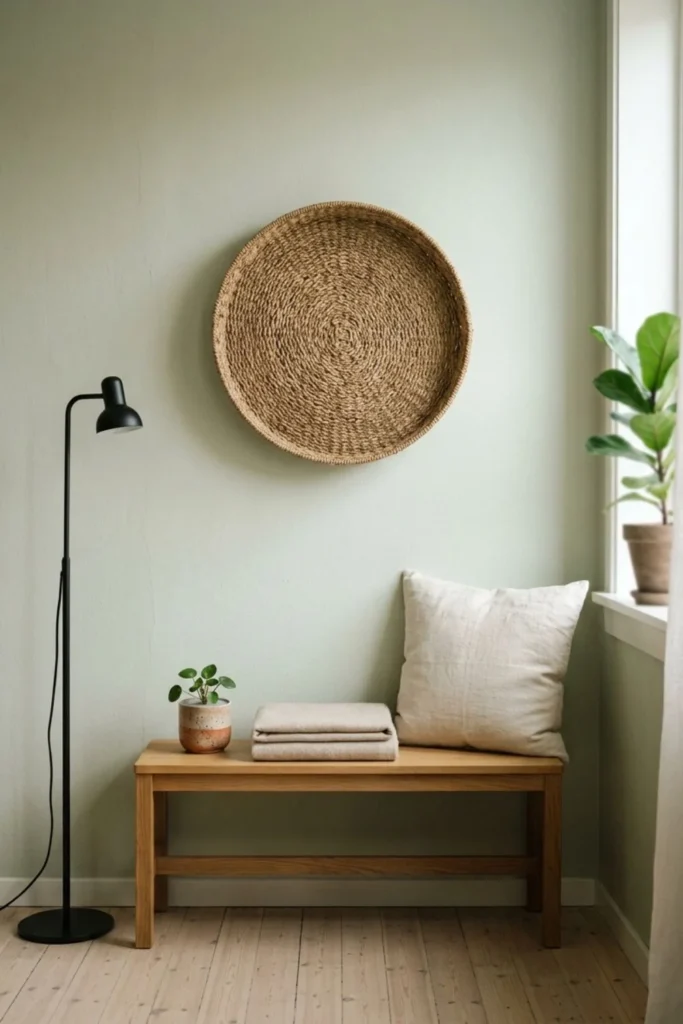
One woven basket adds texture without the clutter of a full basket wall. Choose rattan, cane, bamboo, or seagrass with visible natural variation. A round basket works well above a short console, bench, or reading chair.
Make the basket clearly narrower than the furniture below. A piece around 20 to 30 inches wide is substantial in many rooms, but test a paper circle before buying.
Inspect the hanging loop instead of trusting the front view. Woven fibers can loosen, so support the piece using its intended fixing points and check them every few months. Keep it away from heaters, open flames, and damp walls.
Budget roughly $50 to $300 for one basket, depending on size and handwork. I would repeat the material only once through a lamp shade or storage basket.
3. Hang a Soft Neutral Textile
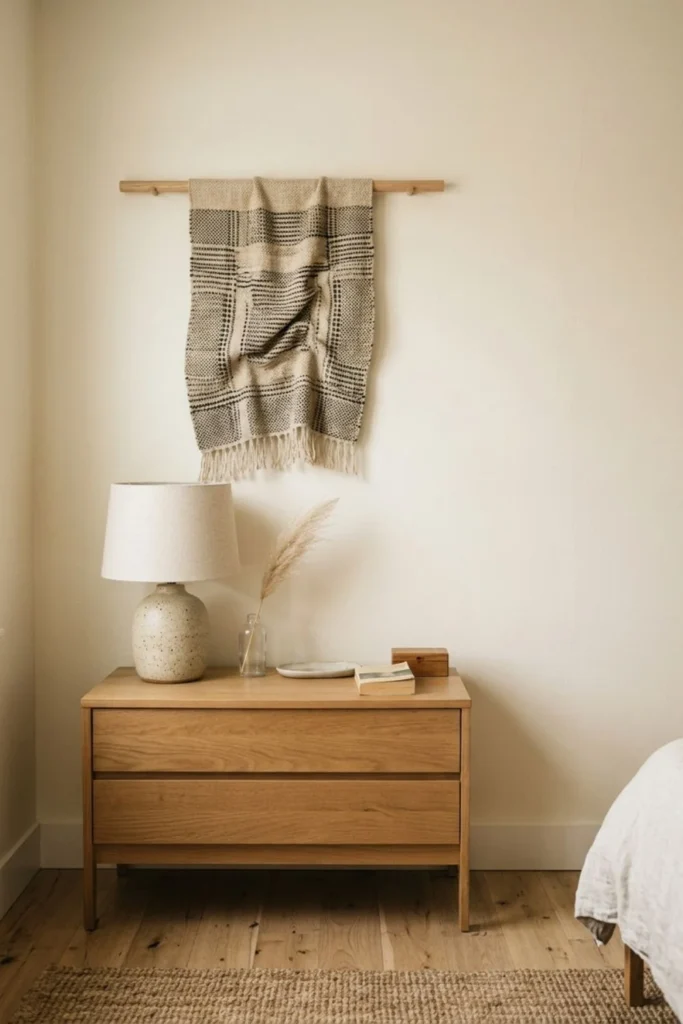
A textile softens a room with hard furniture and straight lines. Try a small woven cloth, quilt square, or neutral fabric artwork in cream, camel, faded rust, or muted black.
Use a clean wooden rail or the maker’s hanging system. Let the fabric keep gentle folds, but do not allow the lower edge to brush a heater, lamp, food surface, or floor.
Above a bed, keep the piece light and avoid heavy rods or sharp metal parts. Dust it with the method recommended for the fiber, and check for sun fading before placing a valuable textile beside a bright window.
A simple piece may cost $60 to $400, while handmade or vintage textiles can cost more. One good textile usually feels calmer than several layered fabrics.
4. Use a Round Rattan Mirror
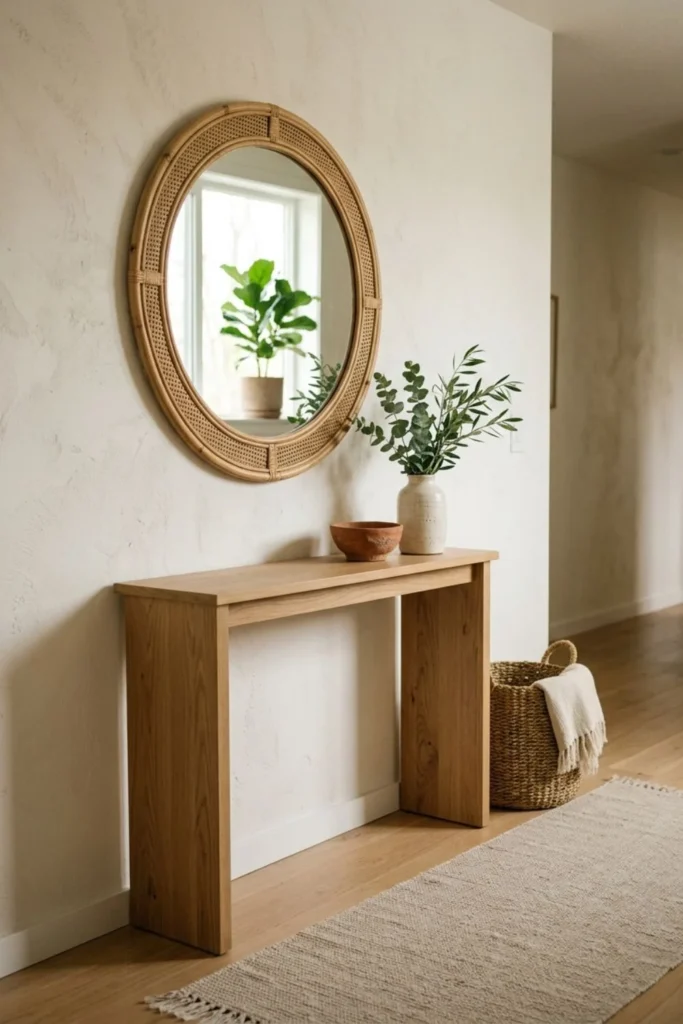
A round rattan mirror can break up the straight lines of shelves and furniture. Place it where it reflects light, a plant, or a calm part of the room—not a cluttered counter or television.
A mirror around 24 to 36 inches wide suits many consoles and bedroom walls. Check the actual glass weight, not only the light appearance of the rattan frame. Use two secure fixing points or the mounting system supplied.
Mirror-hanging labor often runs $50 to $150 per hour, according to HomeGuide’s 2026 mirror installation guide. Heavy mirrors may need two installers.
I would not hang a heavy mirror directly above a bed or active child’s area. A safer location can still brighten the room.
5. Install a Slim Natural-Wood Picture Ledge
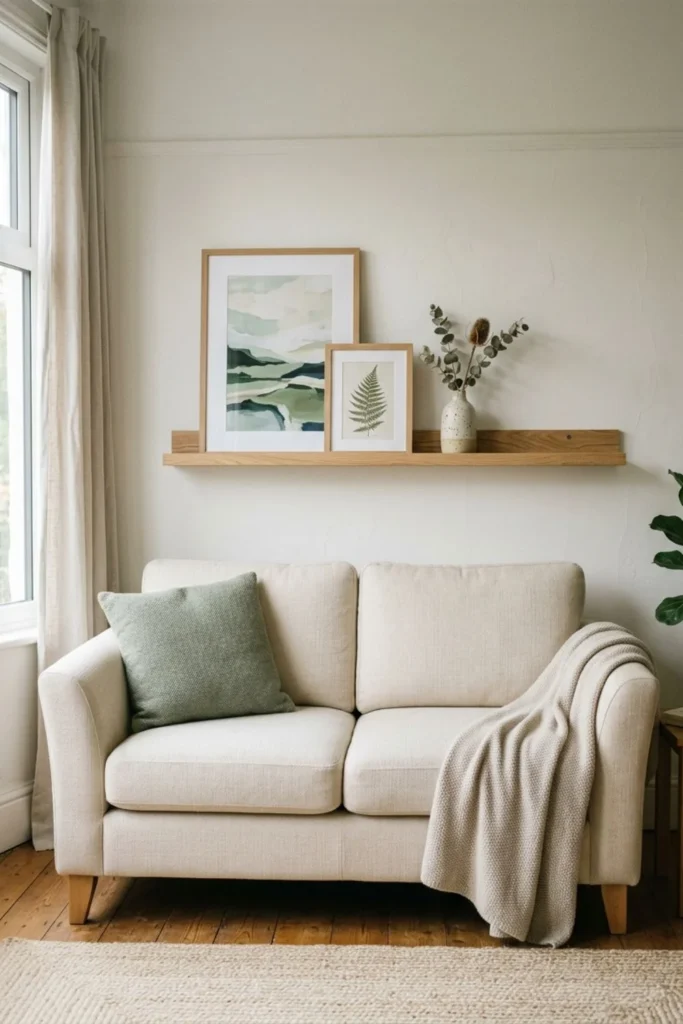
This is my second top choice because a ledge lets you change art without making a new hole for every frame. It also gives a strong horizontal line above a sofa, desk, or sideboard.
A depth around 3.5 to 5.5 inches holds many frames without projecting too far. Look for a front lip around 3/4 to 1.5 inches so frames cannot slide easily. A 36-to-60-inch width works in many rooms, but the furniture below should decide the final size.
Attach the bracket to studs or use approved anchors exactly as the shelf maker requires. Count the ledge, frames, books, and decor in the loaded weight. Do not use a light adhesive strip as a substitute for structural fixing.
Simple floating shelves often cost about $80 to $240 per shelf installed in current HomeGuide project examples. Custom hardwood and difficult walls cost more. I would place only three to five light objects on the ledge and leave the rest open.
6. Display Handmade Ceramic Wall Pieces
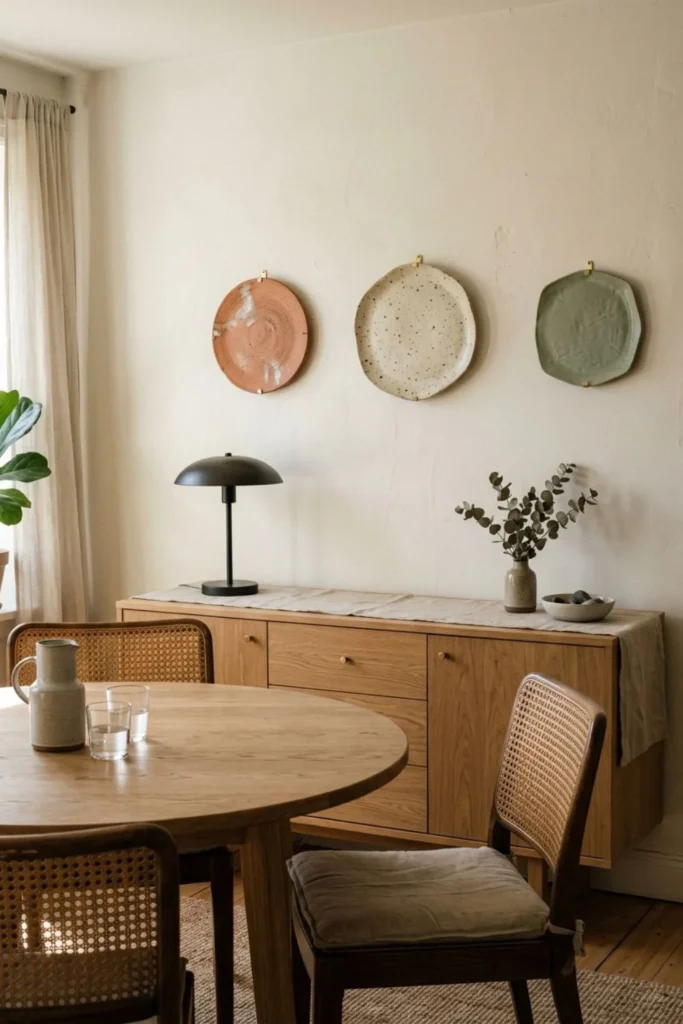
Small ceramic pieces bring depth and an imperfect handmade surface. Use one larger plate or a group of three, and keep the colors close to cream, clay, olive, or sand.
Ceramic is heavier and more breakable than it appears. Use hangers designed for the piece’s shape and weight, then secure the wall side correctly. Avoid weak adhesive on textured glaze or dusty surfaces.
Do not place a ceramic group above a bed, narrow dining seat, or play zone. A console wall or quiet entry can offer a safer location.
Plan around $75 to $500 for a small handmade arrangement. One piece with a visible maker’s touch feels more genuine than a perfectly matched decorative set.
7. Frame Pressed Leaves and Flowers
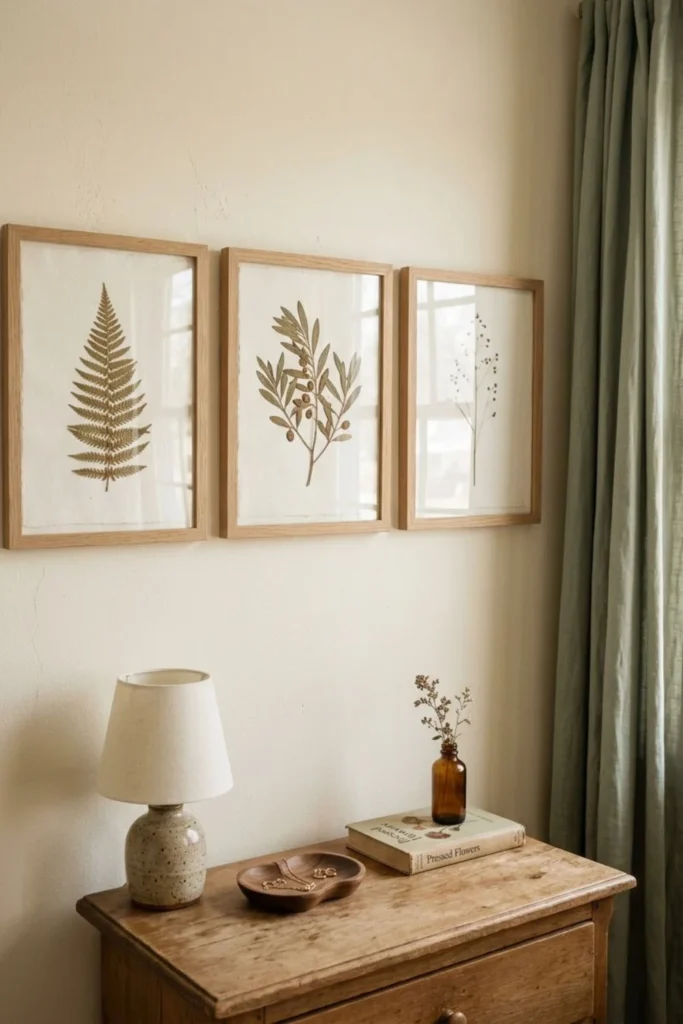
Pressed plants can make inexpensive art feel personal. Use plants you are allowed to collect, dry them fully, and label the back of the frame rather than adding large text to the front.
Choose acid-free paper and keep the work out of strong direct sunlight. Real plant color changes over time, which is part of the material. Sealed frames also reduce dust and moisture.
Use two or three frames with different specimens and the same calm mat color. Keep gaps even, but let each plant sit naturally instead of forcing perfect symmetry.
A DIY group may cost $40 to $200. Professional preservation and framing cost more. Do not use damp leaves; trapped moisture can damage the artwork.
8. Add a Small Macrame Wall Hanging
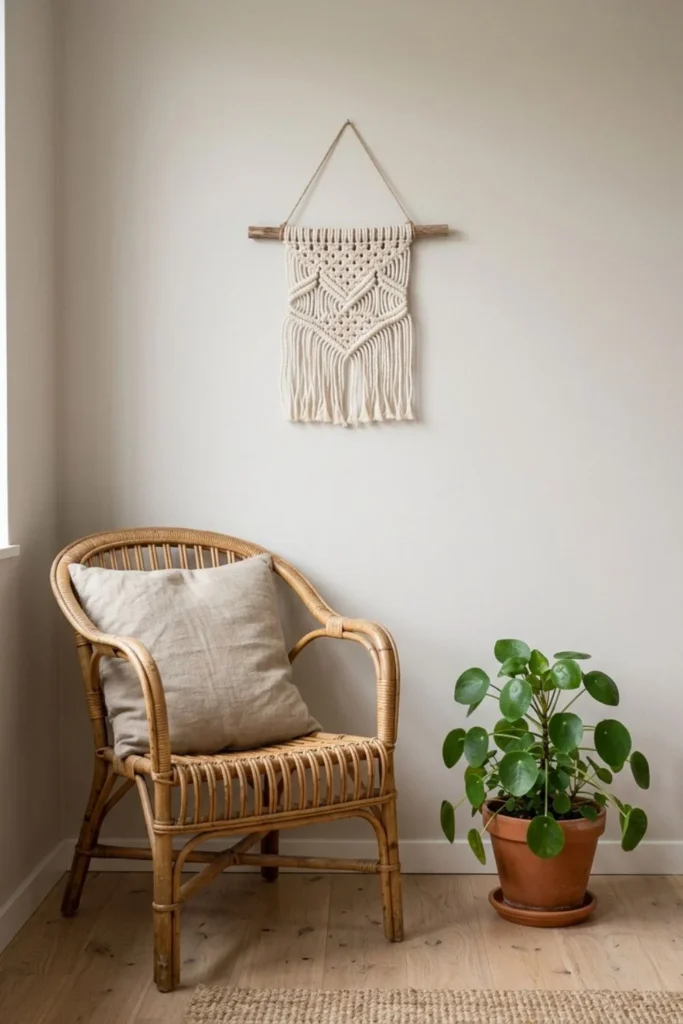
Macrame is one of my weaker choices. The texture is warm, but long fringe traps dust, catches pet hair, and can make a minimalist wall feel busy. The dowel and hanging loop can also fail if the piece is heavy or poorly made.
If you enjoy it, choose one small piece around 12 to 24 inches wide with short fringe. Hang it away from candles, heaters, cooking grease, dampness, and places where children or pets may pull it.
Vacuum gently with a low-suction upholstery tool if the maker allows it. Check the cord, knot, dowel, and wall hook instead of cleaning only the visible front.
A small handmade piece may cost $30 to $200. I would skip a huge floor-length design; a simple textile or framed fabric is often easier to maintain.
9. Use Warm Wood Slat Panels as an Accent
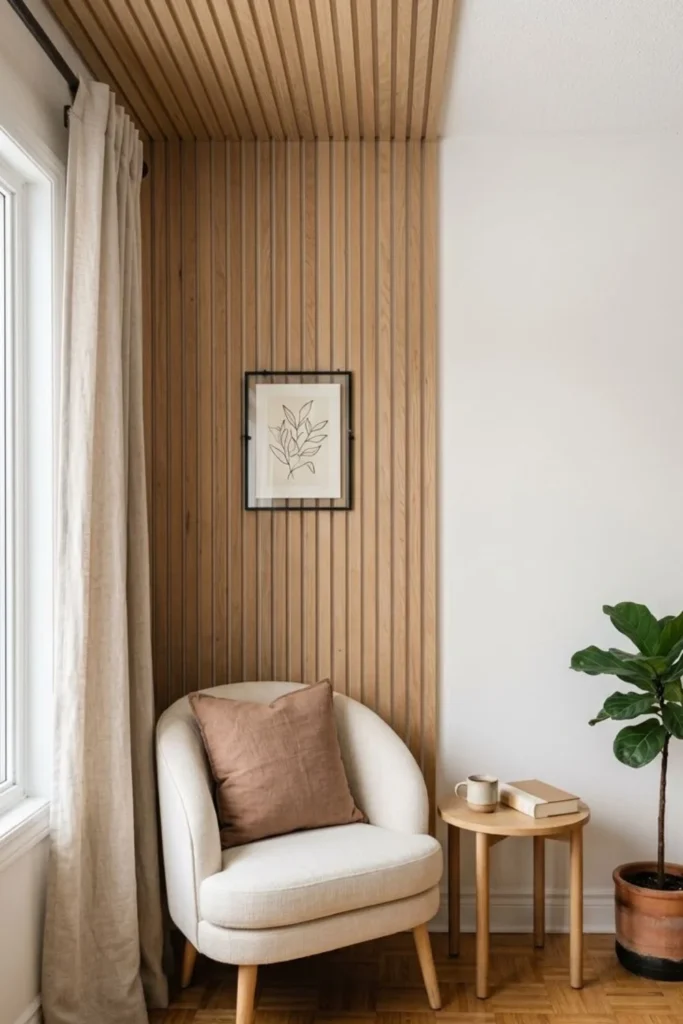
Wood slats add warmth and shadow, but they are a wall treatment rather than a small decoration. Use them on part of one wall instead of wrapping the full room.
Measure outlets, switches, skirting, and ceiling lines before ordering. Ask what the panel core, veneer, backing, finish, fire rating, and installation method are. “Wood look” may mean solid wood, thin veneer, or printed composite.
Slat gaps collect dust, so leave enough access for a brush attachment. Avoid placing panels where moisture is already a problem, and do not hide electrical boxes or vents.
Current 2026 supplier guides commonly place decorative wood panels around $7 to $22 per square foot for materials, with labor extra. Get local quotes and product documents rather than relying on one online image.
10. Style a Floating Shelf with Simple Decor
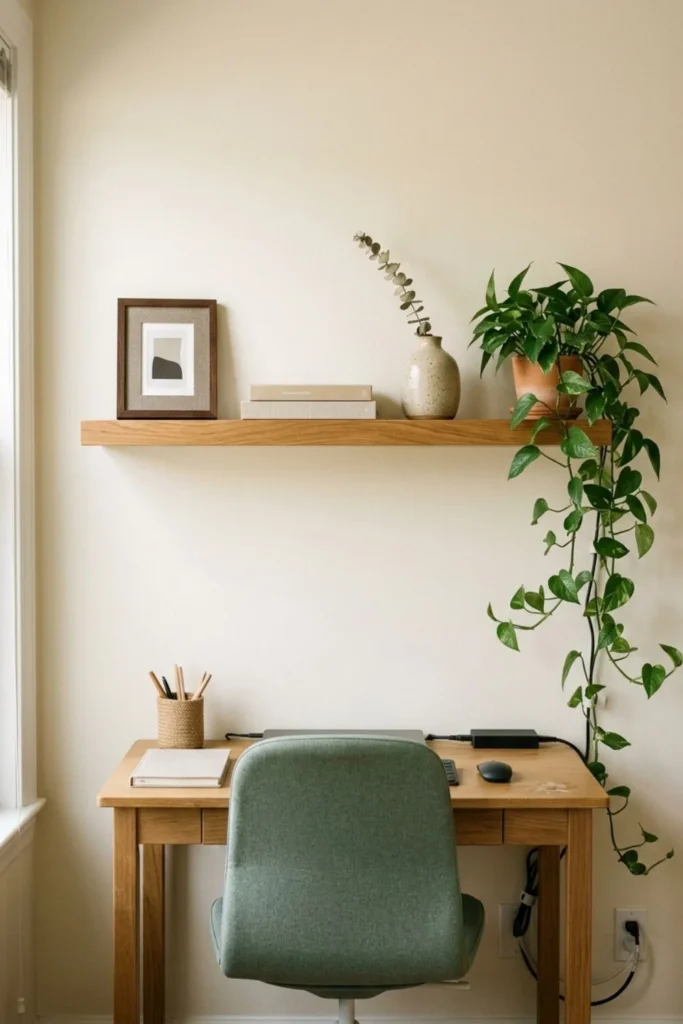
A floating shelf works when it holds useful, light objects. Try two framed prints, one small ceramic piece, and a trailing plant only if the plant has safe light and drainage.
A shelf around 8 to 10 inches deep can hold books, but a shallower decorative shelf looks lighter. Check the bracket system and loaded weight before placing ceramics or a row of hardbacks.
Keep heavy objects low and away from the front edge. Secure tall furniture below the shelf as well. The CPSC advises anchoring bookcases and other heavy furniture and storing heavier items lower; see its 2026 furniture tip-over guidance.
Plan $100 to $500 for the shelf, hardware, fitting, and limited decor. Empty space is part of the design.
11. Mix Black Line Art with Earthy Frames
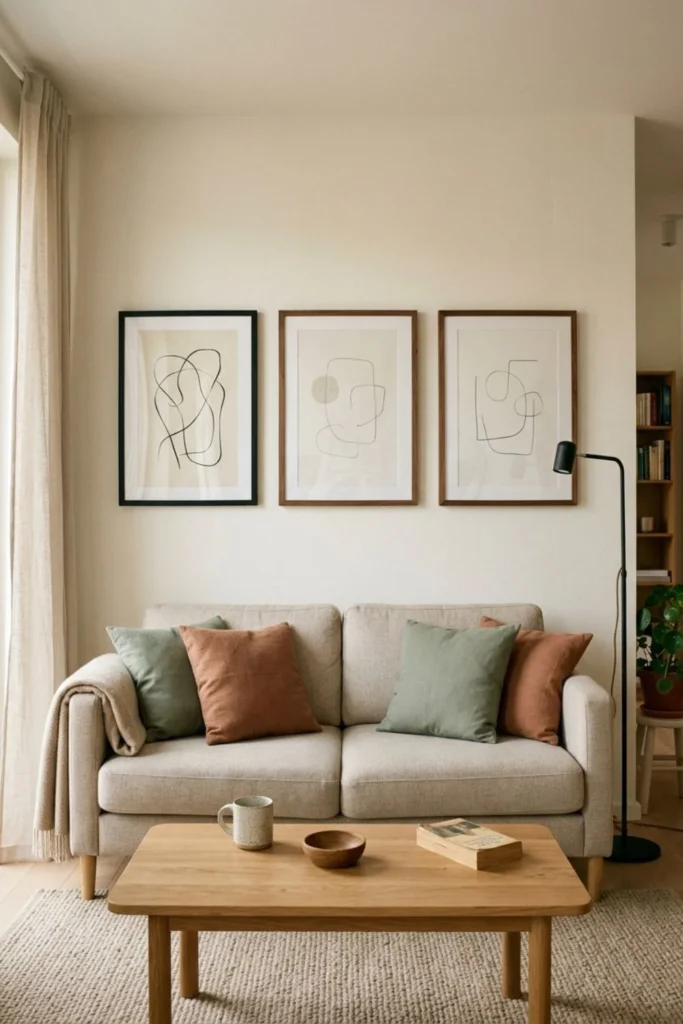
Black line art gives definition to soft boho colors. Use one or two drawings in oak, walnut, or warm-painted frames. The black should repeat in a lamp or furniture leg, not spread across every object.
Look for work that means something to you. Generic faces copied across many homes can make the wall feel less personal. A simple sketch, local print, or family-made drawing may suit the room better.
Use an off-white mat so the paper does not disappear into a cream wall. Keep frame widths similar when the art styles differ.
This update can cost $40 to $400, depending on print rights and framing. Give the drawing open wall around it rather than surrounding it with tiny accessories.
12. Build a Calm Corner Around One Statement Print
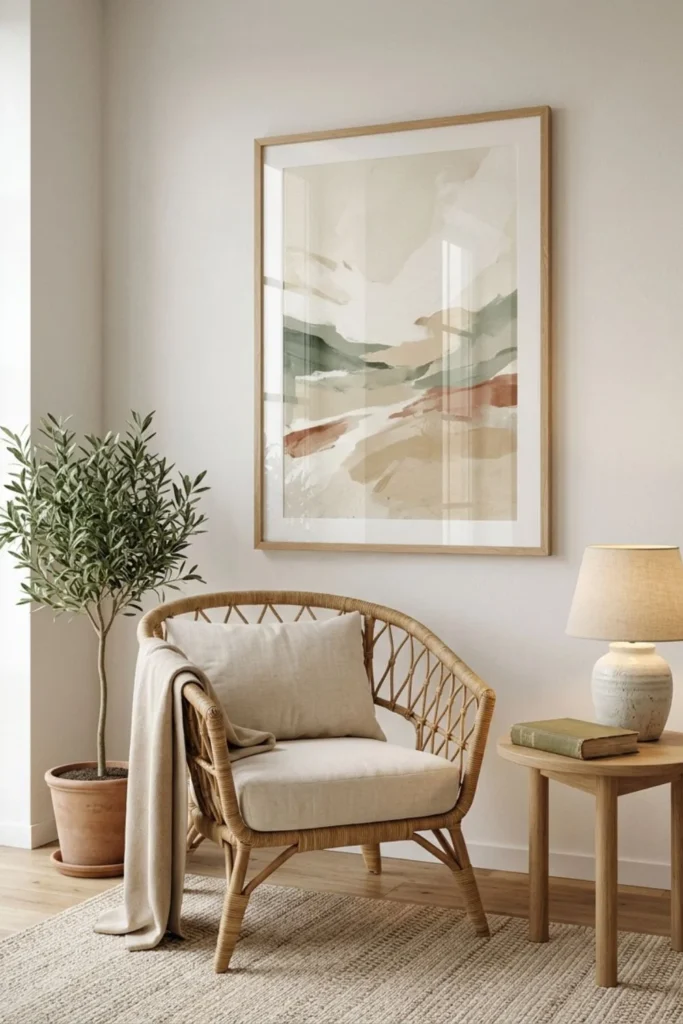
One large print can solve a wall more cleanly than a collection. Choose a landscape, abstract form, or photograph that repeats one room color without matching everything.
Above a console, make the artwork clearly narrower than the furniture. Keep the lower edge roughly 6 to 10 inches above the surface as a starting point, then adjust for lamps and objects.
Use a paper template to test scale. A large print in a very thin frame may look smaller than expected, while a wide mat and dark frame add visual weight.
Budget $100 to $800 for the print and frame, with original art costing more. One meaningful large piece often gives better value than many filler prints.
13. Add a Hanging Plant Near Natural Light
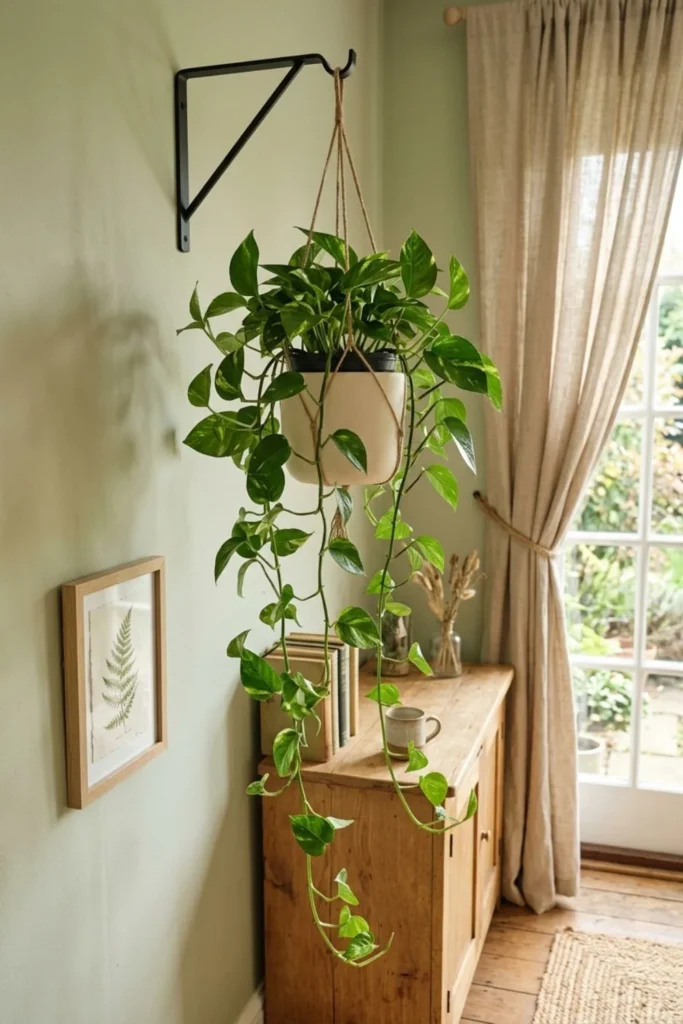
A hanging plant can soften a corner, but the plant’s health and the ceiling fixing matter. Choose a species suitable for the available light and safe for the household.
Weigh the pot after watering because wet soil is much heavier. Use a ceiling fixing rated for the structure and full wet weight. Do not hang from decorative plaster, a weak hook, or an unknown ceiling point.
Use a waterproof inner pot and remove it carefully for watering. Keep drips away from furniture, floors, outlets, and wall art.
A plant, pot, and proper hanger may cost $40 to $250. If safe support is uncertain, place the plant on a tall stand instead.
14. Decorate with Sun, Moon, or Arch Shapes
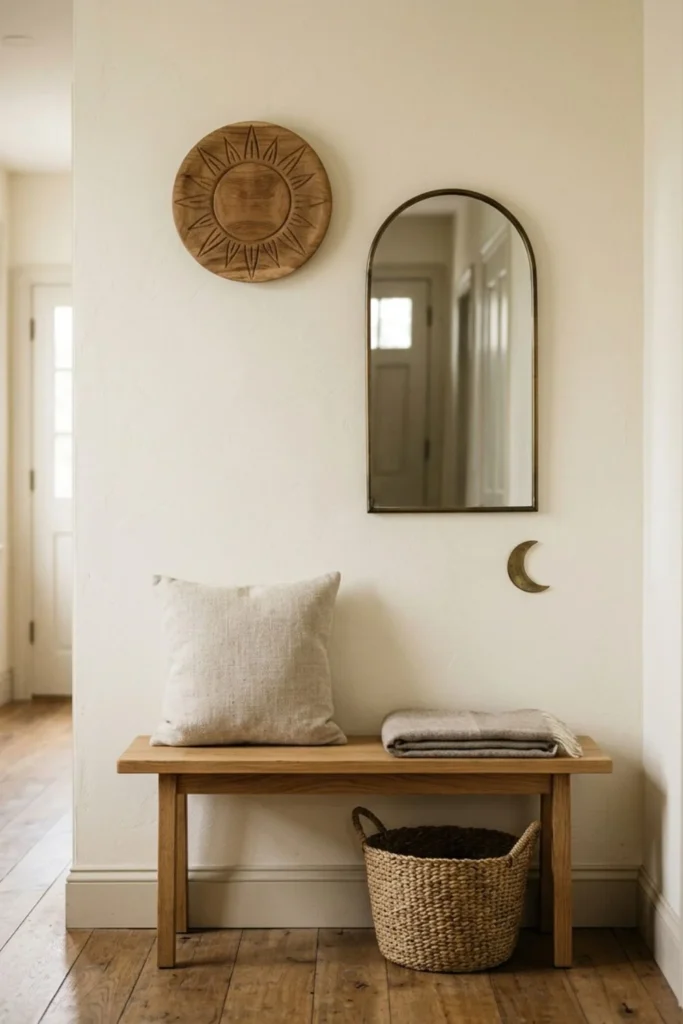
This is my other weak choice because these shapes are now used on prints, mirrors, shelves, cushions, and wall paint at the same time. Repeating them can make a home look like a trend package.
Choose one motif only. A small brass sun, one arched mirror, or a single moon print can add shape without becoming the room’s theme. Avoid mixing all three beside dried grass and macrame.
Test the silhouette with paper before buying. Curved pieces often need wider open space than rectangular frames of the same size. Use correct fixings, especially for mirrors or metal art.
Budget around $30 to $300 for one accent. I would prefer an object linked to your taste or culture over a generic set bought only because it is labeled boho.
15. Use a Soft Limewash-Look Wall Finish
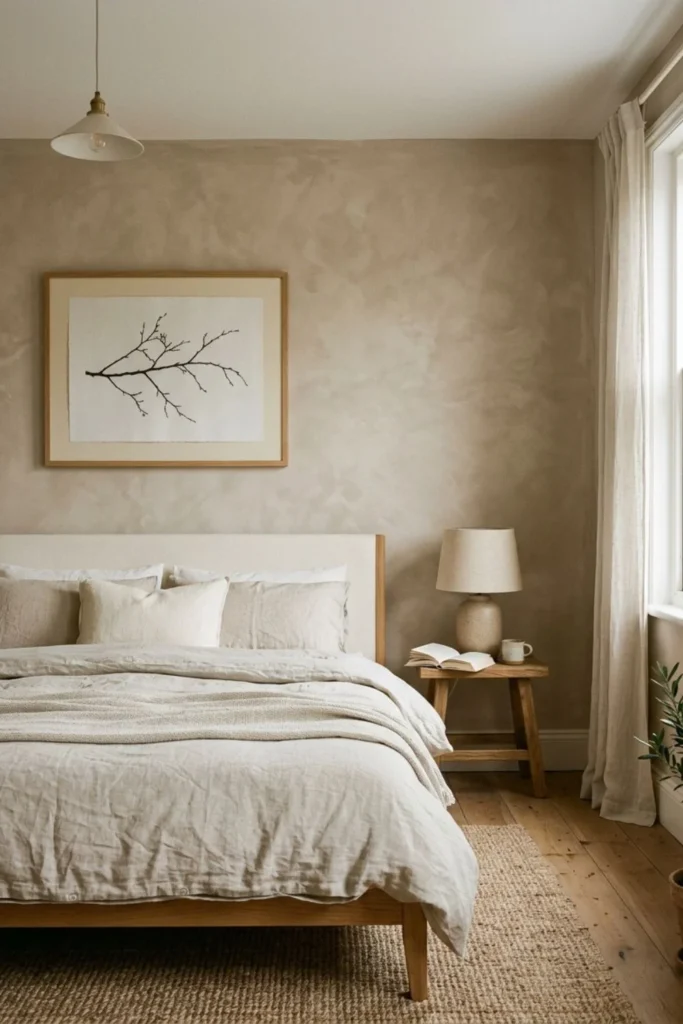
A limewash-look finish adds movement without hanging more objects. True mineral limewash and decorative paint effects behave differently, so check the wall surface and product system first.
Make a large sample board. Brush marks that look soft in a small photo may appear busy across a whole wall. Test the color beside furniture in daylight and evening light.
Follow the maker’s preparation, primer, ventilation, coat, and curing directions. Repair moisture before applying any decorative finish. In older painted homes, follow lead-safe guidance before sanding or scraping.
A DIY feature wall may cost $150 to $600 in materials and tools. Specialist labor can raise the project to $1,000 to $3,500+, depending on wall size, prep, and finish.
16. Hang a Minimal Woven Fiber Artwork
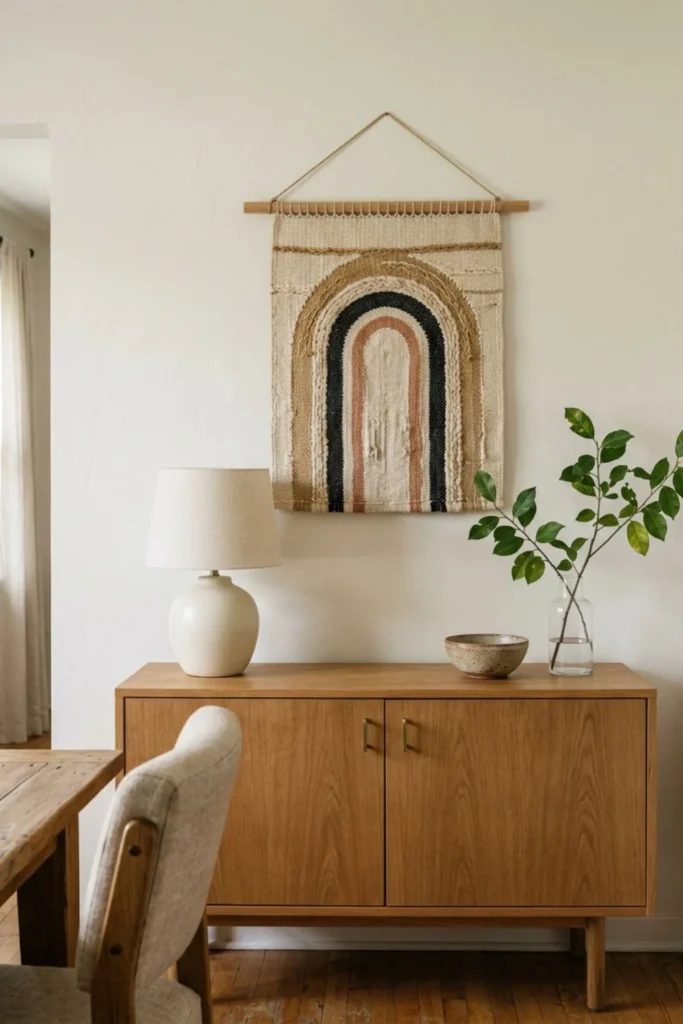
Fiber artwork can give you texture with less fringe than macrame. Look for a firm backing, short fibers, and a simple cream, tan, black, or clay palette.
Ask how it should be cleaned and whether direct sunlight will fade it. Keep it away from cooking grease, damp walls, heaters, and open flame.
The back matters as much as the front. Check the rail, loops, wire, and total weight. Use two fixing points when the maker recommends them so the piece cannot rotate.
Plan $100 to $700 for a handmade piece. One medium artwork is usually enough; another basket, textile, and macrame piece beside it would weaken the minimalist side of the room.
17. Create a Balanced Wall Above the Sofa
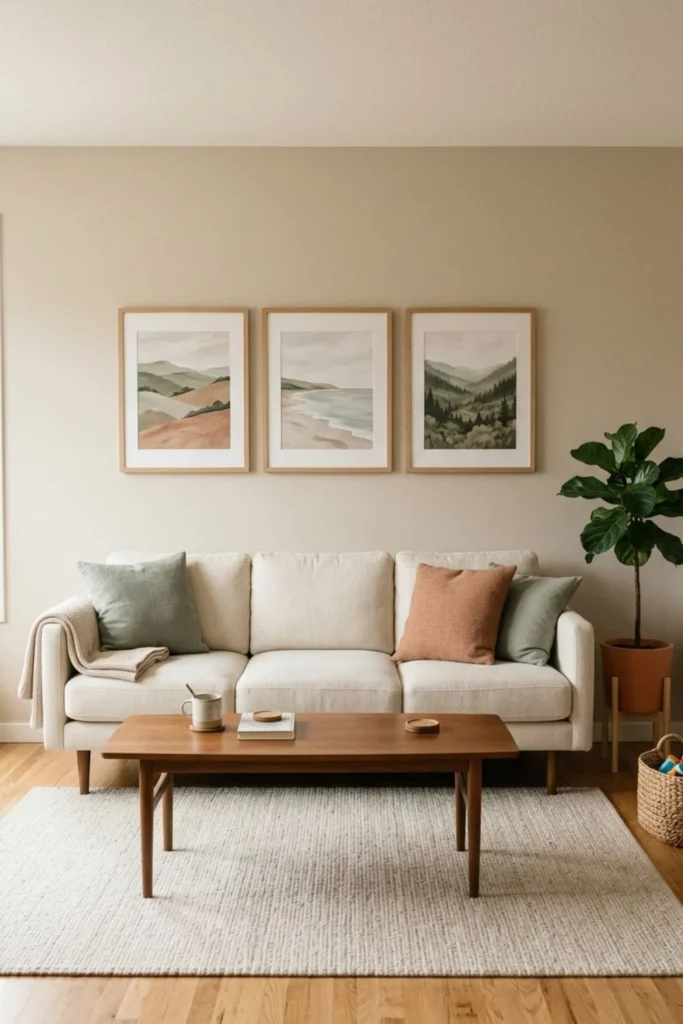
This is my third top choice because the sofa already gives the wall a clear center and width. The goal is to connect the display to the sofa instead of floating it near the ceiling.
Make the full arrangement around 60% to 75% of the sofa width as a practical starting point. Keep the lower edge roughly 6 to 10 inches above the sofa back. Use paper templates, then sit on every cushion to check head clearance and sight lines.
Choose one large frame, a three-piece gallery, or a properly fixed picture ledge. I prefer light frames and unbreakable glazing above active seating. Avoid heavy mirrors, ceramic plates, deep shelves, or anything that may fall when the sofa is bumped.
A balanced sofa wall may cost $100 to $1,000+ depending on art and framing. Spend part of that budget on correct hardware or professional hanging rather than using a cheap hook for an expensive frame.
18. Decorate a Small Bedroom Wall
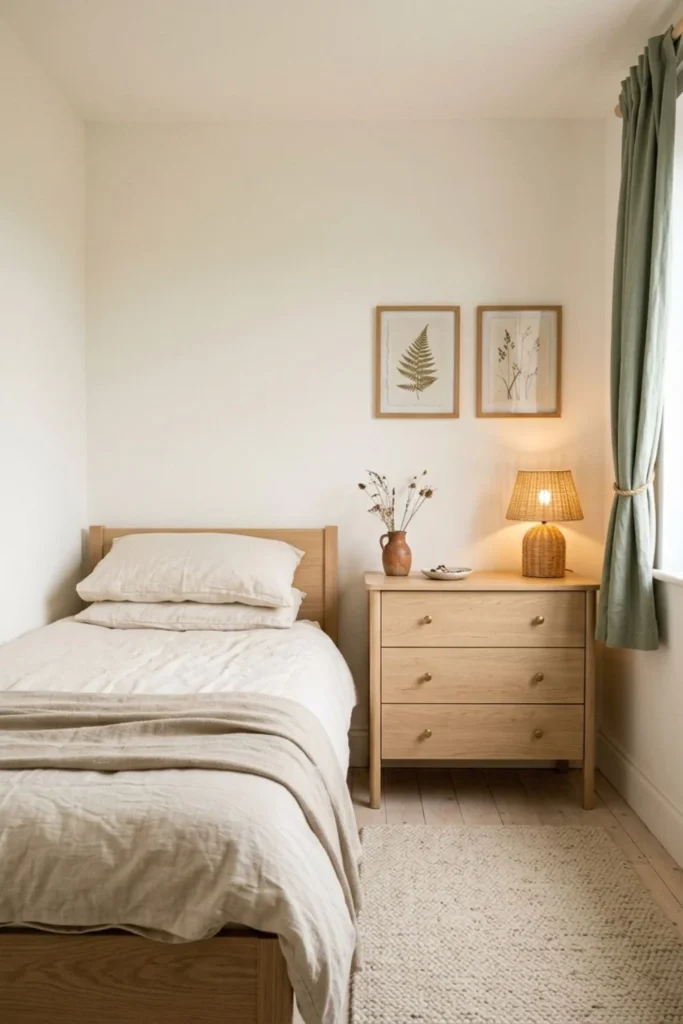
In a small bedroom, choose one wall and one main feature. A framed textile beside the bed, three light prints above a dresser, or one ledge on a clear wall can be enough.
Avoid heavy or breakable decor directly above the pillow. Keep shelves away from the path between bed and door, and make sure nothing projects where a shoulder may hit it in the dark.
Warm white, sand, light wood, and one muted clay or sage detail create a calm base. Personal photographs or one travel print make the room less generic.
Plan $75 to $500 for a small bedroom update. If renting, follow the agreement and the hanging product’s surface and weight rules; removable does not always mean damage-free.
19. Bring Boho Style into a Dining Nook
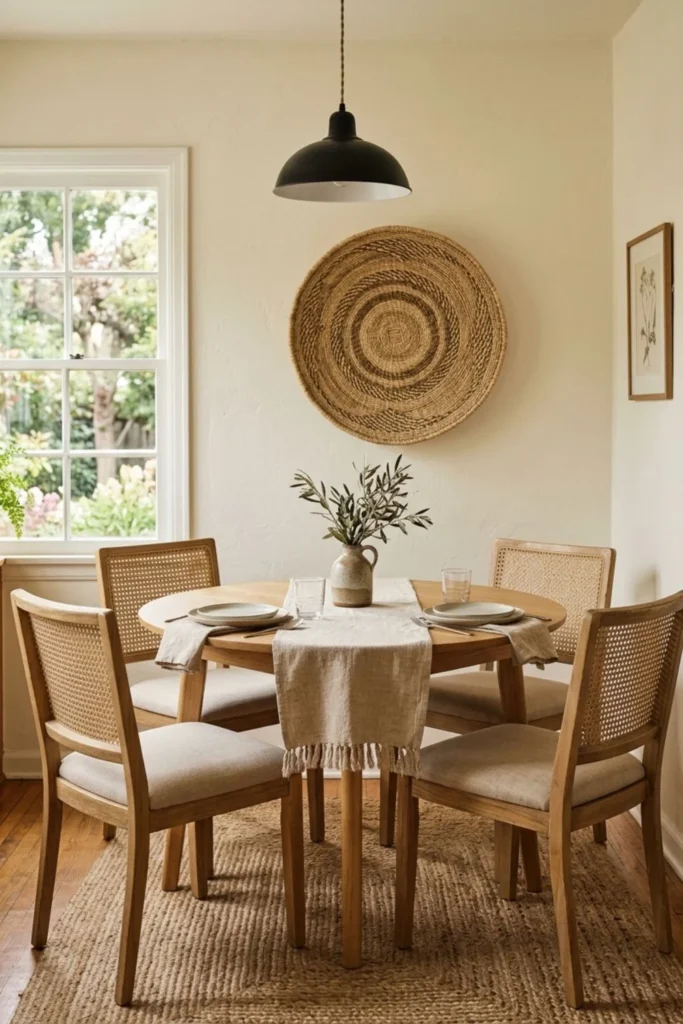
A dining nook needs decor that tolerates movement, food, and cleaning. Try one framed print, shallow ledge, or woven basket above a sideboard rather than a low textile behind chairs.
Keep wall pieces out of the chair path. Pull every chair fully back and check that heads and shoulders cannot hit a shelf, frame, or plant.
Use wipeable frames and avoid loose fibers near cooking grease. A small ceramic display belongs on a secure ledge away from the table edge.
Budget $100 to $700 depending on the shelf, frame, and installation. A useful bowl and one artwork often feel more natural than a styled collection that must be moved before every meal.
20. Make an Easy Budget-Friendly DIY Wall Display
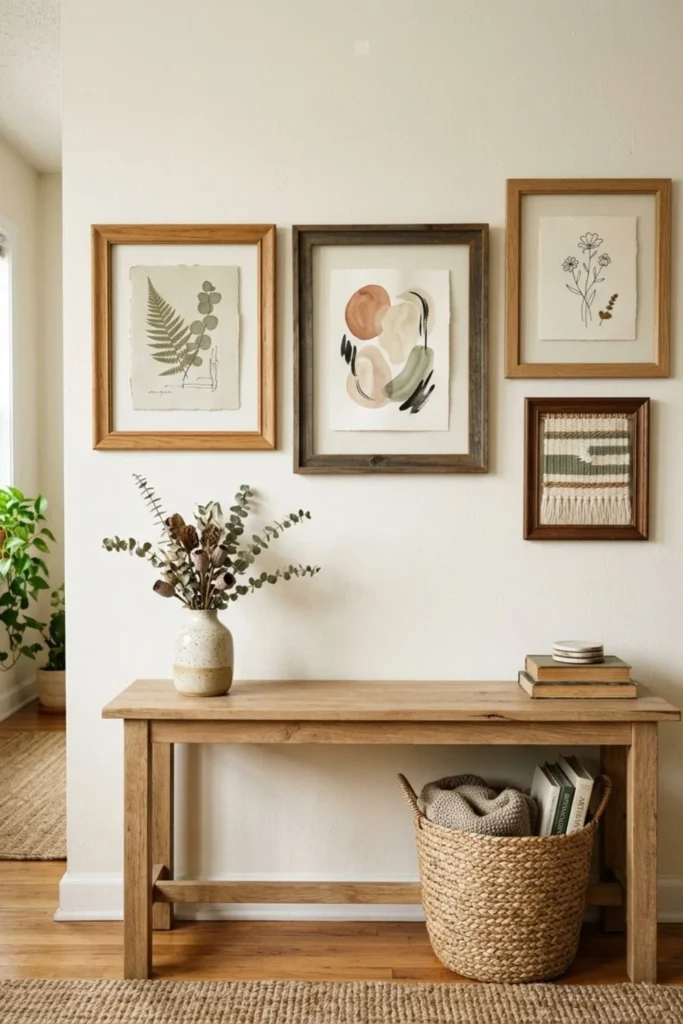
For a low-cost wall, use three ready-made frames, printable art you have the right to use, and one small handmade piece. Paint existing frames in related warm tones instead of buying a full new set.
Cut paper to the exact frame sizes and tape it to the wall. Adjust the gaps and height until the group feels balanced. This no-cost step prevents extra holes and damaged paint.
Use proper hooks even on a budget. Save money on art and frames, not on the hardware holding them. Keep receipts and packaging until the display has stayed secure.
A thoughtful DIY group may cost $50 to $250. Include a family photo, child’s drawing, or your own nature photograph so the wall cannot be copied exactly from a catalog.
21. Create an Achievable Luxury Boho Feature Wall
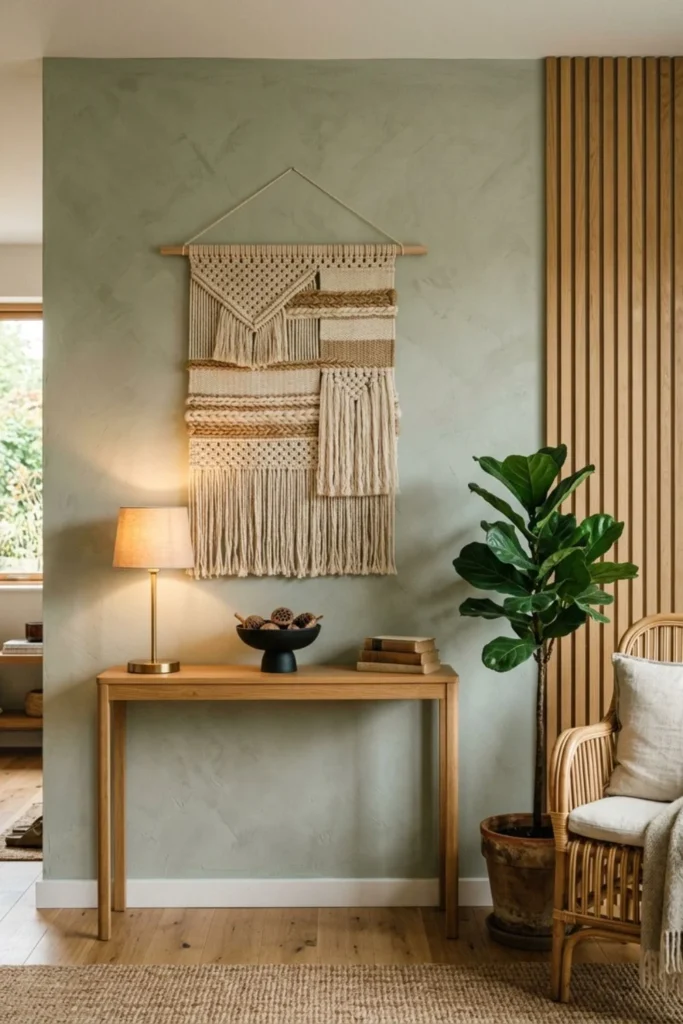
Luxury comes from material quality, scale, and clean installation. My version would use one limewash-look wall, a slim oak ledge, three well-framed personal prints, and a warm wall light.
Keep the palette limited to cream, oak, clay, and a little matte black. Use one woven texture elsewhere in the room. Precise shelf level, clean paint edges, and balanced frame gaps look more expensive than adding gold to every object.
Allow access to switches and lights, and do not hide wall damage or dampness. Ask for an itemized quote that separates wall preparation, finish, carpentry, hardware, lighting, and repair.
A custom feature wall may cost $1,500 to $5,000+. If the total climbs, keep the ledge and good framing, then choose standard paint instead of a specialist finish.
What I Would Choose at Three Budget Levels
Here is how I would simplify the choices.
| Budget | My practical plan | What I would skip |
| Under $500 | Three personal botanical frames, paper templates, correct hooks, and one existing woven object | Giant macrame, matching motif sets, weak adhesive hanging |
| $500–$1,500 | Better botanical gallery, solid picture ledge, calm paint, and one large framed work | Full slat wall and several competing textures |
| $1,500–$5,000+ | Professionally prepared wall, fitted oak ledge, quality framing, safe light, and limited handmade art | Heavy decor directly above seating or a bed |
At every level, I would start with idea 1, use idea 5 for flexibility, and follow idea 17 above a sofa. I would add macrame or celestial motifs only for a personal reason.
Ask installers to state the wall type, hardware, load rating, and repair work in the quote. A beautiful finish should not hide uncertainty about how the display is supported.
Keep Minimalist Boho Wall Decor Fresh
Dust frame tops, ledges, basket fibers, slat gaps, mirrors, and textiles. Follow the maker’s care instructions, especially for natural fiber, old paper, wood finishes, and unsealed ceramic.
Every few months, check:
- Hooks, wires, loops, anchors, and shelf brackets
- Frame movement and cracked glass
- Ledge load and objects near the edge
- Plant water near walls and wood
- Textile dust, fading, and loose fibers
- Dampness, peeling paint, or wall cracks
Do not solve every empty spot with another object. Move pieces between rooms, replace one print, or leave a section blank. Open wall space is not unfinished; it is what allows texture and art to be noticed.
A genuine room includes photographs, handmade work, and small signs of use. Those details create more warmth than buying every item from the same collection.
Final Thoughts
The strongest Minimalist Boho Wall Decor Ideas use fewer pieces, clear measurements, and secure hardware. A personal botanical gallery, useful wood ledge, or balanced display above the sofa can warm a room without turning it into a theme.
Identify the wall, weigh every item, use the correct fixings, and take extra care with old painted surfaces. Place heavy or breakable decor away from beds, children, and active seats, and bring in professional help when the wall or load is uncertain.
My honest order is simple: plan idea 1 carefully, choose idea 5 for flexibility, and use idea 17 to connect the wall with the main furniture. Treat large macrame and repeated celestial shapes as optional trends. A wall that reflects the people living beside it will always feel more human than one copied piece by piece from a perfect image.
Disclosure: Some visuals are AI-assisted design concepts created for inspiration. Always confirm wall type, measurements, materials, object weights, product load limits, wall anchors, hidden services, lead-paint risks, electrical safety, fire safety, child and pet safety, furniture stability, and installation requirements for your home. Costs are rough U.S. planning estimates and may vary by location, labor, materials, delivery, permits, and project conditions.