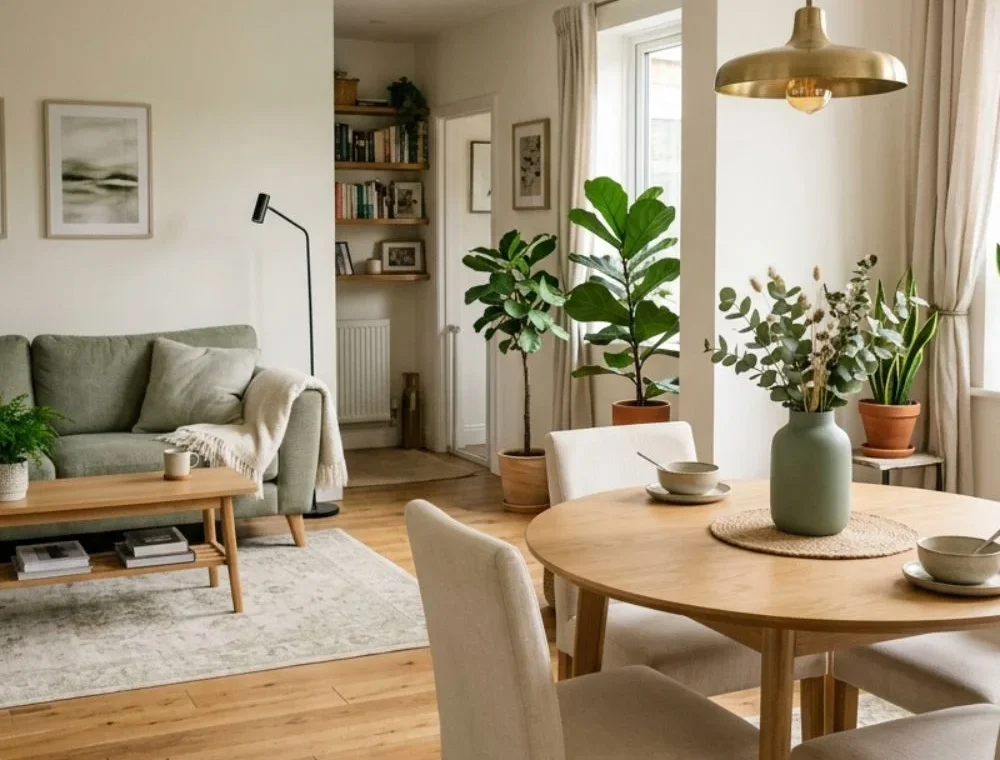
Sage Green Living and Dining Room Ideas work best when the two areas feel connected but still have clear jobs. The living side should invite you to sit, while the dining side needs enough room to pull out a chair and carry food without bumping furniture.
Sage sits between green and gray. It may look fresh in sun and earthy under a warm lamp. The same paint can look muddy or mint in different homes, so never choose from a screen alone.
I would plan the room before buying a green sofa, four matching chairs, two rugs, and a wall full of leaf prints. A shared space can become busy very quickly. One strong green feature, warm white, natural wood, and a smaller accent color are usually enough.
The ideas in this guide are not equally useful. Ideas 1, 2, and 7 are my strongest choices because the wall, sofa, and light-oak furniture can build a clear palette without filling the room with decor. Ideas 14 and 16 are the weakest because two badly sized rugs create trip and chair problems, while repeated botanical art can make the room look staged.
Costs are rough 2026 U.S. estimates, not quotes. Prices vary with room size, quality, labor, condition, delivery, and location. Adjust every measurement for your household.
Measure the Shared Room Before Decorating
Draw a simple floor plan and write down the wall lengths, windows, doors, outlets, vents, and fixed lights. Measure the sofa and dining table you already own. If you are buying new pieces, use painter’s tape to mark their full size on the floor.
Keep the main route through the room open. A 30-to-36-inch path is a useful home-planning range where space allows. The ADA standard uses 36 inches as the minimum clear width for an accessible route; a private room is not automatically governed by that rule, but the ADA width guidance shows why a clear route matters.
These measurements are good starting points:
- Leave about 16 to 18 inches between the sofa and coffee table.
- Allow roughly 24 inches of table edge per dining seat.
- Try to keep 36 inches from the table edge to a wall or fixed furniture.
- Aim for 42 to 48 inches behind chairs on a busy walking route when the room permits.
- Check the chair in its pulled-out position, not only when it is tucked in.
Now test the plan with daily actions. Walk from the kitchen to the table while holding a tray. Pull out every chair. Open the sideboard. Sit on the sofa and check the television angle. A layout that works on paper can still fail when doors and people begin moving.
Choose the main sage feature only after the layout works. It may be a wall, sofa, curtains, or dining chairs—not all four. Repeat the color two or three times in smaller amounts across the second zone.
A Realistic Budget for This Makeover
You can add sage green without replacing a whole room. Paint and textiles may be enough. A larger makeover may include a sofa, dining set, lighting, rugs, and storage, so decide which pieces truly need changing.
| Project level | What it may include | Rough planning cost |
|---|---|---|
| Small color refresh | Paint supplies, cushion covers, table linen, and simple decor | $300–$1,000 |
| Furniture and color update | Accent wall, curtains, rug, chairs, or one main furniture piece | $1,000–$4,000 |
| Full shared-room makeover | Sofa, table, chairs, lighting, rugs, paint, delivery, and labor | $4,000–$12,000+ |
Angi’s 2026 interior-painting guide lists professional work at roughly $2 to $6 per square foot, with a typical living room around $900 to $2,000. A single wall can cost less, but minimum labor charges, repairs, and tall ceilings change the total. See the current painting cost guide.
Set aside 10% to 15% for delivery, furniture assembly, wall patching, curtain hardware, rug pads, or electrical work. I would buy the sofa and dining table only after the floor plan is confirmed, because return fees on large furniture can destroy a careful budget.
1. Paint One Living Room Wall Sage Green
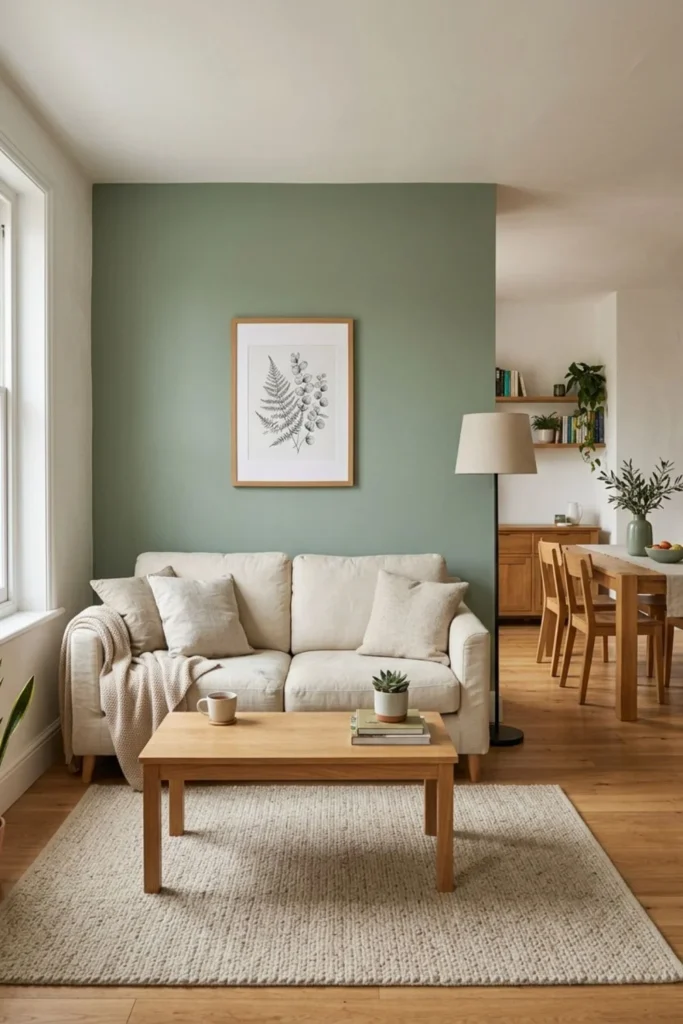
This is my first top choice because it makes a clear change at a manageable cost. The wall behind the sofa often works well, but choose the wall you naturally see when entering the room—not simply the longest one.
Test at least two sage colors on large movable boards. Check them in morning sun, cloudy light, and after dark under your lamps. Place the samples beside the floor, sofa fabric, dining table, and warm-white paint.
For a plain accent wall, 2026 cost data places many 70-to-150-square-foot walls around $140 to $900, depending on preparation and labor. DIY materials may be much lower if the wall is sound. The Angi accent-wall guide explains how size, finish, repairs, and painter minimums change the price.
Ventilate during painting and follow the product label. The EPA notes that paints can release VOCs and advises plenty of fresh air when using them; read its indoor VOC guidance. If a U.S. home was built before 1978, disturbing old paint may create lead dust, so follow the EPA’s lead-safe renovation advice or your local equivalent.
2. Choose a Sage Green Sofa
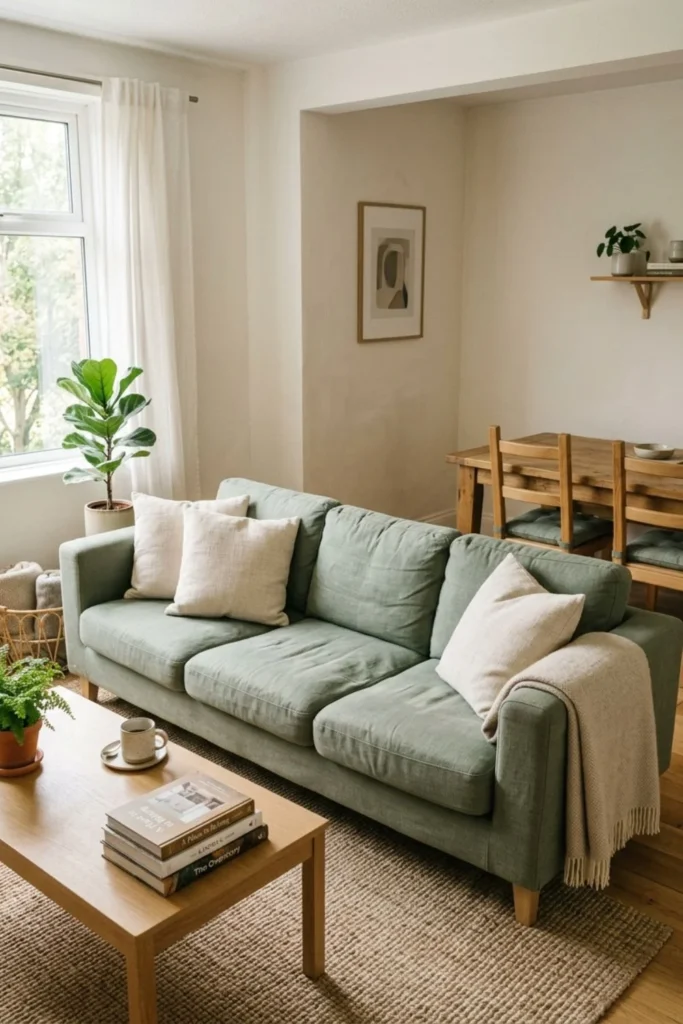
A sage sofa is my second top choice because it brings color into both daytime and evening views. It can also move with you, unlike paint or built-in work. The downside is cost, so measure twice and order once.
Mark the sofa’s full width and depth on the floor, including arms. Keep roughly 16 to 18 inches to the coffee table and protect the main walking route. Check the delivery path through doors, halls, stairs, and elevators before paying.
Ask for a fabric sample and rub it against jeans, pet hair, and the other room textiles. Look for the maker’s cleaning code, cushion construction, frame details, warranty, and return policy. A very pale sage may show spills; a very gray sage may look dull in a dark room.
New sofa prices vary too widely for one honest number, but reupholstery gives a useful comparison. Angi’s 2026 figures place a standard sofa around $1,000 to $2,500 and a sectional around $2,000 to $4,500 for reupholstery. See its sofa reupholstery guide. Reupholster only when the frame and size are already worth keeping.
3. Add Sage Green Curtains
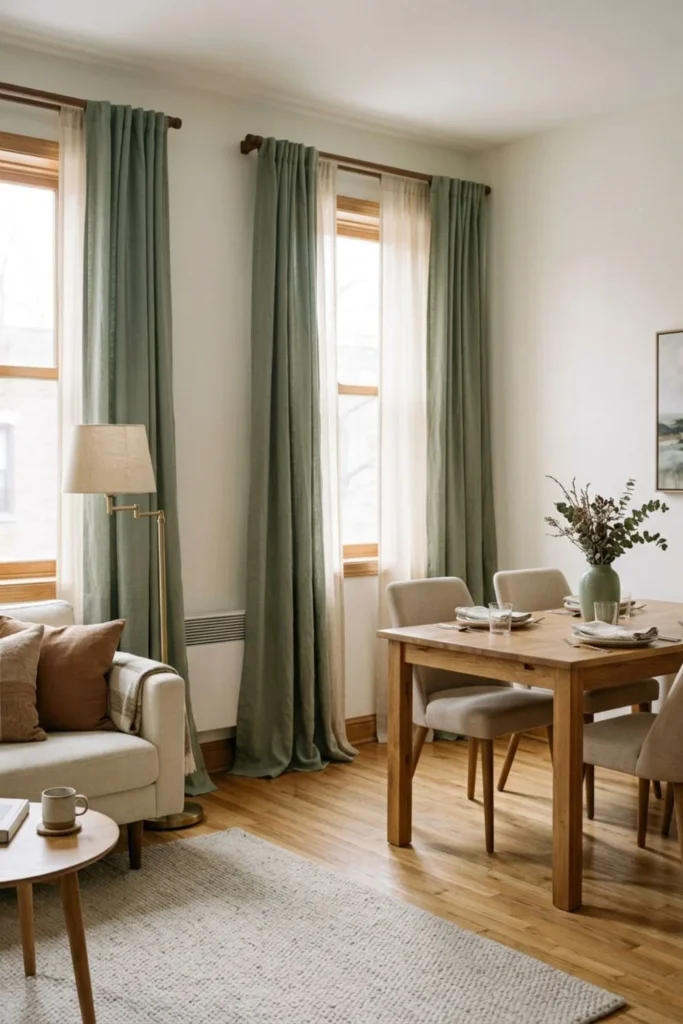
Curtains can repeat green without demanding a new sofa. They work best when the fabric looks good with both daylight and lamps. Hold a sample against the window because strong backlight can make sage appear much brighter.
Mounting the rod close to the ceiling can give a low room more height. Let the panels reach the floor without forming a large pile that traps dust. Keep them clear of heaters, air vents, and open flames.
For a fuller appearance, the combined fabric width is often around 1.5 to 2 times the rod width. Measure each window rather than ordering by memory. Ready-made panels may cost $80 to $400 per window, while lined or custom curtains can rise far beyond that.
I would use plain sage curtains only when the wall and sofa are quieter. If the sofa is already green, warm-white or oatmeal curtains may create better balance.
4. Use Sage Green Dining Chairs
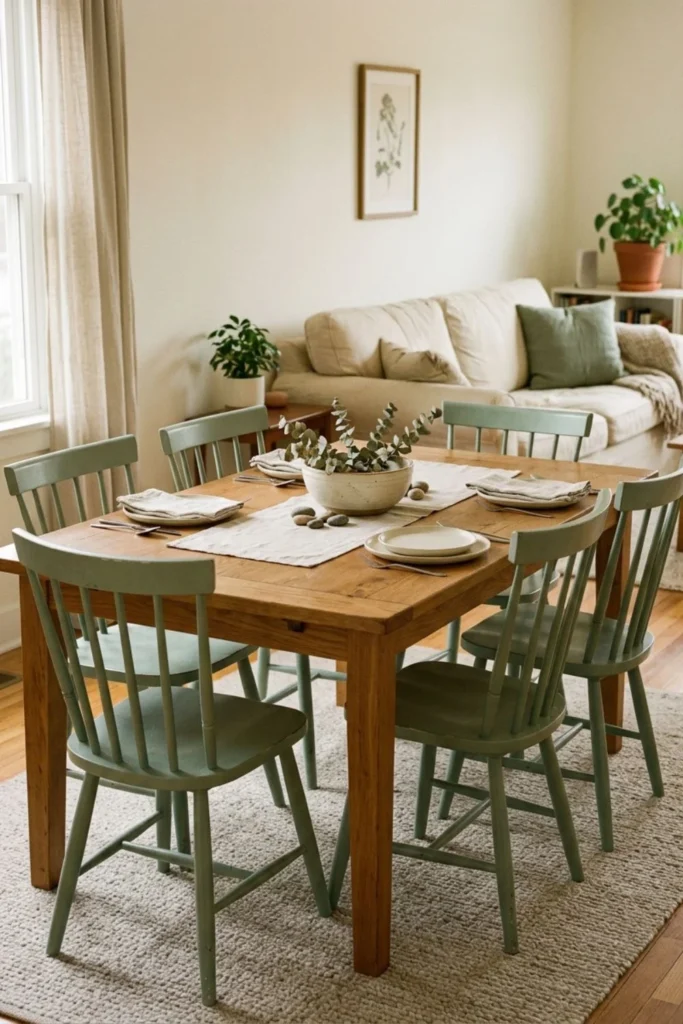
Green dining chairs can connect a neutral table to the living area. Four upholstered chairs create a stronger color block; two green end chairs provide a smaller accent.
Allow roughly 24 inches of table edge per person and test elbow room. The chair seat should slide under the apron without trapping knees. Check the full pulled-out depth and make sure it does not enter the main route.
Choose a fabric that can handle food and frequent cleaning. Removable or professionally cleanable covers are useful, but the chair frame and joints matter more than the color. Sit for a full meal before buying when possible.
A mixed set can look natural if the seat heights and wood tones agree. I would not buy fragile pale-green chairs simply to match the sofa. Comfort, stable joints, and cleanable fabric should lead the decision.
5. Repeat Sage Green in Both Zones
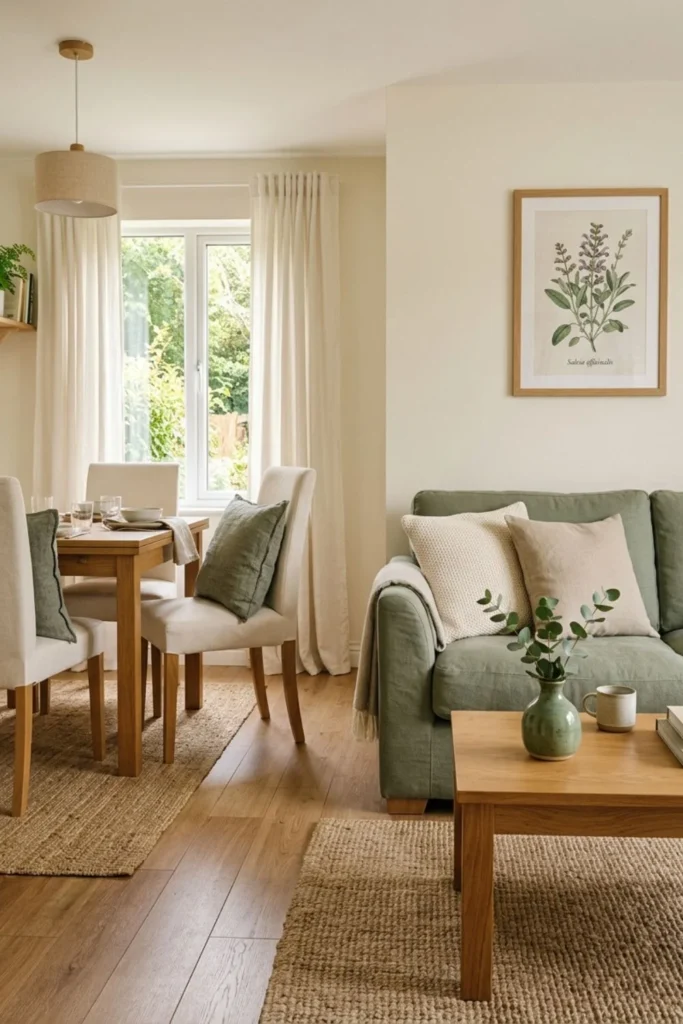
The two zones need a connection, not a matching furniture package. If the living room has a sage sofa, repeat green in a dining runner, two chair cushions, or one vase. If the main feature is a painted wall, a small green object on the table may be enough.
Use a simple balance: one large green feature, two medium repeats, and a few tiny details. Step back to the room entrance after each addition. When your eye starts counting green objects, stop.
Avoid buying decorative pieces only because the shade matches. A useful bowl, fabric napkin, or existing book feels more natural than a line of identical green vases.
This approach may cost $50 to $500 depending on textiles and accessories. Start with objects already owned, then add only what fills a real gap.
6. Pair Sage Green with Warm White
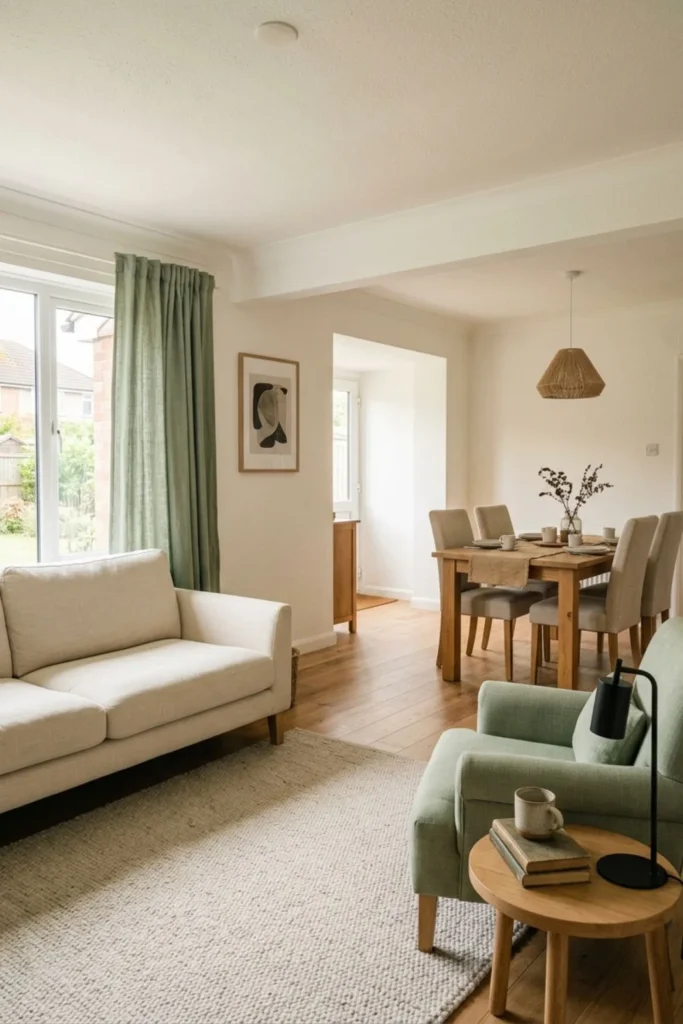
Warm white keeps sage fresh without the sharp contrast of bright blue-white. Use it on most walls, trim, or curtains, then let green carry the main feature.
Compare whites beside the chosen sage. A creamy white may make an olive sage warmer, while a cleaner neutral white may calm a yellow floor. Paint samples on separate boards so you can see the colors together in different parts of the room.
Eggshell or matte often works on walls, while trim usually needs a more washable finish. Follow the paint maker’s system and preparation advice instead of mixing products because their cans look similar.
If both zones feel dark, warm white is more useful than adding another mirror or glossy surface. It creates a quiet background for wood, fabric, books, and everyday objects.
7. Add Light Oak Furniture
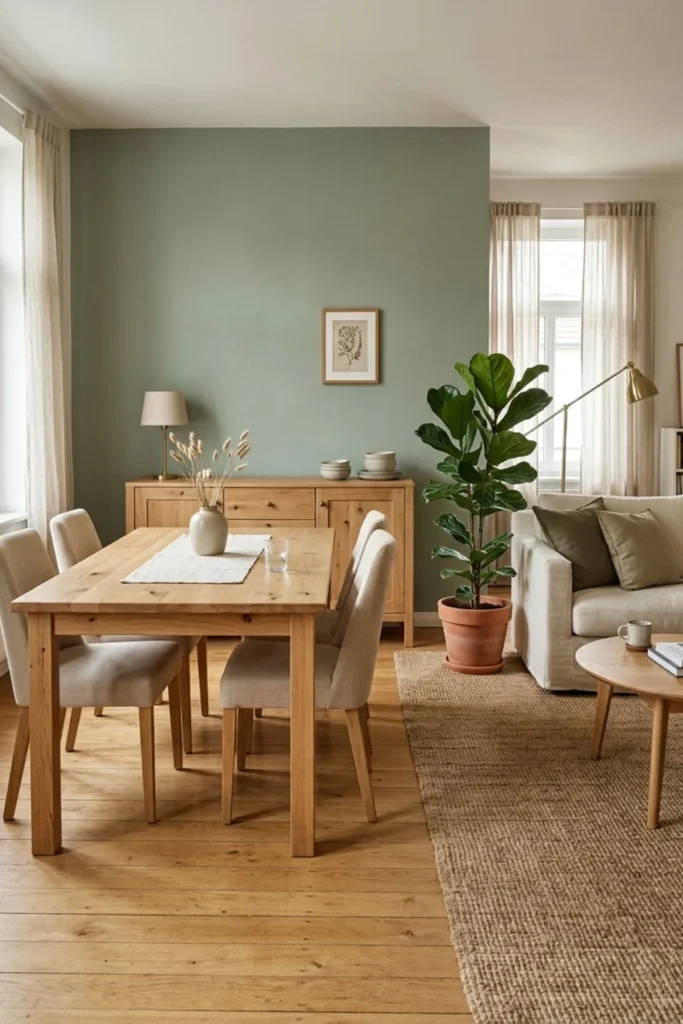
Light oak is my third top choice because it warms sage without making the room heavy. A dining table is the strongest place to use it. Repeat the tone in one coffee table, sideboard, or frame rather than buying a full matching set.
Check whether the piece is solid oak, oak veneer, or an oak-look finish. All can work, but they age and repair differently. Look under the table, inspect joints, feel for wobble, and ask how the surface handles heat and spills.
A dining table around 36 to 42 inches wide gives useful serving space in many homes. Length depends on seating, but still allow about 24 inches per person. Keep at least 36 inches around the table, with more on a main route.
Restoring an existing wood piece can be smarter than replacing it. Angi’s 2026 guide places professional oak-table refinishing around $300 to $900, while complex large tables cost more. Its table-refinishing guide also explains repairs and finish choices. Do not sand veneer as if it were thick solid wood.
8. Use Walnut for Rich Contrast
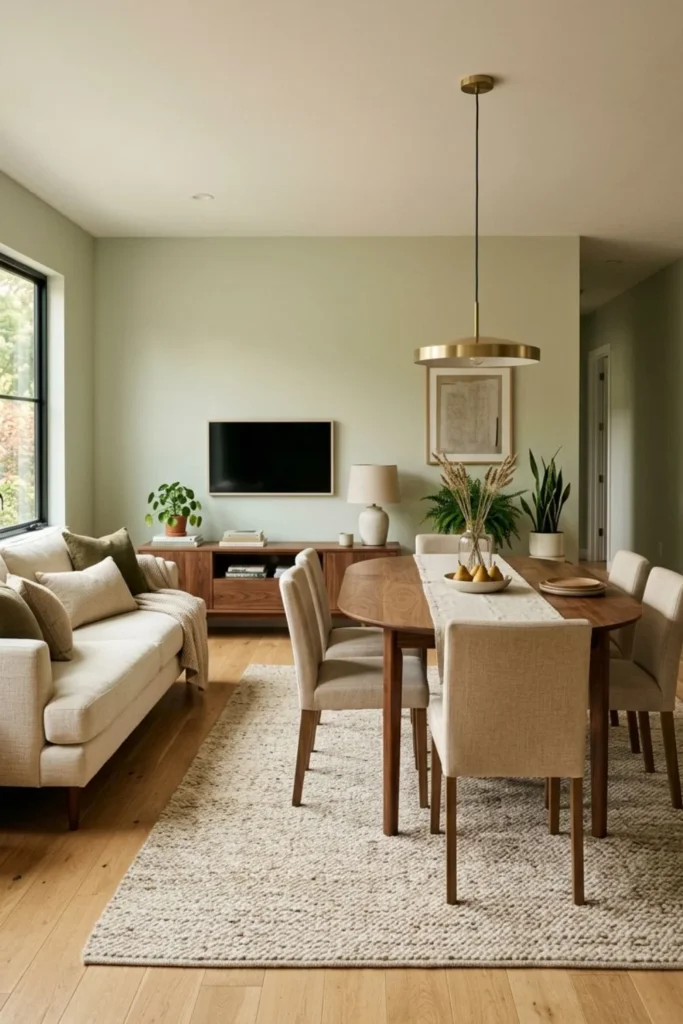
Walnut gives sage a deeper, more formal edge. Use it on one dining table, low sideboard, or coffee table. Too many dark pieces can pull the visual weight toward the floor.
Repeat the walnut once in a small frame, lamp base, or tray. Keep the larger walls and curtains light. Cream upholstery can separate dark wood from a dark floor.
Measure the same clearances you would for oak. Color does not make an oversized table fit. Check that cabinet doors and drawers open without touching chairs.
A vintage walnut piece with small marks often feels more human than a perfect matching set. Budget roughly $300 to $2,500+ depending on size, age, construction, and repairs. Confirm whether it is solid wood or veneer before refinishing.
9. Soften the Room with Cream Fabrics
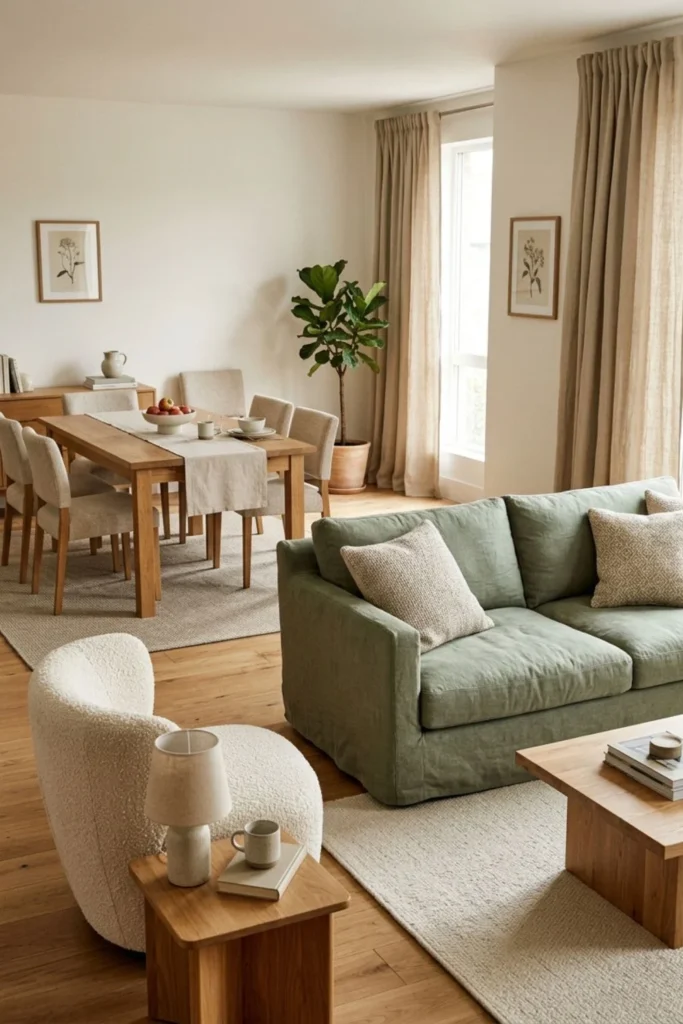
Cream curtains, cushions, and a throw can lighten green and dark wood. Mix weaves rather than buying five objects in exactly the same fabric.
Choose removable covers in busy homes. A sofa pillow that cannot be washed may become a decoration you are afraid to use. Keep pale fabric away from the eating area if spills are common.
One or two cream cushions on a sage sofa are enough. Add a folded oatmeal throw and let the dining chairs remain simpler. Too many pale layers can make the room feel flat and increase cleaning.
Plan $100 to $700 for washable covers, curtains, or a better-quality throw. Check care labels before choosing texture; a practical cotton blend may serve the room better than delicate fabric.
10. Add Terracotta and Burnt Orange Accents
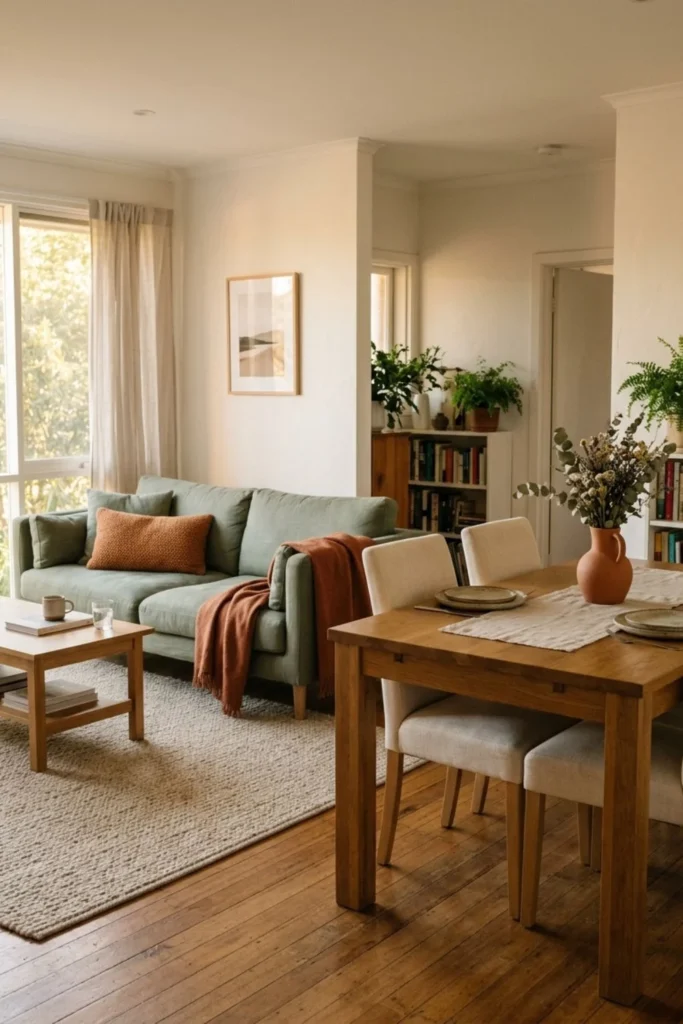
Terracotta brings out the earthy side of sage. Try it in one lumbar pillow, a glazed bowl, or a small piece of art. Burnt orange is stronger, so use less.
Repeat the accent once across the room, not on every surface. A rust pillow in the living area and a terracotta vase on the dining table can be enough.
Test the accent in evening light. Strong orange bulbs plus terracotta may make the room too warm. Keep the wall and large fabrics calm.
This is an affordable update, often $50 to $400. I would choose one handmade or slightly irregular object instead of several matching accessories that make the room look staged.
11. Mix in Dusty Blush Details
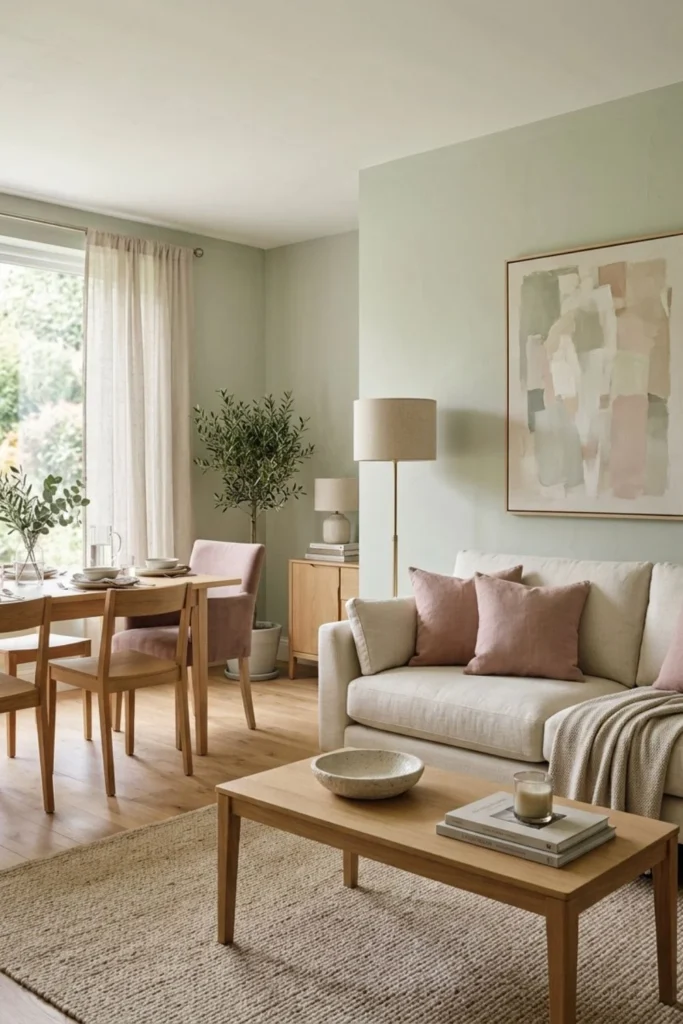
Dusty blush can soften a gray sage without making the room feel childish. Use a faded pink cushion, small artwork, or flowers. Choose a muted tone with brown or gray underneath.
Blush works best as a small supporting color. If the room already includes terracotta, brass, and walnut, adding blush may create too many warm accents.
Carry the color into the dining zone through one bowl or linen napkins. Avoid matching pink curtains and chairs unless pink is meant to become a second main color.
A few details may cost $40 to $300. Borrow a cushion from another room for a day before buying; it is an easy way to see whether the palette needs softness or simply less decoration.
12. Use Small Black Accents
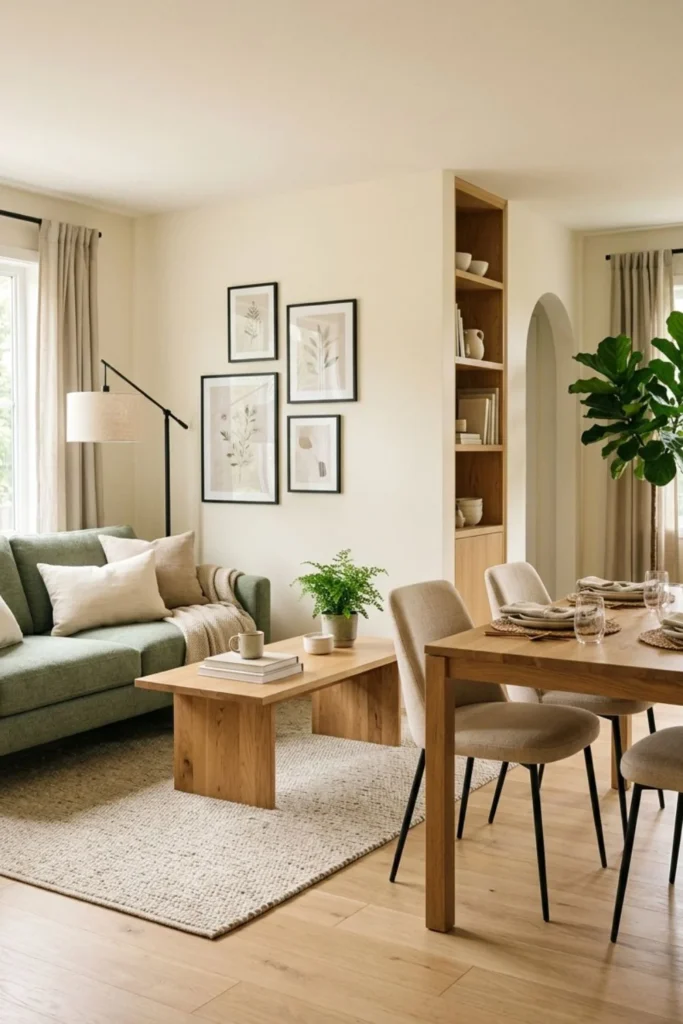
Black can sharpen a soft palette. A slim lamp, curtain rod, frame, or chair leg creates definition without darkening the whole room.
Keep the pieces thin and repeat the finish only two or three times. A large black cabinet, table, chandelier, and frames together can overpower pale sage and oak.
Matte black often looks calmer than glossy black. Dust and fingerprints still show, so place high-touch items where they are easy to wipe.
Budget around $75 to $600 for a rod, lamp, hardware, or frames. Existing hardware can sometimes be replaced instead of changing the full piece, but choose sizes that fit the original holes.
13. Add Brass or Soft Gold Lighting
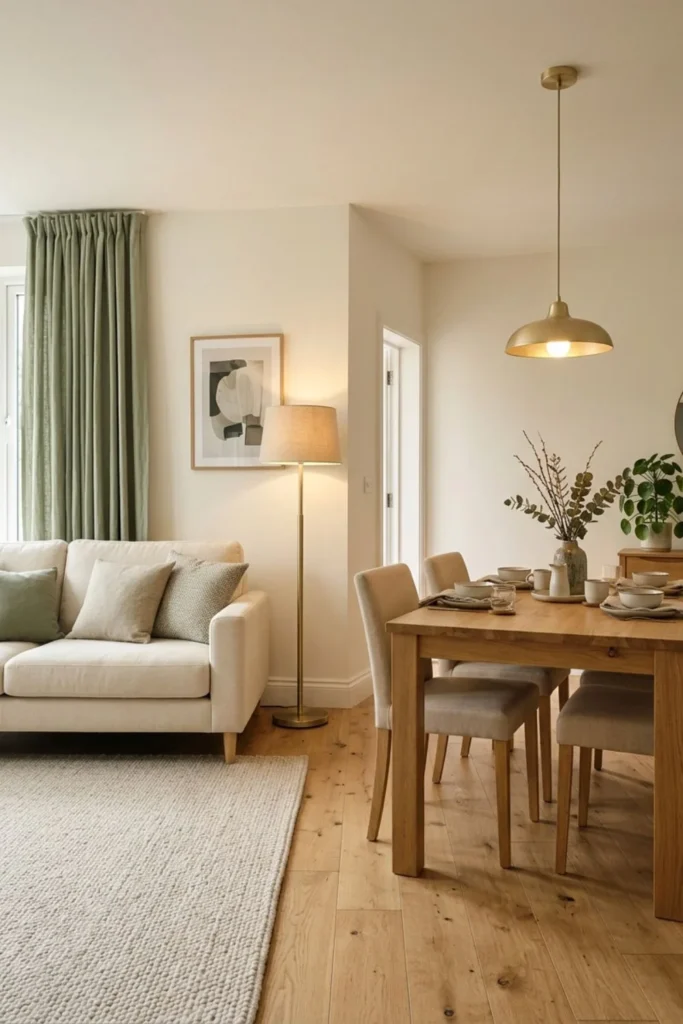
Brass warms sage and cream, especially after dark. Choose a restrained pendant above the table and a floor or table lamp in the living zone. The finishes may relate without being identical.
Center the dining fixture on the table, not automatically on the room. A common starting point is around 30 to 36 inches above the tabletop, then adjust for fixture size, ceiling height, and sight lines.
Use a dimmer where suitable, but make sure the table still has enough light for eating and cleaning. Follow fixture instructions and use a qualified electrician for new hardwiring.
Fixtures and installation may range from $200 to $1,500+ across the room. Before buying a large pendant, make a cardboard outline and hang it temporarily to judge scale.
14. Define Each Zone with Rugs
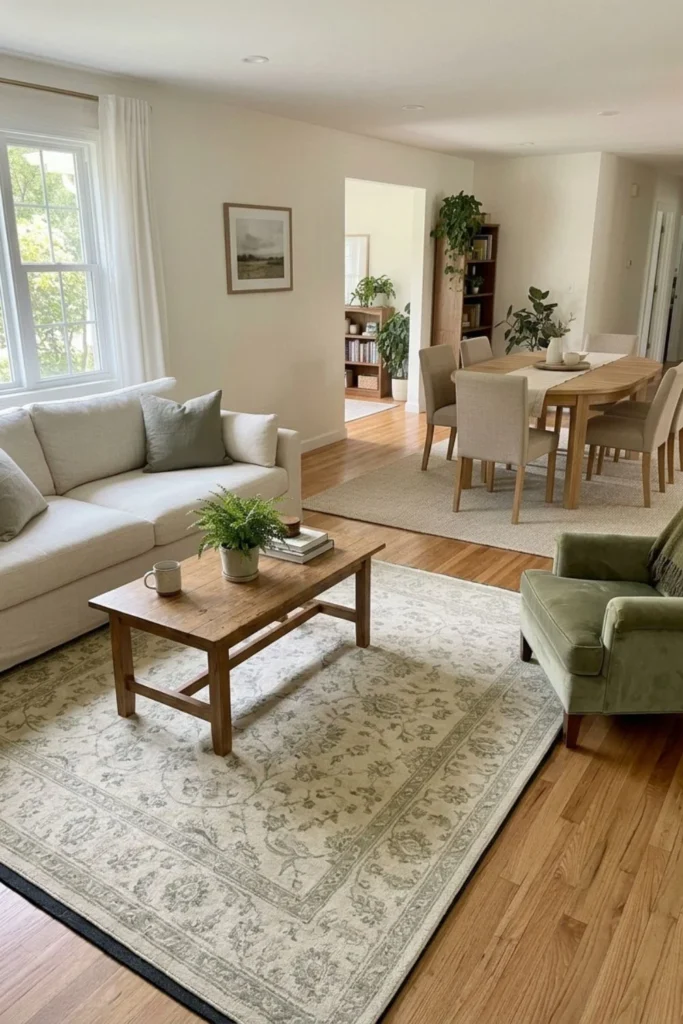
This is one of my weaker choices because two rugs can make a small shared room feel chopped up. Thin corners can curl, chair legs may catch, and a dining rug collects crumbs and stains.
If you use a living-room rug, place at least the sofa’s front legs on it. A rug that floats far from every seat usually looks too small. Keep its edge away from the main doorway where possible and use a pad designed for the floor and rug type.
A dining rug should extend about 24 to 30 inches beyond each table edge so chair legs stay on it when pulled out. If that size blocks a route or reaches a cabinet, skip the dining rug. One good living-room rug may define the space better than two weak ones.
Cleaning adds cost. Angi’s 2026 figures place many 5-by-8 rugs at $80 to $200 and 8-by-10 rugs at $150 to $400 for professional cleaning. See its rug-cleaning cost guide. Choose low pile and secure edges over unnecessary layering.
15. Layer Warm Lighting Across the Room
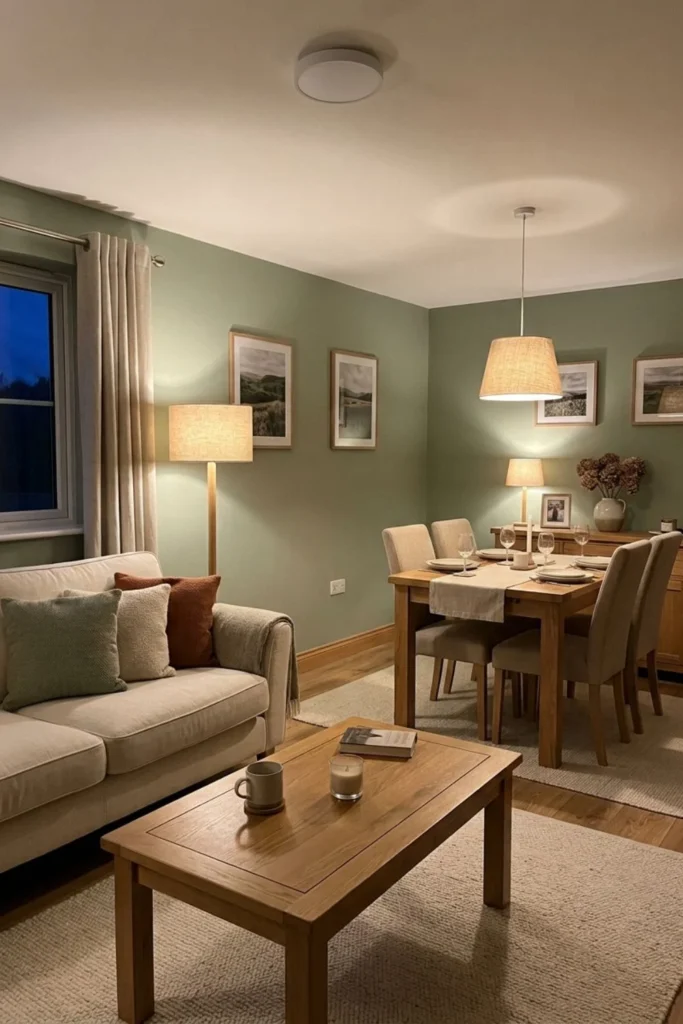
One ceiling light rarely serves both relaxing and dining. Use a pendant over the table, a floor lamp near the sofa, and one smaller lamp on a sideboard if needed.
Keep bulb color reasonably consistent. Warm light around 2700K to 3000K is a useful starting range for a cozy shared room, while the dining table may need stronger output for meals and homework.
Place switches where people naturally enter each zone. Hide cords along walls without running them under rugs or across paths. Do not overload extensions or treat them as permanent wiring.
A simple lamp update may cost $150 to $600. New hardwired fixtures, dimmers, wall repair, and electrician labor can push a full plan to $600 to $2,000+.
16. Connect the Space with Botanical Art
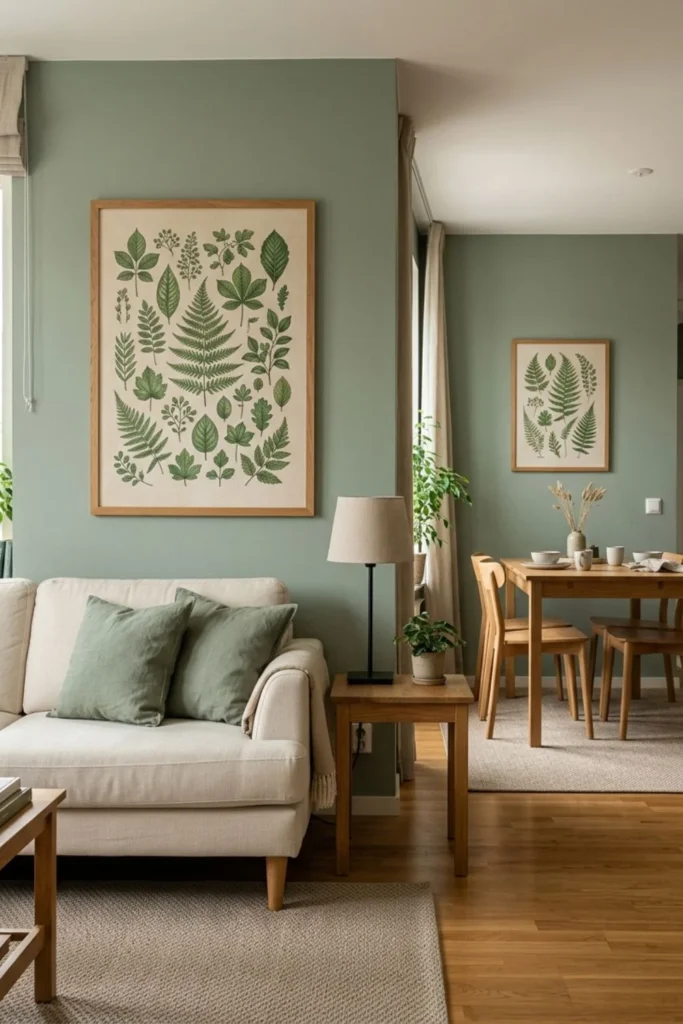
Botanical art is my other weak idea because it is easy to overdo. Five matching leaf prints beside several plants and green furniture can make the room feel like a theme set rather than a home.
Try one meaningful landscape, an original photograph, or a single botanical piece with colors already present in the room. Center it over the furniture below, not the full wall. A gap around 6 to 10 inches above a sofa or sideboard is a planning reference, but frame size and furniture height decide the final spot.
Use fixings rated for the wall type and frame weight. Do not balance heavy glass art where a chair can strike it. Paper templates help check the layout before holes are made.
Prints and frames may cost $50 to $400, while custom or original work can cost much more. I would spend on one personal piece before buying a matching set of generic green leaves.
17. Decorate with Healthy Indoor Plants
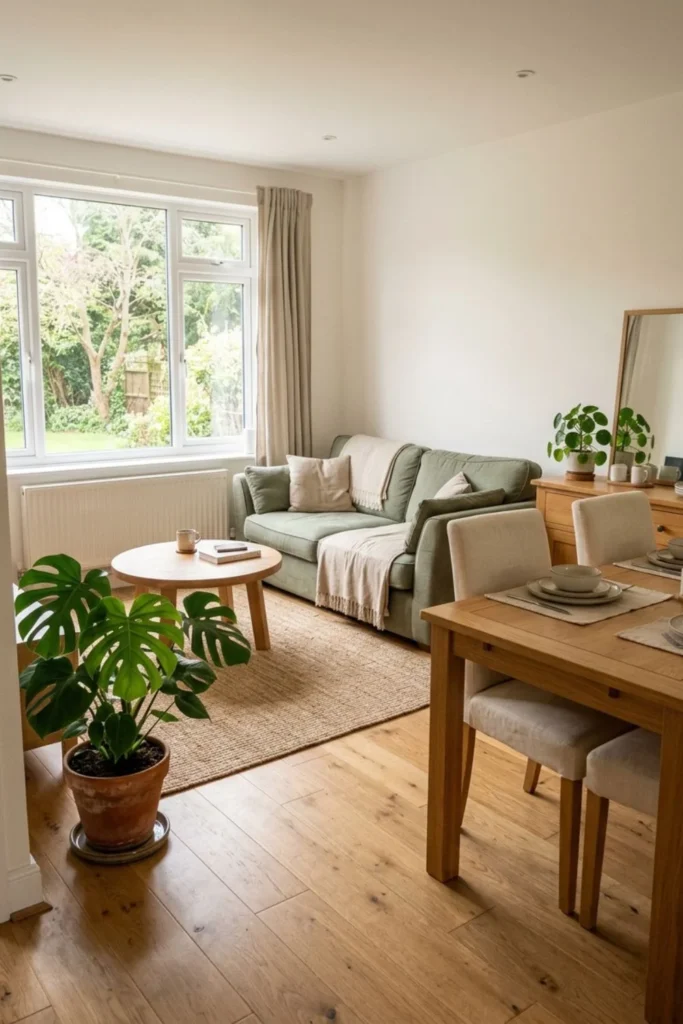
Real plants add shape and life, but they need the right light and care. Put a plant where it can live, not where an image prompt says an empty corner needs green.
Use waterproof saucers and protect wood from moisture. Keep large pots out of the walking route, and choose stable planters in homes with children or pets. Check whether the species is suitable for your household.
One floor plant and one small table plant are enough in many shared rooms. Remove dead leaves and rotate the pot for even growth. If the room has poor light, a realistic faux branch may look better than a struggling plant.
Plan $40 to $300 for plants, pots, and trays. The ongoing cost is small, but regular watering, cleaning, and checking for pests are part of the design.
18. Make a Small Open-Plan Room Feel Bigger
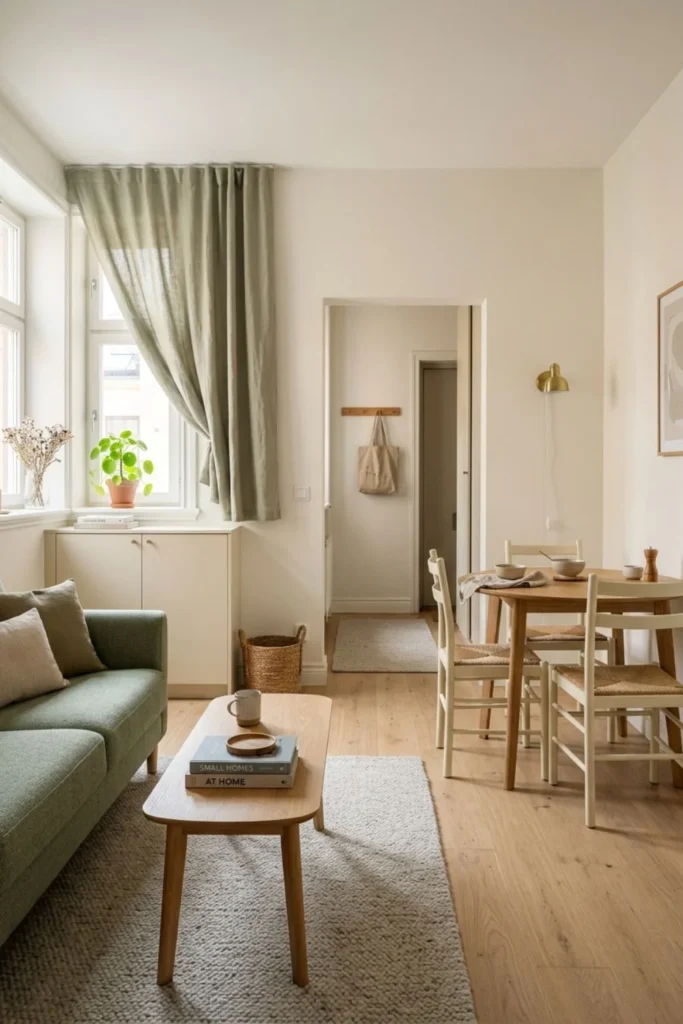
Use fewer, correctly sized pieces and keep the main route visible. A sofa with raised legs and a table with a simple base can reveal more floor, but they still need to be strong and comfortable.
Choose one main sage feature and repeat it lightly. Keep tall storage on one wall rather than spreading cabinets through both zones. Put rarely used serving items behind doors.
Do not push every piece against the wall automatically. A sofa placed a few inches forward may define the living area and leave a clear route behind it. Test the position before buying a console.
Secure tall furniture. The CPSC advises anchoring bookcases and other heavy furniture and keeping heavier items on lower shelves; see its 2026 tip-over advice.
19. Create an Achievable Luxury Living-Dining Room
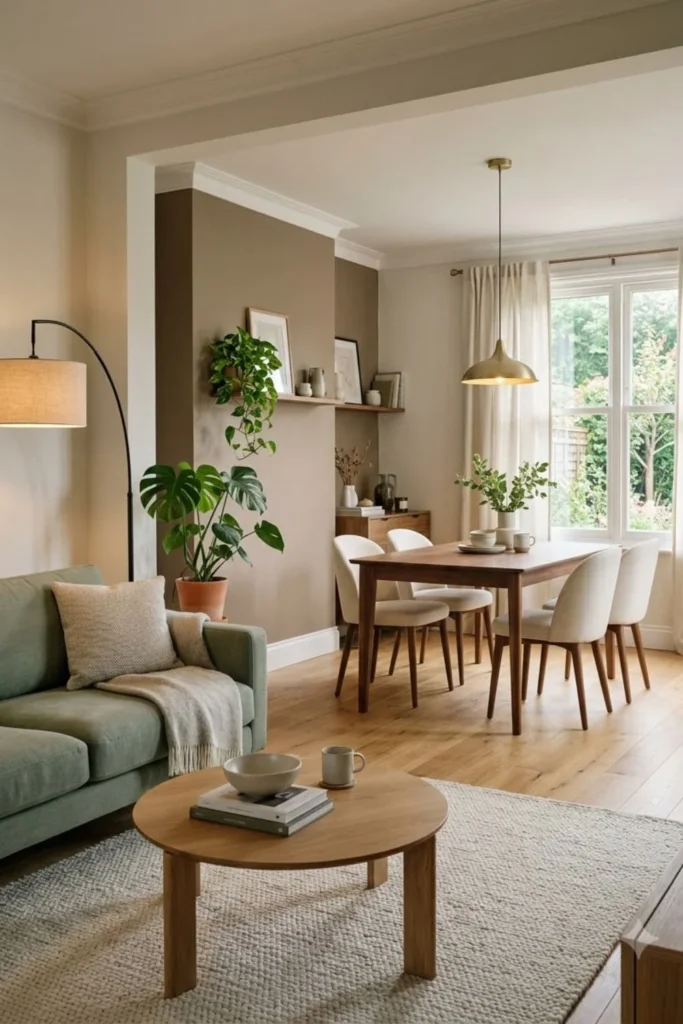
Luxury should come from fit and finish, not a long shopping list. Choose one comfortable sage sofa, a solid or well-made oak table, neat curtains, good lighting, and storage that closes.
Repeat materials quietly. Oak may appear in the table and one frame. Brass may appear in the pendant and one lamp. Sage may lead on the sofa and return in a small dining detail.
Use real-life objects: a current book, fruit bowl, coaster, and folded throw. Remove packaging, random cords, and broken decor, but do not empty the room until it feels like a showroom.
A full makeover can easily reach $4,000 to $12,000+. I would spend first on sofa comfort, table strength, and lighting. Decorative panels, oversized art, and a second rug can wait.
What I Would Choose at Three Budget Levels
Here is how I would keep the plan realistic.
| Budget | My practical plan | What I would skip |
| Under $1,000 | Sage accent wall, warm-white touch-ups, two cushion covers, simple lamp, and rearranged furniture | New sofa, matching decor sets, second rug |
| $1,000–$4,000 | Sage sofa or reupholstery, one light-oak piece, curtains, paint, and focused lighting | Full matching furniture and generic art collection |
| $4,000–$12,000+ | Quality sofa, oak dining table, comfortable chairs, fitted curtains, layered lights, paint, and useful storage | Oversized features that block walking space |
At every level, I would build around ideas 1, 2, and 7. I would add a living rug only if its size and edges work safely, and I would choose one personal artwork instead of a wall of repeated botanical prints.
Ask for separate prices for furniture, delivery, assembly, painting, electrical work, curtains, and repairs. This makes it easier to reduce the plan without cutting the practical parts.
Keep Sage Green Looking Calm and Fresh
Vacuum sofa seams and rugs, wipe dining chairs, and dust lamps, frames, and plant leaves. Clean spills using the care directions for each material; one cleaner is not safe for every fabric, wood finish, or painted wall.
Check these details every few months:
- Sofa legs, frame movement, and cushion support
- Dining-chair joints and table stability
- Tall-furniture anchors
- Rug edges and pad grip
- Curtain hardware and lamp cords
- Plant moisture near wood and walls
Do not keep adding green each season. Rotate a throw, flowers, or one table object while the main palette stays steady. If the room feels crowded, remove three small pieces before buying a new storage basket.
A shared room should be ready for sitting and eating without a long cleanup. That everyday ease gives the design a more genuine human feeling than perfect color matching.
Final Thoughts
The strongest Sage Green Living and Dining Room Ideas begin with space, comfort, and a limited palette. A tested sage wall, correctly sized sofa, and useful light-oak table can connect both zones without making every object green.
Measure the walking route, test chairs in the pulled-out position, and view paint and fabric samples in real light. Ventilate while painting, use lead-safe practices where relevant, anchor tall furniture, and choose professional help for electrical or difficult repair work.
My honest order is simple: start with idea 1, invest in idea 2 only after measuring, and use idea 7 to warm both zones. Treat two-rug layouts and botanical gallery walls as optional—not required. A room that supports meals, rest, cleaning, and movement will stay beautiful longer than a space designed only for one photograph.
Disclosure: Some visuals are AI-assisted design concepts created for inspiration. Always confirm measurements, materials, furniture dimensions, product care, load limits, wall fixings, electrical safety, paint and ventilation requirements, child and pet safety, accessibility needs, and installation requirements for your home. Costs are rough U.S. planning estimates and may vary by location, labor, materials, delivery, permits, and project conditions.