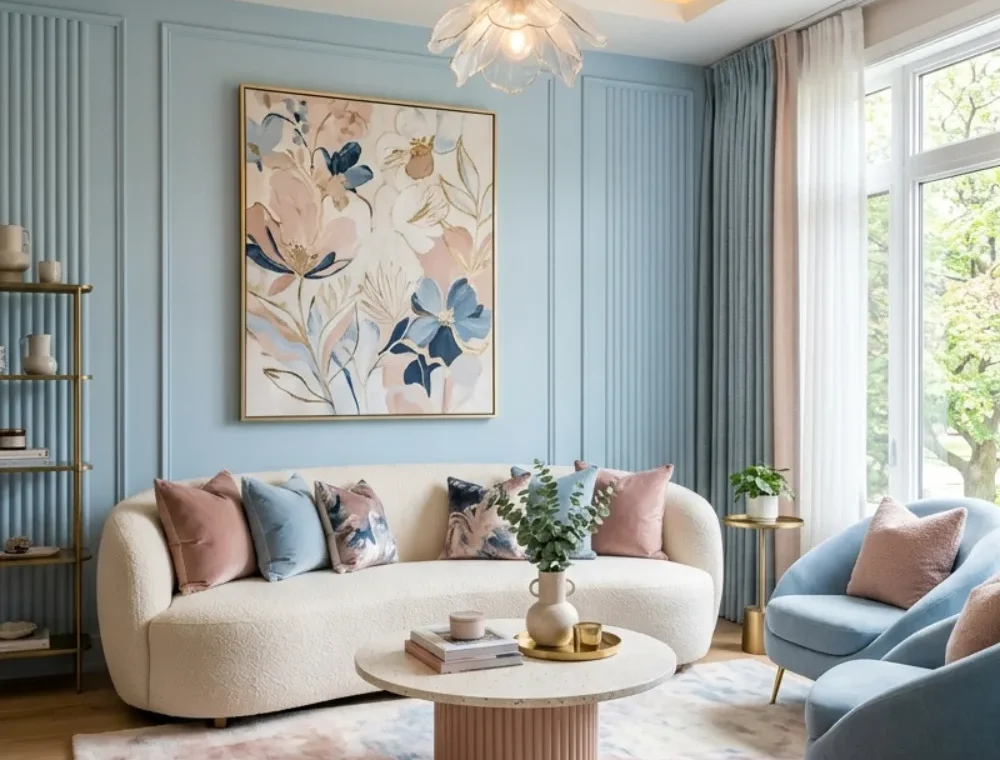
Blush Pink and Sky Blue Living Room Ideas can make an adult room resemble a nursery when the colors are too sweet, evenly matched, or repeated on every surface.
The pastels need something steady beside them. Warm white, oatmeal, oak, soft brown, and one deeper accent make them feel like living-room colors rather than a themed set.
My strongest ideas are a warm neutral base, a blush sofa with one sky-blue chair, and washable pink-and-blue textiles on a neutral sofa. They leave room for normal furniture and everyday mess.
I am cautious about a full sky-blue feature wall and a pale blush ceiling. Daylight and ceiling height change both dramatically, so test large samples first.
These ideas work for renters, families, pet owners, and existing furniture. Costs are rough 2026 U.S. planning ranges; delivery, labor, room size, and local prices vary.
Plan Blush Pink and Sky Blue Living Room Ideas Around the Real Room
Measure first. Draw walls, doors, windows, radiators, fireplace, outlets, television, and furniture you will keep. An online sofa can occupy far more visual space at home.
Protect the path between entrance, seating, and adjoining rooms. A 30- to 36-inch route is a useful home target where possible. For inclusive planning, the 2010 ADA Standards use 36 inches as the general accessible walking-surface minimum, though private-home requirements may differ.
Photograph morning, afternoon, and evening light. North light cools pale blue, while warm light may turn blush peach. Keep painted boards and fabric samples beside the floor for two days.
A practical starting ratio is:
- 60% to 70% neutral: walls, large rug area, or existing sofa
- 15% to 20% blush pink: sofa, chair, curtains, or larger textiles
- 10% to 15% sky blue: chair, rug pattern, curtains, or cushions
- 5% grounding color: navy, berry, dark wood, black, or aged brass
This ratio prevents pink and blue from dividing the room equally. A blush sofa needs less pink elsewhere; a blue wall needs quiet furniture.
List fixed undertones before buying. Grey flooring, creamy stone, orange wood, and red brick all alter pastels. The sample connecting to the floor matters more than an isolated swatch.
A Realistic Budget for This Color Scheme
A textile-led update may cost $300 to $1,200 when the sofa, paint, rug, and lighting work. That can cover covers, a throw, curtains, small art, and a secondhand table.
Paint, a rug, window treatments, and one chair may total $1,200 to $4,500. A new sofa, professional paint, lighting, and storage can reach $4,000 to $10,000+.
Angi estimates professional living-room painting around $900 to $2,000. Its 2026 living-room cost guide places lighting around $150 to $900 per fixture and furniture/decor at $1,000 to $7,000+.
Keep 10% to 15% for delivery, returns, preparation, hardware, rug pads, and repairs. Finish the largest decision, live with it for a week, then add the second color.
1. Begin with a Warm Neutral Base
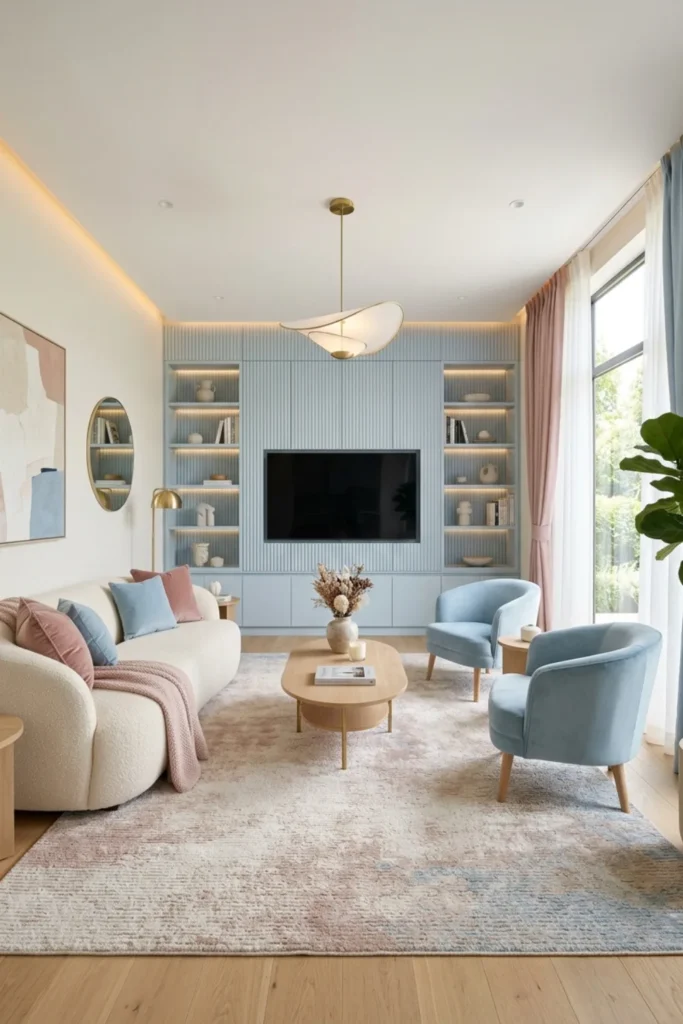
Warm white, oatmeal, or light greige gives blush and blue a grown-up background. Pure bright white can make sky blue look sharp, while dark grey may drain the warmth from blush. The base should work with the existing floor before it works with a cushion.
Size and requirements: Use the neutral on roughly 60% to 70% of the visible room. Test at least three 12-by-12-inch paint boards beside the floor and sofa. Keep trim only slightly cleaner or brighter than the wall instead of creating a hard blue-white outline.
Method and cost: Clean and patch the walls, prime where required, and apply the manufacturer’s stated coats. DIY materials may cost $150 to $450 for a typical living room; professional work commonly runs $900 to $2,000, depending on preparation, ceiling, trim, and local labor.
Pros: Existing furniture becomes easier to blend, both pastels look calmer, and future color changes remain simple.
Cons: A yellow neutral can turn blush orange. An overly grey neutral may make sky blue look dull.
2. Pair a Blush Sofa with One Sky Blue Chair
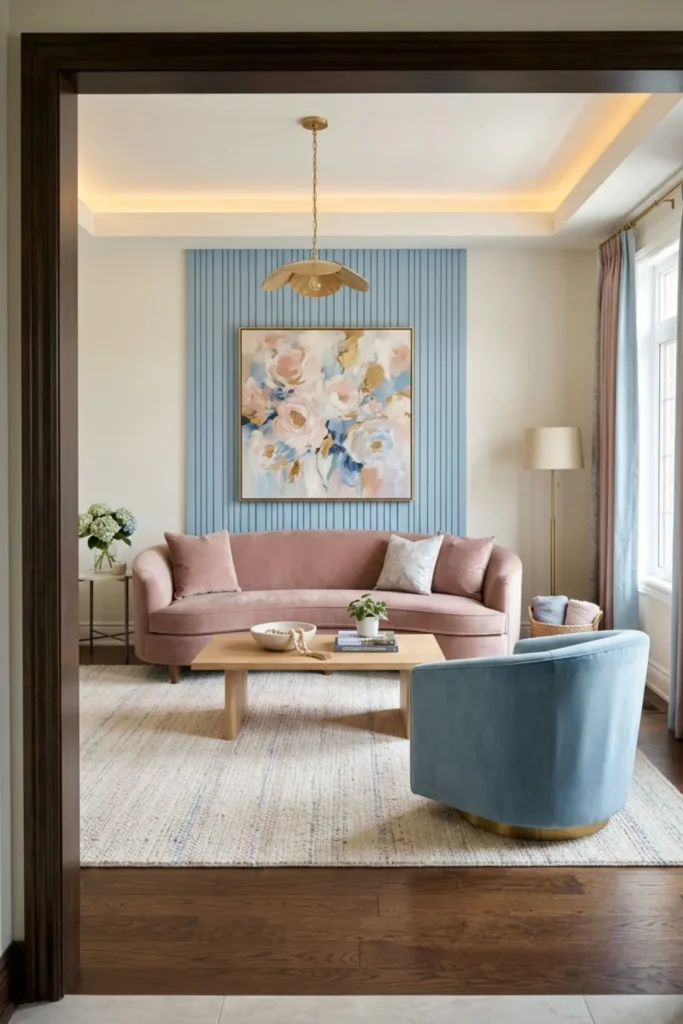
This is the clearest version of the palette and one of the strongest. The sofa carries blush because it is the largest soft object. One blue chair answers it without making the room look evenly split.
Size and requirements: A compact sofa is often 72 to 84 inches wide; an apartment sofa may be 60 to 72 inches. Allow around 30 to 36 inches for the chair width and enough room to walk around its arms. Check doors, stairs, elevators, and delivery turns before ordering.
Method and cost: Tape both footprints on the floor. Choose one solid fabric and let the other piece have subtle texture. A blush sofa may cost $800 to $3,000+, while a sky-blue chair may cost $300 to $1,200+, before delivery and protection plans.
Pros: The palette is obvious with only two purchases, the room feels balanced, and accessories can stay mostly neutral.
Cons: Upholstery colors are expensive to reverse. Pale seating shows denim transfer, pet hair, food, and sunlight fading.
3. Add Both Colors to a Neutral Sofa
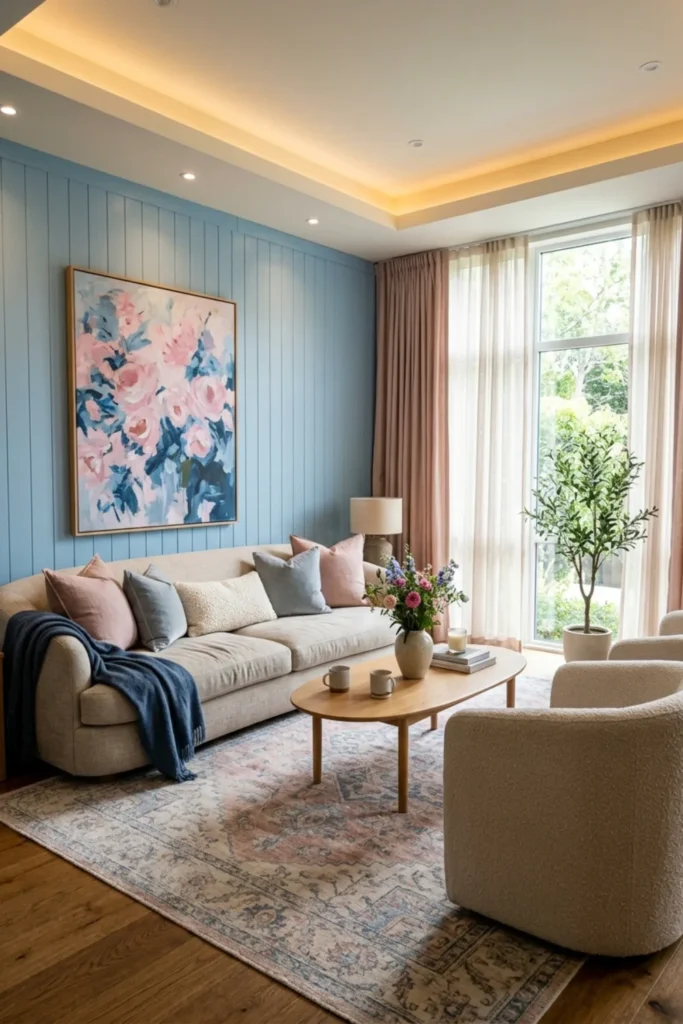
Keeping an oatmeal, cream, tan, or light-grey sofa is easiest. Add blush and blue with washable covers, one throw, and a rug or curtain.
Size and requirements: On a three-seat sofa, use three to five cushions: two 20-inch squares, two 18-inch squares, and one lumbar. Try two blush, two blue, and one neutral bridge.
Method and cost: Keep supportive inserts and replace covers first. Covers and one throw may cost $100 to $400; better inserts add $25 to $80 each.
Pros: Covers are washable, seasonal changes are easy, and renters can take everything to the next home.
Cons: Too many small cushions become clutter. Thin covers and weak inserts can make the sofa look tired rather than colorful.
If the room is narrow or the sofa already feels large, these small living room ideas offer more help with scale and circulation.
4. Think Carefully Before Painting a Sky Blue Feature Wall
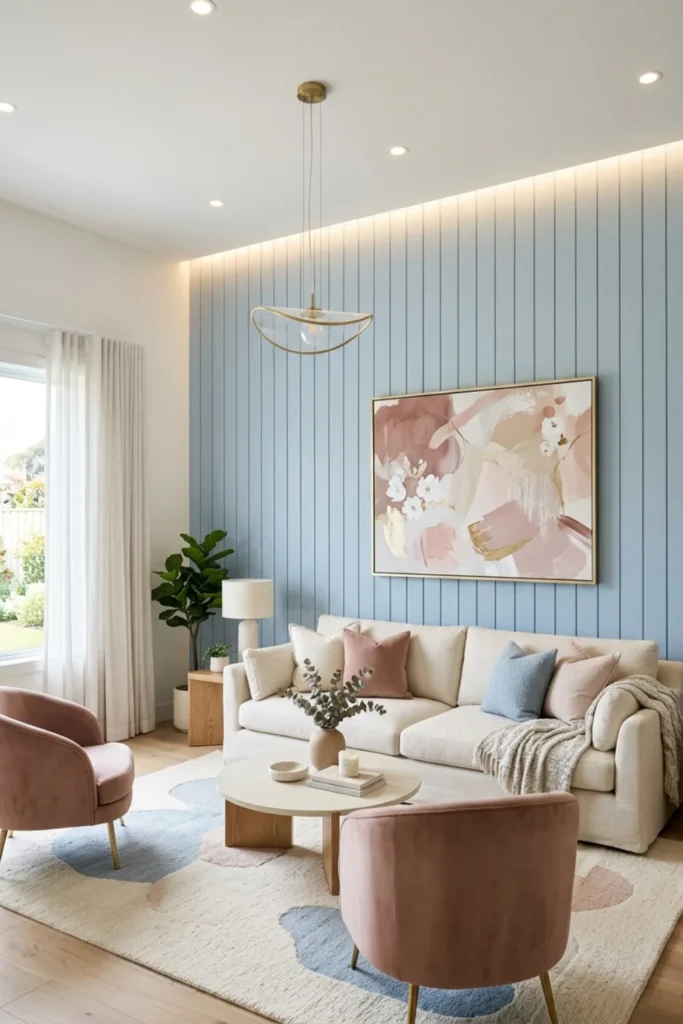
A blue wall can work behind a cream sofa but is weaker in a dim north-facing room. Paint the wall receiving useful light, not automatically the TV wall.
Size and requirements: Limit blue to one wall or 20% to 30% of wall area. Move a 24-by-36-inch sample around and check it beside the television.
Method and cost: Prepare the wall and apply specified coats. DIY may cost $60 to $180; professional work may cost $250 to $700+ with repairs or tall ceilings.
Pros: One wall provides a clear dose of blue and can make cream furniture feel fresher.
Cons: Light changes it dramatically, strong blue may compete with the TV, and repainting is more work than changing cushions.
5. Put Blush Pink Below a Chair Rail
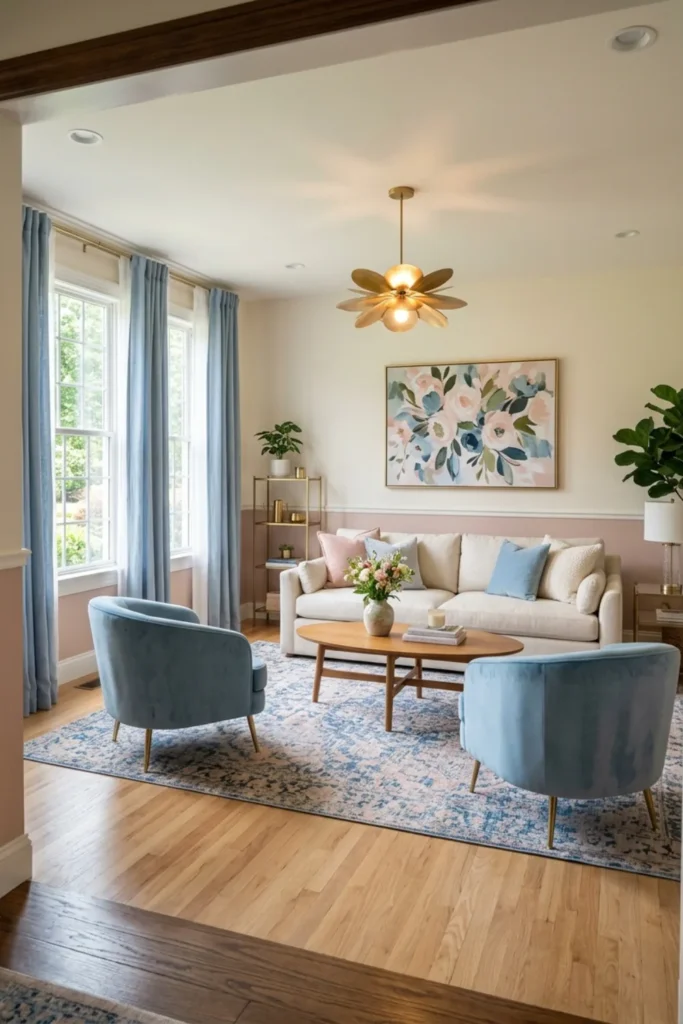
Blush on the lower third of a wall gives the room color without surrounding faces in pink. A warm neutral above keeps the wall light. This suits older homes with existing molding, but a simple painted line can work in a modern room too.
Size and requirements: Place the division around 30 to 36 inches above the floor, or align it with existing architectural details. Test the height behind the sofa so the line does not appear to cut through cushions or artwork awkwardly.
Method and cost: Use a laser or level, seal painter’s tape carefully, and paint the lighter color first. DIY paint and supplies may cost $100 to $300. Adding real molding and professional finishing can raise the project to $500 to $1,800+.
Pros: Blush feels architectural rather than sugary, scuffed lower walls can be repainted, and the neutral upper wall stays bright.
Cons: A crooked line is obvious. New molding may look artificial when it does not match the home’s doors and trim.
6. Use a Rug to Connect the Two Colors
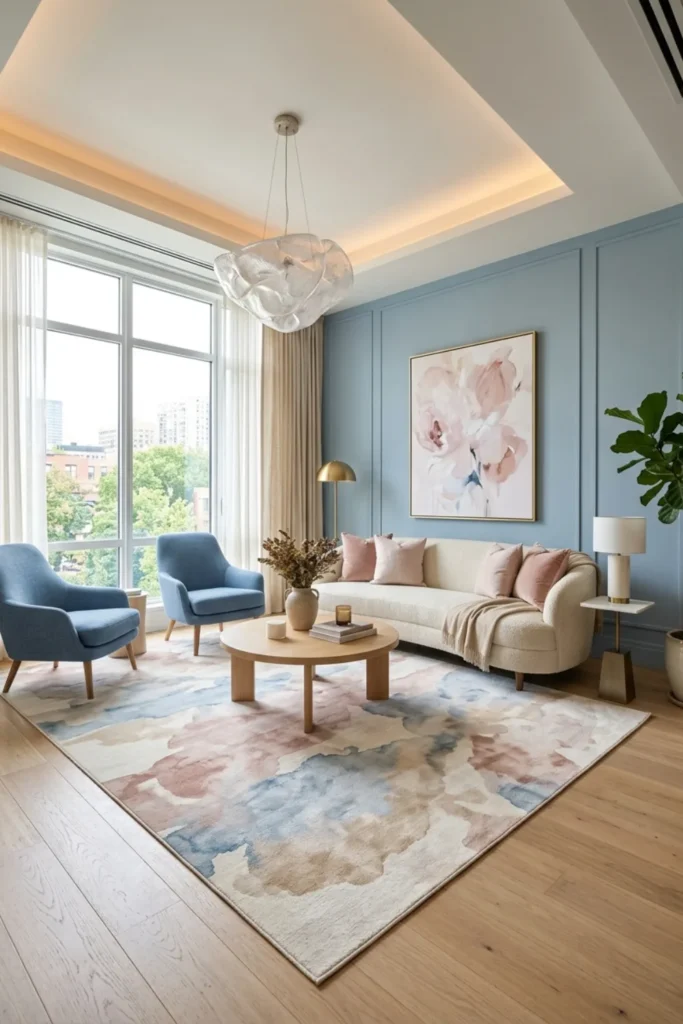
A rug can carry small amounts of blush, sky blue, cream, and brown in one surface. Look for a faded or softly patterned design instead of clear pink and blue blocks. The goal is connection, not a flag made from furniture.
Size and requirements: In many living rooms, an 8-by-10-foot rug suits a standard sofa group, while a compact room may use 6 by 9 feet. At minimum, place the front legs of the sofa and main chairs on the rug. Maintain clear door movement and avoid curled corners.
Method and cost: Tape the full rug outline, then check coffee-table and walking clearance. Add a nonslip pad sized about 1 inch smaller on each edge. Rug and pad together may cost $250 to $1,800+, depending on size, fiber, construction, and brand.
Pros: The palette feels deliberate, hard flooring becomes quieter, and a faded pattern hides minor marks.
Cons: Pale rugs stain, high piles trap debris, and an undersized rug can make furniture look disconnected.
7. Hang Sky Blue Curtains over a Cordless Shade
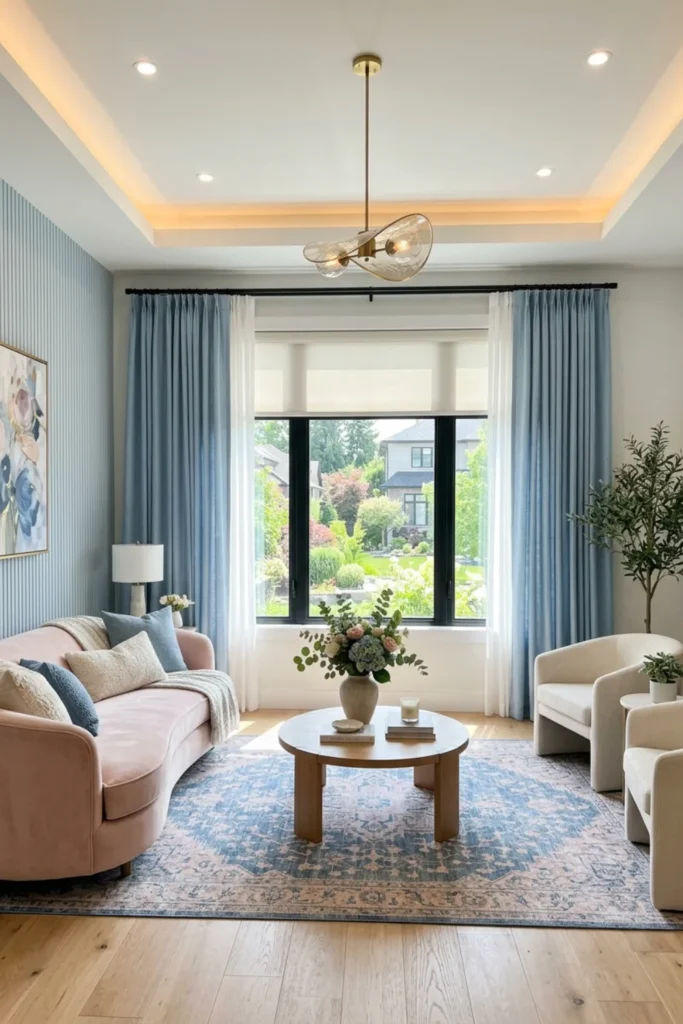
Sky-blue curtains are more forgiving than paint. Choose dusty linen-look blue rather than shiny turquoise, with a cordless shade for privacy.
Size and requirements: Mount the rod 4 to 8 inches above and extend it 6 to 12 inches beyond each side. Use combined panel width around 1.5 to 2 times the rod.
Method and cost: Find support, install the shade, and hem panels just above the floor. A complete window may cost $150 to $900+, depending on hardware, lining, and labor.
Pros: Fabric filters harsh light, adds a large but removable blue area, and improves the room’s softness.
Cons: Pale blue can fade in strong sun. Long curtains collect dust and may conflict with radiators or floor vents.
For homes where children visit, the CPSC says cordless window coverings are the safest option.
8. Bring in Warm Oak Furniture
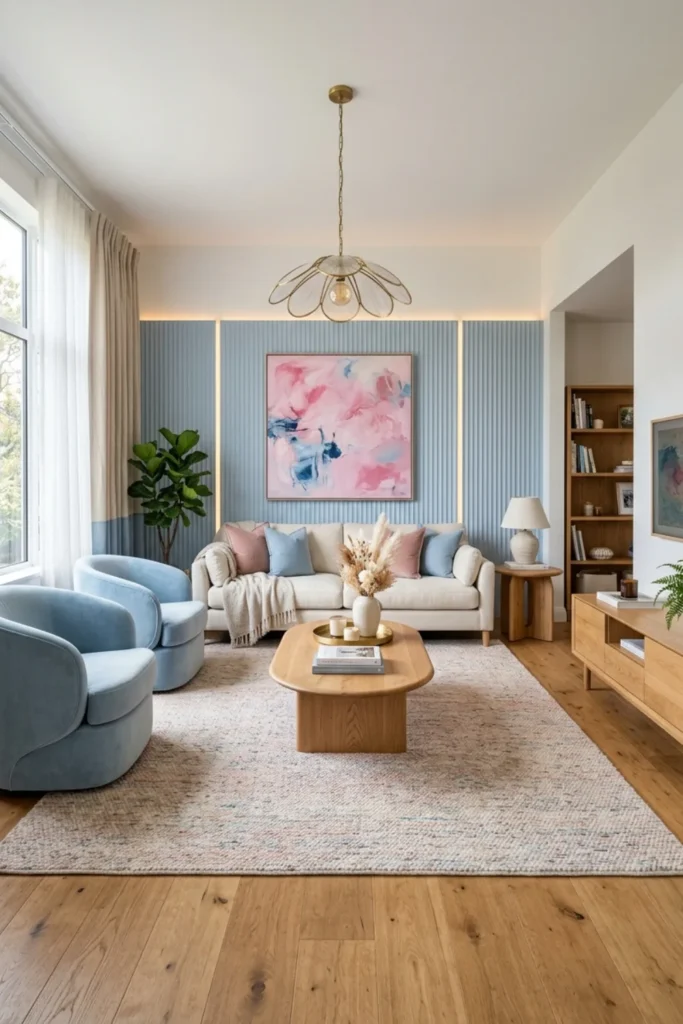
Blush and sky blue need a natural note, and warm oak is an easy one. Use it on a coffee table, media console, or side table rather than buying a perfectly matched set. Slight variation looks more believable.
Size and requirements: A coffee table should leave roughly 14 to 18 inches between its edge and the seating where space allows. Keep it around the sofa-seat height or slightly lower. A media console should safely support its equipment and leave ventilation around electronics.
Method and cost: Compare wood samples beside the floor; orange wood and red wood can pull blush in different directions. A side table may cost $100 to $500, a coffee table $250 to $1,200, and a media console $400 to $2,000+.
Pros: Oak warms both colors, works with cream and brass, and can remain if the palette changes later.
Cons: Too many wood tones can feel accidental. Veneer edges and water rings need realistic care.
9. Keep Metal Finishes Small and Consistent
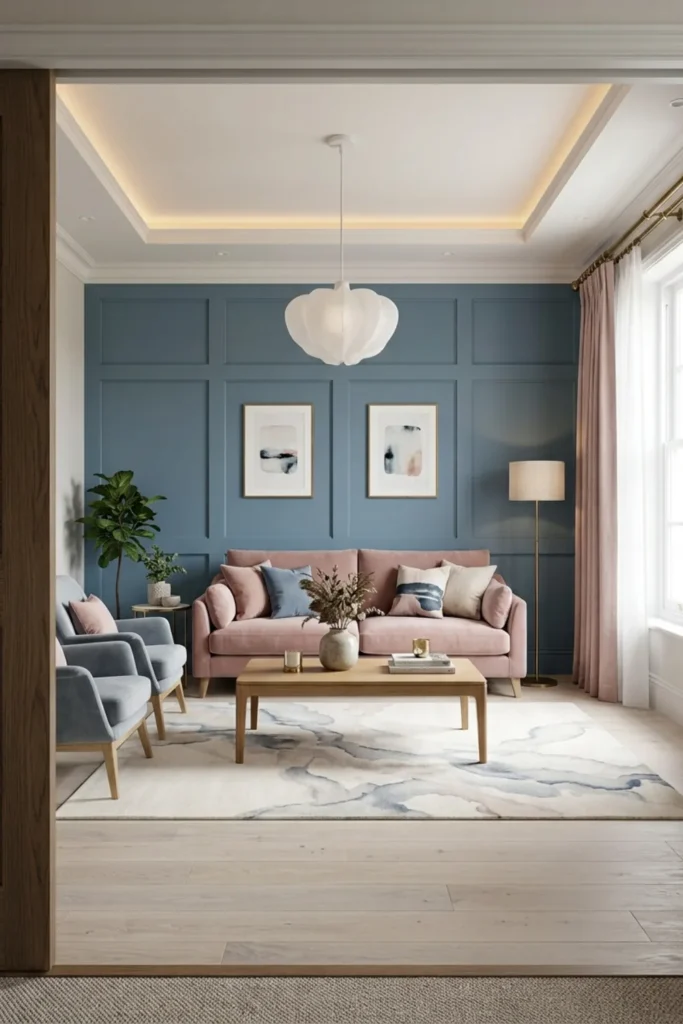
A little aged brass warms the palette; polished nickel keeps it crisp. Choose one main finish for lamp bases, curtain rod, frames, and small hardware. Do not repeat gold on every visible object simply because blush is present.
Size and requirements: Use metal on about 5% or less of the visible room. A slim curtain rod, one floor lamp, and two frame edges are enough. Check that furniture hardware matches by undertone even when the exact finish differs slightly.
Method and cost: Replace pieces gradually and keep receipts until viewed at home. Small hardware may cost $40 to $180; a rod, lamp, and frames can total $250 to $1,200+.
Pros: Metal gives the pale palette definition and reflects evening light without adding another fabric color.
Cons: Cheap gold coatings can look orange, mixed sheens show quickly, and polished finishes collect fingerprints.
10. Let One Artwork Carry Both Colors
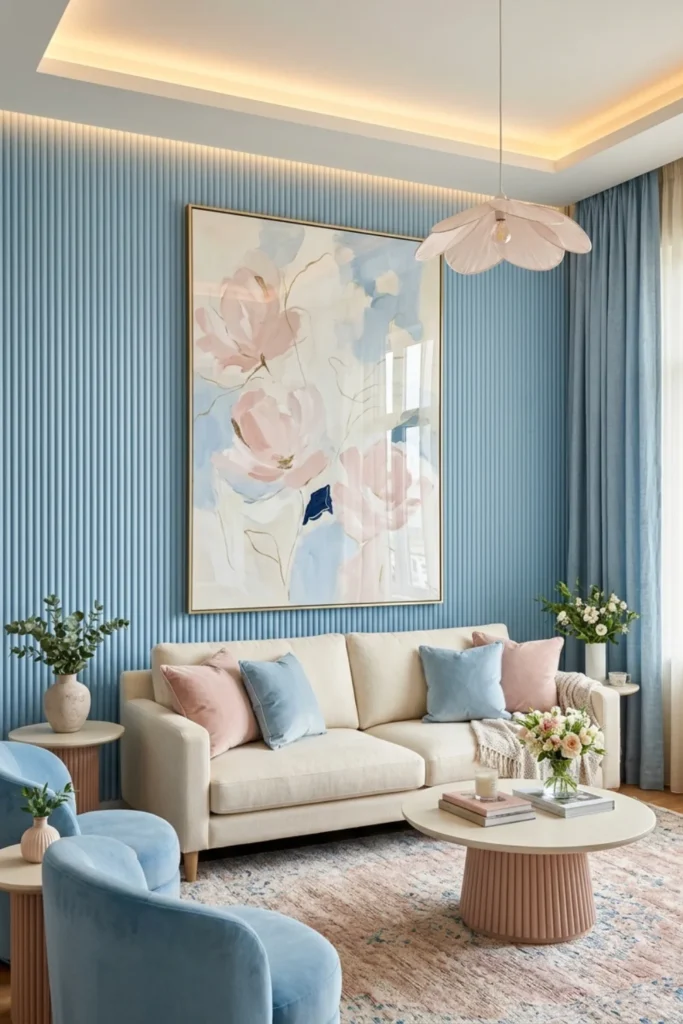
One artwork bridges the palette better than separate ornaments. Include both pastels plus cream, brown, navy, or charcoal.
Size and requirements: Above a sofa, aim near two-thirds of its width. Leave about 6 to 10 inches above the sofa, adjusting for ceiling height and seated heads.
Method and cost: Mark the frame with paper and mount for its wall type and weight. A print and frame may cost $100 to $800+.
Pros: One piece unites the palette, adds personality, and can move with you.
Cons: Art chosen only for matching colors often feels generic. Glass glare can hide pale work opposite a window.
The same restraint used in these minimalist boho wall decor ideas is useful here: one meaningful wall is better than filling every gap.
11. Add a Patterned Accent Chair in a Larger Room
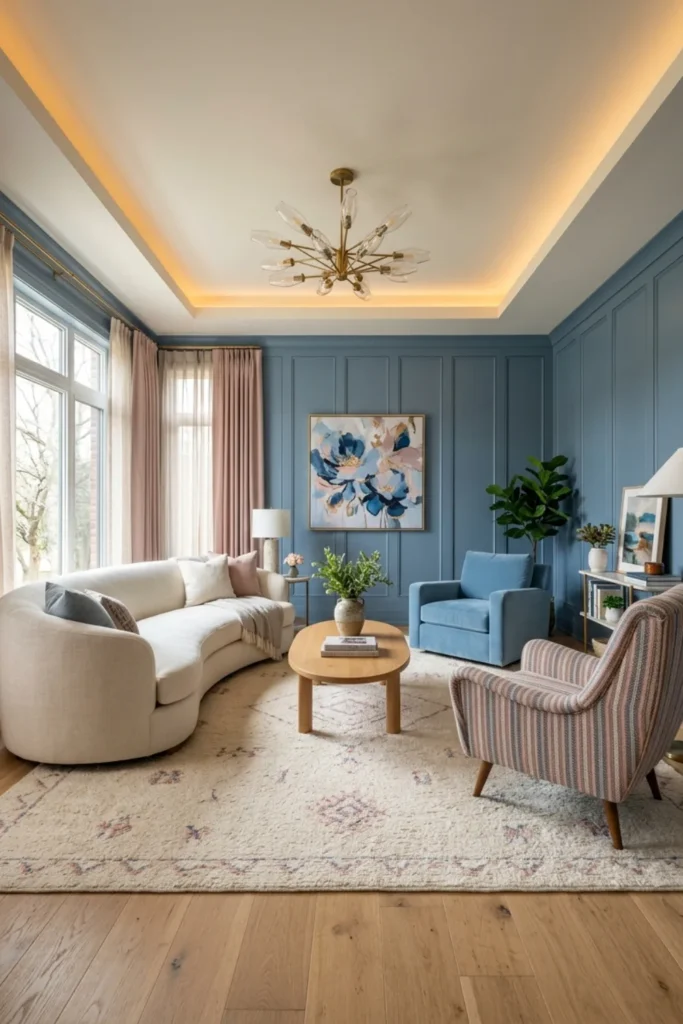
A stripe, small check, or loose floral can include blush and sky blue without looking formal. This works best when the sofa and rug are quiet. In a small room, another pattern and another chair may simply consume useful floor space.
Size and requirements: Allow a footprint around 30 by 34 inches for many chairs, plus access around the arms. Keep the pattern scale different from the rug. If the rug has a broad design, choose a finer chair pattern.
Method and cost: Bring the fabric sample home and view it from across the room. A patterned chair may cost $400 to $1,500+; custom upholstery can exceed $2,000. Include delivery and fabric protection in the estimate.
Pros: One chair adds both colors, hides small marks better than solid pale fabric, and creates an inviting reading seat.
Cons: Pattern mixing is easy to overdo. Reupholstery or replacement costs more than changing cushion covers.
12. Ground the Pastels with Navy or Berry
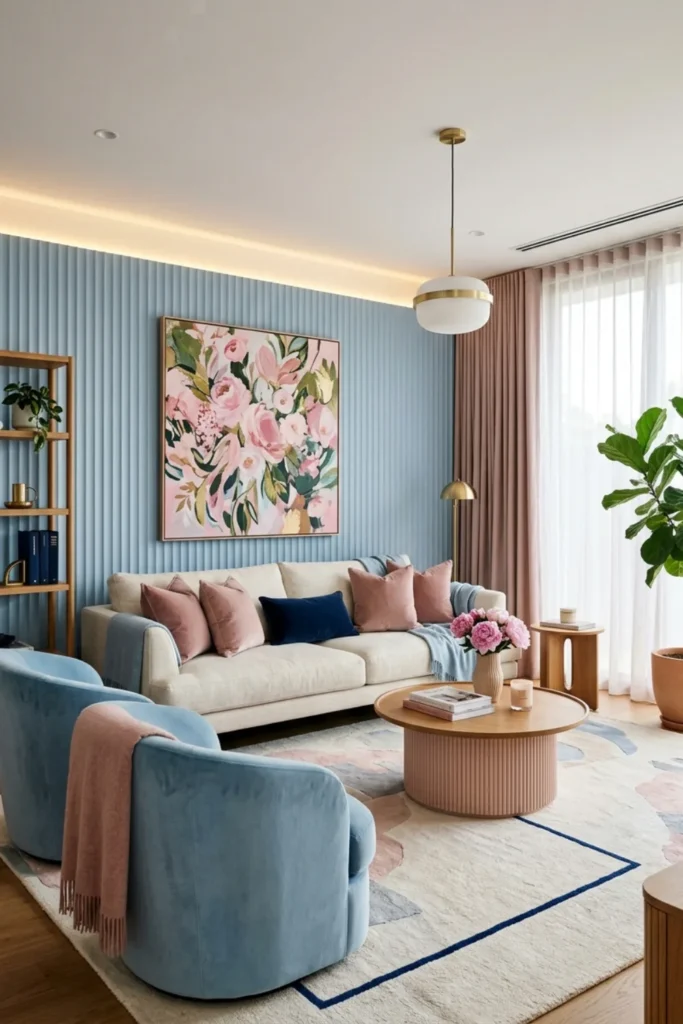
One deeper color keeps pink and blue from floating. Navy connects naturally to sky blue; muted berry deepens blush. Use one, not both, unless the room is large and most surfaces are neutral.
Size and requirements: Keep the grounding color near 5% of the room. That might mean one lumbar cushion, a thin rug line, two book spines, or a small ceramic lamp. Avoid a large navy sofa unless you want navy to become the main color.
Method and cost: Test the deep accent through returnable pieces first. A cushion, throw, books, and small ceramic item may cost $80 to $350.
Pros: Deeper color improves contrast, makes pale fabric look cleaner, and helps the room feel less youthful.
Cons: Too much navy makes sky blue disappear. Strong berry may turn the blush palette red or purple.
13. Use Warm, High-Quality Light
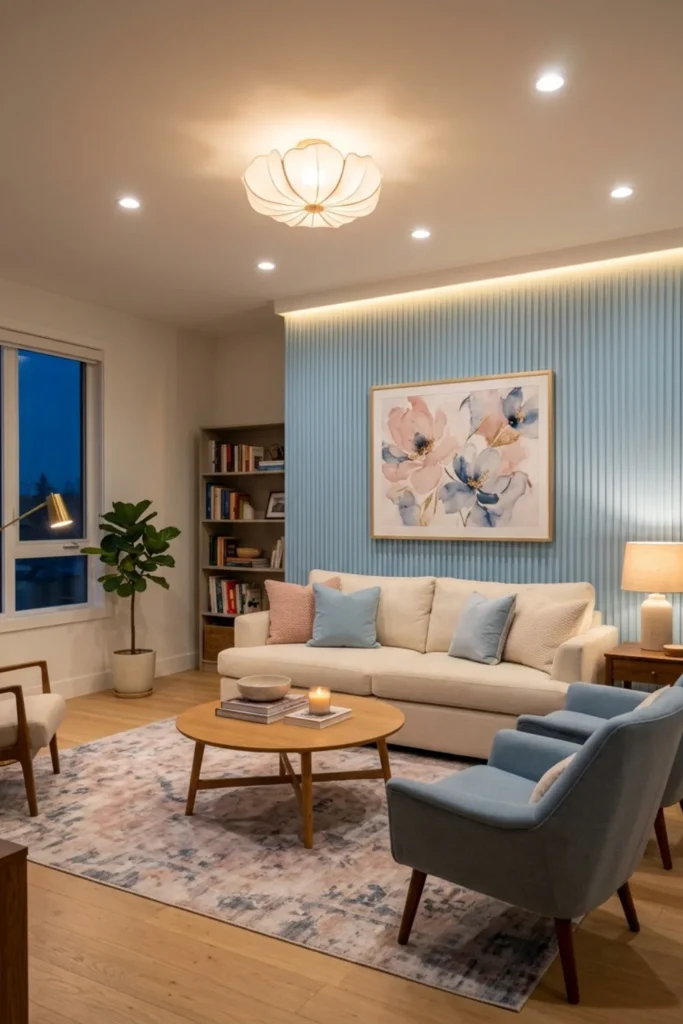
Cool bulbs make blush grey and blue icy. Warm light around 2700K to 3000K is a useful starting point, but color quality matters too.
Size and requirements: Use ambient light, one reading light, and a table or accent lamp. Look for CRI 90+ and confirm dimmer compatibility.
Method and cost: Replace bulbs first. Bulbs may cost $10 to $30 each, lamps $80 to $600+, and new hardwired fixtures $150 to $900 each installed.
Pros: The palette stays warmer at night, reading becomes easier, and separate lamps give control without repainting.
Cons: Very warm light may turn blue greenish. Mismatched bulb temperatures make one room look patchy.
The U.S. Department of Energy explains that CRI measures color fidelity and identifies 90 or higher as excellent color rendering.
14. Adapt the Palette to a Small Living Room
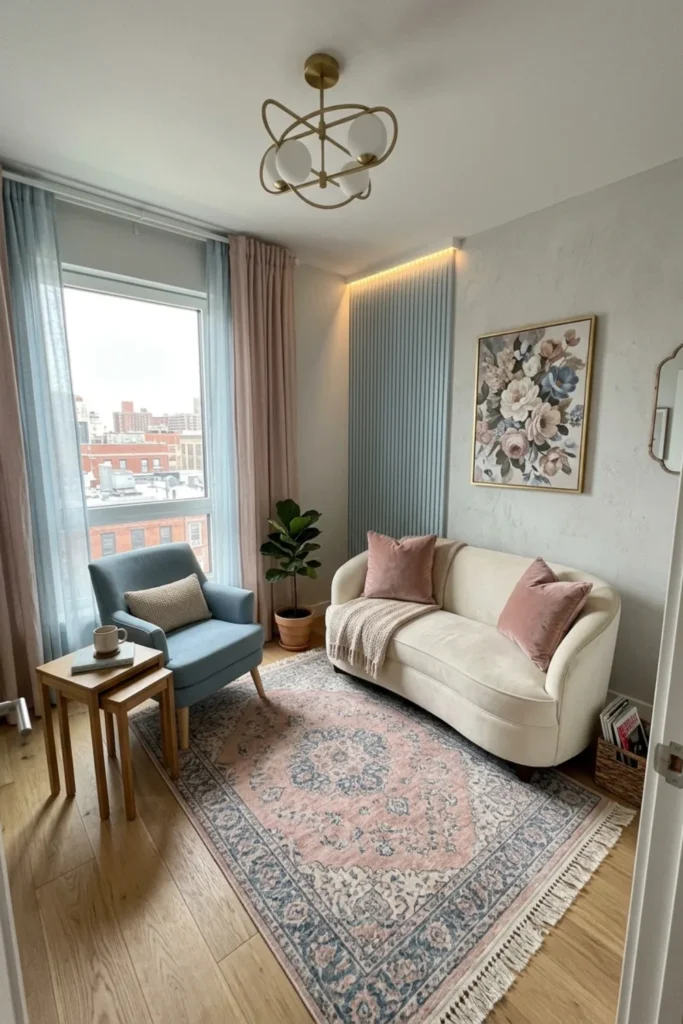
In a compact room, let one pastel lead and use the other in two smaller places. A sky-blue chair with two blush cushions is calmer than a pink sofa, blue wall, two-tone rug, and matching curtains squeezed into the same view.
Size and requirements: Consider a 60- to 72-inch loveseat, one chair under 30 inches wide, and nesting tables instead of a wide coffee table. Preserve the entry path and make sure every seat has usable legroom.
Method and cost: Tape all footprints and photograph the empty floor from the doorway. A compact sofa may cost $600 to $2,200, a slim chair $250 to $900, and nesting tables $100 to $500.
Pros: One leading color keeps the room quiet, compact pieces improve movement, and the palette remains visible without clutter.
Cons: Small furniture can be uncomfortable if chosen only by width. Too many raised legs may make the room feel visually restless.
15. Choose Fabrics for Children and Pets
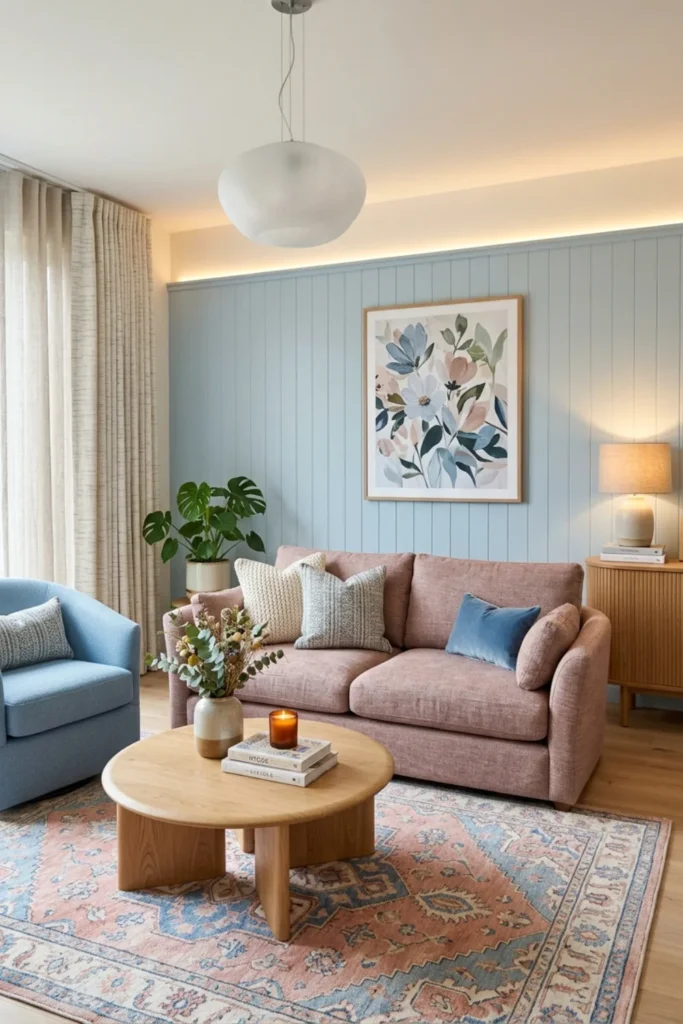
Pastel upholstery is realistic only when it can survive the household. Ask for cleaning instructions, abrasion information when available, removable covers, and a fabric sample. A slightly heathered blush or blue hides marks better than a perfectly flat pale weave.
Size and requirements: Order the largest sample offered and rub it with a clean white and dark cloth to check transfer. Place it near pet hair, denim, and the room’s strongest sun for several days. Confirm cushion-cover removal before buying.
Method and cost: Performance fabric may add $100 to $800+ to a sofa or chair. Washable throws and fitted protectors may cost $60 to $250. Follow the exact cleaning code; do not assume a removable cover is machine washable.
Pros: Practical fabric reduces anxiety, texture disguises wear, and removable pieces extend furniture life.
Cons: “Performance” is not the same as stain-proof. Some treated fabrics feel stiff or still fade in direct sun.
16. Style Shelves with Plenty of Empty Space
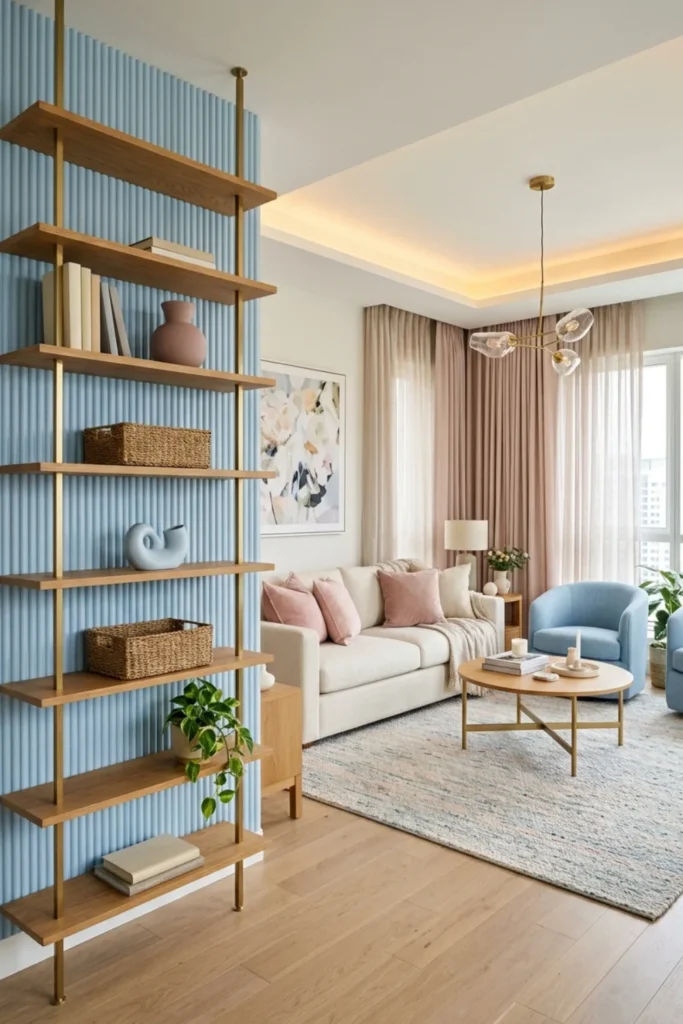
Pastel shelves become cluttered quickly because every pink or blue object demands attention. Start with books and useful storage, then add one ceramic piece or framed photo. Empty space is part of the arrangement.
Size and requirements: Fill roughly 50% to 70% of each shelf rather than every inch. Put heavy items low. Tall freestanding units, media storage, and bookcases need suitable anchoring, especially where children can climb.
Method and cost: Remove everything, group objects by use and color, then return only what earns its place. Existing-object styling costs nothing; baskets and a few frames may cost $80 to $400. Custom shelving can cost much more.
Pros: The palette looks calmer, cleaning is quicker, and useful objects remain visible.
Cons: Open shelves collect dust. Small pastel ornaments can make the room feel staged rather than lived in.
The CPSC recommends that people anchor televisions and furniture securely and keep heavier items on lower shelves.
17. Be Cautious with a Pale Blush Ceiling
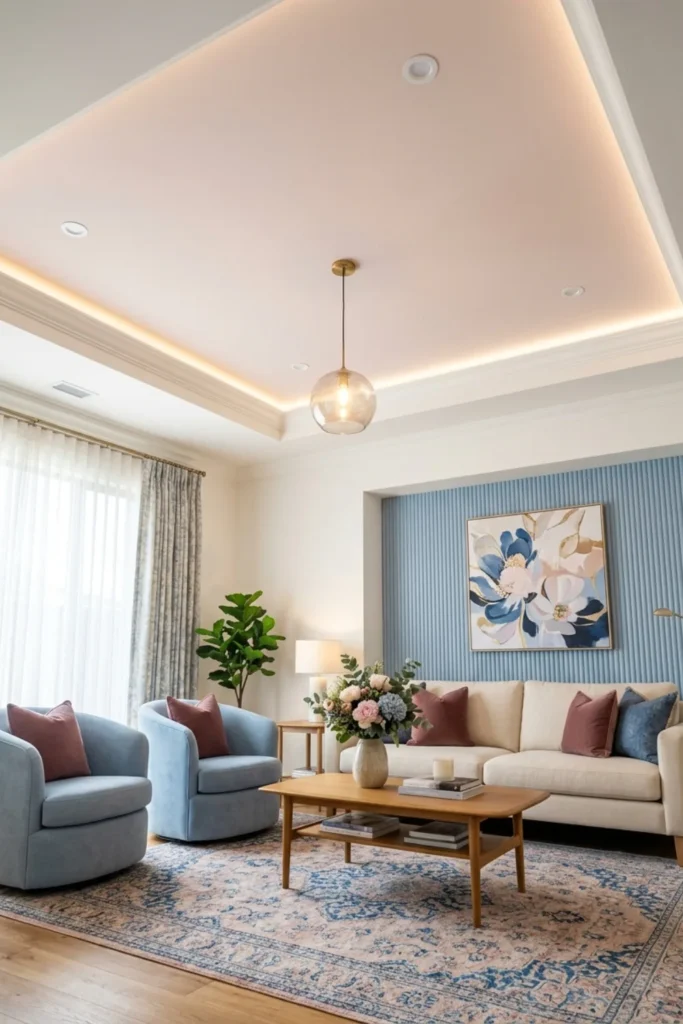
A blush ceiling can soften a bright room, but it is one of my weaker recommendations. In a low-ceilinged or dim living room, pink overhead may make the ceiling feel lower and cast warmth over walls, art, and faces.
Size and requirements: Test a board near the ceiling through a full day. Choose a blush much lighter and quieter than the upholstery. Keep walls neutral and avoid adding pink crown molding unless the room already has strong architecture.
Method and cost: Ceiling preparation matters because light reveals patches and roller marks. DIY materials may cost $80 to $250; professional ceiling painting can cost $300 to $1,000+, depending on height, repairs, and room size.
Pros: The color feels unexpected, softens a sunny room, and leaves walls available for art.
Cons: It may lower the room visually, affect skin tones, and be difficult to judge from a small paint chip.
18. Finish with Useful Objects, Not Pastel Clutter
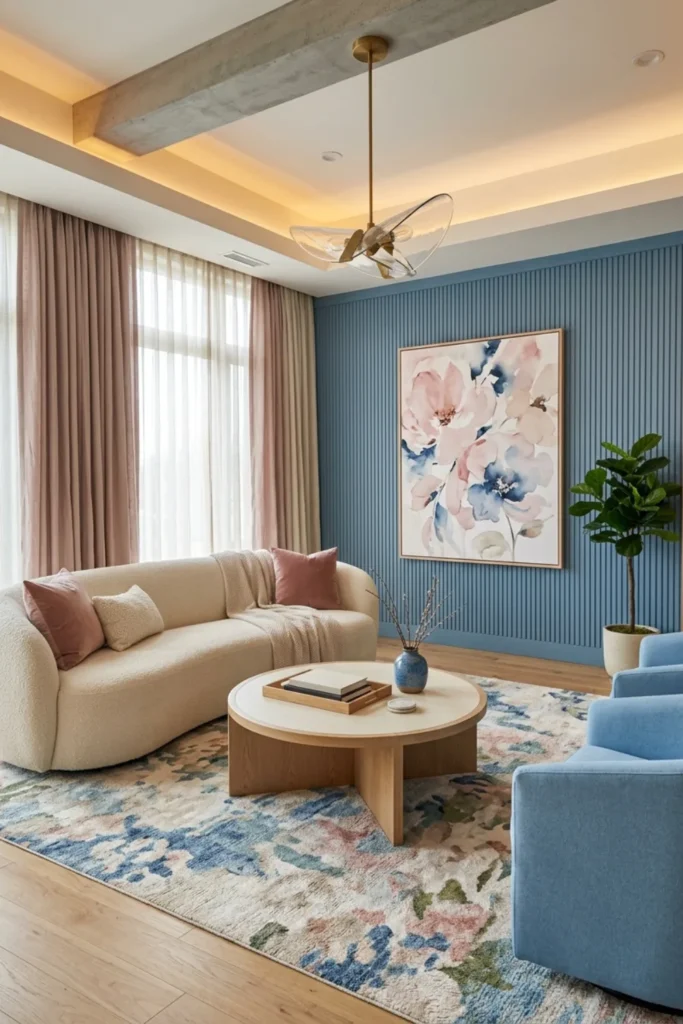
Once the sofa, chair, rug, and curtains are settled, stop matching. A blue tray, pink vase, three pink books, and six pastel candles do not improve a room that already has enough color. Keep the final layer useful.
Size and requirements: Leave at least half of the coffee-table surface clear. One tray around 10 by 14 inches, a small vase, and two books are plenty for many tables. Keep breakables away from edges and traffic paths.
Method and cost: Edit first and shop last. Use a wooden tray, real books, a lamp, and flowers or branches suited to the household. A restrained finishing layer may cost $50 to $300.
Pros: The room stays personal, cleaning remains manageable, and the pastels come from meaningful larger choices.
Cons: Decorative editing requires restraint. Fresh flowers add upkeep, and loose objects can be unsafe around small children or active pets.
What I Would Choose at Three Budget Levels
With $300 to $800, I would keep the existing sofa and walls, then add two blush covers, two blue covers, one neutral throw, warm bulbs, and a secondhand oak table. I would wait before buying curtains until seeing how those changes affect the room.
With $1,500 to $4,000, I would paint the room warm neutral, add a properly sized rug, use sky-blue curtains with a cordless shade, and buy one blush or blue accent chair. Existing furniture would stay unless its size is the real layout problem.
With $5,000 or more, I would choose either a blush sofa or a neutral performance-fabric sofa, add one sky-blue chair, improve layered lighting, and replace only the storage or media unit that is not working. I would not spend the whole budget on matched pastel furniture.
For television scale, safe storage, and cable planning, use these TV wall design ideas before ordering a new media console.
Safety, Cleaning, and Long-Term Maintenance
Keep doorways, heating equipment, outlets, and the main path clear. Rugs need a suitable nonslip pad, flat corners, and furniture contact. Do not run lamp cords across a route.
Anchor tall storage and televisions for the wall and load. Drywall, framing, and masonry require different hardware. Keep toys and remotes away from high shelves that invite climbing.
Use cordless shades where children may be present, keep furniture away from hazardous cords, and follow installation instructions.
When painting, read labels and ventilate. The U.S. EPA advises people to increase ventilation around products emitting VOCs and follow precautions. Store or dispose of leftovers as directed.
For long-term care:
- Vacuum upholstery and rugs with the attachment recommended for the material
- Rotate removable cushions and the rug when sun exposure is uneven
- Blot spills instead of rubbing them deeper into pale fabric
- Test any cleaner in a hidden area and follow the furniture cleaning code
- Tighten chair legs, curtain brackets, shelf hardware, and lamp fittings when needed
- Photograph paint names, fabric labels, model numbers, and warranties for later use
Strong sun may fade the colors at different rates. Lined curtains, furniture rotation, and closing shades during harsh sun can help, but they cannot make sensitive fabric permanent.
For a greener variation, these sage green living and dining room ideas show how oak and cream support another soft color.
Final Thoughts
Useful Blush Pink and Sky Blue Living Room Ideas let one color lead, the other answer, and warm neutrals hold the room together.
Start with what you own, test real samples, and protect the walking path. A blush sofa, one blue chair, oak, and cream walls say more than twenty matching accessories.
Written and reviewed by Ali Hamza | Styled Room Living
Disclosure: Some visuals are AI-assisted design concepts created for inspiration. Always confirm measurements, materials, load limits, and installation requirements for your home.
Safety and cost note: Confirm furniture dimensions, delivery access, wall structure, anchoring, rug stability, electrical requirements, window-covering safety, paint ventilation, cleaning instructions, fire and heating clearances, accessibility needs, and manufacturer guidance before starting. Costs are rough U.S. planning estimates and vary by location, labor, delivery, materials, and existing conditions.