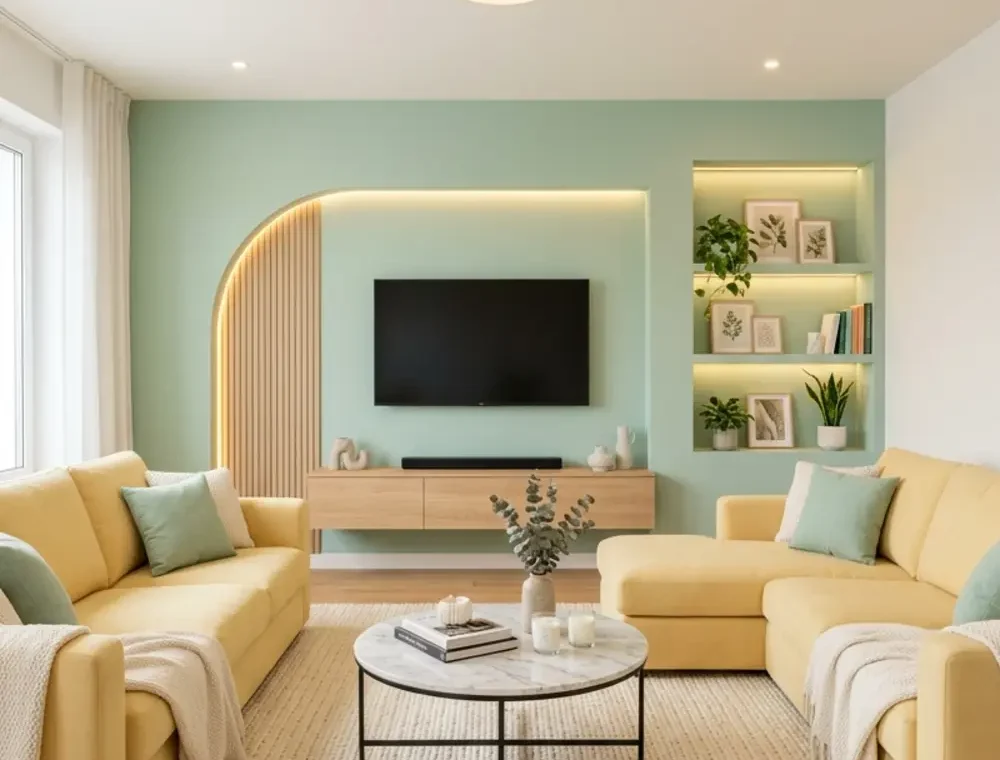
Yellow and mint living room ideas can look bright and playful, but they work best when the room still feels calm enough to live in every day. That balance matters more than people think. Too much yellow can start to feel loud, and too much mint can make the space look cold or overly sweet if the room does not have enough warmth, texture, or grounding pieces.
What I like about this color mix is that it can go in a few different directions. It can feel soft and airy in a small apartment, cheerful and family-friendly in a busy everyday living room, or more polished when you pair it with warm wood, soft white, brushed gold, and layered lighting.
The easiest mistake is treating both colors like they should cover everything. In most rooms, one of them should lead and the other should support. A mint wall with yellow accents often feels cleaner than having bright yellow furniture, yellow art, yellow curtains, and yellow decor all competing at once. The same is true in reverse.
This guide focuses on practical yellow and mint living room ideas you could actually use. That means color balance, furniture scale, TV walls, shelving, rugs, artwork, plants, storage, lighting, and small decisions that stop the room from feeling busy.
What Makes a Yellow and Mint Living Room Work?
The main reason this color combination works is contrast. Yellow brings warmth and energy, while mint softens the room and keeps it feeling light.
Still, the room needs a neutral base or one grounding material to keep the palette from floating. Cream, soft white, warm beige, pale oak, natural cane, light walnut, brushed brass, and soft gray all help.
I usually think of the palette in layers:
- A neutral base
- One main color field
- One supporting color
- A few darker or natural accents
That often gives a cleaner result than trying to distribute mint and yellow evenly everywhere.
Texture matters too. If both colors are light, the room can feel flat unless you add variation through woven rugs, boucle, linen-look fabric, ribbed panels, soft wood tones, ceramic decor, or greenery.
A cozy room also needs lighting that flatters the colors. Warm ambient light usually makes yellow richer and keeps mint from feeling too cold.
Before You Start, Decide Which Color Leads
Before buying pillows or painting a wall, decide whether mint or yellow is the main color.
If the room gets a lot of natural light, mint can take up more visual space because the light will keep the room lively. If the room is darker, I would usually let yellow stay in accents and use mint only where it can still look fresh.
A useful starting point is this:
- Mint-led room: mint wall, mint artwork, or mint upholstery, with yellow accents
- Yellow-led room: yellow sofa or accent chair, with mint wall art, cushions, or styling
You can also keep both colors in smaller doses and let cream, beige, or pale wood do most of the work.
This is one of those color combinations where a little editing helps a lot. If the room starts to feel childish, add more natural wood and reduce the number of bright accessories. If it feels too plain, add one stronger yellow accent and one more warm light source.
1. Start With a Warm Neutral Base
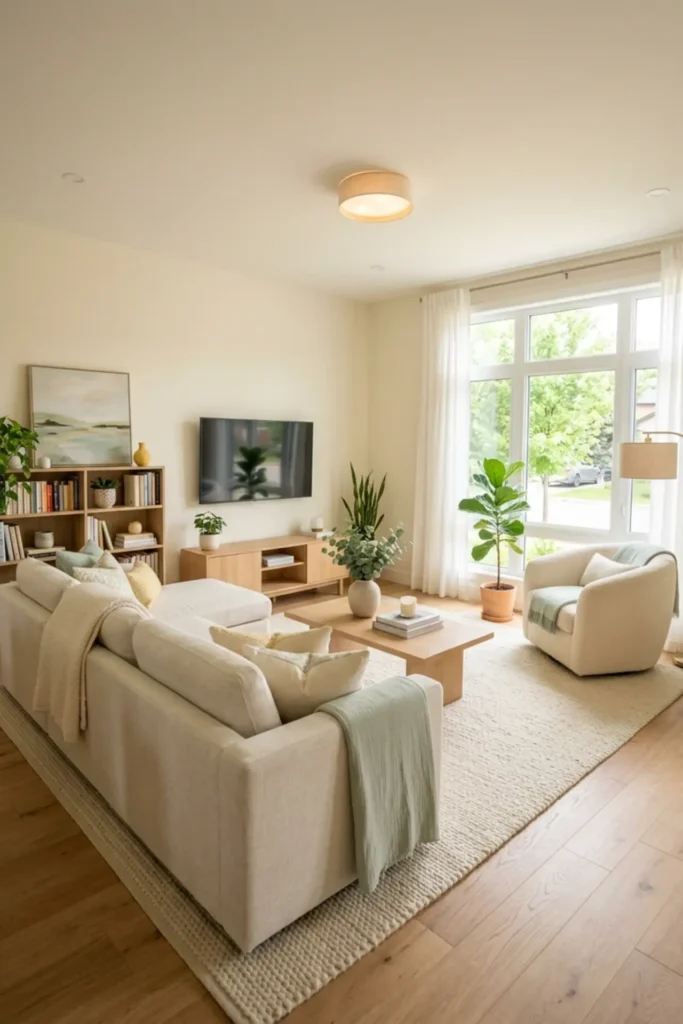
The easiest way to make yellow and mint feel grown-up is to start with cream, soft ivory, warm white, or pale beige.
That base lets the color accents feel intentional rather than overwhelming. It also gives you more flexibility if you want to change the room later without replacing everything.
Walls, large rugs, and major furniture pieces are the best places for the neutral layer. I would usually avoid a strong colored rug unless the rest of the room is very calm.
A soft neutral base is also helpful if your living room already has fixed finishes such as glossy tile floors, cool-toned walls, or built-in cabinetry you cannot easily change.
Planning cost: about $40–$150 for paint and basic supplies, or $120–$350 for a large neutral area rug depending on material and size.
2. Pair a Mint Accent Wall With a Soft Yellow Sofa
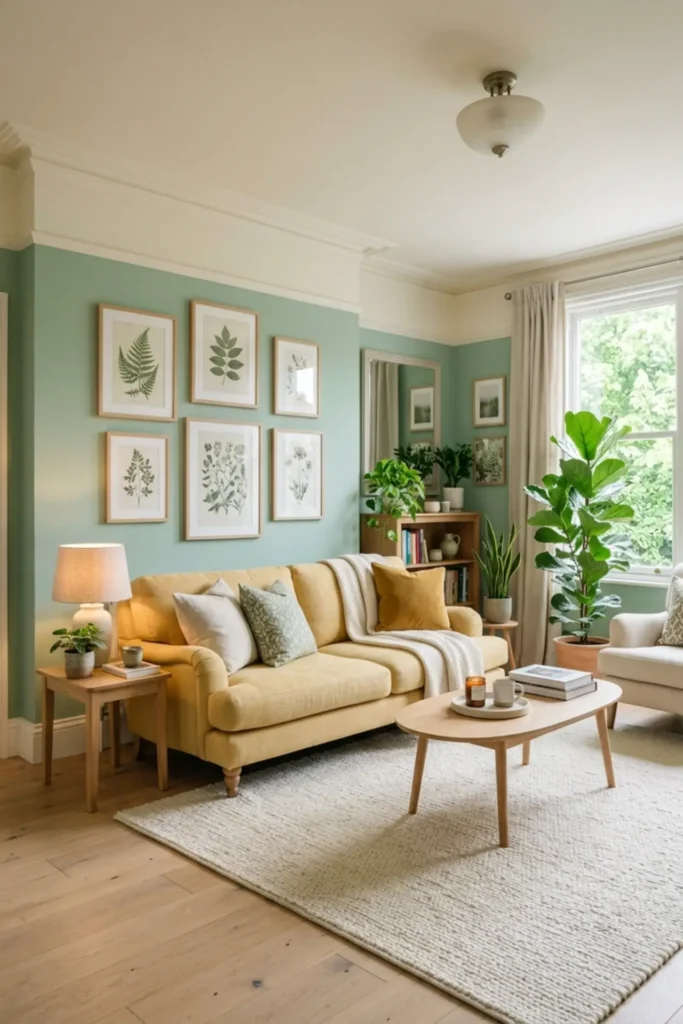
This is one of the cleanest ways to use the palette.
A muted mint feature wall creates a fresh backdrop, while a soft yellow sofa adds warmth and keeps the room from feeling too cool. The combination works especially well with warm LED lighting and light wood.
I would keep the mint gentle rather than bright. Think soft sage-mint or pastel mint instead of a sugary neon tone.
The sofa looks best when the yellow is also slightly softened—more butter, primrose, or muted marigold than traffic-signal yellow.
If both shades are too sharp, the room can start looking cartoonish. A slightly dusty version of each color tends to feel more livable.
3. Build a TV Wall With Curved LED Detail
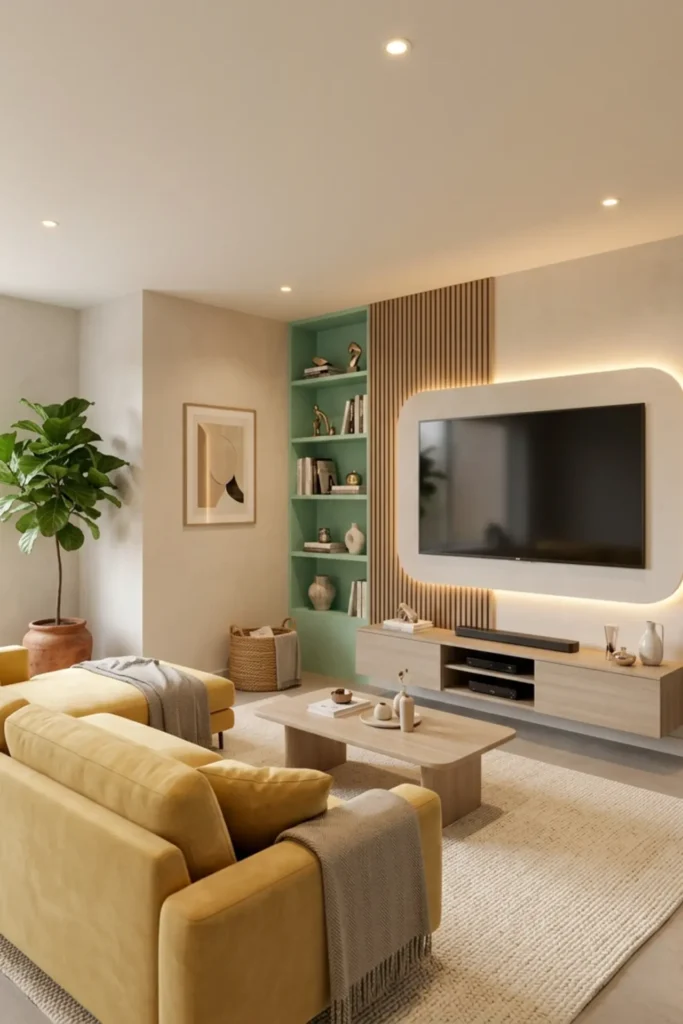
A modern TV wall can make the whole color palette feel more finished.
One of my favorite layouts for this style is a mint side panel or shelving niche with a curved warm-white LED feature behind the TV zone. That curve softens the rectangular screen and gives the wall a cozy evening glow.
Vertical slat detailing in a light wood tone also works well here because it introduces texture without needing another color.
If you use LED lighting, choose a warm temperature that flatters the room. Cool white lighting can make mint feel icy and can also make yellow look harsher.
Keep cords, sockets, and heat clearance in mind before finalizing the design. A beautiful TV wall gets frustrating quickly if it does not handle real electronics properly.
For TV-wall sizing and layout inspiration, your readers may also like TV Wall Design Ideas.
4. Use Open Shelves to Repeat Both Colors
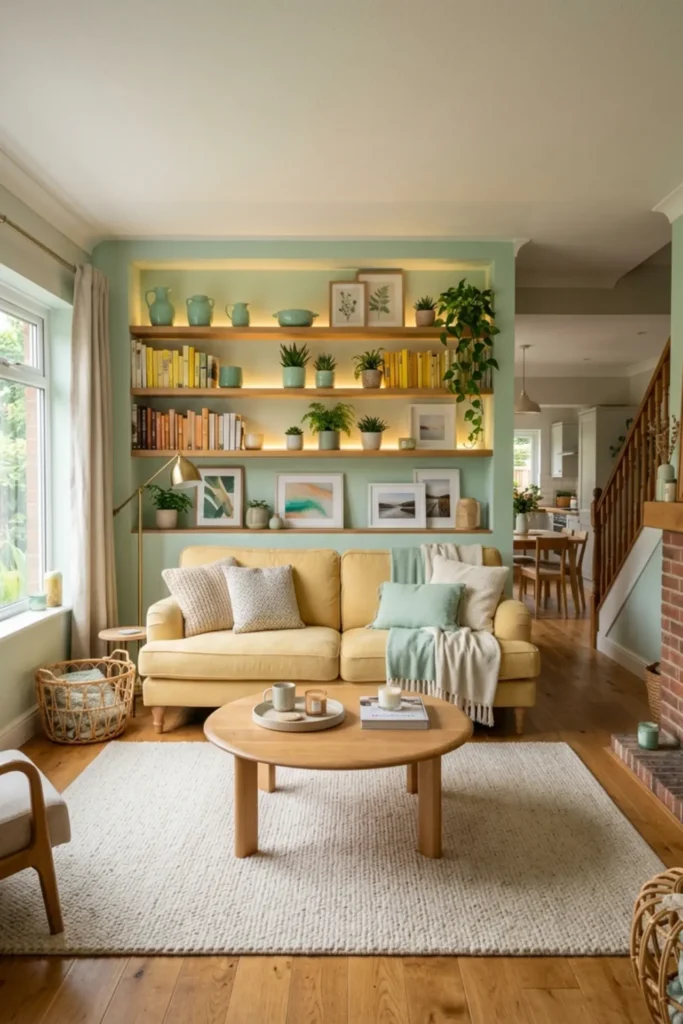
Open shelves are useful in a yellow and mint room because they let you repeat the palette lightly without painting every surface.
You can add a mint ceramic vase, yellow book spine, pale green planter, framed leaf print, or small decorative bowl. The key is restraint.
I would style the shelves with a mix of:
- one or two plants
- books stacked horizontally and vertically
- a few ceramic pieces
- one framed print
- some empty breathing space
Shelves get messy fast if every item is trying to add color. Try to let one or two objects carry yellow and one or two carry mint, then leave the rest neutral.
If the room is small, built-in shelves with warm backlighting can make the whole corner feel more deliberate.
5. Add a Light Mint Wall and Botanical Artwork
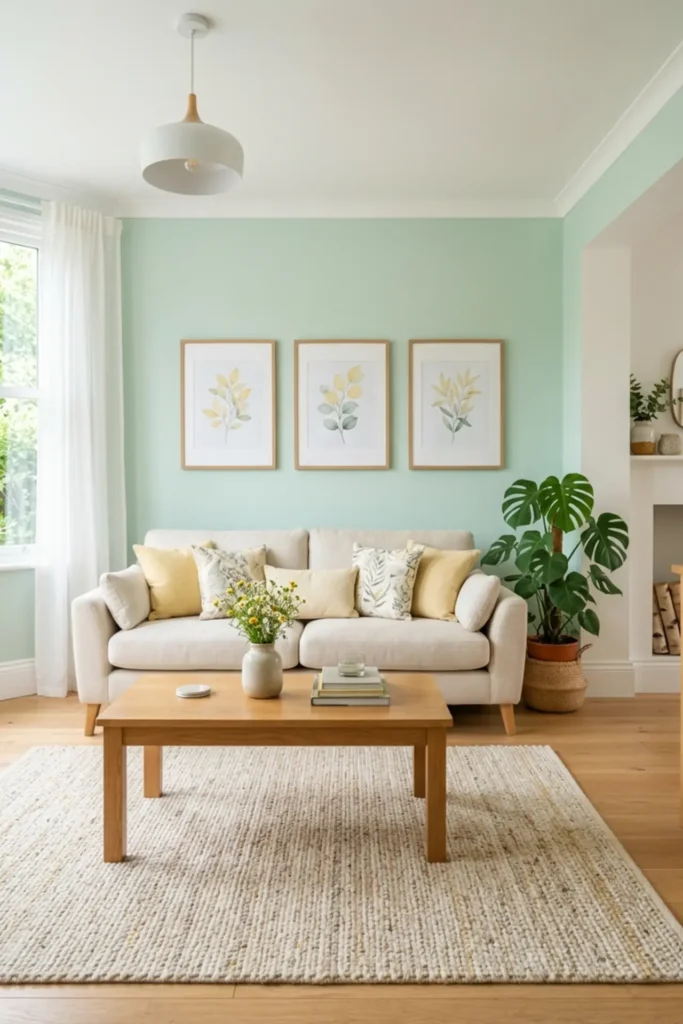
If you do not want to commit to a strong two-color room, this is a good softer version.
Paint the walls in a pale mint or mint-cream tone, then bring yellow in through artwork, cushions, and one or two decorative objects.
Botanical prints work particularly well because green and yellow already live comfortably in plant-inspired imagery. A framed leaf print or abstract floral art can repeat both colors without looking forced.
I would keep the artwork frames simple—light wood, pale oak, or thin brushed brass all work well.
This approach is especially useful in smaller living rooms because the pale mint can still feel airy.
6. Choose a Cream Rug to Soften the Palette
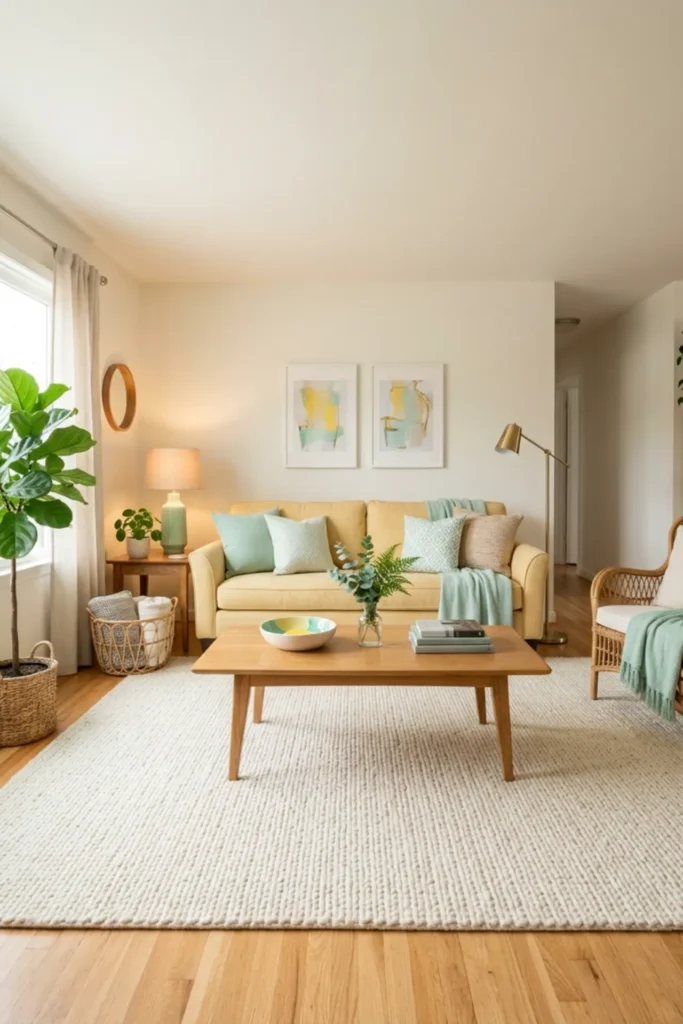
A cream or off-white rug gives the room a place to rest.
That matters because yellow and mint both catch the eye. A soft textured rug can pull the furniture together and stop the room from feeling visually scattered.
For many living rooms, an 8 x 10 foot rug is a good starting point, but the right size depends on your layout. At minimum, the front legs of the main seating should sit on the rug rather than floating around it.
I would keep the rug pattern subtle. If you already have colored walls, a yellow sofa, and styled shelves, the rug should usually calm the room instead of asking for attention.
If you use a light rug, think about cleaning reality too. In a family room, low-pile or washable options are often more practical than something overly delicate.
7. Mix Yellow Cushions With Mint Throw Blankets
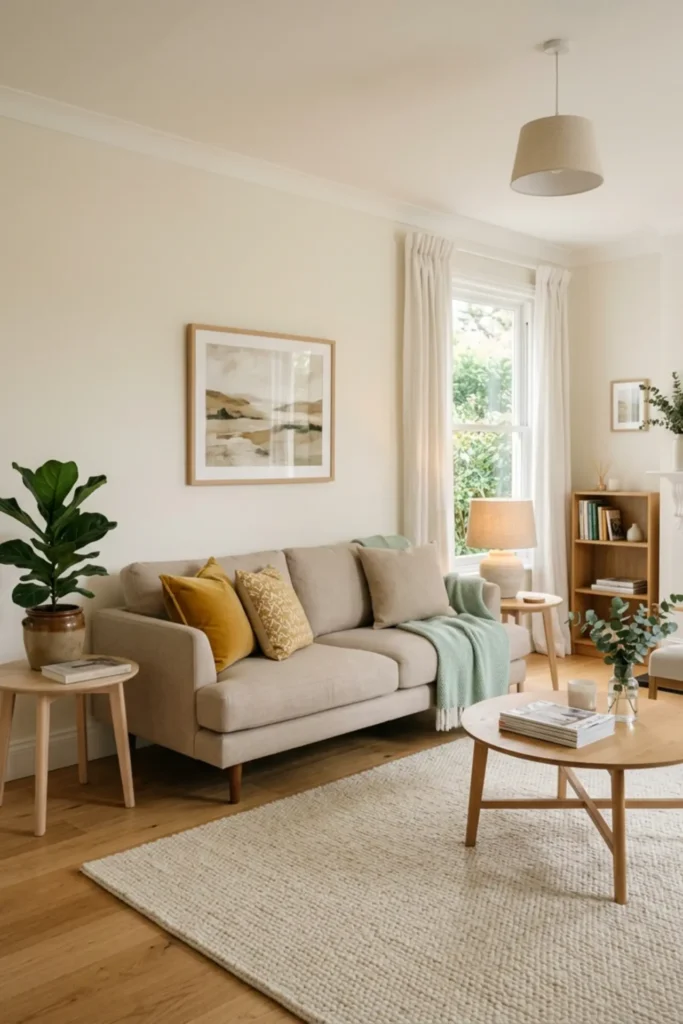
This is a very easy way to test the palette without making permanent changes.
Start with a neutral sofa, then add two or three yellow cushions and one mint throw, or the reverse. You can adjust the balance later without much cost.
I like this method because it lets you see whether you prefer warm yellow leading the room or mint.
Try to vary texture instead of using four flat cushions in similar fabric. A ribbed pillow, a soft woven cushion, and a linen-look throw usually feel better than a matching set.
If the sofa is already colorful, keep the accessories quieter. In that case, I would use either yellow or mint rather than both at equal strength.
Planning cost: roughly $40–$150 depending on cushion covers, inserts, and throw quality.
8. Bring In Pale Wood and Cane Furniture
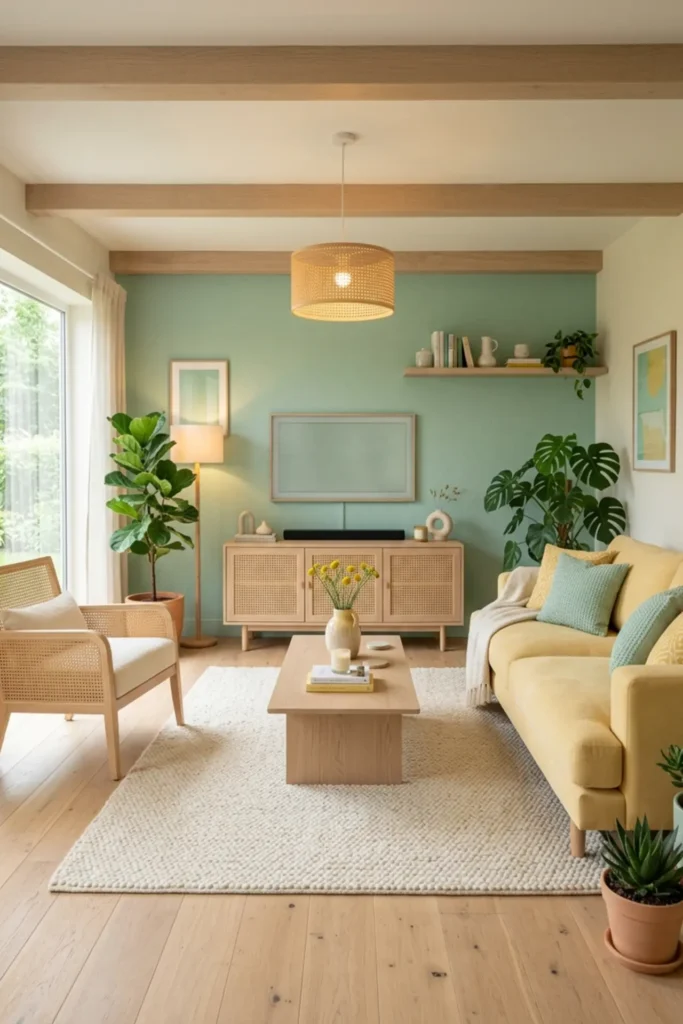
This step often makes the whole room feel more natural.
Yellow and mint can both look sweeter than expected on their own, especially in bright daylight. Light wood, cane cabinet fronts, a pale oak coffee table, or a woven side chair help the palette feel more grounded.
Cane and pale wood also work well with plants, soft linen curtains, and cozy rugs.
You do not need every piece of furniture to match. One pale wood coffee table and one cane-front media unit may be enough.
I would avoid mixing too many unrelated wood tones in a small room. Try to repeat similar warm light woods rather than combining oak, orange pine, dark walnut, and cool gray wood all together.
9. Style the Room With Indoor Plants
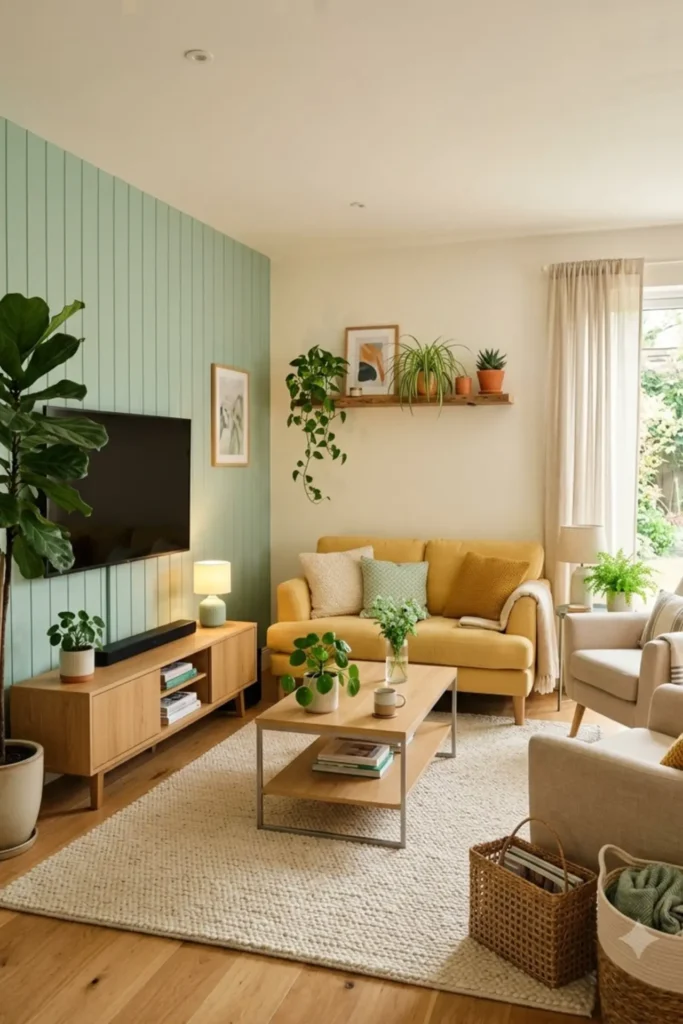
Plants make a yellow and mint palette feel more believable because they naturally connect the colors.
A tall leafy plant near the TV wall or a smaller group on shelves can keep the room feeling fresh.
If your mint is very pale, deeper green leaves can add contrast. If the room already has a lot of mint and leafy art, limit the number of actual plants so the room does not become too green overall.
I usually prefer one tall floor plant and two or three smaller plants rather than a collection of ten little pots.
Use stable planters and protect floors from water damage. In a living room, practicality matters just as much as aesthetics.
10. Warm It Up With Gold or Brass Details
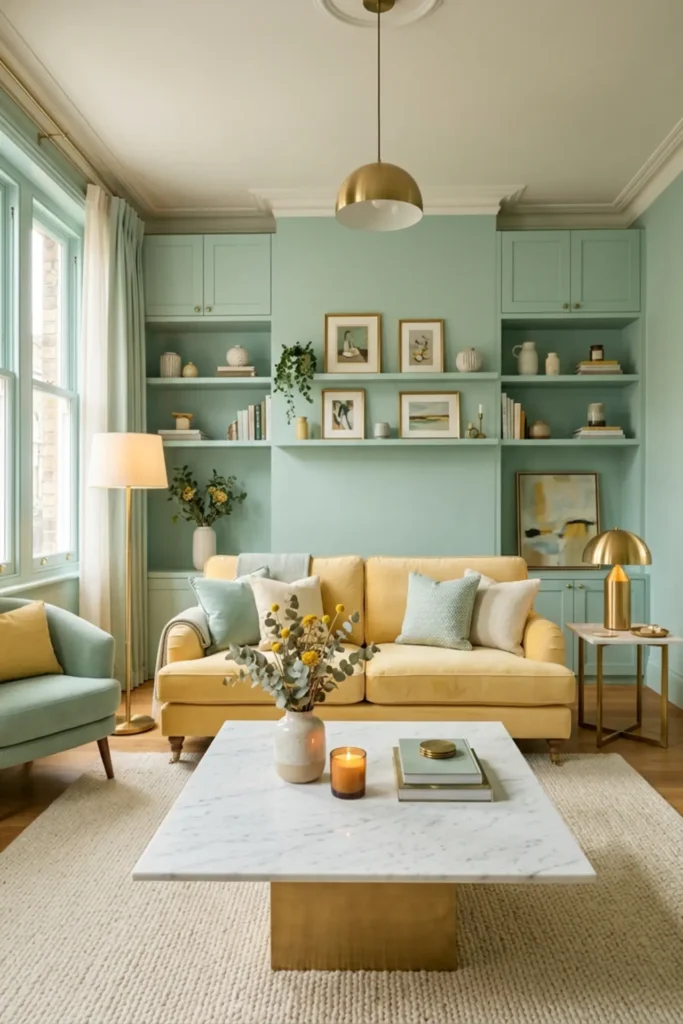
A yellow and mint room often looks better when there is one slightly richer accent running through it.
Brushed gold or warm brass can do that quietly. Think lamp bases, frame edges, cabinet pulls, or a side table detail.
You do not need shiny glam finishes everywhere. Even small touches are enough to warm the room and make mint feel more sophisticated.
If your lighting is already warm and the sofa is yellow, use metal carefully so the room does not start looking too golden.
I would usually pick one warm metal and stick with it. Mixing polished chrome, black metal, brass, and rose gold in a light pastel room can get chaotic quickly.
11. Try Mint Built-Ins With Soft Yellow Decor
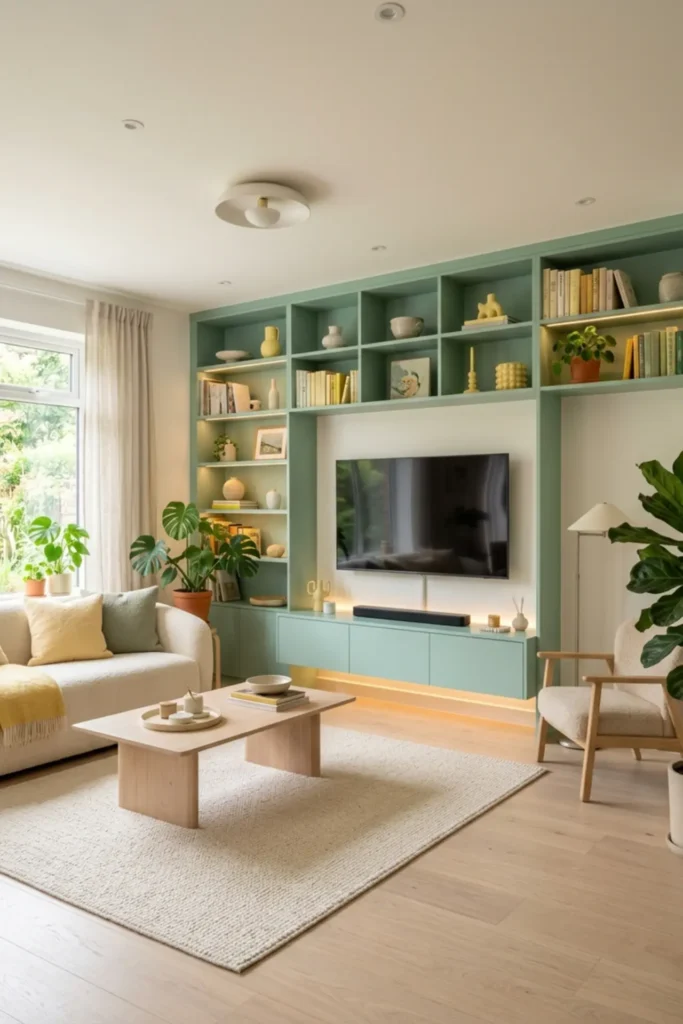
Built-ins can hold the mint tone in a clean, structured way.
Instead of using mint on several random furniture pieces, you can paint one shelving wall or one media-storage system in a muted mint. Then bring yellow in through decor, books, art, or a chair.
That approach looks more custom and can work very well in family rooms where you need storage anyway.
If you are painting built-ins, test the color in morning and evening light first. Mint can shift more than expected depending on your light bulbs and window direction.
I would also keep the shelf styling fairly calm. When the unit itself is colorful, the objects on it need more restraint.
12. Use Layered Lighting for a Cozy Evening Look
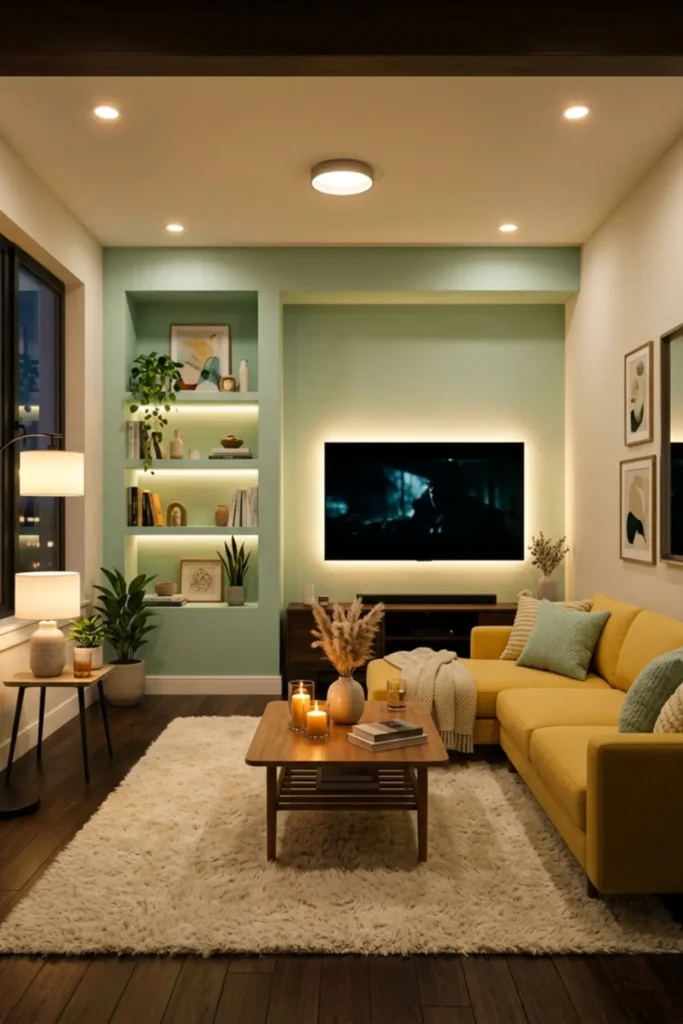
This color palette can look lovely in daylight, but it can feel completely different at night.
That is why layered lighting matters. Try to combine ceiling lighting, shelf lighting, a table lamp, and possibly concealed LED detail rather than relying on one bright overhead light.
Warm ambient light tends to flatter soft yellow especially well. It also gives mint a gentler tone.
A good lighting mix might include:
- one ceiling light for general use
- one table lamp near the sofa
- one floor lamp or wall sconce
- one LED detail on shelving or the TV wall
This is how you get that cozy “glow” effect instead of a flat brightly lit room.
For residential lighting safety, it is worth following fixture instructions and choosing suitable bulbs and wiring methods rather than improvising around built-ins or wall features.
13. Add One Patterned Accent Chair
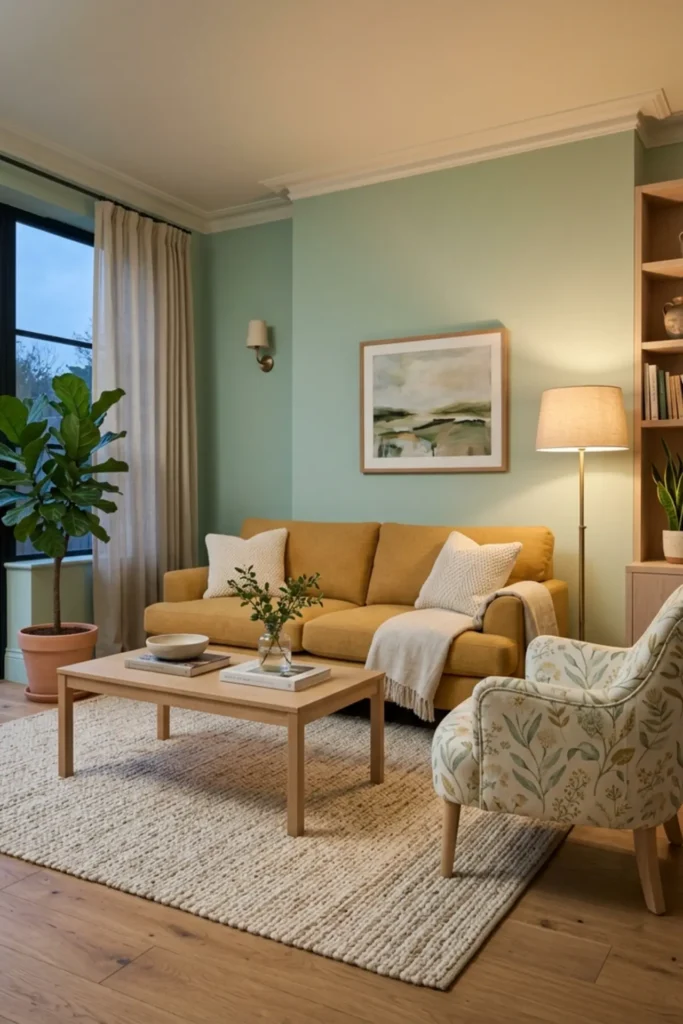
If the room feels too plain, a single patterned accent chair can bring energy without making the whole room busy.
Look for a subtle floral, botanical, stripe, or abstract print that includes mint, yellow, cream, and maybe one darker grounding color.
One chair is enough in most spaces. Two identical patterned chairs can work, but only if the rest of the room is fairly controlled.
Place the chair where it contributes to the layout rather than just filling an empty corner. A chair near the coffee table or beside the TV wall often feels more integrated than one placed off on its own.
Keep the pattern medium-scale. Tiny prints can get lost, while very large prints can dominate a small room.
14. Use Soft Curtains to Keep the Room Airy
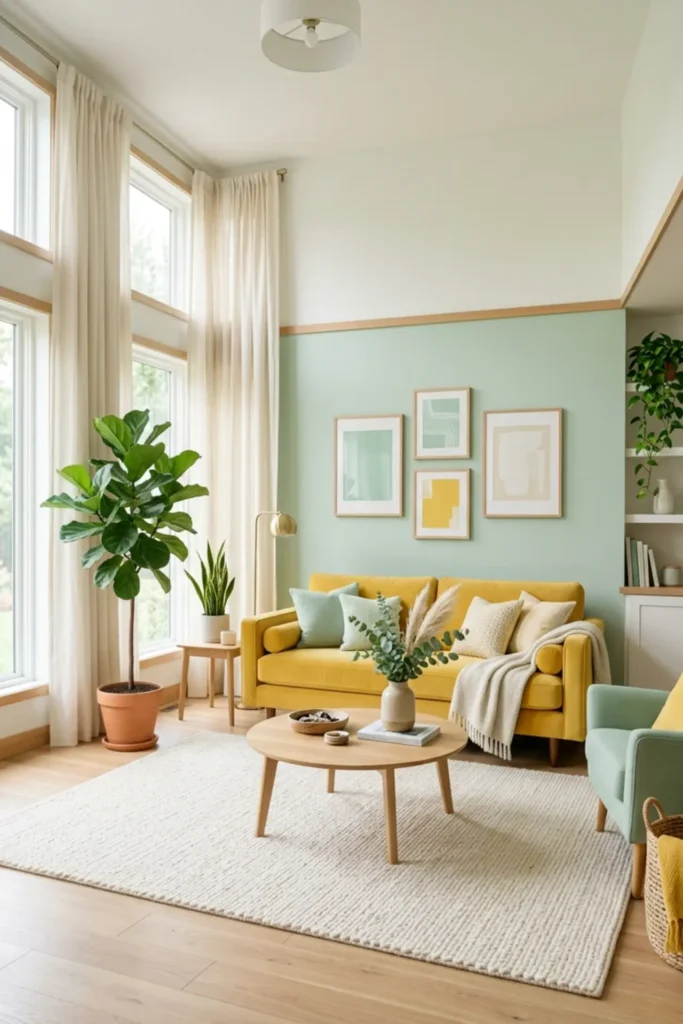
Window treatments do a lot in a light color palette.
Cream, soft ivory, or sheer warm-white curtains usually work better than mint or yellow curtains, especially if the room already has color elsewhere.
A neutral curtain helps reflect light and keeps the room from feeling too segmented.
Hang the rod a little higher and wider than the window if the wall allows it. That can make the room feel taller and lets the curtains frame the opening without blocking as much daylight.
If you want a hint of color, a very soft mint trim or subtle botanical print could work, but I would avoid bright yellow curtains in most living rooms unless the space is extremely simple.
15. Create a Mint and Yellow Coffee Table Styling Moment
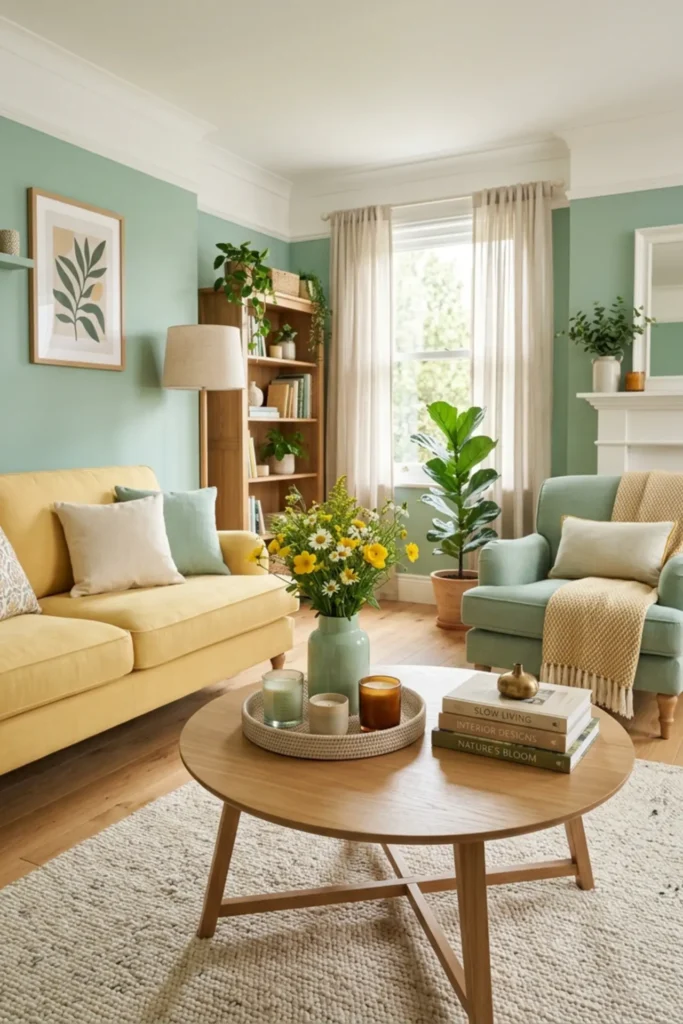
A coffee table is a good place to repeat both colors in small doses.
You might use a mint ceramic vase, yellow flowers, one candle, a neutral tray, and two stacked books. That is enough.
I like to keep coffee table styling low and usable. A tall arrangement may look nice in a photo, but it can block sightlines and become annoying in everyday use.
Try the one tray + one floral or plant element + one candle or object formula. It keeps the surface styled but still practical.
If the table itself is already a strong material such as marble or bold wood grain, the decor should stay simple.
16. Try a Family-Friendly Yellow and Mint Layout
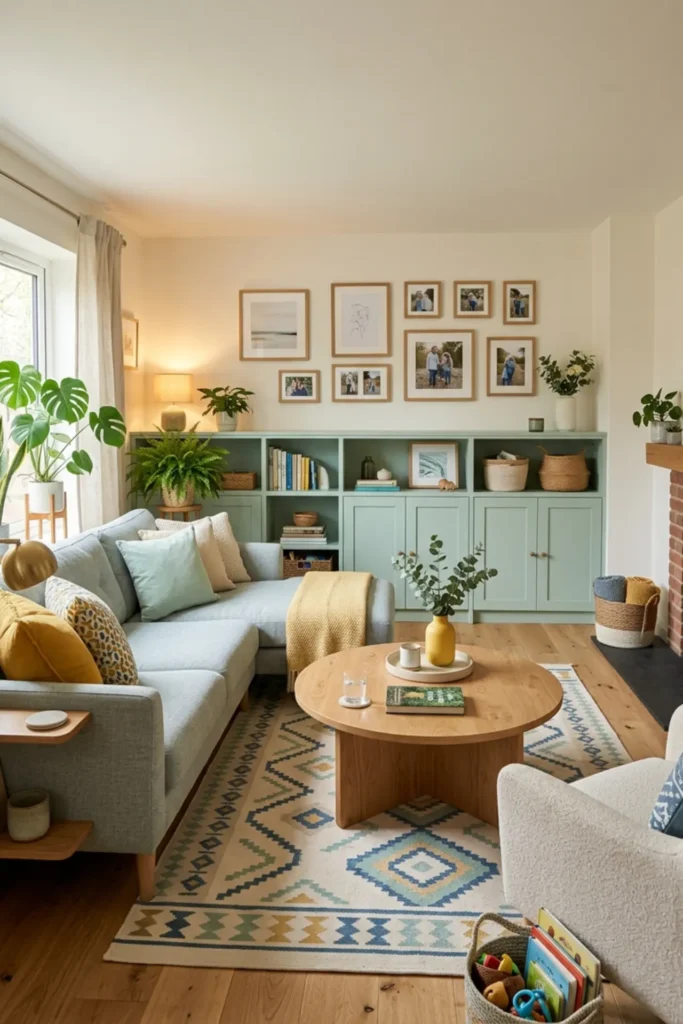
If the living room is a real family space, the colors need to survive daily life.
In that case, I would use mint on washable or more stable surfaces—like painted walls or storage—while keeping yellow in removable or replaceable pieces such as cushions, art, or a throw.
A washable rug, rounded coffee table, and practical sofa fabric become more important than chasing the perfect photo.
Storage also matters more. Closed cabinets in a pale mint tone can hide toys, remotes, or daily clutter while still supporting the color palette.
This is one of those cases where a room often looks better because it is functional, not in spite of it.
17. Make a Small Living Room Feel Lighter With More Mint Than Yellow
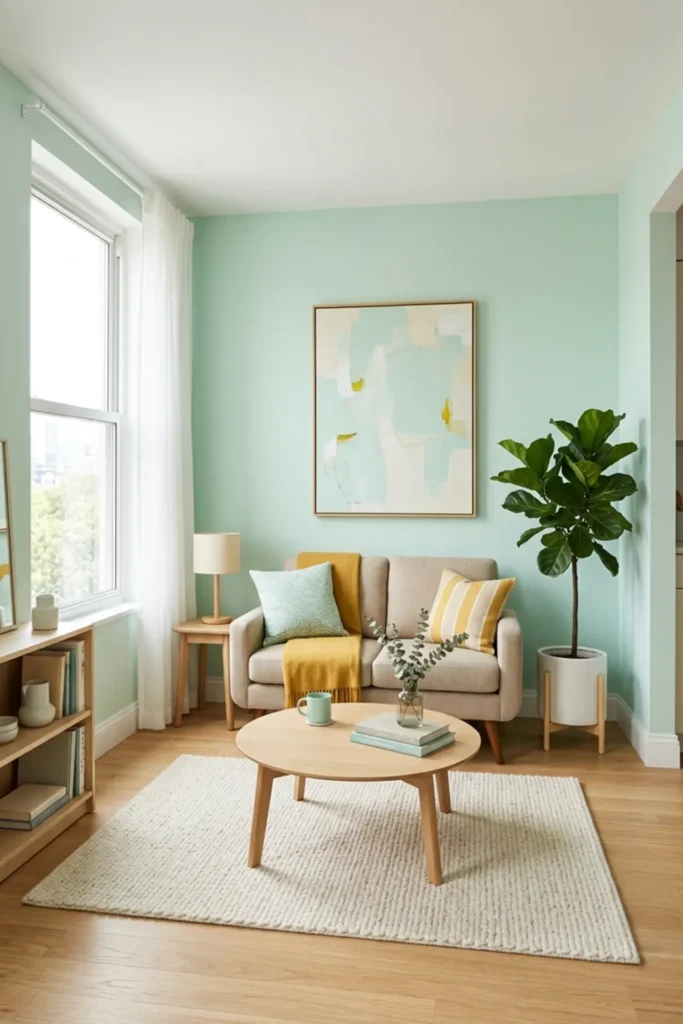
Mint is usually the better leader in a small room because it feels visually lighter.
If the room is tight, I would use mint on the wall or in art and bring yellow in through smaller pieces—perhaps two cushions, one lamp, and flowers.
A full yellow sofa in a tiny living room can work, but it becomes the immediate focal point. That is fine only if the rest of the room is very quiet.
Using more mint than yellow often helps keep the room open while still letting the yellow provide warmth.
Your readers might also like Small Living Room Ideas That Make Tiny Apartments Look Bigger.
18. Add One Statement Light or Lamp in Yellow
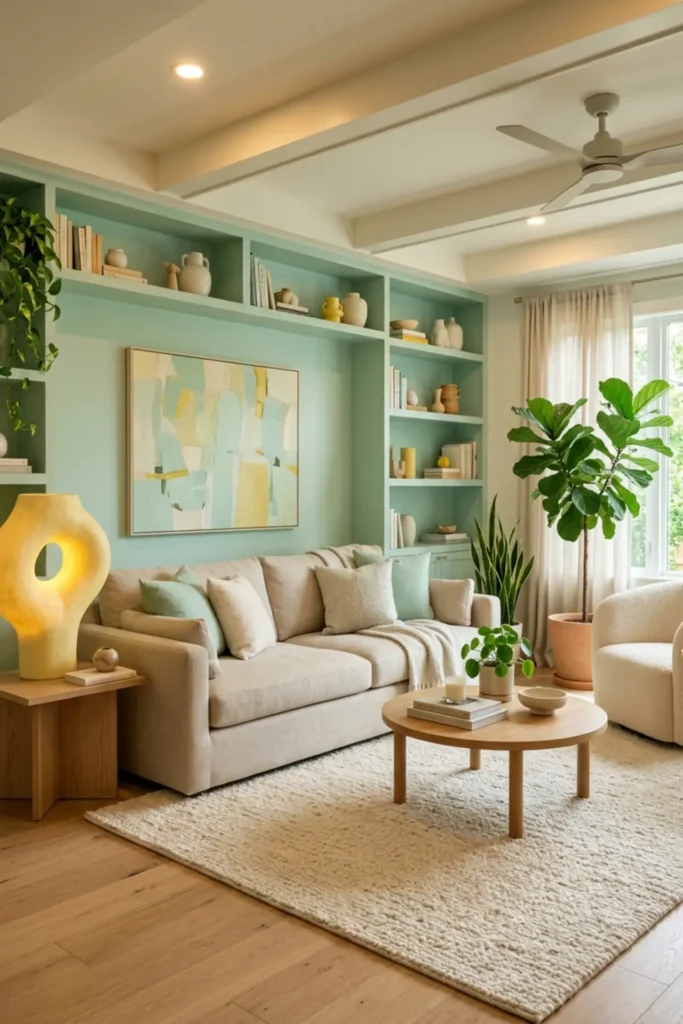
Instead of spreading yellow across ten accessories, you can use one clear statement piece.
A mustard or soft yellow lamp, pendant, or sculptural table light can create a more deliberate focal point than several tiny yellow objects.
This works particularly well in a mint-led room. The yellow light or lamp then feels intentional rather than random.
Keep the shape simple if the room already has a decorative TV wall or detailed shelving. If the room is plain, the lamp can be a little more sculptural.
I would also think about bulb warmth here. A warm bulb will usually suit the yellow tone much better than a cold bright one.
19. Edit the Room Until It Feels Fresh, Not Busy
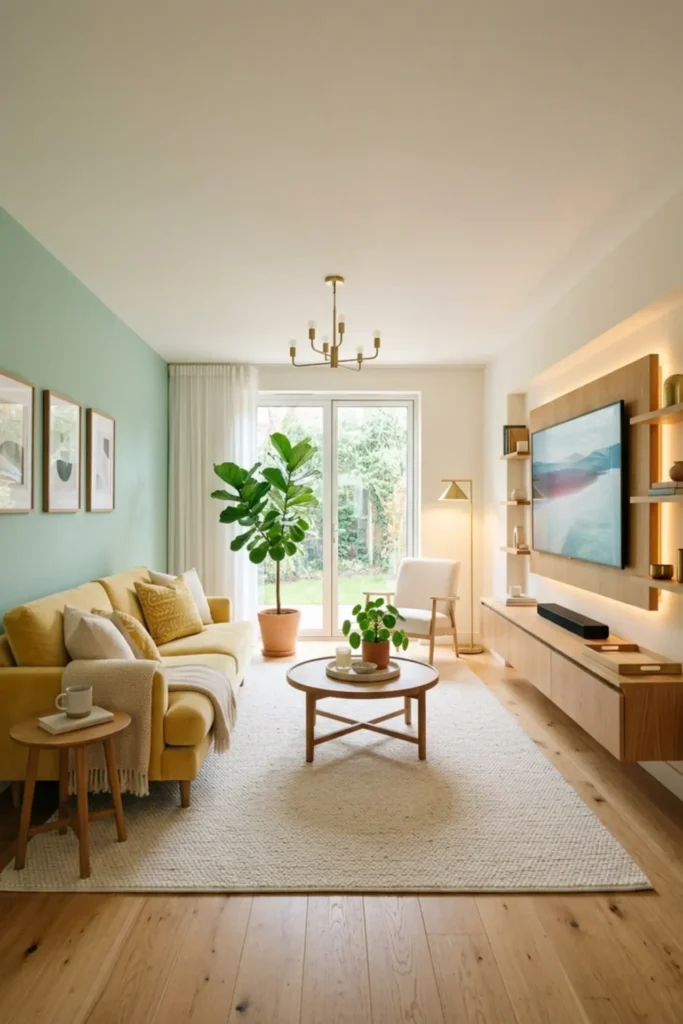
This final step matters more than buying another decorative object.
Stand back and look at the room as one whole composition. If you notice mint wall, yellow sofa, yellow lamp, mint shelves, floral art, multiple plants, colorful cushions, brass accents, and patterned chair all fighting at once, something needs to go.
Pick a few main moments:
- color-led wall or sofa
- one styled TV wall or shelf area
- one plant zone
- one main textile story
Then let the rest stay quieter.
I would rather see one beautiful mint wall and a soft yellow sofa than a room where every surface is trying to prove the color scheme.
This is usually what separates a fresh, cheerful living room from one that feels overstyled.
A Simple Yellow and Mint Shopping Plan
If I were putting the room together slowly, I would use this order:
- Decide which color leads.
- Start with the neutral base.
- Choose the sofa or wall color direction.
- Add the rug.
- Build the TV wall or main focal wall.
- Bring in shelves, tables, or storage.
- Add lighting.
- Add art and plants.
- Finish with cushions, throws, and small decor.
- Remove anything that makes the room look busier than it needs to be.
This slower approach usually gives a better result than buying every mint and yellow accessory in one day.
What I Would Spend More On
If the budget is limited, I would spend more on the sofa, the rug, and the main lighting or TV wall feature.
Those pieces shape how the room actually feels.
I would spend less on small decor, trendy side objects, and sets of matching cushions. You can adjust those later very easily.
A good living room usually comes from getting the big pieces right first. The styling then becomes much easier.
Common Mistakes I Would Avoid
The first mistake is making both colors equally loud. That often creates tension instead of harmony.
The second is using cool lighting. This palette almost always looks better with warmer lighting.
Another common mistake is forgetting texture. Pastel and bright colors need wood, woven materials, plants, fabric variation, or subtle pattern to feel complete.
I would also avoid using too many small accessories just to repeat the colors. Repetition works best when it is deliberate, not when it feels like every object had to join the palette.
Finally, do not ignore scale. In a small room, a large sofa, oversized TV unit, or too many side tables can make even a pretty color scheme feel crowded.
Final Thoughts
Yellow and mint living room ideas work best when they feel cheerful but still controlled.
Start with a neutral base, choose which color will lead, and use warm lighting to make the palette feel cozy instead of sharp. Then bring in texture through rugs, wood, cane, plants, and layered styling.
A soft yellow sofa against a mint wall can look lovely. So can a mostly neutral room with only a few yellow and mint accents. There is no single formula that always wins.
What usually matters most is editing the room until the colors support the space instead of overpowering it.
A fresh room should still feel comfortable at night, easy to maintain in real life, and pleasant enough that you would actually want to sit in it every day.
Disclosure: Some visuals are AI-assisted design concepts created for inspiration. Always confirm measurements, materials, paint colors, electrical requirements, storage dimensions, product availability, and installation needs for your home.
About the Author
Ali Hamza — Founder & Editor
Hi, I’m Ali Hamza, and Styled Room Living is my personal home decor project. I don’t have a formal background in interior design. I started this website because home makeovers are something I genuinely enjoy looking at and learning about. I can spend a surprising amount of time comparing layouts, storage ideas, colors, and small details that change how a space feels.
Most of the ideas shared here are not projects I have personally built. When I put a guide together, I try to separate an idea that only looks good in a photograph from one that could actually be useful in a normal home. Will it fit? Is it easy to clean? Does it require drilling? Can it be adjusted for a smaller budget? These are the questions I keep in mind while working on an article.
Some images on the website are AI-assisted design concepts used to explain an idea more clearly. They are meant for inspiration, not as exact construction plans. Please check measurements, materials, weight limits, prices, plant requirements, weather exposure, and installation requirements before trying anything in your own home.
I’m still learning as the website grows, and I know every home works differently. My purpose with Styled Room Living is simply to collect useful home ideas, explain them in plain language, and help readers find something they can adapt to their own space.
Read more about Ali Hamza →