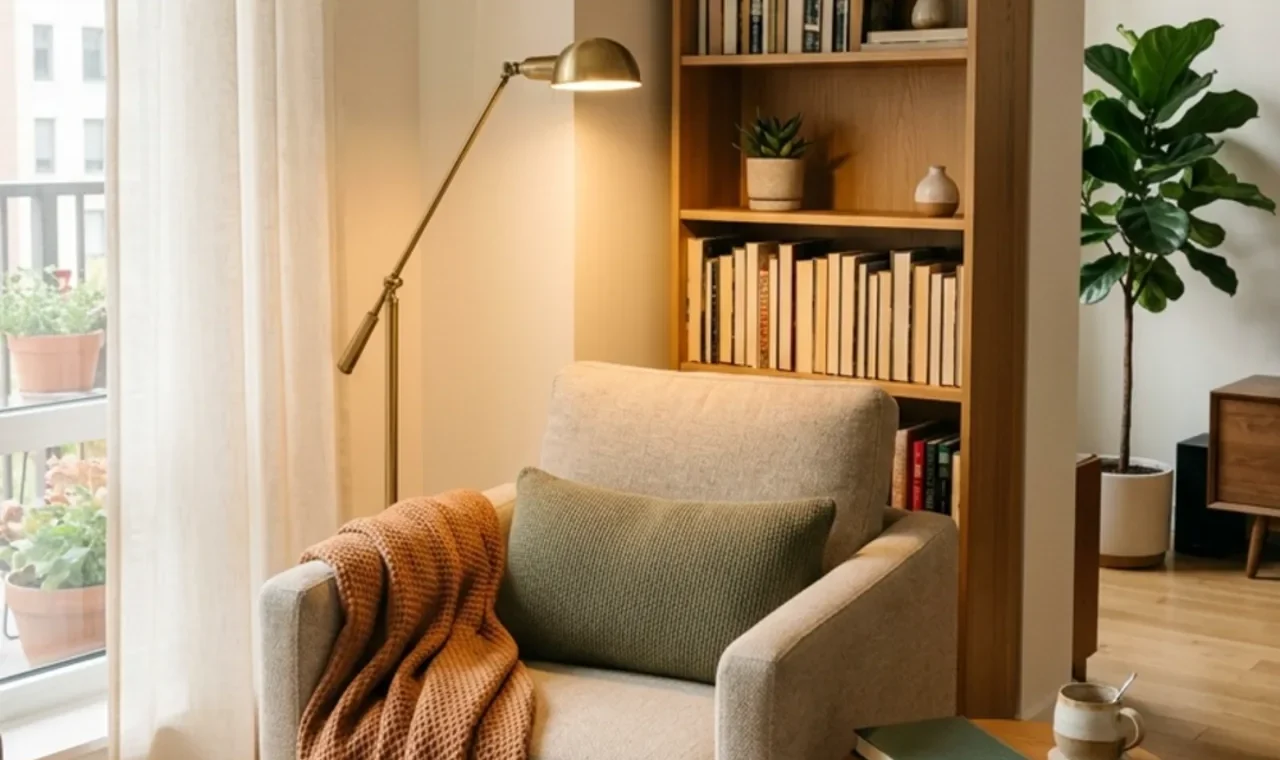
Small space reading nook ideas work best when the chair is comfortable enough that you actually want to sit there. A pretty corner with a stiff accent chair, no place for a drink, and poor light may photograph well, but it usually stops being used.
The good news is that a reading nook does not need a separate room. A bedroom corner, the space beside a living-room window, an empty wall near a bookcase, or a quiet spot at the end of a hallway can all work if the furniture fits.
I would start with the chair before buying shelves, art, baskets, or a floor lamp. The chair controls the footprint, and in a small home every extra inch matters. Once the seat feels right, you can add a lamp, a small surface, and just enough book storage to make the area useful.
This guide includes realistic planning dimensions, rough U.S. cost ranges, setup steps, and pros and cons for every idea. It also covers rental-friendly options, small apartment layouts, lighting, side tables, window corners, book storage, footstools, rugs, and the mistakes that can make a cozy nook feel cramped.
If you are working with a very specific awkward area, the site’s Cozy Under-Stairs Reading Nook Ideas goes deeper into low ceilings, built-in seating, and unusual staircase spaces.
What Makes a Small Reading Nook Actually Comfortable?
A reading nook needs four things before it needs decor:
- a chair that supports you
- a light you can comfortably read by
- enough room to get in and out
- somewhere to put a book, phone, or drink
Everything else is optional.
A chair can be visually small but physically awkward. Thick arms, a deep seat, or a reclined back can use much more room than the product width suggests.
I like to test a chair footprint with painter’s tape before buying. Then I place a normal dining chair inside the taped area and sit there for ten minutes. It is not a perfect test, but it quickly shows whether the corner blocks a door, feels exposed, or leaves nowhere for a lamp.
Lighting matters just as much. ENERGY STAR explains that lower color temperatures around 2700K–3000K have a warmer appearance, which is a useful range when you want a cozy reading corner rather than cool office-like light. See its lighting color-temperature guidance.
Before You Buy the Chair, Measure the Whole Corner
Do not measure only the empty wall.
Measure the chair width, chair depth, the position of the arms, the space needed to sit down, the side table, the lamp base, and the route people use to walk past the nook.
A compact lounge chair may be around 28–34 inches wide and 30–36 inches deep, but chairs vary a lot. Some barrel chairs are visually neat but surprisingly deep. Some wing chairs have narrow seats but wide backs.
Try to preserve around 24–30 inches of clear walking space on the main path where possible. In a very small room, you may have to accept less, but the nook should not force people to turn sideways every time they pass.
For side tables, around 12–18 inches wide is enough for a mug, book, glasses, and small lamp. You do not need a full end table.
If the chair sits beside a bookcase or storage tower, account for any doors or drawers that need to open.
1. Put a Compact Armchair Beside a Window
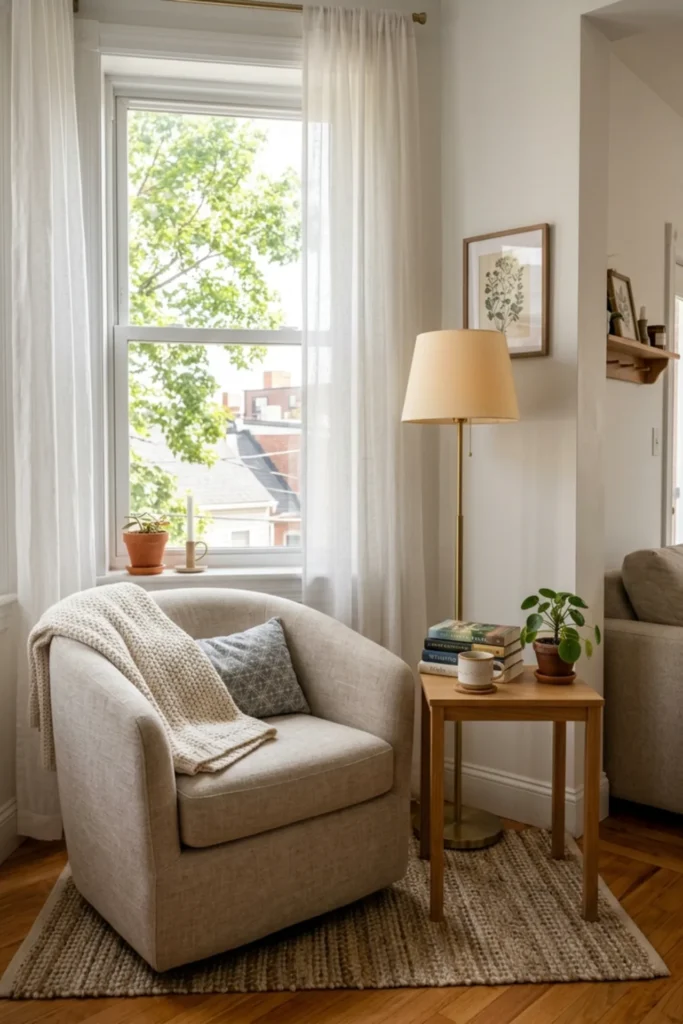
A window corner is one of the easiest places to build a reading nook because natural light already does part of the work.
Use a compact armchair rather than an oversized lounge chair. A rounded back or slim upholstered arm can still feel cozy without taking over the room.
I would angle the chair slightly toward the window or into the room rather than pressing it flat against the wall.
Size and requirements: Look for a chair around 28–32 inches wide and roughly 30–34 inches deep for a tight corner. Leave enough space to operate curtains, blinds, and the window. Keep the chair out of the direct path of heaters, vents, or doors.
Method and cost: Tape the chair footprint on the floor, add the curtain drop, then sit in the corner at different times of day to check glare. Compact upholstered chairs may cost around $250–$1,000+.
Pros: Uses natural light; creates an obvious destination; needs very little extra decor.
Cons: Strong afternoon sun can create glare; furniture may fade in direct sunlight; window drafts can make the corner uncomfortable in some homes.
2. Use a Small Swivel Chair in a Tight Living Room
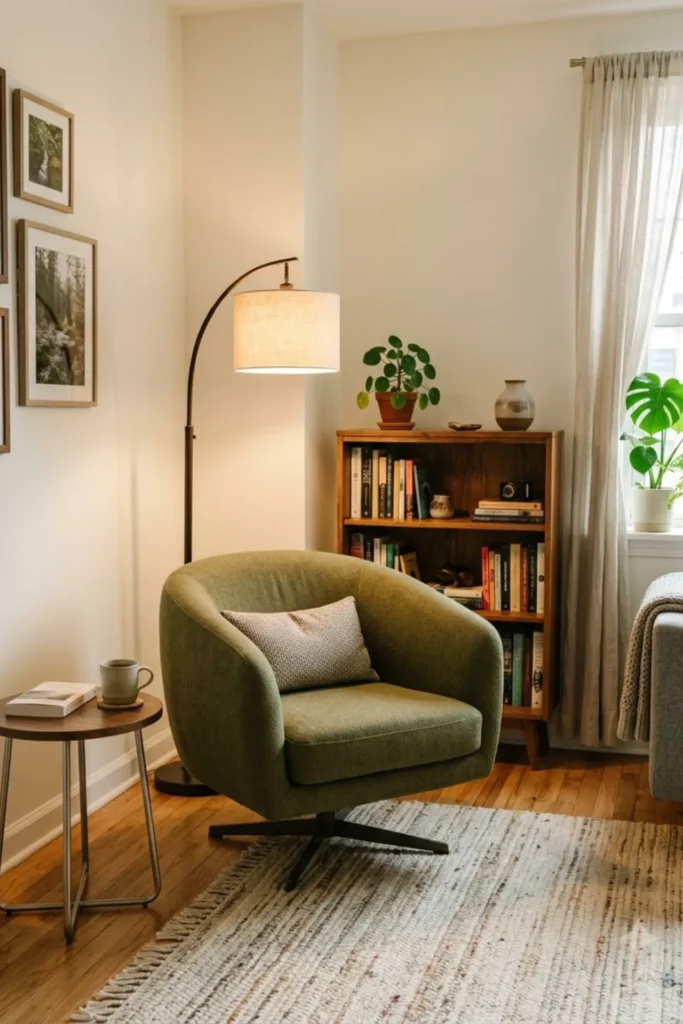
A compact swivel chair can work well when the nook sits beside the main living area.
You can turn toward the room when talking and toward the window or lamp when reading.
I would choose a small round-base chair rather than a bulky recliner.
Size and requirements: Many compact swivel chairs are around 30–34 inches wide. Remember that the chair needs rotation clearance, not just a static footprint. Keep nearby tables and lamps outside the swivel path.
Method and cost: Mark the chair footprint, then add several inches around it to represent movement. Test the area with a normal chair before ordering. A compact swivel chair may cost around $350–$1,400+.
Pros: Flexible orientation; soft curved shape; works in open-plan living rooms.
Cons: Needs more movement clearance; can bump side tables; some swivel chairs sit too deep for shorter readers.
For additional furniture-scale ideas, see Small Living Room Ideas.
3. Add a Slim Floor Lamp Behind the Chair
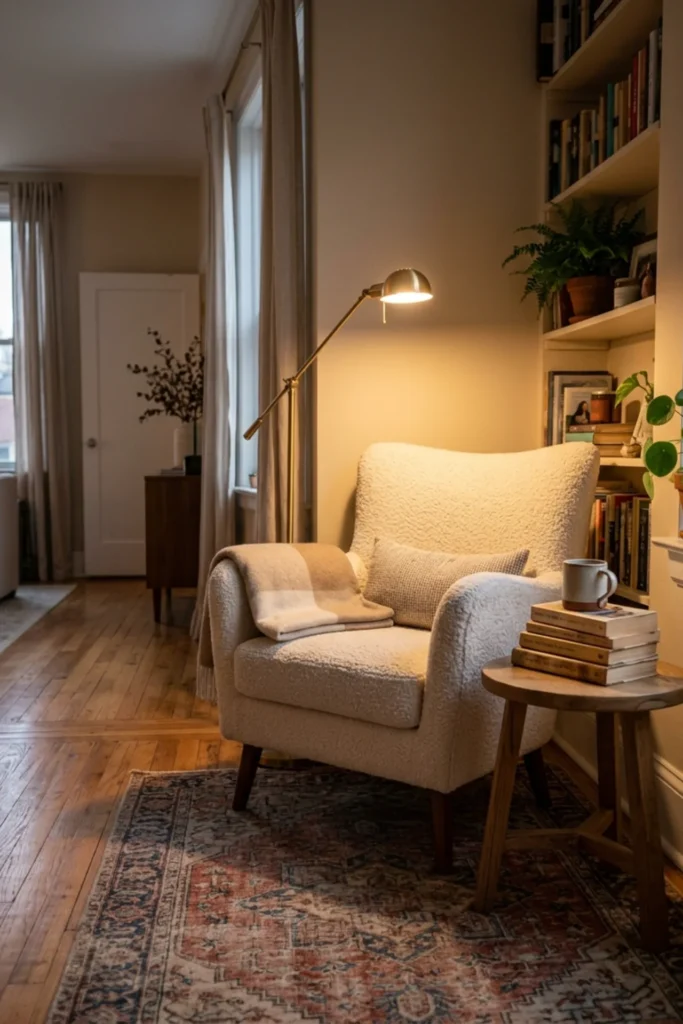
A floor lamp gives the nook useful light without taking up table space.
Place it slightly behind the shoulder rather than directly in front of the reader. That helps the light fall onto the book without staring into the bulb.
A slim stem and compact base work better than a huge tripod lamp in a small space.
Size and requirements: Many reading floor lamps are around 55–65 inches high. Look for a base around 8–12 inches wide when floor space is tight. Use a bulb and wattage compatible with the fixture. Warm light around 2700K–3000K is a good starting point for a cozy nook.
Method and cost: Check the outlet location first. Place a temporary lamp behind the chair and read for ten minutes before buying. Floor lamps may cost $70–$500+.
Pros: Saves side-table space; improves reading comfort; easy to move.
Cons: Needs an outlet; cords need safe routing; very tall shades can throw light over the book instead of onto it.
4. Use a Tiny Round Side Table
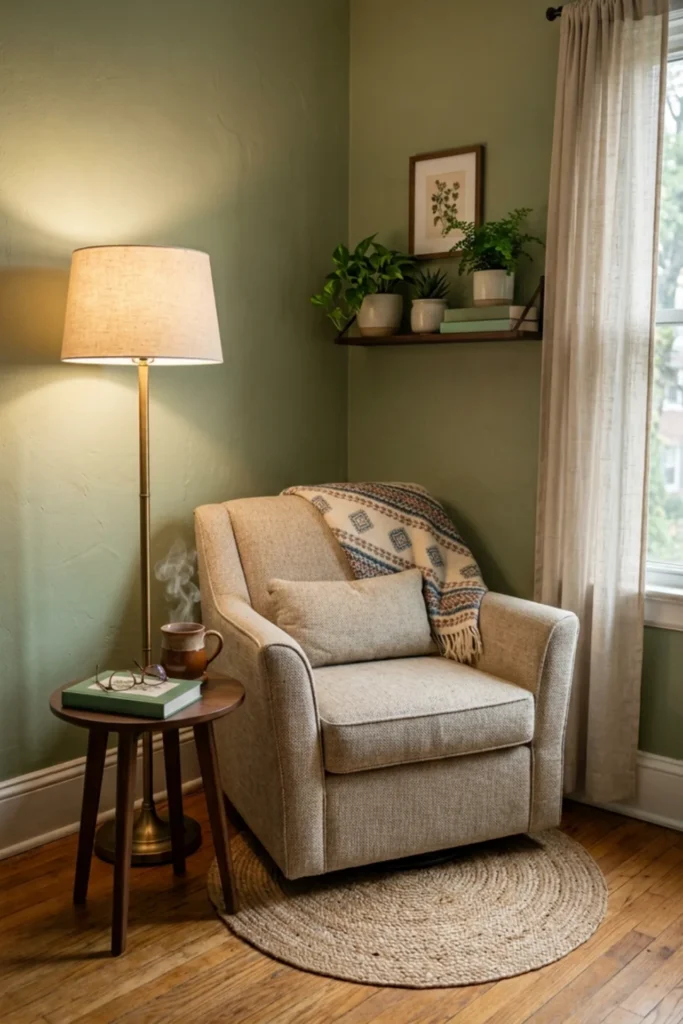
A reading nook feels much more useful when there is somewhere to put a mug and current book.
A small round table usually works better than a square one because it is easier to walk around in a tight corner.
You do not need drawers unless the nook also needs storage.
Size and requirements: Around 12–18 inches in diameter is enough for many nooks. Keep the table close to the chair-arm height so you can reach it comfortably without leaning far forward.
Method and cost: Use a box, stool, or stack of books at the proposed size for a day. If it keeps getting in the way, go smaller. Side tables may cost around $50–$300+.
Pros: Adds immediate function; little floor space; rounded edge feels softer in a narrow area.
Cons: Very small tables can tip; limited surface space; decorative tables may be less stable than they look.
5. Choose a Chair With a Supportive High Back
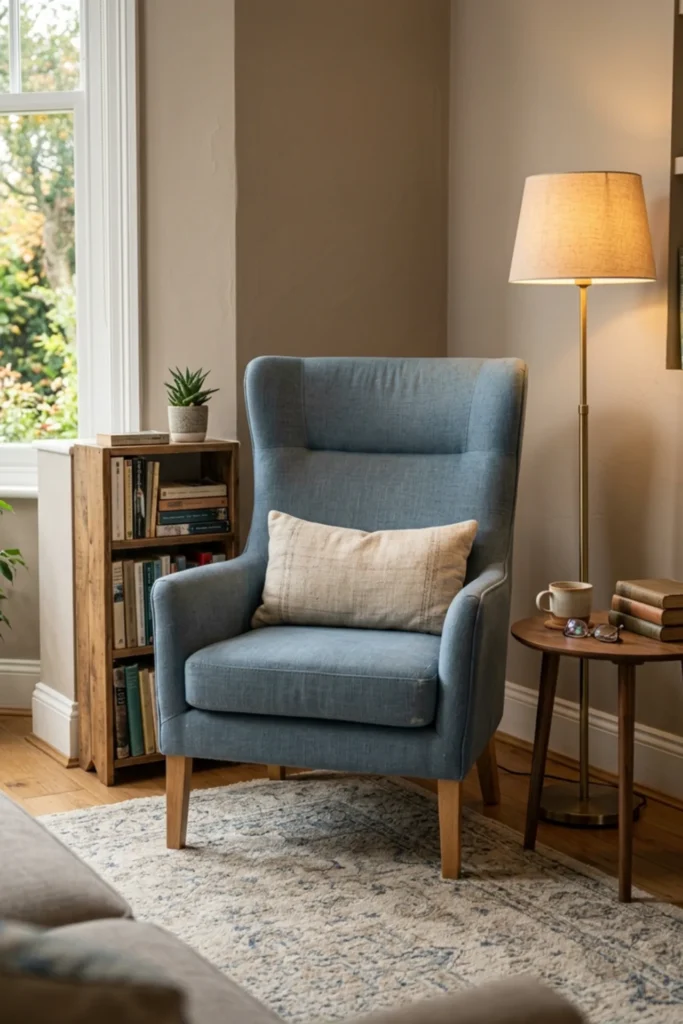
A small nook does not always need a tiny chair.
If you read for long periods, I would rather use a slightly taller supportive chair and keep the rest of the nook simple.
A high back can support the shoulders and head without requiring a large separate headrest.
Size and requirements: Look for a seat height around 17–19 inches as a starting point and a seat depth around 20–23 inches for many adults. Body size and posture matter, so test the chair whenever possible. A back around 36–42 inches high overall can feel supportive without becoming huge.
Method and cost: Sit in the chair for at least ten minutes in the store. Check whether your feet reach the floor and whether the arm height feels natural. Supportive lounge chairs may cost $400–$1,500+.
Pros: Better for long reading sessions; can reduce the need for extra cushions; visually anchors the nook.
Cons: Taller furniture uses more visual space; deep seats can be uncomfortable for shorter readers; good upholstery costs more.
6. Add a Small Footstool Instead of a Recliner
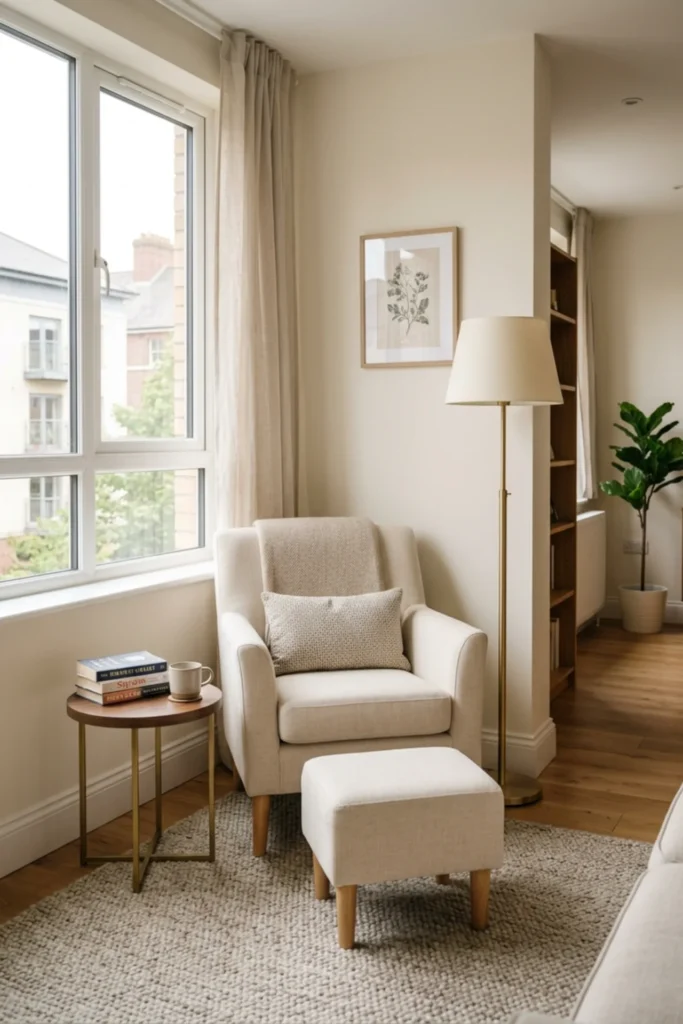
A footstool can make a compact chair much more comfortable.
It also gives you flexibility: move it away when you need floor space and pull it in when reading.
I would choose a soft ottoman with a simple shape rather than a full reclining mechanism in a very small room.
Size and requirements: A footstool around 16–22 inches wide and 14–18 inches high works with many lounge chairs. It should not block the main path when in use or storage.
Method and cost: Test the foot position with a box or folded blanket stack before buying. Compact ottomans may cost around $80–$400+.
Pros: Improves comfort; movable; can sometimes double as an extra seat.
Cons: Adds another floor object; easy to trip over in a narrow route; may become clutter storage.
7. Build a Reading Nook Beside a Narrow Bookcase
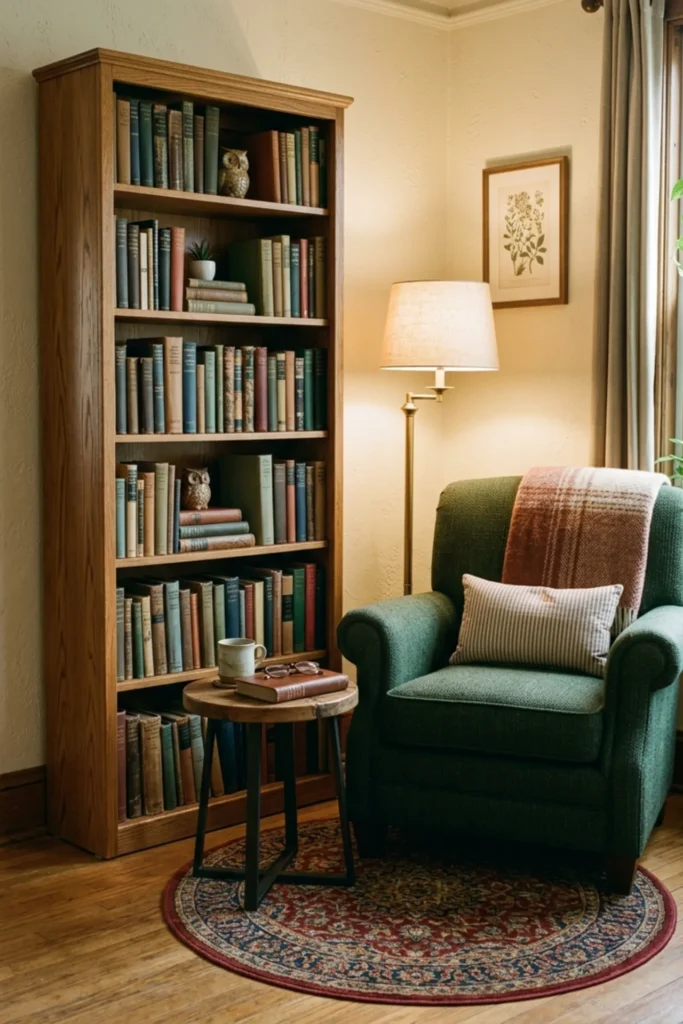
A tall narrow bookcase can create a reading zone without using much wall width.
Place the chair beside it rather than directly in front so books remain easy to reach.
Keep the shelf styling practical. Books should take up most of the space.
Size and requirements: A narrow bookcase around 18–30 inches wide and 10–12 inches deep can work in a small corner. Check ceiling height and the chair clearance. Tall storage furniture should be secured as appropriate for the product and household.
Method and cost: Tape the bookcase footprint and confirm the chair does not block access to the lower shelves. A narrow bookcase may cost $120–$600+.
Pros: Adds lots of vertical storage; clearly defines the nook; keeps books within reach.
Cons: Tall furniture can visually crowd a small room; open shelves collect dust; tip-over safety needs attention.
The U.S. Consumer Product Safety Commission’s Anchor It! guidance recommends securing furniture with drawers, doors, or shelves to help prevent tip-over hazards.
8. Use a Low Book Cart for a Rental-Friendly Nook
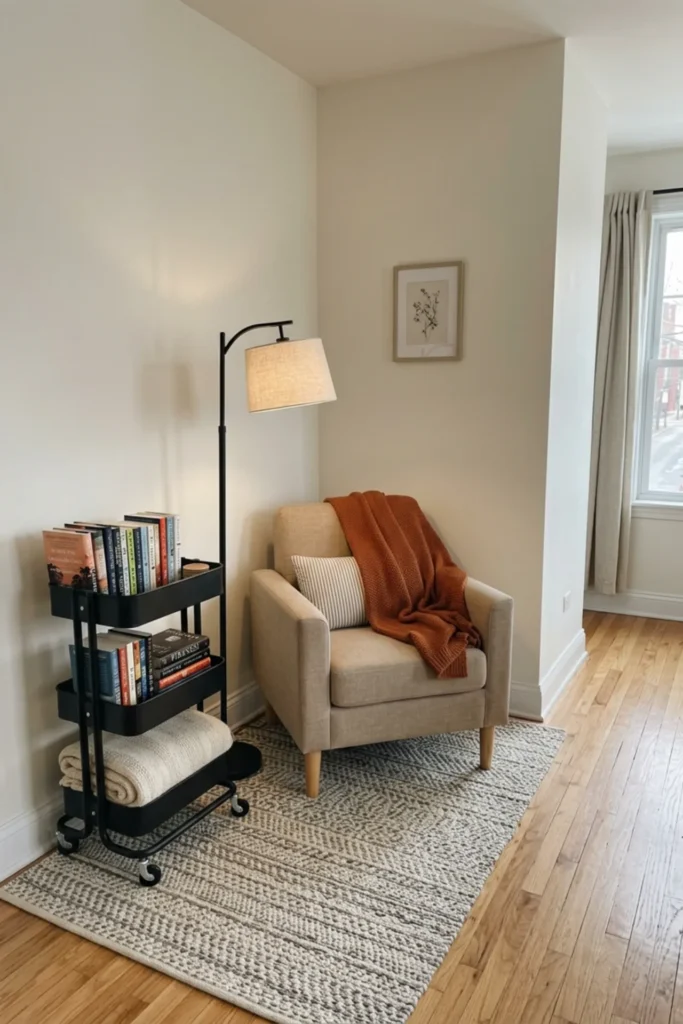
If you rent or do not want to mount shelves, a rolling book cart can work surprisingly well.
It holds current reads, a blanket, headphones, and a few notebooks without changing the wall.
Because it moves, the nook can shift between rooms later.
Size and requirements: Look for a cart around 12–16 inches wide and 16–20 inches long. Keep it lower than the chair arm if you want the room to feel open. Locking casters are useful when available.
Method and cost: Place a cardboard box beside the chair for a week to see whether you actually use the storage. Rolling carts may cost around $40–$180.
Pros: Rental-friendly; movable; inexpensive.
Cons: Wheels collect dust; open tiers can look messy; tall book stacks make the cart unstable.
9. Place the Nook in an Empty Bedroom Corner
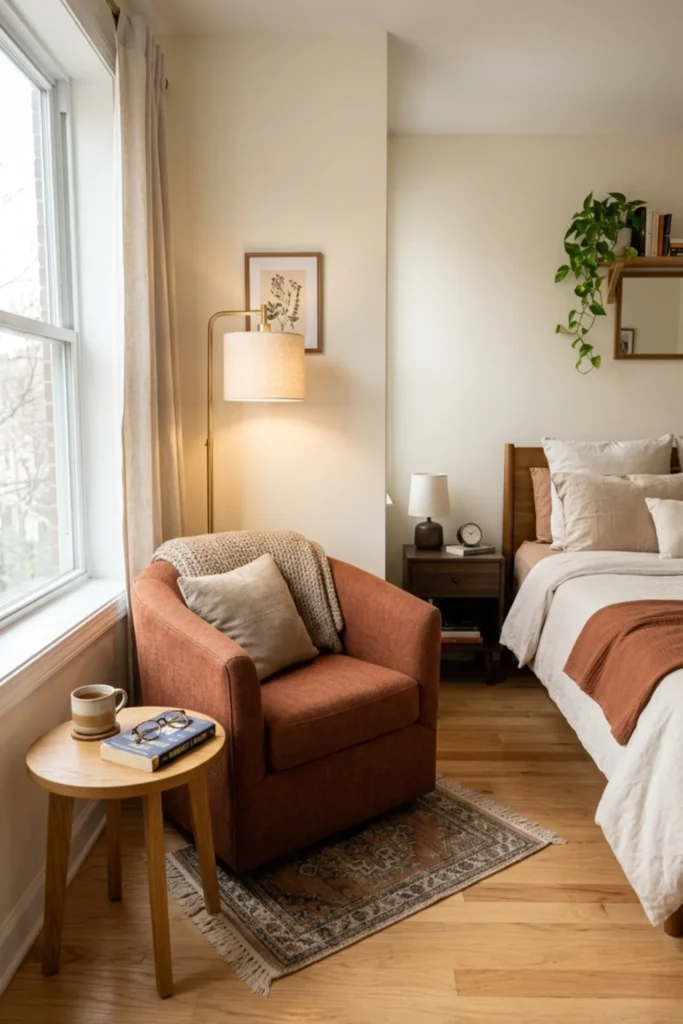
A bedroom corner can become a reading nook without competing with the main living room.
This works especially well if the bedroom has one bright window and enough space beside the bed.
I would keep the chair visually lighter than the bed so the corner does not make the room feel crowded.
Size and requirements: Leave at least 24 inches between the chair and the main route around the bed where possible. Choose a chair around 28–32 inches wide for a compact bedroom. Keep drawers and wardrobe doors fully operable.
Method and cost: Tape the chair and lamp footprint, then walk around the bed several times. A complete bedroom nook with chair, lamp, and table may cost $350–$1,400+.
Pros: Creates a quiet place away from the TV; makes an empty corner useful; works well for nighttime reading.
Cons: Bedroom floor space is limited; the chair can become a clothes pile; lamp light may disturb another sleeper.
For more scale and circulation ideas, see Small Apartment Bedroom Ideas.
10. Use a Washable Rug to Define the Corner
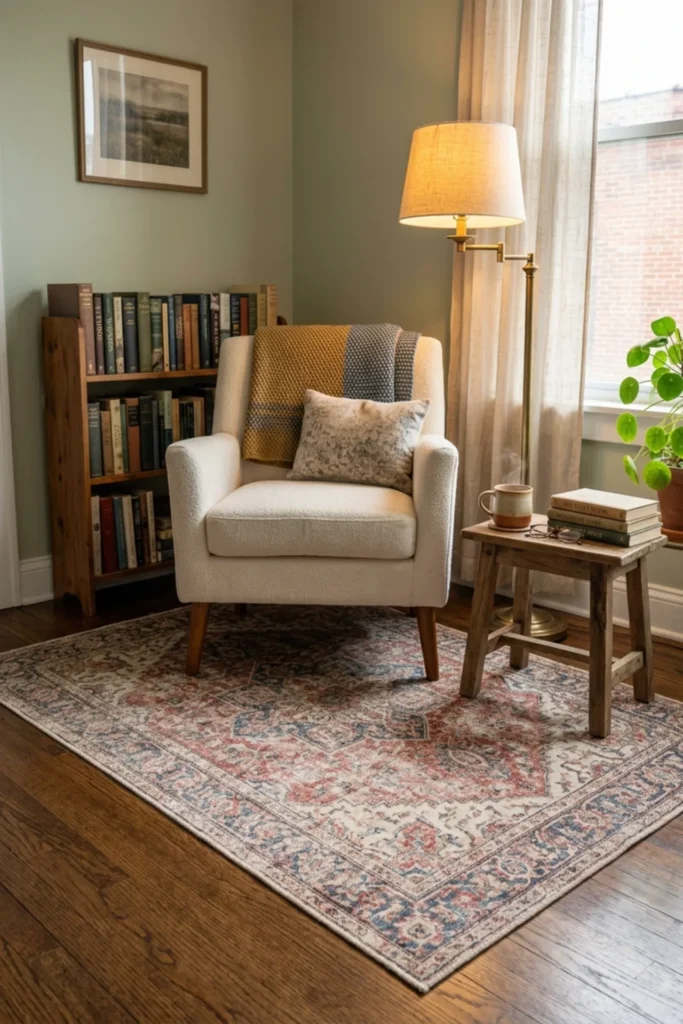
A small rug can make a chair and lamp feel like a deliberate nook rather than random furniture placed in a corner.
I would choose a flat or low-pile rug that does not curl under the chair.
A faded pattern or warm neutral works better than something very busy.
Size and requirements: A 4-by-6-foot rug works in many small reading corners. A 3-by-5-foot rug may be enough when only the front of the chair sits on it. Keep edges out of the main walking path where possible.
Method and cost: Tape the rug size and chair location on the floor. Add a suitable rug pad if required. Small washable or low-pile rugs may cost around $50–$300+.
Pros: Defines the nook; adds softness and warmth; helps reduce visual floating.
Cons: Rug edges can create trip points; small rugs move if not secured; light colors need more cleaning.
11. Add One Wall-Mounted Reading Light
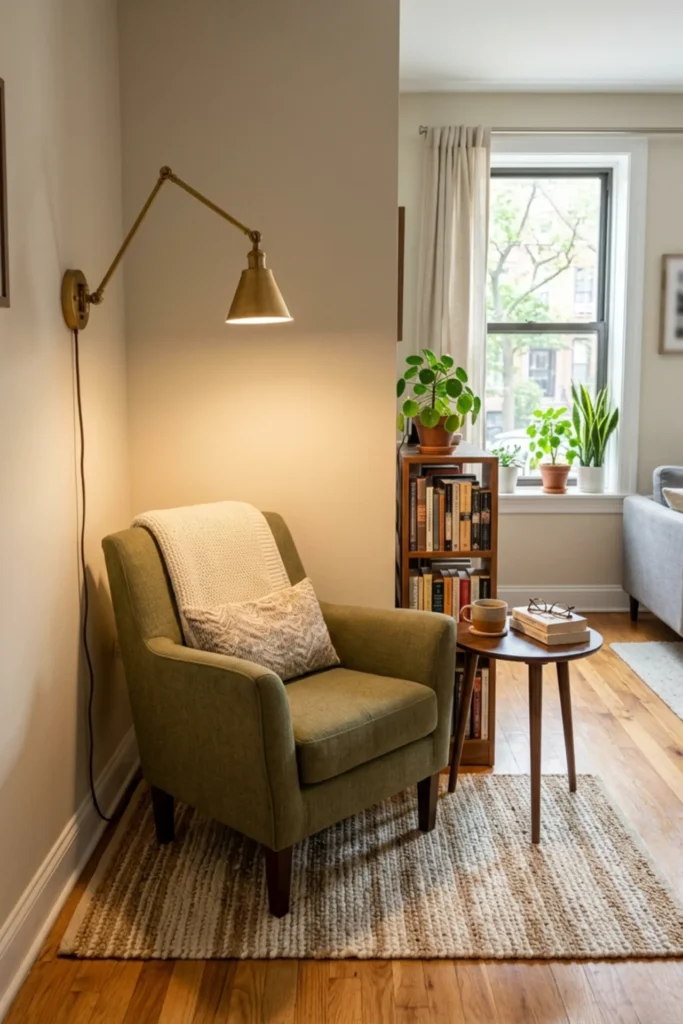
A wall light saves the floor space that a lamp base would use.
This can be useful beside a chair squeezed between a window and bookcase.
For renters, plug-in wall sconces can sometimes offer the look without hardwiring.
Size and requirements: Position the light so it falls across the page without shining directly into your eyes. A swing-arm light should not project into a walking route. Use products suited to the wall and follow installation instructions.
Method and cost: Sit in the chair first, then mark shoulder and eye height before choosing the light position. Plug-in sconces may cost $60–$300. Hardwired fixtures plus installation can cost $250–$800+.
Pros: Saves floor and table space; good direct light; visually clean.
Cons: Wall position is less flexible; cords can look messy on plug-in models; hardwired installation costs more.
12. Make the Nook Cozy With One Throw and Two Cushions
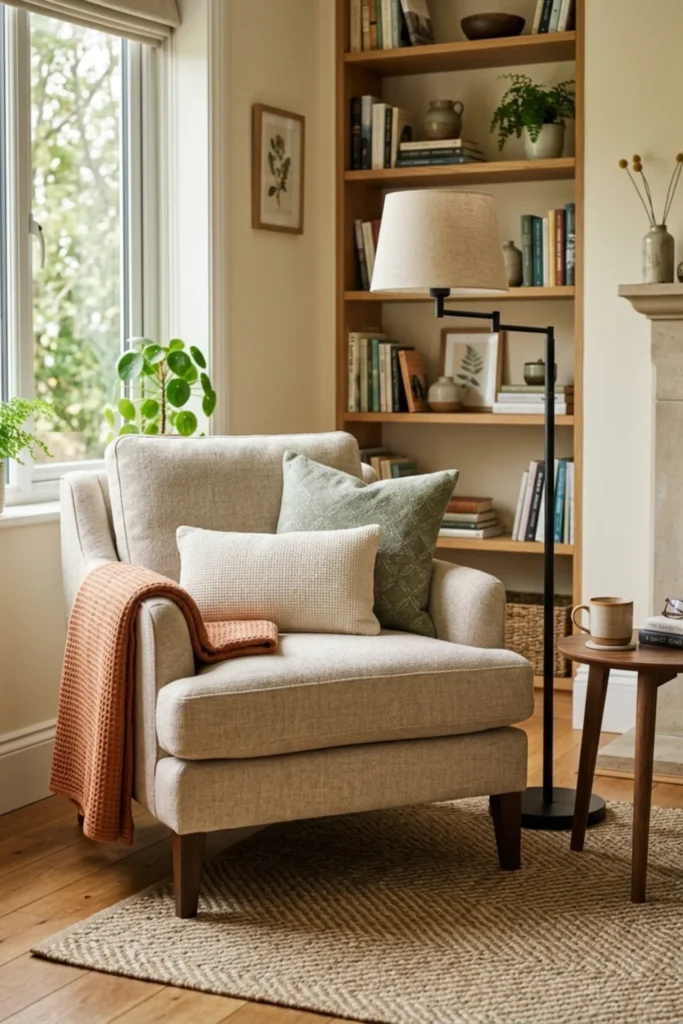
You do not need a pile of pillows to make a chair comfortable.
One lumbar cushion, one softer accent pillow, and one throw are enough for most reading chairs.
If the chair already has good back support, use even less.
Size and requirements: A lumbar cushion around 12 by 20 inches can support the lower back without taking much seat depth. One 18–20-inch square cushion adds softness. Keep enough actual seat area for a person.
Method and cost: Sit in the chair first without cushions. Add only the support that improves comfort. A throw and two cushions may cost around $40–$180+.
Pros: Easy comfort upgrade; adds color; inexpensive.
Cons: Too many cushions reduce usable seat depth; throws collect pet hair and dust; decorative pillows need regular moving.
13. Use a Window Ledge as the Side Surface
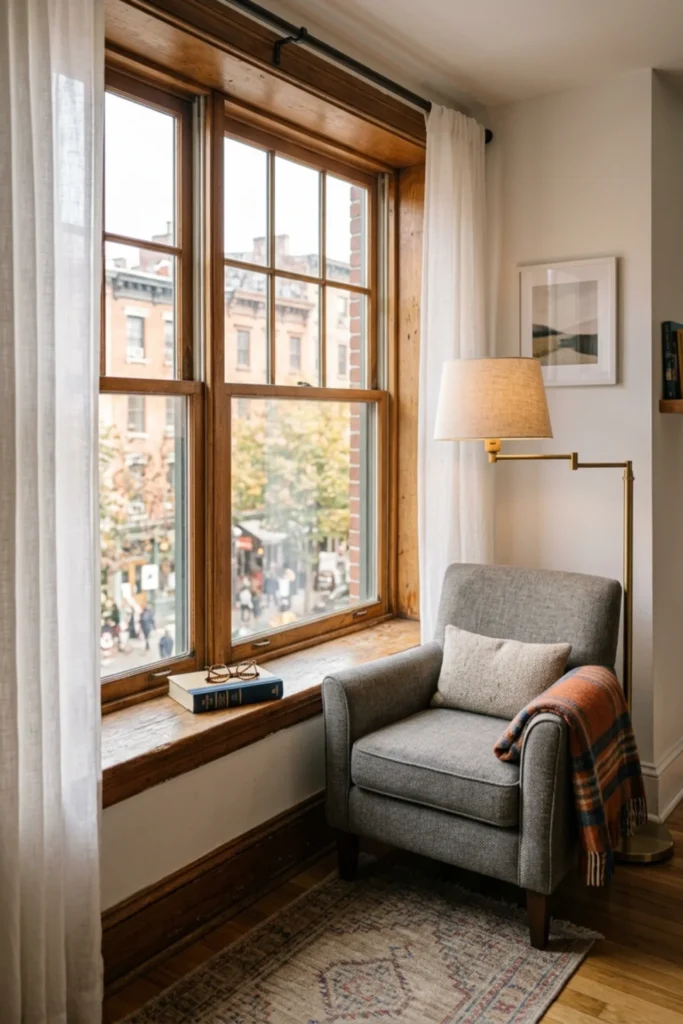
Sometimes the best small-space move is not buying another piece of furniture.
If the window sill is deep and safe enough, it can hold a book, glasses, or small decorative object.
I would still avoid balancing open drinks where they could fall into curtains or onto upholstery.
Size and requirements: A usable ledge around 6–10 inches deep can hold small items. Check whether the window opens inward and whether blinds or curtains need that space.
Method and cost: Clear the sill completely, then use it for a week before buying a side table. Cost: $0.
Pros: Saves floor space; free; keeps the nook visually simple.
Cons: Limited surface area; not ideal for drinks; may interfere with window operation.
14. Try a Floor Cushion Nook Only for Short Reading Sessions
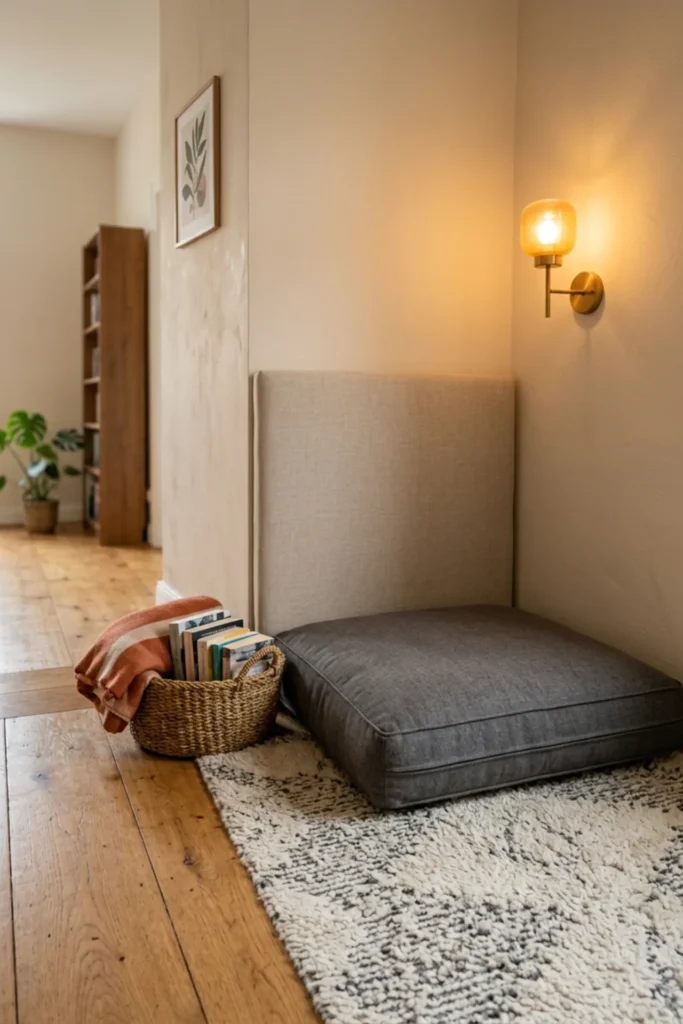
A floor cushion can work when a chair truly does not fit, but I would not present it as equally comfortable for everyone.
Getting down and up from the floor is not practical for many people.
Use this as a casual option, not the default adult reading setup.
Size and requirements: A floor cushion around 24–30 inches wide gives enough room for short sitting. Add wall back support or a firm pillow. Keep the area away from door swings and traffic.
Method and cost: Test the idea with folded blankets before buying a floor cushion. If you enjoy sitting there for twenty minutes, invest in a firmer cushion. Cost may be $40–$180.
Pros: Very small footprint; low cost; easy to move.
Cons: Limited support; difficult for some users to get up from; can feel temporary rather than like real furniture.
15. Make the Nook Rental-Friendly With Freestanding Pieces
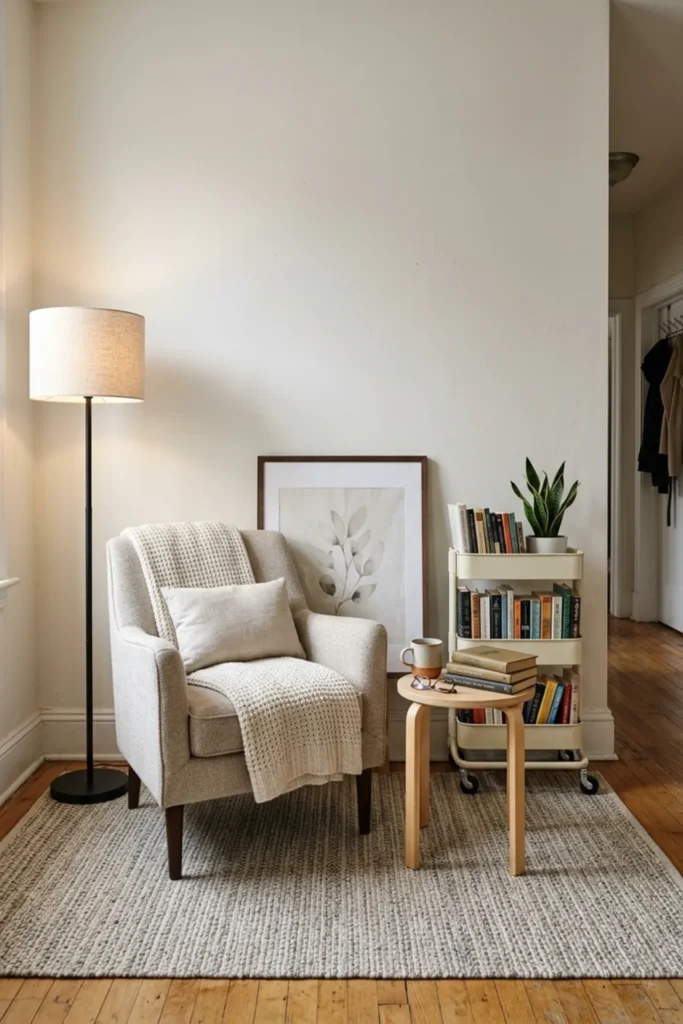
A reading nook does not need built-ins.
A compact chair, floor lamp, small table, narrow cart, rug, and framed art leaning on a shelf can create a complete setup without drilling into the walls.
This is also useful if you expect to move.
Size and requirements: Keep every piece narrow enough to work in more than one room. Choose neutral major pieces and use the rug or cushion for color.
Method and cost: Start with the chair and lamp. Add storage only after you know what the corner lacks. A renter-friendly nook may cost $300–$1,200+.
Pros: Easy to move; no construction; flexible for future homes.
Cons: Freestanding pieces use more floor space than built-ins; cords remain visible; inexpensive furniture may not last through several moves.
16. Add Soft Color Without Making the Nook Busy
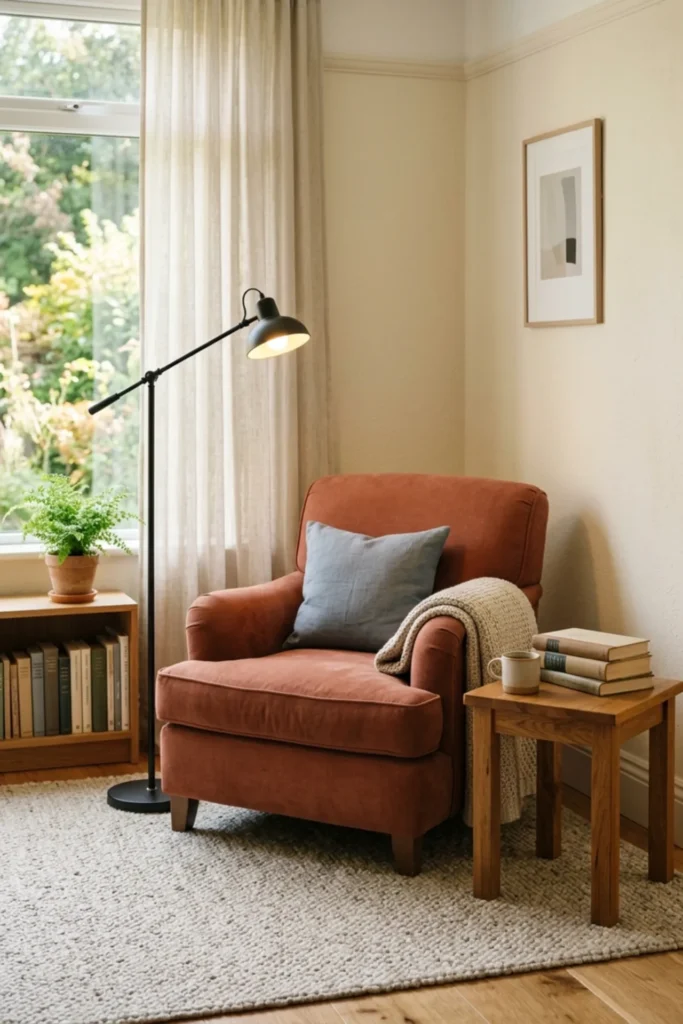
A reading corner is a good place for one color moment.
Try muted olive, dusty blue, terracotta, plum, or soft ochre on the chair or rug, then keep the wall and storage calmer.
I would not combine a bright chair, patterned rug, colorful books, bold wall, and gallery art in one very small corner.
Size and requirements: Let one item carry most of the color. Keep at least 50%–60% of the nook visually neutral so the area still feels restful.
Method and cost: Choose the chair or rug first. Pull one smaller accent from that piece for a cushion or art. This can cost $20–$150 if you are changing only textiles.
Pros: Adds personality; easy to coordinate; makes the nook feel intentional.
Cons: Too many colors make a small corner restless; trendy colors can date; strong upholstery is harder to change than a cushion.
17. Edit the Nook Until the Chair Has Room to Breathe
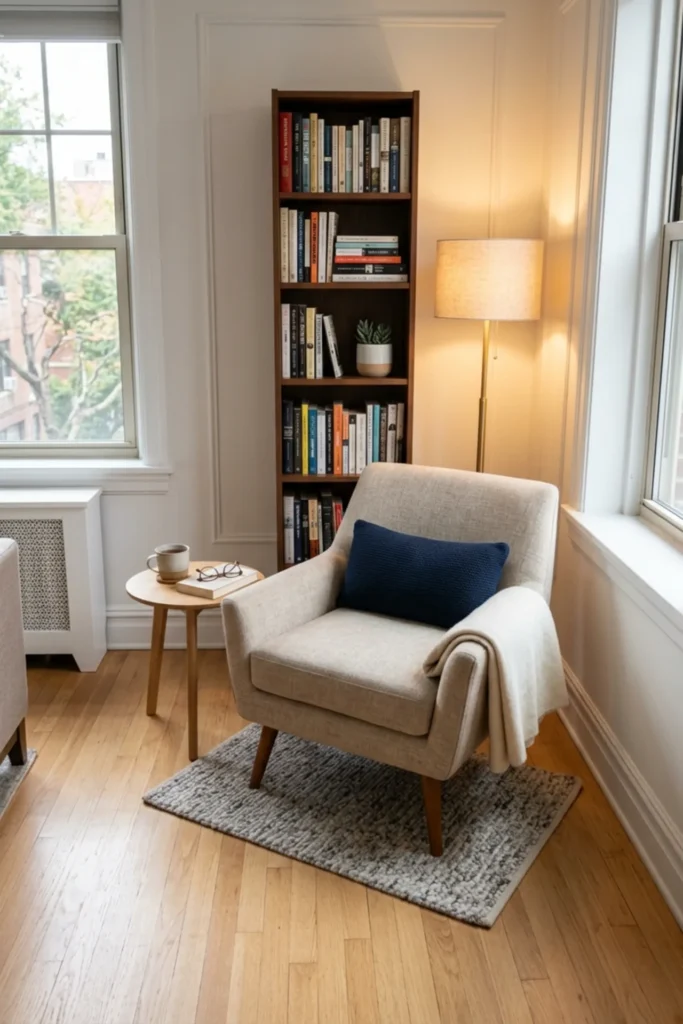
The final reading-nook idea is to stop adding things.
A chair, lamp, side surface, and books may already be enough.
If you also add a basket, footstool, plant, rug, wall shelf, artwork, blanket ladder, candle table, and three pillows, the corner can quickly become harder to use.
Size and requirements: Keep at least 24 inches of clear access to the chair where possible. Leave around 30%–40% of the side table and nearby shelf space visually open.
Method and cost: Remove all decorative objects from the nook, then add back only the pieces that support reading or make the corner noticeably better. Cost: $0.
Pros: Makes the nook feel larger; easier cleaning; chair becomes the focus; costs nothing.
Cons: Very minimal corners can feel unfinished without texture; editing does not fix an uncomfortable chair or poor light.
A Practical 10-Step Small Reading Nook Plan
If I were creating a nook from an empty corner, I would use this order:
- Measure the full corner and walking path.
- Decide who will use the nook most.
- Tape the chair footprint on the floor.
- Choose the chair before shelves or decor.
- Add a reading light.
- Add one small surface for a book and drink.
- Decide whether book storage is actually needed beside the chair.
- Add a rug or footstool only if the layout still feels open.
- Add one or two textiles for comfort.
- Remove anything that makes it harder to sit down.
That order keeps the nook useful instead of turning it into a decorative corner nobody uses.
Approximate Budget by Setup Level
You can build a good reading nook without spending heavily.
Low-cost setup: $100–$400
- Secondhand or simple chair
- Floor lamp
- Small side table
- Throw
- Existing books
Mid-range setup: $500–$1,500
- Comfortable upholstered chair
- Better reading lamp
- Small rug
- Side table
- Narrow bookcase or cart
- Cushions
Higher-end nook: $1,500–$4,000+
- Premium lounge chair
- Designer lighting
- Quality rug
- Custom small shelving
- Upholstery
- Artwork
- Footstool
The chair is where I would put most of the money. A beautiful shelf does not matter if the seat is uncomfortable.
What I Would Spend More On
I would spend more on the chair and the reading light.
Those are the two things you physically use every time you sit down.
I would spend less on decorative book storage, matching baskets, and styling objects.
A supportive chair with one good lamp and a small table will usually create a better nook than an expensive built-in shelf around a seat you do not enjoy sitting in.
If the budget is tight, look for the chair secondhand and buy a good new bulb or lamp. Comfort and light matter more than matching finishes.
Common Mistakes I Would Avoid
The first mistake is buying the chair based only on width. Depth, back angle, arm thickness, and movement space matter too.
The second is adding shelves before checking whether the chair is comfortable.
Another mistake is placing the lamp where the light shines into your eyes instead of onto the page.
I would also avoid squeezing a footstool into a nook that already blocks the walkway.
Tall bookcases and storage furniture should be installed and secured appropriately. CPSC’s Anchor It! program specifically emphasizes anchoring furniture with shelves, drawers, or doors to help prevent tip-over hazards.
Finally, do not force a reading nook into every empty corner. If sitting there means ducking, blocking a door, twisting around furniture, or losing the only useful walkway, the room may be better without it.
Final Thoughts
Small space reading nook ideas work when the chair comes first.
Choose a seat that supports you, then add good light and one place to set a book or drink. After that, the nook may need very little else.
A window, a slim floor lamp, a small rug, and a few books can turn an unused corner into a place you actually look forward to using.
The best nook is not necessarily the most decorated one.
It is the one where you can sit for half an hour without moving the furniture, adjusting three pillows, or wishing you had chosen a better chair.
Disclosure: Some visuals are AI-assisted design concepts created for inspiration. Always confirm furniture dimensions, stability, wall-fixing requirements, lighting compatibility, electrical safety, rental restrictions, and manufacturer instructions before making changes in your home. Cost ranges are approximate U.S. planning figures and vary by location, labor, materials, shipping, and product quality.
About the Author
Ali Hamza — Founder & Editor
Hi, I’m Ali Hamza, and Styled Room Living is my personal home decor project. I don’t have a formal background in interior design. I started this website because home makeovers are something I genuinely enjoy looking at and learning about.
Most of the ideas shared here are not projects I have personally built. When I put a guide together, I try to separate an idea that only looks good in a photograph from one that could actually be useful in a normal home. Will it fit? Is it easy to clean? Does it require drilling? Can it be adjusted for a smaller budget? These are the questions I keep in mind while working on an article.
Some images on the website are AI-assisted design concepts used to explain an idea more clearly. They are meant for inspiration, not as exact construction plans. Please check measurements, materials, prices, weight limits, electrical details, and installation requirements before trying anything in your own home.
I’m still learning as the website grows, and I know every home works differently. My purpose with Styled Room Living is simply to collect useful home ideas, explain them in plain language, and help readers find something they can adapt to their own space.
Read more about Ali Hamza →