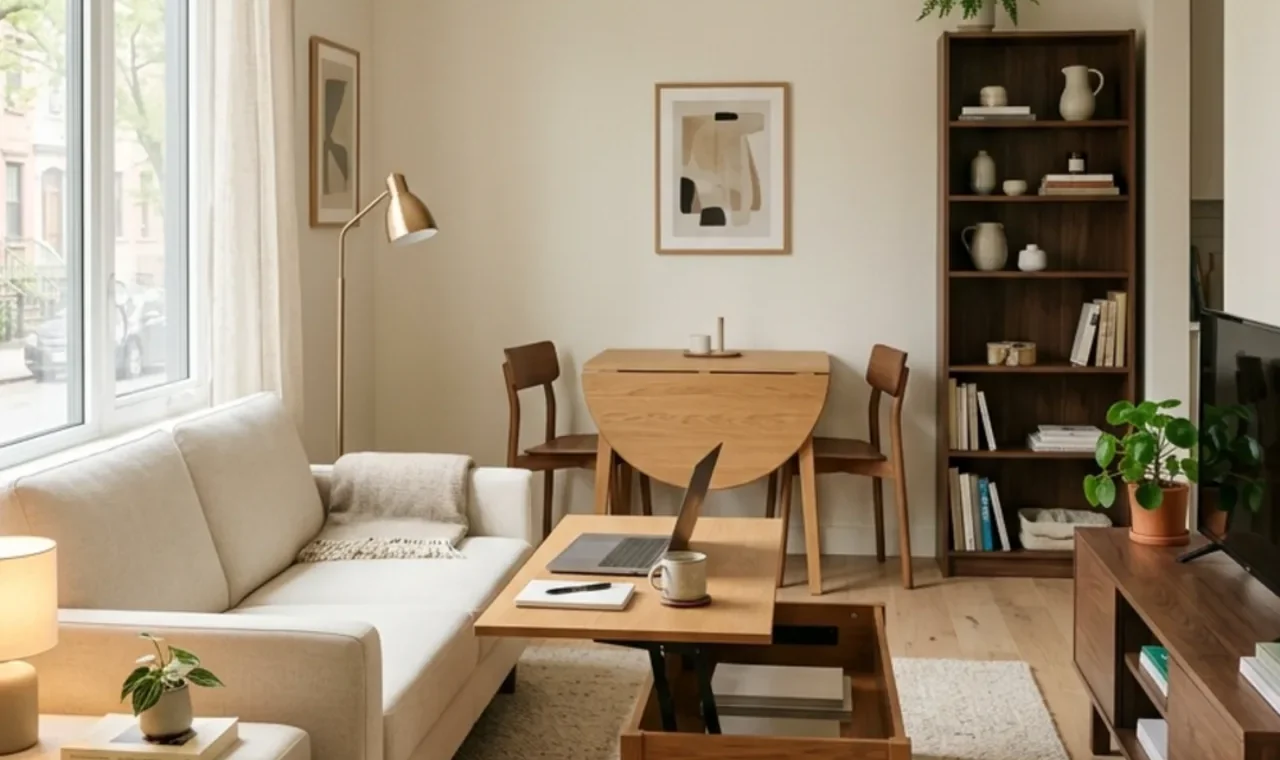
Multifunctional furniture ideas for small apartments are useful because one piece can solve two or three problems at the same time.
A sofa can become a guest bed. A coffee table can become a work surface. A bench can hide shoes. A dining table can fold flat against the wall. A bed can hold seasonal storage underneath.
That sounds simple, but not every “space-saving” piece actually saves space.
Some multifunctional furniture is bulky, awkward to open, uncomfortable to use, or designed for rooms much larger than the apartment shown in the product photos. A sofa bed that needs four feet of empty floor in front of it may not work in a narrow living room. A lift-top coffee table that hits your knees every time you sit down is not really solving anything.
I would choose multifunctional furniture only when both functions are genuinely useful.
This guide includes practical measurements, rough U.S. planning costs, setup methods, pros, cons, and safety notes for every idea. The focus is on realistic apartment living: furniture scale, walking space, storage, guest sleeping, working from home, dining, and pieces that can move with you if you rent.
If your living room is already tight, Small Living Room Ideas is a useful starting point before choosing furniture.
What Makes Multifunctional Furniture Actually Worth Buying?
The best multifunctional furniture does not feel like a compromise.
It should do at least two jobs well.
For example, a sofa bed should still be comfortable as a sofa, a storage bed should still allow easy access around the mattress, and a lift-top coffee table should still look good when closed.
I would also think about how often the second function will be used.
If guests stay twice a year, a sofa bed may make sense. If you work from home every day, a hidden desk should be comfortable enough to use for hours, not just photograph well.
The other key is movement.
Furniture that folds, lifts, swivels, or extends needs extra clearance. Measure the furniture in both its closed position and fully open position.
Before You Buy, Measure the Furniture Twice
Measure the room first, then measure the furniture in every position it can use.
That means checking sofa width, sofa-bed extension, drawer pull-out depth, table extension length, chair pull-out space, cabinet door swing, ottoman lid opening, desk depth when open, bed lift clearance, and the walkway when furniture is in use.
Try to preserve around 24–30 inches of clear walking space on the main route where possible.
For a sofa and coffee table, around 16–18 inches between them often feels comfortable.
For dining chairs, you need room not only for the table but also for the chair to move back.
Tall storage furniture should be secured appropriately. The U.S. Consumer Product Safety Commission’s Anchor It! guidance covers furniture tip-over prevention and is worth reviewing when you add tall cabinets or shelving.
1. Use a Sofa Bed Instead of a Separate Guest Bed
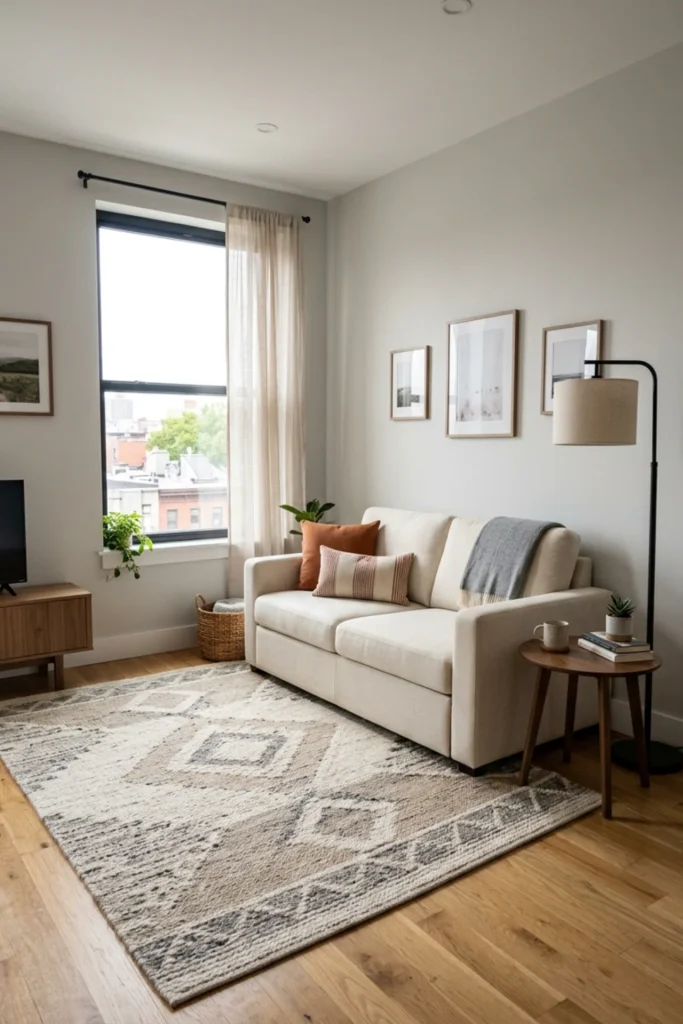
A sofa bed is one of the most obvious multifunctional furniture ideas for a small apartment, but the key is choosing one that still works as your everyday sofa.
I would avoid oversized sleeper sectionals unless the room has enough depth.
A compact pull-out or click-clack model can be enough for occasional guests.
Size and requirements: Apartment-size sofa beds are often around 70–84 inches wide. When opened, many extend around 80–90 inches into the room. Measure the open-bed footprint before buying and keep enough space to walk around it.
Method and cost: Tape both the closed sofa footprint and the open bed footprint on the floor. Sit on the sofa in person if possible. A basic sleeper sofa may cost $700–$2,000, while better-quality models can cost $2,500–$4,500+.
Pros: Replaces a separate guest bed; useful in studios; keeps the room flexible.
Cons: Can be heavy; cheaper sleepers may be uncomfortable; the bed needs clear floor space when open.
2. Choose a Storage Sofa or Chaise Sectional
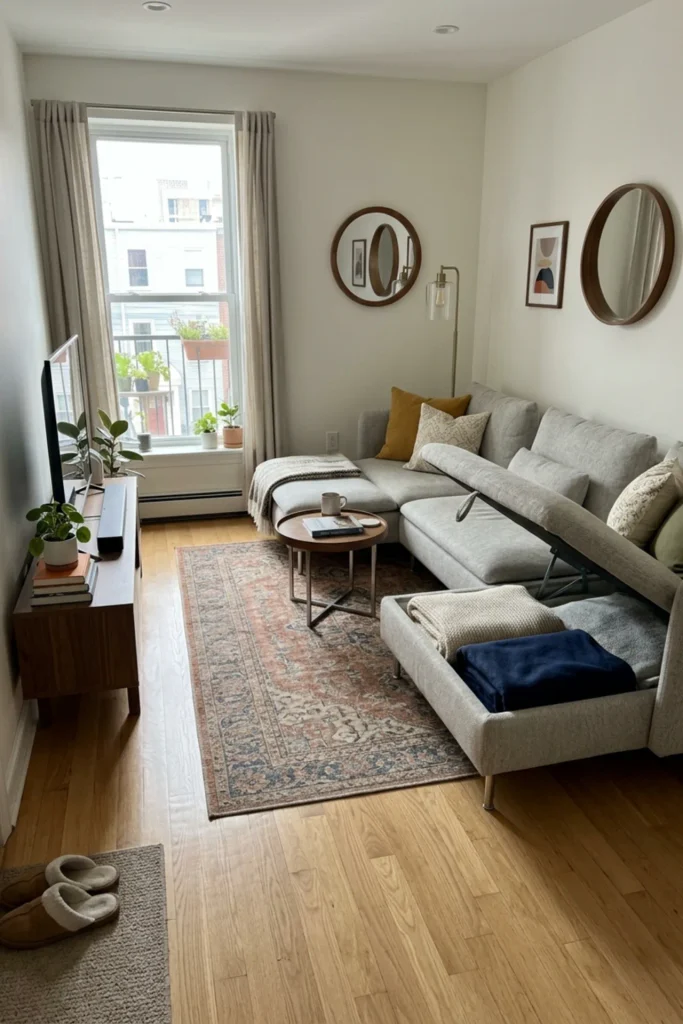
A sofa with storage under the chaise can hide blankets, extra pillows, games, or seasonal items.
This is often more useful than adding a separate basket or cabinet.
I would still choose sofa scale first and storage second.
Size and requirements: Compact storage sectionals are often around 80–95 inches wide. Measure chaise depth carefully. Leave enough room for the storage lid to open.
Method and cost: Tape the full sectional and chaise footprint on the floor. Check the lid mechanism in person if possible. Expect around $900–$3,000+.
Pros: Adds hidden storage without another furniture piece; good for bulky blankets; works well in studio apartments.
Cons: Sectionals are less flexible to rearrange; chaise depth can crowd the room; storage hinges add moving parts.
3. Use a Lift-Top Coffee Table as a Work Surface
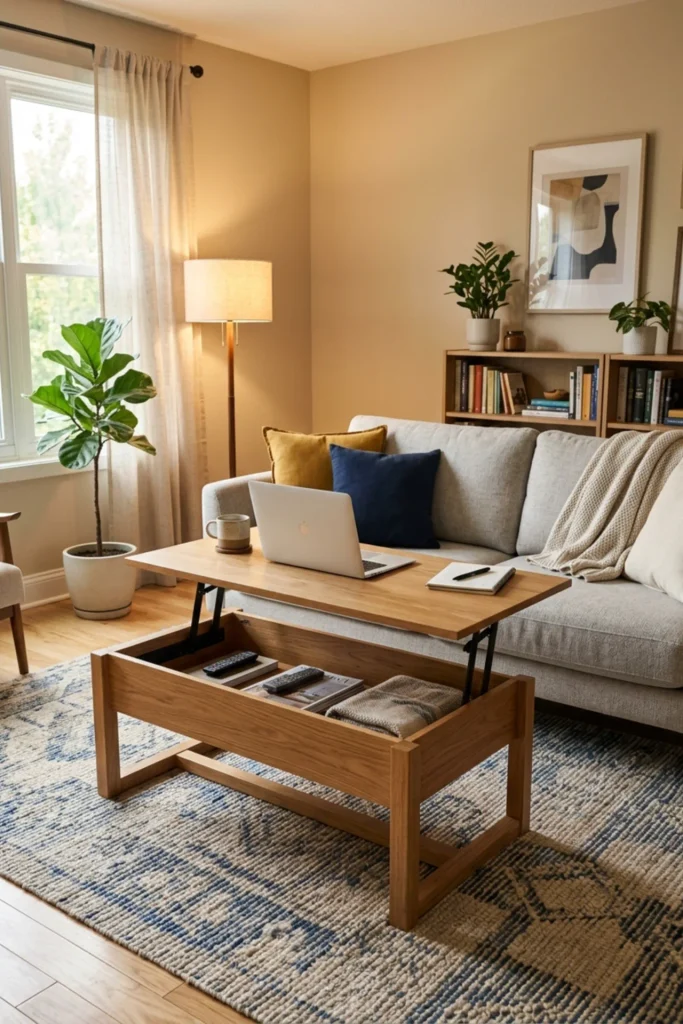
A lift-top coffee table can become a laptop desk or casual dining surface.
This is useful when there is no room for a permanent desk.
The best versions lift smoothly and remain stable when open.
Size and requirements: Look for tables around 36–44 inches wide and 20–24 inches deep for many small living rooms. Keep around 16–18 inches between the sofa and table when closed. Check knee clearance when open.
Method and cost: Sit on your sofa and simulate the lift height with a box or tray before buying. Lift-top tables may cost $150–$700+.
Pros: Adds work and dining function; keeps the room visually simple; often includes hidden storage.
Cons: Hardware can wear; some tables wobble when lifted; storage space inside may be shallow.
For more compact work-from-home layouts, see Small Home Office Ideas.
4. Use Nesting Tables Instead of Two Full Side Tables
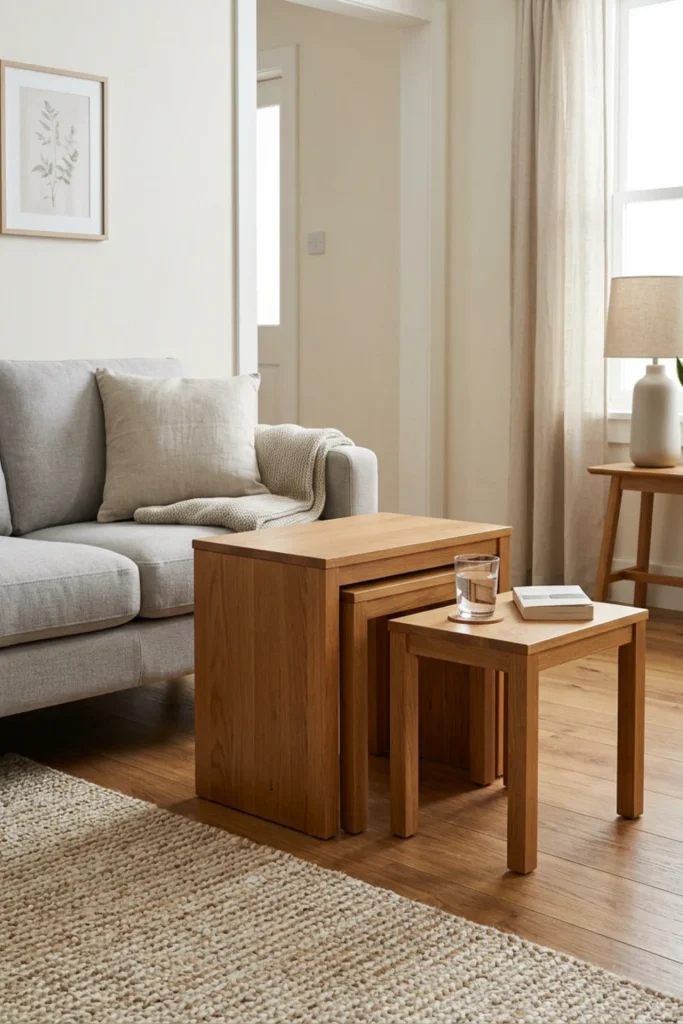
Nesting tables give you extra surface only when you need it.
Most of the time, the smaller tables sit underneath the larger one.
They work well in apartments where guests occasionally need extra drink space.
Size and requirements: A larger nesting table around 18–22 inches wide is enough for many sofas. Check that the smaller table slides fully underneath without catching on the rug.
Method and cost: Place a box at the proposed size beside the sofa. Make sure the nesting set does not block the walkway. Cost may be around $80–$400+.
Pros: Flexible surface area; easy to move; little permanent footprint.
Cons: Multiple small tables can still become clutter; lightweight sets may wobble; not much hidden storage.
5. Add a Storage Ottoman That Can Replace a Coffee Table
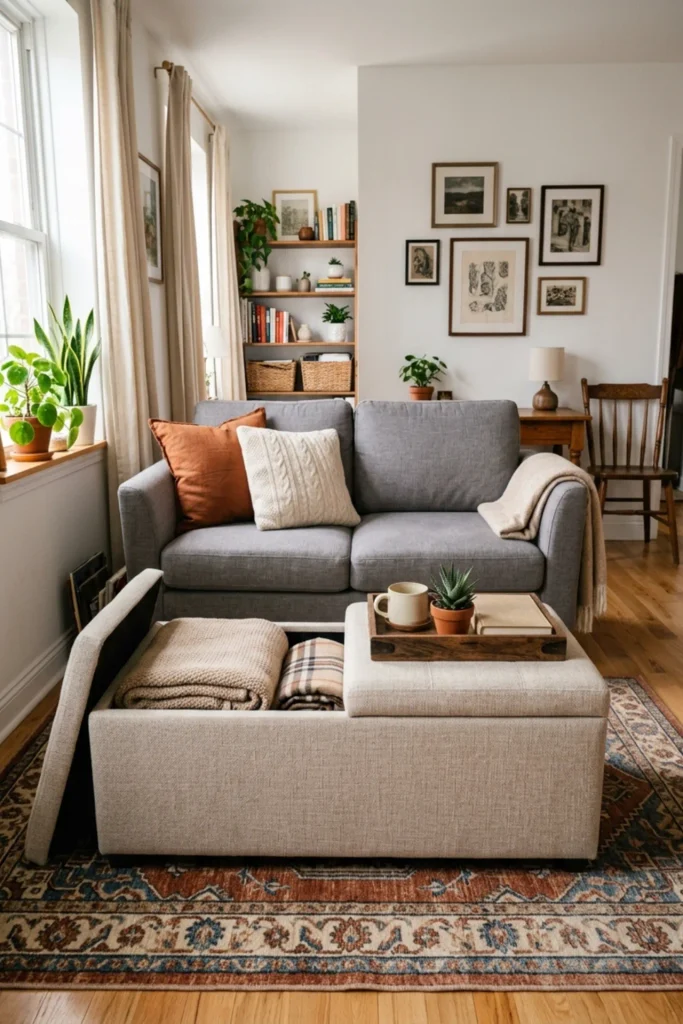
A storage ottoman can work as a footrest, extra seat, coffee-table substitute, and hidden storage.
Use a firm flat top if you want to place a tray on it.
I would choose a quiet upholstery tone so the piece blends with the sofa.
Size and requirements: Around 24–36 inches wide works in many compact living rooms. Keep enough room to open the lid and walk around it.
Method and cost: Test the footprint with a cardboard box. Add a removable tray if you need a hard drink surface. Storage ottomans may cost $120–$600+.
Pros: Four functions in one piece; hides blankets; softens a small room.
Cons: Upholstery can stain; not ideal for hot drinks without a tray; lid opening needs clearance.
6. Use a Drop-Leaf Dining Table
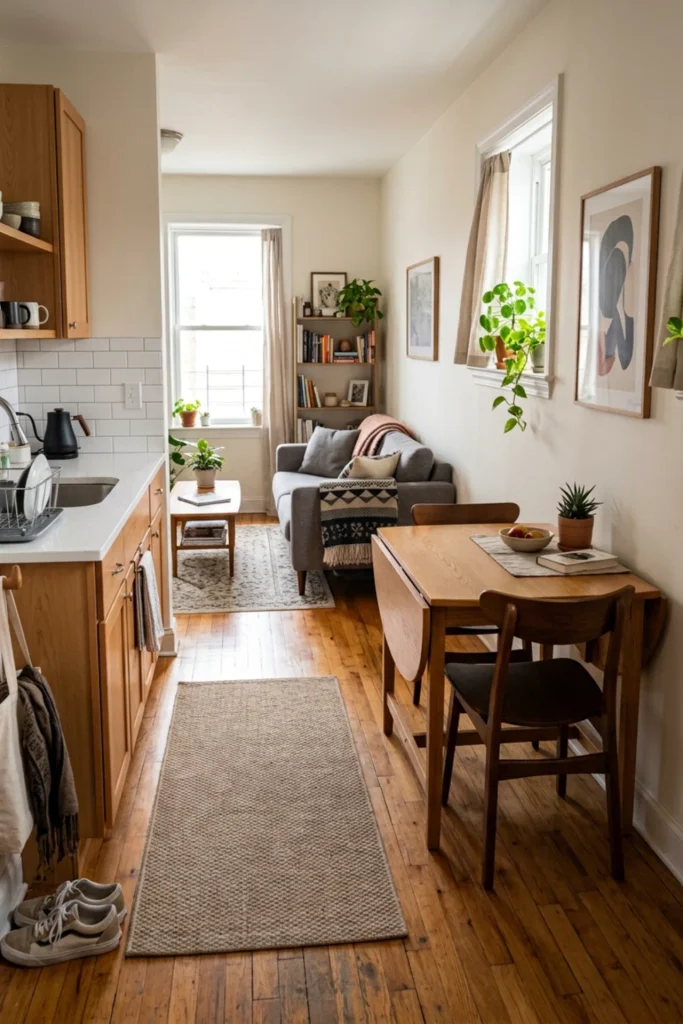
A drop-leaf table can stay narrow against a wall and open only when you need more dining surface.
This is one of the best pieces for small kitchens and open-plan apartments.
A simple wood version usually looks better than a complicated folding mechanism.
Size and requirements: Closed tables may be only 10–18 inches deep, while fully opened models can reach 36–48 inches wide. Check chair pull-out space when open.
Method and cost: Tape both the closed and open table footprints. Check whether the leaves feel stable and whether the legs get in the way. Expect around $250–$1,000+.
Pros: Saves floor space daily; works for dining or laptop use; easy to place against a wall.
Cons: Hinges can loosen; chairs still need storage; some designs have awkward leg positions.
7. Use an Extendable Dining Table for Occasional Guests
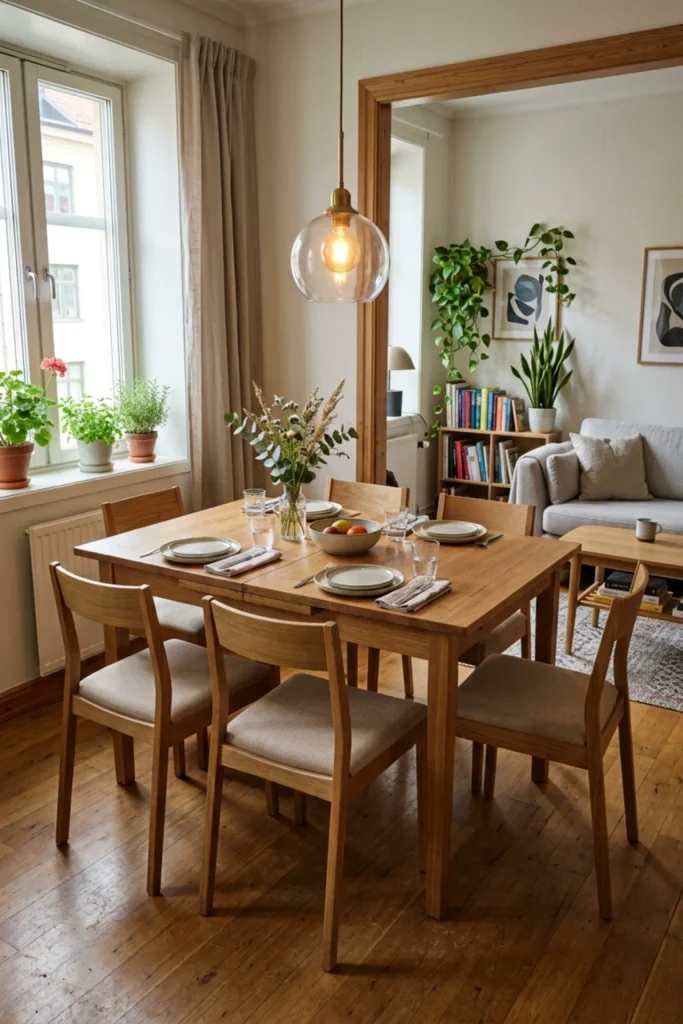
If you normally seat two people but sometimes need four or six seats, an extendable table is often better than a permanently large table.
Keep it compact most days.
Open it only for guests.
Size and requirements: A compact table may start around 36–48 inches long and extend to 60–72 inches. Measure the full extended length plus chair space. In a narrow apartment, make sure the open table does not block the main route to the kitchen or balcony.
Method and cost: Tape the largest configuration on the floor before buying. Check where extension leaves are stored and whether one person can operate the mechanism easily. Extendable tables may cost $500–$2,000+.
Pros: Flexible for entertaining; avoids oversized daily furniture; works well in open-plan apartments.
Cons: Extension hardware adds weight; extra chairs need storage; larger open size may block walkways.
8. Choose a Storage Bench for the Entry
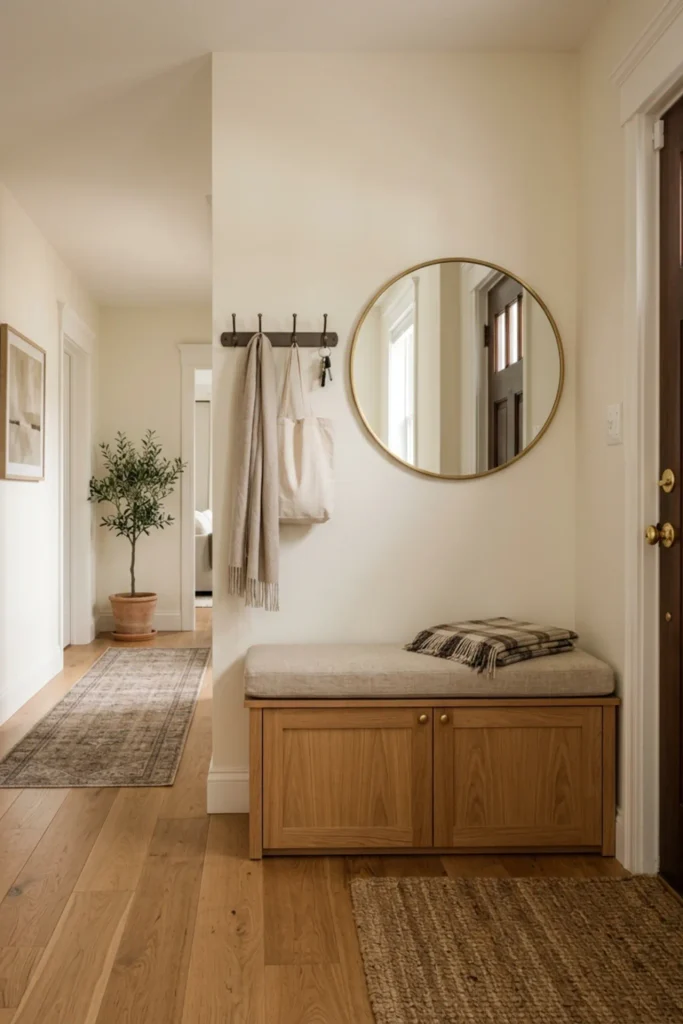
An entry bench can work as seating, shoe storage, bag storage, and a visual landing zone.
A closed bench looks calmer than open cubbies.
Keep the top mostly clear.
Size and requirements: Around 36–48 inches wide, 14–18 inches deep, and 17–19 inches high works in many entries. Keep the main door swing and walkway clear. If the hallway is narrow, even a 14-inch-deep bench can make a noticeable difference.
Method and cost: Tape the footprint and test the lid opening before buying. If the bench uses doors or drawers, check their full opening depth too. A storage bench may cost $180–$700+.
Pros: Seating and storage together; hides shoes; makes the entry feel more organized.
Cons: Can become a clutter surface; deep benches reduce hallway width; lift-up lids need room.
9. Use a Console Table That Becomes a Dining Table
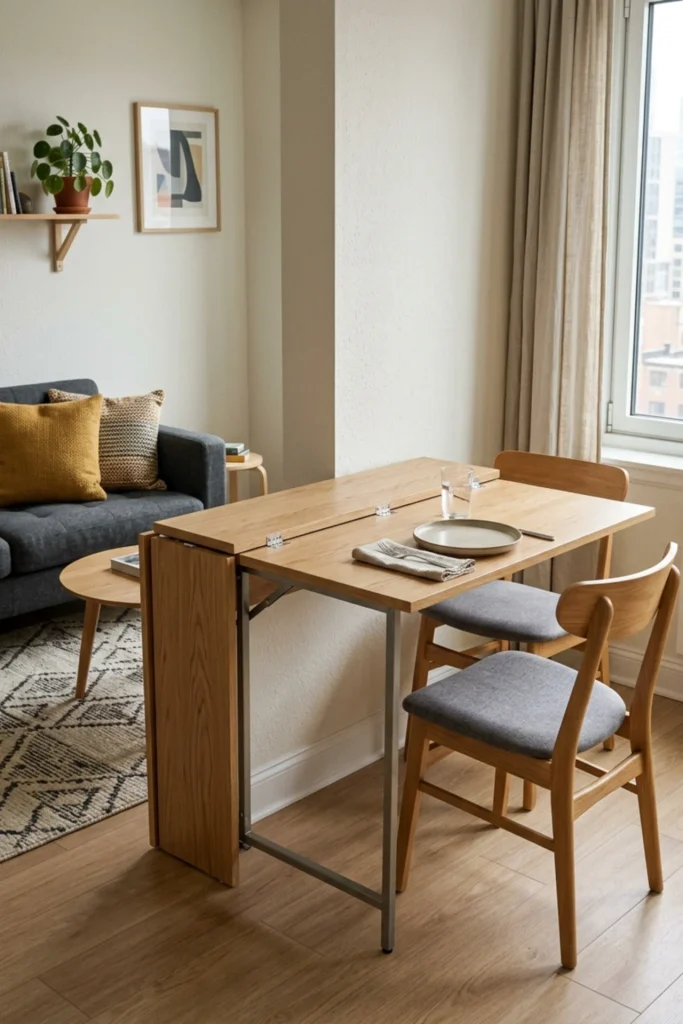
Some narrow consoles extend or unfold into larger dining tables.
This can work in a studio where you do not want a permanent dining area.
When closed, the console can sit behind a sofa or along a wall.
Size and requirements: Closed depth may be around 12–18 inches. Fully opened dining surfaces may reach 36–40 inches deep and 60 inches or more long. Measure the open footprint carefully and include chair movement.
Method and cost: Test the extension mechanism before buying. Make sure the closed console is useful enough to justify its wall space. Expect around $500–$2,000+.
Pros: Excellent for occasional entertaining; saves daily floor space; can double as entry or display furniture.
Cons: Often expensive; extension mechanisms can be heavy; chairs still need storage.
10. Use a Storage Bed With Drawers
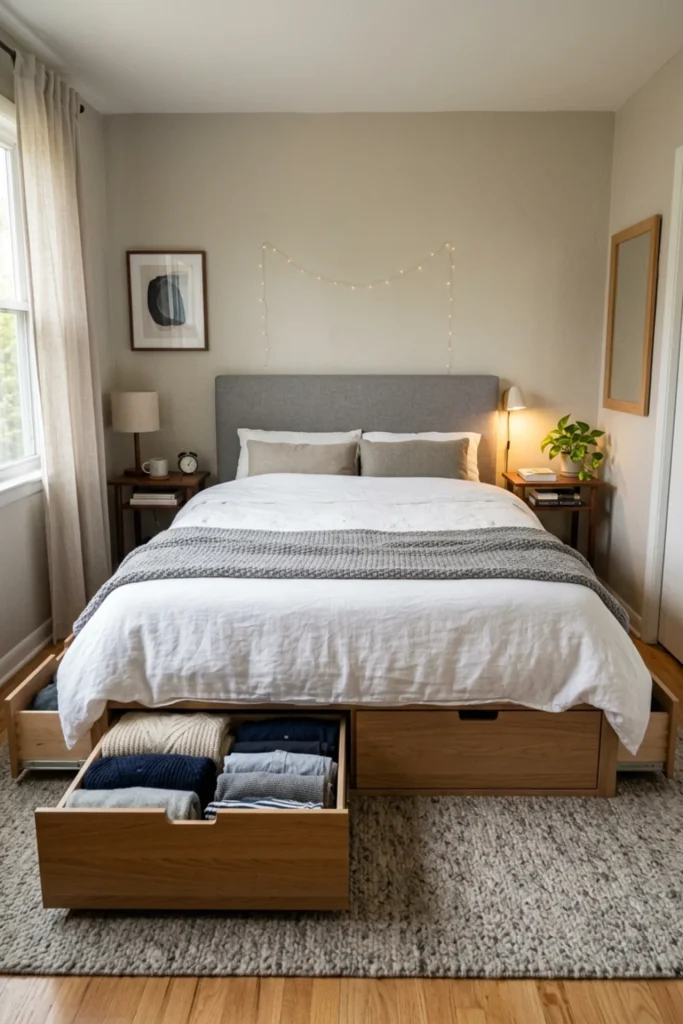
A storage bed replaces several under-bed bins and may reduce the need for a large dresser.
Flush drawers look cleaner than visible containers.
This is especially helpful in small bedrooms.
Size and requirements: A queen mattress is around 60 by 80 inches. Measure the actual bed frame and drawer pull-out clearance. Some drawers require 18–24 inches of open floor. If one side of the bed is near a wall, drawers on that side may be useless.
Method and cost: Tape the bed and open-drawer footprint before buying. Decide which categories will actually live in the drawers so you know whether you need two large drawers or several smaller ones. Storage beds may cost around $600–$2,500+.
Pros: Uses space under the mattress; hides seasonal items; can reduce other storage furniture.
Cons: Heavy to move; drawers need side clearance; moving parts can wear.
For tighter bedroom layouts, see Small Apartment Bedroom Ideas.
11. Use a Lift-Up Storage Bed When Side Clearance Is Limited
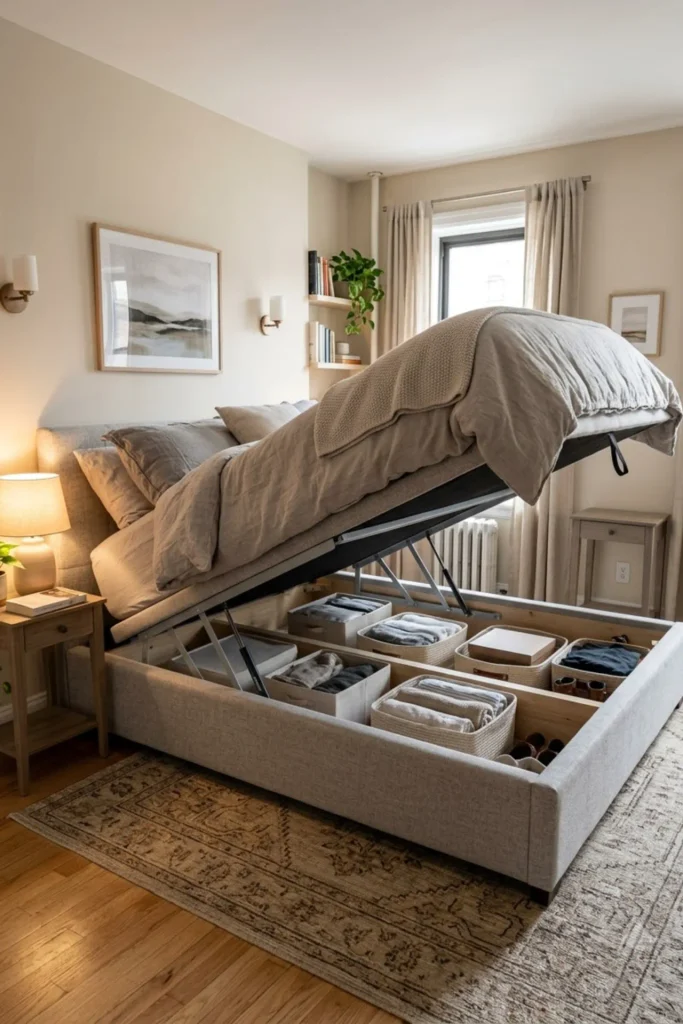
If drawers cannot open because the bed is close to a wall, a lift-up storage bed may work better.
The mattress platform lifts from the foot or side to reveal one large storage cavity.
This is useful for luggage, bedding, and seasonal clothing.
Size and requirements: Check ceiling clearance and the height of the lifted platform. Make sure the gas-lift mechanism is designed for the mattress weight. Keep fingers clear of moving hardware and follow the manufacturer’s instructions.
Method and cost: Test the lift mechanism before buying if possible. Make sure one person can operate it safely. A quality lift-up bed may cost $800–$3,000+.
Pros: Works in narrow bedrooms; offers large hidden storage; no side-drawer clearance needed.
Cons: Heavy items are harder to access; lift hardware can fail; bed frame is heavier than a standard frame.
12. Use a Fold-Down Wall Desk
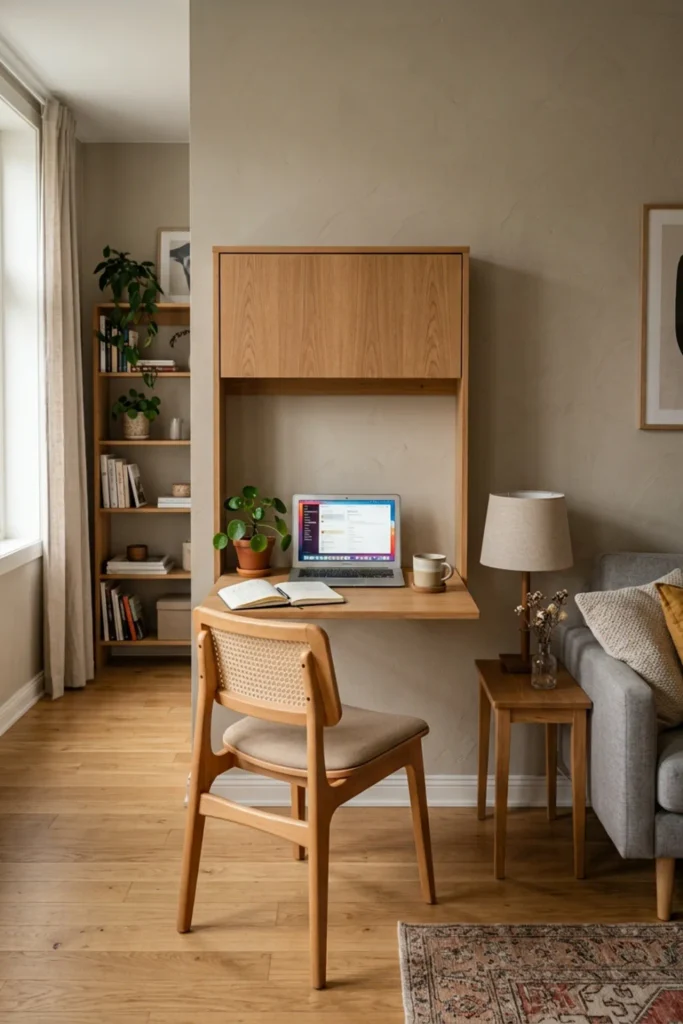
A fold-down desk is useful in bedrooms, living rooms, or hallways where a permanent desk would feel too bulky.
When closed, it can look like a shallow wall cabinet.
When open, it provides enough surface for a laptop.
Size and requirements: A work surface around 30–36 inches wide and 18–22 inches deep works for many laptop setups. Mounting hardware must suit the wall type and expected load. Check chair clearance and make sure the open desk does not block a door.
Method and cost: Test the open desk depth with a taped rectangle. Follow the manufacturer’s mounting instructions. A fold-down desk may cost $150–$700+, with professional installation adding more if needed.
Pros: Very small closed footprint; good for occasional work; can hide office supplies.
Cons: Requires wall fixing; shallow surface limits monitors; not ideal for every rental.
For apartment work zones that need to function every day, Small Home Office Ideas has more layout-specific options.
13. Hide a Desk Inside a Cabinet
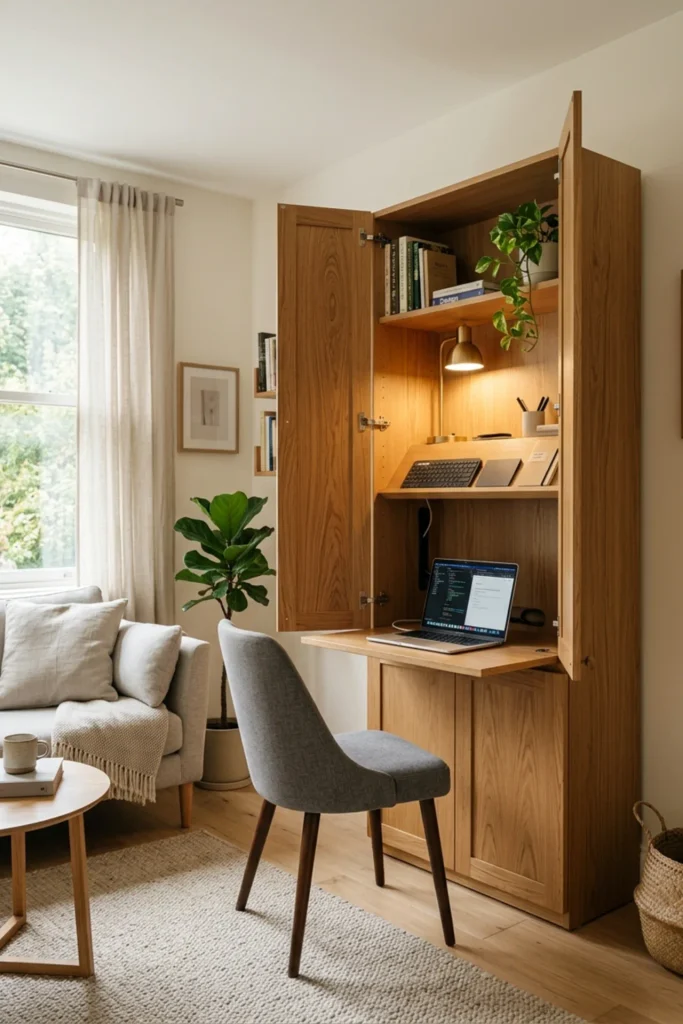
A cabinet desk gives you a more permanent workstation without leaving the work mess visible.
This works well in living rooms where a conventional desk would dominate the space.
When the doors close, the room returns to normal.
Size and requirements: Aim for a work surface around 28–30 inches high and 18–24 inches deep. Check chair storage, cable access, and ventilation around electronics. If the cabinet has doors, make sure they open fully without blocking the walkway.
Method and cost: Choose a cabinet designed for desk use or a stable piece that safely supports a worktop. Test your laptop, keyboard, and chair position before committing. Expect around $400–$1,800+.
Pros: Hides office clutter; works in studios; closed doors make the room calmer after work.
Cons: Can be expensive; shallow depth limits large monitors; chair still needs somewhere to go.
14. Use a Sleeper Chair in a Studio or Guest Corner
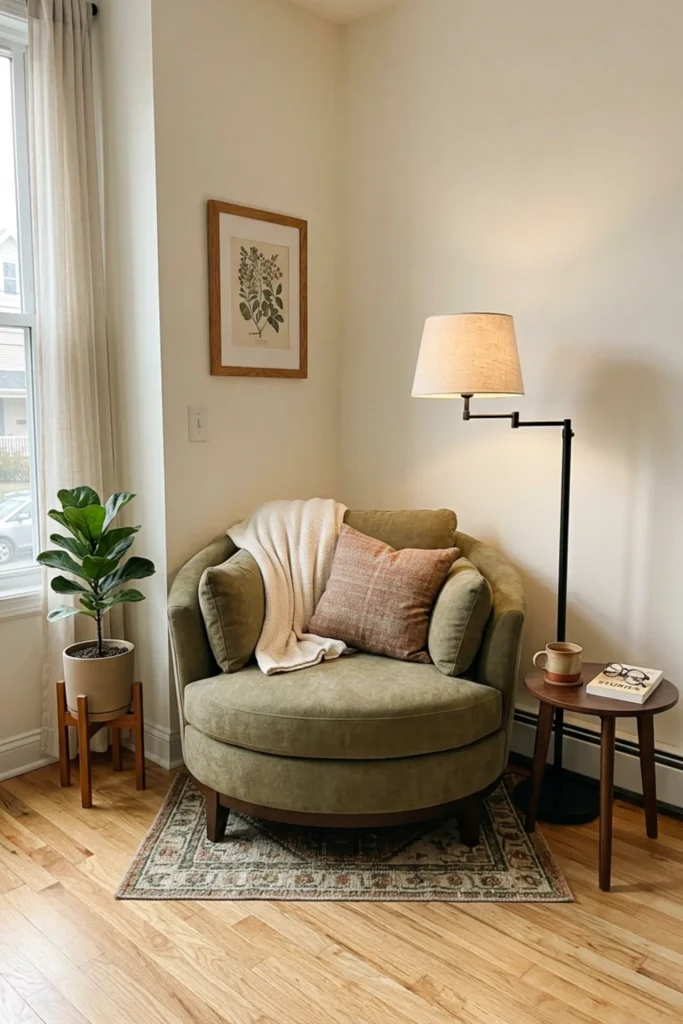
A sleeper chair can work as a reading chair during the day and a single guest bed at night.
It is useful when a full sleeper sofa is too large.
The open bed footprint still needs to be measured.
Size and requirements: Sleeper chairs are often around 32–42 inches wide. When unfolded, they may extend around 70–80 inches. Keep the path around the open bed usable and check whether a side table or lamp must be moved first.
Method and cost: Tape both positions on the floor. Sit and lie on the chair if possible before buying. Sleeper chairs may cost $400–$1,500+.
Pros: Smaller than a sofa bed; useful guest sleep option; can create a reading corner.
Cons: Single sleeping width only; cheaper models can be uncomfortable; needs clear extension space.
15. Use a Storage Headboard Instead of Extra Nightstands
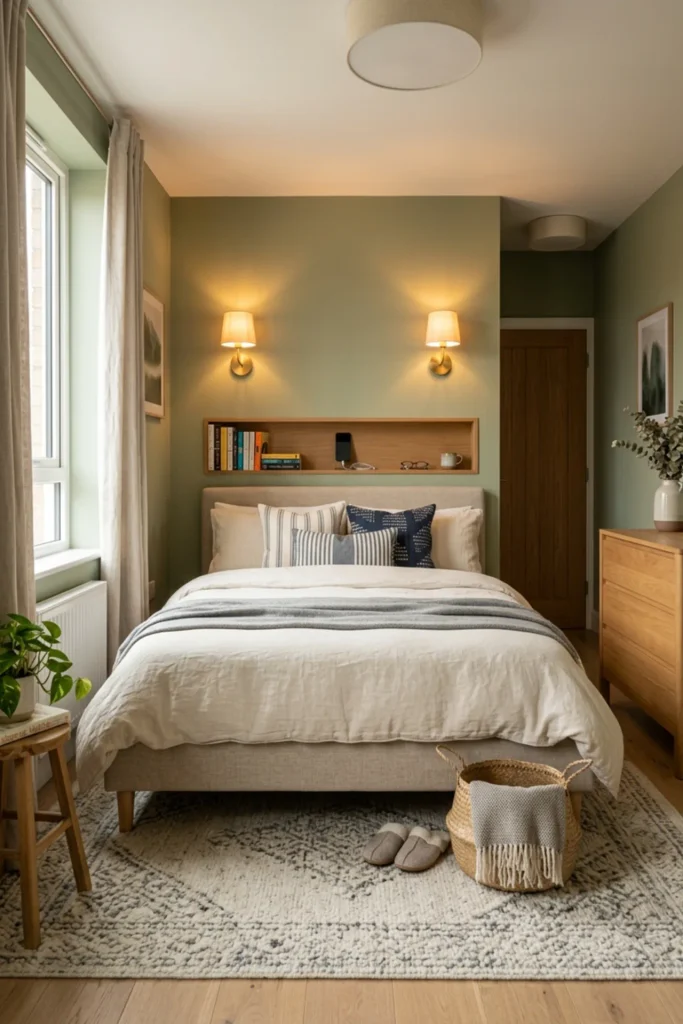
A storage headboard can hold books, charging cables, glasses, and small everyday items.
That can reduce the need for wide nightstands.
I would choose closed or recessed storage rather than very deep shelves over the pillows.
Size and requirements: Keep the headboard depth around 6–10 inches where possible. Make sure shelves do not project awkwardly over the sleeping area. Check outlet and charging access before installation.
Method and cost: Measure the full bed width and wall depth. Decide exactly what needs to live in the headboard so the design does not become oversized. Storage headboards may cost $250–$1,200+.
Pros: Adds bedside storage without much floor space; can replace one nightstand; keeps small items organized.
Cons: Dust collects in open shelves; bulky designs reduce room depth; overhead storage needs careful design.
16. Use a Bookcase as Both Storage and a Room Divider
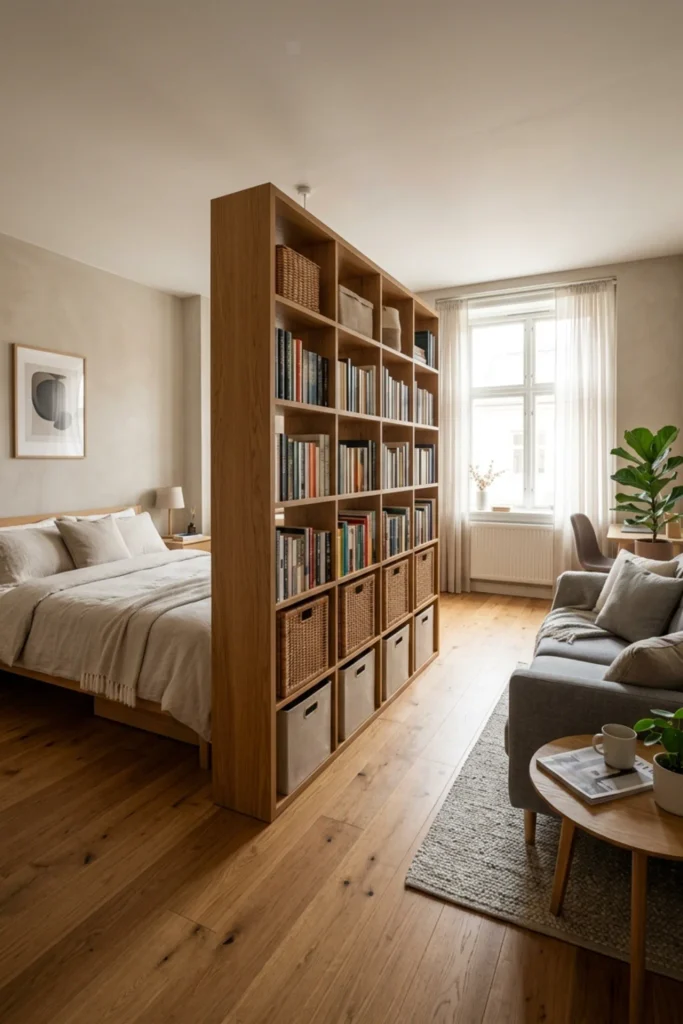
In a studio apartment, an open bookcase can separate the sleeping and living zones while also storing books and household items.
Choose one that looks finished from both sides.
Keep enough open sections so the apartment still shares light.
Size and requirements: A divider around 10–14 inches deep is enough for many books and baskets. Preserve the main walkway. Tall units need appropriate stability and anchoring.
Method and cost: Tape the bookcase footprint before buying. Keep the heaviest items low and avoid overloading the top. Open divider bookcases may cost $250–$1,200+.
Pros: Creates zones without building a wall; adds storage; allows some light through.
Cons: Open shelves show clutter; tall units need safety attention; can make a studio feel narrower if oversized.
17. Use an Ottoman Bed or Folding Guest Mattress Inside Storage
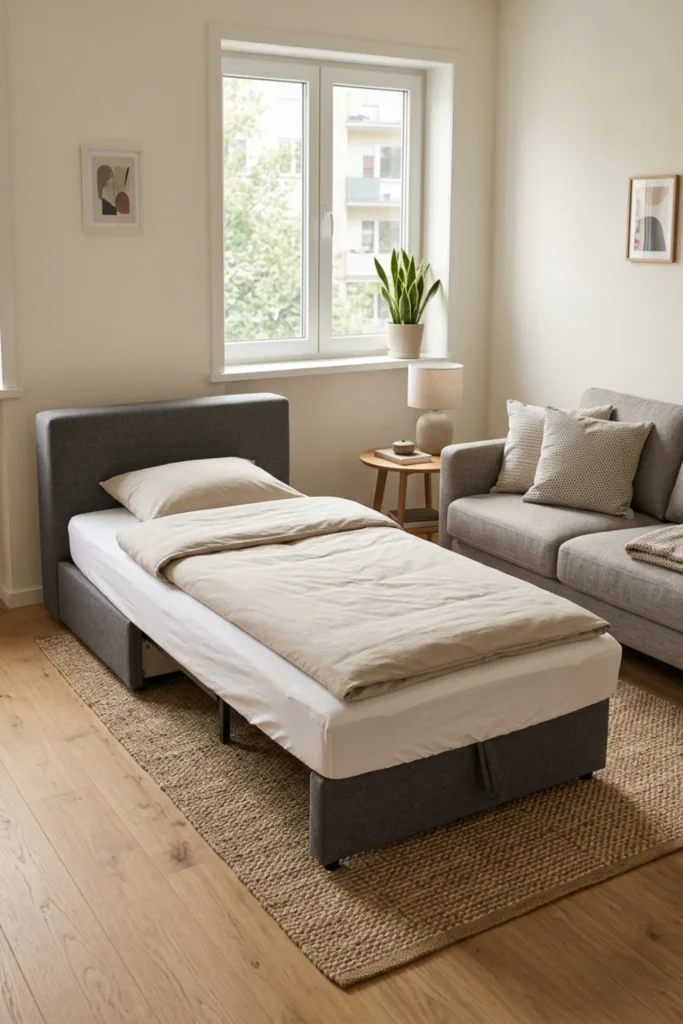
If overnight guests are rare, you may not need a permanent sleeper sofa.
Some ottomans unfold into compact single beds, while a folding guest mattress can live inside a storage bench or closet.
This keeps the everyday room lighter.
Size and requirements: Check the full open sleeping length, often around 70–76 inches. Make sure the mattress thickness is acceptable for your guests and that the open bed does not block the main door or kitchen route.
Method and cost: Test the opening mechanism and storage location. Folding ottoman beds may cost $250–$900+. A good folding guest mattress may cost less.
Pros: Guest bed without a large sleeper sofa; small daily footprint; easy to move.
Cons: Limited comfort compared with a real mattress; single-person use; folding mechanisms can feel temporary.
18. Edit the Room So the Furniture Still Has Space Around It
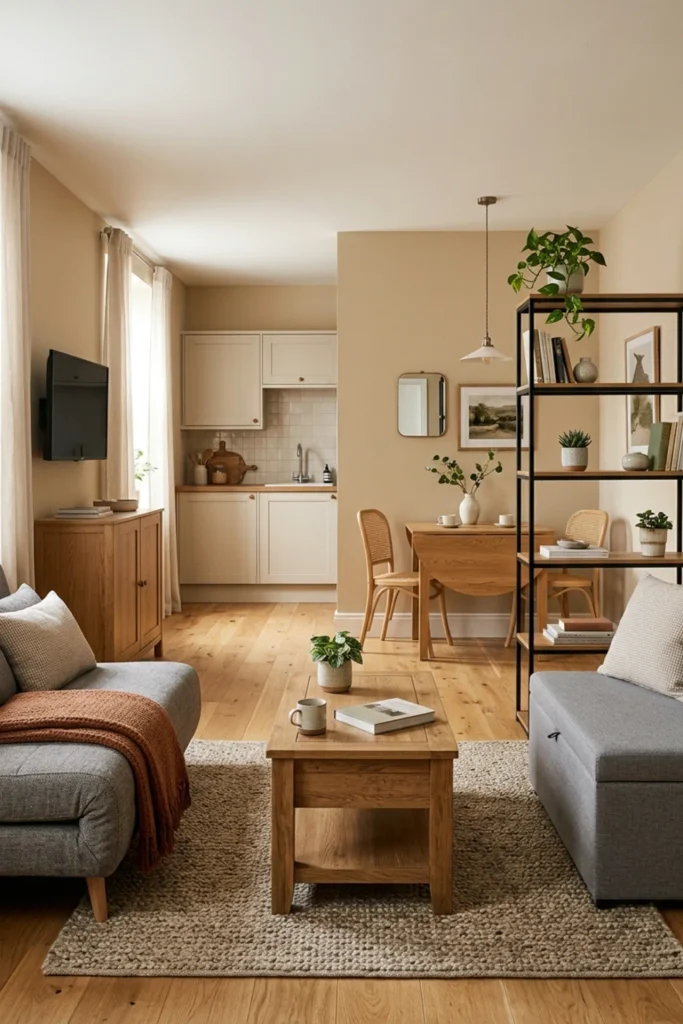
The biggest mistake with multifunctional furniture is buying too many multifunctional pieces.
A room does not need a storage sofa, storage ottoman, lift-top table, extendable console, sleeper chair, and bookcase divider all at once.
The furniture still needs breathing room.
Size and requirements: Keep around 24–30 inches on the main walking routes where possible. Leave enough clearance for every moving part to open fully. Keep one or two floor zones visually open.
Method and cost: List the room’s three biggest problems. Buy furniture that solves those problems only. Remove redundant pieces. Cost: $0.
Pros: Makes the apartment feel larger; prevents mechanisms from colliding; reduces unnecessary spending.
Cons: Requires prioritizing; one multifunctional piece may not solve every storage problem.
A Practical 10-Step Multifunctional Furniture Plan
If I were furnishing a small apartment from scratch, I would use this order:
- Measure every room and walkway.
- List the functions each room must support.
- Identify the three biggest space problems.
- Choose the sofa and bed first.
- Add storage inside those large furniture pieces where useful.
- Decide whether you truly need a dining table every day.
- Add a flexible work surface.
- Choose one or two movable pieces such as nesting tables or an ottoman.
- Check every moving mechanism at full extension.
- Remove any furniture that duplicates another piece’s job.
That approach usually saves more space than filling the apartment with “clever” furniture.
If your kitchen and dining area are fighting for the same floor space, Small Apartment Kitchen Ideas can help you decide where a folding or extendable table actually fits.
Approximate Budget by Furniture Level
You can build a multifunctional apartment gradually.
Low-cost setup: $200–$900
- Nesting tables
- Storage ottoman
- Fold-down desk
- Entry bench
- Folding guest mattress
Mid-range setup: $1,500–$5,000
- Sofa bed
- Storage bed
- Lift-top coffee table
- Drop-leaf dining table
- Storage headboard
Full apartment setup: $5,000–$15,000+
- Quality sleeper sofa
- Premium storage bed
- Extendable dining table
- Cabinet office
- Bookcase divider
- Storage seating
- Better mechanisms and upholstery
Custom wall beds, premium transformable systems, designer furniture, and professional installation can cost far more.
What I Would Spend More On
I would spend more on any piece you use every day.
That means the sofa, bed, dining table, and work surface.
I would spend less on occasional multifunctional accessories.
A cheap nesting table is easy to replace. A cheap sleeper sofa that is uncomfortable every night is a much bigger mistake.
Mechanisms matter too.
Good hinges, lift systems, extension rails, and sofa-bed frames often justify spending more because they are the parts that fail first.
Common Mistakes I Would Avoid
The first mistake is measuring furniture only when it is closed.
The second is buying too many transformable pieces.
Another mistake is choosing storage furniture that is so deep it reduces the walkway.
I would also avoid placing moving furniture where it blocks doors, vents, radiators, or electrical access.
Tall bookcases and cabinets need appropriate stability and anchoring.
Lift-up beds and storage lids should have reliable mechanisms and should be used according to manufacturer instructions.
Finally, multifunctional furniture should still be comfortable.
If the sofa is bad as a sofa, the desk is bad as a desk, or the dining table is unstable when open, the second function does not make the furniture a good purchase.
Final Thoughts
Multifunctional furniture ideas for small apartments save the most space when one piece replaces something you would otherwise have to buy separately.
A storage bed can replace extra bins.
A sofa bed can replace a guest bed.
A lift-top coffee table can replace a casual desk.
A drop-leaf table can replace a full-size dining table.
A storage bench can replace both entry seating and a shoe cabinet.
The key is not buying every clever product you see.
Choose furniture that solves your actual space problems, measure it in every position, and leave enough room for the mechanisms to work.
When multifunctional furniture is scaled properly, a small apartment can feel less crowded, easier to use, and much more flexible without sacrificing comfort.
Disclosure: Some visuals are AI-assisted design concepts created for inspiration. Always confirm furniture dimensions, weight limits, opening clearances, moving mechanisms, wall-fixing requirements, rental restrictions, product stability, manufacturer instructions, and installation requirements before adding multifunctional furniture to your apartment. Cost ranges are approximate U.S. planning figures and vary by location, labor, materials, shipping, and product quality.
About the Author
Ali Hamza — Founder & Editor
Hi, I’m Ali Hamza, and Styled Room Living is my personal home decor project. I don’t have a formal background in interior design. I started this website because home makeovers and small-space ideas are something I genuinely enjoy looking at and learning about.
Most of the ideas shared here are not products or setups I have personally tested in every possible apartment. When I put a guide together, I try to separate something that only looks clever in a photograph from something that could actually make daily life easier. Will it fit when fully open? Is it comfortable? Does the mechanism feel practical? Can it be moved to another home? These are the questions I keep in mind while working on an article.
Some images on the website are AI-assisted design concepts used to explain an idea more clearly. They are meant for inspiration, not as exact furniture or installation plans. Please check dimensions, product instructions, weight limits, hardware, wall conditions, and rental requirements before making changes in your own home.
I’m still learning as the website grows, and I know every home works differently. My purpose with Styled Room Living is simply to collect useful home ideas, explain them in plain language, and help readers find something they can adapt to their own space.
Read more about Ali Hamza →