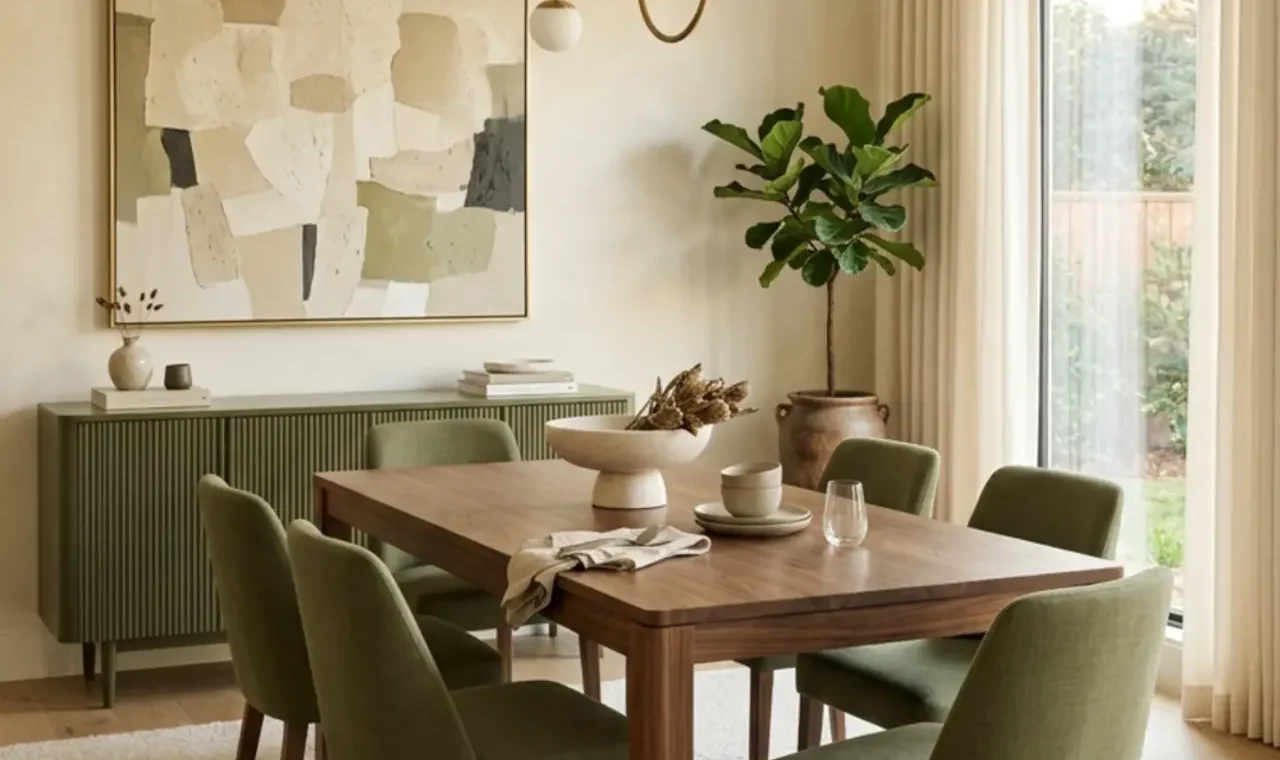
Modern olive dining room ideas sit in a useful middle ground between neutral and colorful. Olive has enough depth to give a dining space character, but it is quieter than emerald green and usually easier to live with than a very dark forest tone.
The color also works with materials already common in modern homes: walnut, pale oak, cream fabric, black metal, aged brass, linen, travertine-look surfaces, warm white paint, and natural ceramics. That makes it possible to build the look without replacing every piece in the room.
The part I would get right first is the balance. Olive becomes heavy when the walls, dining chairs, curtains, rug, cabinetry, and accessories are all green. In most rooms, one major olive element and two or three smaller repeats are enough.
This guide includes more than inspiration. Each idea covers practical sizing, rough U.S. planning costs, a simple method, and the pros and cons I would consider before spending money. The goal is a dining room that looks polished in a photograph but still works when people pull out chairs, serve dinner, clean the floor, and walk through the room every day.
Why Olive Works So Well in a Modern Dining Room
Olive behaves almost like an earthy neutral because it already contains warm yellow, brown, or gray undertones depending on the shade.
That is why it works beside cream, tan, walnut, oak, black, brass, muted terracotta, and warm stone without needing a complicated palette.
The finish changes the mood too. A matte olive wall feels relaxed. Olive velvet chairs look richer. A painted fluted sideboard feels more architectural. A few olive ceramics create a very light version of the trend.
I would never choose the final paint color from a phone screen. Green shifts noticeably beside different floors, woods, windows, and bulbs. Paint a large sample board and move it around the room for at least a day.
If you want to compare olive with a lighter green direction first, see Sage Green Living and Dining Room Ideas.
For paint testing, Benjamin Moore also recommends viewing color in the actual room because lighting conditions affect appearance. Their color overview and sample resources are useful when narrowing down a shade.
Plan the Dining Room Before Choosing the Color
Measure the room before buying the table, chairs, rug, sideboard, or pendant.
A useful starting target is about 36 inches of clearance from the table edge to a wall or large piece of furniture where the room allows it. A busy walkway may need more. In a very small room, physically test the pulled-out chair position before ordering.
Give each diner roughly 24 inches of table width as a planning starting point. Chair width, arms, table legs, and the apron can reduce the usable space.
Most standard dining tables are around 29–30 inches high. Bench and chair seat heights commonly fall around 17–19 inches, but the actual comfort depends on the table apron and cushion thickness.
For lighting, a pendant often starts around 30–36 inches above the tabletop, then moves up or down depending on fixture size, ceiling height, and sight lines.
These are practical starting points, not building-code rules. Always check the actual product dimensions and installation instructions.
1. Paint One Olive Feature Wall
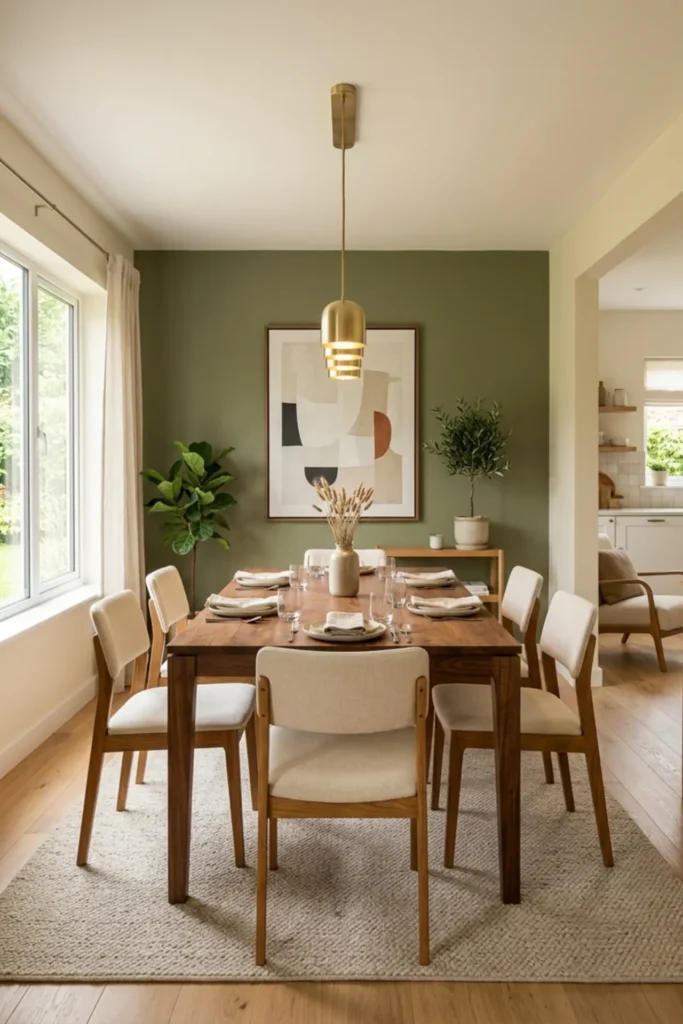
One olive wall is the easiest way to bring the color into a dining room without surrounding the whole space in green. The best wall is usually the one that already has a reason to attract attention: behind the dining table, behind a sideboard, or the first wall visible from the main entrance.
Choose a muted olive with gray or brown underneath rather than a very bright military green. Keep the remaining walls warm white, bone, or cream so the room still reflects light.
Size and requirements: Keep the olive to one main wall or roughly 20% to 30% of the visible wall area. Paint at least a 24-by-36-inch sample board before buying several gallons. Check it beside the floor, dining table, curtains, and evening lighting.
Method and cost: Clean the wall, patch damage, sand where required, prime if the surface or manufacturer calls for it, then apply the stated number of coats. DIY materials may cost around $60–$220 for a feature wall. Professional painting can run roughly $300–$900+, depending on preparation, wall height, trim, and local labor.
Pros: Large color impact for relatively little money; easy to pair with existing neutral furniture; simpler to repaint than a whole room.
Cons: Olive can turn yellow or muddy under the wrong light; a dark wall may reduce brightness; the feature wall can compete with artwork or a television if too much is placed on it.
2. Use Olive Upholstered Dining Chairs
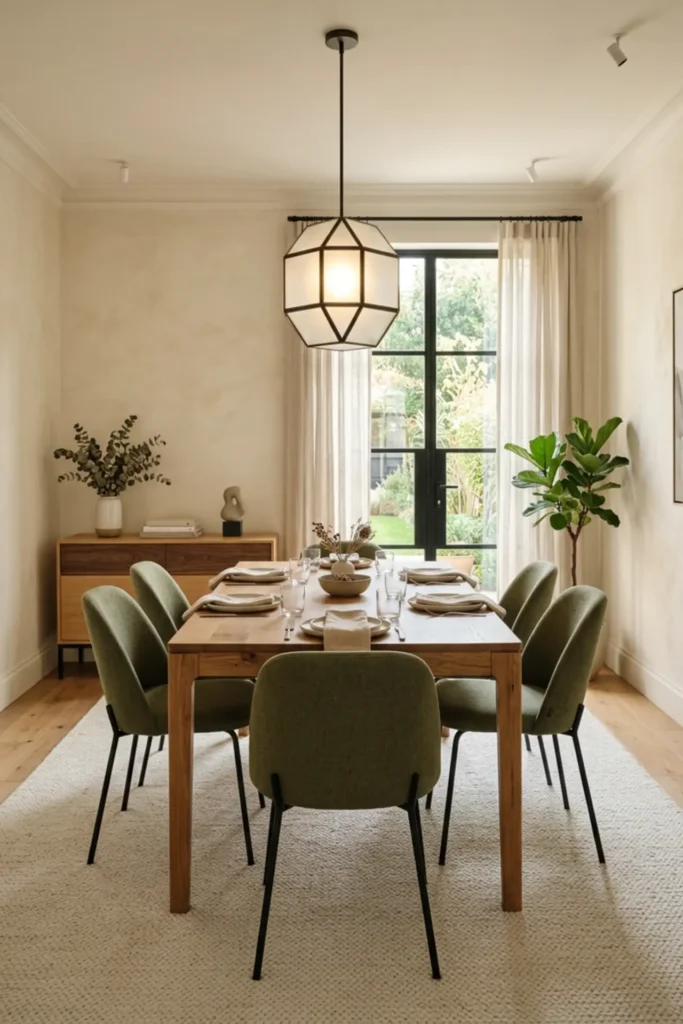
Olive dining chairs can carry the whole color scheme without changing the walls. This is one of my strongest choices because the chairs give you a clear block of color exactly where the dining room needs softness.
A textured woven fabric feels casual. Velvet looks richer but may require more care. Performance fabric is worth considering in a room used daily.
Size and requirements: Allow roughly 22–24 inches of table width per chair as a starting point. Check the chair’s full width, seat depth, and back depth. Make sure arms slide under the table if you choose armchairs. Leave enough room behind the chair for it to pull out without hitting a wall or sideboard.
Method and cost: Tape the chair footprints around the table before buying. Order a fabric swatch if possible and check it beside the table wood and floor. A set of four to six chairs may cost about $500–$3,000+, while custom or designer upholstery can go much higher.
Pros: Clear olive color without paint; adds comfort and texture; easy to pair with cream and wood.
Cons: Upholstery is more expensive to reverse than paint; food stains are a real concern; wide chairs can reduce the number of seats that comfortably fit.
3. Pair Olive With a Warm Walnut Dining Table
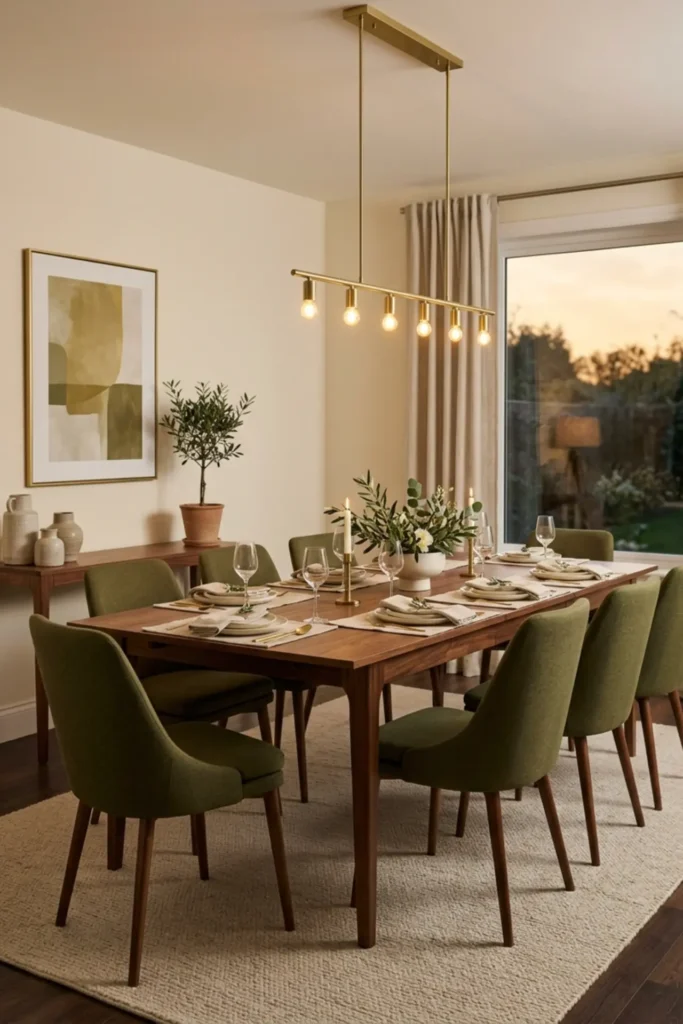
Walnut is one of the best partners for olive because both colors have depth without looking identical. A dark walnut table makes olive chairs look more sophisticated and gives the dining area a strong center.
I would keep the other large surfaces lighter so the room does not become bottom-heavy.
Size and requirements: A four-person rectangular table may start around 36 by 48 inches. Six-person tables are often around 36 by 60–72 inches. The actual chair widths and room clearance matter more than the seat count printed on the product page. Aim for a table height around 29–30 inches unless you are intentionally buying counter-height furniture.
Method and cost: Tape the entire tabletop size on the floor, then add the pulled-out chair depth before ordering. A mass-market walnut-look table may cost $500–$1,500. Solid walnut or premium construction can easily reach $2,000–$5,000+.
Pros: Warm, rich pairing; walnut grounds lighter rooms; works with brass, black, cream, and stone.
Cons: Dark wood can visually shrink a small room; genuine walnut can be expensive; scratches and water marks may be more obvious depending on the finish.
4. Keep the Walls Cream and Let Olive Lead Through Furniture
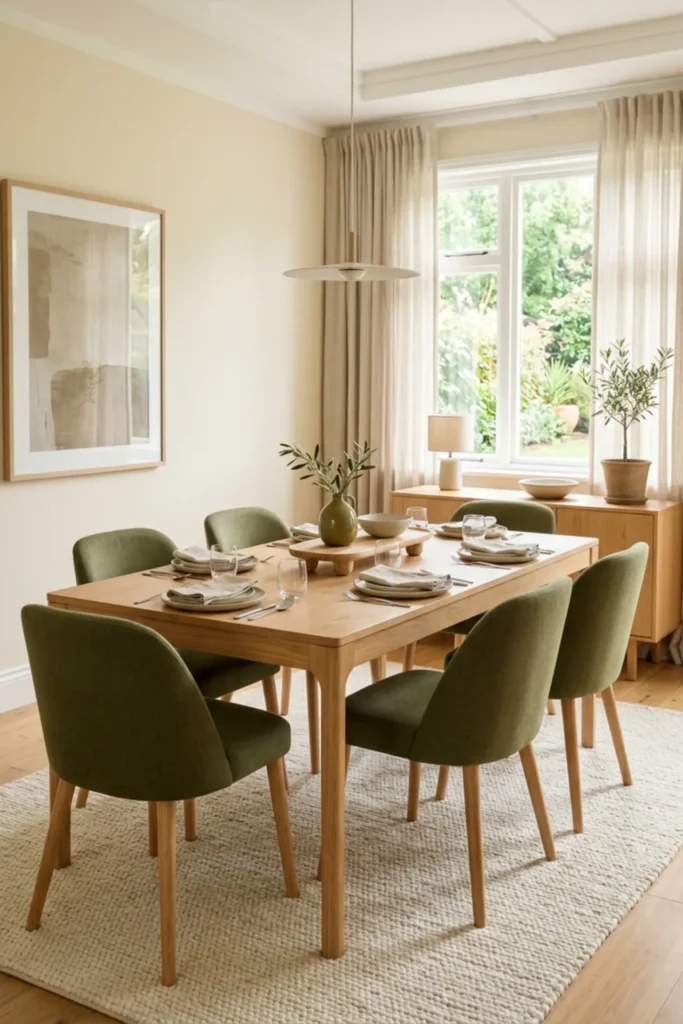
You do not need olive paint to make the palette obvious. Cream walls create a brighter room and allow olive chairs, a bench, a sideboard, or artwork to carry the color.
This is the version I would choose for a small dining room or a room with limited daylight.
Size and requirements: Keep around 60% to 70% of the visible room light or neutral, then allow olive to occupy one major furniture group. One smaller olive repeat elsewhere is usually enough.
Method and cost: If the walls are already a usable warm neutral, the cost may be zero. Repainting a typical dining room can cost around $150–$450 DIY or $700–$1,800+ professionally, depending on preparation, trim, ceiling, and local labor.
Pros: Brighter and more flexible; olive furniture becomes easier to notice; future color changes are simpler.
Cons: The room may feel plain if there is no texture; some cream shades are too yellow beside olive; pale walls show marks near dining chairs.
5. Add a Fluted Olive Sideboard
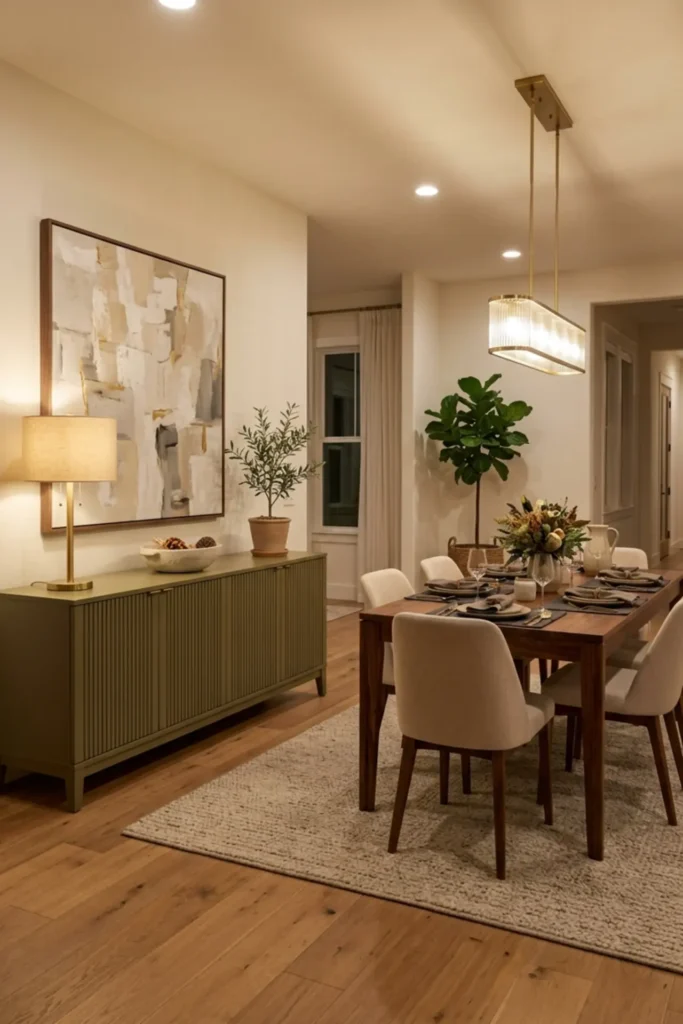
A sideboard gives the room color and solves a storage problem at the same time. Muted olive looks especially good on simple slab or fluted doors. The texture is enough decoration, so I would keep the styling on top restrained.
Store table linens, serving pieces, candles, and items you use for meals rather than filling the cabinet with unrelated clutter.
Size and requirements: Many sideboards are around 60–72 inches wide, 16–20 inches deep, and 30–36 inches high. Leave a comfortable route between the sideboard and pulled-out chairs. In a narrow room, even an 18-inch-deep cabinet can make circulation awkward.
Method and cost: Tape the full footprint on the floor and test the chair behind it. A ready-made olive sideboard may cost $500–$2,000+. Painting an existing cabinet yourself can cost roughly $80–$250 in preparation materials, primer, paint, and hardware. Custom cabinetry may reach several thousand dollars.
Pros: Adds closed storage; creates a strong color statement; gives artwork and lighting a natural place to sit.
Cons: Uses valuable floor depth; fluted fronts collect dust; tall or top-heavy furniture may need anchoring.
For homes with children, the U.S. Consumer Product Safety Commission’s Anchor It! guidance explains why tip-over-prone furniture should be secured appropriately.
6. Hang a Warm Brass Pendant Over the Table
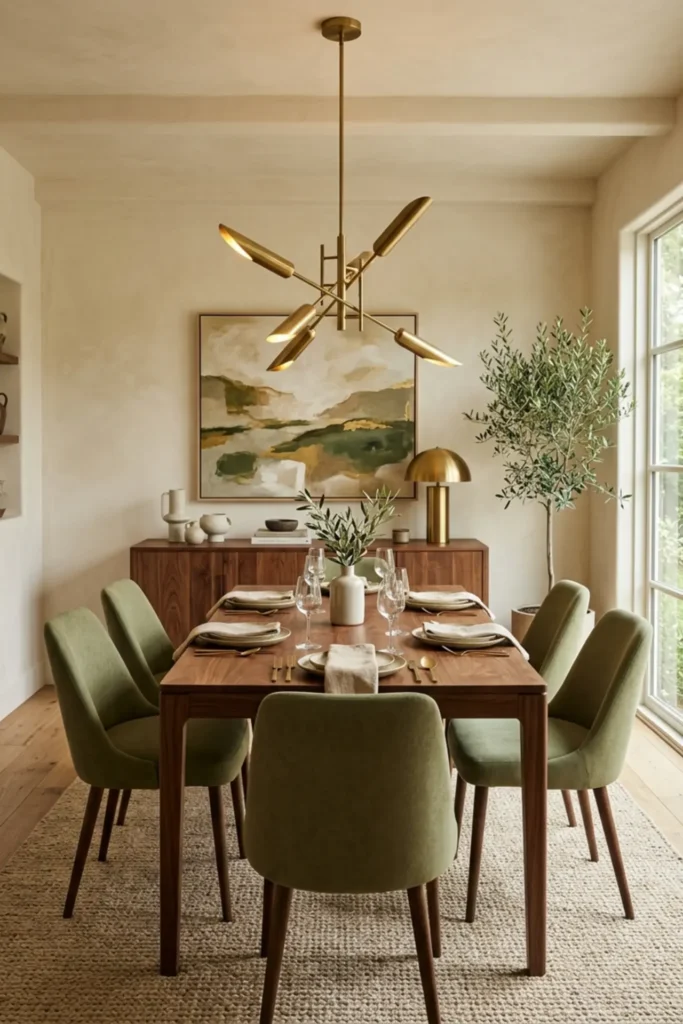
Olive and brass work naturally together because both have warm undertones. The pendant should be centered on the dining table, not automatically on the middle of the ceiling. That distinction matters in open-plan or off-center layouts.
I prefer brushed or aged brass to very shiny gold because it feels softer beside olive.
Size and requirements: Start around 30–36 inches from the tabletop to the bottom of the pendant and adjust for fixture size, ceiling height, and sight lines. For a rectangular table, use a fixture that feels substantial without blocking faces or extending too far beyond the table width.
Method and cost: Mark the table center, hang a paper or cardboard template at the proposed size and height, and sit around the table before ordering. Fixtures may cost $150–$1,200+. Professional installation can add $150–$600+, with new wiring or ceiling repair costing more.
Pros: Warms olive; creates a clear focal point; improves dinner-time atmosphere.
Cons: Oversized fixtures can block views; shiny brass may feel too glamorous; hardwired relocation increases cost.
Use a qualified electrician for fixed electrical work and follow the fixture manufacturer’s instructions.
7. Ground the Dining Set With a Cream Textured Rug
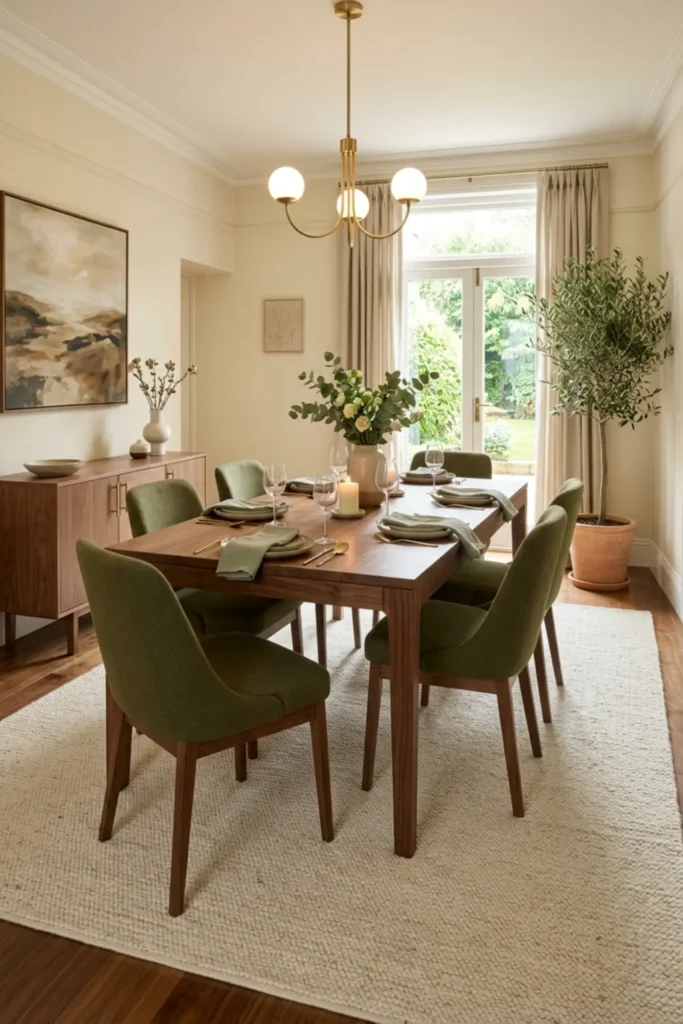
A cream rug lightens a dark walnut table and olive chairs. It also defines the dining zone in an open-plan room, but it needs to be large enough to work with moving chairs.
This is one area where I would rather skip the rug than buy one that is too small.
Size and requirements: Measure the table, then add roughly 24–30 inches beyond each side as a planning starting point so chair legs remain on the rug when pulled out. A six-seat rectangular table often needs around an 8-by-10-foot rug, but measure your actual chair movement before buying.
Method and cost: Tape the rug dimensions on the floor, pull each chair out, and walk around the table. Choose a low-pile or easy-clean dining rug. Expect roughly $200–$1,200+, depending on size, fiber, brand, and construction.
Pros: Softens the room; reduces visual heaviness; can improve acoustics and define an open dining zone.
Cons: Collects crumbs and stains; chairs can catch on the edge; light rugs show spills; unsuitable pads or damp floors can cause problems.
8. Mix Olive With Thin Black Accents
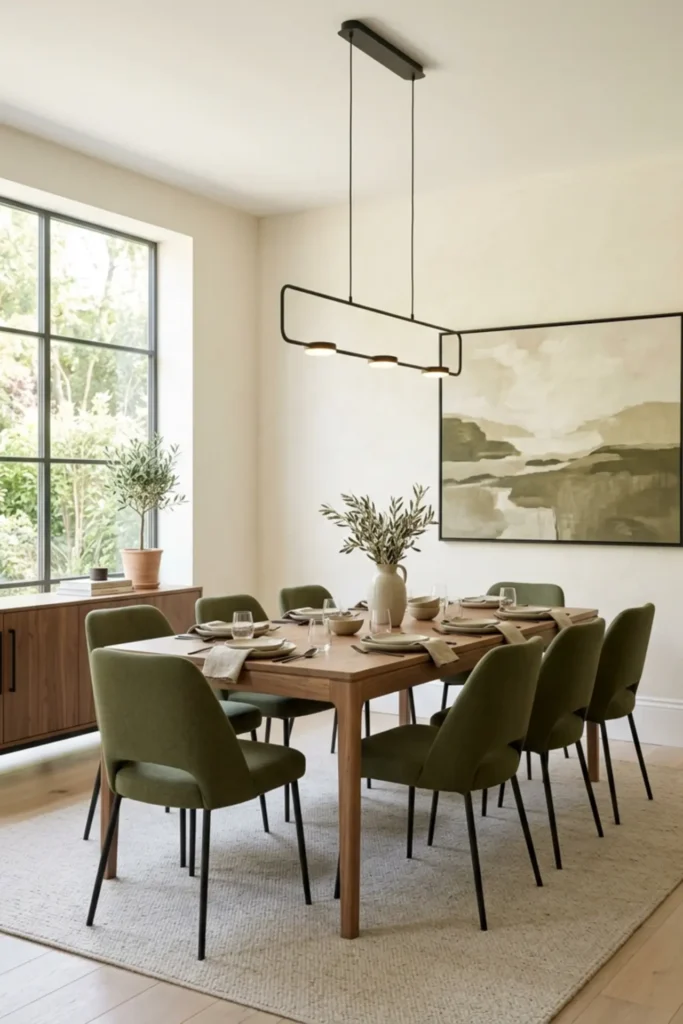
Black gives olive more definition. The easiest version is to repeat thin black lines on chair legs, a pendant frame, picture frames, or one table base.
The key is keeping black secondary.
Size and requirements: Limit black to roughly 5% to 10% of the visible palette. Use two or three repeated details instead of one large black furniture wall.
Method and cost: Start with removable items such as frames, a lamp, or small hardware. A low-cost update may be $50–$250. Replacing a full pendant or chair set can raise the total to $500–$2,000+.
Pros: Adds contrast; makes olive feel more contemporary; ties into black windows or kitchen hardware nearby.
Cons: Too much black makes the room darker; matte black shows dust; mixing several black finishes can look accidental.
9. Add Terracotta in One or Two Places
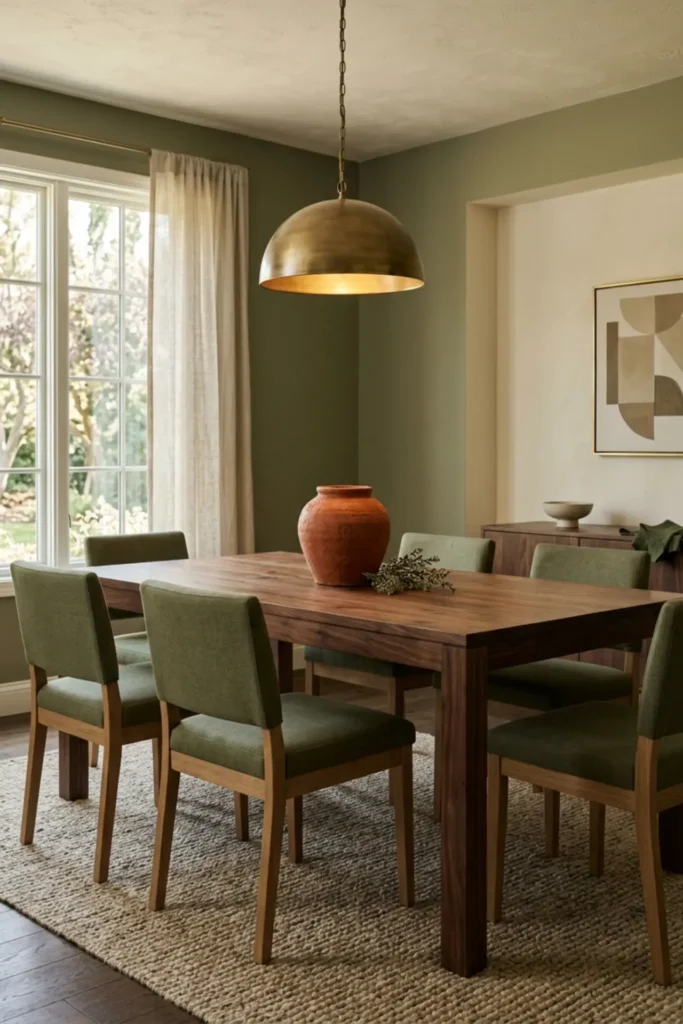
Terracotta brings out the earthy side of olive. You only need a little. One ceramic vessel on a sideboard and a small repeat in artwork can be enough.
I would not add terracotta curtains, rust chairs, orange cushions, and clay walls in the same room unless you want terracotta to become a second major color.
Size and requirements: Keep terracotta around 5% of the room’s visual color. Choose one medium object around 10–16 inches tall or two smaller pieces rather than a shelf full of pottery.
Method and cost: Start with a returnable vase, bowl, or artwork before changing textiles. A simple update may cost $40–$250. Handmade ceramics can cost considerably more.
Pros: Adds warmth; works naturally with olive and walnut; easy to change seasonally.
Cons: Too much can make the palette feel orange-brown; cheap faux finishes can look overly themed; pottery near table edges can break.
10. Use Olive Curtains Only When the Room Has Enough Light
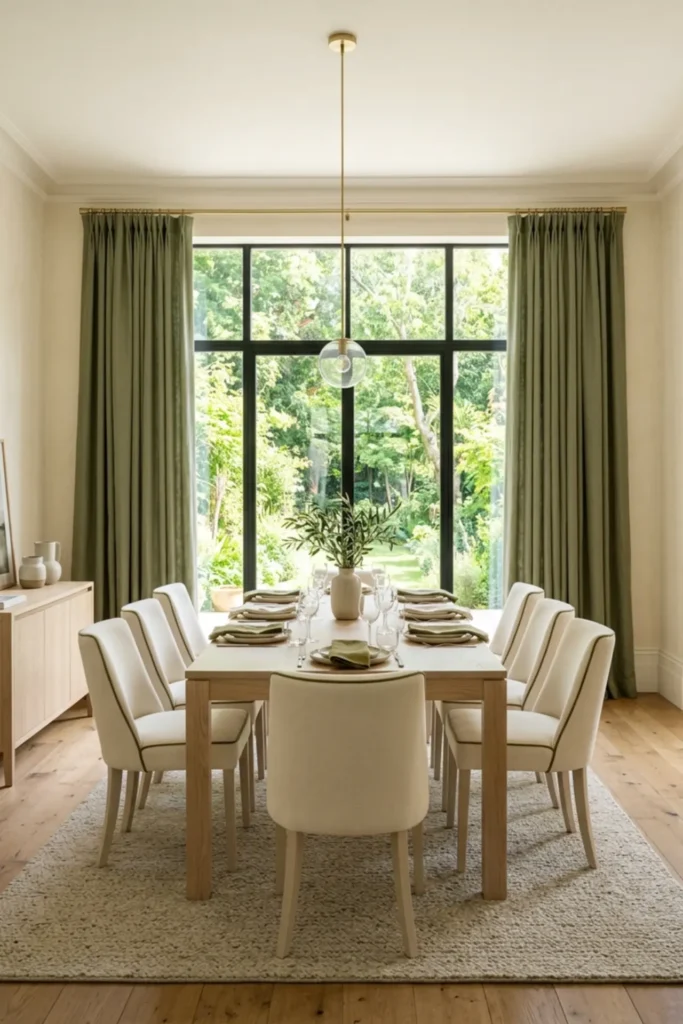
Olive curtains can look elegant, but they cover a large visual area. That is why I would use them mainly in a bright dining room with a wide window or glass doors.
A matte linen-look fabric usually works better than shiny green fabric.
Size and requirements: Mount the rod around 4–8 inches above the window where the wall allows it and extend it approximately 6–12 inches beyond each side so the curtains can stack away from the glass. Combined panel width often looks fuller at around 1.5–2 times the rod width.
Method and cost: Measure from the proposed rod position to just above the floor. Check radiators, vents, doors, and furniture first. Curtains plus hardware may cost $150–$1,000+ per window, depending on lining, fabric, custom sizing, and installation.
Pros: Adds a large removable olive layer; softens sound and hard surfaces; can frame daylight beautifully.
Cons: Dark curtains reduce light; fabric collects dust; long panels can interfere with heating, vents, or patio doors.
11. Create an Olive Built-In Dining Nook
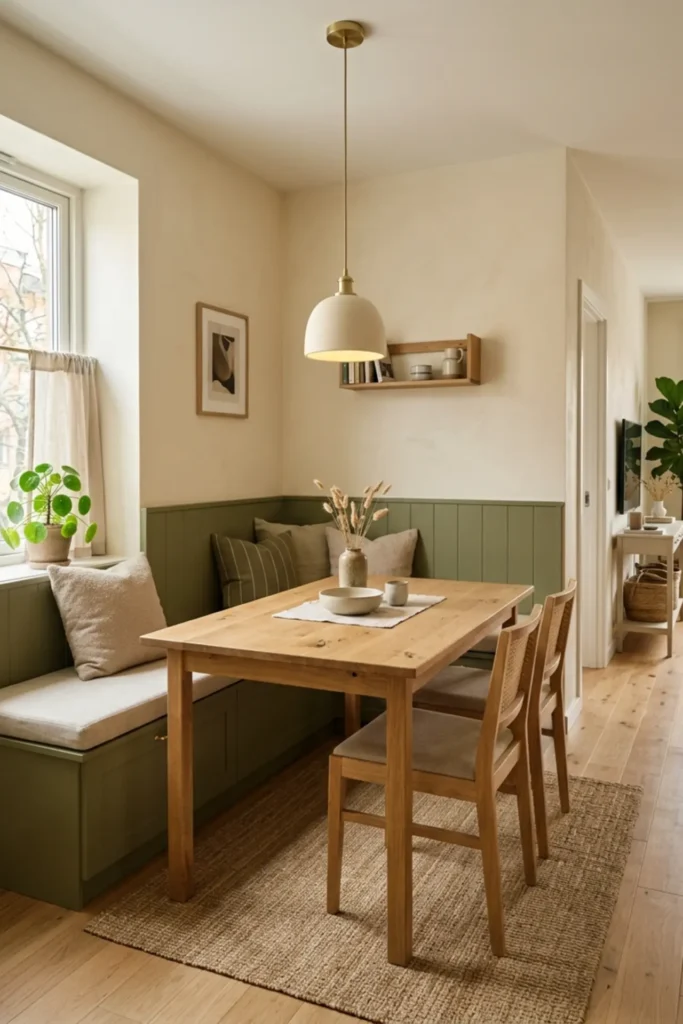
A dining nook is a strong option when you want color and seating in one architectural feature. Use olive on the bench front, wall panel, or washable upholstery. I would not make every layer green.
Drawers below the seat are usually more practical than one giant lift-up lid because the table can stay in place.
Size and requirements: A dining bench seat commonly lands around 17–19 inches high. Allow around 18–20 inches of seat depth and approximately 24 inches of width per person. Check knee space against a 29–30-inch-high table. Leave enough room to slide into the bench and clean below it.
Method and cost: Tape the bench depth and table location on the floor. Sit against the wall with a temporary seat at the planned height before building. A simple DIY bench may cost $400–$1,200. Professionally fitted storage seating and upholstery may cost $1,500–$5,000+.
Pros: Uses a corner efficiently; adds storage; makes olive feel integrated rather than decorative.
Cons: Fixed seating is harder to rearrange; upholstery beside food needs cleaning; poorly placed table legs can make entry awkward.
For a lighter green variation, see Sage Green Kitchen and Dining Ideas.
12. Bring in Travertine-Look or Warm Stone Surfaces
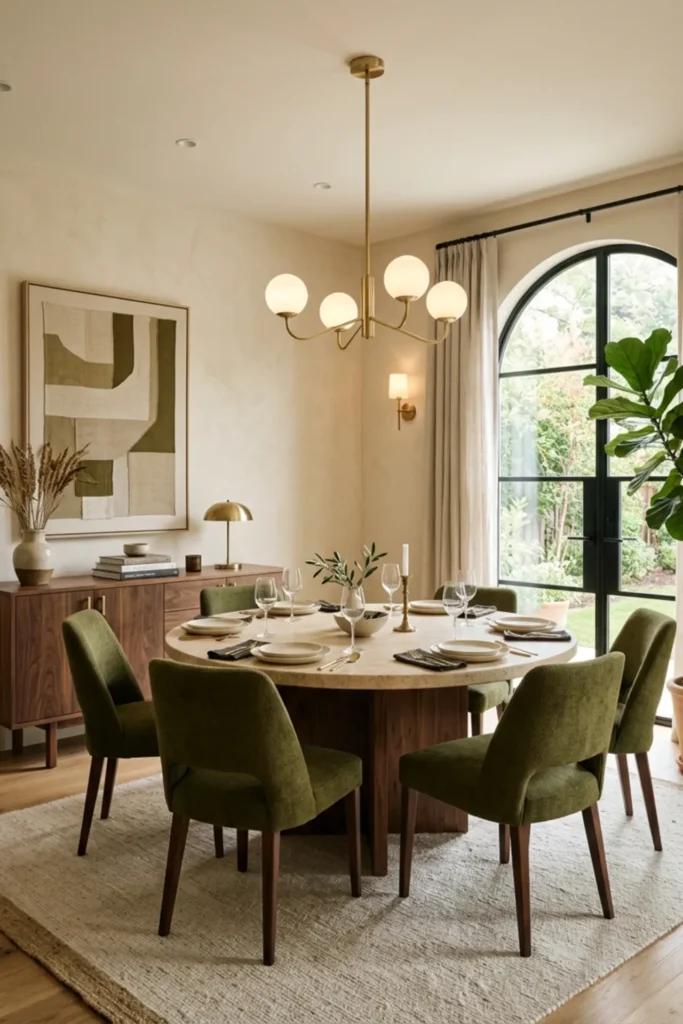
Warm cream stone can brighten olive without introducing another strong color. A travertine-look table, console top, or sideboard surface can make the room feel more polished. It also creates a useful contrast between soft upholstery and harder material.
I would use one stone element rather than several matching stone pieces.
Size and requirements: For a dining table, use the same clearance rules as any other table and confirm the total product weight. Stone tables can be extremely heavy. Measure doors, stairs, elevators, and the final floor location before ordering.
Method and cost: Order or borrow a material sample first. Compare it beside olive, wood, and the floor. Stone-look tables may cost $800–$2,500+. Real travertine, marble, or custom stone can cost $2,000–$6,000+, before difficult delivery or assembly.
Pros: Lightens olive; adds tactile contrast; works with brass and walnut.
Cons: Real stone can stain or etch; heavy delivery is difficult; some stone-look products appear artificial when the printed pattern repeats.
13. Style the Sideboard With One Oversized Artwork
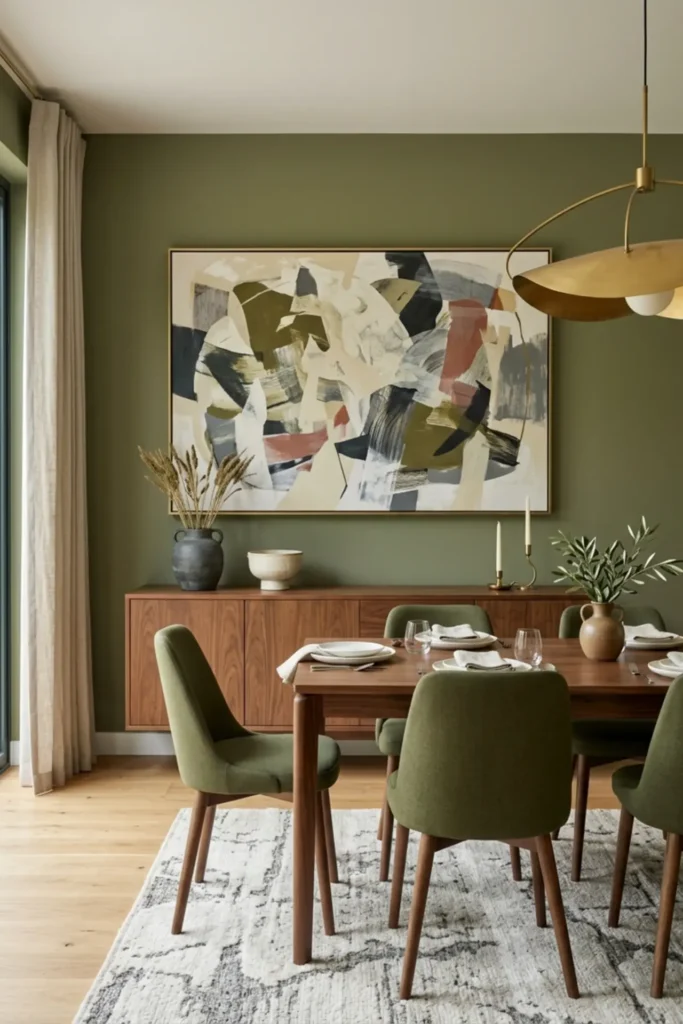
One large artwork often looks calmer than six small frames. Choose a piece with olive somewhere in the palette, then let cream, charcoal, brown, rust, or muted gold prevent it from looking too matched.
Keep the sideboard below it fairly clear.
Size and requirements: A useful visual starting point is artwork around 60% to 75% of the sideboard width. Leave about 6–10 inches between the sideboard and the artwork, then adjust for frame size and ceiling height.
Method and cost: Tape a paper rectangle on the wall before ordering the frame. Use hanging hardware suitable for the wall type and artwork weight. A print and frame may cost $100–$800+; original art can range far beyond that.
Pros: Creates a clean focal point; adds personality without clutter; can connect olive with other room colors.
Cons: Heavy frames need proper mounting; very literal green art can make the room feel themed; large art can be expensive to frame and ship.
14. Add One Healthy Plant Rather Than a Green Theme
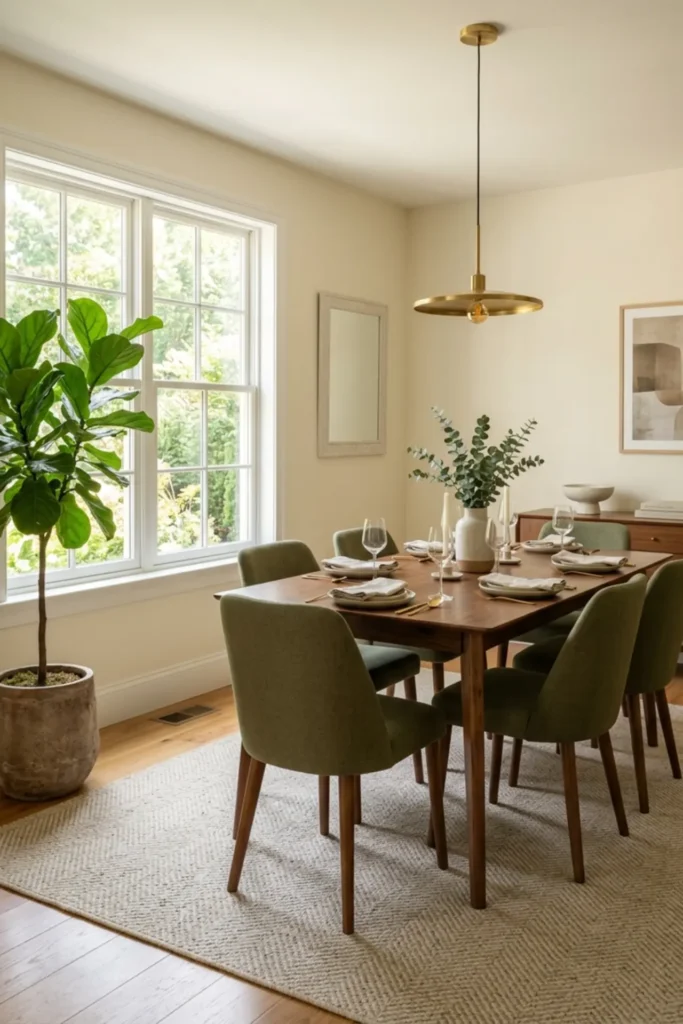
A real plant introduces a different green from olive and can make the room feel fresher. One tall plant near a suitable window or one small plant on the sideboard is often enough.
Do not put a plant in a dark corner just because the room photograph looks empty.
Size and requirements: Keep floor plants outside the chair pull-out zone and main walkway. A 10–14-inch planter can suit many medium floor plants, but match the container to the actual root system and plant. Use a waterproof saucer or liner where the floor needs protection.
Method and cost: Measure the light level over a normal day, choose a plant that fits those conditions, and check household safety if pets or young children can reach it. A plant and decorative pot may cost $40–$250+.
Pros: Adds natural shape; softens hard furniture; easy to relocate.
Cons: Requires real care; water can damage floors; some plants are unsuitable around pets or children; too many green elements can weaken the olive focal point.
15. Layer Warm Lighting After Dark
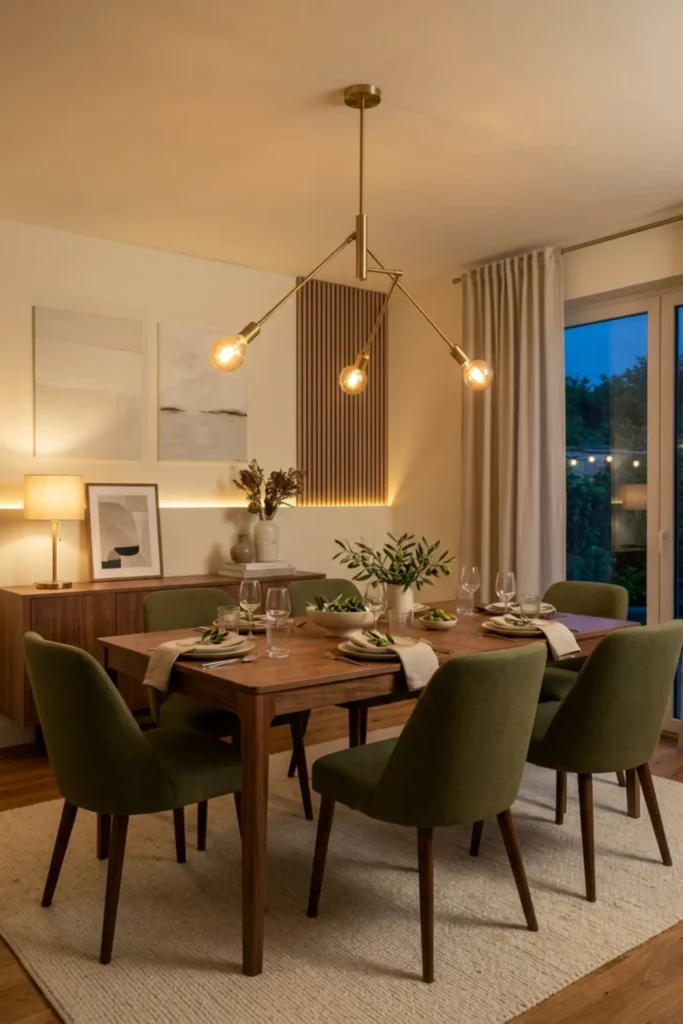
A dining room with one ceiling light can feel flat, even when the furniture is good. Use the pendant over the table as the main light, then add one lamp on the sideboard or subtle wall lights if the room needs softer edges.
This matters with olive because poor lighting can make it look muddy.
Size and requirements: Warm light around 2700K–3000K is a useful starting range for a relaxed dining atmosphere. Use reasonably consistent bulb color across fixtures. Check bulb brightness, fixture rating, dimmer compatibility, and the light output needed for homework or serving food.
Method and cost: Replace bulbs first before buying new fixtures. Good bulbs may cost $10–$30 each. Table lamps can cost $80–$500+. New wall lights or pendants may cost $150–$1,000+ each installed, depending on wiring.
Pros: Improves the room after sunset; lets olive and walnut look warmer; separate lights create more control.
Cons: Too-warm bulbs can make olive look brown; mismatched color temperatures make the room patchy; fixed wiring increases cost.
16. Make a Small Olive Dining Room Feel Lighter
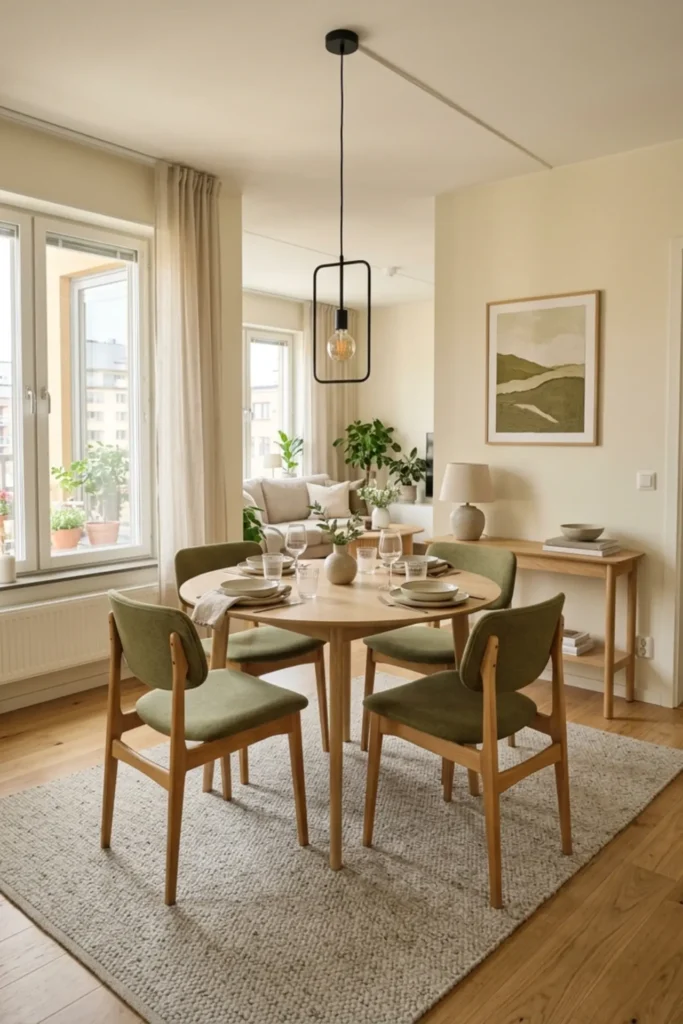
In a compact room, I would concentrate olive in one place instead of spreading it everywhere. Four olive chairs around a light oak table can be enough. Another option is one olive wall with cream seating.
Keep storage on one wall and choose furniture with visually lighter legs or a simple pedestal base.
Size and requirements: A round table around 36–42 inches in diameter can work for two to four people depending on chair width. A compact rectangular table may be around 30–36 inches wide and 48 inches long. Preserve the main walking route and physically test pulled-out chairs. Avoid adding a sideboard if it reduces the passage to an uncomfortable squeeze.
Method and cost: Mark every furniture footprint with tape before ordering. A compact four-seat setup may cost around $700–$2,500+, depending on table and chair quality.
Pros: Olive still feels intentional without darkening the whole room; fewer pieces make cleaning easier; light furniture can visually open the space.
Cons: Small tables offer less serving space; extra chairs need storage; a round table is not automatically space-saving in every floor plan.
For more layout thinking that transfers well to tight dining areas, see Small Living Room Ideas.
17. Finish With Useful Objects, Not Olive Clutter
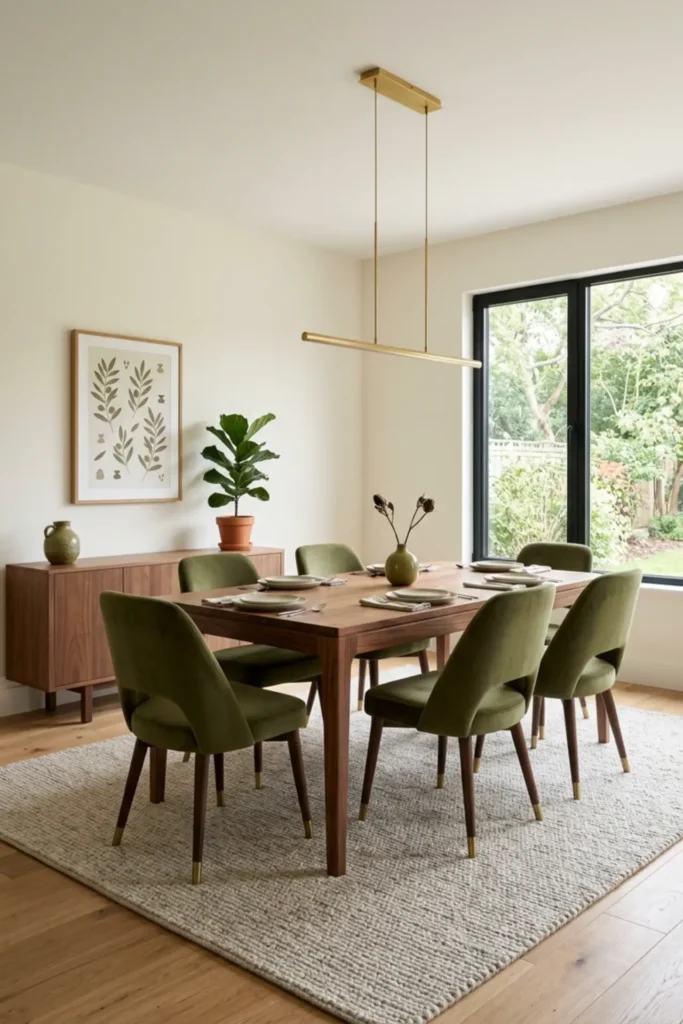
Once the wall, chairs, table, light, rug, and storage are decided, stop matching. An olive vase, green books, four green candles, green bowls, a green tray, and botanical prints do not improve a room that already has olive chairs or walls.
Useful objects make a dining room look more believable than color-coded accessories.
Size and requirements: Keep the dining table center clear enough for serving dishes. One low centerpiece around 8–12 inches high is easier to see over than a tall arrangement. Leave at least half of the sideboard top visually clear.
Method and cost: Remove all decorative objects first, then return only the pieces that have a use or enough visual weight to deserve the space. This step may cost $0. If you add a bowl, lamp, or vase, a sensible finishing budget is around $50–$300.
Pros: Makes the room calmer; costs little; easier to clean; major furniture looks more important.
Cons: Minimal styling can feel bare if the room has no artwork or texture; people who enjoy collecting objects may need more storage elsewhere.
A Practical 10-Step Olive Dining Room Plan
- Measure the room, doors, walkways, and windows.
- Tape the proposed dining table size on the floor.
- Add the pulled-out chair depth.
- Choose the table and chairs before the rug.
- Decide where olive will appear as the main color.
- Test olive paint or fabric beside the real floor and table.
- Center the pendant on the actual table position.
- Add a sideboard only if the walkway still works.
- Choose the rug after the table and chair layout is final.
- Finish with artwork, one plant, and a small amount of decor.
This order keeps the room useful before it becomes decorative.
Approximate Budget by Update Level
Low-cost refresh: $150–$700
- Feature wall paint
- Two or three decor pieces
- Table linen or artwork
- New bulbs
- Small plant
Mid-range update: $1,500–$4,500
- New dining chairs
- Rug
- Pendant
- Paint
- Sideboard or artwork
Full room update: $5,000–$12,000+
- Quality table
- Six upholstered chairs
- Sideboard
- Large rug
- Lighting and electrician
- Curtains
- Artwork
- Professional painting
Custom furniture, real stone, designer lighting, premium upholstery, and structural or electrical changes can move well beyond these ranges.
What I Would Spend More On
I would spend more on the dining table, comfortable chairs, and main light. These are the things people physically use and the pieces most likely to remain for years.
I would spend less on small olive accessories at the start. A comfortable chair in the right fabric is worth more than ten green decorative objects.
If you are choosing between a larger table and better circulation, I would take the slightly smaller table. A dining room that is easy to move through feels better every day than a large table that looks impressive only when the chairs are tucked in.
Common Mistakes I Would Avoid
The first mistake is choosing olive before checking it beside the actual floor and table. Green can change dramatically once it is surrounded by warm wood.
The second is making everything olive. Choose one strong color area and let the rest of the room support it.
The third is buying a dining rug that is too small. If the back chair legs leave the rug every time someone sits down, the rug will become annoying.
I would also avoid hanging the pendant based only on the center of the ceiling. It should relate to the table.
Another mistake is forgetting storage depth. A 20-inch-deep sideboard can destroy a comfortable walkway in a narrow room.
Finally, do not trust a product’s “six seater” label without checking chair width and room clearance. Six chairs technically fitting is not the same as six people dining comfortably.
Final Thoughts
Modern olive dining room ideas work best when olive is treated as an earthy anchor, not a theme.
Use it on the chairs, one wall, a sideboard, or a built-in bench. Pick one major place for the color, then repeat it lightly.
Cream, walnut, oak, stone, black, and brass can do the rest.
The practical side matters just as much as the palette. Measure the table, pull the chairs out, test the rug size, check the sideboard depth, and position the pendant on the real table location.
Once those things work, the olive color does not need much decoration around it. It already brings enough warmth, depth, and character to make the dining room feel settled and sophisticated.
Disclosure: Some visuals are AI-assisted design concepts created for inspiration. Always confirm measurements, materials, product dimensions, furniture stability, electrical requirements, wall fixings, manufacturer instructions, and installation needs for your home. Cost ranges are approximate U.S. planning figures and can vary by location, labor, materials, brand, shipping, and project conditions.
About the Author
Ali Hamza — Founder & Editor
Hi, I’m Ali Hamza, and Styled Room Living is my personal home decor project. I don’t have a formal background in interior design. I started this website because home makeovers are something I genuinely enjoy looking at and learning about.
Most of the ideas shared here are not projects I have personally built. When I put a guide together, I try to separate an idea that only looks good in a photograph from one that could actually be useful in a normal home. Will it fit? Is it easy to clean? Does it require drilling? Can it be adjusted for a smaller budget? These are the questions I keep in mind while working on an article.
Some images on the website are AI-assisted design concepts used to explain an idea more clearly. They are meant for inspiration, not as exact construction plans. Please check measurements, materials, prices, weight limits, electrical details, and installation requirements before trying anything in your own home.
I’m still learning as the website grows, and I know every home works differently. My purpose with Styled Room Living is simply to collect useful home ideas, explain them in plain language, and help readers find something they can adapt to their own space.
Read more about Ali Hamza →