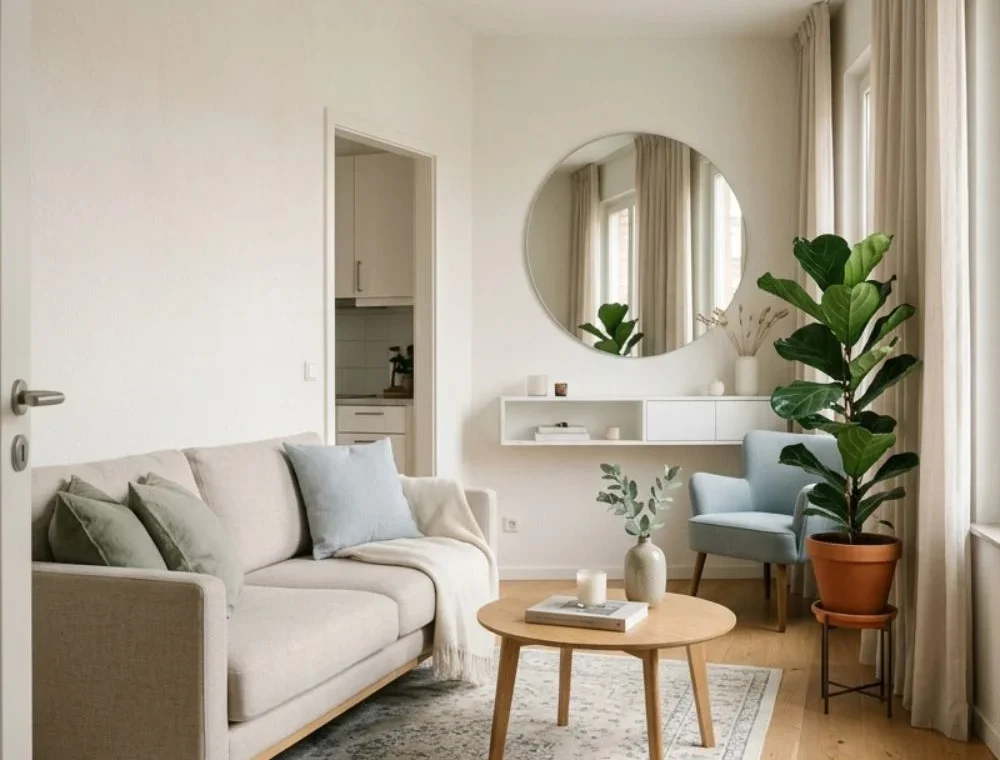
Small Living Room Ideas often look easy in photographs. Move one chair, add a pale rug, place a mirror on the wall, and the tiny room suddenly appears twice as large. Real homes are not quite that simple.
Written and reviewed by Ali Hamza | Styled Room Living
A real living room may hold toys, chargers, cups, a television, family seating, and the only clear path to another room. It may also need to work as a dining area or office. A design idea is only helpful when it respects those daily needs.
I enjoy looking for changes that make a room feel calmer without removing its personality. For this guide, my three strongest choices are a correctly sized sofa, a large rug, and soft layered lighting. Together, they improve scale, connect the furniture, and brighten dark corners.
I am less excited about replacing a side table with a stool or adding one tall plant. Both can work, but neither is a must. A stool may be less stable for drinks, while a plant can steal the last useful corner or become another care job.
Begin with the Room You Actually Have
Start by measuring every wall, doorway, window, and fixed feature. Include radiators, air vents, plugs, and the swing of each door. Then measure the furniture already in the room.
Draw a simple plan on paper. It does not need to look professional. Mark the sofa, chairs, television, and main walking path. This basic map is often more useful than saving another beautiful room online.
Next, decide what the room must do every day. A couple may need two comfortable seats and a place for evening drinks. A family may need more seating, toy storage, and an open floor area. Someone in a studio may need the same room for relaxing, eating, and working.
Use painter’s tape to mark a new sofa, rug, or table on the floor. Walk around the outline, open the doors, and sit in the nearby chairs. This small test can expose a bad size before money is spent.
How to Compare These Small Living Room Ideas
This quick view shows what each idea does and what you should check first.
| Idea | Best result | Check before using it |
|---|---|---|
| Correct-size sofa | Better scale and seating | Width, depth, and delivery route |
| Furniture off walls | More depth | Clear path behind and around pieces |
| Simple colors | Calmer visual flow | Real daylight in the room |
| Large mirror | More reflected light | Secure fixing and safe reflection |
| Visible furniture legs | More visible floor | Strength and stability |
| Round coffee table | Easier movement | Useful surface size |
| High, wide curtains | Taller-looking window | Rod support and heater clearance |
| TV wall storage | Less scattered clutter | Safe mounting and cable route |
| Large rug | One connected seating zone | Door clearance and cleaning |
| Multipurpose stool | Flexible extra surface | Stability for the intended job |
| Vertical storage | More storage on less floor | Anchoring and shelf load |
| Clear room zones | Better mixed-use layout | Enough open space between zones |
| Open walking path | Easier daily movement | Cords, corners, and door swings |
| Layered lighting | Brighter corners and depth | Plug positions and glare |
| Hidden storage | Less visible clutter | Safe hinges and useful capacity |
| Fewer large pieces | Less visual noise | Correct scale for the wall |
| One tall plant | Height and softness | Light, care, pets, and floor space |
| Clear windows | More daylight | Privacy, heat, and glare |
| Calm focal point | Clear visual order | One feature, not several competitors |
1. Choose a Sofa That Fits the Room
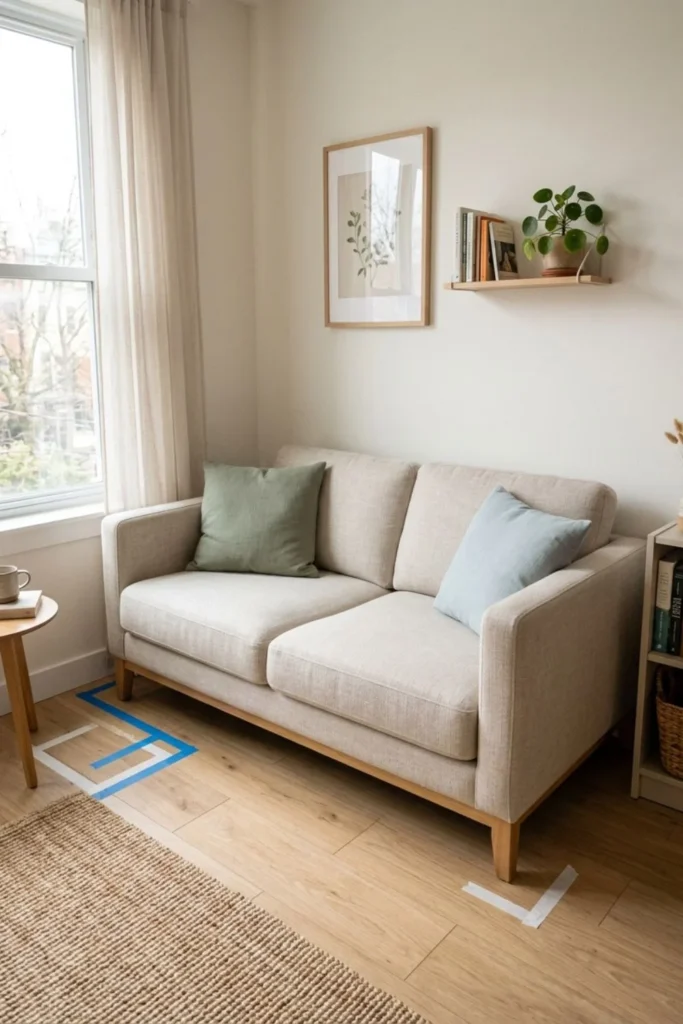
The sofa is my first and strongest choice because it controls the scale of the whole living room. If it is too deep, the walkway becomes tight. If its arms are very thick, useful seating space is lost. If it is too small, you may need extra chairs that crowd the floor.
Measure the wall, but also measure the open space in front of it. Check the sofa’s full depth, not only its width. A deep seat can project much farther into the room than it appears in a front-facing product photograph.
Mark the outline with painter’s tape and place dining chairs inside it. Sit down, stand up, and walk past. Open nearby doors and drawers. If the route feels annoying during a five-minute test, it will not improve after the sofa arrives.
Slim arms, a lower back, and visible legs can make a sofa look lighter. However, comfort comes first. A low seat may be hard for some people to use, and very narrow arms may not give the support your household prefers.
Do not buy a tiny sofa simply because the room is small. Choose enough seating for the people who use the room most often. A compact three-seat sofa may use the floor better than a loveseat plus two separate chairs.
Check the delivery route too. Measure the main door, hallway, stair turns, and lift if the home has one. The perfect sofa is not perfect if it cannot reach the living room.
For me, this is where the makeover begins. When the sofa fits, the rug, table, lamps, and walking path become easier to plan around it.
2. Move Furniture Away from the Walls
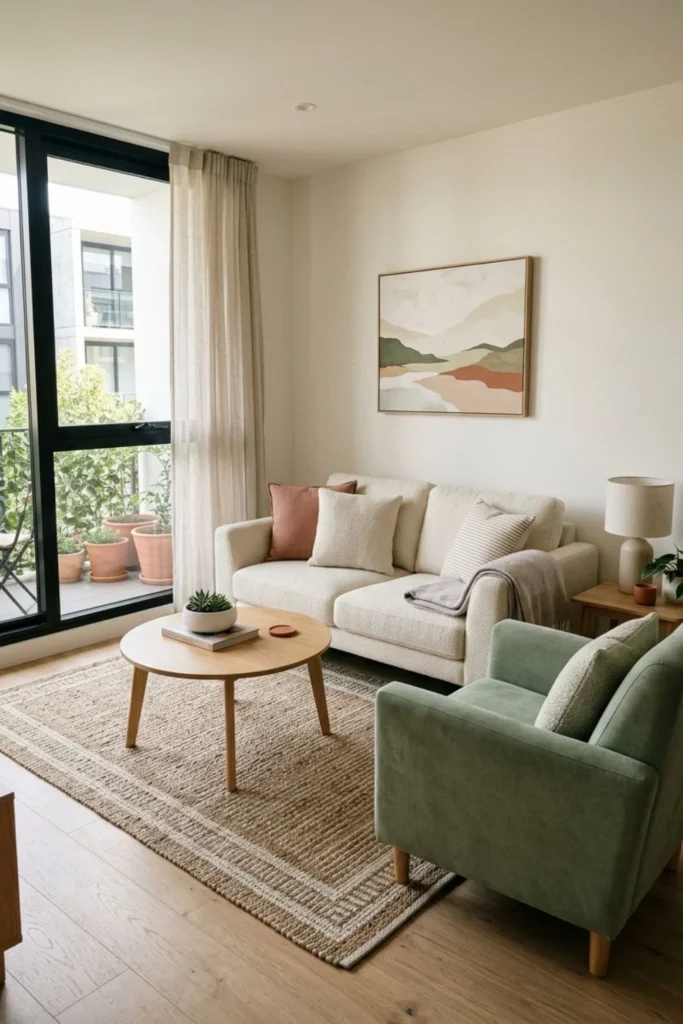
Pushing every item tightly against a wall can leave an empty center and a stiff border of furniture. In some rooms, moving the sofa forward by a few inches creates a small shadow line that adds depth.
This does not mean every piece should float in the middle. A narrow apartment still needs a clear path. Start with a very small gap and see whether the room feels more relaxed without losing useful floor space.
Turn one chair gently toward the sofa instead of lining it flat against another wall. The change can create a conversation area and make the room look planned. Take a photograph from the doorway before and after, because the camera often reveals awkward spacing.
3. Use a Light and Simple Color Palette
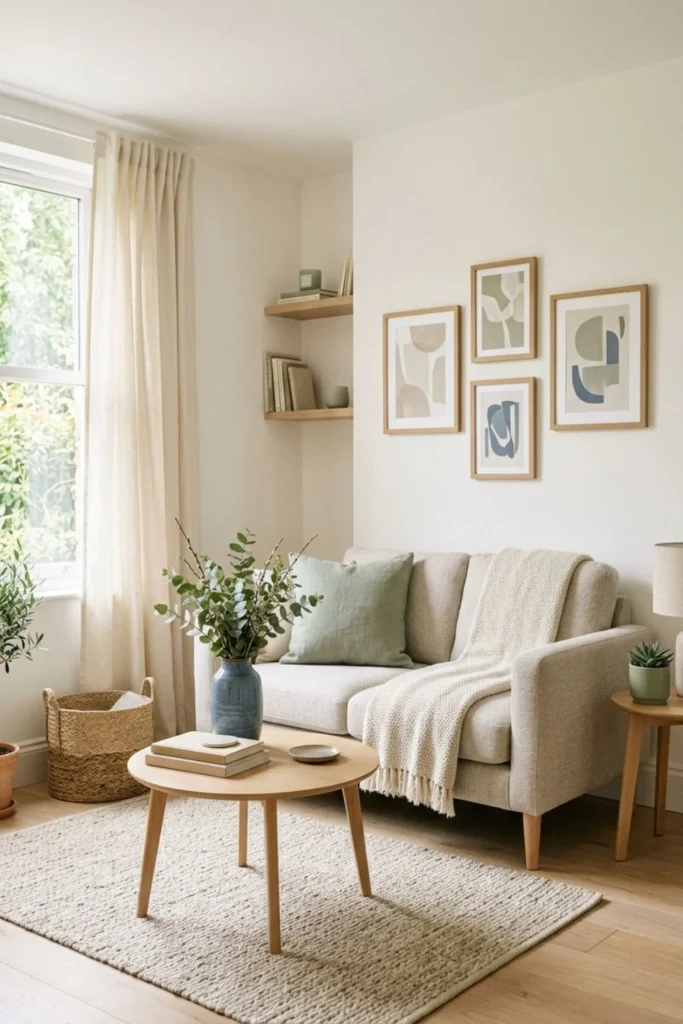
Light colors reflect more daylight and can make large surfaces feel less heavy. Warm white, cream, pale beige, soft sage, and gentle blue are easy choices, but the room does not need to become completely white.
Choose two main colors and one smaller accent. For example, use warm white walls, beige seating, and sage in cushions or art. Repeating the same shades across the room helps separate items feel connected.
Look at paint and fabric samples during the morning, afternoon, and evening. A gray that looks fresh in a bright shop may appear cold in a north-facing room. The real light in your home matters more than the name printed on the sample.
4. Add One Large Mirror
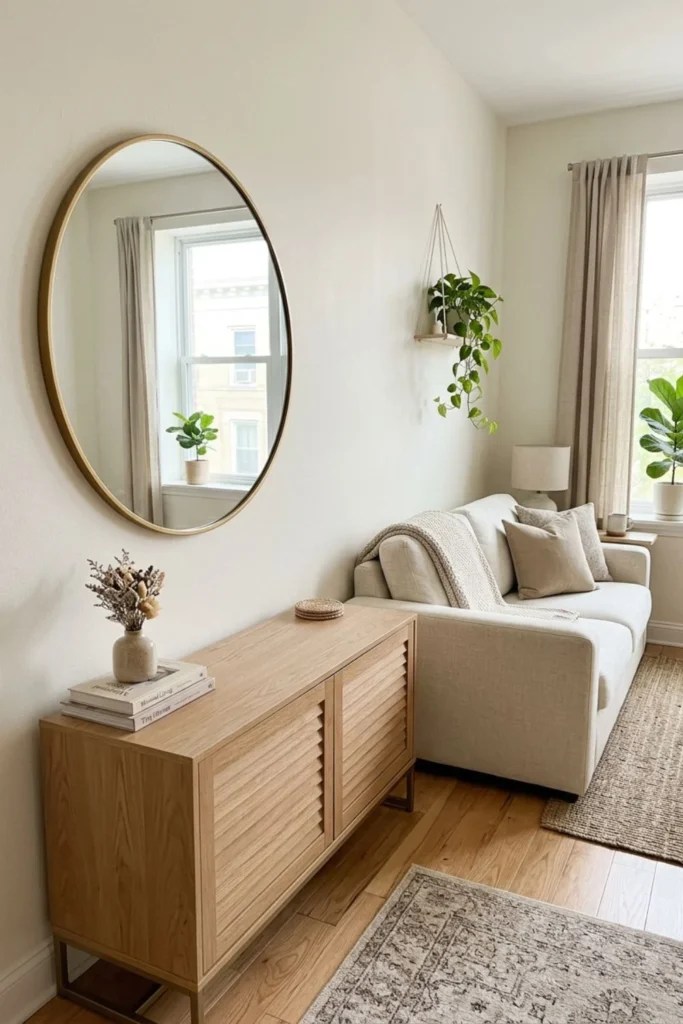
A mirror can reflect daylight and show another view of the room, which creates a feeling of depth. One well-placed mirror often looks calmer than a group of many small pieces.
Before hanging it, stand where people usually sit. Check exactly what the mirror will reflect. A bright window, plant, or clear wall is helpful. A cluttered shelf, television wires, or direct glare is not.
Heavy mirrors need the correct fittings for the wall and the mirror’s weight. Do not guess with unknown hardware. Ask for qualified help when the wall type or fixing method is unclear.
5. Pick Furniture with Visible Legs
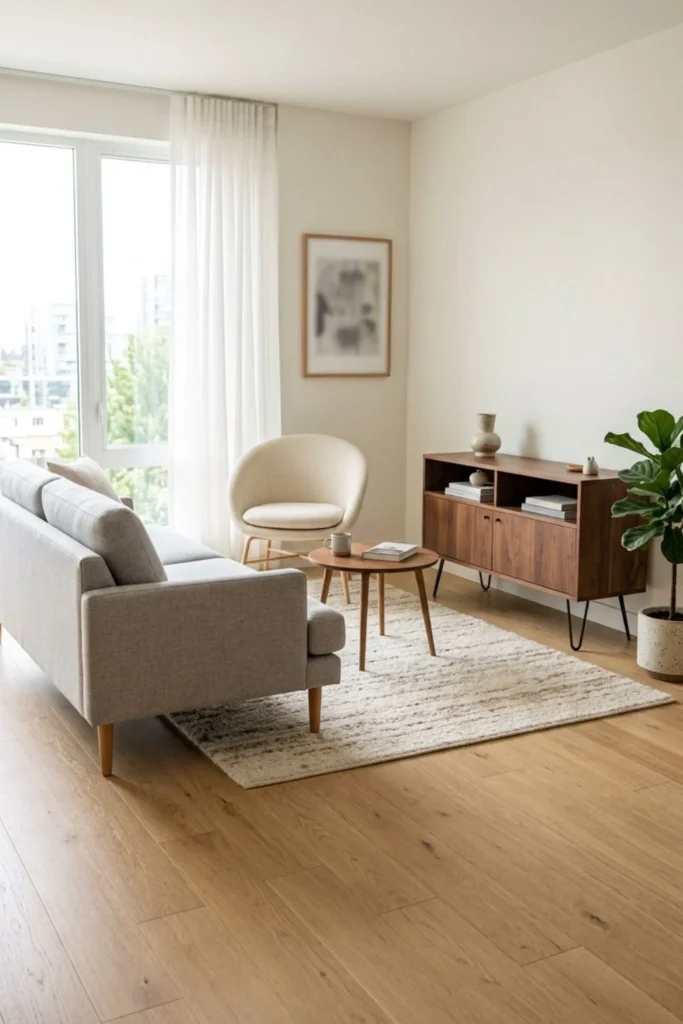
Furniture on raised legs lets the eye see more continuous floor. This can make a sofa or media unit look lighter than a solid piece that reaches all the way down.
You do not need to replace every item. One raised sofa and a slim cabinet may provide enough open space. Mixing them with one grounded ottoman can keep the room feeling warm rather than fragile.
Check that the legs are strong, level, and properly attached. Very thin legs may look elegant, but they still need to support normal use. Also consider whether toys, pet items, or dust will collect below.
6. Use a Round Coffee Table
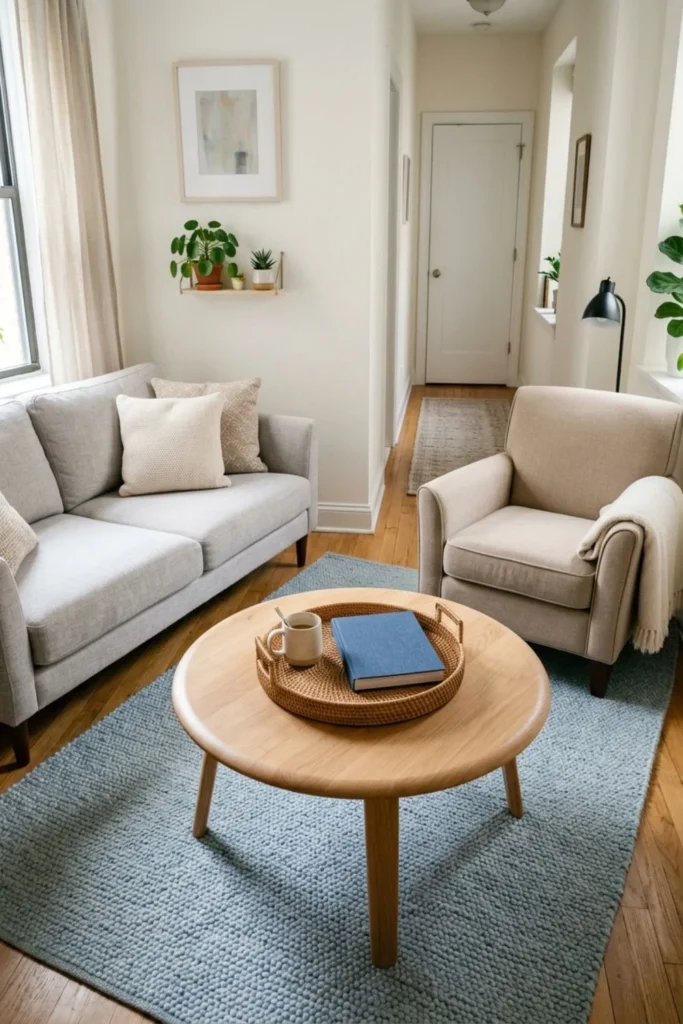
A round coffee table removes sharp corners from the middle of a tight seating area. It can make the route around the sofa feel smoother, especially when several doors open into the room.
Test the size with a circle of paper, string, or tape on the floor. Make sure people can reach the table from the sofa without squeezing past it. A table that is too small may look neat but fail to hold the things you use.
Nesting tables can add a second surface when guests visit. The smaller table should slide away easily without becoming another object left in the walking path.
7. Hang Curtains High and Wide
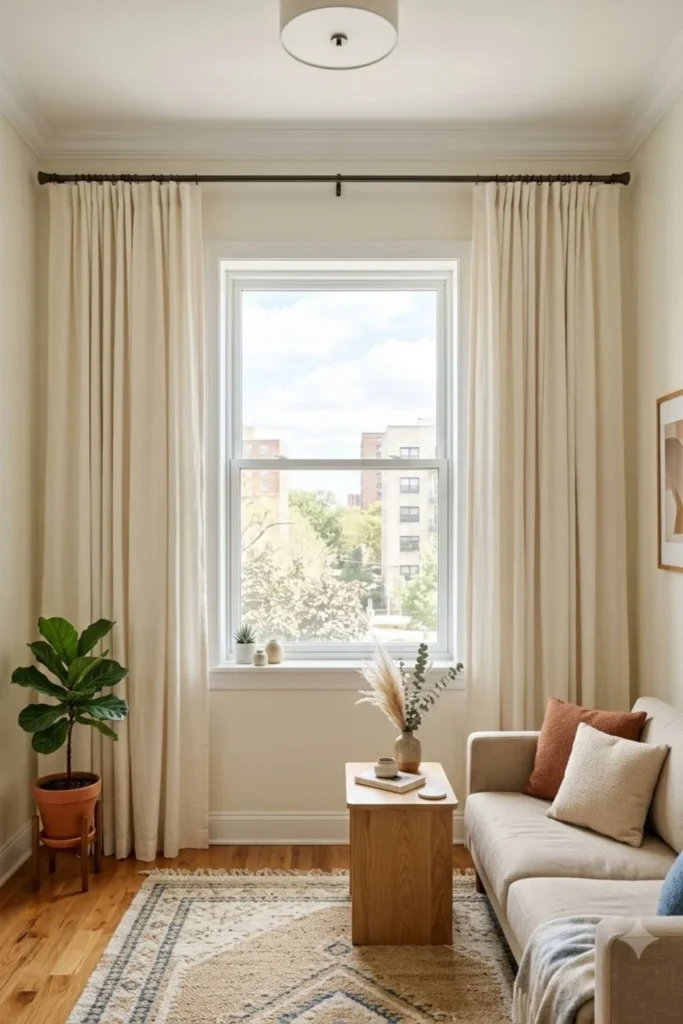
Mounting a curtain rod above the window can make the wall appear taller. Extending it beyond the frame allows open curtains to rest beside the glass, so more daylight enters.
The exact height and width depend on the wall, ceiling, and rod. Do not force a dramatic position if the fittings will be weak. Use the correct supports and check that the rod stays level.
Curtains that finish close to the floor create one long line. Fabric pooling across the floor may collect dust or become a trip risk. Keep curtains away from heaters and make sure they do not block vents.
8. Add Storage Around the TV
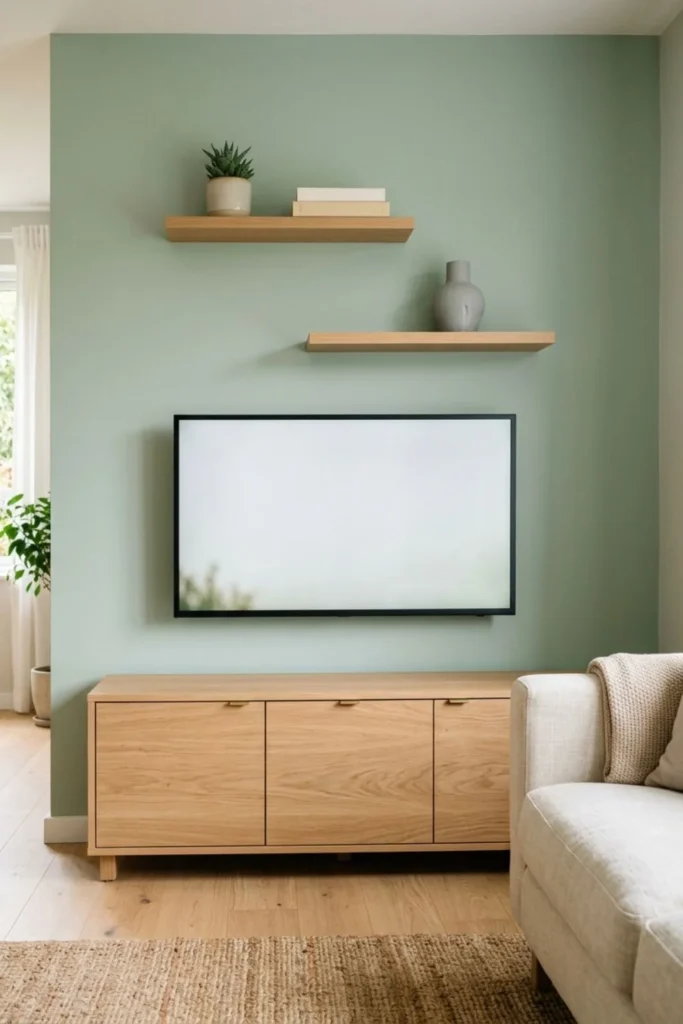
he television wall can combine entertainment and storage, but it can also become the busiest wall in the room. Start with a low cabinet that hides game controllers, devices, and other small items behind doors.
Add open shelves only when there is something useful to store. One or two short shelves with open space around them usually feel calmer than cabinets covering the full wall.
Plan the cable route before mounting anything. Keep plugs easy to reach, follow the equipment instructions, and do not trap adapters in a sealed space. A simple cable cover can look better than a complicated built-in design.
Safety matters around televisions and tall storage. The U.S. Consumer Product Safety Commission advises securing televisions and furniture such as bookcases to help prevent tip-overs. It also recommends storing heavier items lower and keeping tempting objects away from places where children may try to climb.
9. Choose a Large Rug
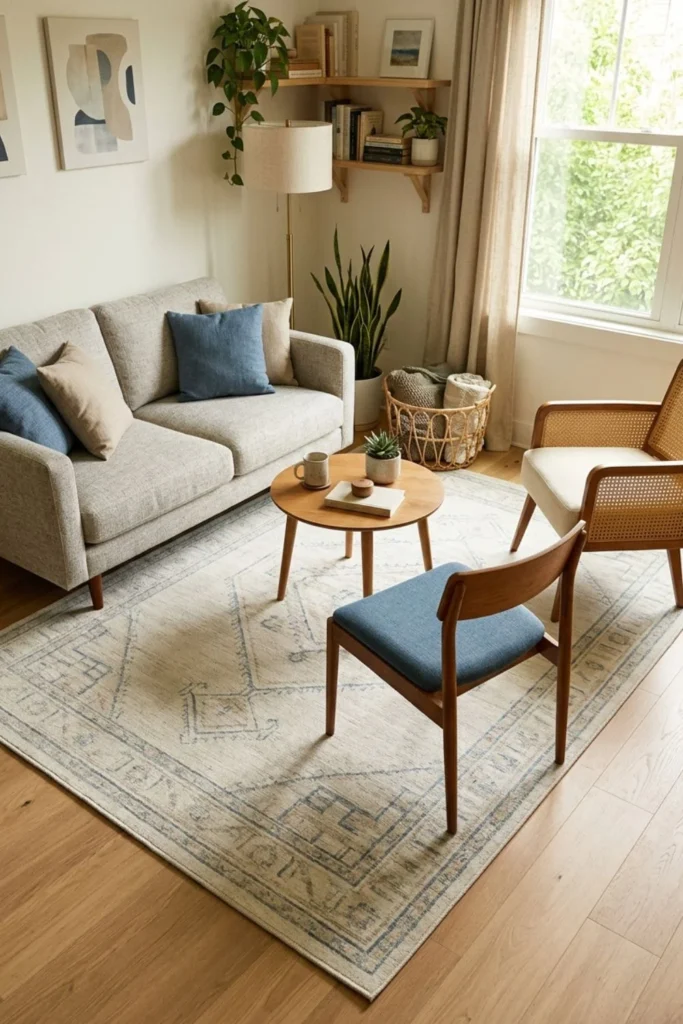
A large rug is my second top choice because it connects the seating area. A tiny rug floating below the coffee table can divide the floor into several small shapes, making the room look more broken up.
The rug does not need to cover the whole room. A useful starting point is to place at least the front legs of the sofa and main chairs on it. This makes the furniture feel like one group instead of separate islands.
Measure the seating layout after the sofa position is final. Use tape to mark the rug edges and check every nearby door. A thick rug that stops a door from opening will become a daily problem.
For busy homes, choose a low pile that is easier to vacuum and less likely to catch feet or chair legs. A non-slip pad can help the rug stay flat. Make sure the pad is suitable for the floor below it.
A soft pattern can hide normal crumbs or small marks better than a plain pale surface. The pattern should support the furniture rather than demand all the attention. I like a quiet border or faded design for this reason.
The best rug size is not automatically the biggest size sold. It should define the seating zone while leaving a sensible edge of visible floor. In an open-plan apartment, that border helps separate the living room without building a wall.
Before buying, check the return rules and final folded or rolled size. Large rugs can be awkward to carry upstairs or through a narrow hallway. Planning delivery matters here too.
10. Replace a Side Table with a Stool
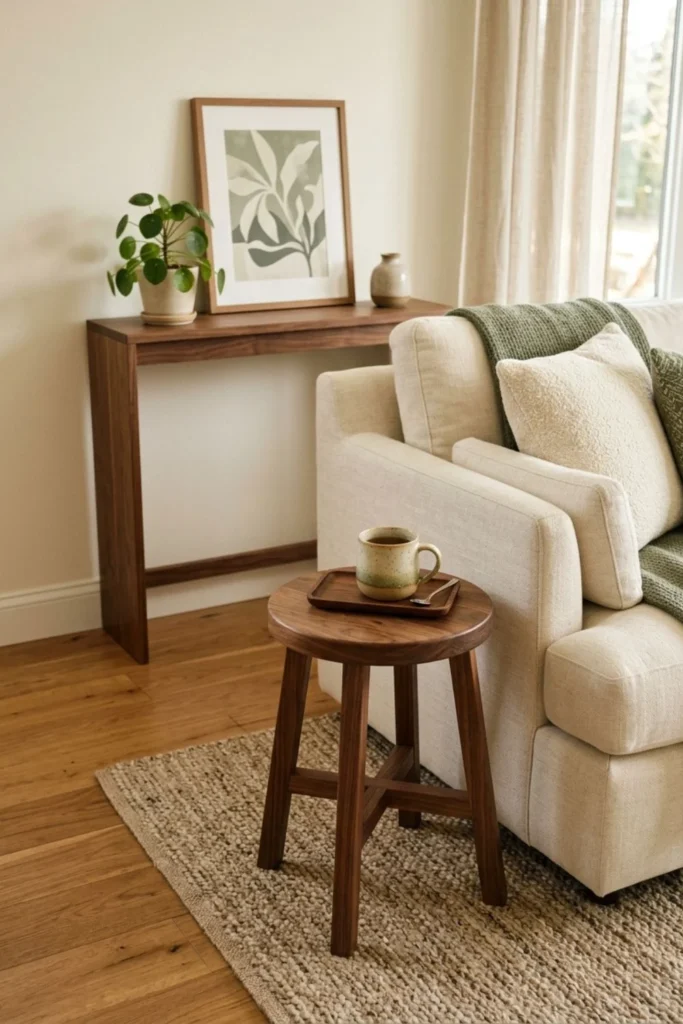
A stool can act as an extra seat, footrest, or small table, which sounds perfect for a tiny room. Still, this is one of my weaker choices because one object does not always perform three jobs equally well.
A curved or padded stool may be comfortable for feet but unsafe for a hot drink. A hard wooden stool may hold a tray well but feel uncomfortable as a seat. Choose it for the job you need most, not for a long list of possible uses.
Check the maker’s weight limit and place it on a stable floor. If cups and lamps sit beside the sofa every day, a proper side table with a wider, level top may be the safer and more useful choice.
11. Use Vertical Wall Storage
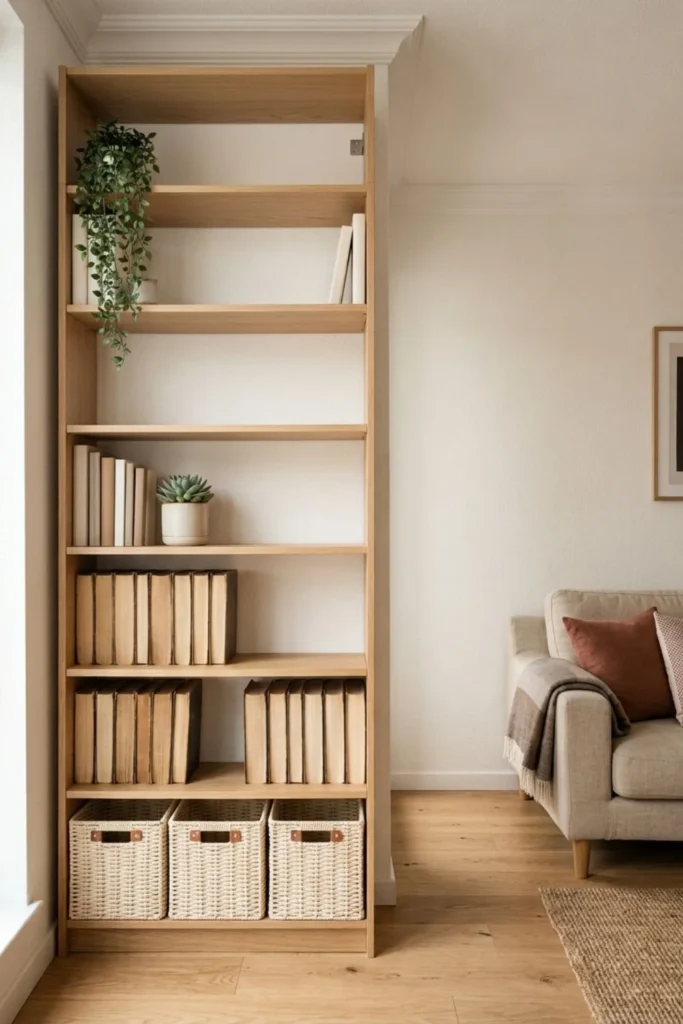
A tall narrow bookcase can hold more than a low wide unit while using less floor. Floating shelves or a wall cabinet can also move books and small items away from tables.
Keep heavier objects on the lowest shelves. Use closed boxes for cables, papers, or toys, and leave some open space above. When every shelf is full, vertical storage can make the wall feel taller but also much busier.
Secure tall furniture with the correct anti-tip method, especially where children or pets live or visit. Follow the product instructions and choose fittings made for the wall. Do not assume the small bracket supplied with another item is suitable.
12. Create Clear Zones in One Room
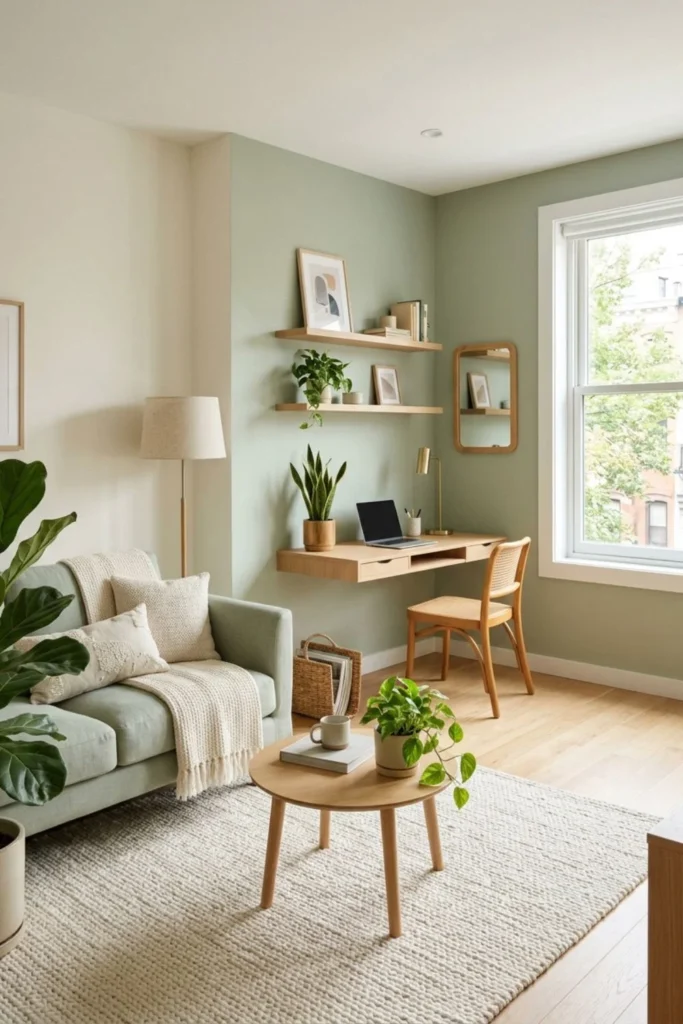
A studio or open-plan apartment may need one room for relaxing, dining, and working. Use the back of a sofa, a rug edge, or a narrow console to show where one activity ends and another begins.
Keep materials connected across the zones. The same light wood on a desk and coffee table can make two areas feel related. Repeating one color also helps the room look like a single home.
Avoid tall solid dividers unless privacy is essential. They can block light and make each side feel smaller. A low open piece creates a boundary while preserving the view.
13. Keep the Main Walking Path Open
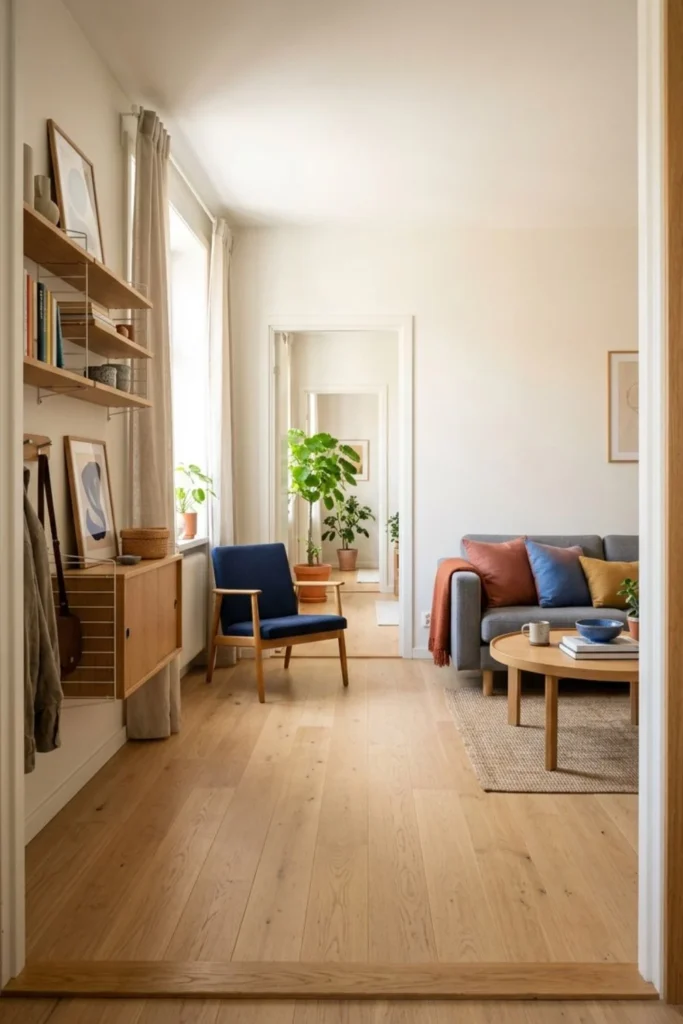
Stand at the entrance and look toward the sofa, window, and next room. The easiest route should be clear without turning sideways or stepping around a basket.
Move small objects before replacing large furniture. A plant pot, floor lamp, or side table may be causing the problem. Sometimes ten minutes of editing improves the layout more than a new purchase.
Keep cables out of the route and make sure rug edges stay flat. Round tables help where the path bends, while wall-mounted lighting may replace a floor lamp in a very tight corner.
14. Add Soft Layered Lighting
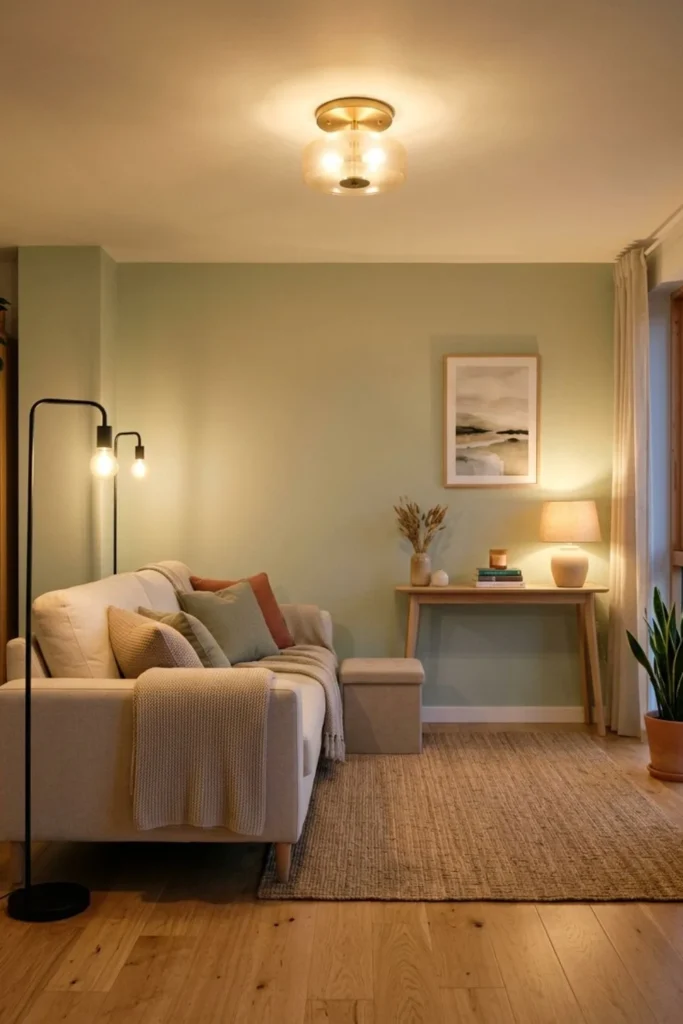
Layered lighting is my third top choice because a room can feel small even when the furniture fits. One strong ceiling bulb often leaves corners dark and puts a flat pool of light in the middle.
Use light at different heights. The ceiling fixture provides general light, a floor or table lamp brightens a seating corner, and a task lamp can support reading. You may need only two sources in a very small room.
Try to keep the bulb colors similar. Mixing a cold blue ceiling bulb with a deep orange lamp can make the room feel uneven. Warm white light usually feels comfortable in a living room, but choose a level that suits your eyes and activities.
Place lamps where they solve a real need. A floor lamp can brighten the wall behind the sofa. A small shaded lamp on a console can soften a dark corner. Do not add several lamps only because layered lighting is popular.
Plan every cord. Keep it close to the wall, away from doorways, and out of reach where needed. Never run a cable below a loose rug to hide it. Use plugs, bulbs, and extensions only as their makers direct.
Renters can use plug-in lamps, while homeowners may consider properly installed wall lights to free a table. If electrical work is required, use a qualified professional and follow local rules.
During the day, turn off the lamps and use the window when possible. In the evening, switch on only the light needed for the activity. A thoughtful lighting plan gives the room depth without adding more furniture.
15. Use Hidden Storage Furniture
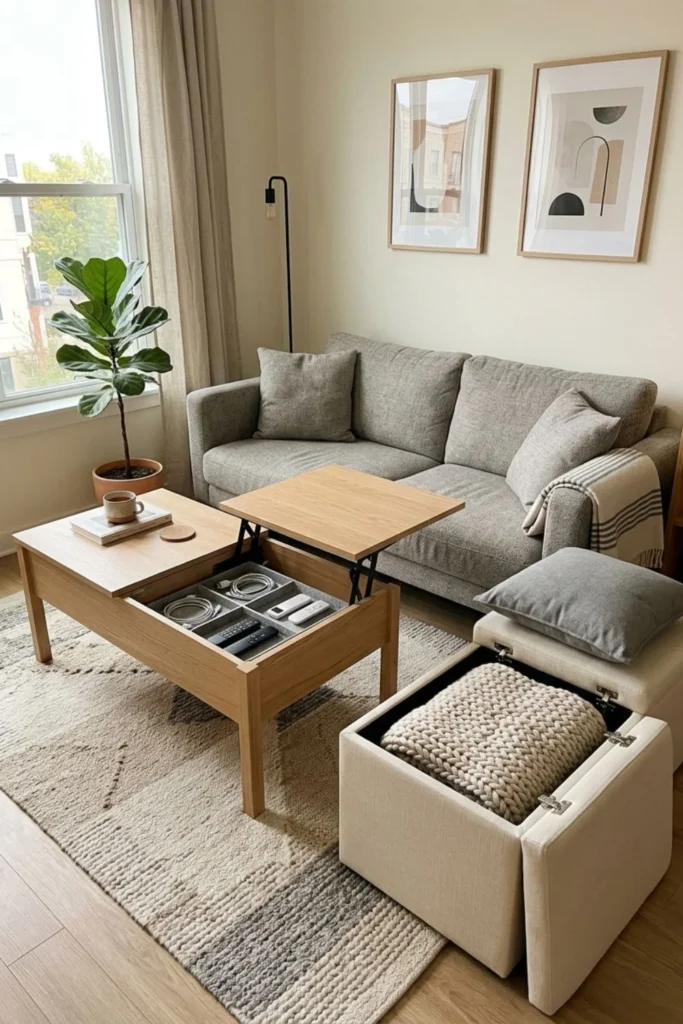
A storage ottoman or lift-top table can hide blankets, remote controls, and chargers inside something the room already needs. One good piece may remove the need for a separate basket or cabinet.
Check the hinge, lid weight, and inside depth. The lid should open and close safely, especially in a home with children. Do not buy a large storage table if its open lid blocks the sofa or television view.
Give the hidden space one purpose. A blanket compartment stays useful when it does not also hold old mail, toys, tools, and forgotten cables. Hidden clutter is still clutter.
16. Decorate with Fewer, Larger Pieces
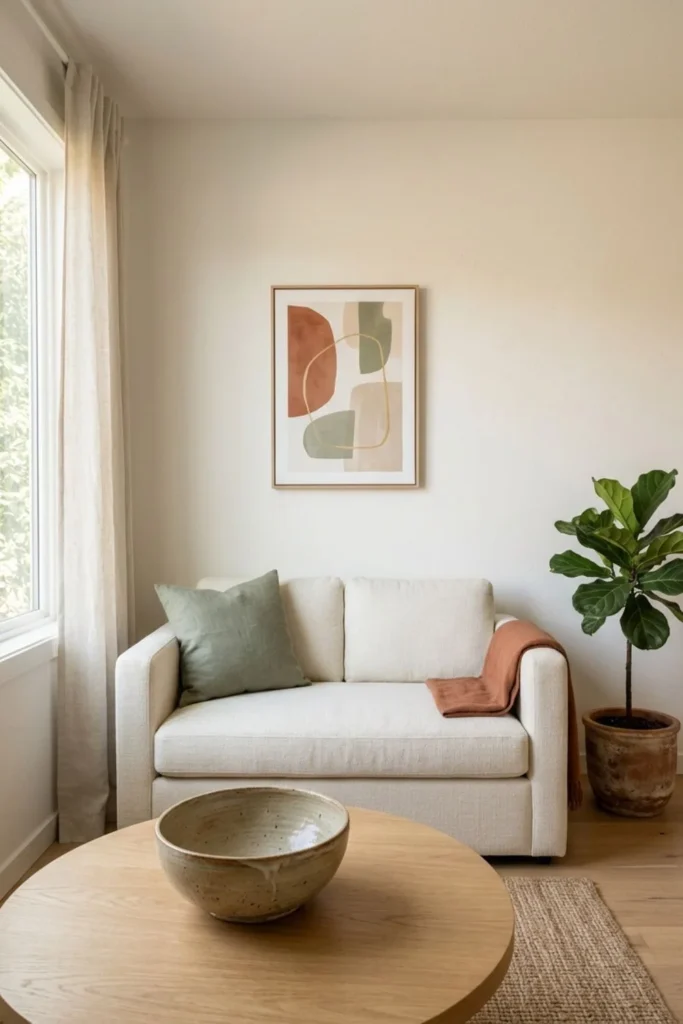
Many tiny frames, ornaments, and pots can create lots of edges for the eye to process. One medium artwork and one useful bowl may feel calmer than a full group of small decorations.
“Fewer” does not mean empty or without personality. Keep objects that carry meaning, but give them enough space to be noticed. Store or rotate the rest instead of displaying everything at once.
Match the size of art to the furniture below it. A piece that is much too small can look lost, while an oversized frame can overpower a short wall. Mark the outline with paper before making holes.
17. Add One Tall Indoor Plant
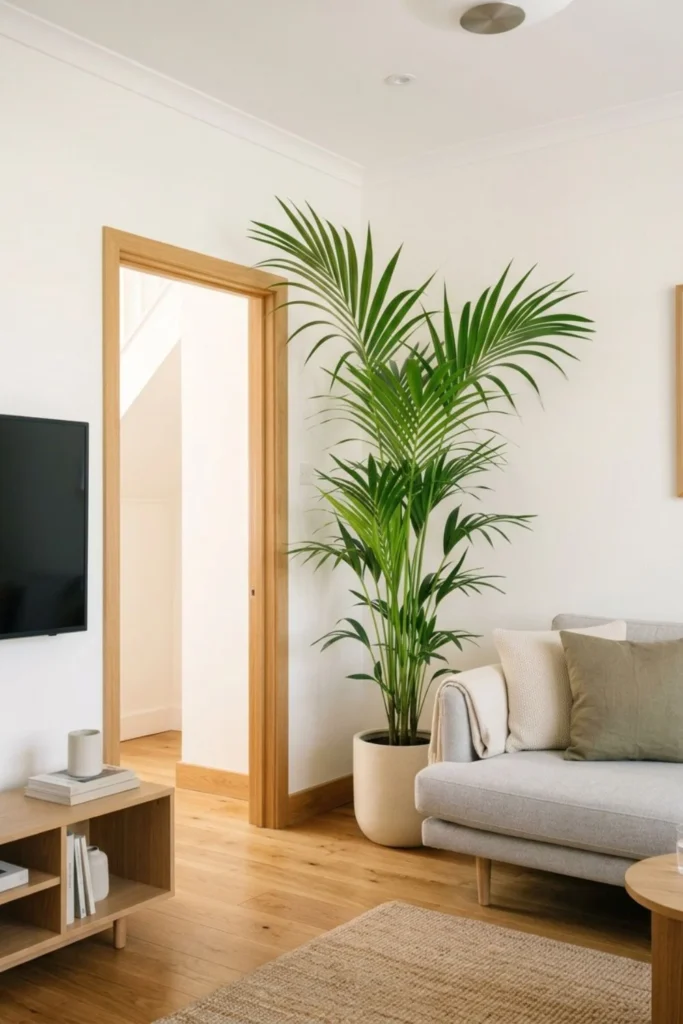
A tall plant can fill an awkward corner and draw the eye upward, but it is my second weak choice. In a truly small room, that corner may be needed for a lamp, storage, or open movement.
Choose a plant only if the room provides the right light and you want the care routine. Do not place it in a dark spot merely because the empty corner looks convenient. A struggling plant will not make the room feel fresh.
The pot needs a stable base and a tray. Keep it away from plugs, television equipment, door swings, and busy paths. Check whether the plant is safe for children and pets in the home.
18. Keep Windows Bright and Clear
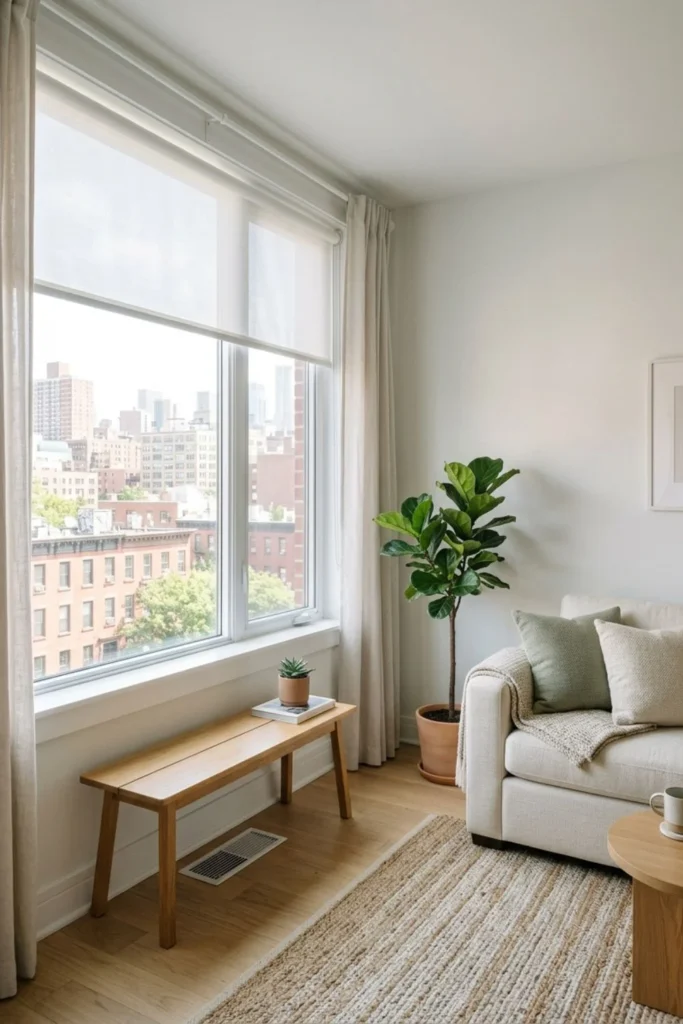
Natural light makes colors easier to see and connects the room to the view outside. Avoid placing a tall cabinet directly in front of the glass. Pull curtains fully aside when daylight and privacy allow.
Clean the window, blind, and nearby surfaces. Dust and heavy fabric can make the area look dull. A light-filtering blind can soften strong sun while still keeping the room bright.
Do not block a heater, vent, or safe exit. If a low bench sits below the window, make sure it does not prevent the window from opening or create a climbing risk.
19. Create a Calm Focal Point
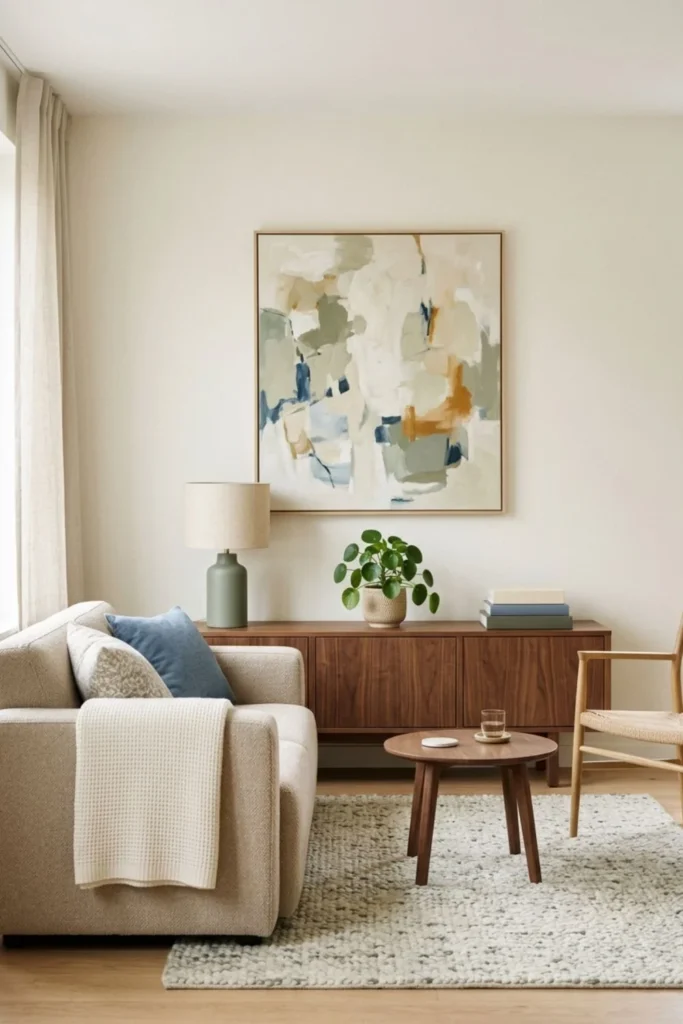
A focal point gives the eye one main place to settle. It may be the television wall, a large artwork, a window, or a low cabinet with a mirror above it.
Choose one feature rather than asking every wall to compete. Arrange the main seats so they connect with it, then keep nearby objects simple. A lamp, plant, and short book stack can be enough.
The focal point should make sense for daily life. If the family watches television every evening, pretending the screen does not exist may lead to an awkward layout. Design around the real use, then soften the area with closed storage and balanced light.
The Three Changes I Would Make First
If I could make only three changes, I would choose these:
- Fit the sofa to the room. It is the largest decision and controls the walking path, seating, rug, and table.
- Use one properly sized rug. It joins the seats into a clear zone instead of breaking the floor into small pieces.
- Layer the lighting. It gives dark corners depth and makes the room work at different times of day.
These changes are not about making a tiny home look expensive. They improve proportion, comfort, and the way the room feels from morning to evening.
Start with the sofa even if you are keeping the one you own. Test a better position. Then mark the rug size and notice where daylight fades. You may solve much of the room without buying all three items.
Two Ideas I Would Treat as Optional
A multipurpose stool and one tall plant may be useful, but they should earn their floor space.
Choose the stool when occasional guest seating matters more than a large, steady side-table surface. Keep the table if it safely holds drinks, a lamp, or daily items better.
Choose the plant when the corner has suitable light, a safe position, and someone who wants to care for it. Leave the corner open when it supports movement or makes the room feel less crowded.
Saying no to an idea is part of good small-space design. Every item adds weight to the room, even when it is beautiful.
Keep the Room Working After the Makeover
Take five minutes each evening to clear the main path, return remote controls, move cups to the kitchen, and fold the blanket. Small messes have a strong effect in a compact room.
Once a week, check the rug edges, lamp cords, and spaces below furniture. Wipe the television, mirror, tables, and plant leaves. A clean reflective surface does more for light than another decoration.
Use storage as a limit. When the media cabinet or ottoman is full, sort it before adding a new basket. Remove items that belong in another room or are no longer used.
Do not protect the design from normal life. Add a washable throw if the sofa needs it, choose an easy-clean rug for children or pets, and keep frequently used items within reach. A room is successful when the household can relax in it.
Final Thoughts
A small living room does not need to pretend it is large. It needs furniture that fits, a safe path, enough light, and a clear place for the things used every day.
Begin with the sofa, rug, and lighting because they shape the whole room. Then decide whether storage, curtains, a mirror, or a focal point solves the next real problem. Decorative details can wait until the layout feels comfortable.
Use these small living room ideas as choices, not rules. Keep what supports your home and skip what creates more work. The result can feel open and welcoming without becoming empty or losing the objects that make it yours.
Disclosure: Some visuals are AI-assisted design concepts created for inspiration. Always confirm measurements, materials, load limits, building rules, electrical safety, furniture stability, and installation requirements for your home.
3 comments