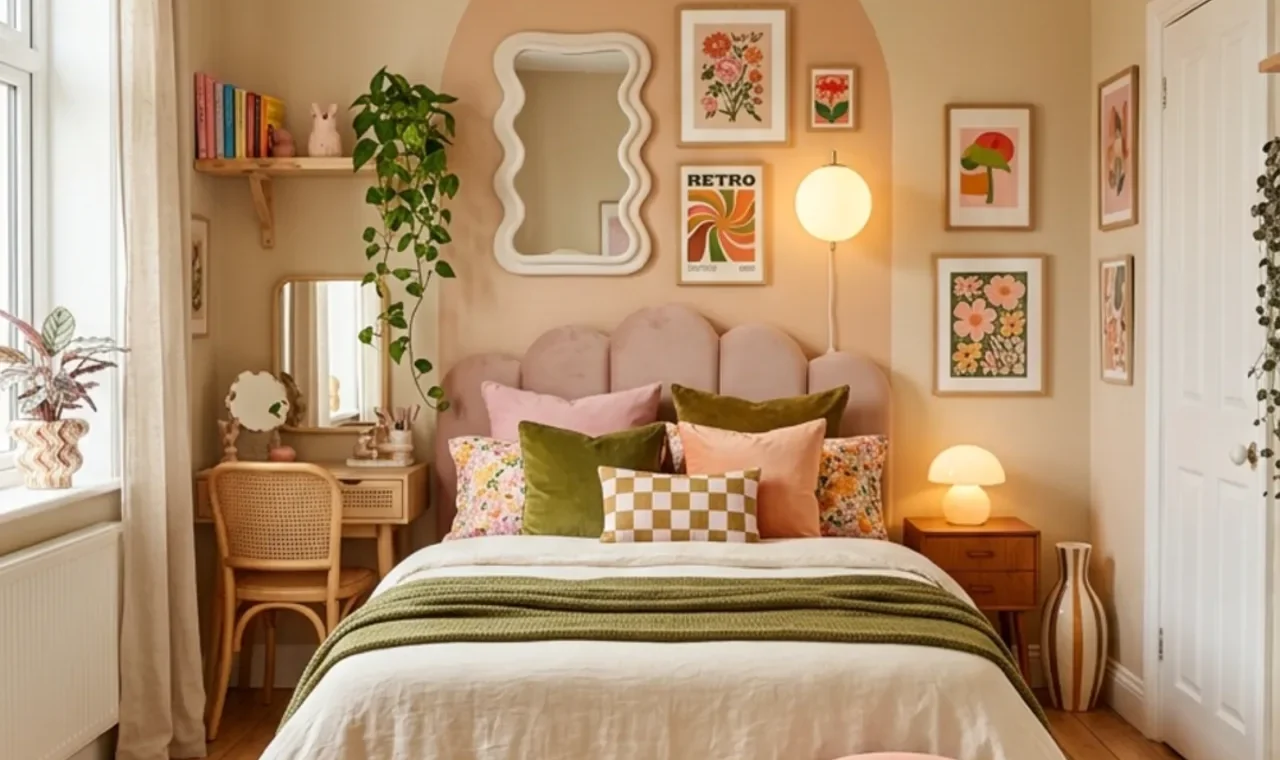
Colorful funky bedroom ideas are fun because they give you permission to use more personality than a typical neutral bedroom.
The tricky part is knowing when to stop.
A room can have a pink headboard, green nightstand, checker rug, orange lamp, wavy mirror, patterned bedding, colorful art, and a painted ceiling. But if every object is trying to be the focal point, the bedroom starts to feel noisy instead of creative.
I would build the look in layers.
Start with one main color story. Add one or two curved or unusual shapes. Then bring in pattern through a rug, bedding, or artwork. Lighting should make the colors feel warmer at night, not turn the room into a neon display.
This guide includes practical measurements, rough U.S. planning costs, simple setup steps, pros, cons, renter-friendly ideas, and full-room image prompts for every concept.
The goal is a bedroom that feels bold and playful but still works for sleeping, getting dressed, storing clothes, and moving around comfortably.
If you are working with a tighter room, Small Apartment Bedroom Ideas can help with bed scale, walkways, and storage before you start layering color.
What Makes a Bedroom Feel Funky Without Feeling Messy?
A funky room usually mixes a few things:
- bold color
- unexpected shape
- playful pattern
- vintage or retro details
- interesting lighting
- art with personality
- contrast between old and new
The room does not need all of those at once.
I would choose one strong color family, one contrasting accent color, and one neutral that gives the eye somewhere to rest.
For example:
- cobalt + orange + cream
- olive + pink + warm white
- burgundy + mustard + oatmeal
- teal + rust + pale wood
- lilac + red + soft beige
Benjamin Moore’s color overview is useful when comparing bold colors beside warmer neutrals before you commit to paint.
Before You Decorate, Protect the Bed and Walkways
The bed still controls the room.
A queen mattress is commonly around 60 by 80 inches. A full mattress is around 54 by 75 inches.
Try to preserve around 24–30 inches of walking space on the main sides of the bed where possible.
If the room is small, I would rather use one colorful nightstand and one wall-mounted light than squeeze in two bulky tables.
Also measure:
- closet-door swing
- dresser drawers
- chair depth
- rug size
- bed-frame width
- mirror position
- outlet locations
The room should be fun to look at and still easy to live in.
1. Use a Bold Curved Headboard as the Main Statement
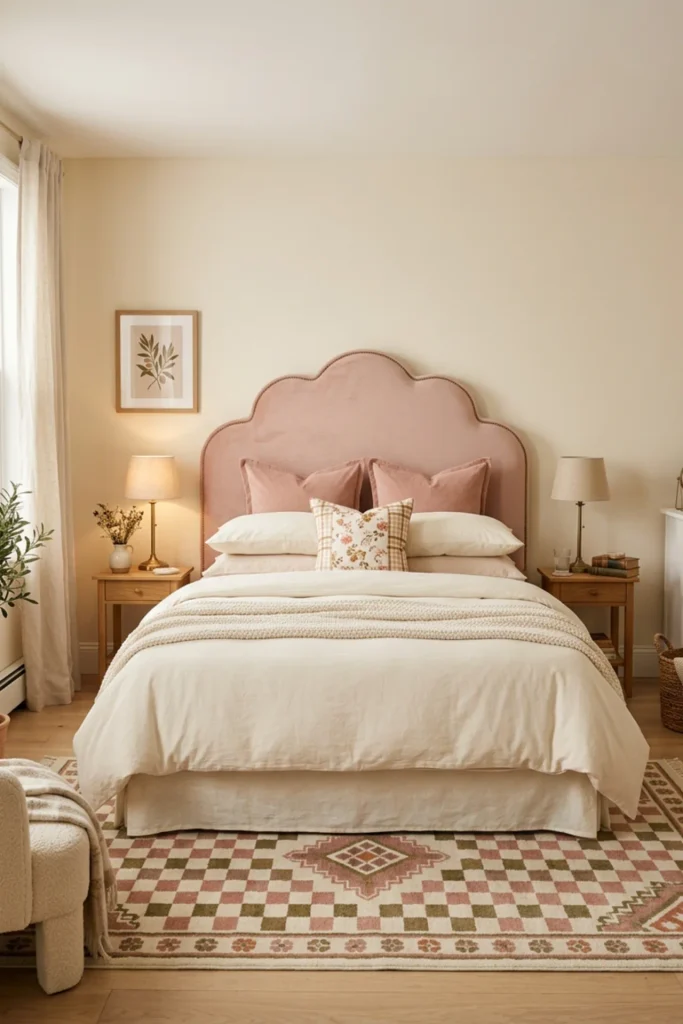
A funky bedroom does not need bold color on every wall if the bed already makes a strong statement.
A rounded, scalloped, or gently wavy upholstered headboard can carry both color and shape.
Dusty orange, cobalt, olive, berry, or pink all work.
Size and requirements: For a queen bed, a headboard around 62–68 inches wide and 48–60 inches high works in many bedrooms. Keep the depth slim if the room is tight.
Method and cost: Tape the full headboard shape on the wall before ordering. Choose upholstery that works with the bedding rather than matching it exactly. Ready-made statement headboards may cost $300–$1,500+.
Pros: Creates an instant focal point; adds curve and color together; reduces the need for extra wall decor.
Cons: Strong colors are a bigger commitment; oversized headboards can overwhelm a small room; upholstery collects dust.
2. Try a Two-Color Wall Instead of One Accent Wall
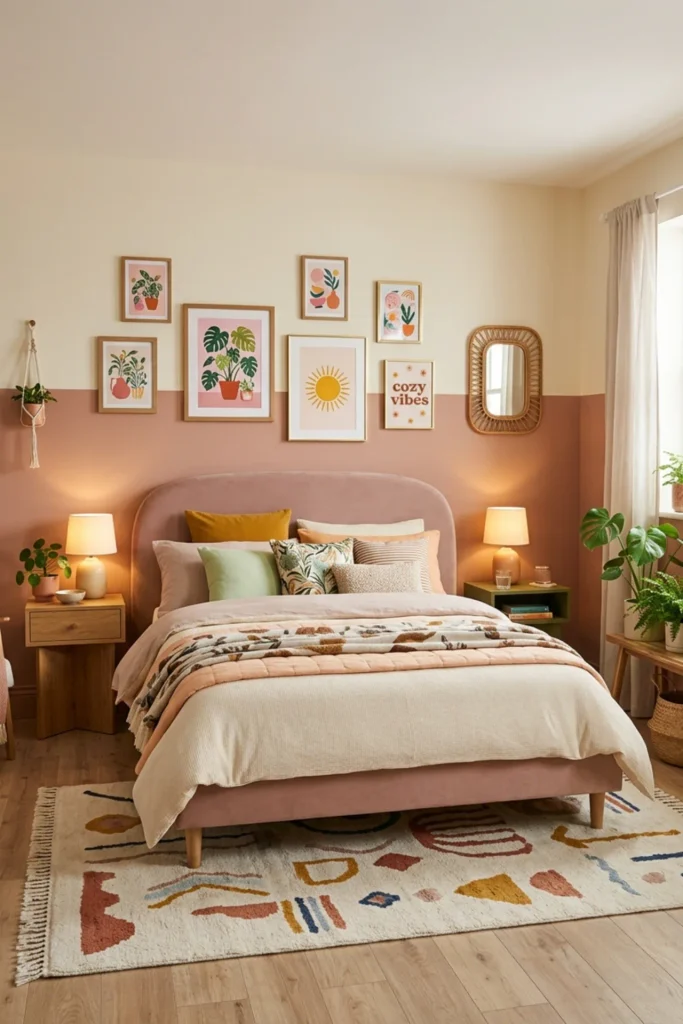
Instead of one solid accent wall, split the wall into two colors.
A horizontal half-wall or large painted block can feel more playful and less predictable.
I would keep one color softer so the combination still feels livable.
Size and requirements: A horizontal split often works around 36–48 inches from the floor, depending on furniture height. Use painter’s tape and a level for a clean line.
Method and cost: Test both colors beside the bedding before painting. DIY paint and supplies may cost $80–$250. Professional work may cost $400–$1,200+.
Pros: High visual impact; inexpensive compared with furniture; easy to customize.
Cons: Rental approval may be needed; strong contrast can shorten the wall visually; repainting may be required later.
3. Add a Checkerboard Rug in a Muted Palette
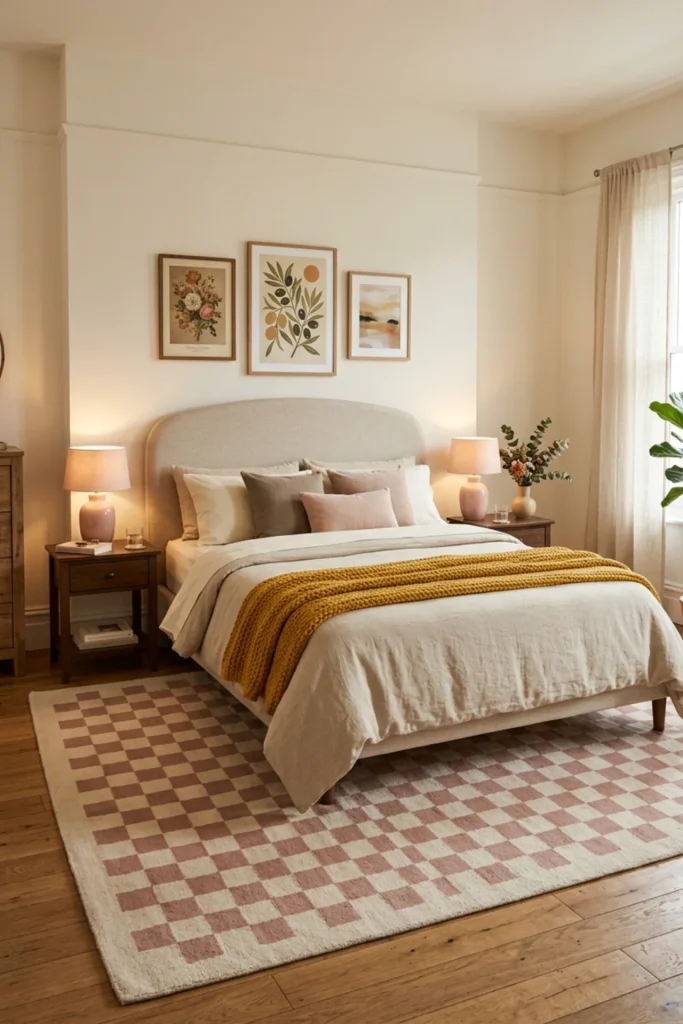
Checkerboard brings instant funky energy.
The trick is avoiding harsh black-and-white unless that is truly your palette.
Cream and rust, olive and beige, pink and burgundy, or blue and tan can feel softer.
Size and requirements: For a queen bed, an 8-by-10-foot rug is a common starting point. In smaller rooms, 6 by 9 feet can work under the lower two-thirds of the bed.
Method and cost: Tape the rug size on the floor before ordering. Keep other large patterns quieter. A good rug may cost $150–$900+.
Pros: Adds pattern without painting; makes the room feel playful; easy to change later.
Cons: Strong checks can dominate the room; pale rugs show stains; small checker rugs can make the room feel busier.
4. Use Mismatched Nightstands in Related Colors
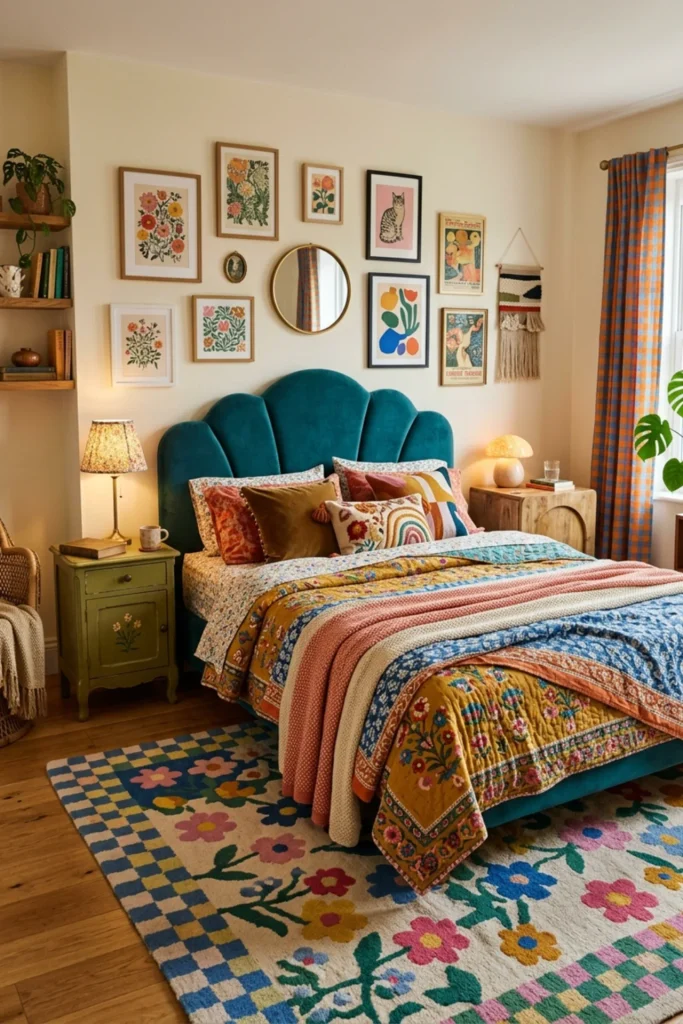
Matching nightstands are easy, but slightly mismatched tables can make the room feel more collected.
Use the same general scale but vary the color or shape.
For example, one could be olive and the other warm wood.
Size and requirements: Keep both tops close to mattress height. In small rooms, nightstands around 14–20 inches wide are often enough.
Method and cost: Match the height first, then vary color or material. A pair of budget-friendly nightstands may cost $150–$700+ total.
Pros: Adds personality; easier to use vintage pieces; makes the room feel less showroom-like.
Cons: Too much mismatch looks accidental; very different heights feel awkward; storage capacity may vary.
5. Add a Wavy Mirror Instead of a Plain Rectangle
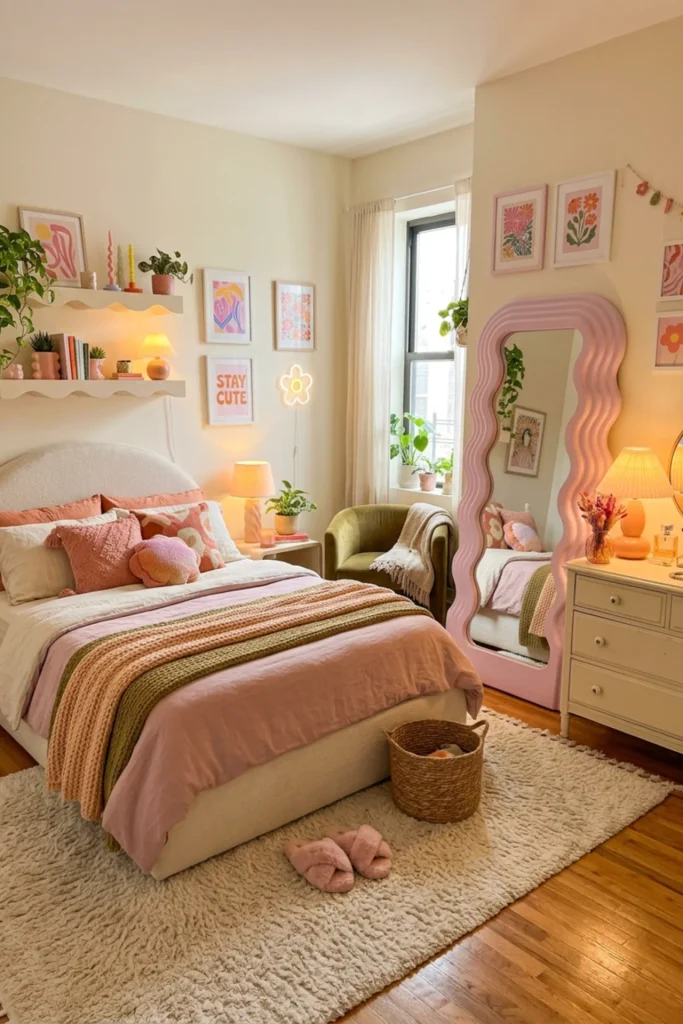
A wavy mirror adds a funky shape without using much floor space.
It works especially well when the room already has straight-lined furniture.
I would keep the frame simple if the wall color is already bold.
Size and requirements: A mirror around 24–36 inches wide works in many bedrooms. Heavy mirrors need appropriate wall fixings.
Method and cost: Tape the outline before buying and check what the mirror will reflect. A statement mirror may cost $100–$700+.
Pros: Adds shape; reflects light; creates a strong design moment without clutter.
Cons: Trend-heavy designs may date faster; heavy mirrors require secure mounting; poor placement reflects mess.
6. Use One Brightly Painted Dresser
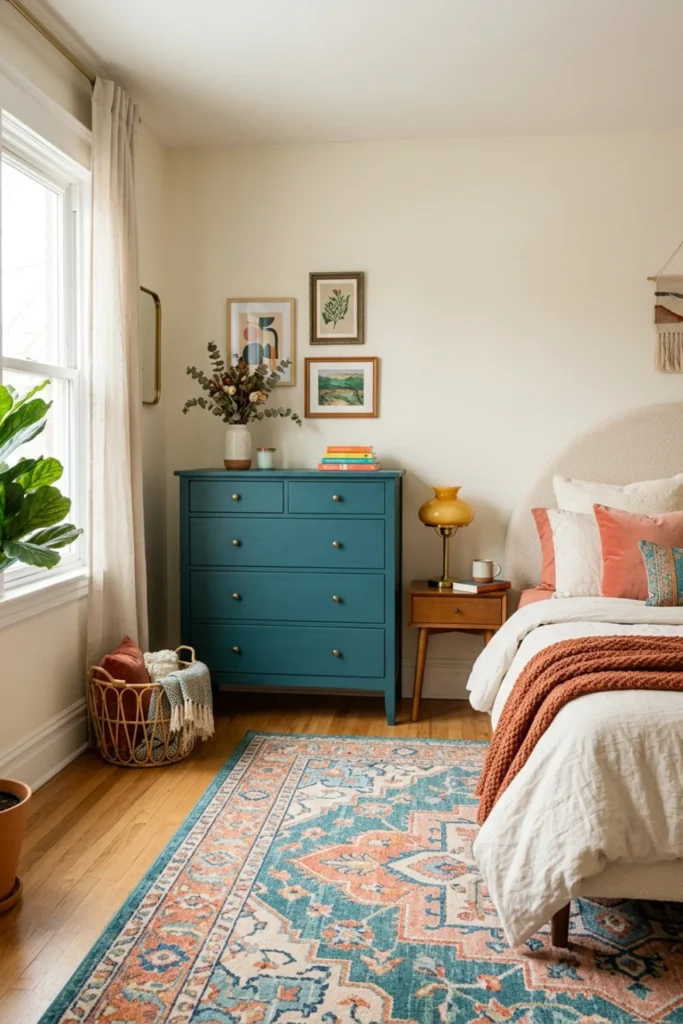
A painted dresser can bring in color without changing the whole room.
Olive, cobalt, red-orange, mustard, lilac, or deep teal can work.
I would keep the shape simple and let the paint do the work.
Size and requirements: Compact dressers around 30–42 inches wide and 16–20 inches deep work in many bedrooms. Measure drawers fully open.
Method and cost: If repainting an existing dresser, prep the surface correctly for the material. DIY supplies may cost $60–$200. A new painted dresser may cost $300–$1,500+.
Pros: Strong color impact; useful storage; can refresh secondhand furniture.
Cons: Poor prep causes peeling; large bold furniture is harder to restyle; tall units may need anchoring.
The U.S. Consumer Product Safety Commission’s Anchor It! guidance is useful for general furniture tip-over safety.
7. Use Colorful Bedding With One Dominant Pattern
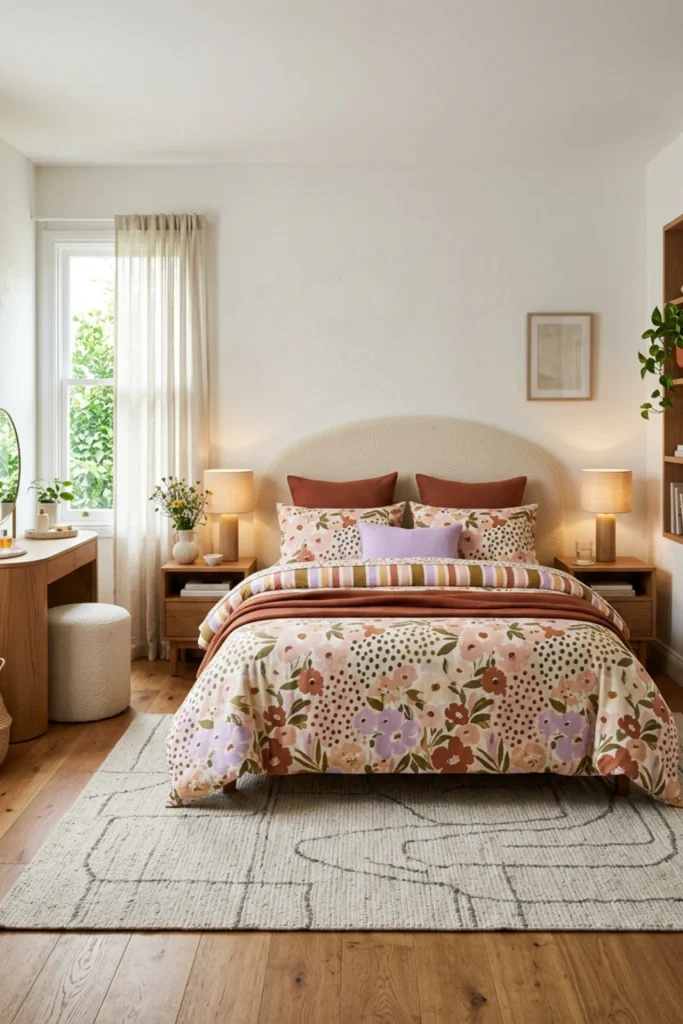
Patterned bedding can make the whole room feel funky without adding more furniture.
Choose one main pattern: stripe, floral, abstract, checker, or geometric.
Then keep the throw and rug more controlled.
Size and requirements: Buy bedding sized for the actual mattress and frame. For a queen bed, check the duvet dimensions rather than relying only on the label.
Method and cost: Start with the duvet or quilt, then pull two smaller colors from it for accessories. Bedding may cost around $120–$600+.
Pros: Easy to change; adds several colors at once; renter-friendly.
Cons: Strong patterns can fight with rugs and art; trendy prints may date; too many pillows make the bed less usable.
8. Add a Retro Globe or Mushroom Lamp
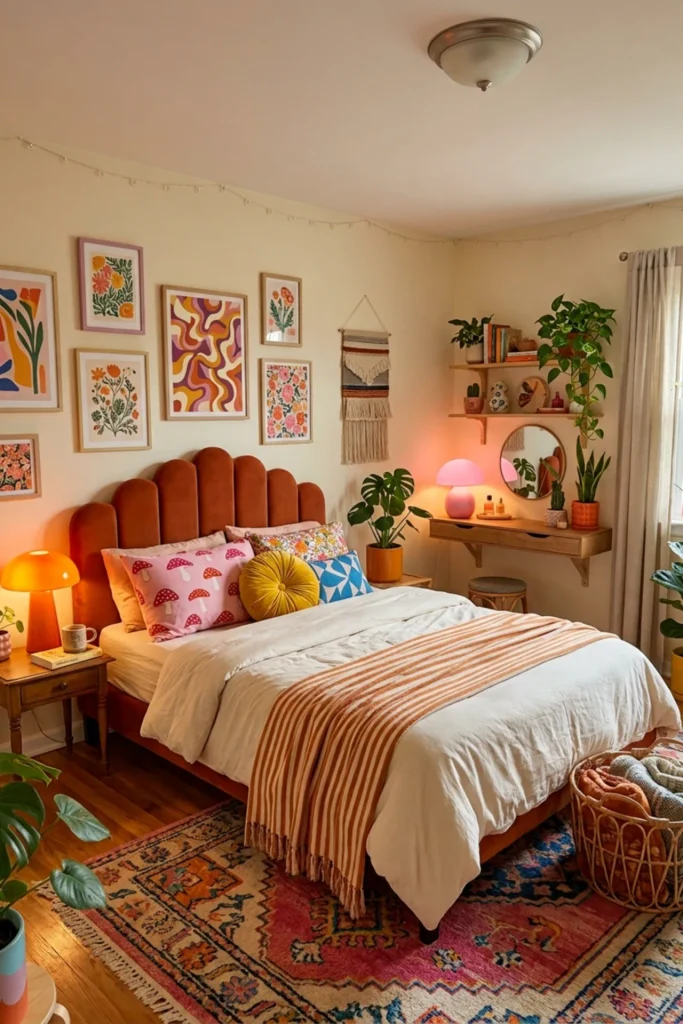
A sculptural lamp can add shape, light, and color in one object.
A mushroom lamp, opal globe, ceramic dome, or glossy retro base works well.
I would use one or two strong lamps instead of many small novelty lights.
Size and requirements: Bedside lamps around 18–26 inches high work in many setups. Keep the base small enough that the nightstand still has usable surface.
Method and cost: Use warm bulbs around 2700K–3000K and keep bulb color consistent across the room. Lamps may cost $60–$400+.
Pros: Functional decor; adds warm evening mood; easy to move.
Cons: Trend lamps can date; glossy finishes show fingerprints; some designs give poor reading light.
ENERGY STAR’s LED lighting guidance is useful when comparing efficient bulb options and light quality.
9. Paint the Ceiling a Soft Funky Color
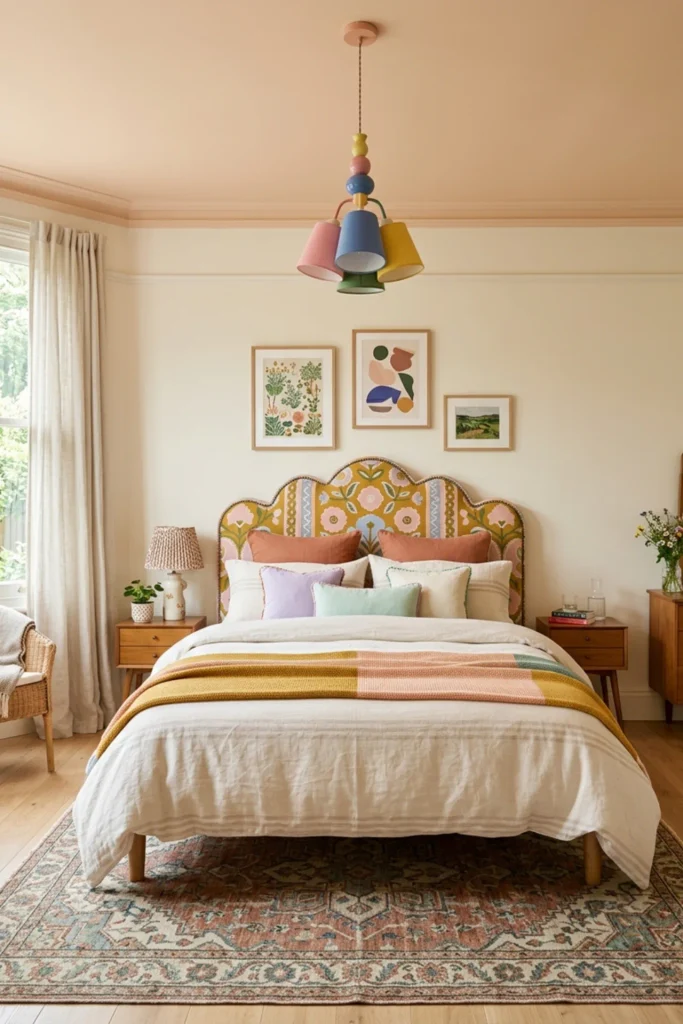
The ceiling is an unexpected place to add color.
Soft peach, pale lilac, muted sky blue, olive-gray, or warm pink can make the room feel more designed without adding another object.
I would keep the ceiling color softer than the main wall color.
Size and requirements: Test a large sample because ceiling color changes under both natural and artificial light. Use a paint product appropriate for the room and existing surface.
Method and cost: Paint only if the lease allows it. DIY supplies may cost $80–$250. Professional painting may cost $400–$1,000+.
Pros: Adds personality without using floor space; makes the room feel unique; easy to coordinate with bedding.
Cons: Dark ceiling colors can make the room feel lower; rental approval may be required; repainting later takes work.
10. Create a Small Funky Gallery Wall
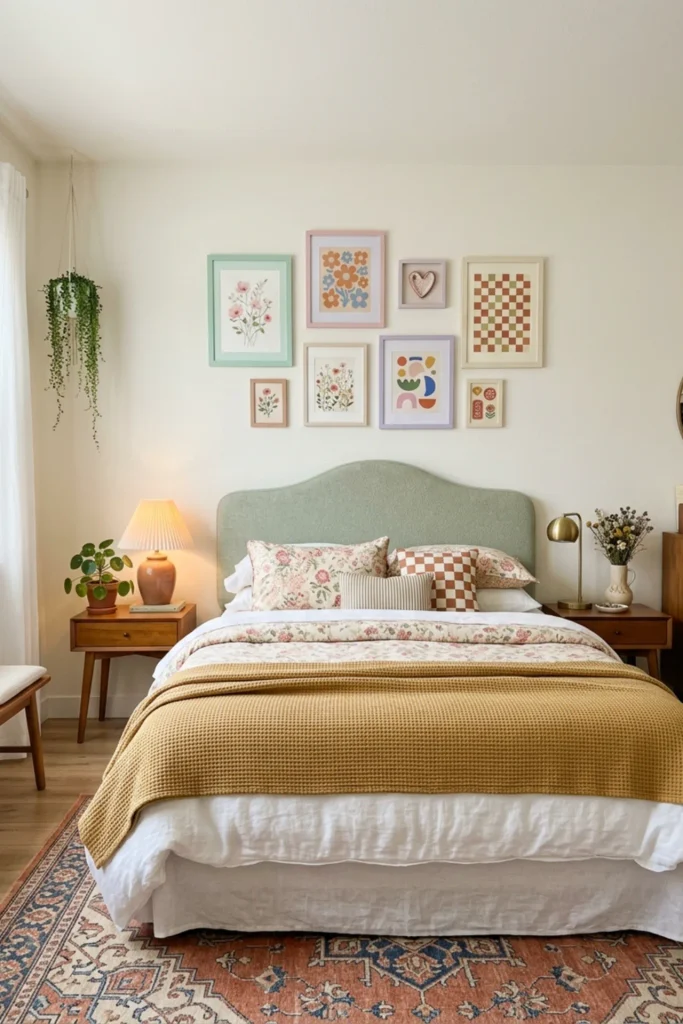
A gallery wall works best when it feels edited.
Mix art, photography, graphic prints, and one unusual shape, but keep the frame colors controlled.
I would use fewer, larger pieces rather than a wall full of tiny prints.
Size and requirements: Keep the group around 60%–75% of the furniture width below it when placed over a dresser or bed. Maintain roughly 2–3 inches between frames.
Method and cost: Lay the arrangement on the floor first or tape paper templates on the wall. A small gallery wall may cost $100–$700+.
Pros: Adds personality; easy to update; works well with strong color.
Cons: Too many frames create clutter; drilling may be restricted; random sizes can look messy.
11. Add One Curved Accent Chair in a Contrasting Color
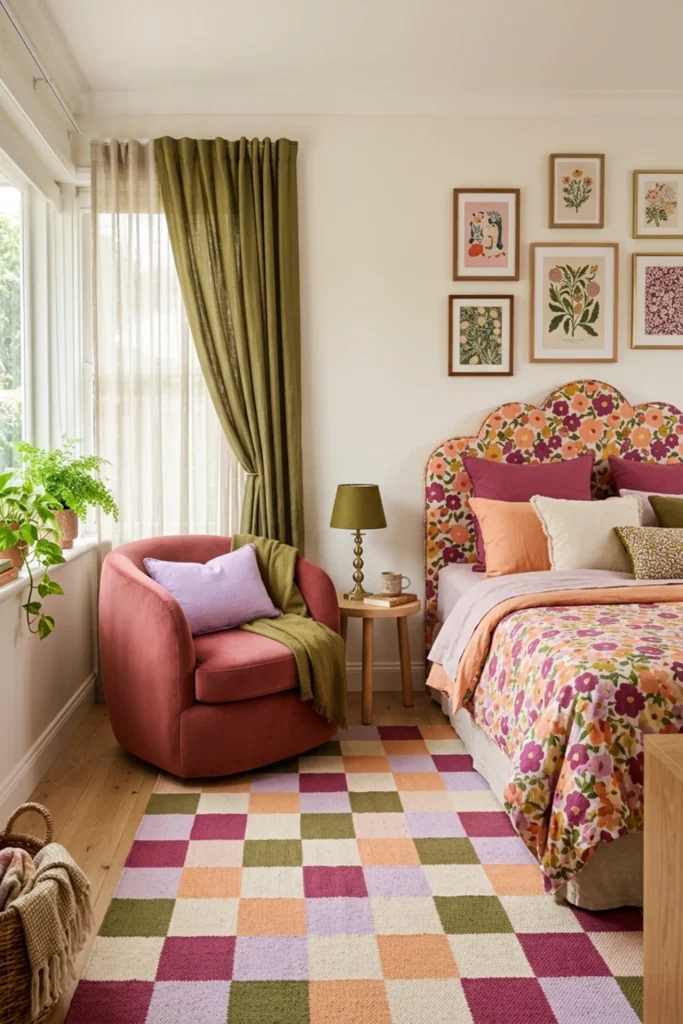
A single accent chair can create a strong color moment without touching the bed.
Choose a compact chair with rounded arms or back.
Rust, cobalt, burgundy, lime-olive, or dusty pink can all work depending on the room.
Size and requirements: Compact chairs are often around 28–34 inches wide and 30–36 inches deep. Keep the main walkway clear and make sure wardrobe doors still open.
Method and cost: Tape the footprint before buying. Use a standard chair in the corner for a day to test circulation. Accent chairs may cost $250–$1,200+.
Pros: Adds color and curve; useful seating; makes an empty corner feel intentional.
Cons: Uses valuable floor space; can become a clothes chair; cheap accent chairs may be uncomfortable.
12. Use a Stripe or Wave on the Wall Instead of Full Wallpaper
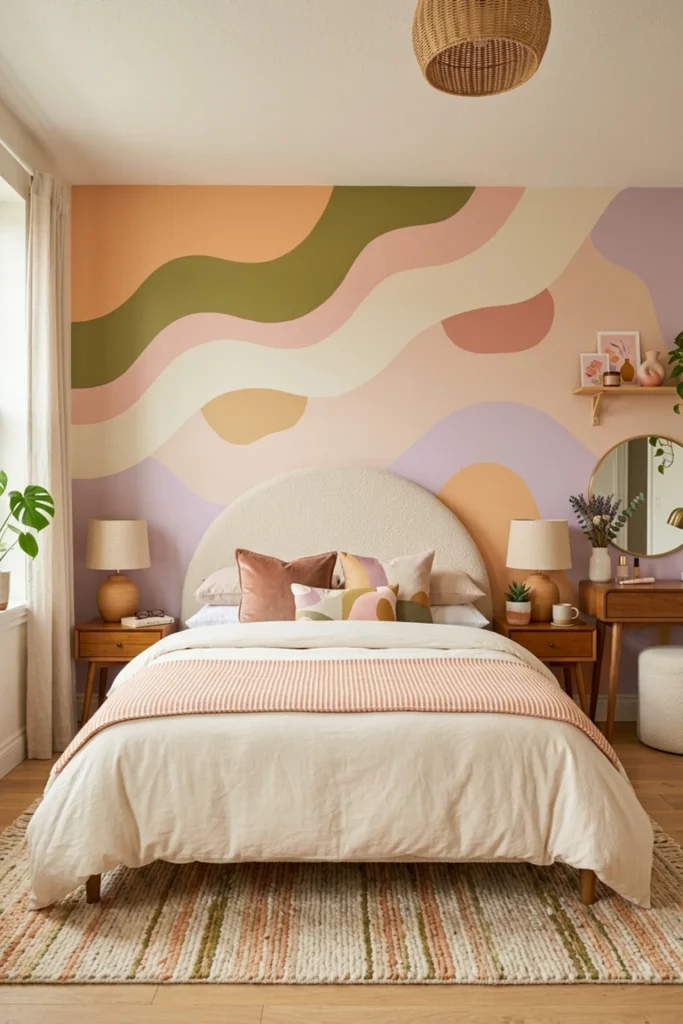
A painted stripe, arch, or wave can create a funky wall without the cost of full wallpaper.
This works well behind the bed or a desk.
I would keep the shape large and simple.
Size and requirements: Keep the graphic large enough to read from across the room. Very small waves or repeated stripes can make the wall feel busy.
Method and cost: Draw the design lightly, tape the edges where needed, and paint with one or two accent colors. DIY supplies may cost $40–$150.
Pros: Inexpensive; customizable; strong visual effect.
Cons: Harder to execute cleanly than a flat wall; rental approval may be needed; strong graphics can dominate a small room.
13. Use Colored Curtains Instead of Neutral Ones
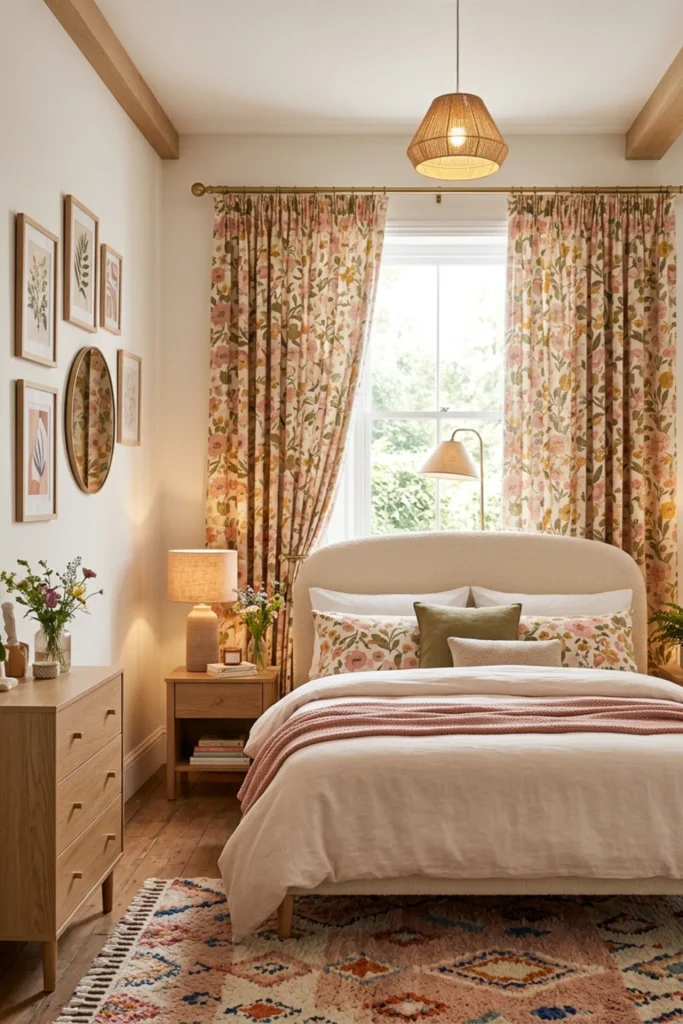
Curtains can carry color across a large vertical surface.
Muted berry, olive, ochre, dusty blue, or rust panels can change the whole room.
I would keep the bedding simpler if the curtains are strong.
Size and requirements: Mount the rod around 4–8 inches above the window and 6–12 inches beyond each side where possible. Panels should fall close to the floor.
Method and cost: Order fabric samples if possible because color changes with daylight. Curtains and hardware may cost $100–$500+ per window.
Pros: Adds color and softness; makes windows look larger; easy to replace.
Cons: Dark curtains reduce daylight; saturated fabric can fade; strong color limits future palette changes.
14. Mix One Vintage Piece With Modern Color
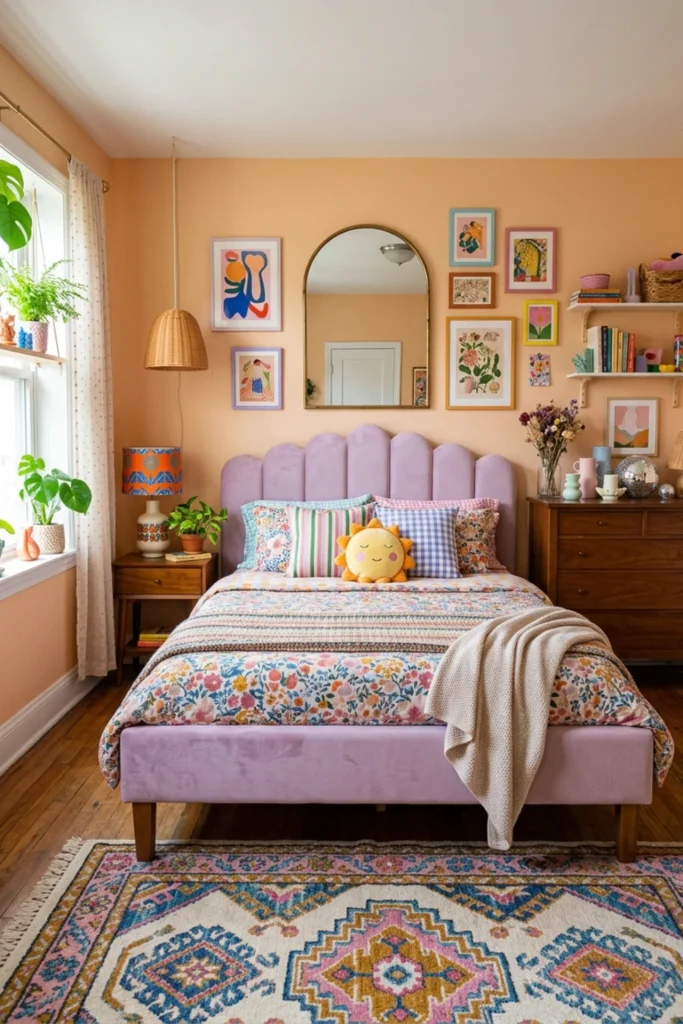
One old wood nightstand, vintage chair, brass mirror, or small cabinet can stop the room from feeling too trend-driven.
The older piece adds texture and character.
I would keep it to one or two vintage elements.
Size and requirements: Measure the exact footprint before buying. Vintage furniture often has deeper drawers, projecting feet, or unusual proportions.
Method and cost: Check secondhand pieces for stability, odor, pests, loose joints, and drawer function. Prices may range from $50–$800+.
Pros: Adds character; balances modern colors; can be affordable secondhand.
Cons: Condition varies; old finishes may need care; too many vintage pieces can make the room feel themed.
15. Use a Small Neon-Look Accent Without Turning the Room Into a Gaming Setup
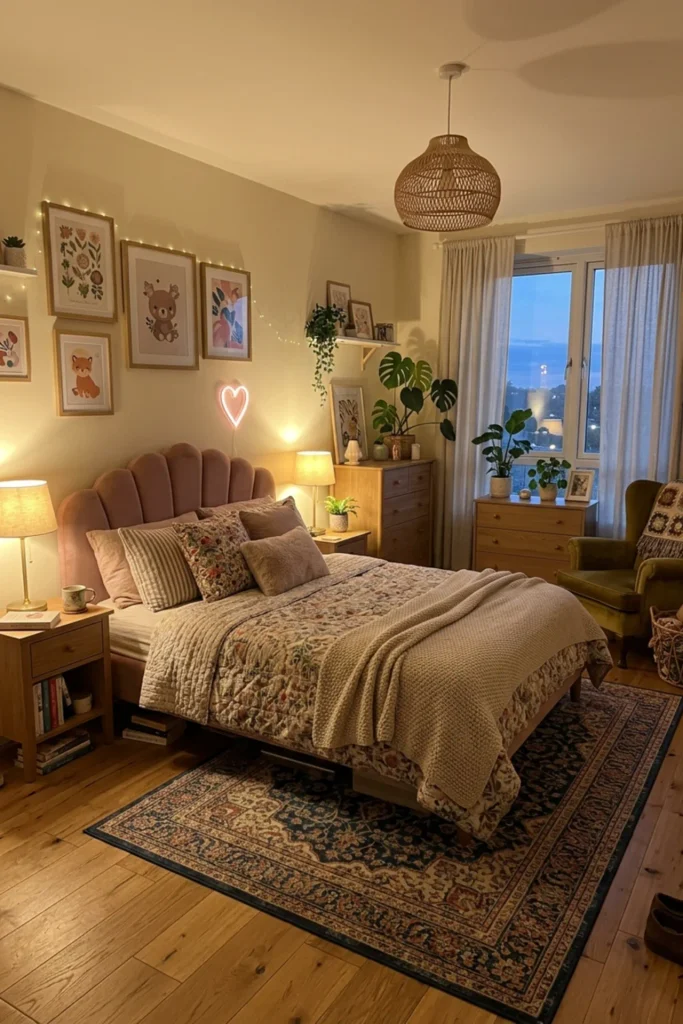
A very small neon-style light can work in a funky bedroom if it is treated like an accent.
Use it on one wall or shelf.
I would choose a warm symbol or simple shape rather than bright multicolor strips around the room.
Size and requirements: Keep the sign around 12–24 inches wide for most bedrooms. Check cord length, mounting method, and outlet position.
Method and cost: Mount according to the product instructions and route the cord neatly. Small LED neon-style signs may cost $40–$200+.
Pros: Adds personality at night; inexpensive; easy to move.
Cons: Can look juvenile if overused; visible cords reduce the effect; bright colored light can interfere with a calm sleep environment.
16. Repeat One Funky Color Three Times
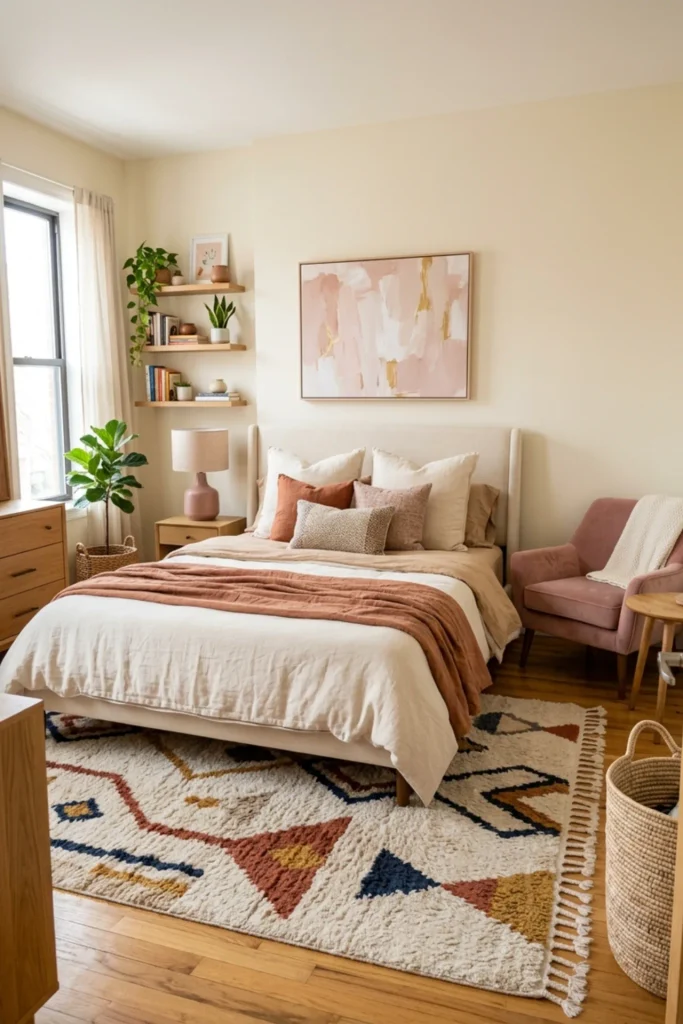
A colorful bedroom feels more intentional when one accent color repeats.
For example, cobalt might appear in the lamp, one artwork detail, and one cushion.
Three repetitions are usually enough.
Size and requirements: Keep the repeated accent to around 10%–20% of the visible palette. Let the rest of the room use softer colors and neutrals.
Method and cost: Start with the largest accent, then repeat it through two smaller items. Cost may be $20–$200.
Pros: Makes the palette feel connected; easy to adjust; prevents random color choices.
Cons: Exact matching can feel forced; too much repetition looks themed; strong colors dominate quickly.
17. Use a Funky Rug and Plain Bedding or Funky Bedding and a Plain Rug
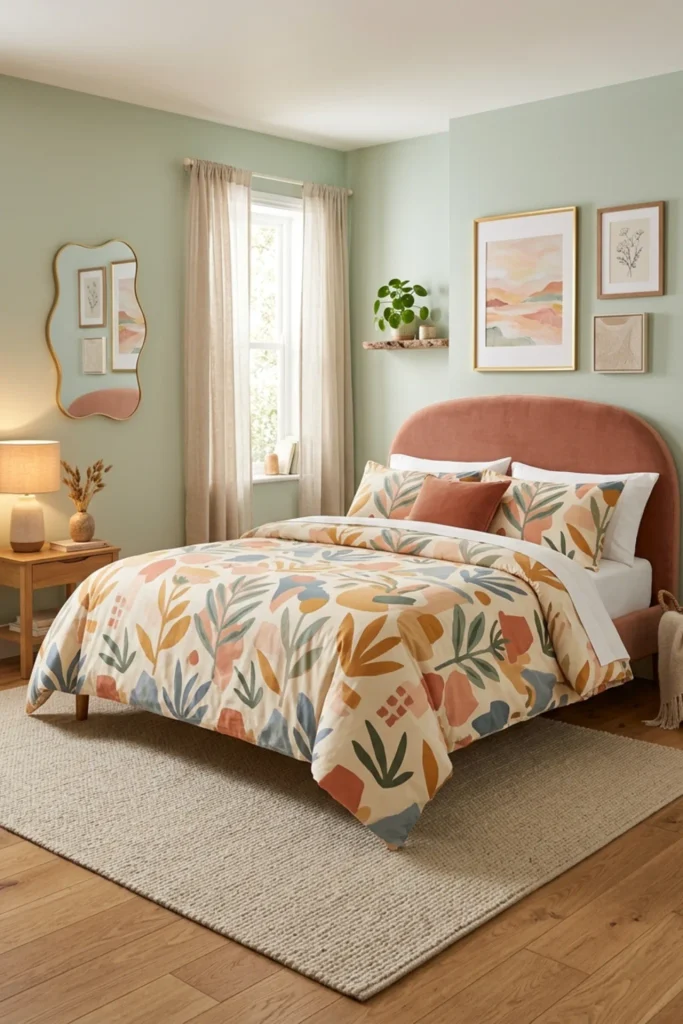
The easiest way to control pattern is to choose one major textile hero.
If the rug is checkerboard, keep the bedding quieter.
If the bedding is heavily patterned, use a more solid rug.
This simple rule keeps the room from becoming visually exhausting.
Size and requirements: Choose the rug or bedding first, then build the rest of the palette around it. Avoid two large high-contrast patterns competing across the room.
Method and cost: Photograph the room with both options before buying the second pattern. Cost depends on the chosen textile, usually $100–$900+.
Pros: Keeps the room balanced; makes bold pattern easier to live with; simpler shopping decisions.
Cons: Less maximalist; may feel too restrained if you want a very layered look.
18. Edit the Room Until the Funk Feels Intentional
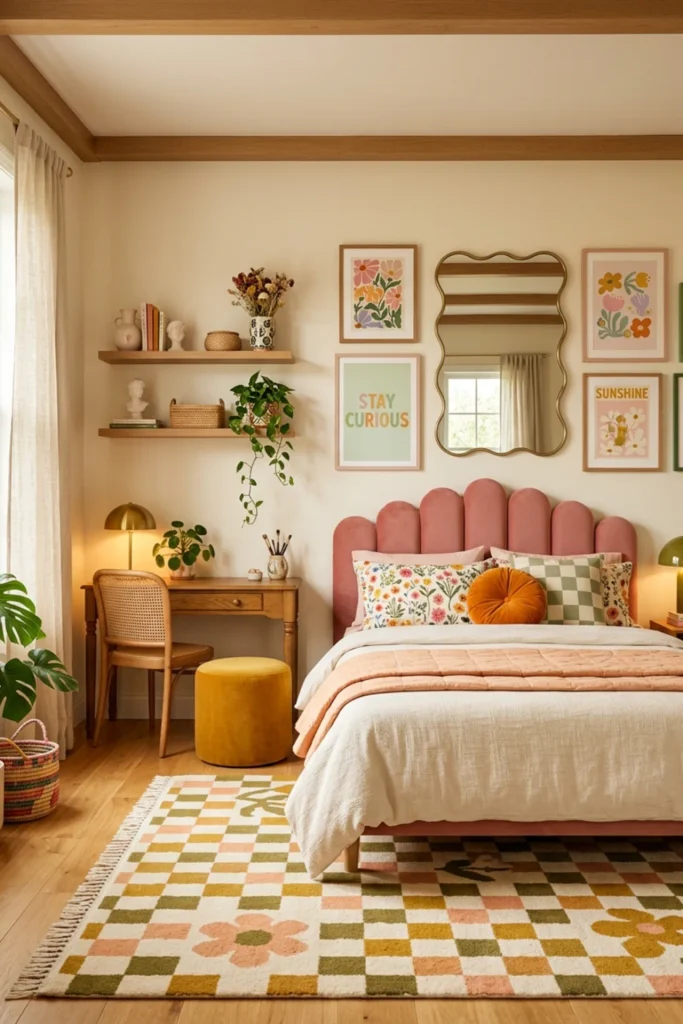
The final step is usually removing something.
If the room has a checker rug, striped bedding, wavy mirror, painted ceiling, colorful curtains, neon sign, gallery wall, bright dresser, funky lamps, and a curved chair, it may already have enough.
Let some surfaces stay quiet.
Size and requirements: Keep around 30%–40% of major surfaces visually open. Leave one or two walls mostly calm. Protect the main walking route.
Method and cost: Remove all loose decor, then add items back one at a time. Stop when the room feels energetic but still restful. Cost: $0.
Pros: Makes the strongest ideas stand out; easier cleaning; keeps the bedroom livable.
Cons: Requires editing; a room with very little texture may still need one more layer.
A Practical 10-Step Colorful Funky Bedroom Plan
If I were building the room from scratch, I would use this order:
- Measure the room and bed.
- Choose one main color story.
- Decide whether the statement will be the headboard, rug, or wall.
- Add one contrasting color.
- Choose one curved or unusual shape.
- Add warm bedside lighting.
- Choose either bold bedding or a bold rug, not both at full strength.
- Add one mirror or art wall.
- Add one vintage or retro detail.
- Remove anything that makes the room feel visually crowded.
That keeps the room playful without losing comfort.
Approximate Budget by Update Level
Low-cost refresh: $150–$700
- Bedding
- Paint
- Lamp
- Small artwork
- Mirror
- One colorful nightstand
Mid-range update: $900–$3,500
- Rug
- Headboard
- Dresser
- Curtains
- Accent chair
- Lighting
- Artwork
Full bedroom update: $3,500–$10,000+
- New bed
- Statement headboard
- Quality rug
- Dresser
- Chair
- Lighting
- Curtains
- Artwork
- Mirror
- Premium bedding
Designer furniture, original art, premium upholstery, custom curtains, and large rugs can push the total much higher.
What I Would Spend More On
I would spend more on the bed, rug, lighting, and any furniture you use every day.
I would spend less on novelty decor.
A good colorful rug and one strong lamp usually do more for the room than several small trend objects.
If the budget is limited, start with bedding, paint, and lighting. Those three changes can create most of the mood without replacing the furniture.
Common Mistakes I Would Avoid
The first mistake is trying to use every bright color in the same room.
The second is combining several large patterns at once.
Another mistake is buying a trendy wavy or sculptural piece without measuring the actual floor space.
I would also avoid relying on colored LED light as the only evening lighting. The room still needs warm usable light for reading and getting ready.
Heavy mirrors and tall dressers need appropriate wall fixing or anchoring.
Finally, keep the bedroom restful enough to sleep in. A funky room should feel energetic during the day and still comfortable at night.
Final Thoughts
Colorful funky bedroom ideas work best when the room has confidence and restraint at the same time.
Use one strong color story.
Add one playful pattern.
Choose a few curves.
Bring in warm lamps.
Mix one vintage detail with modern furniture.
Then stop before every surface starts competing.
The best funky bedroom does not look like a collection of trends. It feels personal, playful, and easy to live with.
That is what makes the color feel intentional rather than chaotic.
Disclosure: Some visuals are AI-assisted design concepts created for inspiration. Always confirm furniture dimensions, wall-fixing requirements, lighting compatibility, rental restrictions, paint requirements, product stability, manufacturer instructions, and installation requirements before making changes in your bedroom. Cost ranges are approximate U.S. planning figures and vary by location, labor, materials, shipping, and product quality.
About the Author
Ali Hamza — Founder & Editor
Hi, I’m Ali Hamza, and Styled Room Living is my personal home decor project. I don’t have a formal background in interior design. I started this website because home makeovers are something I genuinely enjoy looking at and learning about.
Most of the ideas shared here are not projects I have personally built. When I put a guide together, I try to separate an idea that only looks good in a photograph from one that could actually work in a normal bedroom. Will it fit? Is it easy to clean? Does it block the walkway? Can it be adjusted for a smaller budget? These are the questions I keep in mind while working on an article.
Some images on the website are AI-assisted design concepts used to explain an idea more clearly. They are meant for inspiration, not as exact installation plans. Please check measurements, materials, prices, weight limits, electrical details, and manufacturer instructions before trying anything in your own home.
I’m still learning as the website grows, and I know every home works differently. My purpose with Styled Room Living is simply to collect useful home ideas, explain them in plain language, and help readers find something they can adapt to their own space.
Read more about Ali Hamza →