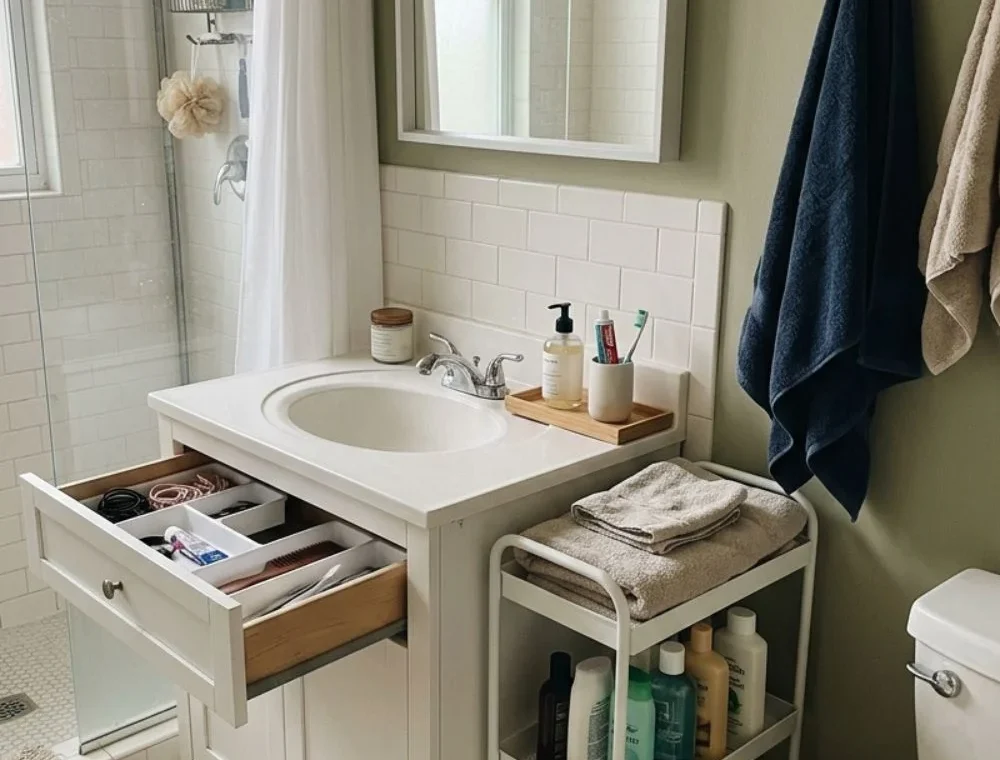
Bathroom organization ideas should remove small daily problems. You should not have to search through three drawers for a comb, move five bottles to clean the sink, or discover that you bought another refill you already owned.
The bathroom is small, but it holds many different things. Dental supplies, skin care, towels, toilet paper, cleaners, and electrical tools cannot all be stored in the same way. Water, humidity, children, and limited floor space also affect every choice.
Written and reviewed by Ali Hamza | Styled Room Living
My three strongest ideas in this guide are giving every drawer a clear job, storing cleaning supplies safely, and creating one limited refill basket. These systems improve the routine without filling the room with more open shelves.
Simple jars and labels are the two ideas I would treat more carefully. Both can look organized, yet they may create extra work or hide important information if used badly.
You do not need to copy all 17 ideas. Choose the system that fixes the most repeated problem in your bathroom, test it for a week, and then decide what comes next.
Start with the Routine, Not the Containers
Before buying organizers, notice what happens during a normal morning. Which drawer gets searched? Which products remain on the counter? Where does a wet towel land? These repeated actions show where the current system is failing.
Remove everything from one problem area, not the entire bathroom. Group the contents into daily products, backups, towels, cleaning supplies, electrical tools, and things that belong elsewhere.
Ask these questions:
- Is the item used daily, weekly, or rarely?
- Does it need to stay dry?
- Could it leak, cut, burn, or harm someone?
- Who needs to reach it?
- Is the current storage easy to open and clean?
- Do I already own more than I can use?
Check expiration dates and product instructions. Empty containers can leave, while unwanted medicine, chemicals, batteries, and electrical items need appropriate local disposal rather than a normal declutter pile.
Measure drawers, cabinet openings, plumbing, blank walls, and narrow floor gaps. Open every door before choosing new storage. A cart or basket is not helpful when it blocks the shower, toilet, or walking path.
Keep the room’s wet and dry zones in mind. Paper, spare towels, medicine, and electrical tools need more protection than shampoo or soap. Good organization respects the room instead of pretending moisture does not exist.
How to Choose a Bathroom System That Will Last
A good system is easy to understand while you are in a hurry. It should also be easy to clean when water, dust, or a spilled product reaches it.
Use four simple tests:
- Purpose: Every drawer, basket, or shelf has one clear job.
- Access: Daily items are easy to reach without moving other things.
- Safety: Water, heat, children, pets, and load limits are considered.
- Reset: Returning an item takes only a few seconds.
Try the idea with a container you already own before buying the permanent version. A small box can test a drawer zone, while removable tape can show the footprint of a cart.
1. Use a Slim Rolling Cart
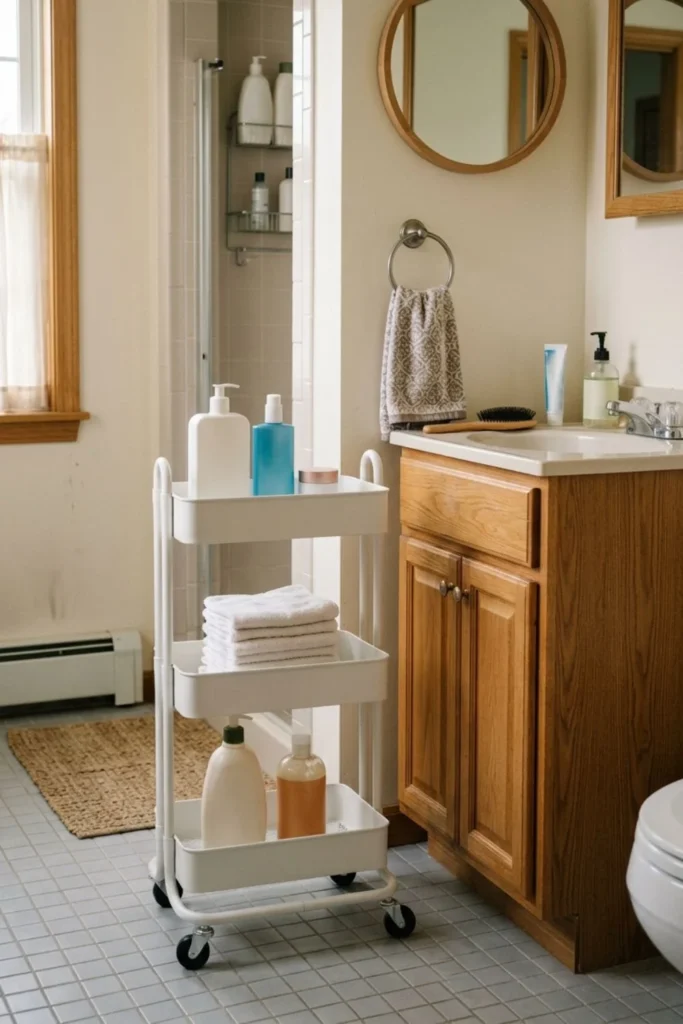
A narrow cart can provide several levels of storage without drilling. It may fit beside a vanity or along a dry wall in a rental bathroom.
Measure the full width, depth, and turning space. Product images can make a cart look slimmer than it feels beside an open bathroom door.
Choose a rust-resistant, washable design. Keep daily light products on top and heavier sealed refills lower. Lock the wheels if the cart provides that feature.
Do not place it where people have to move it whenever they use the toilet or shower. A cart that constantly blocks the path is movable clutter, not organization.
2. Add Clear Bins Under the Sink
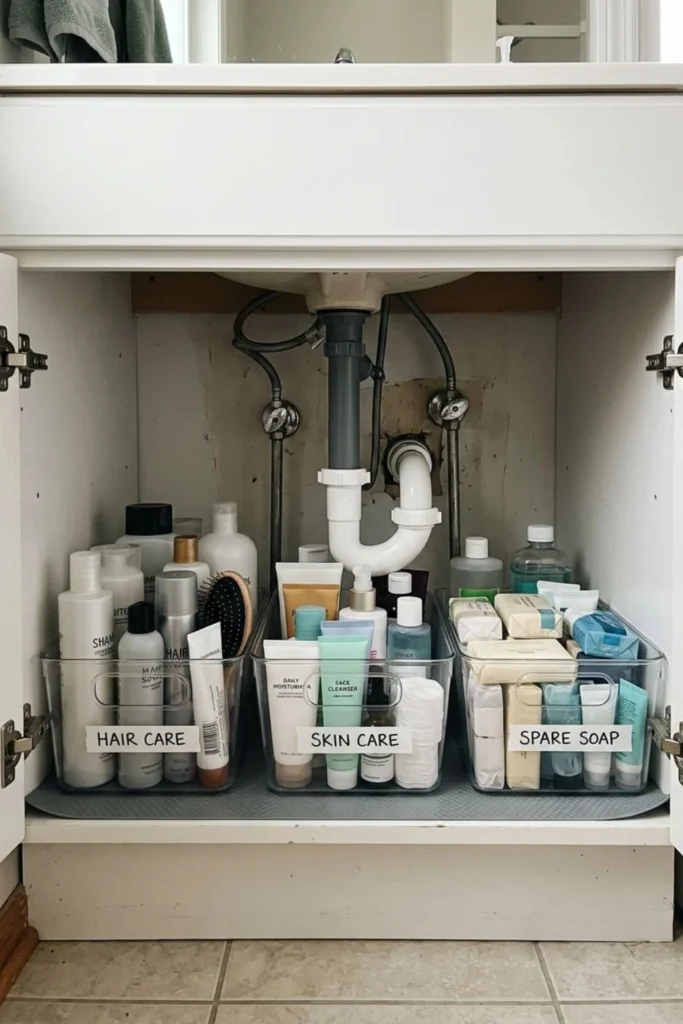
Clear bins can make supplies visible inside a dark under-sink cabinet. They work best when each bin holds one broad group rather than many unrelated products.
Remove everything and inspect the base for leaks, swelling, rust, or damp smells. Repair water problems before covering the area with containers.
Measure around pipes and valves. Use short bins on the sides and keep plumbing access open. Place a washable waterproof tray below the main storage.
Clear plastic is useful, but it will not make an overfilled cabinet easier to use. Leave room to lift each bin and check the floor beneath it.
3. Hang a Shelf Above the Toilet
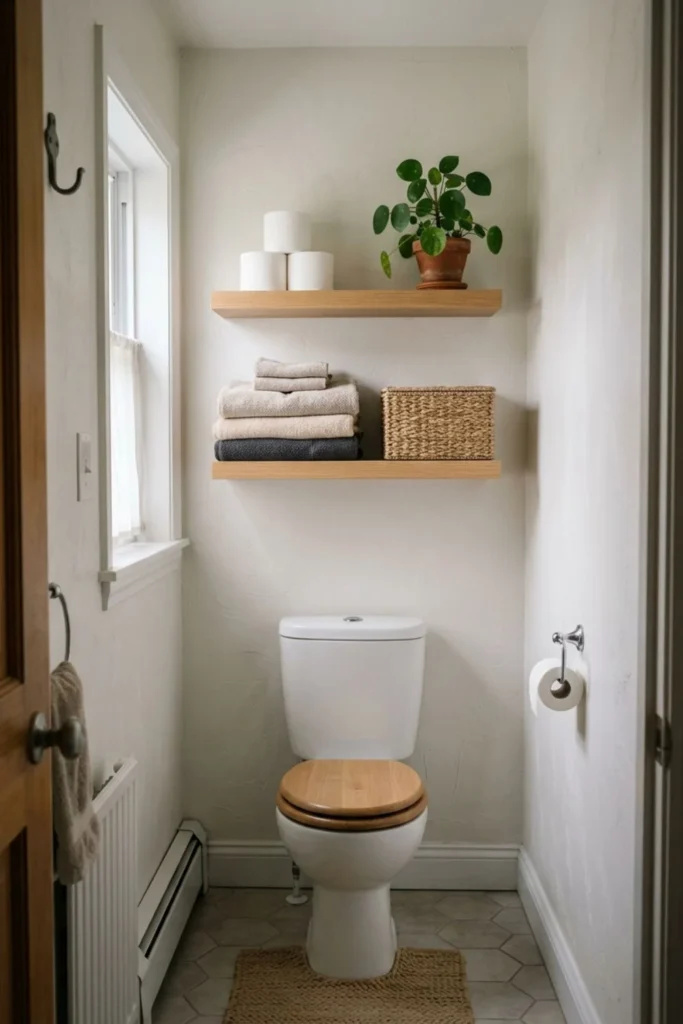
One shallow shelf can hold light supplies when wall space is limited. It should sit high enough for comfort but low enough to reach without unsafe stretching.
Keep the shelf shallow and avoid heavy bottles, glass, or loose objects that could fall. A small closed basket and a few paper rolls may be enough.
Use hardware suited to the wall and loaded weight. Do not drill until you understand what may be behind the wall.
Leave some empty space around the shelf. Filling the whole wall can make a small bathroom feel more crowded.
4. Give Every Drawer a Clear Job
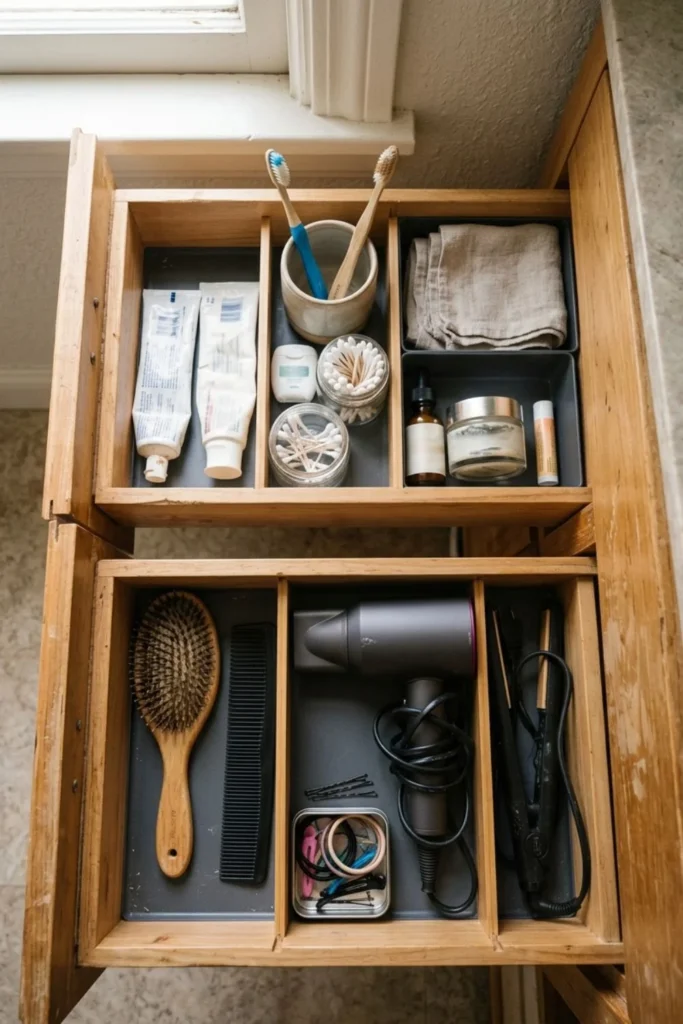
This is my first top choice because a drawer becomes easier to maintain when its purpose is obvious. “Morning care” is more useful than a drawer filled with whatever happened to fit.
Begin with the routine. One drawer might hold dental care, another hair items, and a third skin-care products. A shared bathroom may work better with one drawer or section for each person.
Keep the categories broad. Too many tiny groups create decisions every time an item is returned. The system should still work on a rushed morning.
Try this drawer plan:
- Top or easiest drawer: Products used every morning and evening
- Second drawer: Hair tools and grooming items stored safely
- Lower drawer: Clean backups or less-used supplies
- Separate locked area: Medicine, razors, and anything unsafe for children
Empty each drawer and clean it before arranging products. Return the useful items first. Duplicates can move to the refill basket, while things used in another room should leave the bathroom.
Do not use height only to decide what belongs together. A tall bottle and a small tube may serve the same routine. Grouping by use makes the drawer easier to understand.
Leave open space around items. If a drawer has to be pushed shut, it is holding too much. Remove rarely used products or move refills out before buying another divider.
Test the layout for several days. Notice what keeps landing in the wrong drawer. It may need a closer position, a larger section, or a different home.
Think about the order of the routine as well. Toothpaste should not sit behind rarely used travel items, and a brush should not require opening two containers. Place the first items you use near the front, then arrange the rest in the same order you normally need them.
In a shared bathroom, avoid giving one person all the easiest space by accident. Divide the most reachable drawer fairly or create separate sections. Children can have access to safe daily items while adult-only products remain locked or high.
This system feels personal because every household uses the bathroom differently. The best drawer plan is not the prettiest one online; it is the one everyone can reset without asking where something goes.
5. Use Drawer Dividers for Small Items
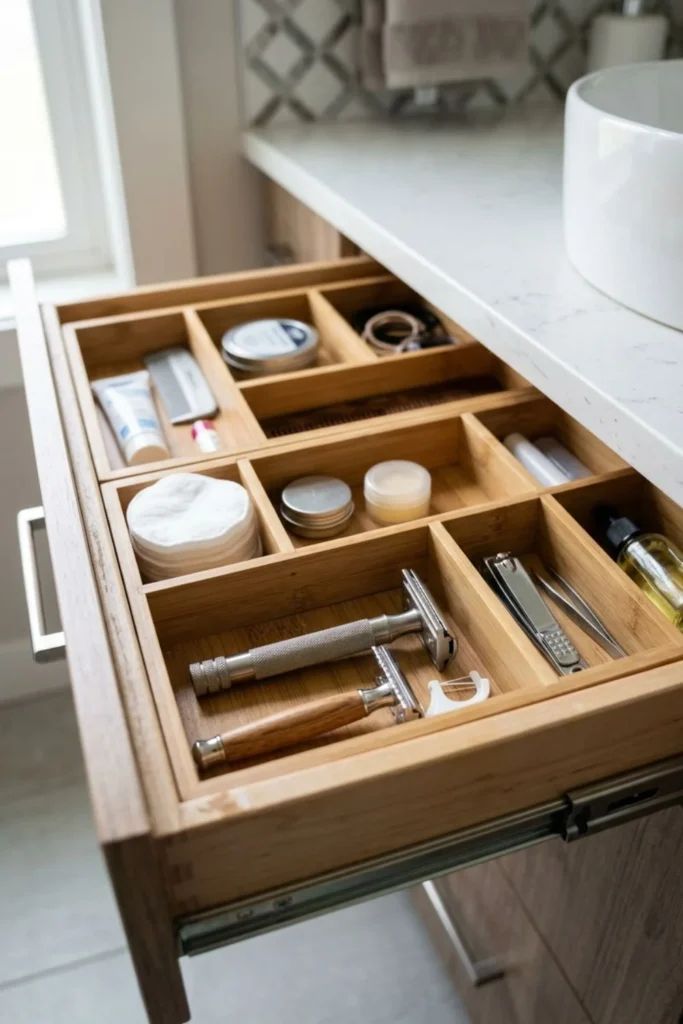
Dividers stop brushes, clips, tubes, and small tools from becoming one mixed layer. Adjustable pieces are helpful when product sizes change.
Measure the inside height as well as the width. A tall organizer can stop the drawer from closing even when its base fits.
Choose washable materials and protect sharp items. Keep only one layer visible where possible, so products do not disappear under one another.
Dividers support a clear drawer job; they do not create it. Decide the category first, then choose the smallest number of sections needed.
6. Keep Daily Products on One Tray
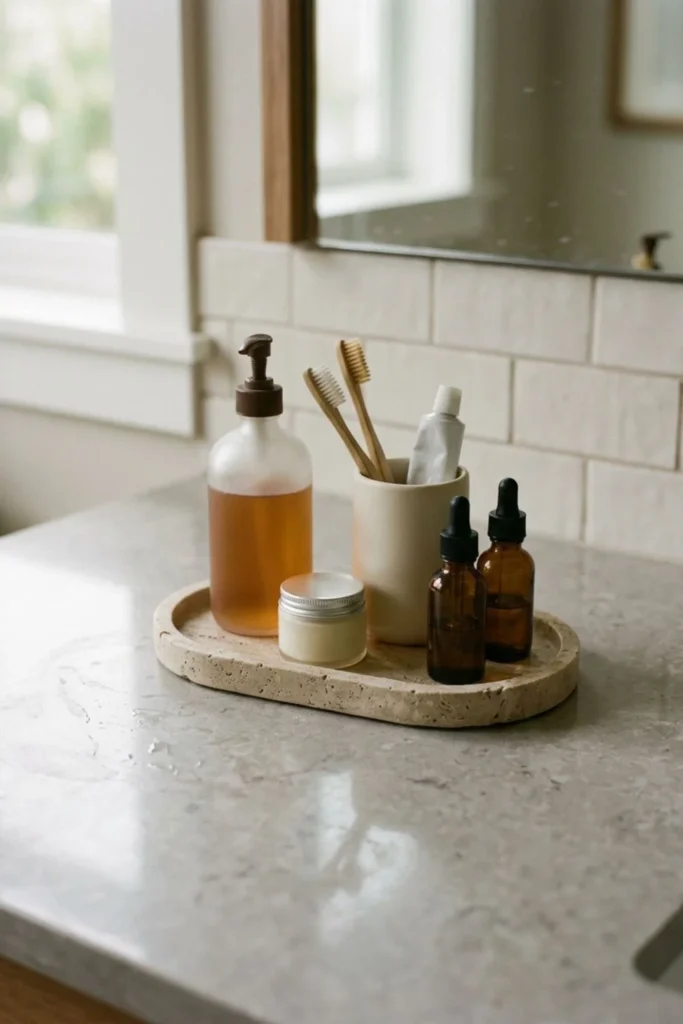
A small washable tray creates a boundary for products that must remain on the vanity. It also lets you lift the group when cleaning.
Keep only daily face care or grooming products there. Soap should sit on its own draining dish near the sink.
Leave open counter around the tray and tap. If the products spread beyond the tray, move weekly items into a drawer instead of buying a larger tray.
Lift and dry the tray regularly. Water hidden below a decorative object can leave marks or damage some counter materials.
7. Add Hooks Behind the Door
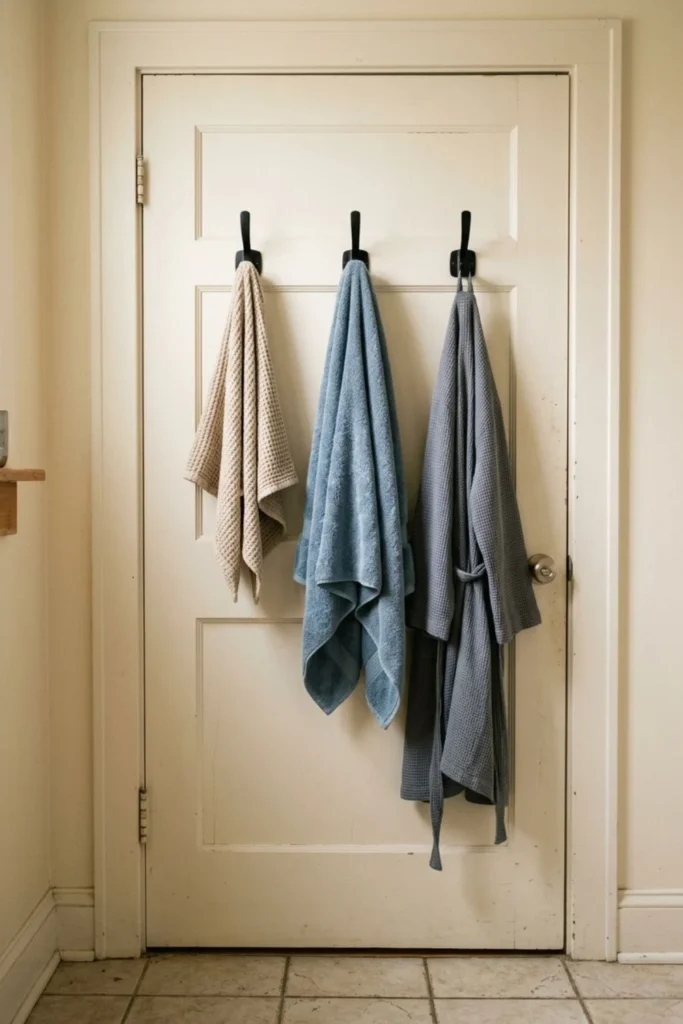
Over-door hooks can hold one robe, a dry outfit, or a light towel without using wall space. They may suit renters when the door has enough clearance.
Check the top gap and close the door gently after installing the hooks. Thick brackets can scratch the frame or stop a tight door from closing.
Do not hang several damp towels together. Fabric needs open air to dry, and a heavily loaded door can become difficult to use.
One or two useful hooks are better than a full row that becomes a second wardrobe.
8. Mount Wall Baskets for Fresh Towels
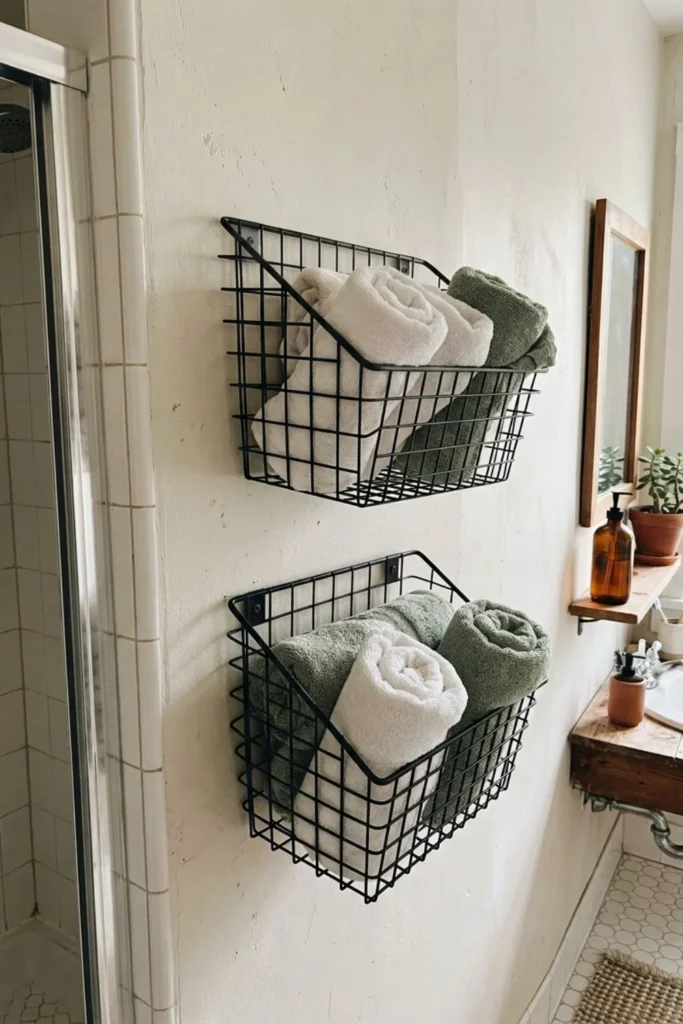
Wall baskets can hold a few fresh hand towels when there is no linen cabinet. Choose shallow baskets that do not narrow the walking path.
Keep clean fabric away from the toilet and direct splash. Store the main towel supply in a drier place if the bathroom remains humid.
Mount each basket with the correct fixings and respect its weight limit. Several thick towels can weigh more than expected.
Leave space above the basket so towels are easy to remove without pulling against the wall.
9. Use Simple Jars for Tiny Supplies
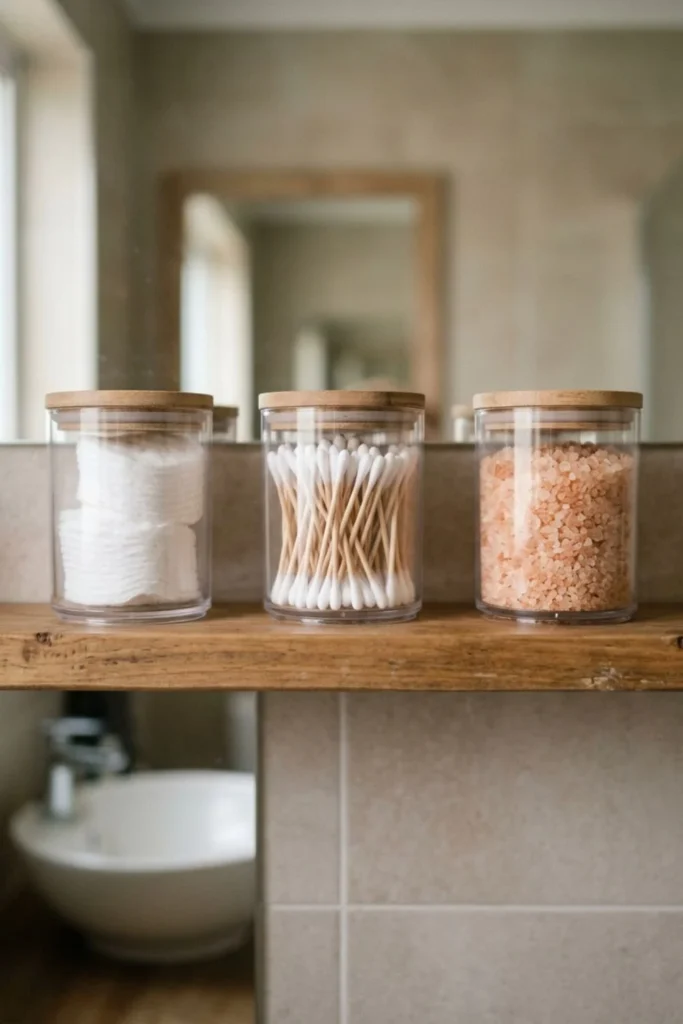
Jars can keep cotton pads or hair ties visible, but this is one of my weaker choices. It is easy to turn a useful shelf into a display that needs regular wiping and refilling.
Use only a few lidded containers for safe items that benefit from being grouped. Keep medicine, chemicals, and products with important instructions in their original packaging.
Choose a container that opens easily with dry hands and will not shatter in a risky location. Plastic may be safer than glass in some bathrooms.
If the original package fits neatly in a drawer, I would keep it there. Decanting is not automatically better organization.
10. Choose a Mirrored Medicine Cabinet
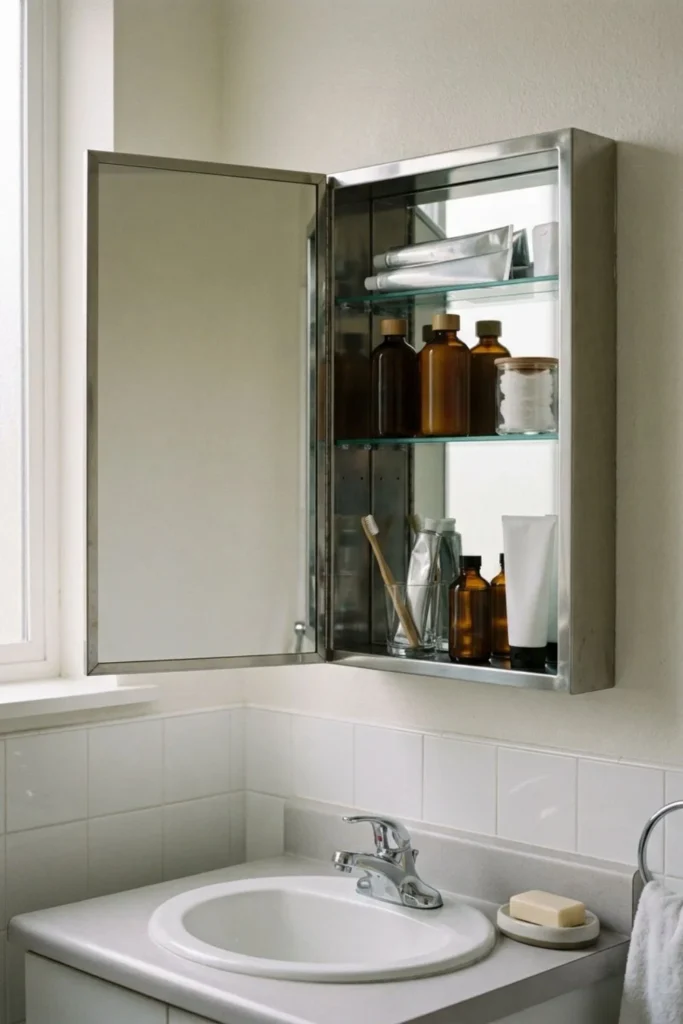
A mirrored cabinet combines a daily mirror with shallow hidden storage. It can reduce visible bottles without adding floor furniture.
Measure the wall, tap clearance, lighting, and door swing. The mirror should open without striking another wall or shelf.
Despite the traditional name, the bathroom may not be the best place for medicine. The FDA says damp bathroom storage can reduce the effectiveness of some medicines and advises following each label; most are better kept in a cool, dry place. Read the official FDA medicine-storage advice.
Use the cabinet for suitable dental or skin-care products, and keep leaking bottles on a washable tray. Heavy installation or electrical work needs qualified help.
11. Place Extra Toilet Paper in a Basket
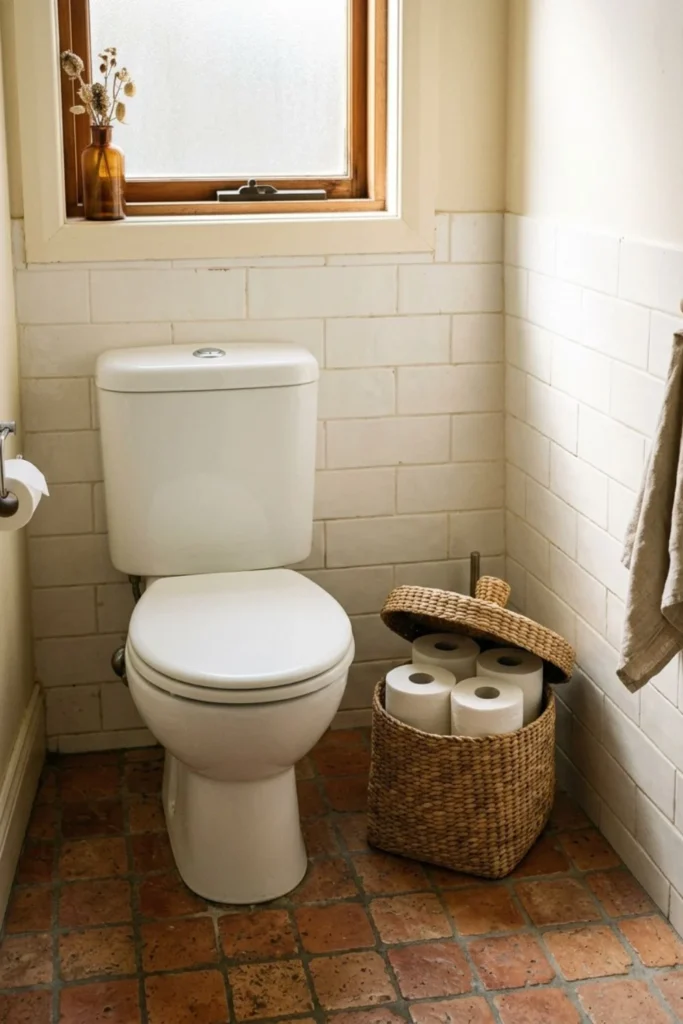
A lidded basket can keep a small number of paper rolls together and protect them from splash. Place it outside the walking path and away from the shower.
Store the main package in a dry closet. The bathroom needs a practical backup supply, not every roll in the home.
Choose a washable container and remove any paper that becomes damp or dirty. An open decorative basket may not suit a bathroom where water travels easily.
Keep the system simple enough that a new roll can be reached when needed.
12. Add Labels That Everyone Can Read
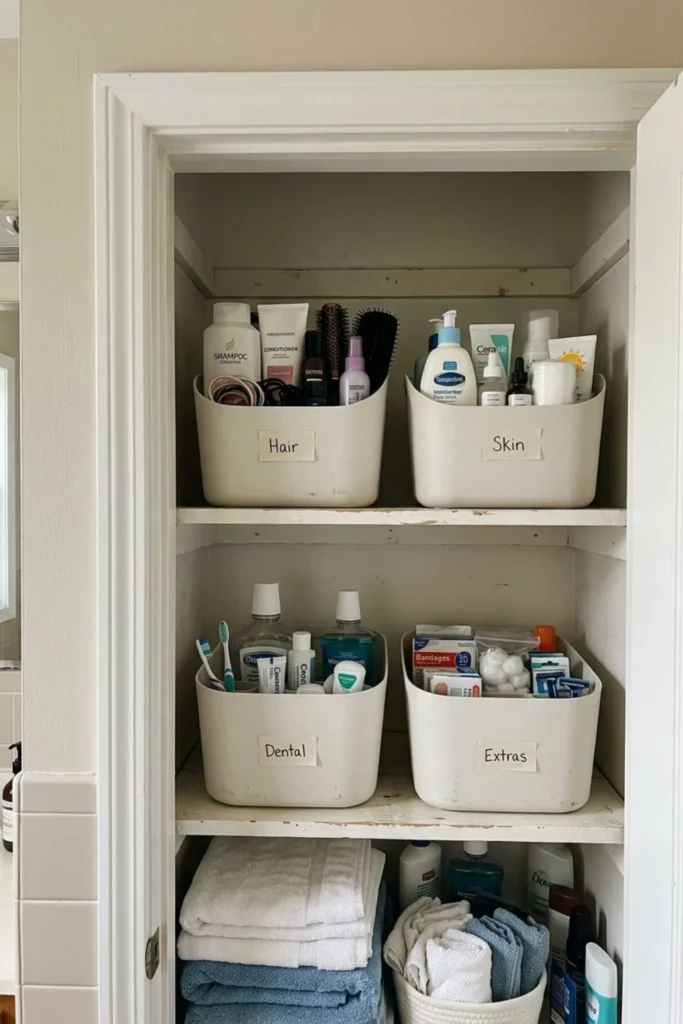
Labels can help a shared bathroom, but this is my second weaker choice. Too many labels make the room feel managed rather than naturally easy to use.
Label only closed or similar-looking containers. Broad words such as “refills,” “hair,” or “cloths” are easier to maintain than a separate label for every product.
Never cover a safety warning, ingredient list, medicine direction, or expiration date. Decorative labels do not replace original information.
If everyone can already see what belongs in a drawer, leave it unlabelled. A clear layout is better than extra text.
13. Use a Shower Caddy That Drains Well
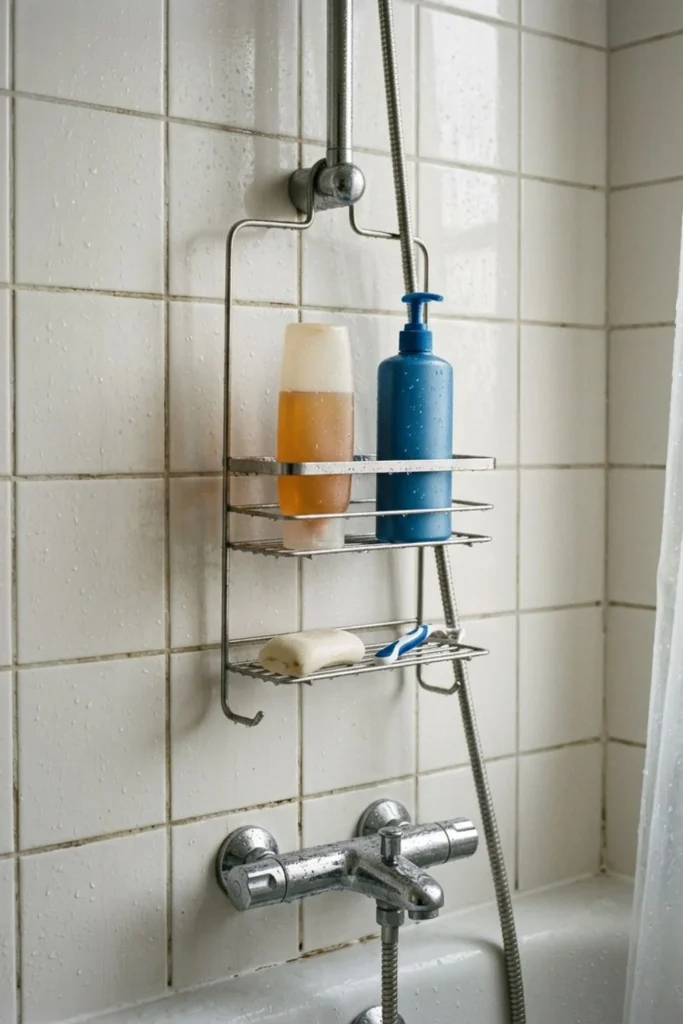
A draining caddy lifts bottles from the shower floor and makes cleaning easier. Choose a rust-resistant design made for wet conditions.
Remove empty products before loading it. Put larger bottles on the lowest secure level, keep soap where water can drain, and protect razors from children.
Install the caddy according to its instructions. It should not swing, strain the showerhead, block controls, or reduce safe standing room.
Clean soap marks and check for rust or loose parts regularly. Drainage helps, but it does not make the caddy maintenance-free.
14. Store Cleaning Supplies Safely
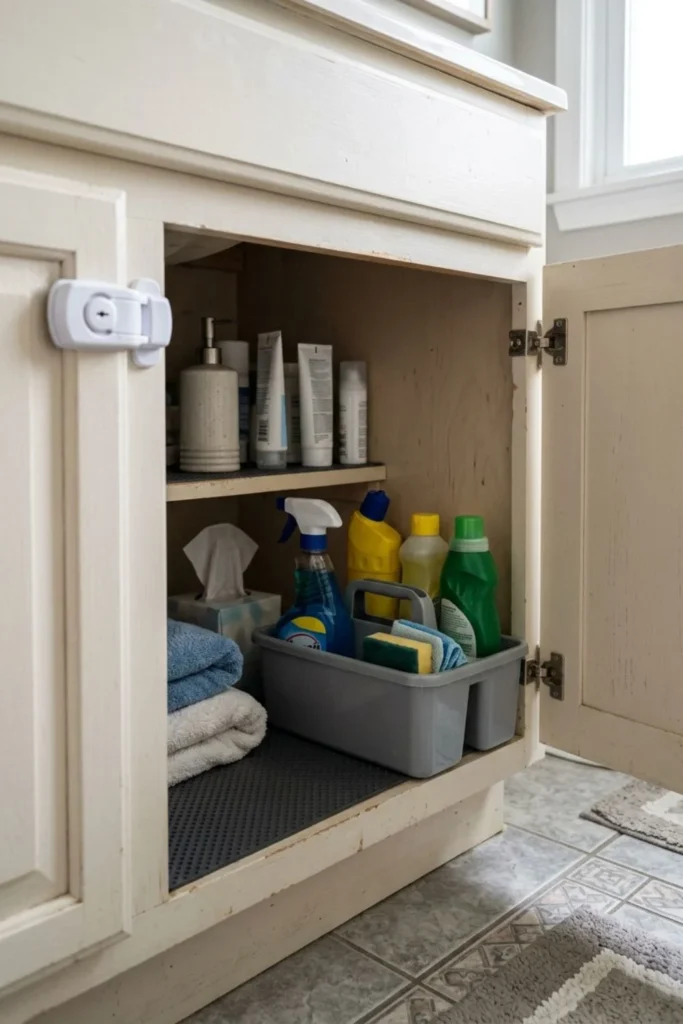
This is my second top choice because cleaners are not ordinary bathroom clutter. A beautiful storage setup can still be unsafe if a child or pet can reach it or if products lose their labels.
Keep every cleaner in its original container with the label attached. The label explains use, storage, first aid, and warnings. Never pour a chemical into a food, drink, or decorative bottle.
The U.S. EPA advises reading labels, keeping household cleaners and pesticides out of children’s and pets’ reach, and retaining original containers. Its household-product safety guidance gives the full advice.
Create one secure cleaning zone:
- Use a high or locked cabinet when children may be present.
- Keep bottles upright with lids fully closed.
- Use a washable tray to contain a small leak.
- Separate cloths from personal-care products.
- Follow every label’s temperature and ventilation instructions.
Do not mix cleaners or store them where bottles can knock together. Products that look similar may contain very different ingredients. The original label matters in an emergency.
Keep only the products needed for the room. A bathroom may require a surface cleaner, toilet product, and a few cloths—not a collection of every cleaner in the home.
Check containers for damage, corrosion, or leaks. Follow label and local disposal instructions for unwanted or damaged products. Do not pour them into the sink or toilet unless the official instructions specifically allow it.
Keep the cleaning tray easy to remove without touching bottle caps or spray triggers. After cleaning, return each product with the lid closed and the front label visible. If a spill occurs, keep children and pets away and follow the product label rather than guessing how to clean it.
Never buy a new cleaner only to make the cabinet look uniform. Different products may require different containers, temperatures, or separation. A mixed group of original bottles is safer and more honest than identical decorative bottles with unclear contents.
If the bathroom has no secure, dry cabinet, store cleaners in a safer room and bring in only what is needed for cleaning. Safety matters more than keeping supplies close.
15. Create a Safe Hair Tool Station
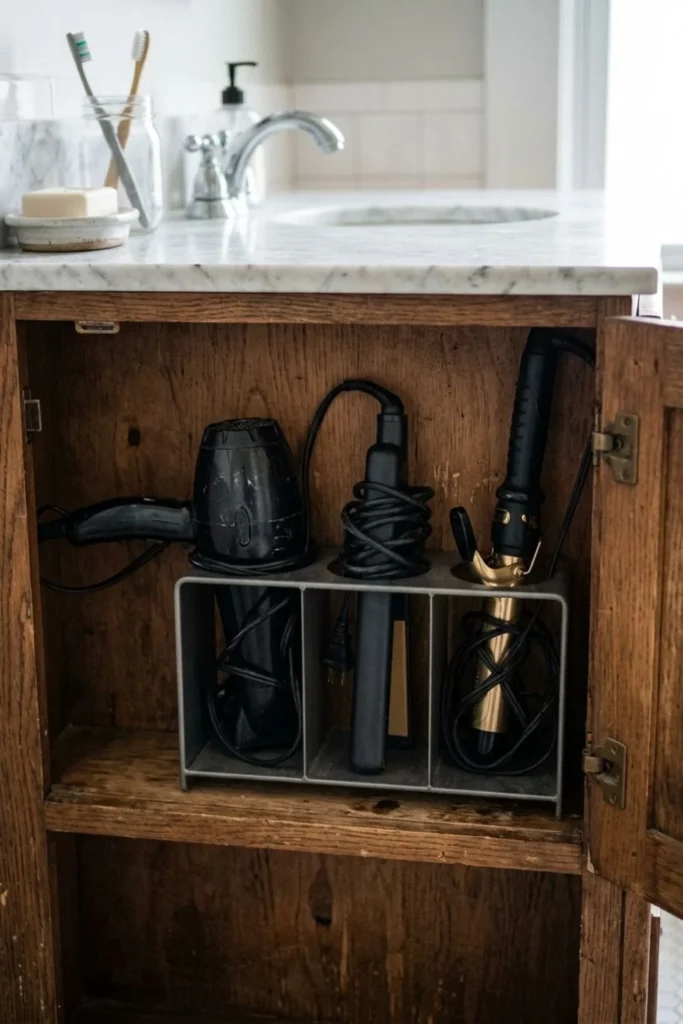
Hair dryers and heated tools should remain far from the bath, shower, and sink. Never store a plugged-in appliance where it can fall or be pulled into water.
The U.S. Consumer Product Safety Commission advises unplugging a hair dryer when it is not being used and not placing or storing it where it can fall into a tub or sink. See the CPSC hair-dryer safety advice.
Let a hot tool cool fully on a heat-safe surface before putting it away. Use a holder made for the appliance, keep air openings clear, and wrap cords loosely.
If the bathroom has no safe dry location, use and store the tool in another room.
16. Put Bottles on a Lazy Susan
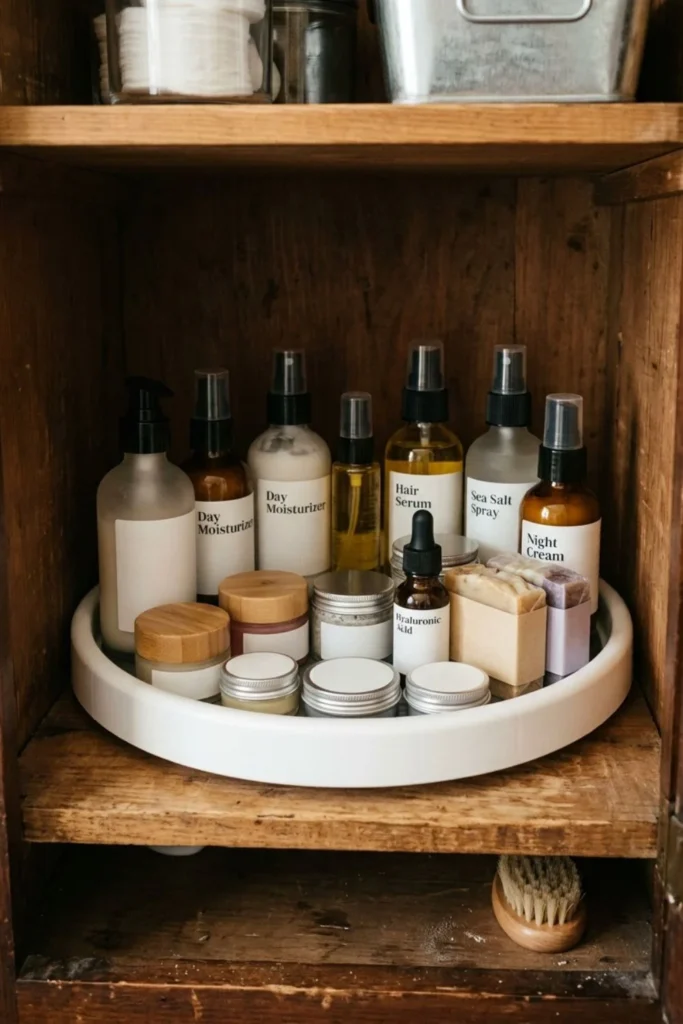
A small turntable can make bottles at the back of a deep cabinet easier to reach. It works best on a stable, level shelf.
Measure the full turning circle, not just the base. Tall bottles should remain stable when the tray moves, and nothing should hit a pipe or cabinet door.
Group similar safe products and avoid overloading the edge. A divided bin may be better for bottles that tip easily.
Keep the turntable in a dry cabinet rather than on a wet counter. Remove it regularly to wipe the shelf below.
17. Make a Refill Basket
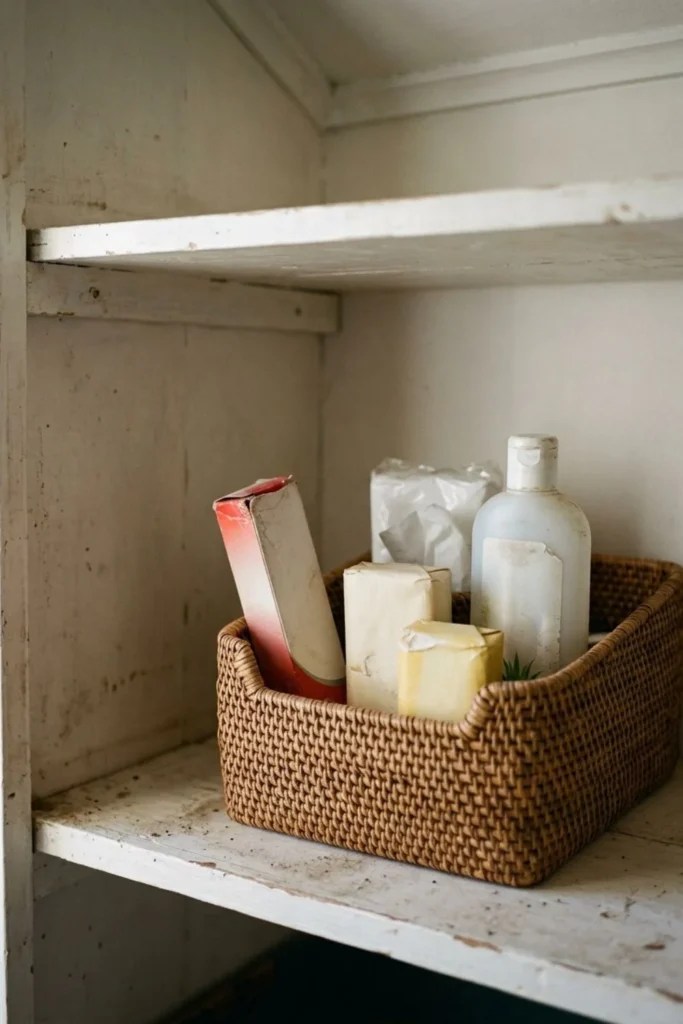
A controlled refill basket is my third top choice because it shows what you already own before you shop. It can prevent duplicate soap, toothpaste, shampoo, and other basics from spreading through several cabinets.
Choose one basket or bin that fits a dry shelf. Its size becomes the limit. When the basket is full, use what you have before buying another backup.
Group only safe, sealed refills that suit the same storage conditions. Keep medicine, chemicals, batteries, and anything dangerous in their proper separate locations.
Use this simple method:
- Put new refills behind older ones.
- Check the basket before writing a shopping list.
- Open only one backup of the same product at a time.
- Remove leaking or damaged packages safely.
- Review products that remain unused for several months.
Do not decant every refill into matching bottles. Original packaging helps identify the product, directions, ingredients, and date information.
Place the basket where an adult can lift it comfortably. A deep container packed with large bottles becomes heavy and hides what is at the bottom. A shallow basket may work better.
I would review it once a month. Move the oldest usable item forward, wipe the base, and note what genuinely needs replacing. This takes less time than searching several cabinets during every shopping trip.
Keep a short shopping note beside the basket or on your phone. Add an item only when the final unopened backup moves into use. This rule gives you enough time to replace a basic product without building a large stockpile.
Refills also need realistic limits. A large family may use toothpaste quickly, while one person may not need three spare bottles. Set the quantity from the household’s normal use, available space, and product dates—not from an online picture.
A refill basket earns its space when it reduces waste and last-minute purchases. If it becomes a place for free samples and products nobody likes, clear it and return to the size limit.
The Three Changes I Would Make First
If I wanted the biggest practical improvement, I would focus on daily products, risky products, and backup products.
First, I would give every drawer a job. Daily routines would stay close to the sink, while rarely used products would move out of the easiest space.
Second, I would secure the cleaners. Original containers would stay upright in one locked or out-of-reach zone, separate from personal care.
Third, I would create one refill basket. It would hold a limited supply and be checked before shopping.
These three systems reduce searching, improve safety, and control duplicates. After testing them, I would decide whether the bathroom truly needs a cart, shelf, turntable, or additional baskets.
Two Ideas I Would Treat as Optional
Jars and labels can support organization, but they should not become the project.
A lidded jar may help with cotton pads or hair ties. It becomes extra work when every package is emptied into a display container and important information disappears.
A short label may help distinguish closed bins in a shared bathroom. It becomes visual noise when every drawer and shelf already explains itself.
I would add either item only after the drawer, cleaning, and refill systems work. Function should come before matching accessories.
Keep Moisture from Undoing the Work
Watch for leaks, condensation, rust, swollen cabinet material, or a damp smell. Fix the water source before hiding signs behind bins.
Run a working extractor fan during and after a shower according to its instructions, or open a safe window when suitable. Do not block ventilation with shelves or storage.
Choose washable plastic, sealed bathroom-suitable wood, or rust-resistant metal. Paper, spare fabric, medicine, and electrical tools need the driest locations.
Spread wet towels so air can reach them, wipe standing water, and check under-sink trays regularly. A clean-looking bathroom can still have moisture trapped behind storage.
Build a Reset That Fits Real Life
A five-minute evening reset is enough for most days. Return products to their drawers, hang towels, close bottles, remove laundry, and wipe visible standing water.
Use a weekly check for the refill basket, shower caddy, trays, and cleaning zone. Once a month, inspect plumbing, wall fixings, and electrical tools.
If an item always lands outside its assigned drawer, move its home closer. If a basket keeps overflowing, reduce the contents instead of buying a larger one.
Ask everyone who shares the room what feels awkward. A system may look clear to the person who created it but confuse everyone else. One small change in drawer position or basket height can make the difference between a system that lasts and one that is ignored.
The room does not need to look unused. A toothbrush, soap dish, and towel in use are normal. The goal is a bathroom that returns to order quickly.
Final Thoughts
A calm bathroom depends more on clear decisions than matching containers. Give each drawer a practical job, treat cleaners as safety items, and limit refills to one visible basket.
Use the other bathroom organization ideas when they solve a specific problem. A cart can help a rental, a draining caddy can clear the shower floor, and a mirror cabinet can hide suitable daily products.
Make one change and test it during an ordinary week. Keep the systems that save time, stay safe, and remain easy to clean.
Disclosure: Some visuals are AI-assisted design concepts created for inspiration. Always confirm measurements, materials, moisture resistance, load limits, building rules, child and pet safety, electrical safety, furniture stability, and installation requirements for your home.