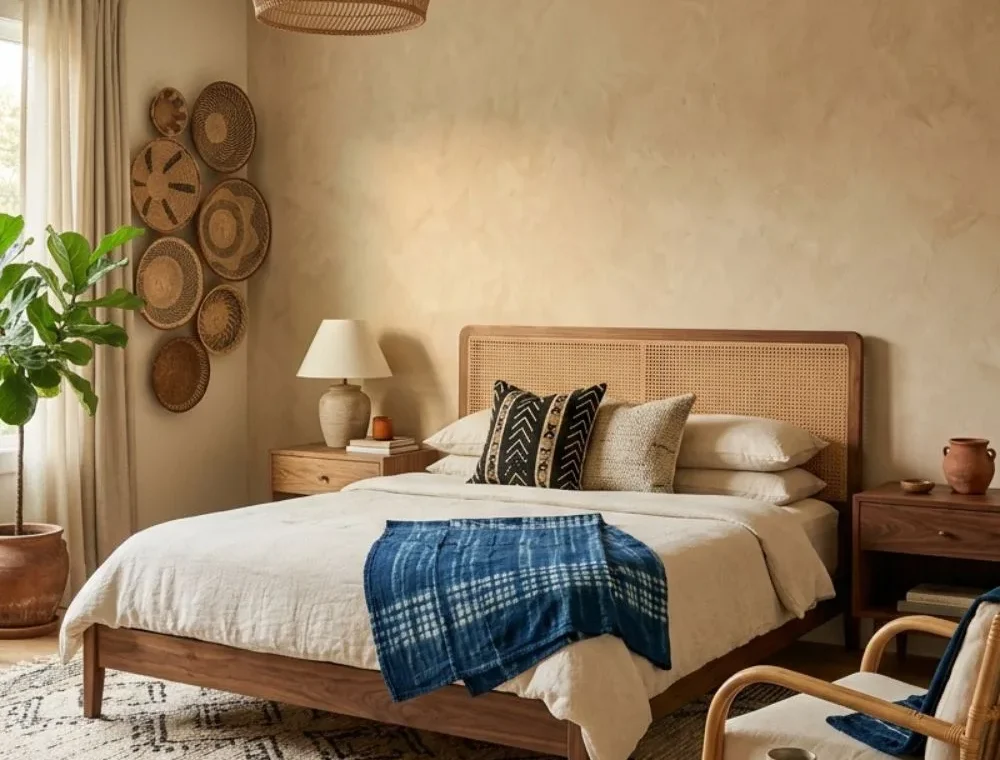
Afrohemian bedroom ideas work best when the room feels warm, personal, and slowly collected rather than filled with matching decor bought in one afternoon. The style brings together relaxed bohemian layering with African craftsmanship, rich natural materials, handmade textiles, carved wood, woven fibers, pottery, and artwork that has a clear sense of origin.
The strongest rooms usually start quietly. Warm beige walls, clay-colored bedding, natural wood, and soft linen create a calm base. Then a few deeper details—indigo, rust, plum, black, or forest green—give the room weight.
I would avoid treating Afrohemian style as a checklist of “tribal” prints. Adire, bogolan, basketry, beadwork, carving, and other African design traditions come from specific places and makers. If you want the room to feel thoughtful rather than themed, buy fewer pieces, learn where they come from, and give them enough space to stand on their own.
This guide focuses on practical choices too: rug size, artwork scale, nightstand height, lighting, storage, small-bedroom options, and simple ways to keep the final room collected without letting it become cluttered.
What Makes a Bedroom Feel Afrohemian?
An Afrohemian bedroom usually has five things working together: a warm earth-tone palette, natural materials, handmade or artisan-looking details, layered textiles, and a mix of modern and older-looking furniture.
The room does not need to be dark. Cream walls, pale sand bedding, light oak, and open-weave rattan can create the same warmth in a small bedroom. Darker chocolate, charcoal, walnut, or indigo can then be added in smaller amounts.
Texture matters more than the number of decorations. Linen beside carved wood, a wool rug under a cane bed, or a handwoven basket against smooth plaster gives the eye something to notice without filling every surface.
There is also a big difference between collected and cluttered. A collected room has objects that relate through color, material, or story. A cluttered room has too many small things competing at the same time.
My simple test is this: if the bed, wall art, rug, nightstands, and one or two handmade pieces already look complete, stop before adding another shelf of decor.
Before You Start: Measure the Room First
Before buying a large rug, chair, pendant, or wall art, measure the bedroom and sketch the basic layout. Include the bed frame, not only the mattress.
Try to keep a comfortable path around the bed and leave enough room for drawers, wardrobe doors, and the bedroom door to open normally. Small rooms benefit from fewer, better-sized pieces rather than several narrow pieces squeezed into every gap.
For costs in this guide, I use rough U.S. planning ranges only. Vintage pieces, handmade imports, local artisan work, shipping, and custom furniture can change the price a lot.
1. Start With a Warm Earth-Tone Foundation
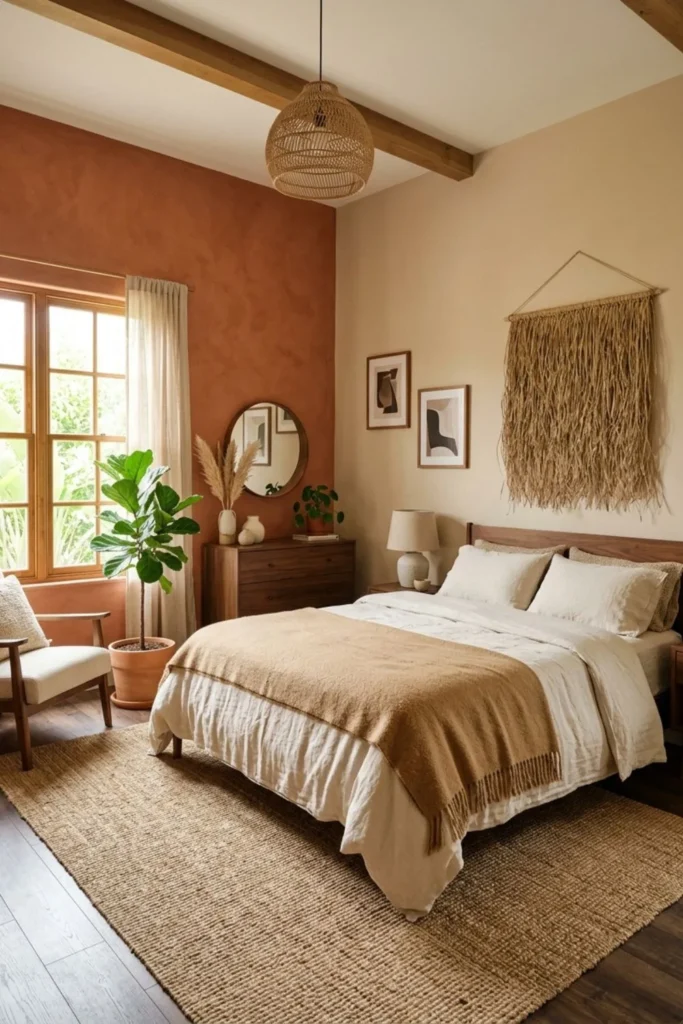
Terracotta, clay, sand, warm beige, camel, cocoa, and chocolate brown are easy starting colors for an Afrohemian bedroom. They create warmth without demanding attention from every other piece in the room.
You do not need to paint all four walls. In a small bedroom, I would often keep the walls warm white or soft beige and bring clay through the duvet, throw, rug, or one painted wall.
A useful palette is roughly 70% calm base, 20% wood and texture, and 10% deeper accent color. It is not a strict design law; it simply prevents every surface from becoming a statement.
If the room already has cool gray flooring, warm it with tan, rust, cream, walnut, and woven fiber instead of fighting the floor with even more gray.
Planning cost: about $40–$150 for paint and basic supplies, or $60–$250 for bedding depending on material and size.
2. Add One Deep Jewel-Tone Accent
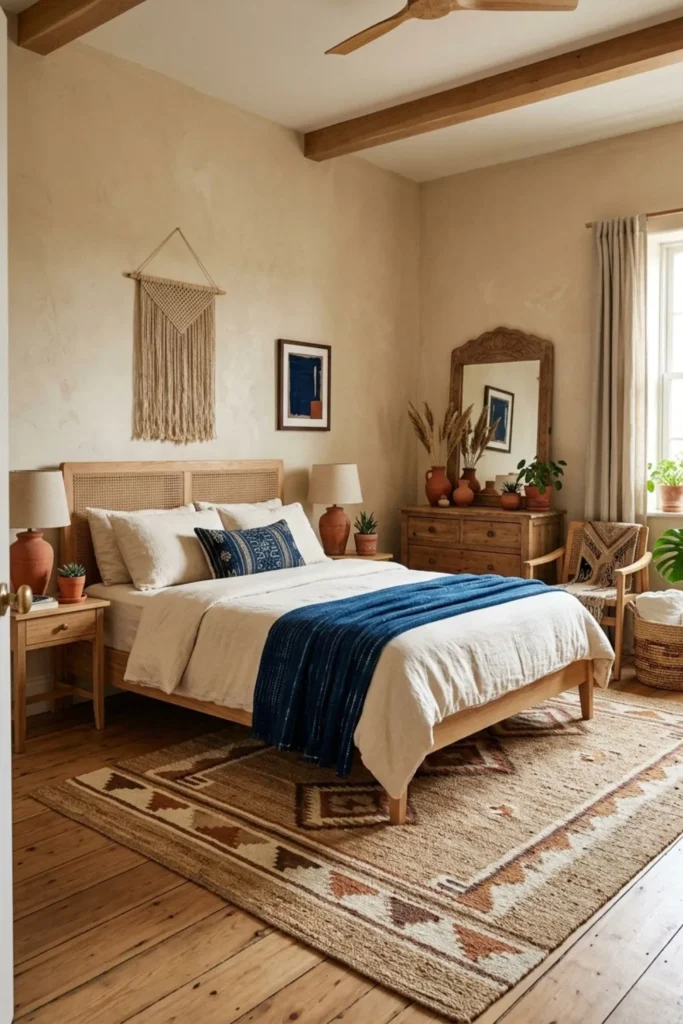
Indigo, emerald, aubergine, deep plum, burnt orange, and oxblood can make an earthy bedroom feel richer. The important part is choosing one main deep accent, not five.
Indigo is one of my favorite choices because it sits comfortably beside brown wood, cream linen, terracotta, and natural basketry. A folded throw or two pillow covers may be enough.
If the room is small, keep the jewel tone below eye level or use it in one medium piece. A dark curtain, dark bed, dark wall, and dark rug together can make the room feel visually heavy.
Repeat the chosen accent two or three times in different sizes. For example: an indigo throw, one small art detail, and a narrow stripe in the rug.
3. Choose a Natural Wood or Rattan Headboard
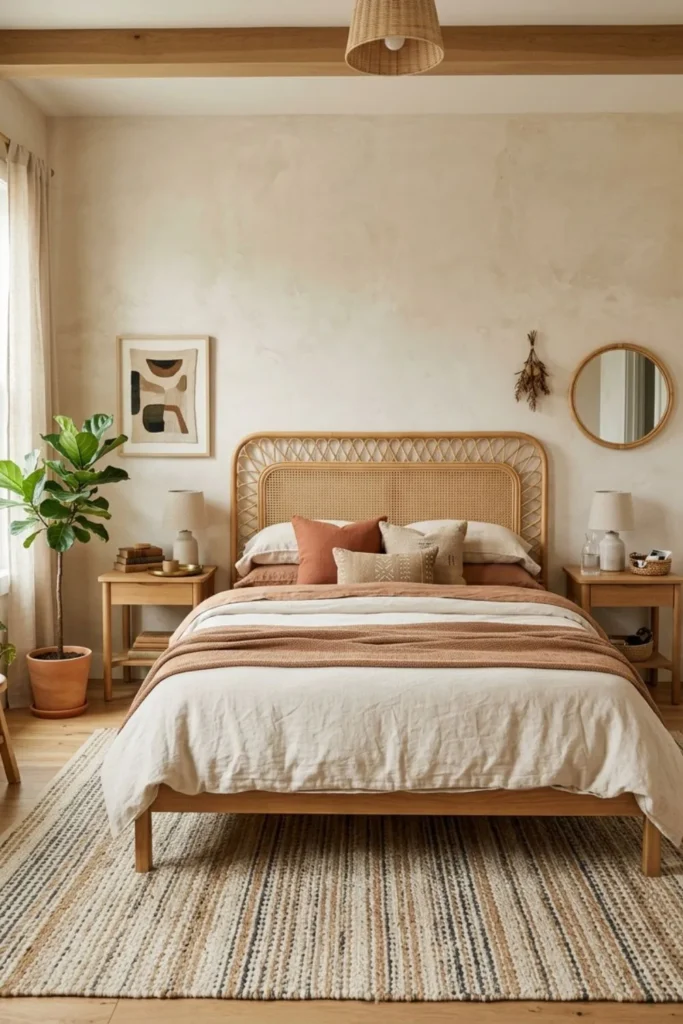
The bed is usually the visual center of a bedroom, so the headboard can set the Afrohemian mood without needing much extra decor.
Rattan, cane, walnut, teak-toned wood, or a carved wood headboard all work. For a smaller room, an open-weave cane or rattan design keeps more of the wall visible and feels lighter than a thick upholstered bed.
Before ordering, measure the full width of the frame and check how far the headboard projects from the wall. Deep carved pieces can take more floor space than the product photo suggests.
I would keep highly decorative carving to one major furniture piece. If the bed is already detailed, simpler nightstands and quieter wall art usually look better.
Planning cost: roughly $150–$700 for a ready-made headboard, with handmade or antique pieces often costing more.
4. Layer Adire-Inspired Indigo Textiles
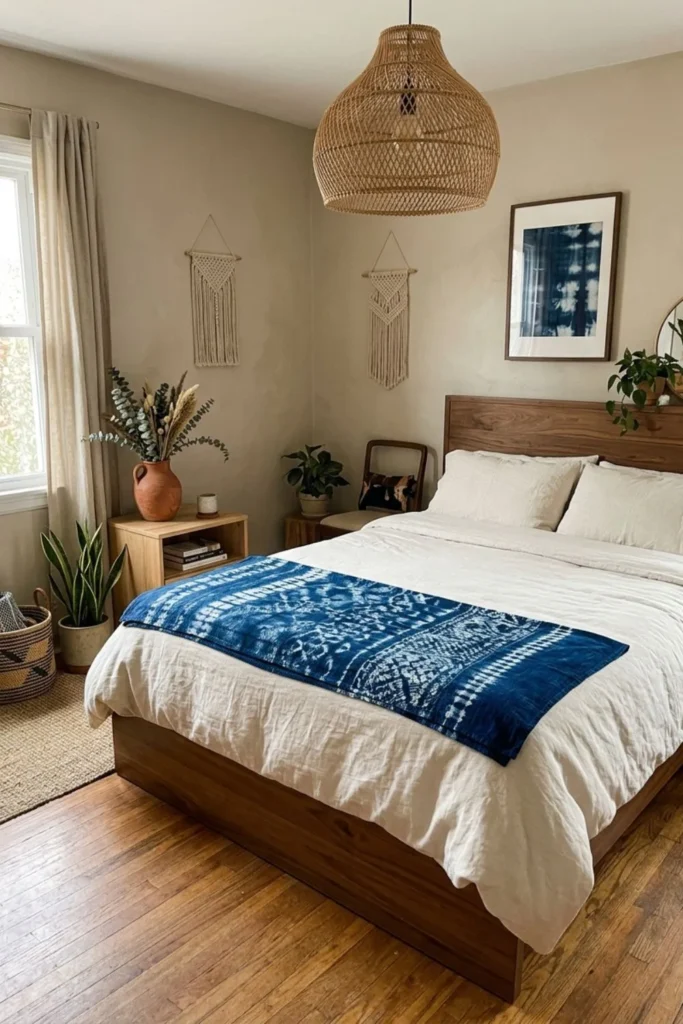
Adire is not just a generic blue-and-white pattern. The Metropolitan Museum of Art describes adire as a Yoruba resist-dyed cloth tradition associated especially with southwestern Nigeria. If you buy a real piece, it is worth learning who made it and how it was produced.
For the bedroom, one indigo textile can do a lot. Fold it across plain cream or sand bedding, place it over a bench, or use it as a wall textile only when it can be mounted without damage.
I prefer pairing a strong indigo pattern with plain linen or cotton bedding. That contrast gives the textile space to be noticed.
If an item is only “adire-inspired,” label it that way rather than presenting a mass-produced print as traditional handmade adire.
Learn more from The Metropolitan Museum of Art’s African textiles collection.
5. Mix Mudcloth-Style Pillows Without Overdoing the Pattern
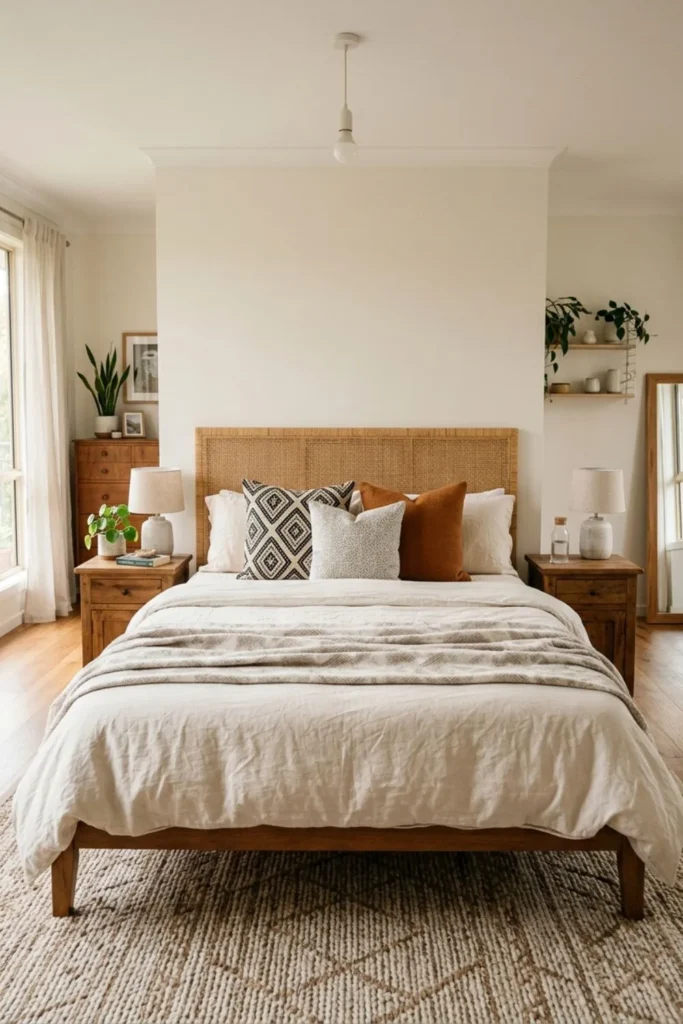
Bogolanfini, often called bogolan or mud cloth, is a specific Malian textile tradition. The Smithsonian explains the term in relation to mud or earth and cloth, so I would avoid treating every black-and-cream geometric cushion as authentic mud cloth.
A simple pillow formula works well:
- One larger geometric pillow
- One smaller patterned pillow
- One plain textured pillow
That is usually enough on a queen bed. A pile of six or eight decorative cushions can make the room look busy and creates work every night.
Mix pattern scale instead of using three prints with the same visual weight. A bold geometric design beside a quiet stripe and plain woven cotton feels more natural.
For background on the textile tradition, see the Smithsonian Center for Folklife and Cultural Heritage’s Malian Bogolan resource.
6. Ground the Bed With a Handwoven-Looking Rug
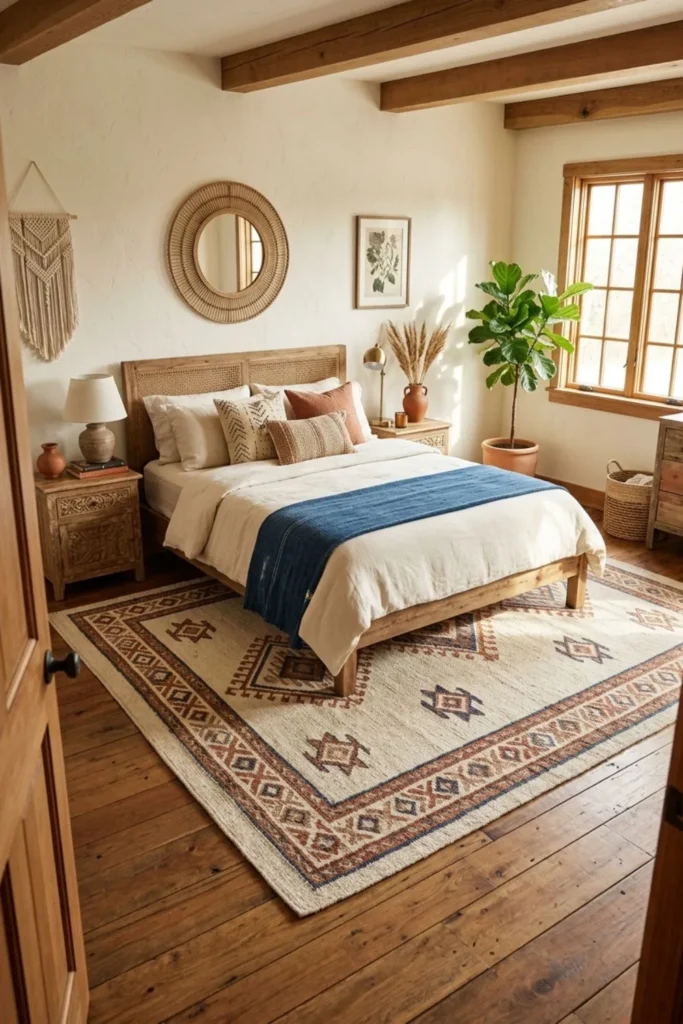
A rug can connect nearly every color in the room while adding softness underfoot. Jute, wool, flatweave, and kilim-style rugs are all useful depending on comfort and cleaning needs.
For a queen bed, 8 x 10 feet is a common starting point, but measure your actual room before buying. The rug should normally extend far enough beyond the sides and foot of the bed that your feet land on it instead of immediately stepping onto bare floor.
If an 8 x 10 overwhelms a small room, use two runners or place a smaller rug across the lower two-thirds of the bed.
Keep the rug quieter when the bedding is heavily patterned. If the bed is simple, the rug can carry more character.
Use a suitable non-slip rug pad and keep the edges flat, especially along the main walking path.
Planning cost: around $100–$600 for many machine-made or natural-fiber options; artisan rugs can be considerably higher.
7. Create a Woven Basket Gallery Wall
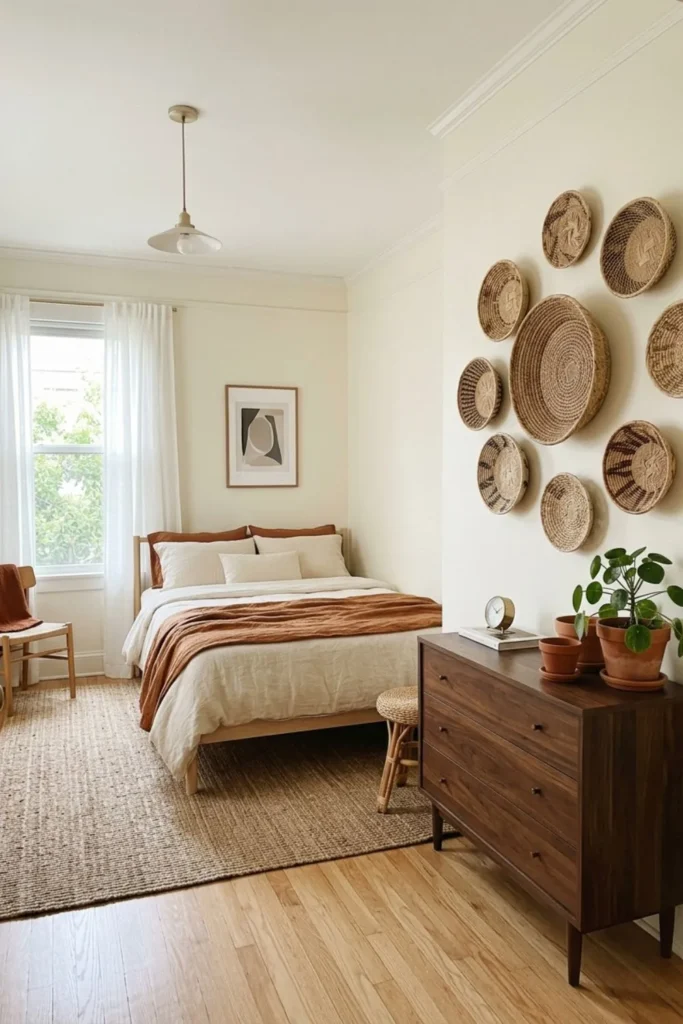
A basket wall can add texture without another framed print. It works especially well above a dresser, reading chair, or on a side wall.
Start with one larger basket, then build around it with smaller pieces. I would keep about 2–4 inches of breathing room between most baskets rather than pressing everything together.
Lay the arrangement on the floor first and take a phone photo. That makes it easier to see the balance before drilling.
Use secure wall fixings suited to the basket weight and your wall type. Lightweight baskets may be easy to hang, but “light” is not the same as “safe with any adhesive.”
I would avoid placing a large group of loosely secured objects directly above the pillow. A side wall gives almost the same visual effect with less worry.
For more wall-layering ideas, the site’s sage green bedroom ideas show how one strong wall feature can work without covering every empty space.
8. Hang One Oversized African Artwork Piece
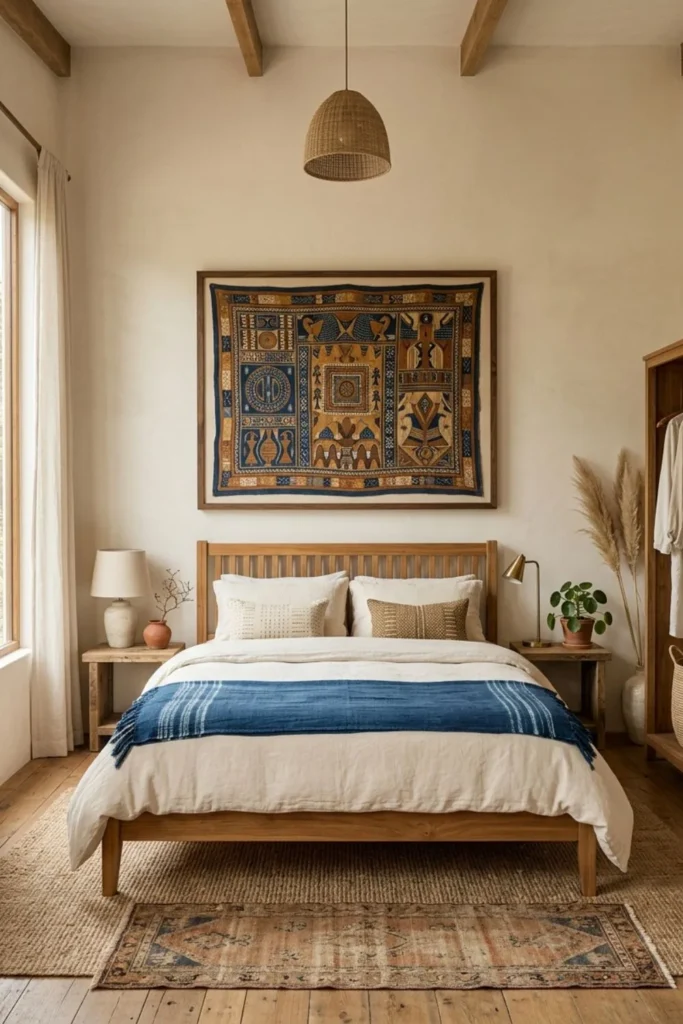
One large artwork often looks more collected than a wall full of unrelated small frames.
As a rough starting point, choose art that is around 60–75% of the width of the headboard or furniture below it. The exact number matters less than visual balance, but a tiny frame floating above a wide bed usually feels accidental.
If the artwork has strong color or detailed pattern, let the surrounding wall stay quiet. Plain bedding and natural wood will give it room.
Try to buy from an artist, gallery, cooperative, or seller that clearly credits the maker and place of origin. “African-style” art with no artist information may be decorative, but it should not be presented as a traditional piece.
Heavy framed art needs proper hanging hardware. If you are unsure about the wall construction, move the artwork to a side wall or use professional installation.
9. Add a Compact Rattan Reading Chair
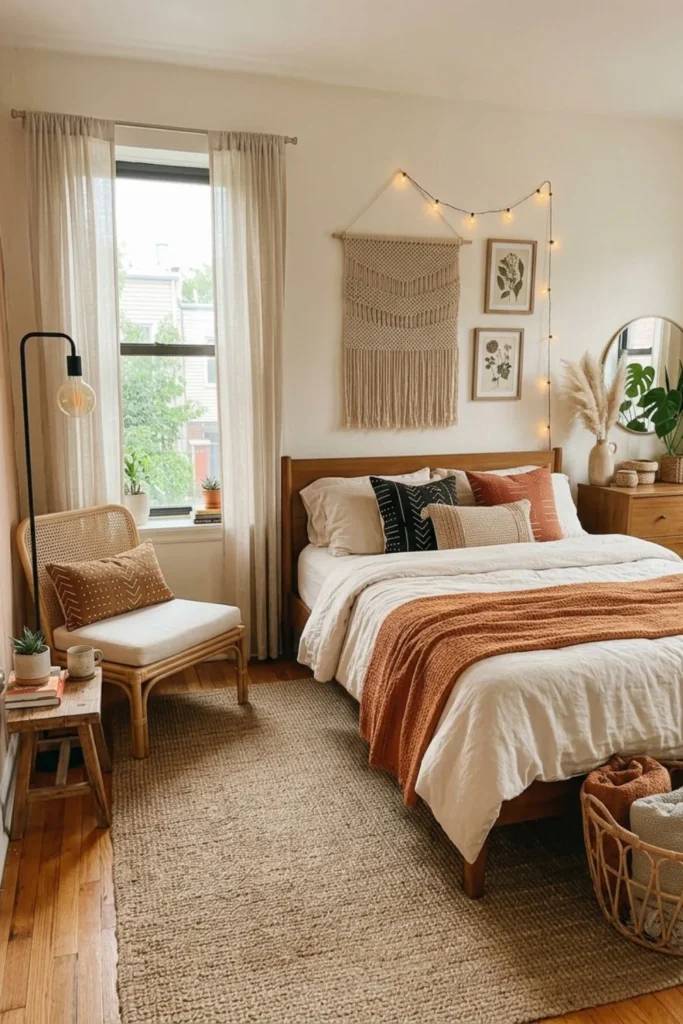
A reading chair gives the room another natural texture and can make an empty corner useful.
For a small bedroom, I would choose a compact armless chair rather than a wide lounge chair. Measure the chair depth as well as its width; a deep seat can block a walkway even when the width looks fine.
Leave enough space to pull the chair out and sit comfortably without hitting the bed or dresser.
Add only one small cushion or a folded throw. The open cane or rattan texture is already decorative, so it does not need several accessories.
If the room is extremely tight, skip the chair and use a carved stool or bench instead. The small apartment bedroom ideas guide has more examples of choosing furniture that does not crowd the walking path.
Planning cost: roughly $120–$500 for many retail rattan chairs.
10. Use Carved Wood Nightstands Carefully
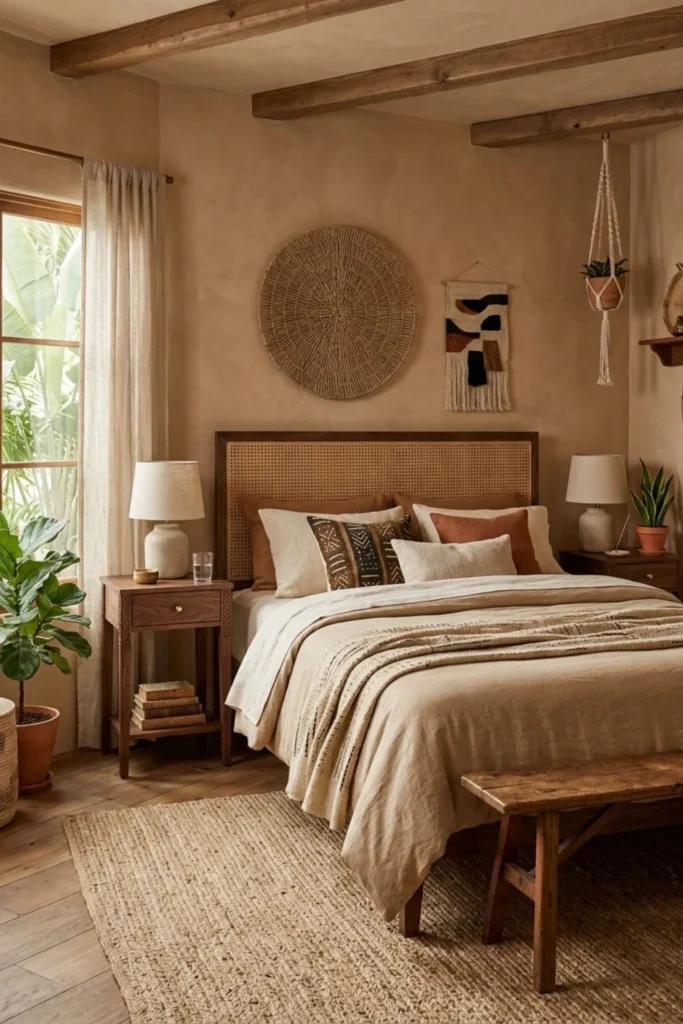
Carved wood nightstands can bring real depth to a simple bed, but they become visually heavy when both sides are oversized.
The top of the nightstand should sit close to the top of the mattress so a lamp, phone, or glass is easy to reach. A difference of a few inches is normally fine; comfort matters more than making both heights exactly equal.
In a narrow room, look for a nightstand around 14–18 inches wide instead of forcing a standard wide cabinet into the gap.
Storage is useful here. One drawer can hide chargers, medication, glasses, or other small things that would otherwise make the top look messy.
If the bed already has strong carving, choose plainer nightstands. I would rather have one hero piece than three pieces competing to be the most decorative.
11. Warm the Room With a Woven Pendant Light
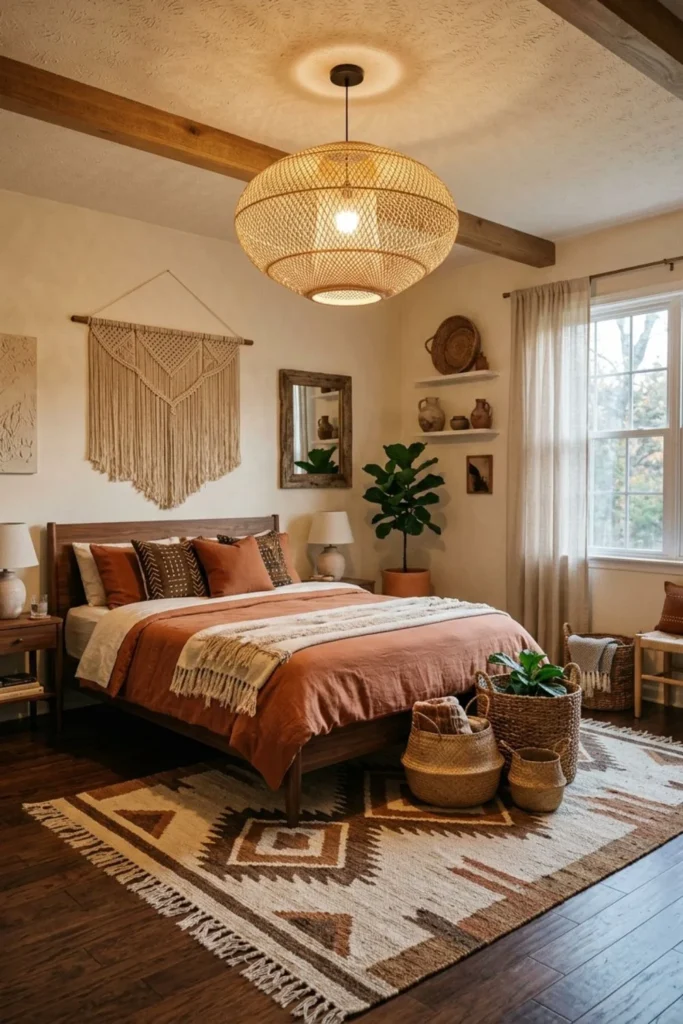
A woven pendant made from cane, raffia, rattan, or another natural-looking fiber can soften the ceiling and cast gentle texture around the room.
For the relaxed look, I prefer a warm bulb around 2700K rather than a cool blue-white light. The shade should still allow enough useful light for dressing and cleaning.
Scale matters. A huge low pendant can feel dramatic in a large room but annoying in a standard bedroom. Keep comfortable head clearance and make sure doors, wardrobes, and ceiling fans cannot strike it.
Use only bulbs and wattages approved for the fitting. Natural-fiber shades should not sit against a hot bulb.
If the light is hardwired, use a qualified electrician and follow the fixture instructions rather than treating it as a decorative DIY job.
Planning cost: about $60–$300 for many woven pendants, excluding electrical labor.
12. Style Terracotta and Handmade Pottery in Small Groups
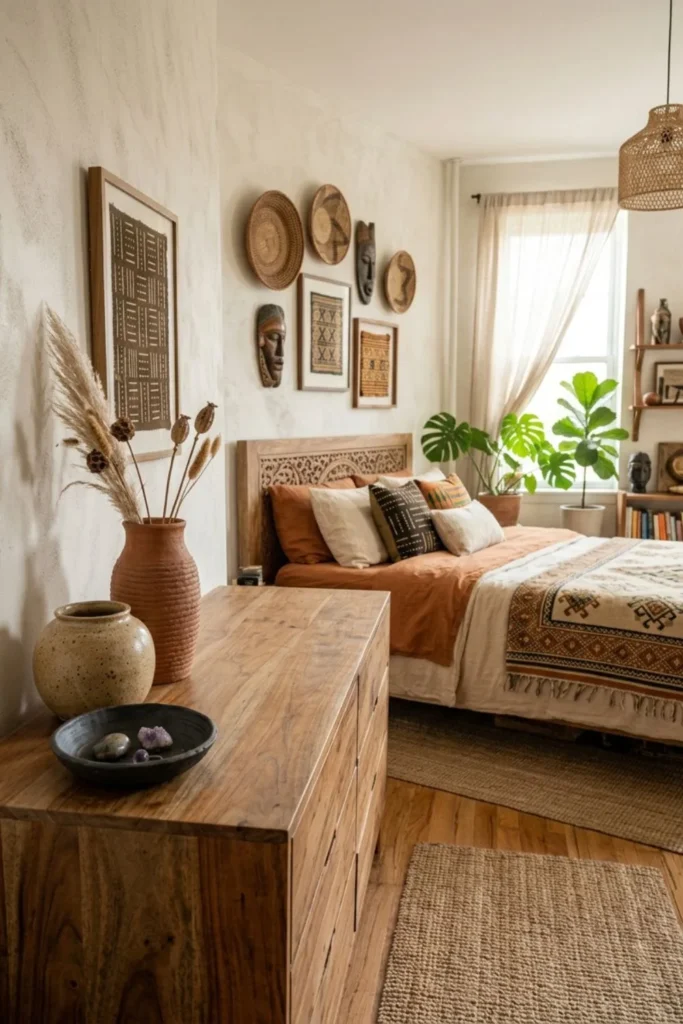
Terracotta instantly connects the room to the earthy palette, but a bedroom does not need pottery on every surface.
Try an odd-number grouping of three pieces on a dresser: one taller vessel, one medium rounded form, and one small dish. The different heights make the group feel intentional.
Handmade pieces are especially good because slight changes in shape and glaze add character. They do not need to match.
Keep fragile pottery away from the edge of a narrow nightstand. If you have children, pets, or a tight path around the bed, a stable dresser or shelf is safer.
You can also use one empty vessel as sculpture rather than filling every piece with branches or dried grass. Sometimes the shape is enough.
13. Bring in One Tall Green Plant
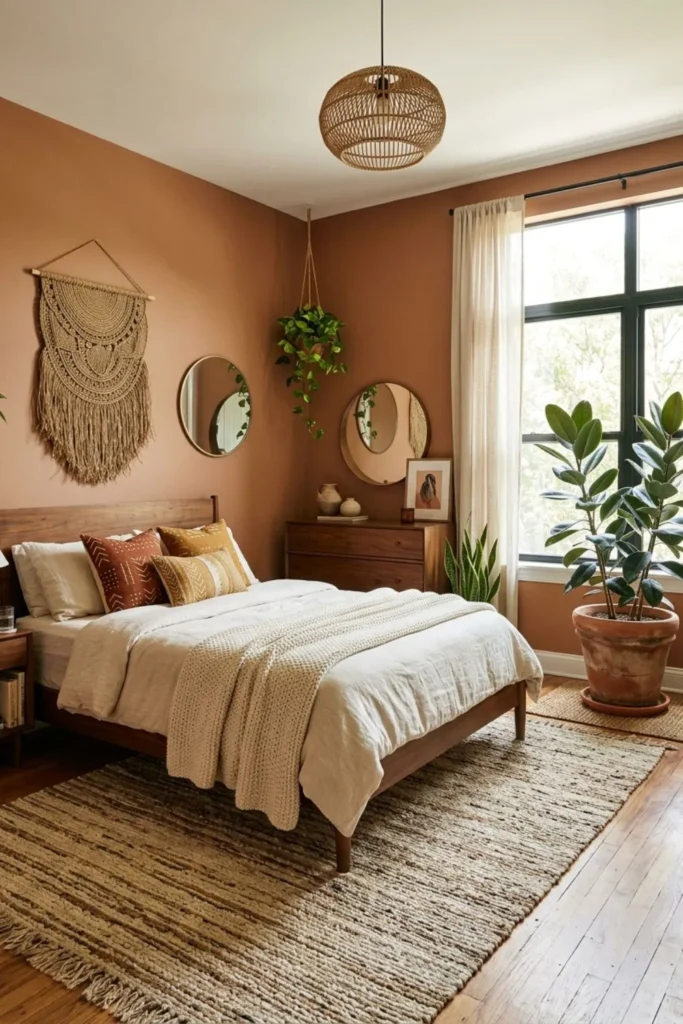
A tall plant can soften the hard line of a dresser, headboard, or room corner while adding a fresh green note to all the brown and clay tones.
Rubber plants, fiddle-leaf figs, and indoor olive trees are popular visually, but choose a plant for the actual light in your bedroom rather than the photo you want to copy.
If the room receives very little usable daylight, a good artificial plant may be easier than keeping a struggling live plant in the wrong conditions.
Use a stable planter with a saucer and protect wood floors or furniture from water. I would keep soil and watering cans away from bedding and electrical outlets.
One healthy plant is enough. A bedroom packed with ten pots starts to feel like a plant room rather than a calm sleeping space.
14. Mix Linen, Cotton, Wool and Woven Texture
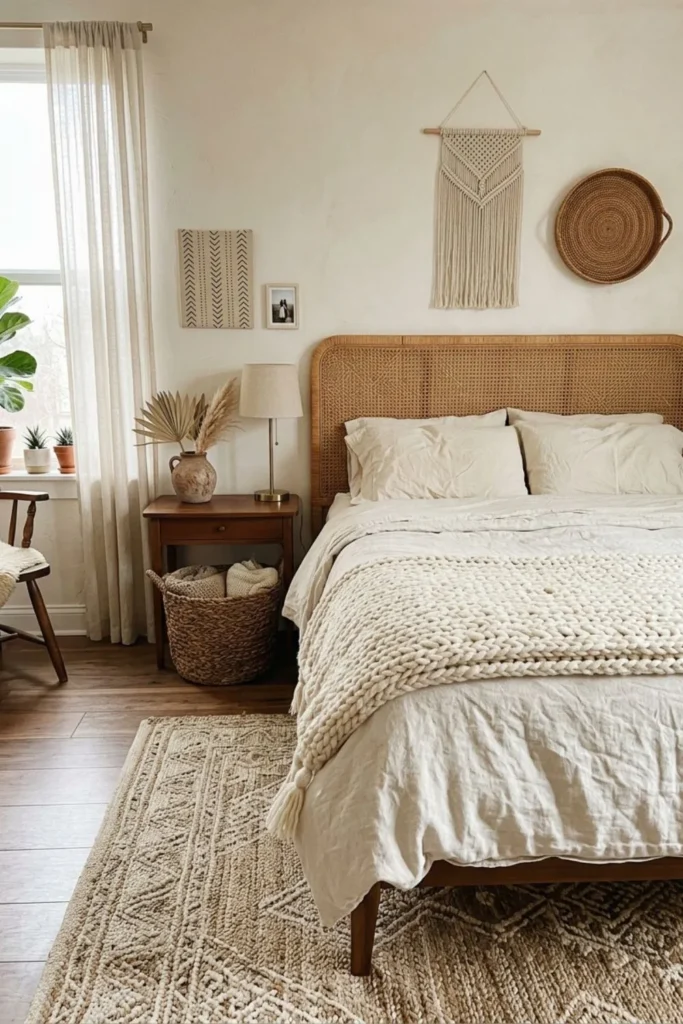
The easiest way to make an Afrohemian bedroom feel expensive is often not adding more color—it is mixing texture.
Try crisp cotton sheets, a slightly relaxed linen duvet, a wool or woven throw, cane or rattan, and one rougher natural-fiber rug.
Avoid using the same texture everywhere. A room with rattan bed, rattan nightstands, rattan pendant, rattan chair, and baskets can turn into a furniture showroom.
I also prefer matte and tactile surfaces over lots of shiny synthetic fabric. A little sheen is fine, but the style feels strongest when most surfaces look natural and touchable.
Before buying delicate fabrics, check the care label. Bedding that cannot survive your normal laundry routine will become frustrating no matter how good it looks in a photograph.
15. Frame the Windows With Linen Curtains or Bamboo Shades
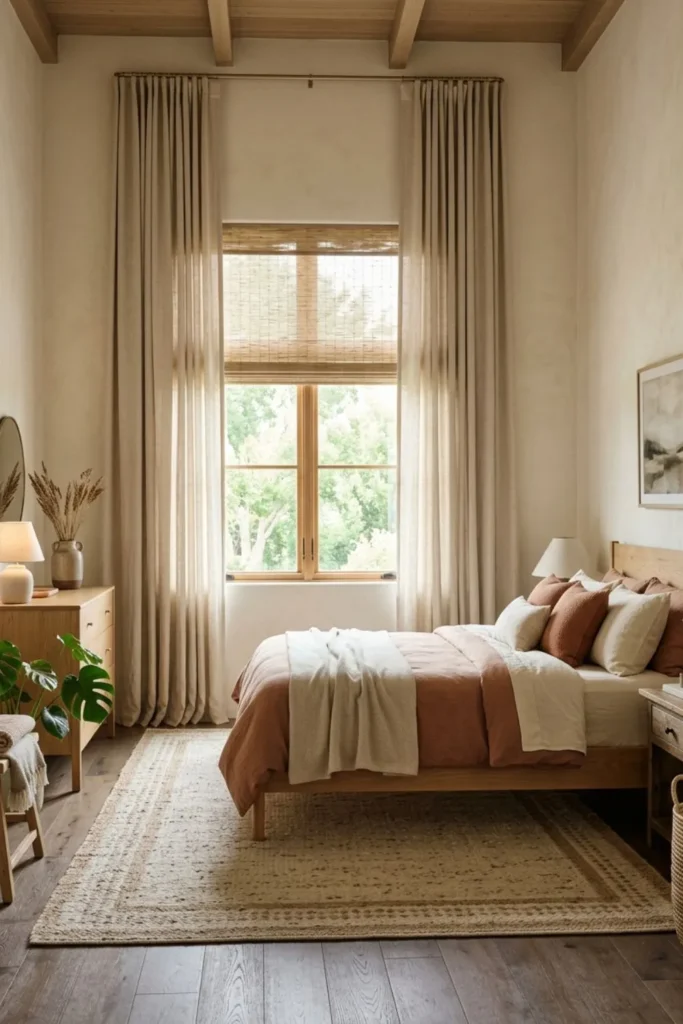
Windows are a good place to make the room feel softer without adding another object.
Hang curtain rods higher and a little wider than the window when the wall allows it. This can make the opening feel taller and lets curtains stack beside the glass instead of blocking daylight.
For a relaxed bedroom, oatmeal, flax, warm white, or soft clay linen-look curtains work well. Bamboo or woven shades can add another natural layer underneath.
Measure the full drop before ordering. Curtains that nearly reach the floor usually look cleaner than panels stopping halfway down the wall.
Keep cords, chains, and operating loops managed according to the product instructions, particularly in homes with children. Do not let fabric sit against heaters or other hot surfaces.
16. Mix Modern Furniture With One or Two Vintage Pieces
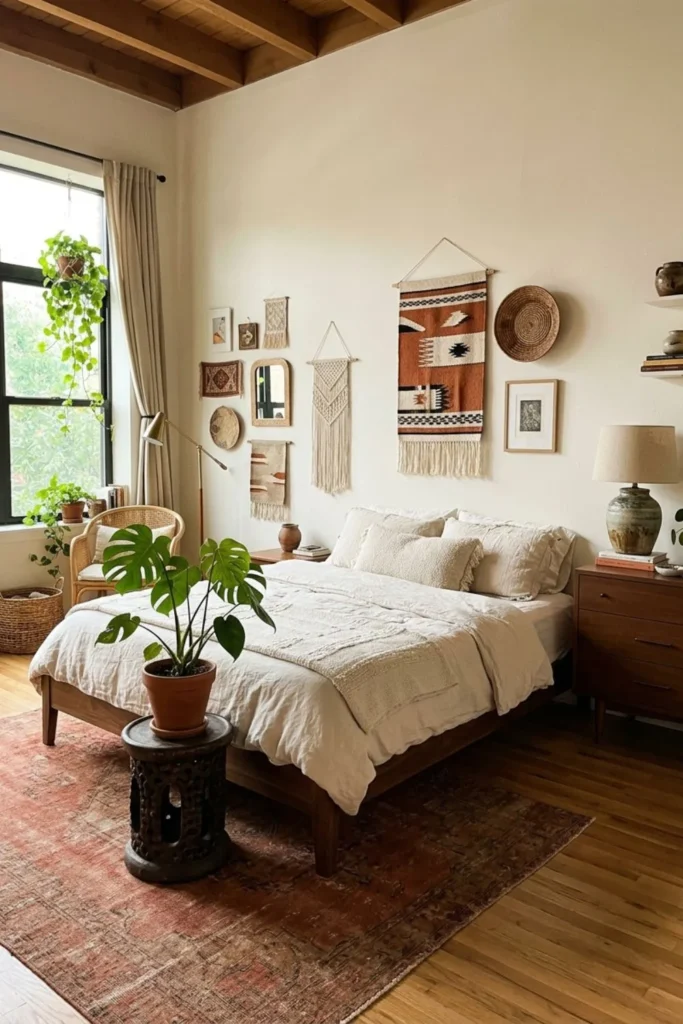
This is where the “collected” part becomes important.
A modern low-profile bed can look better beside an old carved stool than beside a matching bedside suite. A simple dresser can carry a handmade ceramic lamp. A clean upholstered chair can sit under a vintage textile or artwork.
I would keep the mix controlled. One vintage stool, one older chest, or one weathered wood bench may be enough.
Too many deliberately “ethnic-looking” pieces can turn the room into a theme instead of a home. Keep some furniture plain and practical so the handcrafted pieces have contrast.
Check vintage furniture for loose joints, sharp edges, pests, unstable legs, and old finishes before bringing it into a bedroom.
If a dresser, bookcase, or tall storage piece could tip, follow the manufacturer’s anchoring instructions. The U.S. Consumer Product Safety Commission’s Anchor It guidance recommends securing top-heavy furniture.
17. Add a Low Carved Stool or Bench at the Foot of the Bed
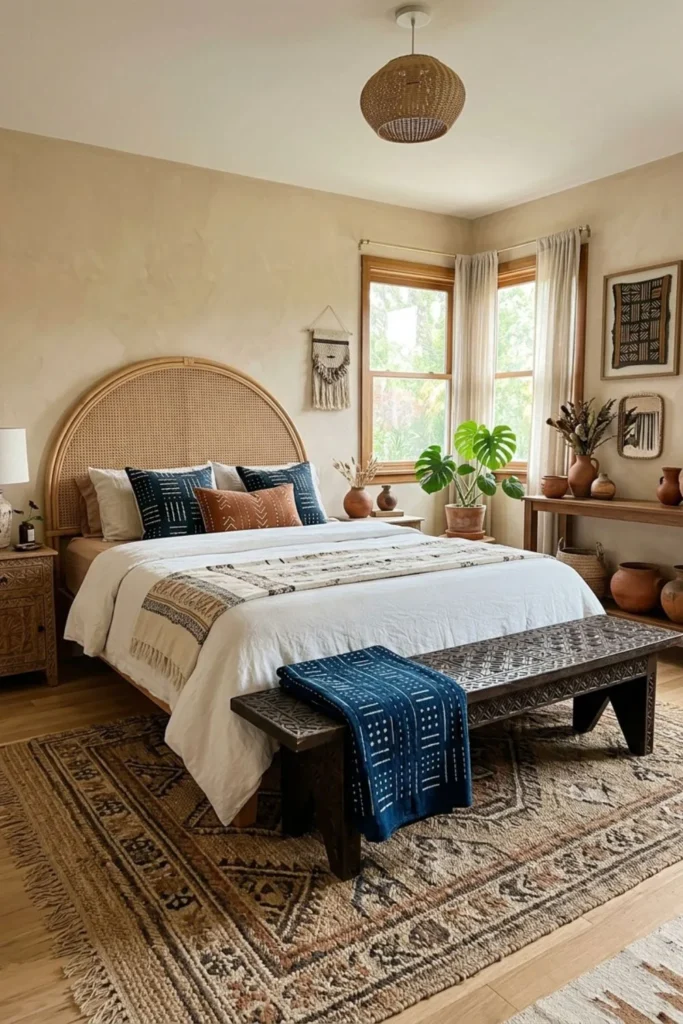
A small stool or bench can introduce another handmade-looking shape without taking over the room.
At the foot of a bed, leave enough clearance to walk comfortably between the bench and the opposite wall or dresser. If the room is narrow, skip the full bench and use one small stool in a corner.
A carved wood stool can work as a place for a folded blanket, book, or clothing while getting ready. Keep the top mostly clear so it does not become a permanent pile.
If you choose a woven bench, let either the headboard or the bench carry the stronger pattern—not both.
Planning cost: roughly $70–$350 for many retail stools and benches, with antique or artisan-made pieces varying widely.
18. Build a Collected Nightstand With Books and Personal Objects
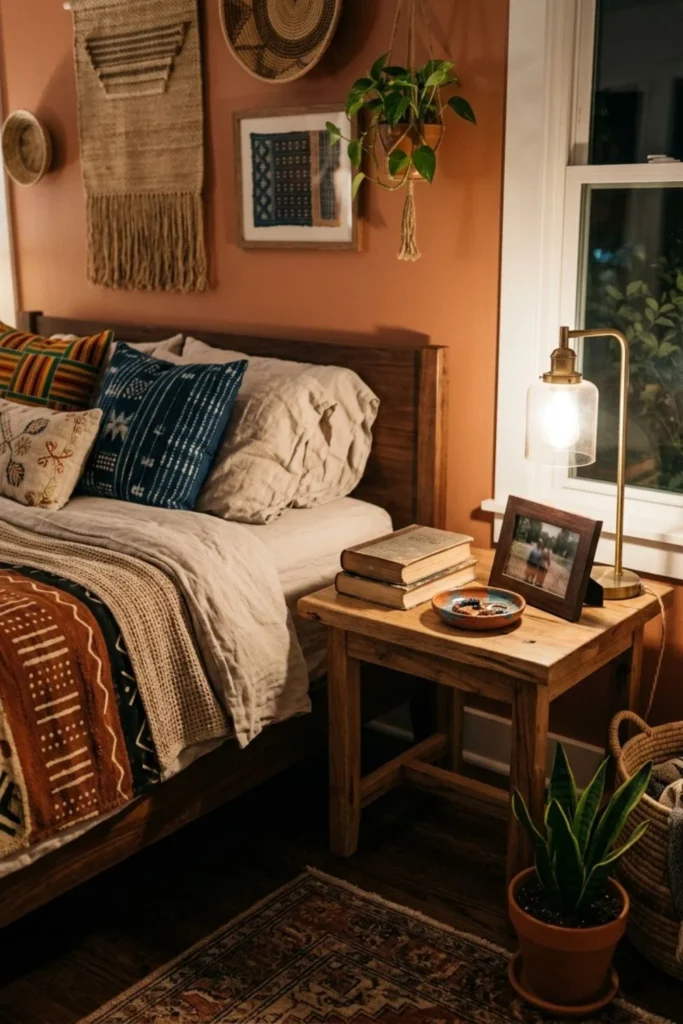
A collected bedroom should include something that belongs to you, not only objects that fit a design trend.
Stack two books you actually read, add a small handmade dish, place a framed personal photo nearby, or use a tiny carved object brought back from a meaningful trip.
The nightstand still needs to work. Leave room for water, glasses, a phone, or whatever you use every evening.
I like the one useful + one personal + one decorative rule. It keeps the surface interesting without turning it into a shelf display.
Avoid filling both nightstands with identical styling. A little asymmetry can make the room feel more natural, especially when the lamps or furniture already match.
19. Edit the Room Until It Feels Collected, Not Cluttered
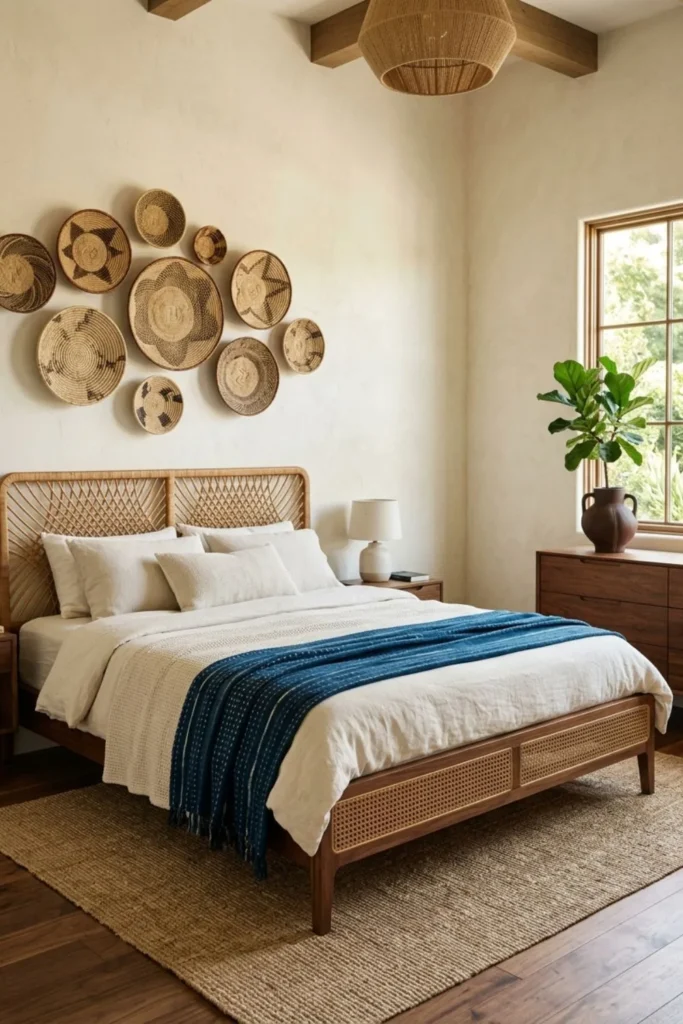
The final idea is not to buy another object. It is to remove the pieces that are fighting for attention.
Stand in the doorway and look at the room as one picture. If you notice the basket wall, patterned rug, bright pillows, carved bed, pendant, pottery, large art, and five small accessories all at once, something probably needs to leave.
Choose two or three main visual moments. For example:
- Carved or woven bed
- Indigo textile
- Basket wall or oversized artwork
Let the remaining furniture stay quieter.
I would also keep some empty wall and some clear surface area. Empty space is what makes handmade pieces look important.
This editing step is usually what separates a warm, layered bedroom from a themed room. The goal is not to prove how many Afrohemian elements you can fit inside. It is to create a bedroom that feels calm enough to sleep in and interesting enough to enjoy every day.
A Simple Afrohemian Bedroom Shopping Plan
You do not need to buy everything at once. If I were building the room slowly, I would use this order:
- Choose the earth-tone base: paint, bedding, or both.
- Fix the bed and headboard first.
- Measure and add the rug.
- Choose one main textile tradition or patterned accent.
- Add one strong wall feature: baskets or artwork.
- Bring in lighting.
- Add one chair, stool, or bench only if the room has space.
- Finish with pottery, greenery, books, and personal objects.
- Remove anything that makes the room feel crowded.
A slow approach also makes it easier to source real handmade pieces instead of filling the room with quick copies.
What I Would Spend More On
If the budget is limited, I would spend more on the pieces you touch and use every day: comfortable bedding, a useful rug, stable furniture, and good lighting.
Artwork, baskets, pottery, and vintage decor can be collected over time.
I would not spend heavily on a large set of matching “Afro boho” accessories. One authentic or well-made textile with a clear maker and origin can give the room more character than ten generic objects.
Final Thoughts
The best Afrohemian bedroom ideas are not really about adding more decoration. They are about warmth, texture, craft, and choosing pieces with enough character that the room does not need dozens of them.
Start with clay, sand, cream, or brown. Add natural wood. Bring in one deep accent such as indigo. Then choose a few handmade or meaningful pieces that can stand on their own.
If the bedroom begins to feel busy, remove something before buying something new.
A room that grows slowly will usually look more convincing than a room copied from one inspiration photo in a weekend. That slightly imperfect mix—modern bed, old stool, woven basket, favorite books, handmade textile—is what gives the space its collected feeling.
Disclosure: Some visuals are AI-assisted design concepts created for inspiration. Always confirm measurements, materials, load limits, building rules, electrical safety, furniture stability, and installation requirements for your home.
About the Author
Ali Hamza — Founder & Editor, Styled Room Living
Hi, I’m Ali Hamza, and Styled Room Living is my personal home decor project. I don’t have a formal background in interior design. I started this website because home makeovers are something I genuinely enjoy looking at and learning about.
I’m still learning as the website grows, and I know every home works differently. My purpose with Styled Room Living is simply to collect useful home ideas, explain them in plain language, and help readers find something they can adapt to their own space.