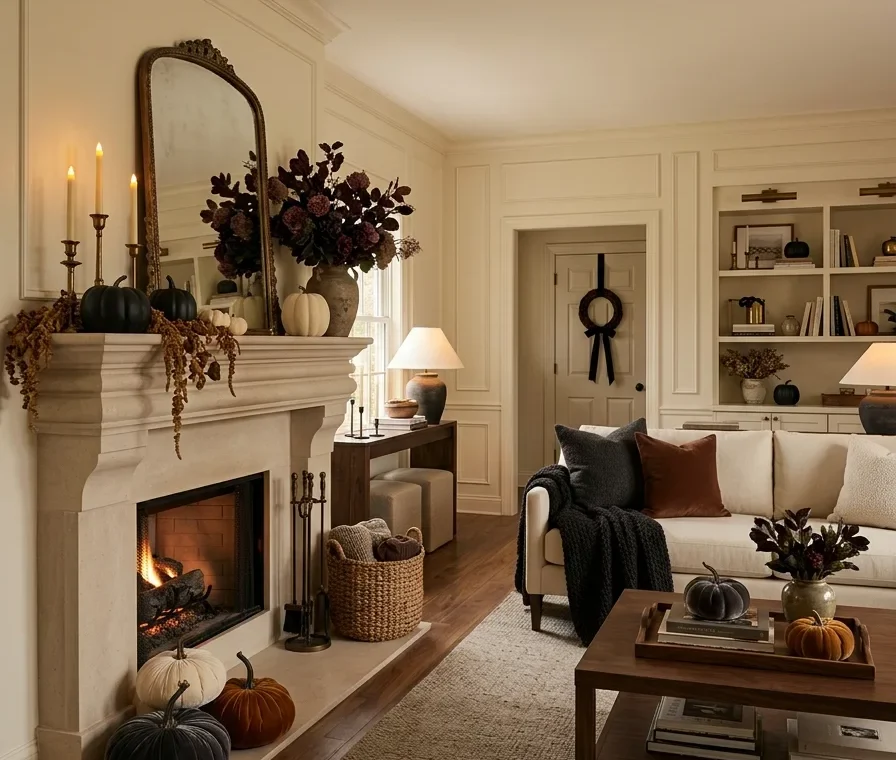
Elegant Halloween decor ideas does not have to mean plastic skeletons on every wall, bright orange lights, or a front yard full of oversized props.
If your home already has a calm, collected style, Halloween works better when it is treated like a seasonal layer rather than a complete room makeover.
Black velvet, warm brass, cream pumpkins, dark flowers, old-looking frames, soft lighting, and a few carefully chosen shapes can create the mood without making the house feel like a party store.
The trick is knowing where to stop.
I would rather see three beautiful pumpkins on a console than twenty small decorations fighting for attention. I would also use flameless candles for most indoor displays, especially around curtains, dried flowers, and other seasonal materials.
If you like rooms that feel styled but still practical, Small Apartment Decor Ideas is another useful guide for editing decor in a smaller home.
What Makes Halloween Decor Look Classy?
The easiest formula is one dark color + one warm metal + one soft texture + one seasonal shape.
For example:
- matte black
- aged brass
- velvet
- pumpkins
That is enough to establish the season.
You can then repeat those elements in different rooms without buying a matching Halloween collection.
I would also keep the existing architecture visible. A beautiful fireplace, wood floor, paneled wall, curved mirror, or large window can do more for the room than another decorative object.
Plan the Display Before You Buy Anything
Before shopping, walk through the house and choose the three or four places that matter most.
Good spots include:
- the entry console
- fireplace mantel
- dining table
- living room coffee table
- staircase
- front porch
- kitchen island
- bathroom vanity
Measure the surfaces first.
A console display that looks balanced on a 60-inch table may overwhelm a 36-inch one. Likewise, a centerpiece that works on a large dining table can block conversation on a smaller table.
I would also photograph each area before shopping. It makes it easier to see what is already there and what can be removed.
1. Start With a Black, Cream, and Brass Color Palette
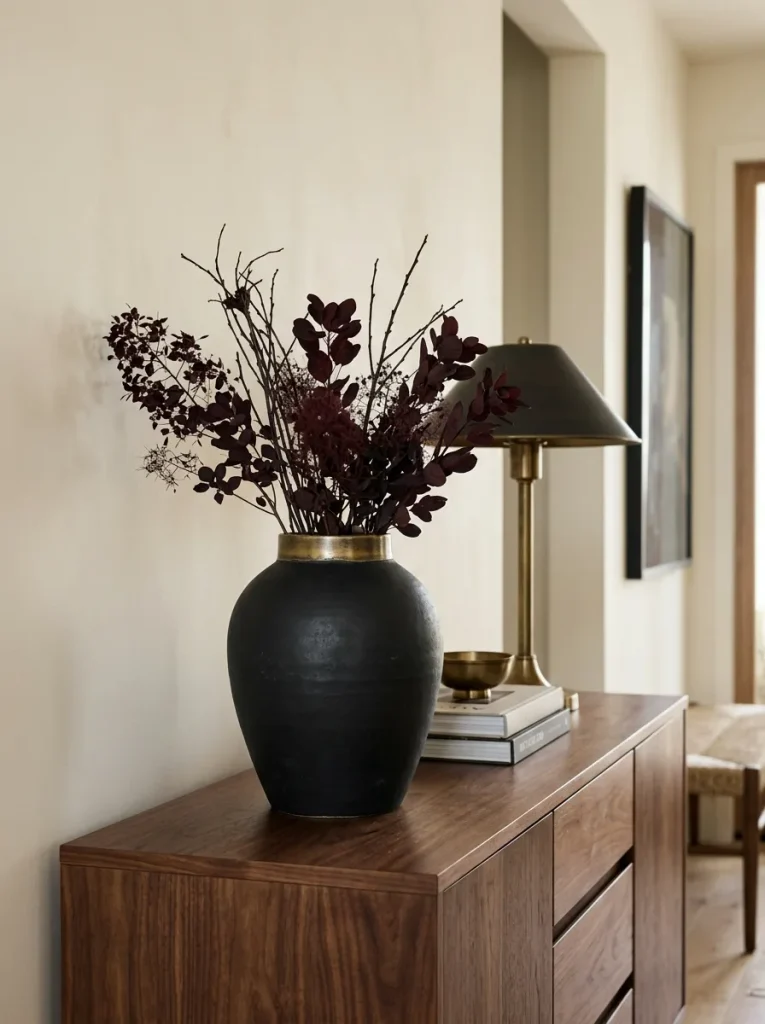
Size and requirements: Keep the main palette to black, warm ivory, aged brass, and one muted accent such as burgundy or olive.
Method and cost: Build the palette with removable pieces such as pillows, ribbon, pumpkins, candles, and art. Expect $50–$250 for a coordinated refresh.
Pros: Looks sophisticated and works with many existing interiors.
Cons: Too much black can make a small room feel dark.
Keep the palette visible in more than one layer: use the black on a larger piece, cream on the base, brass on a small metal detail, and only a little burgundy or olive. That balance keeps the room from looking like a Halloween display aisle.
2. Style the Fireplace Mantel With Height and Restraint
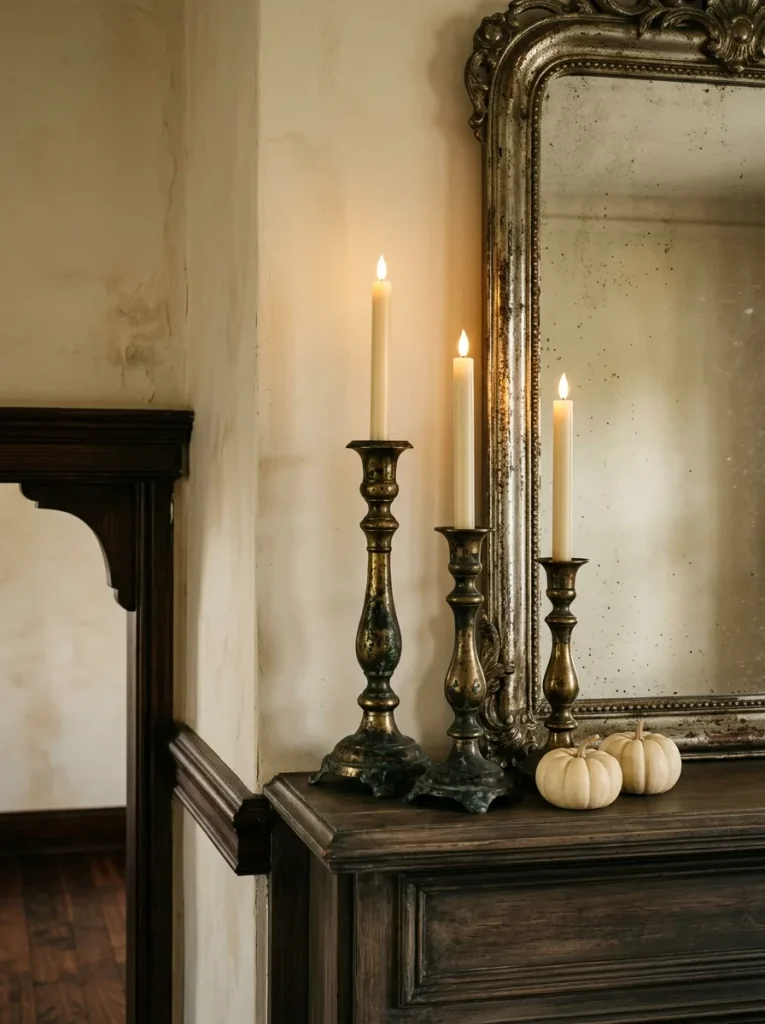
Size and requirements: Keep the main display around two-thirds of the mantel width and use objects at three different heights.
Method and cost: Layer a mirror or artwork, two candleholders or flameless lanterns, and a few pumpkins or branches. Budget $75–$400+.
Pros: Creates a strong focal point without decorating every surface.
Cons: Heavy objects need stable placement and crowded mantels quickly lose the elegant look.
For the mantel, place the mirror or artwork first, then build outward with one tall object on one side and lower pumpkins or foliage on the other. Leave some open mantel surface so the fireplace still reads as architecture.
3. Use Matte Black Pumpkins Instead of Bright Orange Everywhere
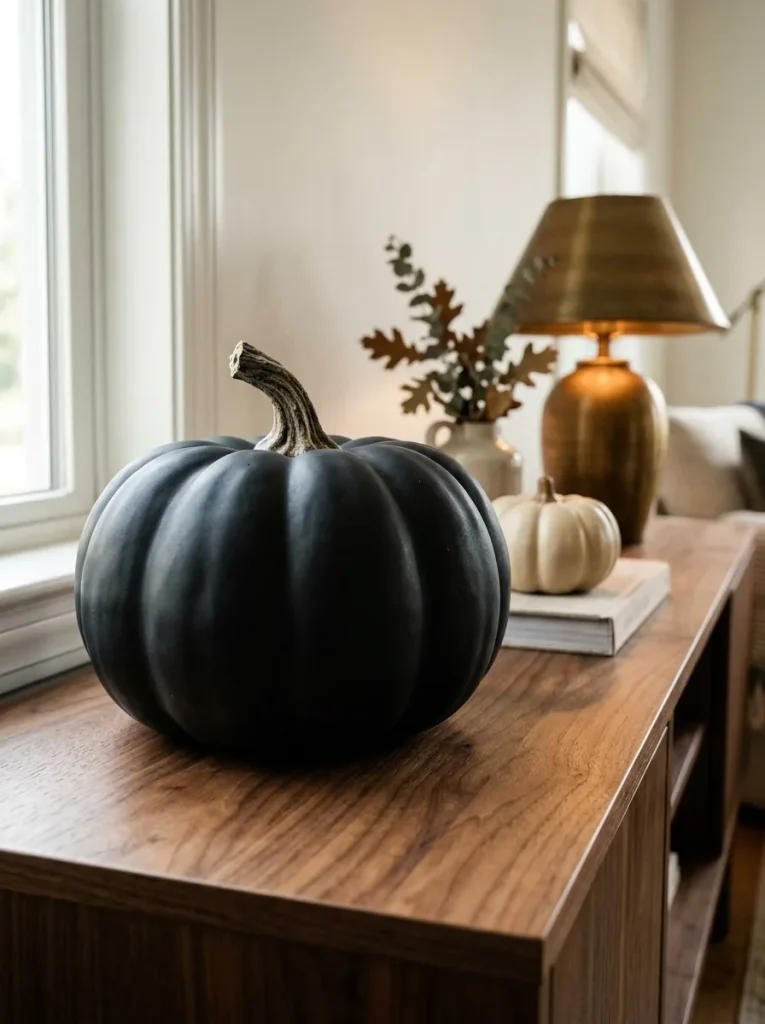
Size and requirements: Mix roughly three sizes using black, cream, charcoal, or muted green pumpkins.
Method and cost: Use real or faux pumpkins and group them in odd numbers. A collection may cost $40–$200+.
Pros: Gives instant Halloween atmosphere with a grown-up palette.
Cons: A monochrome display can look flat without texture.
Use the pumpkins as the actual focal group rather than adding black accents everywhere. A black velvet or matte ceramic finish beside one cream pumpkin gives the display enough contrast without making the whole room feel dark.
4. Add Velvet Pumpkins for Soft Texture
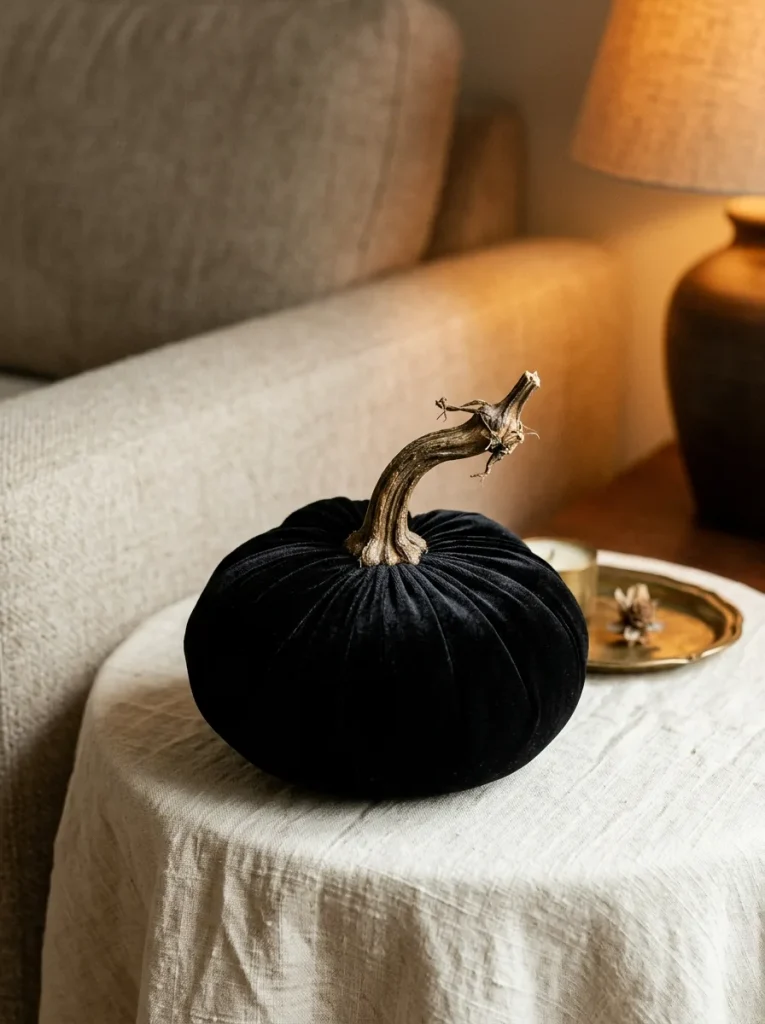
Size and requirements: Use 3–7 velvet pumpkins, generally around 3–8 inches wide.
Method and cost: Place them on a console, dining table, shelf, or mantel. Budget $8–$30 each.
Pros: Adds softness and color without looking childish.
Cons: Too many small velvet pumpkins become visual clutter.
Choose velvet pumpkins when the room already has hard surfaces such as wood, stone, glass, or metal. Their soft texture adds depth, especially when the colors are kept within black, cream, burgundy, and muted green.
5. Create a Moody Floral Arrangement
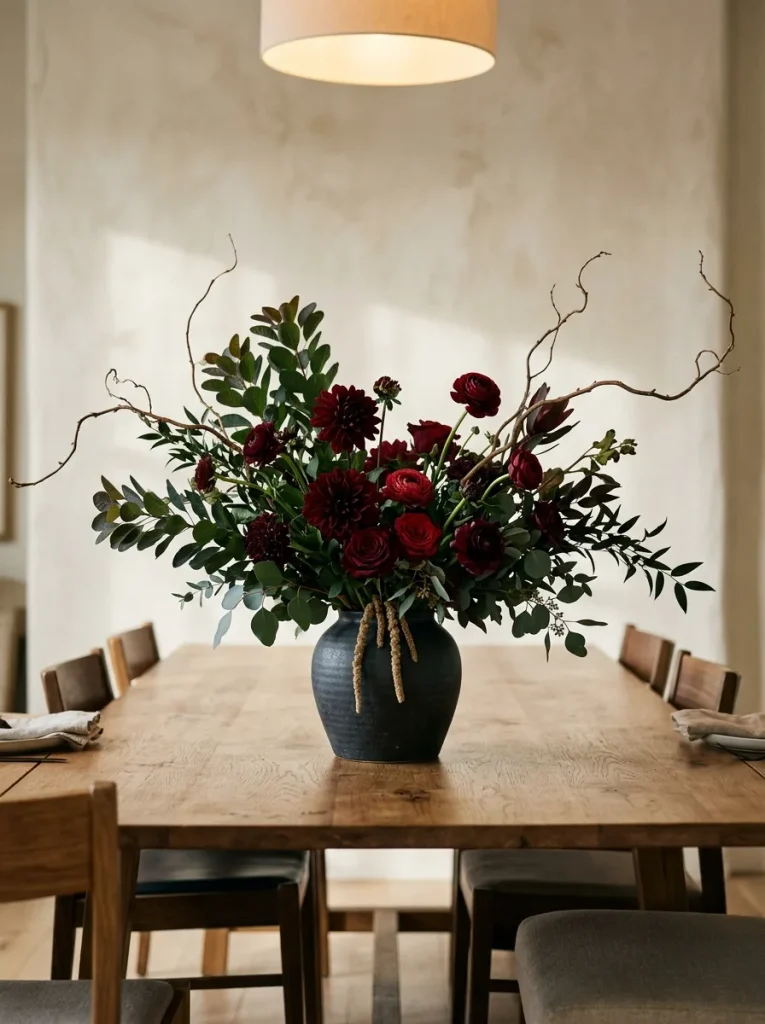
Size and requirements: Choose a vase around 8–14 inches tall and keep the arrangement proportional to the furniture.
Method and cost: Try dark foliage, burgundy flowers, eucalyptus, dried branches, or high-quality faux stems. Budget $40–$180+.
Pros: Brings Halloween atmosphere through color and shape rather than novelty props.
Cons: Fresh flowers need maintenance and dried materials must stay away from heat sources.
Let the flowers carry the seasonal mood. Dark foliage, burgundy blooms, crooked branches, and an irregular silhouette will feel more atmospheric than adding several obvious Halloween props beside the vase.
6. Use Aged Brass Candleholders With Flameless Candles
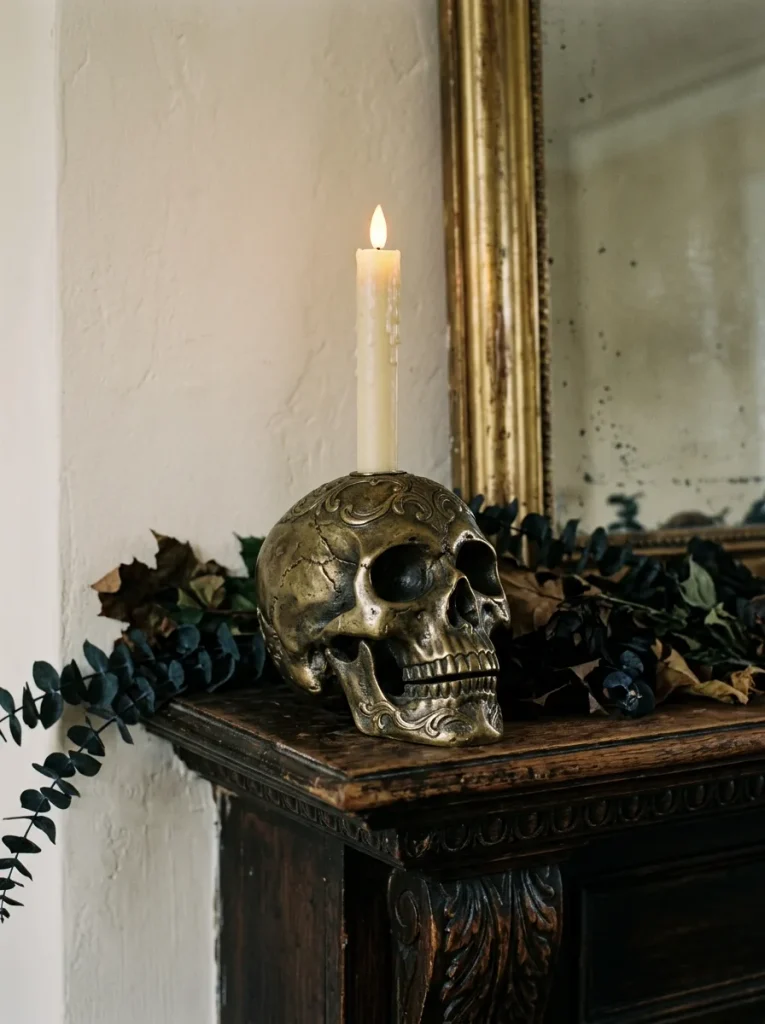
Size and requirements: Choose candleholders around 6–14 inches tall on a stable, uncluttered surface.
Method and cost: Use battery-operated flameless candles for the main display. Budget $50–$250+.
Pros: Gives a candlelit effect without adding open flames to a room full of seasonal textiles.
Cons: Very cheap flicker effects can look artificial.
Group the brass holders at different heights, but keep the display compact. Flameless candles are the practical choice here because the look depends on placing metal, fabric, foliage, and pumpkins close together.
7. Hang a Simple Black Ribbon Wreath
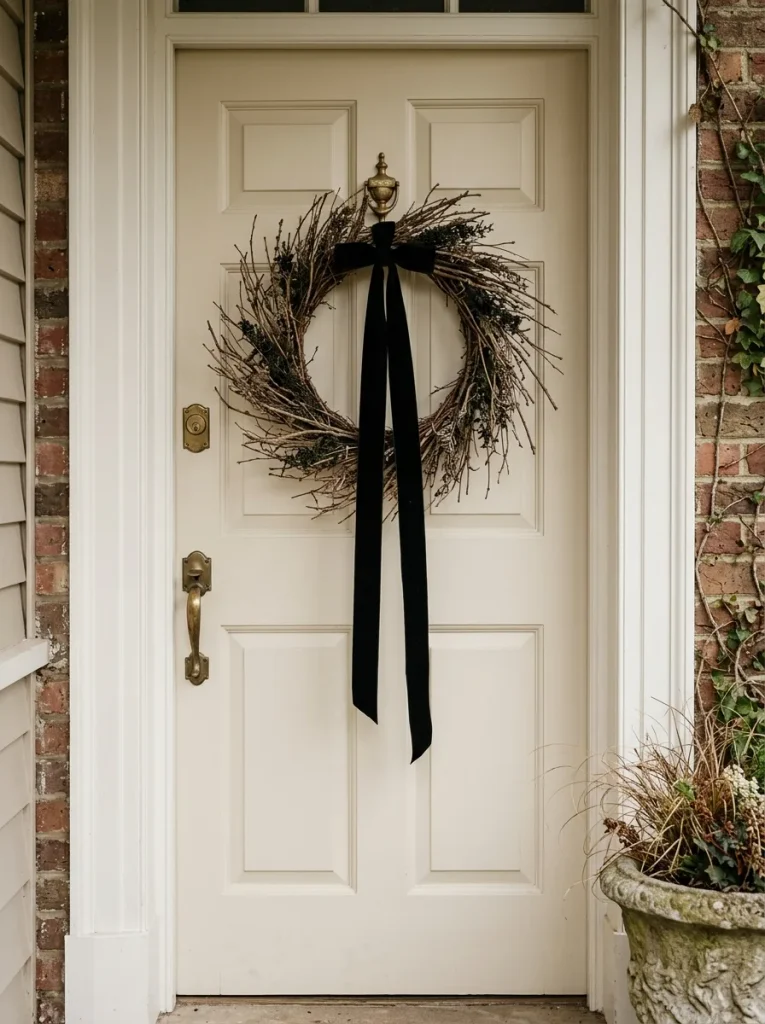
Size and requirements: A wreath around 20–26 inches wide works well on many standard entry doors or interior walls.
Method and cost: Use a twig, eucalyptus, or dried-floral wreath with one wide black velvet or satin ribbon. Budget $40–$180+.
Pros: Seasonal but elegant and easy to remove.
Cons: A giant bow can overwhelm a small door.
Make the wreath the only strong decoration on the door. A simple black ribbon tied low or hanging naturally can look more expensive than a large bow surrounded by plastic Halloween ornaments.
8. Add One Vintage-Inspired Halloween Portrait
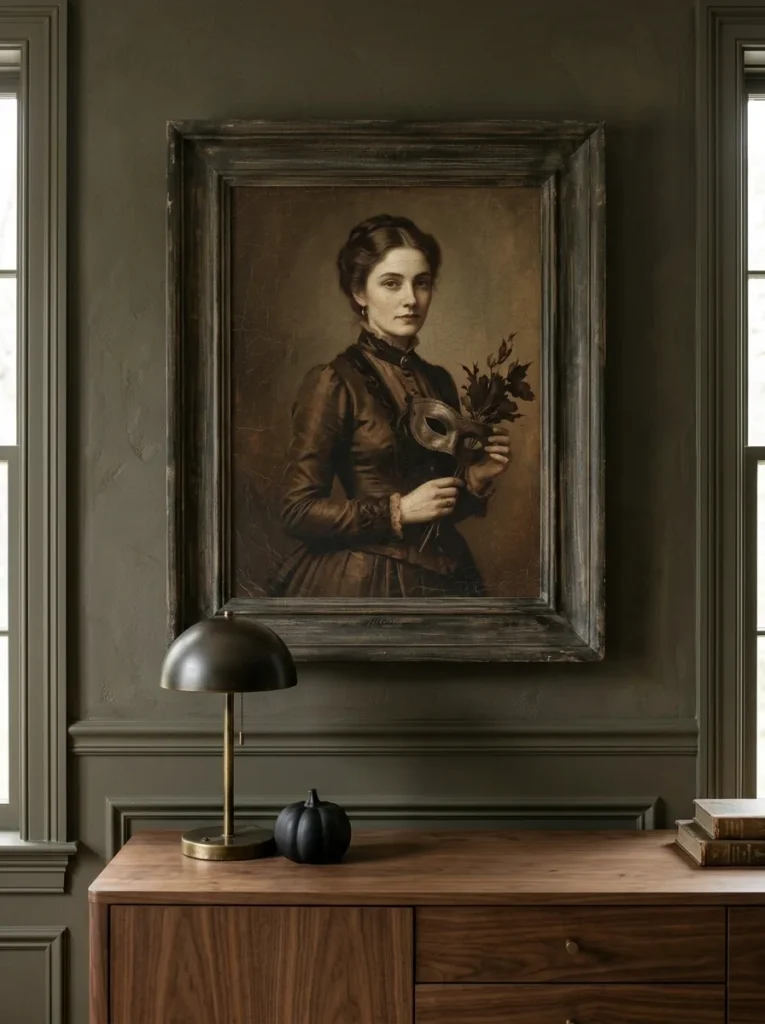
Size and requirements: Choose one framed piece around 18–30 inches high rather than filling a wall with novelty prints.
Method and cost: Use a black, dark wood, or antique-look frame above a console or within an existing gallery wall. Budget $30–$150+.
Pros: Adds personality and a collected feeling.
Cons: Fragile or heavy frames need suitable support.
Treat the portrait like artwork rather than a Halloween prop. A single dark frame above a console creates the mood; adding several spooky prints would make the same wall feel themed instead of collected.
9. Decorate a Console Table With Three Visual Levels
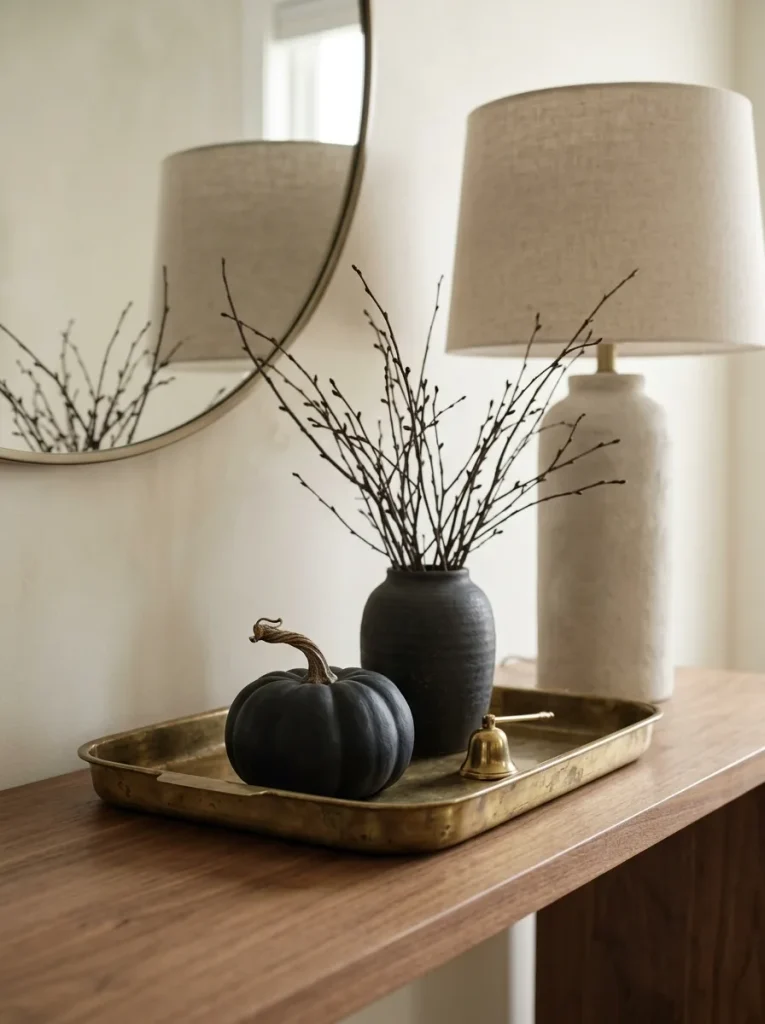
Size and requirements: A console around 10–16 inches deep can hold a mirror, lamp, and low seasonal arrangement while preserving the walking path.
Method and cost: Build the display with one tall object, one medium object, and a low pumpkin or tray. Budget $75–$350+.
Pros: Creates an intentional entry moment.
Cons: Too many objects reduce useful drop-zone space.
Use the mirror or artwork as the tall anchor, the lamp or vase as the middle layer, and the tray or pumpkins as the low layer. Keep the front edge of the console useful so keys and everyday items still have a place.
10. Use a Black-and-Cream Dining Table Setting
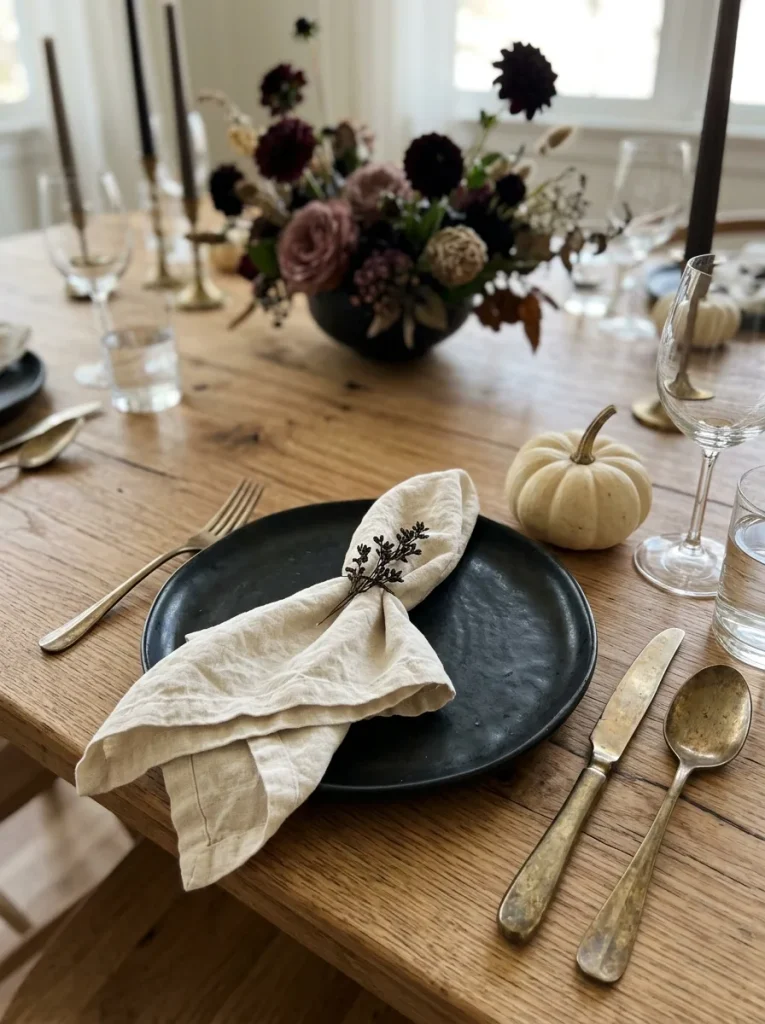
Size and requirements: Leave at least 12 inches of clear working space at each place setting and keep the centerpiece low.
Method and cost: Combine cream linens, black napkins or plates, brass flatware, and a low centerpiece. Budget $100–$500+.
Pros: Feels festive but appropriate for an adult dinner.
Cons: Tall centerpieces can block conversation.
Keep the centerpiece low enough that people can see across the table. The contrast should come from the black plates or napkins, cream linens, warm wood, and brass details—not from a pile of Halloween decorations.
11. Build a Low Pumpkin Centerpiece
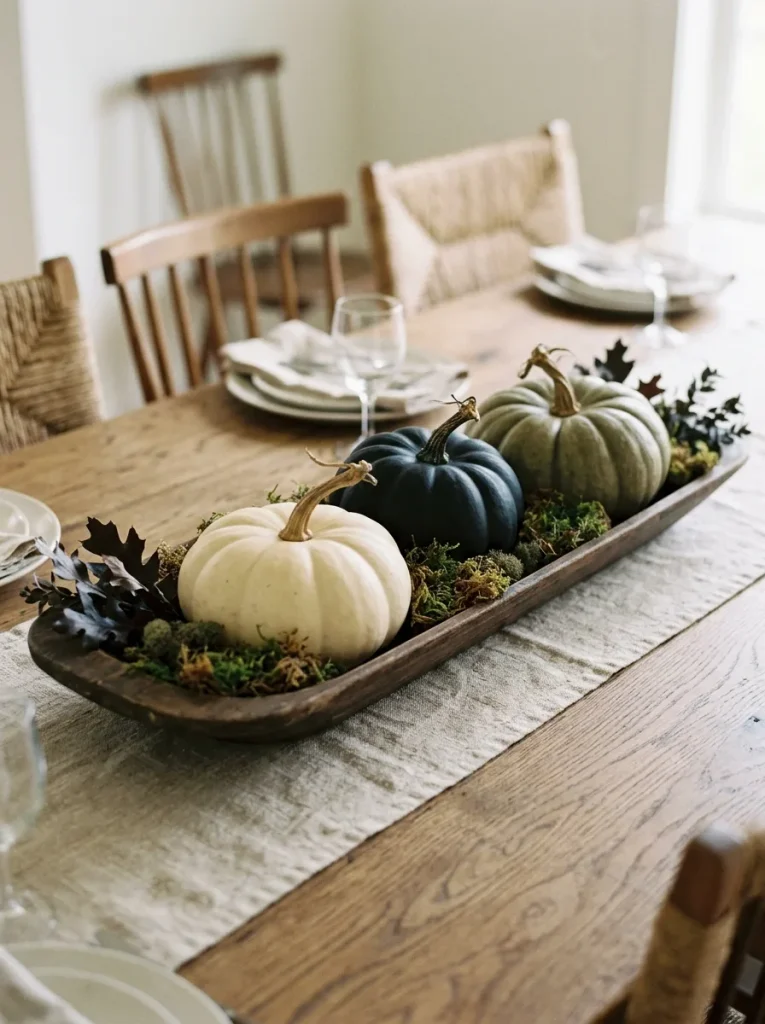
Size and requirements: Keep the centerpiece under about 12–14 inches high when guests sit around the table.
Method and cost: Arrange three to five pumpkins with moss, branches, or dark foliage on a long tray. Budget $40–$180+.
Pros: Easy to see over and simple to remove.
Cons: Natural moss and dried foliage can shed.
Use a long tray to visually contain the pumpkins and foliage. This makes the centerpiece easier to move when the table is needed and prevents individual pieces from spreading into each place setting.
12. Use Black Taper Candles Only as a Color Accent
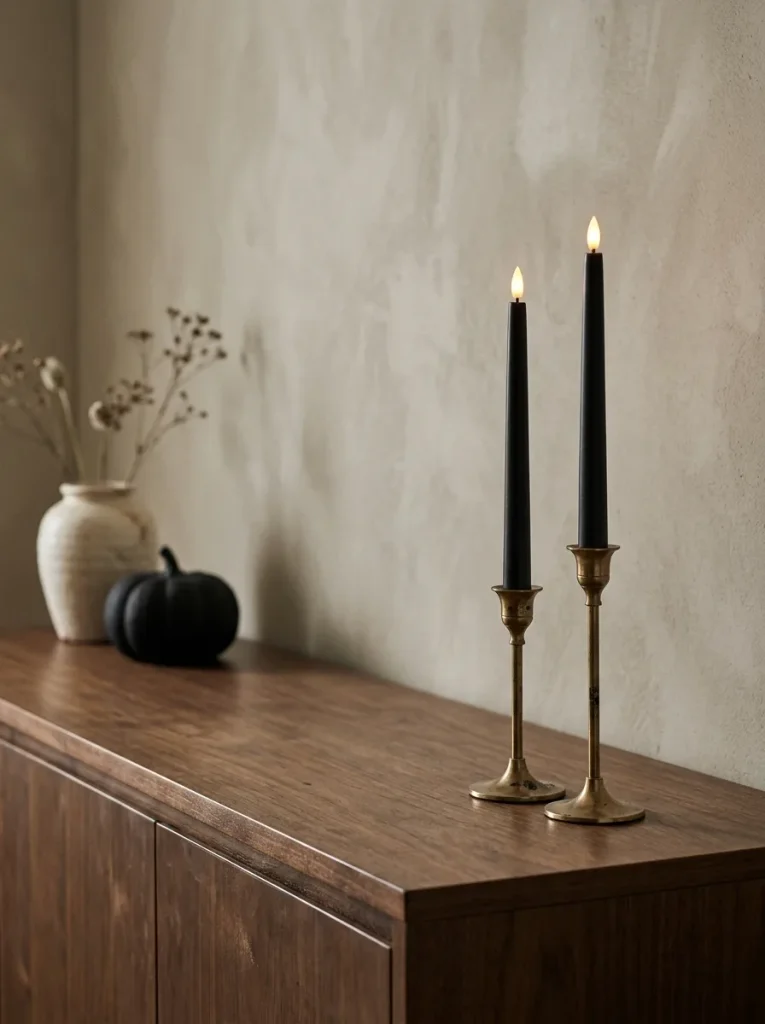
Size and requirements: Use a small grouping of 2–4 candles rather than filling every surface.
Method and cost: For open flames, use stable holders and keep candles well away from curtains, dried foliage, paper, and other combustibles. For everyday display, choose flameless tapers. Budget $20–$100+.
Pros: Adds a subtle Gothic note.
Cons: Open flames require constant attention.
If you use real taper candles, make them the decorative accent rather than the main source of light. For a safer everyday version, use realistic flameless tapers in the same black holders and keep the surrounding foliage clearly separated.
13. Drape a Small Amount of Faux Cobweb Across One Architectural Detail
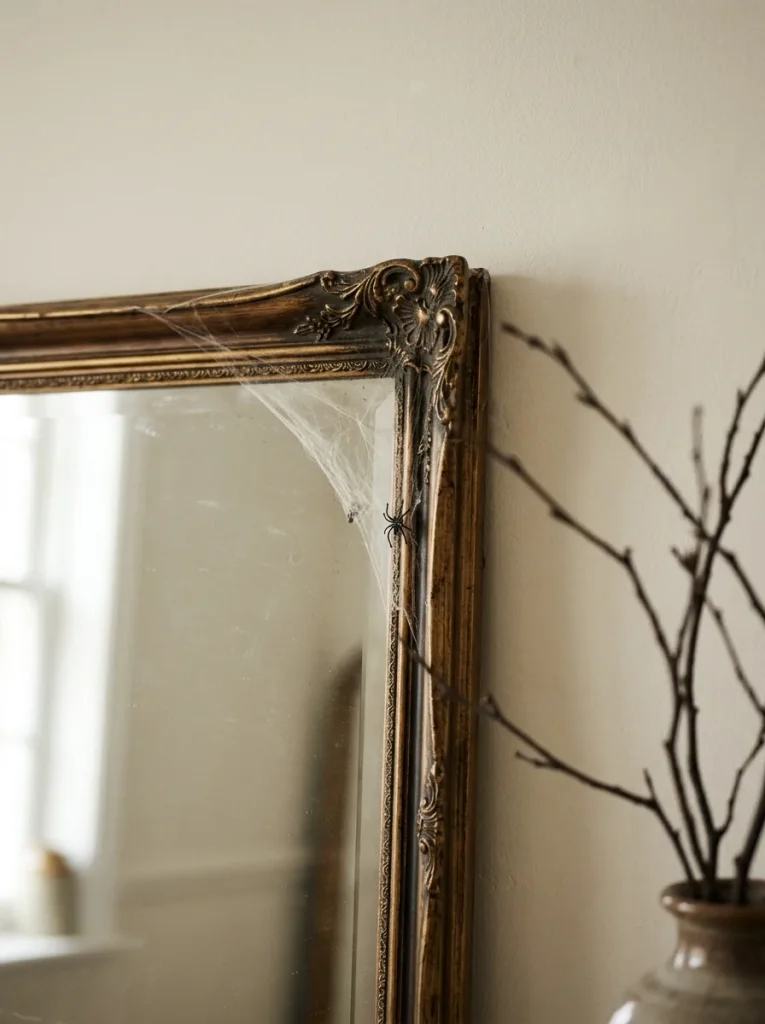
Size and requirements: Keep the cobweb effect to one small zone, such as one mirror corner, shelf, or chandelier arm.
Method and cost: Stretch a thin amount of good-quality web material instead of covering the room. Budget $10–$40.
Pros: Adds a recognizable Halloween cue while keeping the rest polished.
Cons: Too much looks messy and loose fibers create cleaning work.
Keep the web effect intentionally incomplete. A small strand catching one mirror corner or shelf edge suggests an old, slightly mysterious house without turning the room into a haunted attraction.
14. Style a Staircase With a Minimal Black Garland
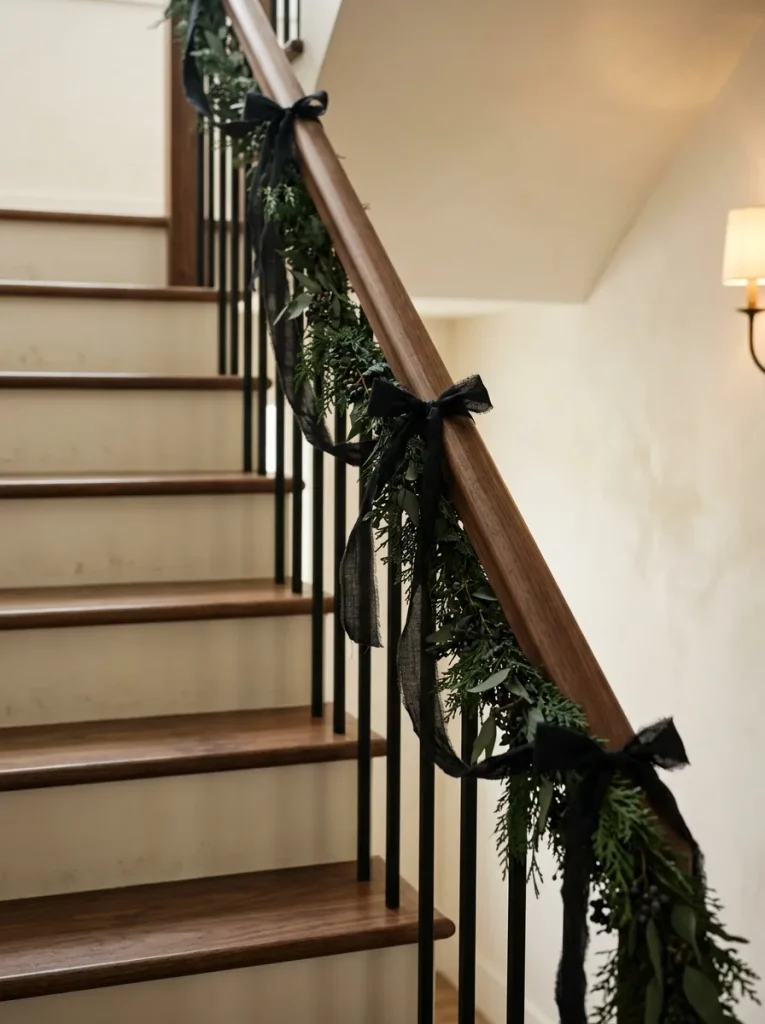
Size and requirements: Keep garland close to the handrail and never reduce usable stair width.
Method and cost: Use lightweight faux greenery or black ribbon attached securely at intervals. Budget $40–$200+.
Pros: Adds drama to an architectural area.
Cons: Loose or bulky garland can create a trip or snag hazard.
Attach the garland to the handrail rather than letting it hang across the stairs. The decoration should follow the staircase line neatly, with the handrail and every step remaining easy to use.
15. Use Warm Lighting Instead of Bright Orange LEDs
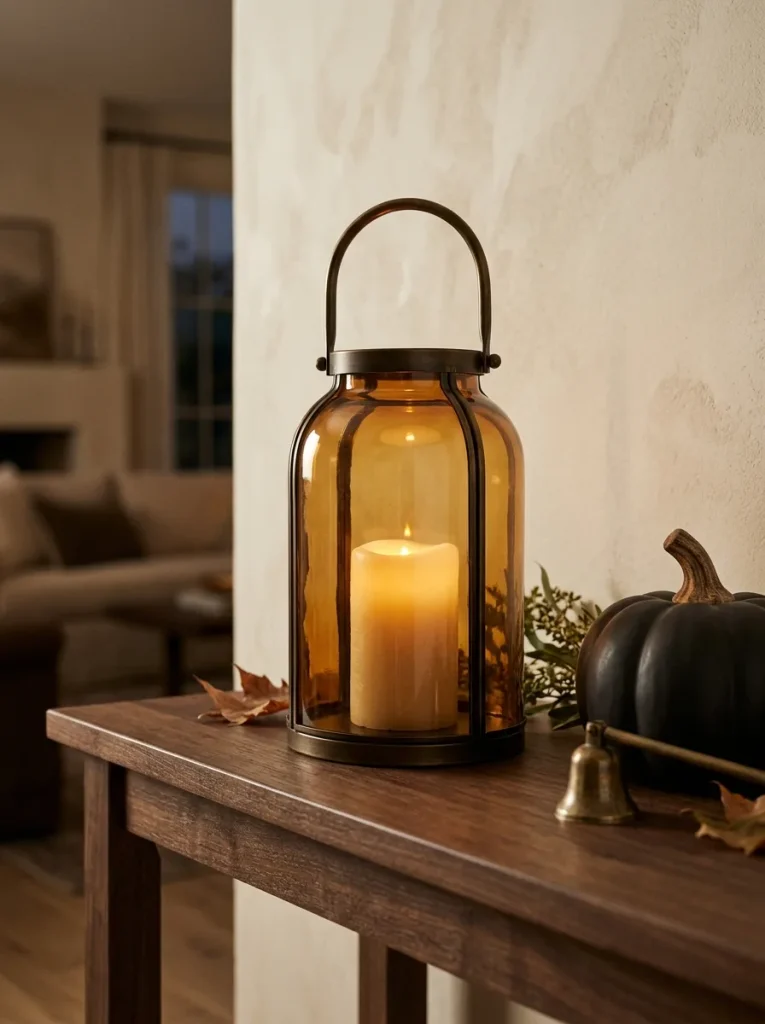
Size and requirements: Aim for warm decorative lighting around 2200K–3000K and use only enough accent light to shape the room.
Method and cost: Layer table lamps, sconces, flameless candles, and a few tested decorative light strands. Budget $50–$300+.
Pros: Makes black, brass, velvet, and cream look richer.
Cons: Too much orange or flashing light can look themed instead of elegant.
Use warm lamps and small pools of light to make the decor look richer. The goal is soft contrast around the pumpkins, brass, and fabrics—not an orange wash over the whole room.
16. Create a Gothic-Inspired Bathroom Moment
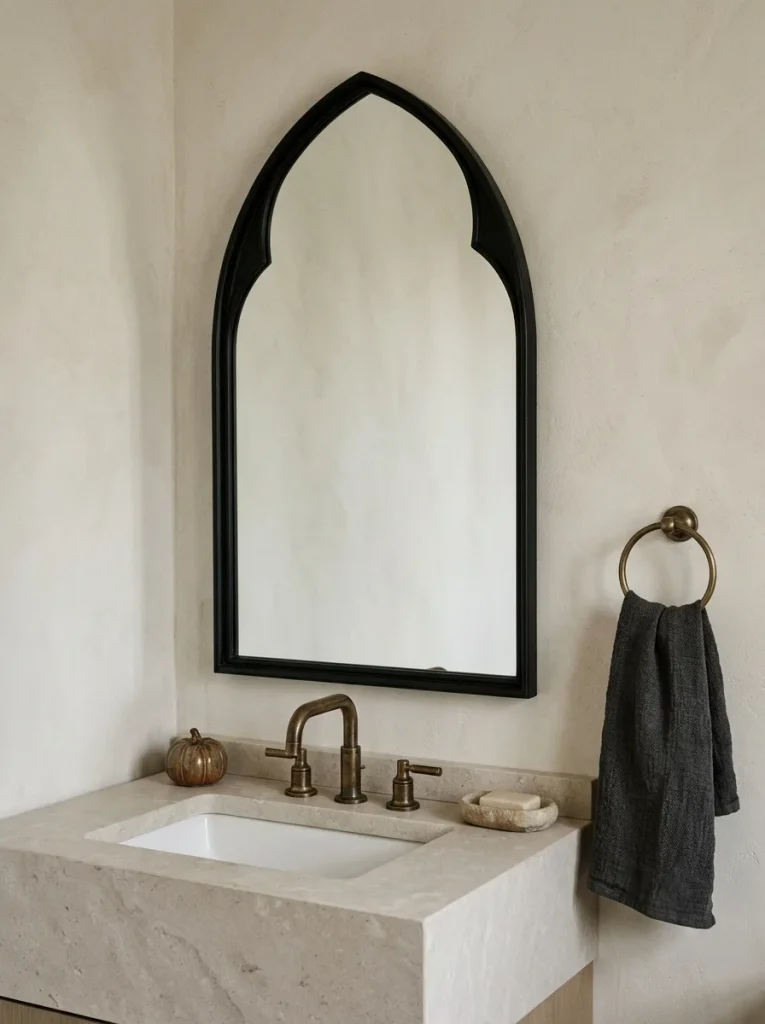
Size and requirements: Use one small 24–36 inch vanity zone rather than decorating every shelf.
Method and cost: Add a black-framed mirror, dark hand towels, one faux branch, and a ceramic pumpkin. Budget $30–$180.
Pros: Adds seasonal character without sacrificing bathroom function.
Cons: Keep textiles away from open flames and do not block the sink or outlets.
Keep the bathroom decoration concentrated around one vanity zone. A dark towel, framed mirror, branch, and small ceramic pumpkin are enough; the counter should still have clear space for normal morning use.
17. Add Subtle Halloween Details to the Bedroom
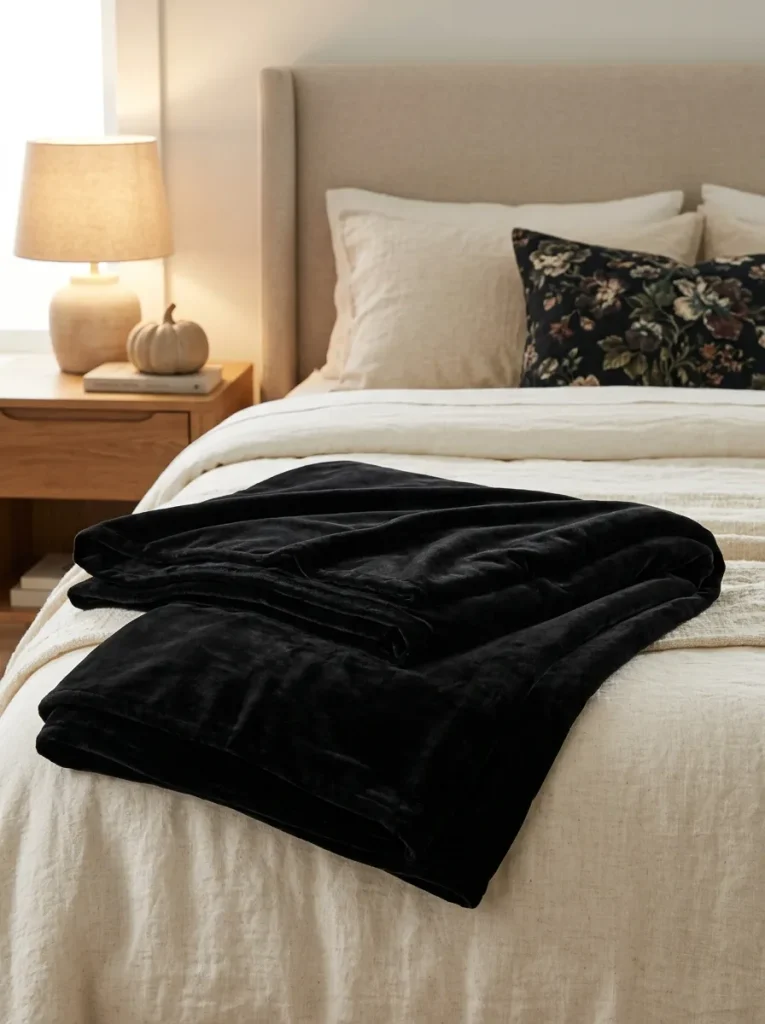
Size and requirements: Keep seasonal decor to about 3–5 pieces so the bedroom remains restful.
Method and cost: Try a black velvet throw, dark floral pillow, small ceramic pumpkin, antique-style frame, and warm bedside light. Budget $50–$250+.
Pros: Creates a sophisticated seasonal mood.
Cons: Too many dark accents can make the room feel heavy.
Let the bedroom stay restful. A black velvet throw and one dark floral accent can establish the season without replacing the calm bedding, and the small pumpkin should feel like a finishing detail rather than a centerpiece.
18. Style a Bar Cart With Dark Glass and Brass
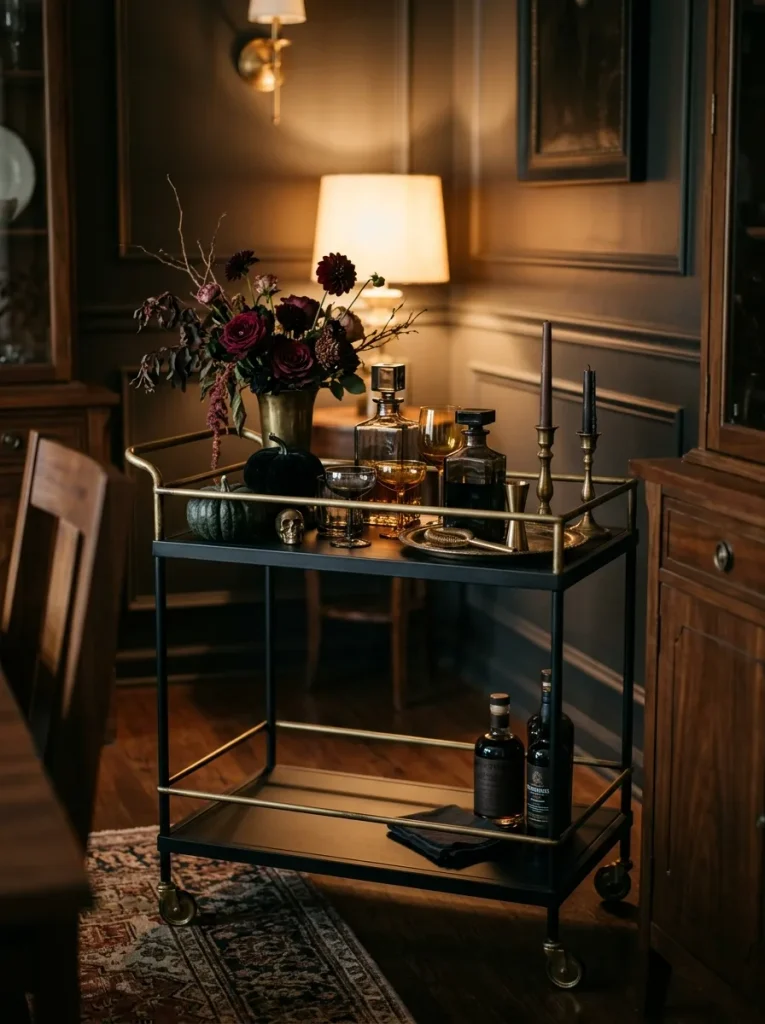
Size and requirements: A compact cart around 18–24 inches wide can hold a seasonal arrangement while preserving serving space.
Method and cost: Add black or amber glassware, a brass tray, dark florals, and one small pumpkin. Budget $50–$300+.
Pros: Feels polished and entertaining-friendly.
Cons: Keep glassware stable and candles away from edges.
Treat the bar cart as a styled serving station, not a storage shelf. Put the brass tray and glassware where they remain functional, then add the dark floral arrangement as the seasonal focal point.
19. Decorate the Front Porch With Symmetry
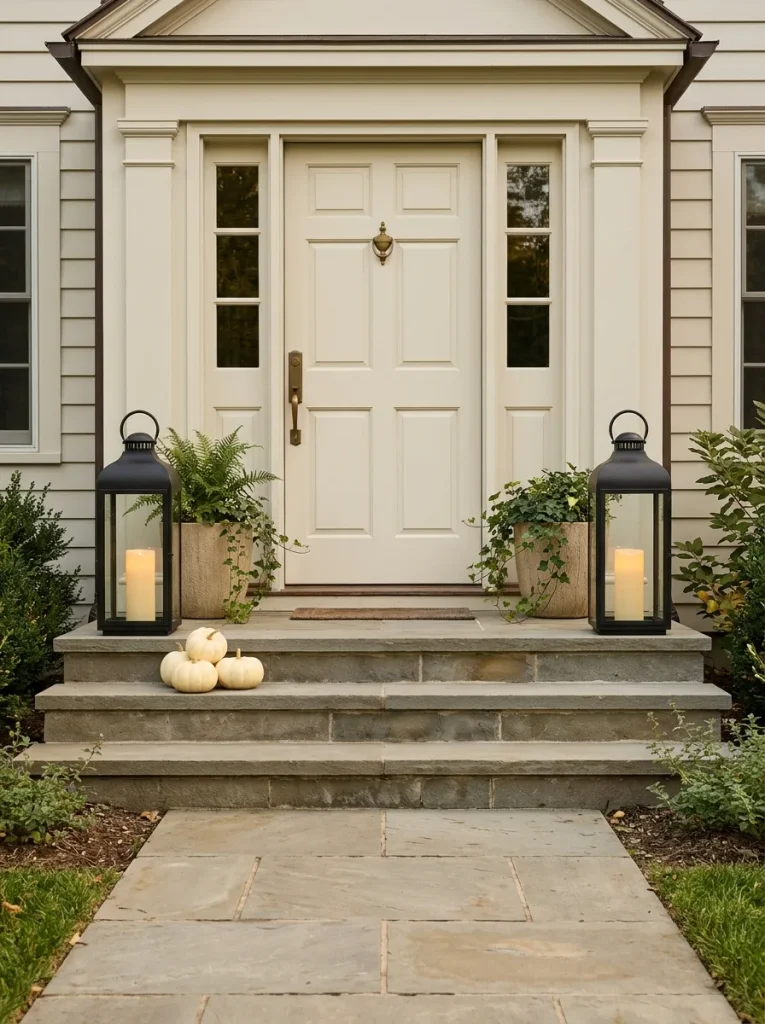
Size and requirements: Use the doorway as the centerline and preserve about 36 inches of practical walking clearance where the entry allows.
Method and cost: Place matching lanterns or planters on both sides, then add a simple wreath and a few pumpkins. Budget $100–$500+.
Pros: Makes the home look finished from the street.
Cons: Do not block steps or the door path.
Use matching visual weight on both sides of the door. Two planters or lanterns create the symmetry first; pumpkins and the wreath should support that structure rather than crowd the entry.
20. Finish With One Unexpected Antique or Heirloom-Look Piece
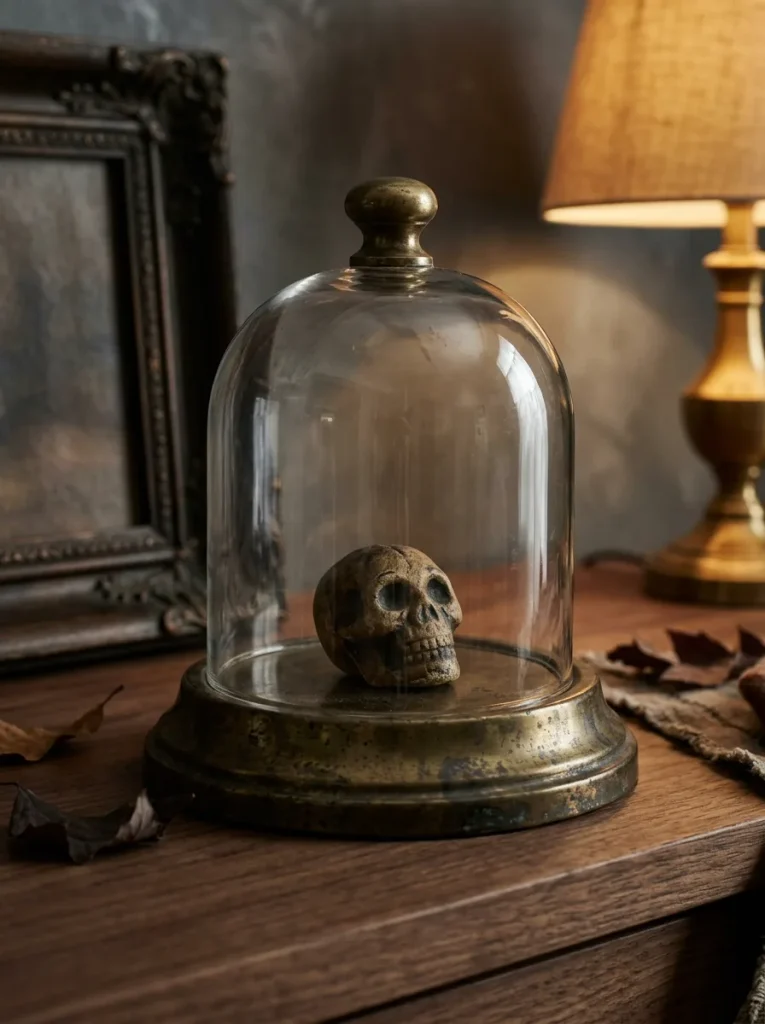
Size and requirements: Choose one hero object around 12–24 inches in its largest dimension.
Method and cost: Try an antique-style mirror, brass cloche, old wooden box, ceramic vessel, or vintage-looking candlestick. Budget $30–$250+.
Pros: Makes the decor feel collected and personal.
Cons: Fragile antiques may not suit high-traffic areas.
Choose an object with a believable age-worn finish and let it stand alone. One brass cloche, old wooden box, or vintage-style vessel adds character because it does not look like it came from a coordinated Halloween set.
21. Repeat One Halloween Motif Across the House
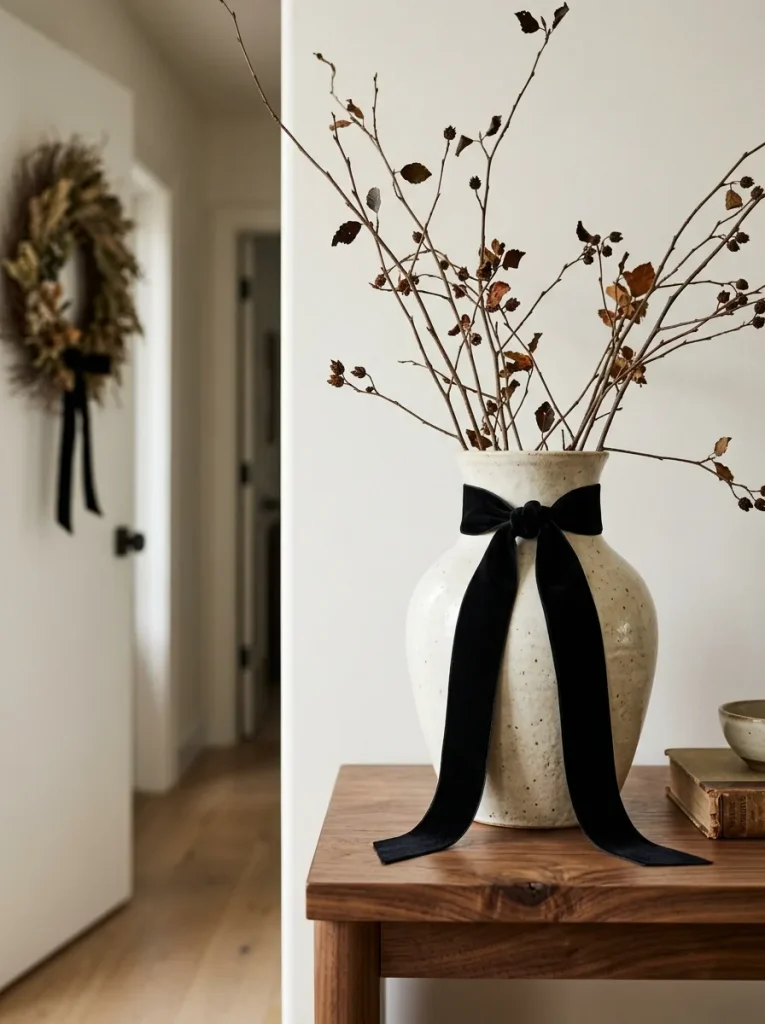
Size and requirements: Pick one motif—black ribbon, crescent shapes, botanical silhouettes, velvet pumpkins, or antique brass—and repeat it in 3–5 rooms.
Method and cost: Use small versions in the entry, living room, dining room, and one bedroom or bathroom. Budget $50–$300+ if you already own the main pieces.
Pros: Makes the home feel coordinated without buying a matching set.
Cons: Repeating the exact same object can feel repetitive.
The motif should repeat through materials or shapes, not by copying the same decoration in every room. A black velvet ribbon can appear on the wreath, table linen, and vase while each room keeps its own styling.
A Practical 10-Step Classy Halloween Decorating Plan
If I were decorating a home for Halloween, I would do it in this order:
- Choose the color palette.
- Walk through the home and select three to five priority zones.
- Remove everyday clutter from those areas.
- Start with one strong focal piece in each zone.
- Add pumpkins in only two or three finishes.
- Introduce brass, wood, velvet, or another warm texture.
- Add warm lighting instead of relying on orange LEDs.
- Use flameless candles for most indoor displays.
- Check walkways, doors, cords, and heat sources.
- Stop before every surface becomes decorated.
The last step matters. A classy Halloween home should still look like your home.
Approximate Budget by Update Level
Low-cost refresh: $75–$300 – Black ribbon – A few pumpkins – Flameless candles – One floral arrangement – Dark pillow covers – Small framed artwork
Mid-range update: $400–$1,500 – Wreath – Mantel decor – Dining linens – Velvet pumpkins – Lighting – Faux branches – Porch planters or lanterns
Full-home seasonal styling: $1,500–$4,000+ – Coordinated entry, living, dining, bedroom, bathroom, and porch pieces – Higher-quality faux florals – Decorative lighting – Premium wreath – Larger art and mirrors – Storage for reusable seasonal decor
You do not need the highest budget to get the best result. The biggest improvement usually comes from editing the display.
What I Would Spend More On
I would spend more on one good wreath, one strong mantel piece, quality flameless candles, and reusable neutral pumpkins.
Those pieces can return every October.
I would spend less on novelty signs, disposable plastic props, and decorations that only work in one exact theme.
If you are buying seasonal decor, storage matters too. A beautiful piece that breaks after one season is not really a bargain.
Common Mistakes I Would Avoid
Decorating every surface. Leave some normal home decor visible.
Using only bright orange. A little orange can be beautiful, but black, cream, brass, burgundy, and wood usually create a more refined palette.
Using too many tiny decorations. Larger, fewer pieces read as intentional.
Putting real candles beside dried foliage. Use flameless candles when the materials are close.
Blocking stairs and exits. Halloween decor should never interfere with safe movement.
Using damaged light strands. Check decorative lights for damaged sockets, frayed wires, or loose connections and discard damaged sets.
Running cords through walking paths. Route them along safe edges and use appropriate equipment.
Making every room spooky. One or two stronger rooms plus subtle accents elsewhere usually feels better.
Ignoring the existing style of the home. Halloween decor should complement the furniture and architecture already there.
Buying before measuring. A giant porch lantern or oversized mantel piece can overwhelm the space.
Halloween Safety Check
Halloween decor often introduces candles, electrical lights, dried foliage, ribbons, and other materials that are more flammable or easier to trip over than everyday decor.
The National Fire Protection Association’s Halloween fire-safety guidance recommends keeping decorations away from open flames and heat sources, using battery-operated candles, and keeping exits clear.
The U.S. Consumer Product Safety Commission’s Halloween safety guidance also recommends flameless lights for many Halloween decorations, keeping burning candles away from curtains and combustible materials, checking decorative light strands for damage, and avoiding overloaded extension cords.
For candles specifically, the NFPA candle-safety guidance recommends keeping candles at least 1 foot (30 cm) from anything that can burn and extinguishing candles before leaving the room or going to bed.
Final Thoughts
Elegant Halloween decor is really about restraint.
You do not need a haunted house in every room. A black ribbon, cream pumpkin, aged brass candleholder, dark floral arrangement, warm lamp, and one unusual vintage-looking object can create more atmosphere than a pile of novelty decorations.
I would start with the room people see first.
Then choose one or two strong seasonal zones.
After that, repeat a material or color through the rest of the house.
The goal is for someone to walk in and think, “This feels like Halloween,” before they notice exactly why.
That is the kind of seasonal decorating that still feels like your home.
Disclosure: Some visuals are AI-assisted design concepts created for inspiration. Always confirm measurements, material suitability, electrical ratings, mounting requirements, candle safety, load limits, weather ratings, and manufacturer instructions before installing or using seasonal decor. Cost ranges are approximate U.S. planning figures and vary by location, labor, materials, shipping, and product quality.
About the Author
Ali Hamza — Founder & Editor
Hi, I’m Ali Hamza, and Styled Room Living is my personal home decor project. I don’t have a formal background in interior design. I started this website because home makeovers are something I genuinely enjoy looking at and learning about.
Most of the ideas shared here are not projects I have personally installed in every type of home. When I put a guide together, I try to separate an idea that only looks good in a photograph from one that could actually work in a normal home. Will it fit? Is it safe? Can people still walk around? Is it useful after the holiday? These are the questions I keep in mind.
Some images on the website are AI-assisted design concepts used to explain an idea more clearly. They are meant for inspiration, not exact installation plans. Please check measurements, materials, prices, electrical details, candle safety, weight limits, and manufacturer instructions before trying anything in your own home.
I’m still learning as the website grows, and I know every home works differently. My purpose with Styled Room Living is simply to collect useful home ideas, explain them in plain language, and help readers find something they can adapt to their own space.