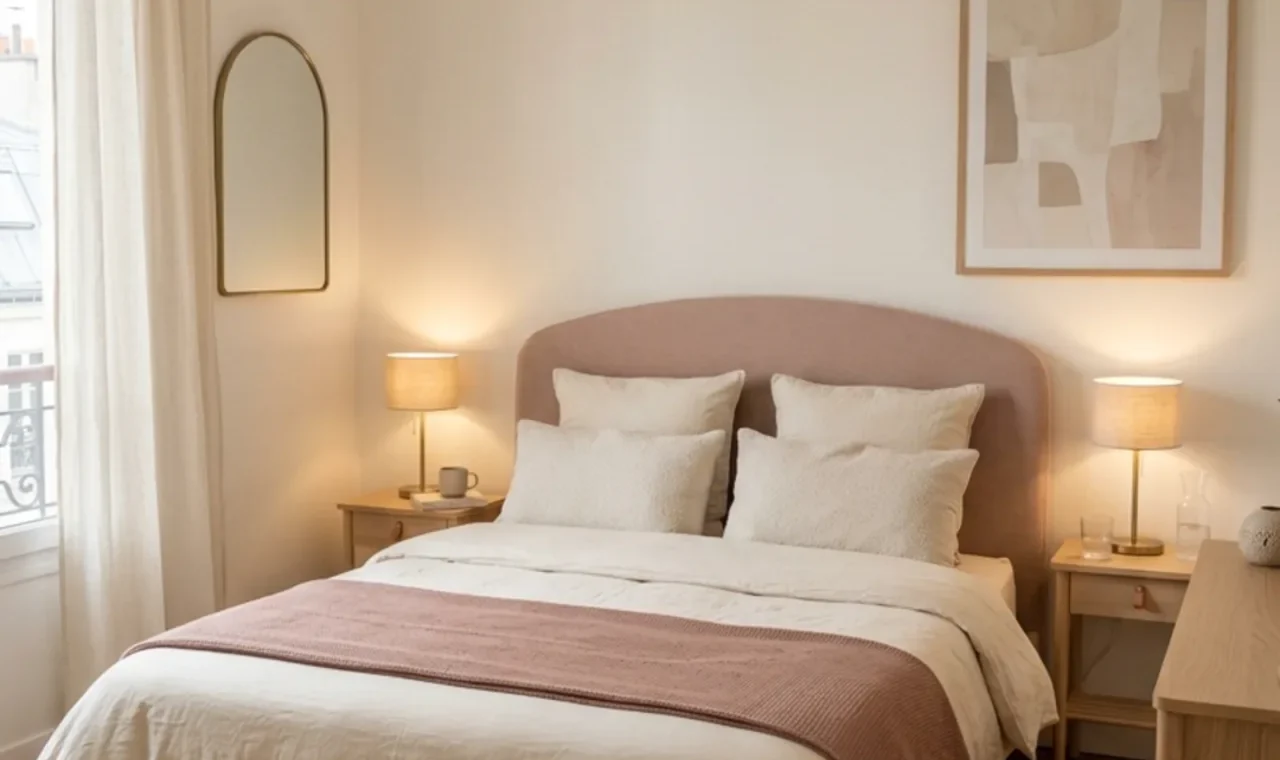
Romantic minimalist small apartment bedroom ideas work best when the room feels soft without becoming overloaded. The romantic side comes from warm light, curved shapes, tactile fabrics, and a gentle color palette. The minimalist side comes from leaving enough empty space that those details can actually be noticed.
That balance matters even more in a small apartment bedroom. A compact room can look beautiful with blush bedding, a curved headboard, linen curtains, a soft rug, and warm bedside lighting. But if you also add a bench, vanity, large armchair, gallery wall, floor mirror, multiple lamps, decorative trays, and lots of pillows, the room quickly starts to feel crowded.
I would treat romance as a mood rather than a theme. You do not need heart-shaped decor, roses everywhere, or an all-pink room. Cream, warm white, dusty rose, muted mauve, soft taupe, pale wood, warm brass, and gentle lighting can create the feeling in a much more grown-up way.
This guide includes practical dimensions, rough U.S. planning costs, setup steps, and pros and cons for every idea. It also covers renter-friendly options, small-bedroom storage, bed placement, lighting, rugs, curtains, wall decor, and ways to keep the room cozy without sacrificing walking space.
What Makes a Bedroom Feel Romantic and Minimal at the Same Time?
A romantic minimalist bedroom usually has fewer pieces, but each one has softness.
Instead of filling the room with decor, you might use:
- one softly upholstered headboard
- layered cream and blush bedding
- warm bedside lamps
- one curved mirror
- one soft rug
- one or two framed prints
- a simple wood nightstand
- light curtains that soften the window
The room should still have visible wall, floor, and tabletop space.
Color also needs restraint. A pale neutral base with one muted romantic accent is usually enough. Dusty pink, muted mauve, terracotta rose, soft plum, warm beige, and sage can all work without making the room feel overly themed.
Benjamin Moore’s color overview resources are useful when comparing soft warm neutrals and muted accent colors in your actual room.
If your apartment bedroom is especially tight, see Small Apartment Bedroom Ideas before buying furniture.
Before Decorating, Measure the Bed and Walking Space
The bed controls almost the whole room, so start there.
A queen mattress is commonly around 60 by 80 inches, while a full mattress is around 54 by 75 inches. The frame can be several inches wider and longer than the mattress.
Try to preserve roughly 24–30 inches of walking space along the sides people regularly use. Small apartments may need compromise, but the room should not require you to turn sideways around the bed every day.
Nightstands around 14–20 inches wide are often enough in compact bedrooms. You do not need matching 24-inch-wide tables if that reduces circulation.
A rug under a queen bed often starts around 8 by 10 feet, but a smaller 5 by 8 or 6 by 9 rug can work if positioned under the lower two-thirds of the bed.
For lighting, plan outlets before furniture. A romantic bedroom feels much better with two warm light sources than one harsh ceiling light.
1. Use Warm White Walls as the Base
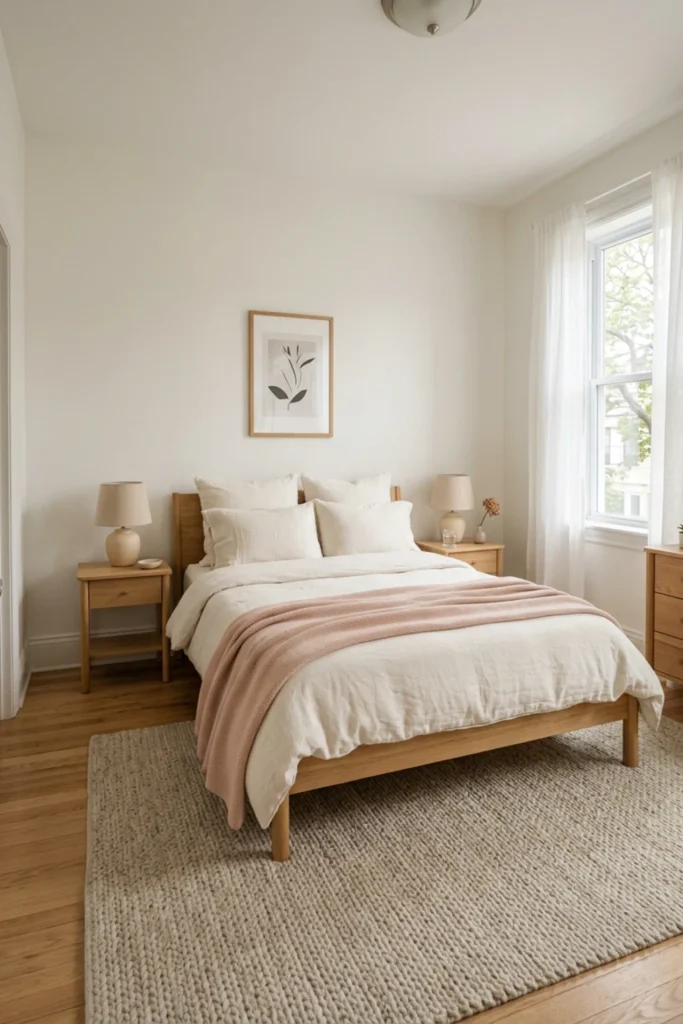
Warm white is one of the easiest ways to keep a small romantic bedroom calm.
It reflects light, works with almost any bedding, and gives blush, mauve, taupe, or soft rose accents room to stand out.
I would avoid a very cold blue-white because it can make warm fabrics look slightly gray.
Size and requirements: Keep the majority of the visible walls warm and light. If you want one accent color, use it on a smaller wall or through textiles rather than repainting the whole room.
Method and cost: Test a large paint sample in morning and evening light. DIY paint and supplies for a small bedroom may cost around $100–$350. Professional painting may cost roughly $600–$1,600+, depending on preparation and location.
Pros: Makes the room feel larger; easy to style; works with almost every romantic color.
Cons: Shows marks; some warm whites look yellow under warm bulbs; very plain walls need texture elsewhere.
2. Add a Soft Blush or Dusty Rose Headboard
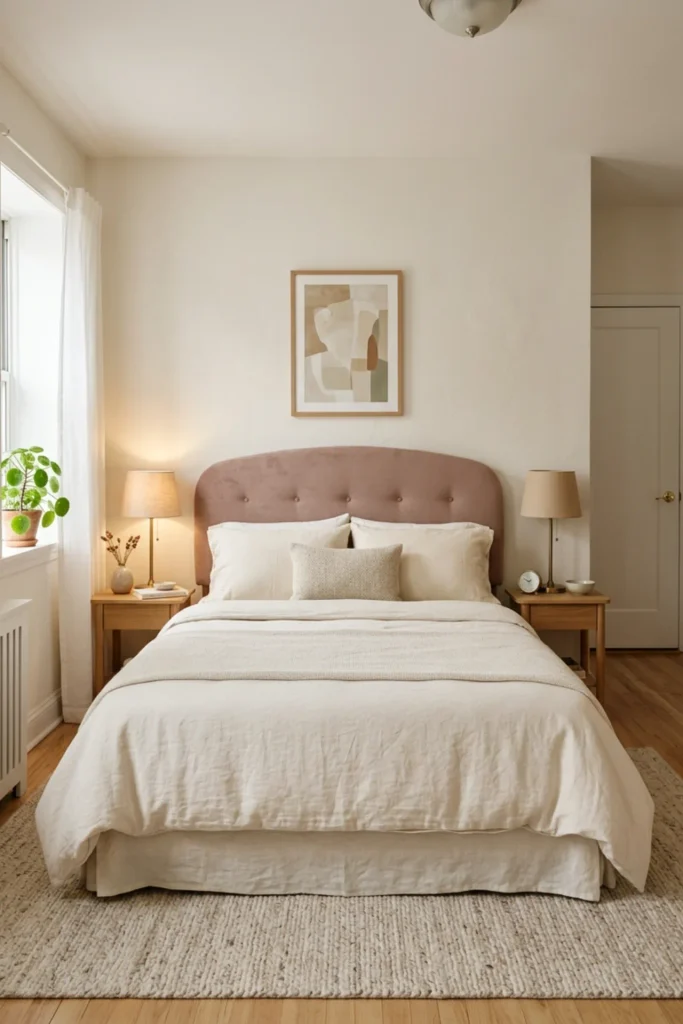
A headboard is a good place to add romance without turning the entire room pink.
A muted blush, dusty rose, mauve-beige, or clay-pink upholstered headboard gives the bed softness and makes the room feel more finished.
I would choose a simple curved or gently arched shape rather than a highly tufted design.
Size and requirements: For a queen bed, headboards are commonly around 62–68 inches wide. A height around 44–56 inches works in many apartment rooms. Check outlets and wall switches before ordering.
Method and cost: Order a fabric swatch and compare it with the wall, curtains, and bedding. Ready-made upholstered headboards may cost $250–$1,200+.
Pros: Strong romantic focal point; softens the room; no wall paint needed.
Cons: Fabric collects dust; pale upholstery can stain; a tall headboard may visually crowd a low-ceiling room.
3. Keep the Bedding Mostly Cream With One Romantic Accent
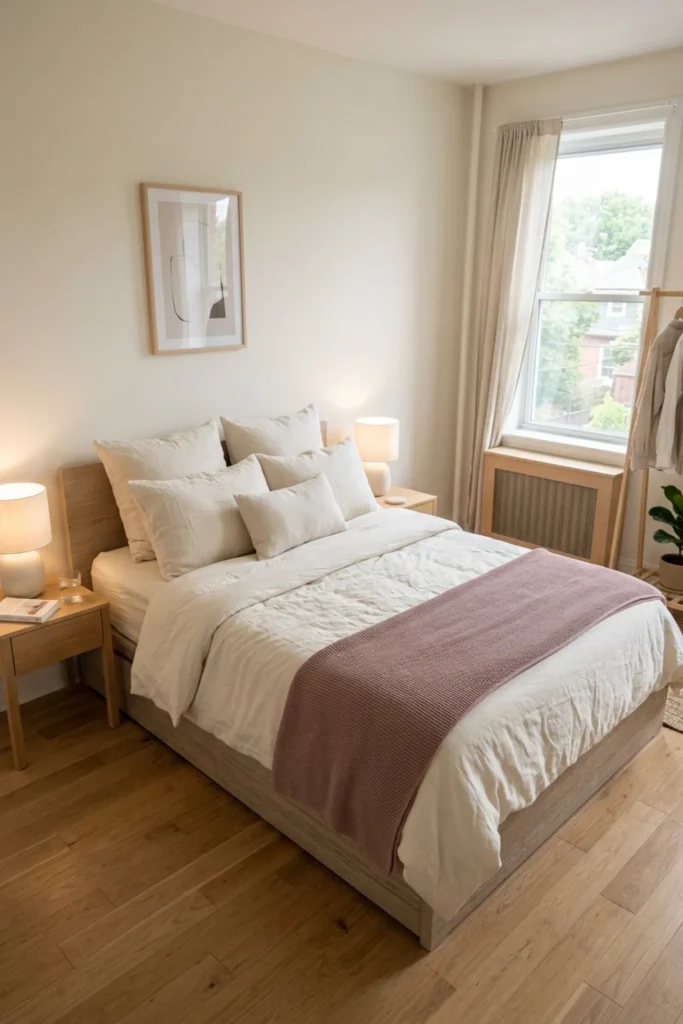
The bed is the largest soft surface in the room, so I would keep most of it calm.
Use cream, ivory, oatmeal, or warm white sheets and duvet covers, then add one blush quilt, mauve throw, or dusty rose blanket.
That gives you romance without making the whole bed one color.
Size and requirements: For a queen bed, a duvet or coverlet around 88–92 inches wide usually provides useful coverage, but check the mattress and frame height. Use only the layers you are willing to remove and remake daily.
Method and cost: Start with neutral bedding and add one colored layer at the foot of the bed. A bedding refresh may cost around $100–$500+, depending on fiber and brand.
Pros: Easy to change; keeps the room light; feels soft and calm.
Cons: Light bedding shows marks; too many layers become annoying; inexpensive fabrics may wrinkle or pill quickly.
4. Use Slim Nightstands Instead of Bulky Bedside Chests
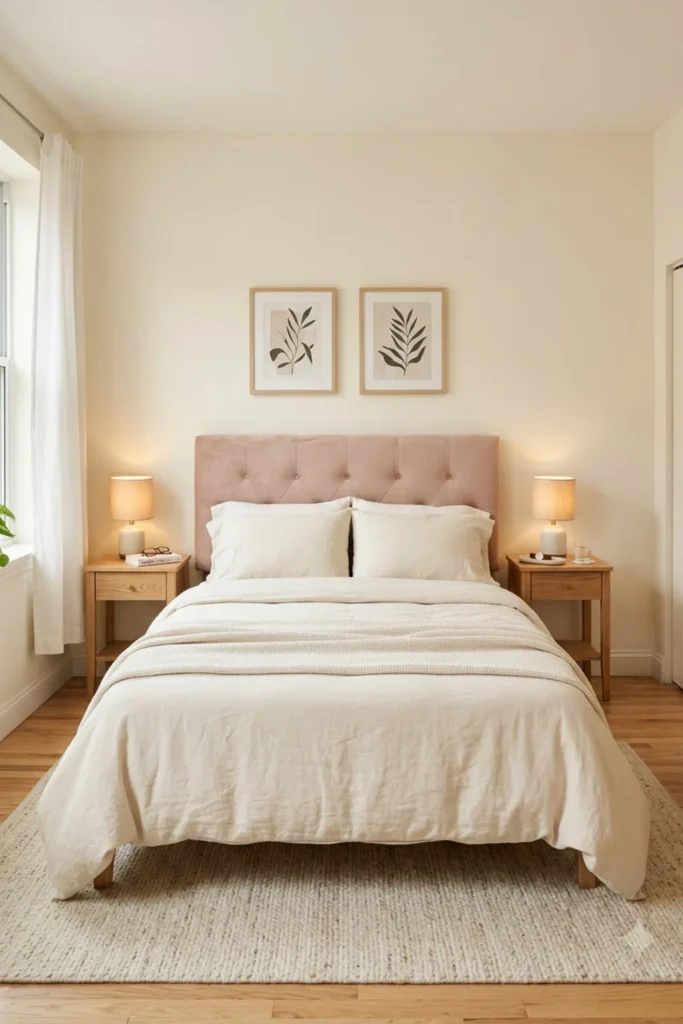
Small bedrooms benefit from narrow furniture.
A slim nightstand with one drawer and an open lower shelf is often enough for a phone, book, lamp, and a few essentials.
I would rather have two 16-inch nightstands and better circulation than two large 24-inch pieces.
Size and requirements: Look for nightstands around 14–18 inches wide and 14–18 inches deep in a tight room. Keep the top close to mattress height for easier reach.
Method and cost: Tape the footprint on the floor before buying. Slim nightstands may cost $80–$400 each, with solid wood or designer pieces costing more.
Pros: Saves floor space; keeps the room balanced; still provides useful storage.
Cons: Limited drawer space; very narrow tables can feel unstable; lamps may take up most of the surface.
5. Add Warm Bedside Lighting Instead of a Harsh Ceiling Light
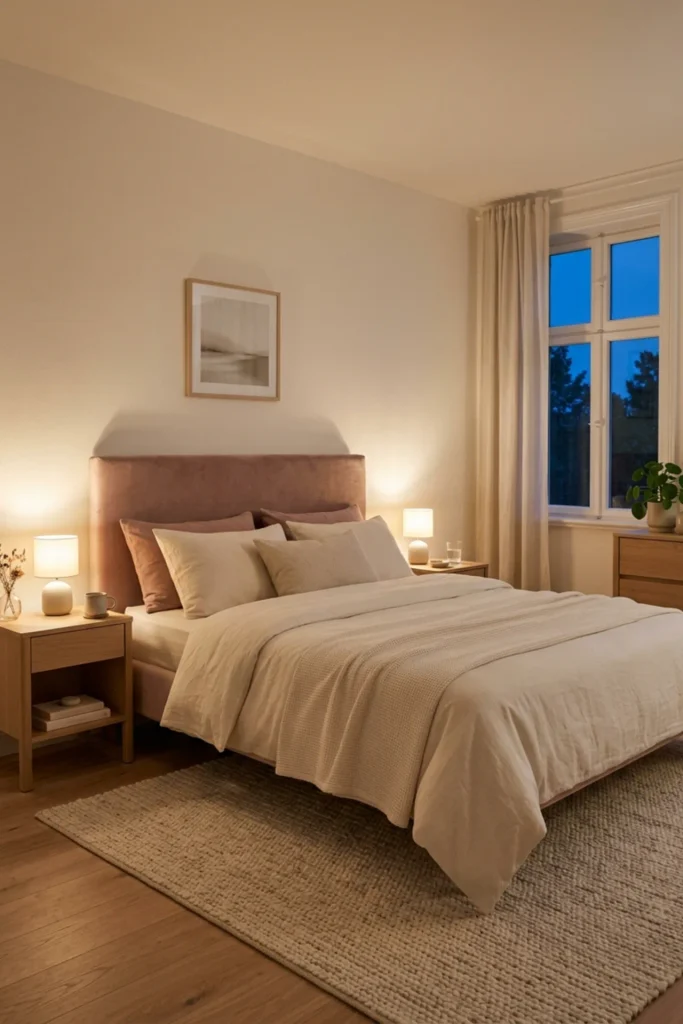
Lighting is where the romantic feeling becomes obvious.
Two warm lamps, or one lamp and one wall light, can make the room feel much softer at night.
Use warm white bulbs instead of cool daylight bulbs.
ENERGY STAR notes that lower color temperatures around 2700K–3000K appear warmer, which suits bedroom lighting well. See its lighting color-temperature guidance.
Size and requirements: Bedside lamps around 20–28 inches high work in many setups. The shade should sit where it gives useful light without shining directly into your eyes.
Method and cost: Replace existing bulbs first. Then add one or two lamps only where the room still feels dark. A simple setup may cost $60–$350, while designer lighting can cost more.
Pros: Creates instant mood; useful for reading; less harsh than a single ceiling light.
Cons: Lamps need surface space; cords need management; mismatched color temperatures can make the room feel patchy.
6. Use a Curved Mirror Instead of a Heavy Dresser Mirror
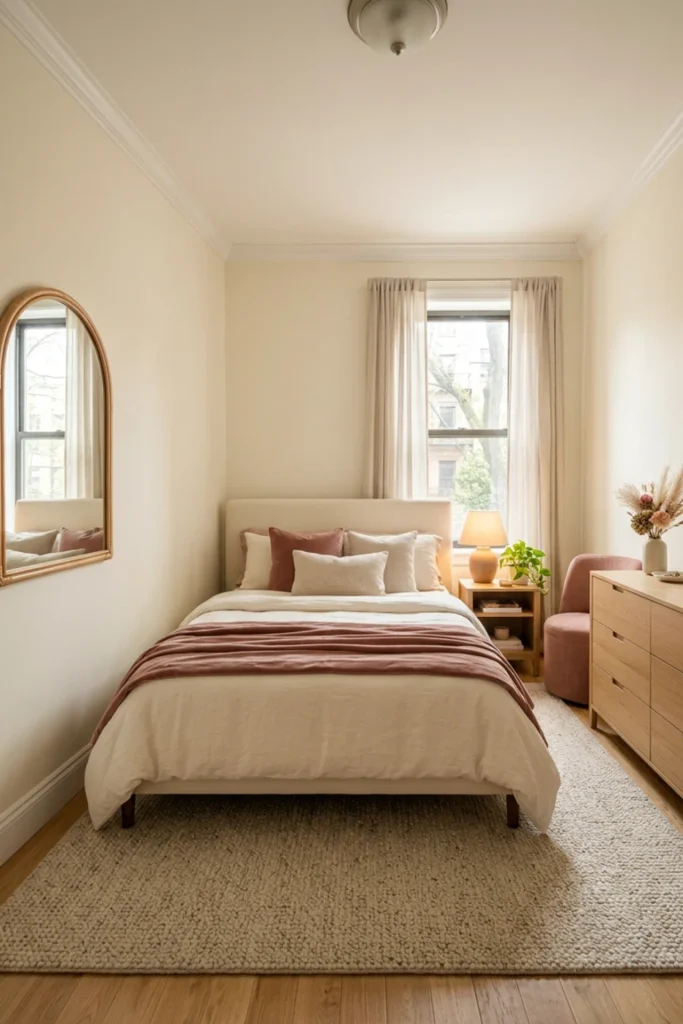
A curved or softly arched mirror adds romance without using much floor space.
It can also bounce daylight deeper into the room and make a small bedroom feel brighter.
I would use one statement mirror rather than several reflective surfaces.
Size and requirements: A wall mirror around 24–32 inches wide works in many small bedrooms. Keep it proportional to the wall and do not hang heavy mirrors without proper hardware.
Method and cost: Tape the mirror shape on the wall first. Use fixings suitable for the wall type and mirror weight. Curved mirrors may cost $80–$500+.
Pros: Reflects light; adds soft shape; needs no floor space when wall mounted.
Cons: Requires secure installation; can reflect clutter; oversized mirrors are heavy.
7. Add a Small Oatmeal or Blush Rug Under the Bed
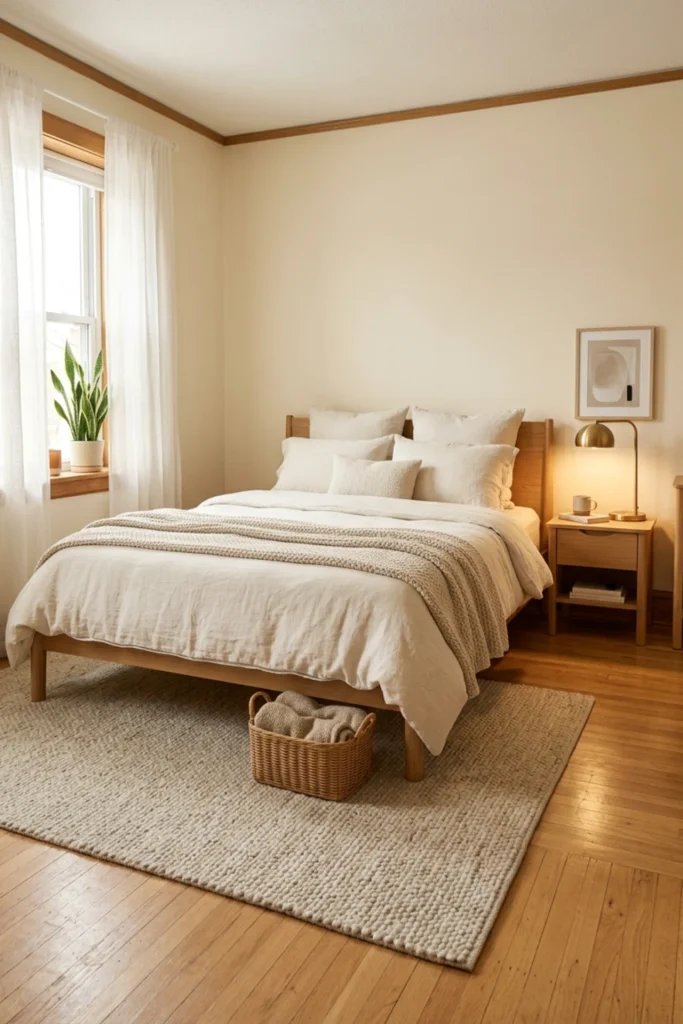
A soft rug adds warmth and makes the room feel more finished.
For a romantic minimalist look, I would choose low contrast: oatmeal, warm beige, blush-beige, soft taupe, or a faded muted pattern.
Avoid a very busy rug if the bedding already has color.
Size and requirements: For a queen bed, 8 by 10 feet is a common full-size option. In a smaller bedroom, 5 by 8 or 6 by 9 can work under the lower part of the bed. Keep enough rug visible at the sides or foot so it does not disappear completely.
Method and cost: Tape the rug size on the floor before ordering. Rugs may cost $150–$900+, depending on fiber and size.
Pros: Softens hard flooring; adds warmth; helps the bed feel anchored.
Cons: Light rugs show stains; small rugs can look undersized; thick pile is harder to clean.
8. Use Sheer Curtains for Soft Daylight
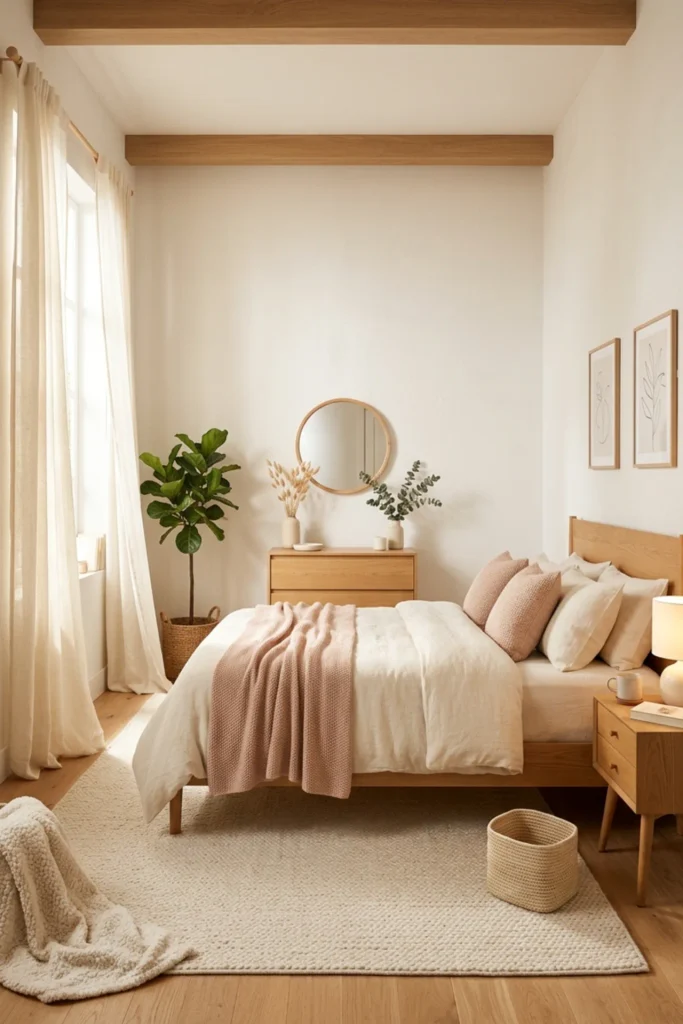
Sheer curtains are one of the simplest romantic details because they soften the window without making the room heavy.
Warm ivory, cream, or light beige works better than bright white in this style.
If privacy is important, layer them with blinds or heavier side panels.
Size and requirements: Mount the rod around 4–8 inches above the window where possible and extend it 6–12 inches beyond each side. Let the panels reach close to the floor for a more finished look.
Method and cost: Measure the rod width and full drop carefully. Sheers and hardware may cost around $60–$300+.
Pros: Softens daylight; makes the room feel calmer; adds movement without much visual weight.
Cons: Limited privacy on their own; fabric collects dust; low-quality sheers can look flimsy.
9. Add One Curved Accent Chair Only If the Room Can Handle It
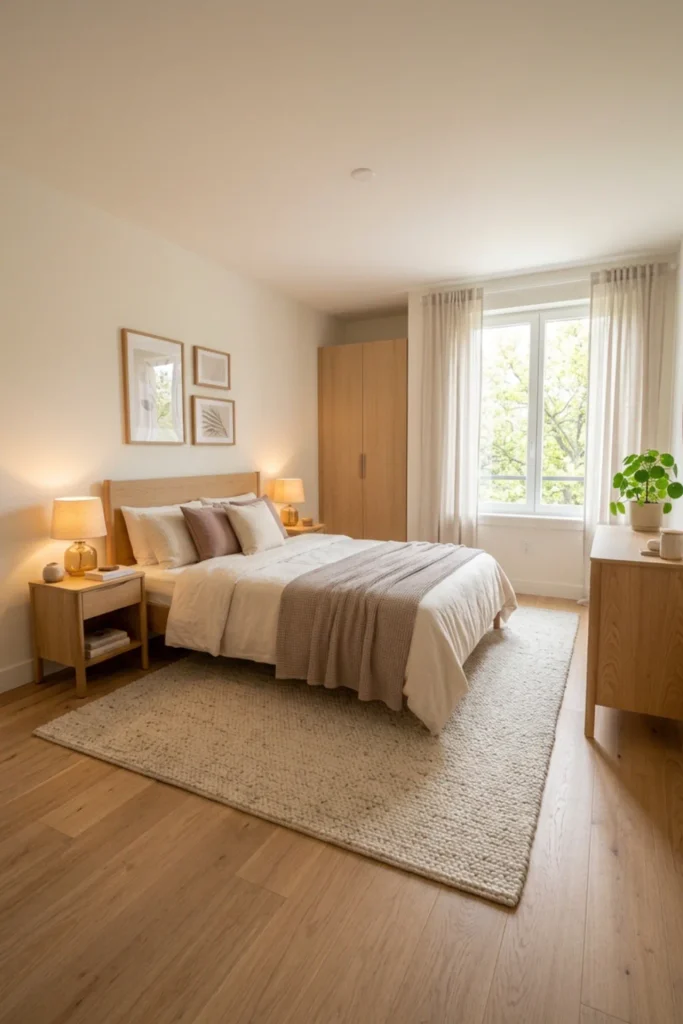
A small chair can make the bedroom feel more romantic and useful.
But I would only add one if the room still has a comfortable walkway.
A compact barrel chair or rounded slipper chair works better than a large lounge chair.
Size and requirements: Look for a chair around 26–32 inches wide. Leave enough room for the bed walkway and wardrobe doors. If you cannot preserve at least a comfortable path around the chair, skip it.
Method and cost: Tape the chair footprint and live with it for a day. Accent chairs may cost $200–$900+.
Pros: Adds a cozy sitting spot; introduces a curved shape; helps fill an empty corner.
Cons: Uses valuable floor space; often becomes a clothes chair; unnecessary in very small bedrooms.
10. Use One Romantic Art Piece Instead of a Gallery Wall
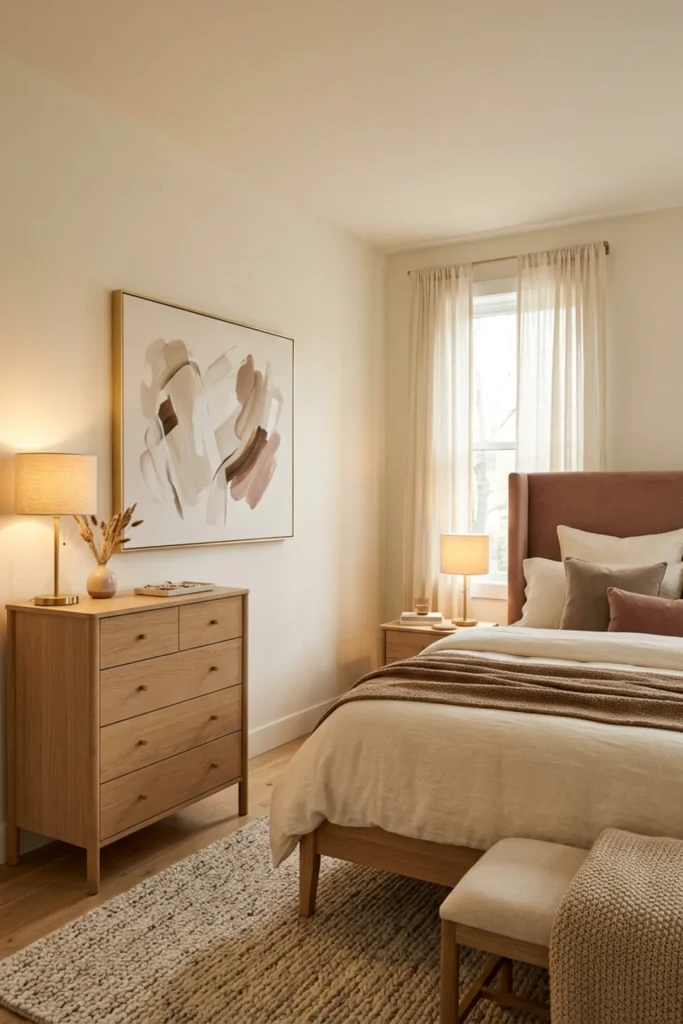
A minimalist bedroom does not need a wall full of frames.
One larger soft-toned print or painting can create enough emotion.
Look for abstract florals, muted landscapes, soft figure studies, or textured neutral art rather than overly literal romantic imagery.
Size and requirements: A useful starting point is artwork around 60%–75% of the width of the furniture below it. Keep heavy art securely mounted and avoid loosely hung frames directly over the bed.
Method and cost: Tape a paper rectangle on the wall before ordering. A large framed print may cost $100–$700+.
Pros: Creates a focal point; keeps the wall calm; easier to coordinate.
Cons: Large framing can be expensive; oversized art needs proper mounting; strong colors can dominate the palette.
11. Use a Narrow Dresser With Clean Lines
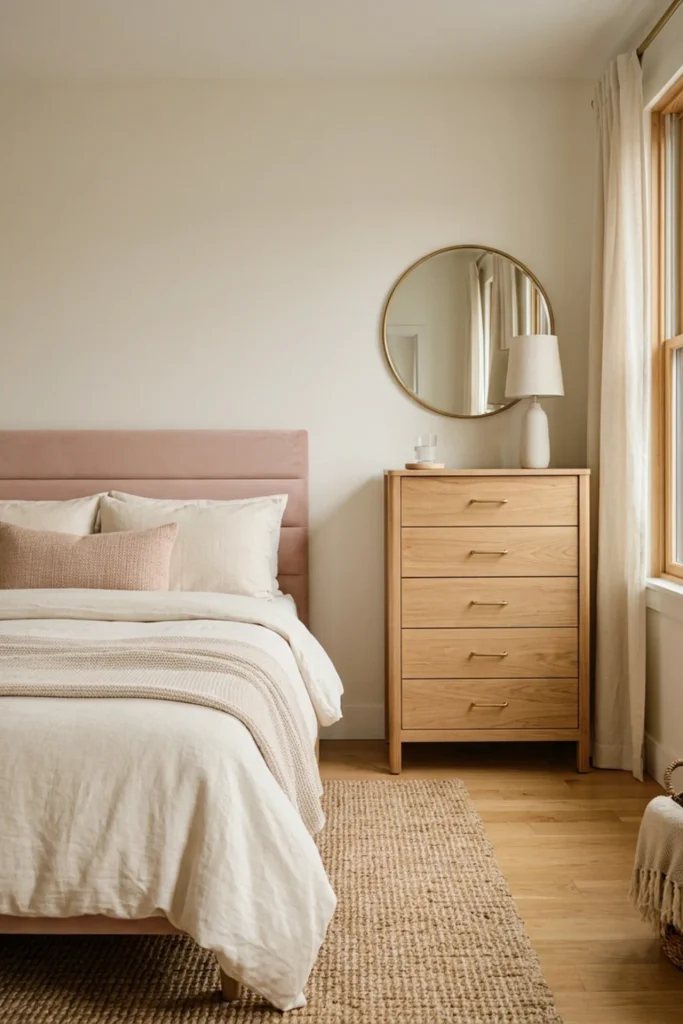
A dresser can work in a small apartment bedroom if the depth is controlled.
I would choose a simple piece in light oak, warm white, or soft taupe rather than a large dark chest.
Keep the top mostly clear.
Size and requirements: A narrow dresser around 42–54 inches wide and 16–19 inches deep fits many small bedrooms better than a deeper traditional dresser. Add drawer-open depth to the floor plan before buying.
Method and cost: Tape the full footprint and open-drawer zone on the floor. A narrow dresser may cost $300–$1,500+.
Pros: Adds hidden storage; keeps clothing off visible surfaces; supports a clean minimalist look.
Cons: Still uses floor space; drawers need clearance; tall or tip-prone furniture may need anchoring.
The U.S. Consumer Product Safety Commission’s Anchor It! guidance explains furniture tip-over prevention and anchoring.
12. Use Under-Bed Storage That Disappears Visually
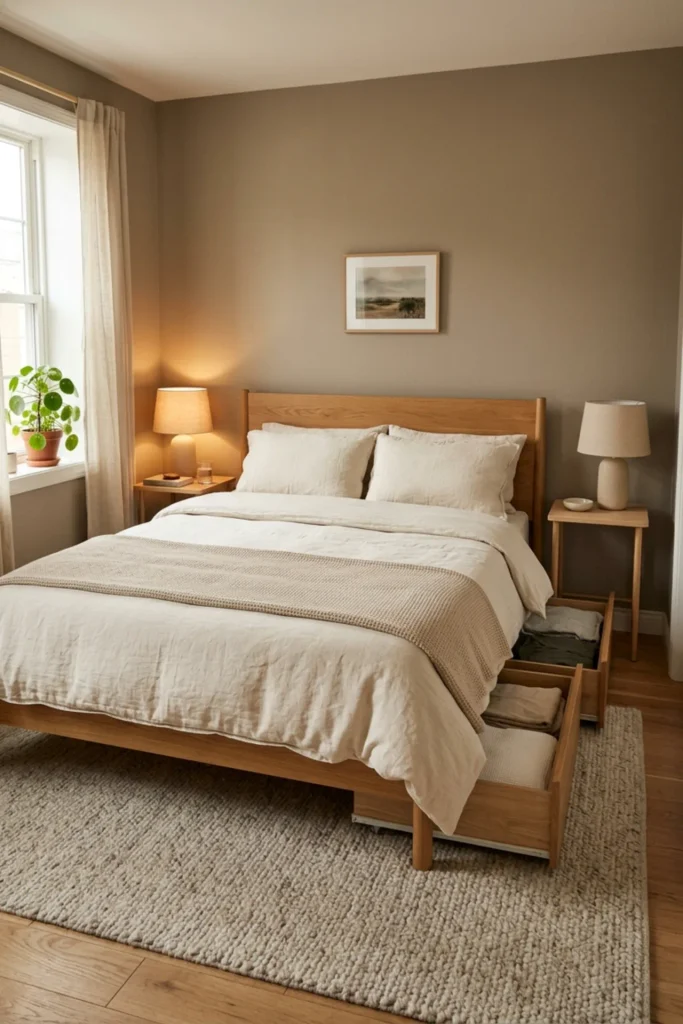
Under-bed storage is especially useful in apartments because it adds capacity without adding another piece of furniture.
The best version is hidden, easy to access, and not visible from every angle.
I prefer low drawers or covered boxes over open baskets.
Size and requirements: Measure the clearance beneath the bed before buying. Many under-bed containers are around 6–8 inches high, but actual bed frames vary.
Method and cost: Group seasonal clothes, spare bedding, or less-used items before choosing containers. Under-bed boxes or drawers may cost $30–$150+.
Pros: Uses otherwise wasted space; keeps visible furniture minimal; inexpensive.
Cons: Dust collects underneath; low clearance limits options; overfilled boxes become hard to pull out.
13. Add a Small Bench Only in a Longer Bedroom
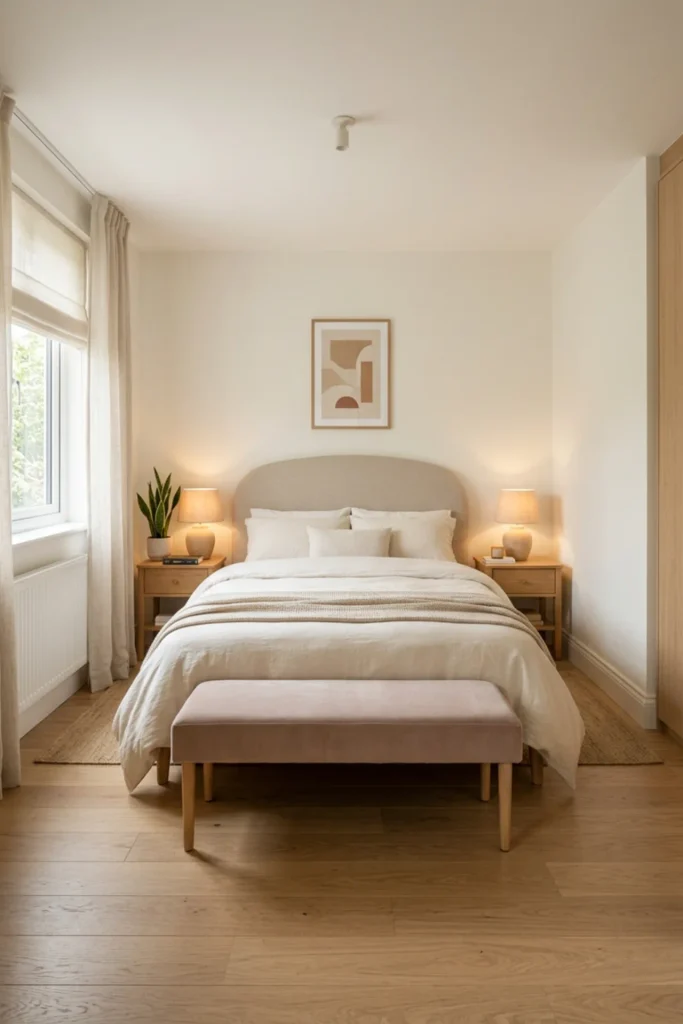
A bench at the foot of the bed can look romantic and polished, but it is not necessary in every small room.
I would use it only when the bedroom is long enough that the bench does not interrupt circulation.
A soft upholstered bench in cream, blush-beige, or light taupe works well.
Size and requirements: For a queen bed, a bench around 44–52 inches wide works in many rooms. Leave roughly 30 inches or more between the bench and the opposite wall or dresser where possible.
Method and cost: Tape the bench footprint and walk around the room for a day. Benches may cost $150–$700+.
Pros: Adds seating; makes the bed feel finished; useful while getting dressed.
Cons: Uses floor space; easily becomes clutter storage; unnecessary in tight bedrooms.
14. Use Soft Brass or Warm Metal in Small Amounts
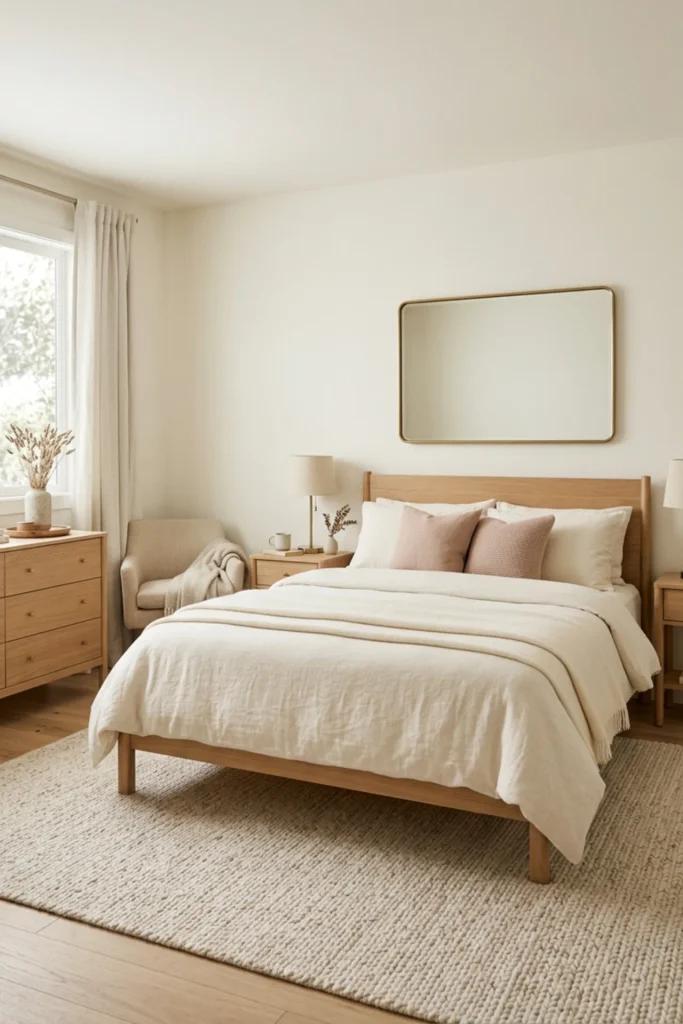
Warm metal adds a romantic note without changing the whole palette.
Use it on lamp bases, drawer pulls, a mirror frame, or one small wall sconce.
I would keep the finish brushed or aged rather than very shiny.
Size and requirements: Repeat the same warm metal in no more than 2–3 places. Too much metallic detail can make the room feel glam rather than minimalist.
Method and cost: Start with small changes such as drawer pulls or one lamp. A subtle update may cost $40–$250.
Pros: Adds warmth; pairs well with blush and cream; easy to change.
Cons: Too much can feel glamorous rather than minimal; mixed gold tones can look accidental; shiny finishes show fingerprints.
15. Add One Soft Scent or Candle-Like Glow Safely
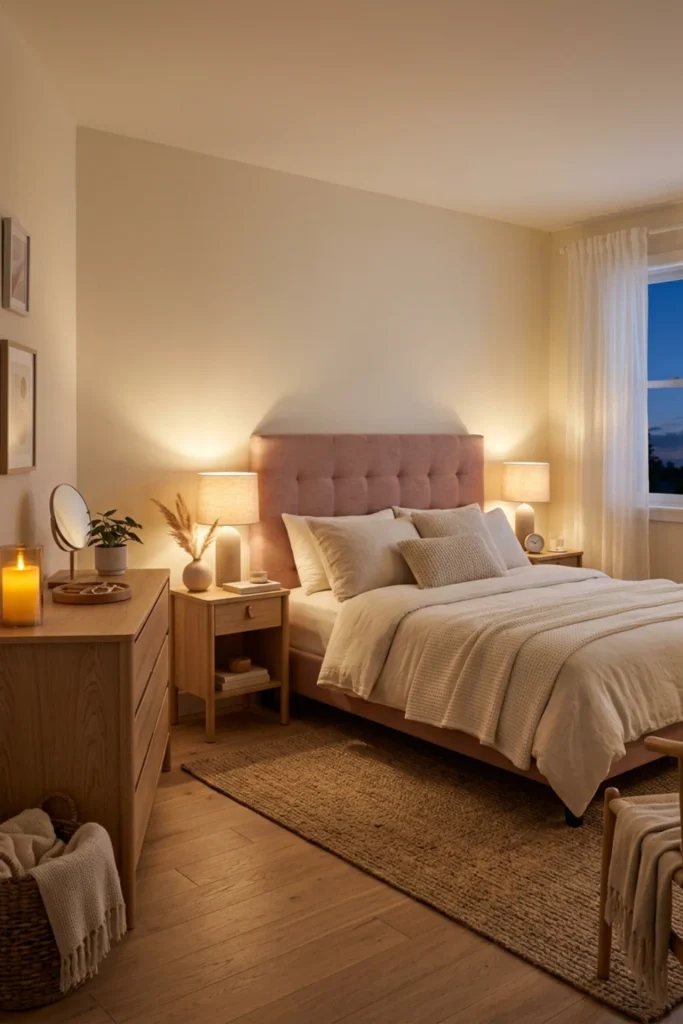
Romantic bedrooms often feel better when they have a soft evening glow.
I prefer an LED candle, warm table lamp, or rechargeable accent light if open flames are not practical.
If you use a real candle, follow the product’s safety instructions and never leave it unattended.
Size and requirements: Keep decorative lighting away from bedding, curtains, and paper. Use flame-free options when the room is tight or when pets and children are present.
Method and cost: Add one small rechargeable warm light or LED candle to the dresser or nightstand. Cost may be $15–$80.
Pros: Adds evening atmosphere; low cost; no major furniture changes.
Cons: Decorative lighting does not replace task lighting; real candles add fire risk; cheap LEDs can look artificial.
16. Keep Decorative Pillows to a Minimum
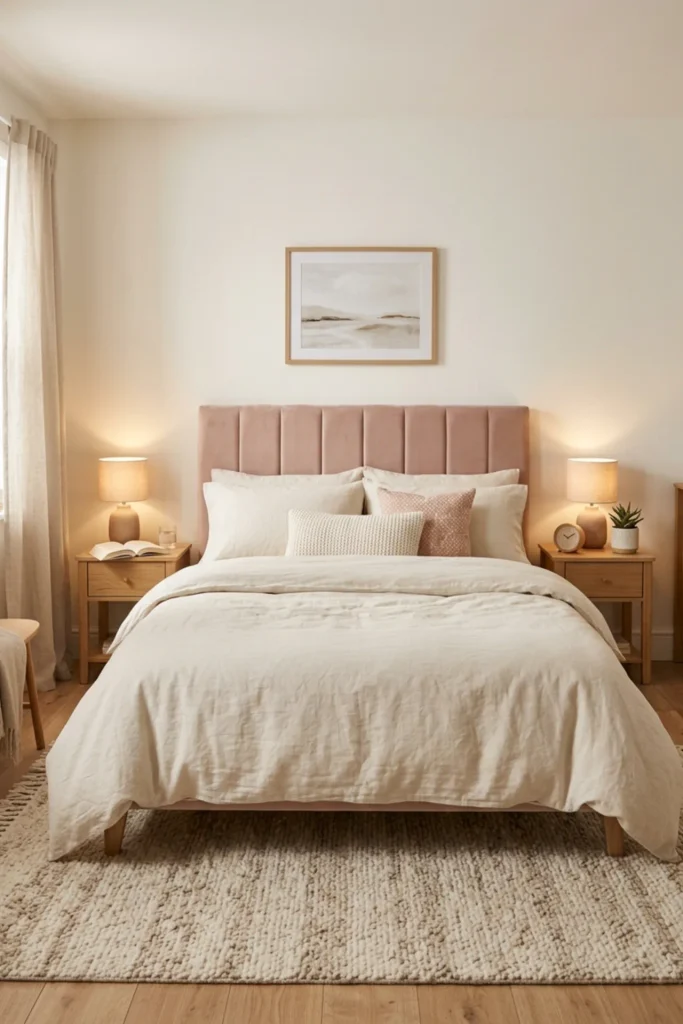
A romantic bed does not need eight pillows.
Two sleeping pillows per person plus one lumbar cushion or two decorative cushions are usually enough.
This keeps the room polished without creating a pile you have to move every night.
Size and requirements: One lumbar cushion around 12 by 20 inches or two 18–20-inch square cushions is plenty for most queen beds.
Method and cost: Remove all decorative pillows, then add back only the ones that improve the bed visually. A minimal pillow refresh may cost $30–$120.
Pros: Easier bed-making; less clutter; keeps the minimalist look.
Cons: May feel too simple for people who love layered bedding; fewer textiles mean the headboard and bedding need to carry more of the look.
17. Use Renter-Friendly Wall Styling Instead of Heavy Built-Ins
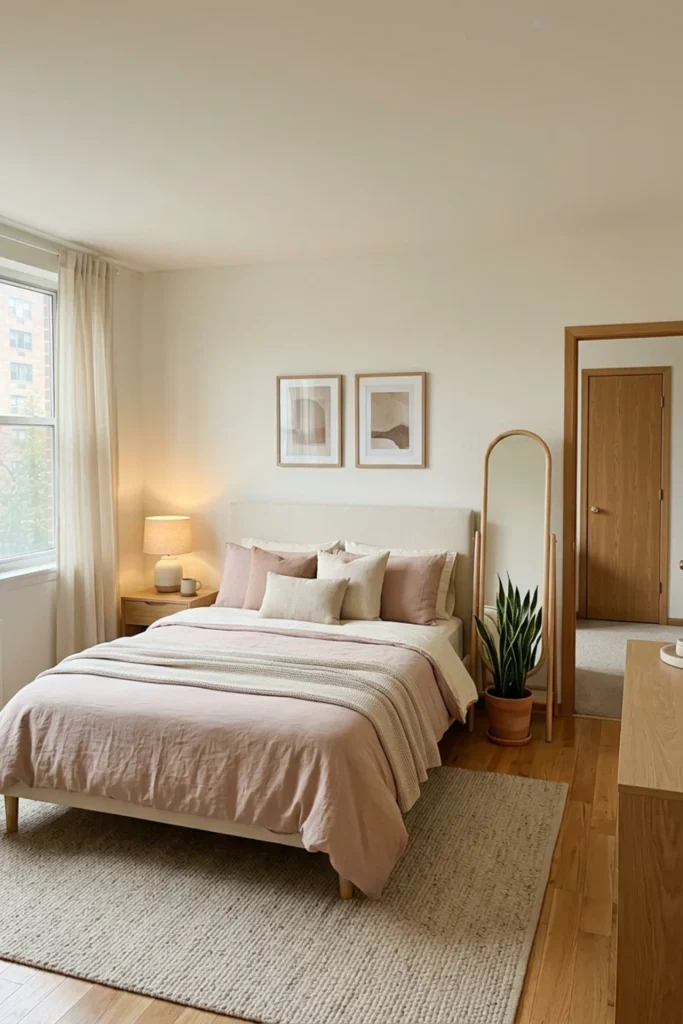
A romantic minimalist bedroom does not need paneling, built-in shelves, or major construction.
You can use removable hooks, lightweight framed art, a freestanding mirror, plug-in sconces, or a temporary wallpaper panel where appropriate.
Keep the number of wall elements low.
Size and requirements: Follow the product instructions and rental agreement. Lightweight items are generally easier to manage in rental spaces than large heavy installations.
Method and cost: Choose one wall treatment or one artwork area rather than decorating every wall. A renter-friendly wall update may cost $30–$250.
Pros: Easy to reverse; lower cost; flexible for future apartments.
Cons: Adhesive products do not work on every paint finish; wall damage is still possible; temporary products can look cheap if overused.
18. Edit the Room Until It Feels Calm, Not Empty
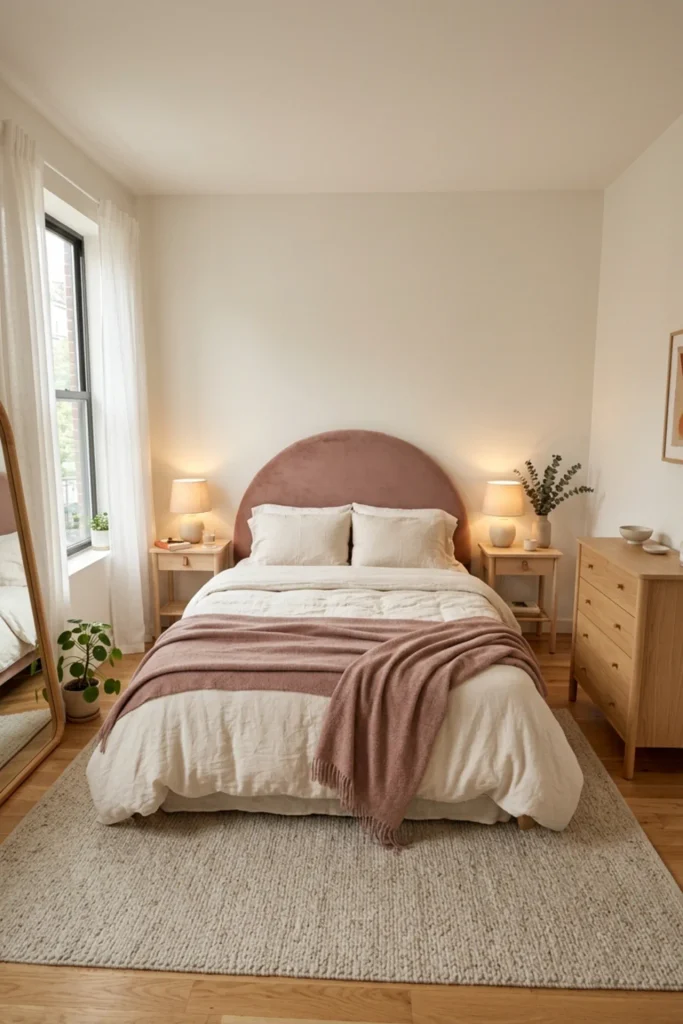
Minimalism is not about removing everything.
The room still needs enough softness to feel comfortable.
But if the bedroom already has a curved headboard, blush bedding, a bench, chair, rug, mirror, art, curtains, brass lamps, candles, decorative trays, plants, and many pillows, something probably needs to come out.
Size and requirements: Keep around 30%–40% of dresser and nightstand surfaces clear. Preserve visible floor around the bed and at least one quiet wall section.
Method and cost: Remove all loose decor from the room, then add pieces back slowly. Stop as soon as the bedroom feels finished. Cost: $0.
Pros: Makes the bedroom feel larger; easier cleaning; lets the romantic details stand out.
Cons: Can feel too plain if texture is missing; editing does not solve poor furniture scale or bad lighting.
A Practical 10-Step Romantic Minimalist Bedroom Plan
If I were decorating a small apartment bedroom from scratch, I would use this order:
- Measure the bed and the main walkway.
- Choose warm white or another light wall color.
- Pick the headboard before buying decorative pillows.
- Keep the main bedding cream or warm neutral.
- Add one romantic accent color.
- Choose slim nightstands.
- Add warm bedside lighting.
- Solve hidden storage before adding a chair or bench.
- Add one mirror and one artwork piece.
- Remove anything that makes the room feel crowded.
This order keeps the bedroom romantic without sacrificing everyday function.
Approximate Budget by Update Level
You can create this look at several price points.
Low-cost refresh: $150–$700
- New bedding
- Warm lamps
- Curtains
- A few cushions
- Wall art
- Small decor edit
Mid-range update: $900–$3,500
- Upholstered headboard
- Rug
- Nightstands
- Lamps
- Mirror
- Dresser
- Bedding
Full bedroom makeover: $3,500–$10,000+
- Bed frame
- Premium mattress
- Headboard
- Quality rug
- Dresser
- Nightstands
- Lighting
- Curtains
- Accent chair
- Artwork
Custom upholstery, premium furniture, designer lighting, and professional painting can push the total much higher.
What I Would Spend More On
I would spend more on the bed, mattress, bedding, and bedside lighting.
Those are the things you physically use every day.
I would spend less on decorative trays, matching accessories, and trend-driven romantic decor.
If the budget is limited, a good cream duvet, one blush throw, and two warm lamps can change the room more than a large collection of decor.
The room should feel better to sleep in, not just better to photograph.
Common Mistakes I Would Avoid
The first mistake is making the room too pink.
Romantic does not have to mean pink walls, pink bedding, pink curtains, pink art, and pink accessories.
The second mistake is using too many soft shapes. A curved headboard, round mirror, boucle chair, scalloped nightstand, wavy lamp, and rounded bench can start to feel overly styled in a small room.
Another mistake is adding furniture before checking the walkway. A bench or accent chair is not worth it if it blocks the bed or wardrobe.
I would also avoid very cool white bulbs. Warm lighting usually works better with cream, blush, taupe, and warm wood.
Finally, keep tall storage furniture stable and installed appropriately. If you use a dresser, bookcase, or narrow storage tower, follow manufacturer instructions and relevant furniture-safety guidance.
Final Thoughts
Romantic minimalist small apartment bedroom ideas work when the room feels soft, warm, and edited.
You do not need a lot of decor.
Warm white walls, one gentle accent color, soft bedding, a curved headboard, warm lamps, and one or two simple pieces of art can be enough.
The minimalist part keeps the room useful. The romantic part keeps it from feeling plain.
Measure the bed first, protect the walkway, solve storage, and then add softness through fabrics, light, and shape.
When the room has enough empty space around the furniture, even a small apartment bedroom can feel calm, intimate, and much more expensive than it actually is.
Disclosure: Some visuals are AI-assisted design concepts created for inspiration. Always confirm furniture dimensions, stability, wall-fixing requirements, electrical safety, rental restrictions, fabric care, manufacturer instructions, and installation needs before making changes in your home. Cost ranges are approximate U.S. planning figures and vary by location, labor, materials, shipping, and product quality.
About the Author
Ali Hamza — Founder & Editor
Hi, I’m Ali Hamza, and Styled Room Living is my personal home decor project. I don’t have a formal background in interior design. I started this website because home makeovers are something I genuinely enjoy looking at and learning about.
Most of the ideas shared here are not projects I have personally built. When I put a guide together, I try to separate an idea that only looks good in a photograph from one that could actually be useful in a normal home. Will it fit? Is it easy to clean? Does it require drilling? Can it be adjusted for a smaller budget? These are the questions I keep in mind while working on an article.
Some images on the website are AI-assisted design concepts used to explain an idea more clearly. They are meant for inspiration, not as exact construction plans. Please check measurements, materials, prices, weight limits, electrical details, and installation requirements before trying anything in your own home.
I’m still learning as the website grows, and I know every home works differently. My purpose with Styled Room Living is simply to collect useful home ideas, explain them in plain language, and help readers find something they can adapt to their own space.
Read more about Ali Hamza →