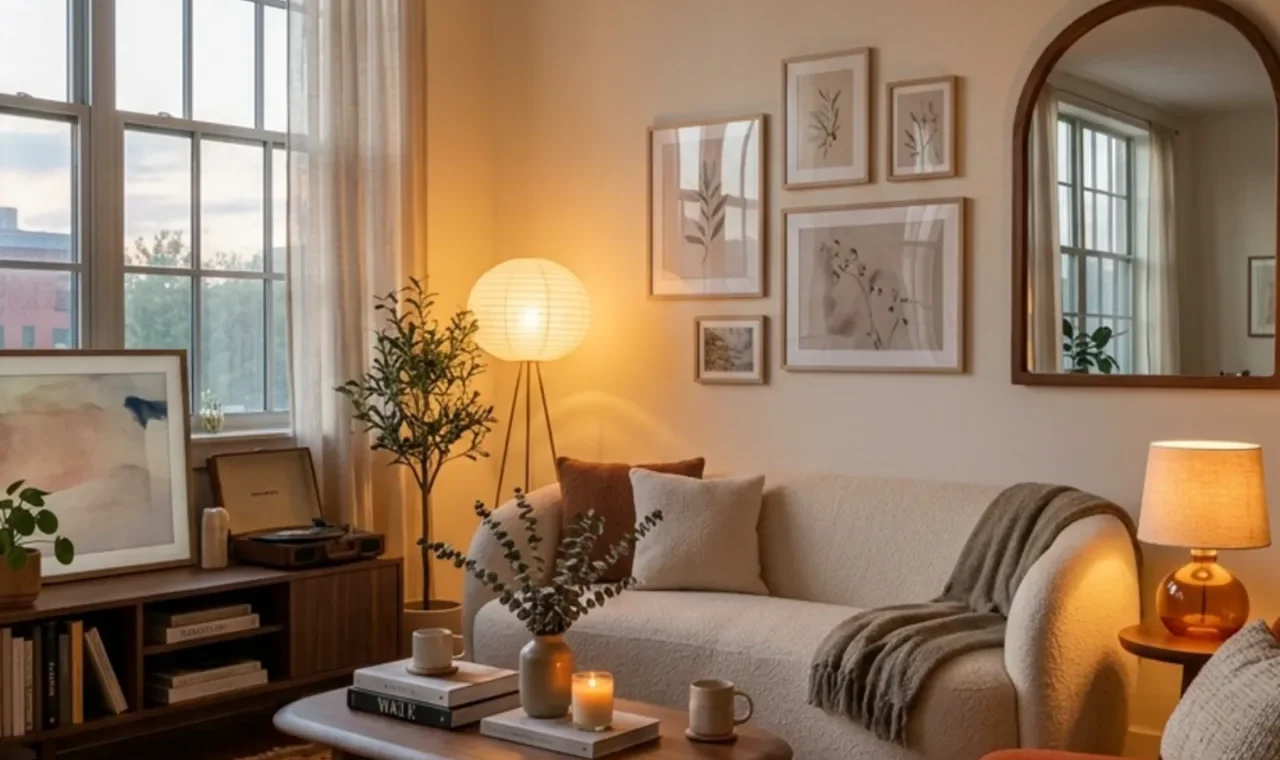
Vibey apartment living room ideas usually have three things in common: a little personality, softer shapes, and lighting that feels good at night. The room does not need to be huge or expensive. It just needs to feel intentional.
That is what makes this style so appealing for apartments. Even a small rental can feel more atmospheric when you add one confident color, a few rounded shapes, and several warm light sources instead of relying on one flat ceiling light.
The part I would focus on first is balance. A vibey room still needs to work for normal life. You need a sofa that fits, a rug that makes sense, a coffee table you can walk around, and enough lighting to make the room feel cozy without becoming dark. Color should add energy, not chaos. Curves should soften the room, not block the walkway.
This guide is built around practical apartment decisions, not just inspiration photos. Every idea includes rough dimensions, setup notes, cost ranges, and honest pros and cons. I have also added living-room layout basics, apartment-safe styling moves, and image prompts that match the Pinterest-style full-room look you want for the site.
What Makes an Apartment Living Room Feel Vibey?
A vibey living room usually feels layered rather than perfectly matched.
You may see a soft curved sofa, a colored accent chair, a sculptural floor lamp, a wavy mirror, a tinted glass vase, warm pools of lamp light, and a rug that quietly ties the room together. None of those pieces has to be dramatic on its own. The mood comes from how they work together.
Color helps, but not every surface needs to be colorful. One dusty rose chair, one olive rug, one rust throw, or one cobalt lamp can do more than painting every wall a different shade.
Curves matter because they soften apartment rooms that often have lots of straight lines: boxy walls, rectangle windows, square storage, and hard edges from the kitchen or TV unit.
Lighting is what makes the room feel finished. In many apartments, the room looks acceptable in daylight and flat at night. Layered lighting solves that problem.
If you want more small-space planning ideas first, see Small Living Room Ideas.
Before You Buy Anything, Measure the Room
A vibey apartment living room still needs clear walking space.
Measure the full room, including the distance from the sofa to the TV wall, the walkway to the kitchen or bedroom, window locations, and where doors open.
A standard apartment sofa might be around 72 to 90 inches wide, but the actual usable room matters more than the sofa category. Try to preserve around 24 to 30 inches of comfortable walking space in the main routes where possible.
Coffee tables need breathing room too. In many living rooms, something around 30 to 42 inches wide works better than a huge rectangle. A round table often makes circulation easier.
For rugs, I usually want the front legs of the main seating to sit on the rug rather than leaving the rug floating in the middle of the room.
Before buying lighting, check outlet locations. A room can look amazing in a photo and still be annoying if every lamp needs an extension cord crossing the walkway.
1. Start With One Color-Led Rug
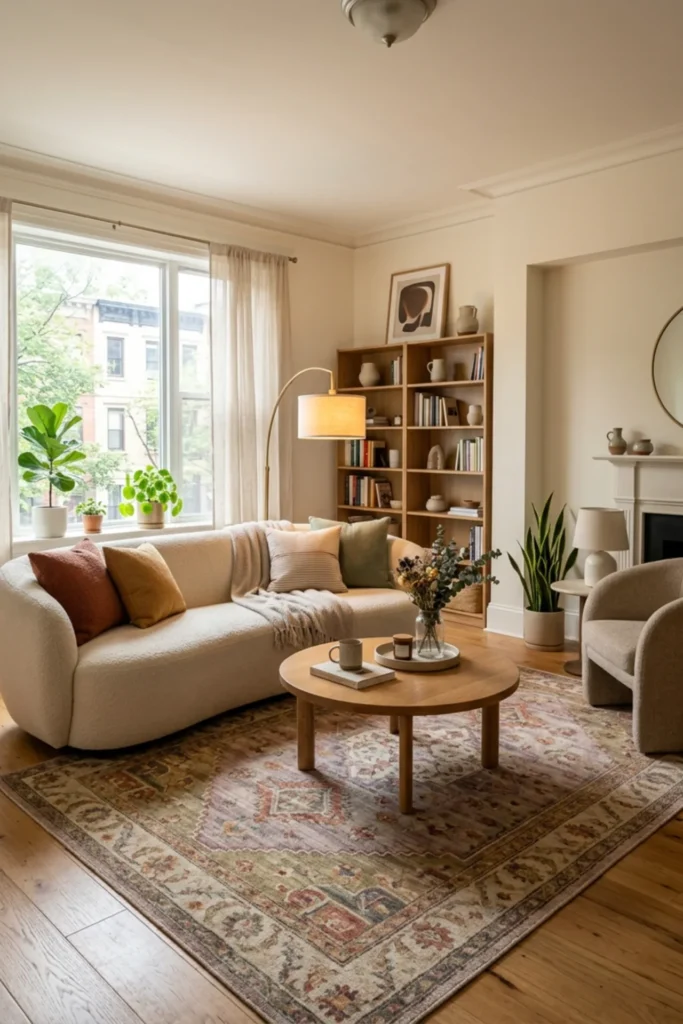
A rug is one of the easiest ways to introduce color without repainting the apartment.
A softly patterned rug in olive, rust, ochre, faded berry, dusty blue, or warm multi-tone shades can anchor the room and tell you what the rest of the palette should be.
I would keep the rug more complex than the sofa. If the sofa is already colorful, choose a quieter rug.
Size and requirements: In many apartment living rooms, an 8-by-10-foot rug or 6-by-9-foot rug works well, but the actual furniture layout decides it. Try to fit at least the front legs of the sofa and chairs on the rug. Leave enough floor visible around the edges so the room does not feel wall-to-wall covered.
Method and cost: Tape the rug dimensions on the floor before ordering. Then place the sofa and coffee table positions inside that tape. A decent rug may cost around $150–$700, while premium wool or designer rugs can cost $800–$2,500+.
Pros: Adds color quickly; defines the seating zone; softens apartment flooring.
Cons: Too-small rugs make the room look awkward; busy patterns can fight with colorful art; light rugs show spills.
2. Use a Curved Sofa or Softly Rounded Loveseat
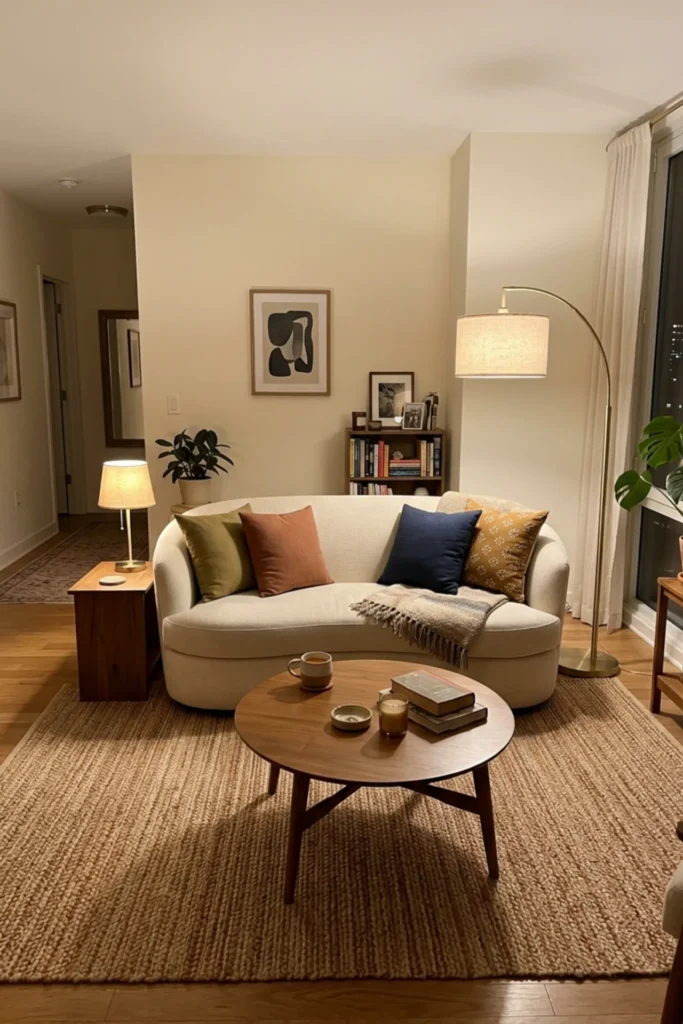
Curved seating instantly changes the mood of a room.
Even a gently rounded apartment sofa or loveseat feels more relaxed than a sharp boxy shape. This is especially useful when the rest of the apartment has straight built-in lines.
If a full curved sofa is too expensive, a rounded-arm loveseat can still create the same feeling.
Size and requirements: Apartment-friendly curved sofas often range around 72–88 inches wide. Measure the deepest point of the curve because it can project farther into the room than expected. Leave enough clearance for the coffee table and the main walkway.
Method and cost: Tape the full sofa footprint on the floor, not just the width. If possible, compare seat depth with how you actually sit at home. A curved loveseat or sofa may cost around $900–$3,500+, depending on brand and upholstery.
Pros: Makes the room feel more interesting; softens hard angles; gives the space a modern-vibey look immediately.
Cons: Often more expensive than simple sofas; may be harder to place against walls; unusual shapes can limit future layout changes.
3. Choose a Round or Organic Coffee Table
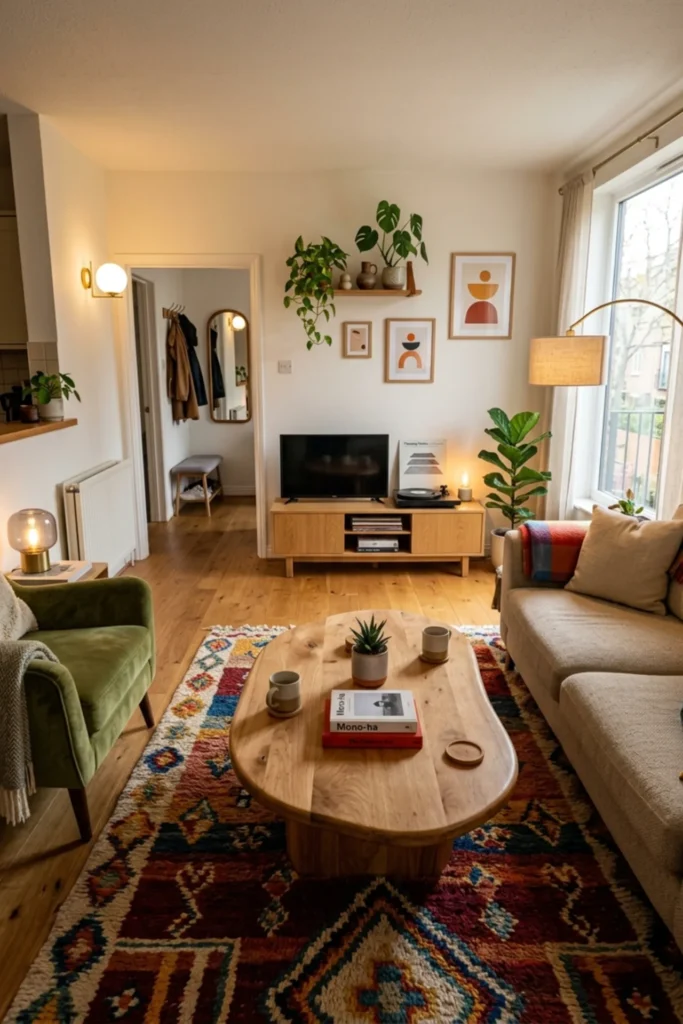
A round or organic-shaped coffee table helps apartment living rooms feel easier to walk through.
This is one of the smartest ways to add curves without committing to expensive curved upholstery.
I also think it makes the whole space feel more casual and inviting.
Size and requirements: A coffee table around 30–36 inches in diameter often works well in compact living rooms, though larger rooms may handle more. Keep roughly 16–18 inches between the sofa and the table if space allows, so it stays reachable without crowding the seating.
Method and cost: Test the size with paper or taped cardboard on the floor before buying. A simple round table may cost $120–$600, while stone, wood, or designer pieces can cost $700–$2,000+.
Pros: Improves circulation; adds curves; often safer in tight spaces because there are no sharp corners.
Cons: Some round tables hold less usable surface area; large sculptural tables can still feel bulky; unusual shapes may be harder to style.
4. Layer Three Light Sources Instead of Relying on One Ceiling Light
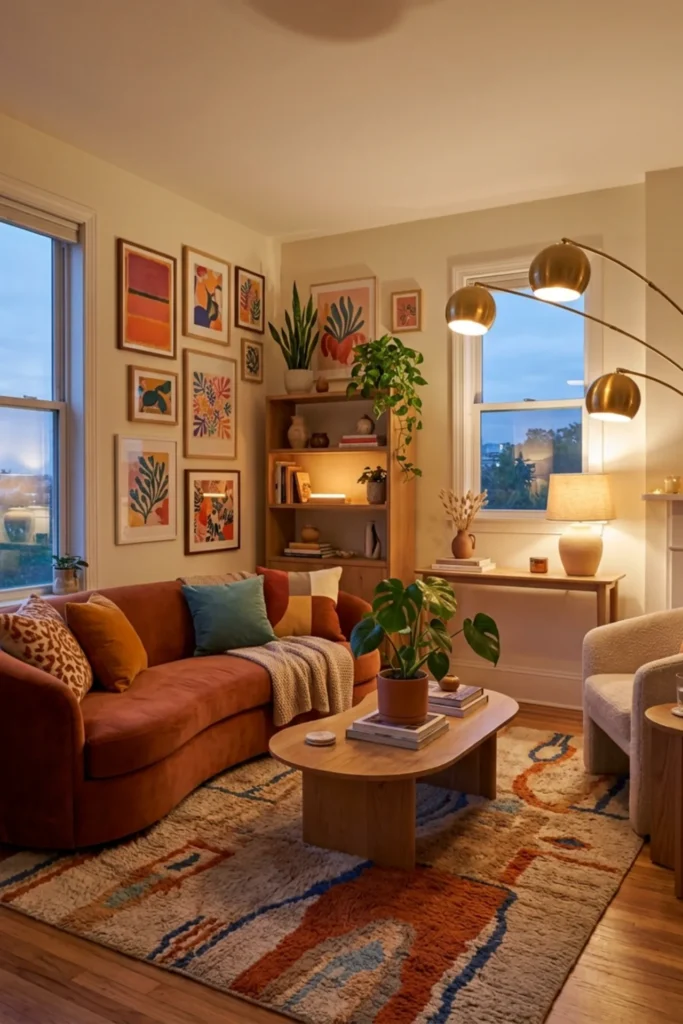
This is probably the biggest mood upgrade in the whole article.
A vibey apartment living room rarely feels good because of one overhead light. It feels good because several smaller lights create pockets of warmth.
Try a floor lamp, one table lamp, and one secondary light such as a wall sconce, shelf light, or paper lantern.
Size and requirements: Use warm bulbs around 2700K–3000K if you want a cozy look. Make sure each light source serves a purpose: one for overall ambient light, one near seating, and one for accent or corner glow. Check outlet access before buying.
Method and cost: Start by switching the bulbs in lights you already own. Then add one floor lamp and one table lamp where the room feels dim after sunset. A basic layered setup may cost $80–$400, while higher-end lighting can run $500–$1,500+.
Pros: Instant mood improvement; easier to control brightness; makes the room more usable at night.
Cons: Multiple lamps need outlets; cords must be managed carefully; buying several lights at once can add up.
5. Add One Apartment-Friendly Accent Wall in a Soft Bold Color
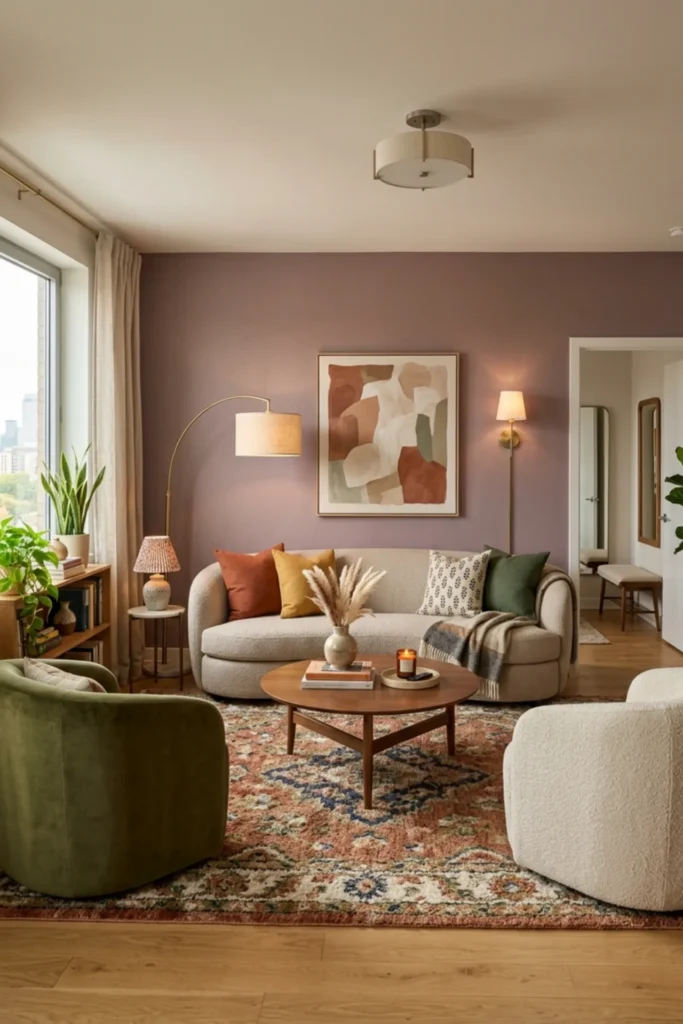
If your apartment allows paint, one color wall can transform the room.
Think muted terracotta, dusty mauve, olive, deep teal, smoky blue, or warm peach rather than neon or very dark black-brown. You want character, not a cave.
If paint is not allowed, you can get a similar effect through a large artwork grouping or renter-friendly peel-and-stick treatment.
Size and requirements: Keep the strong color to one main wall, usually behind the sofa or TV. Test a sample board first because apartment light shifts dramatically during the day.
Method and cost: Paint sample patches or a large movable board before committing. DIY paint materials may cost $50–$180. Professional painting can cost $300–$900+ for a small living room wall or more depending on prep.
Pros: Big visual impact; creates a focal point; helps the room feel less generic.
Cons: Dark colors can reduce brightness; some rentals restrict painting; the color has to work with the sofa and rug.
Benjamin Moore’s color overview resources are useful when comparing undertones and testing options at home.
6. Bring In One Colorful Accent Chair
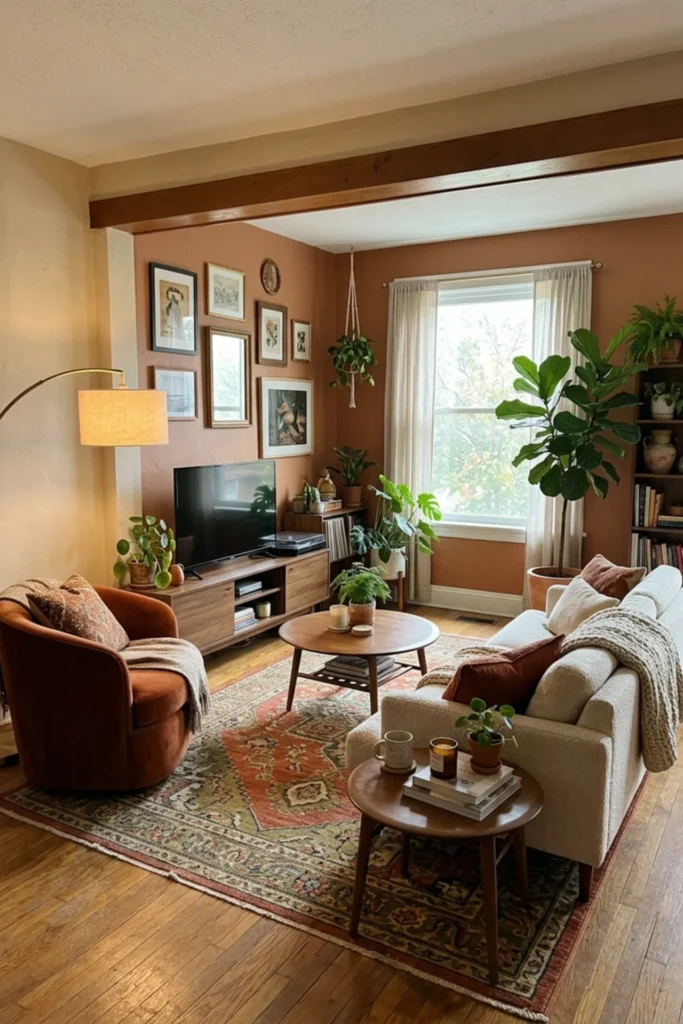
A colorful accent chair is a good compromise when you want more personality without making the main sofa too loud.
This can be mustard, olive, rust, mauve, cobalt, burnt orange, or a soft berry tone depending on the room palette.
I would keep the chair shape a little rounded if possible to reinforce the curve theme.
Size and requirements: Many apartment accent chairs range around 28–34 inches wide. Leave enough room for the chair to sit naturally without blocking the walkway. If you add a side table, factor that into the footprint.
Method and cost: Tape the chair footprint and sit a normal dining chair in that spot for a day to see whether the room still flows well. Accent chairs may cost $200–$1,200+.
Pros: Adds personality fast; easier than replacing the sofa; creates an instant styling moment.
Cons: Can become clutter in a tight room; bright upholstery limits future palette changes; low-quality chairs may look good but feel uncomfortable.
7. Use a Curved Mirror to Bounce Light Around the Room
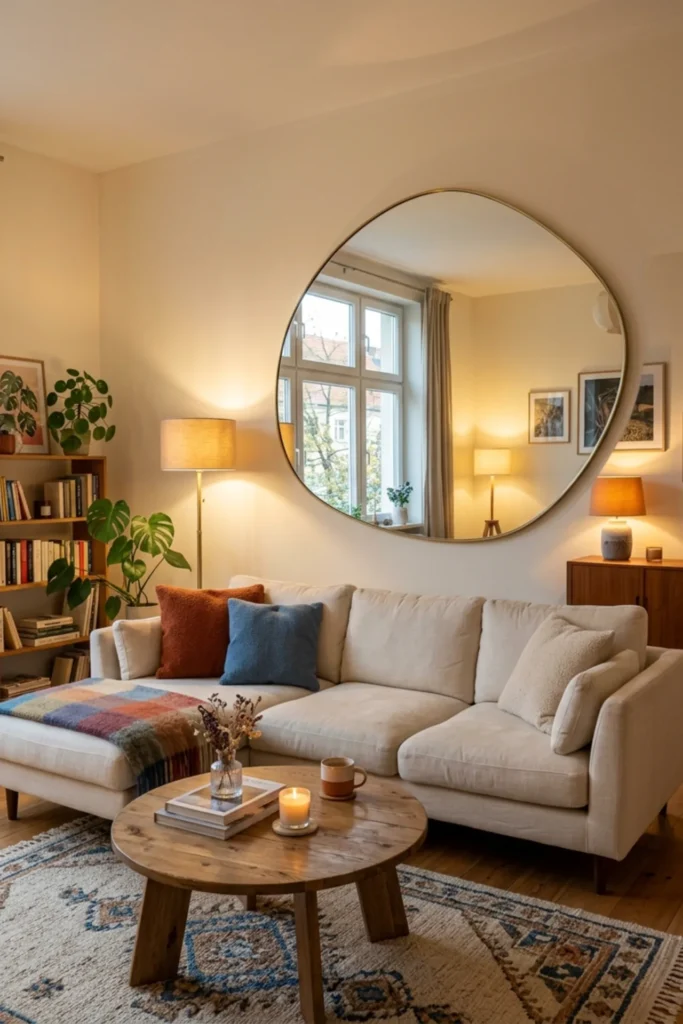
Mirrors are not new, but a softly curved or irregular mirror feels more decorative than a plain rectangle.
It can bounce natural light deeper into the room and visually soften a plain apartment wall.
A mirror also helps the room look brighter at night when lamps are on.
Size and requirements: A mirror around 24–36 inches wide works in many apartment living rooms, but what matters most is wall scale. Hang it where it reflects light or an attractive part of the room rather than a messy hallway or TV glare.
Method and cost: Tape the mirror size on the wall before buying. Use hardware suitable for the wall type and the mirror weight. A curved mirror may cost $80–$500+, with larger statement mirrors costing more.
Pros: Reflects light; adds curves; makes the room feel more styled without taking floor space.
Cons: Needs proper mounting; can reflect clutter if placed badly; oversized mirrors can be heavy and expensive.
8. Add a Sculptural Floor Lamp in One Empty Corner
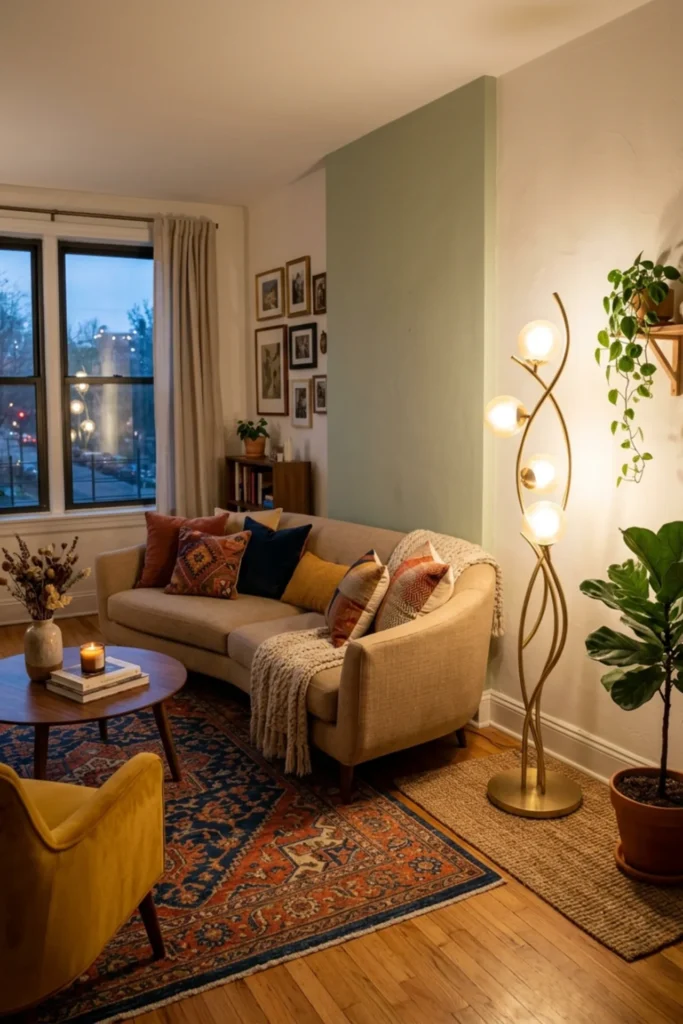
A floor lamp is one of the easiest apartment-friendly ways to create vibe.
Arc lamps, mushroom lamps, globe floor lamps, or pleated-shade lamps all work if the shape is soft and the light is warm.
I would place the lamp where it fills a dark corner rather than squeezing it beside a crowded shelf.
Size and requirements: Many floor lamps range around 58–72 inches high. Check the base size because some sculptural lamps take more floor space than expected. Keep enough walking clearance around the lamp base.
Method and cost: Try the lamp in a paper mockup or use painter’s tape on the floor for the base. A floor lamp may cost $90–$500+, with statement designs costing more.
Pros: Adds height; improves evening mood; fills awkward corners.
Cons: Needs a nearby outlet; large bases can crowd small rooms; oversized lamps can overpower compact furniture.
9. Use a Low Media Console in Warm Wood or Lacquered Color
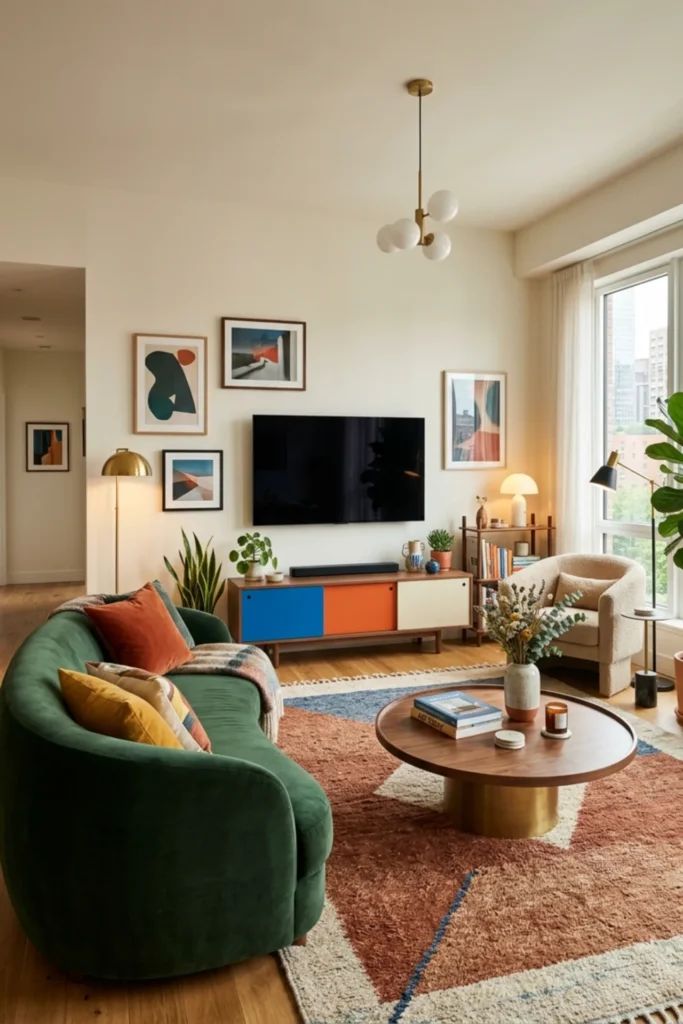
Even in a vibey room, the TV wall needs to feel intentional.
A low media console in walnut, oak, painted muted color, or a softly rounded shape helps the TV area look designed instead of purely functional.
I would avoid a very tall heavy unit in a small apartment living room.
Size and requirements: A media console often works well around 60–72 inches wide in apartment settings, but match it to the actual TV and wall width. Keep enough depth for cables and devices without making the walkway tight.
Method and cost: Measure the wall and mark both console and TV size with tape. A simple media unit may cost $200–$900, while higher-end or sculptural pieces can cost $1,000–$2,500+.
Pros: Grounds the TV; adds storage; helps the room look finished.
Cons: Can look bulky if too deep; styling the top can become cluttered; some low-cost units lack durable construction.
10. Layer Pillows and Throws Without Overstuffing the Sofa
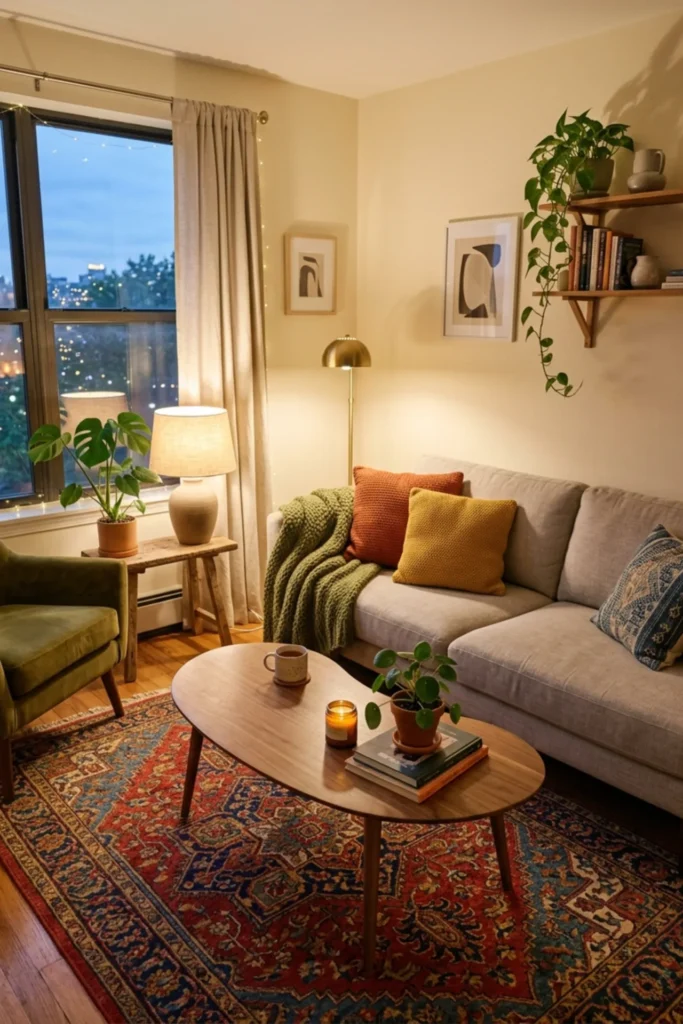
Textiles are where cozy living room vibes usually become obvious.
Use a few pillow shapes, one tactile throw, and materials with some texture—boucle, velvet, washed linen, knits, or nubby woven fabrics.
But I would stop before the sofa turns into a storage pile.
Size and requirements: For a standard apartment sofa, 3–5 pillows is often enough. Mix around 18–22-inch pillows with one smaller accent if needed. Keep throw blankets easy to fold or drape so they do not look messy.
Method and cost: Pull colors from the rug or art instead of inventing a second palette. A basic textile refresh may cost $50–$250, while premium covers and throws can cost more.
Pros: Adds softness and color quickly; easy seasonal change; low commitment compared with furniture.
Cons: Too many pillows become annoying; low-quality fabrics pill or flatten; bold patterns can make the room feel busier.
11. Use a Compact Side Table With a Rounded Silhouette
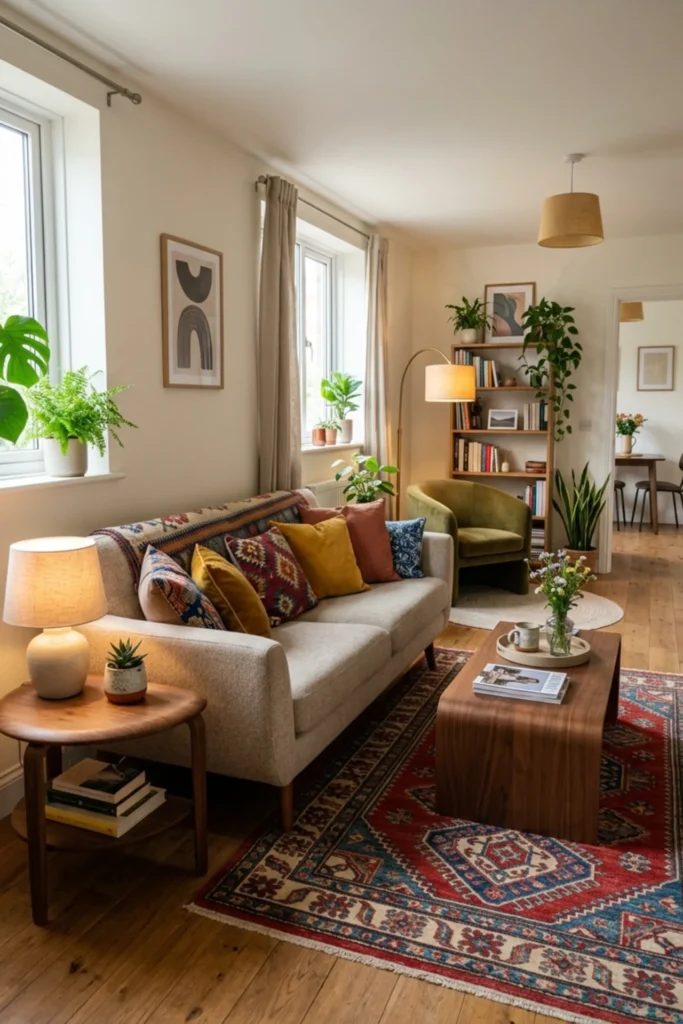
Side tables are small, but in apartments they matter because every piece is visible.
A little drum table, pedestal side table, rounded acrylic table, or fluted cylinder works better for this look than a heavy square block.
I would use one table that looks intentional instead of two tiny mismatched pieces.
Size and requirements: A side table around 14–20 inches wide works in many apartment layouts. Keep the height close to the sofa arm height so it is practical for drinks or a lamp.
Method and cost: Measure the spot beside the sofa or chair before buying. A compact side table may cost $60–$300, while stone or designer tables can cost $400–$1,200+.
Pros: Adds function without much bulk; reinforces the curve theme; easy styling surface.
Cons: Some sculptural tables are less practical than they look; too-small tables feel useless; lightweight tables can wobble.
12. Use Sheer Curtains With Warm Ambient Lighting for a Softer Glow
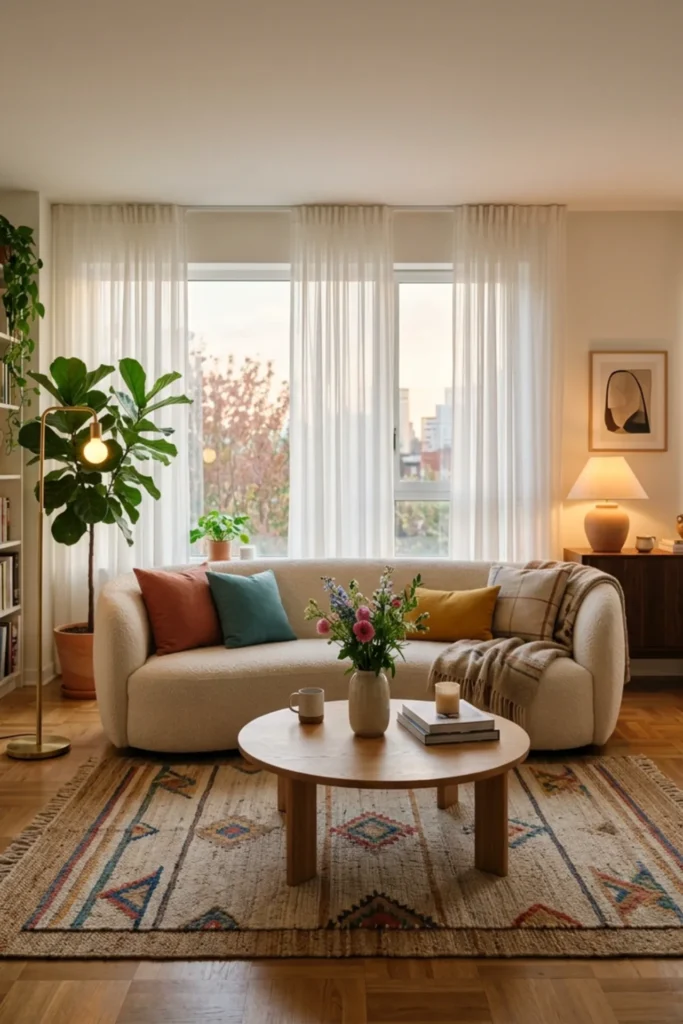
Daytime vibe matters too.
Sheer curtains can filter harsh apartment light and make the room feel softer without blocking it completely. At night, the curtains help lamps glow more warmly through the room.
If privacy is a concern, layer sheers with more solid side panels if your lease and window layout allow.
Size and requirements: Mount the rod around 4–8 inches above the window where possible and extend it around 6–12 inches beyond the frame. Let the curtains reach close to the floor for a more finished look.
Method and cost: Measure rod width and drop carefully before ordering. Sheers and hardware may cost around $60–$300+, while custom panels will cost more.
Pros: Softens daylight; adds movement and texture; helps the room feel less bare.
Cons: Fabric gathers dust; low-quality sheers can look flimsy; long curtains may not work well near heaters or awkward apartment vents.
13. Create a Cozy Reading Corner With One Chair, One Lamp and One Table
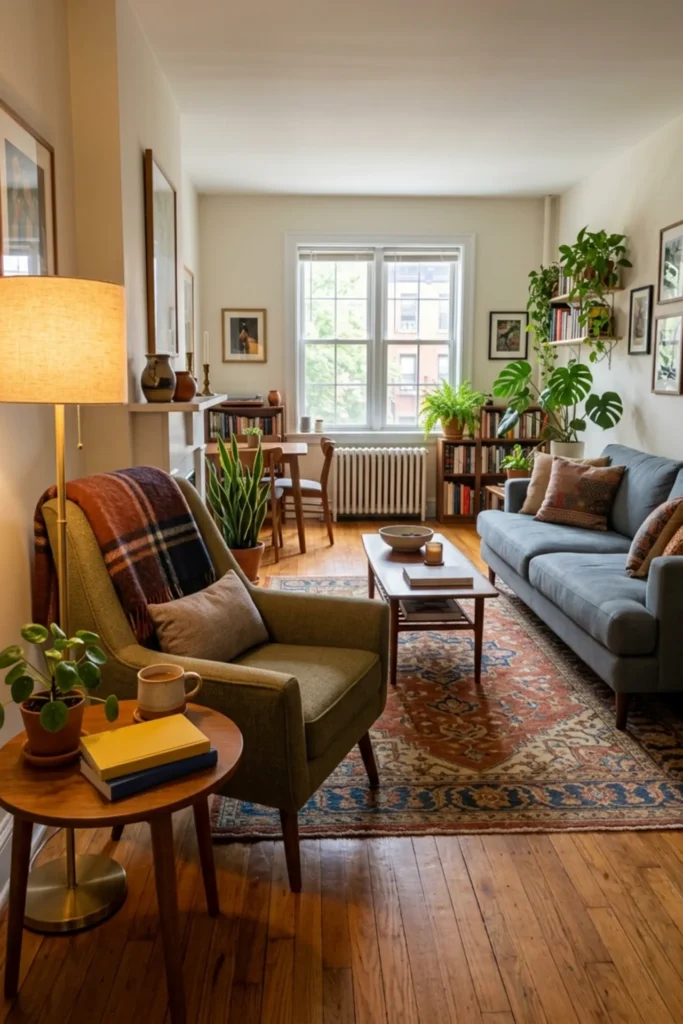
A reading corner makes the living room feel more layered and lived-in.
You do not need a full second seating group. One chair, one lamp, and one little side table are enough if the corner still leaves the room open.
This is especially useful in one-bedroom apartments where the living room has to do more.
Size and requirements: Plan for a chair footprint of around 28–34 inches wide plus a small side table. Leave enough floor area so the corner feels intentional, not wedged into leftover space.
Method and cost: Use an empty corner near a window or existing outlet if possible. A reading corner may cost $250–$1,500+ depending on the chair and lighting.
Pros: Adds function; makes the room feel layered; creates an inviting cozy zone.
Cons: Not every apartment has the extra space; the chair can become a clothes pile; the corner needs enough light to be useful.
14. Mix One Playful Sculptural Piece Into the Room
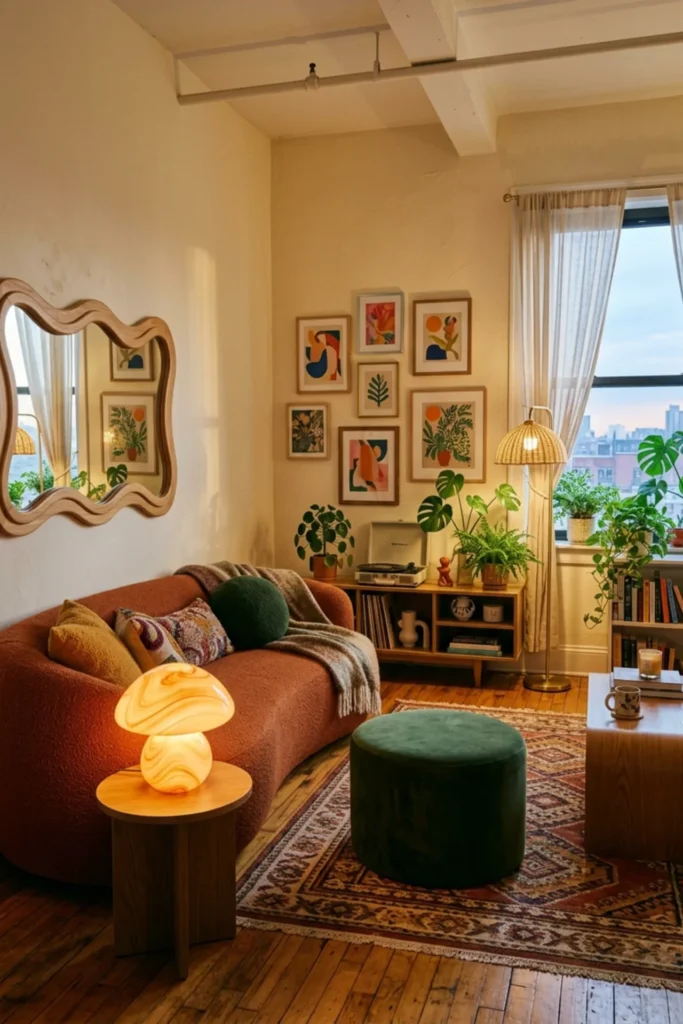
A vibey room often has one piece that feels a little unexpected.
That could be a wavy mirror, mushroom lamp, sculptural candleholder, rounded ottoman, glossy pedestal, or unusual artwork.
The trick is using one playful piece instead of ten trend objects.
Size and requirements: Keep the sculptural piece proportional to its surface or corner. If it sits on a coffee table or console, make sure there is still usable surface left.
Method and cost: Add the bigger essentials first, then choose one shape-driven accent to keep the room from feeling generic. Cost can range from $30–$300+ for decor, or much more if the sculptural piece is furniture.
Pros: Adds personality fast; helps the room look less ordinary; easy to change later.
Cons: Trendy pieces can date quickly; too many playful shapes feel cluttered; decorative items still need storage discipline.
15. Use Warm LED Strips or Shelf Lighting Carefully
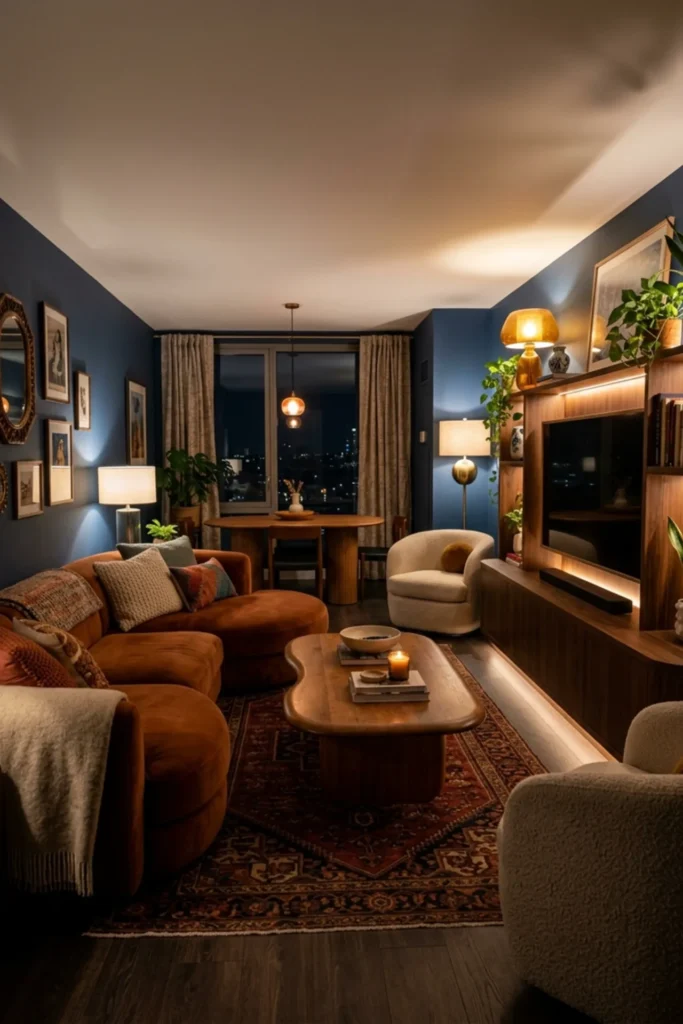
If you want a slightly more modern night vibe, hidden warm LED lighting can help.
I would use it behind a shelf, under a media unit, or inside a bookcase rather than outlining every wall like a gaming setup.
The effect should feel soft and atmospheric.
Size and requirements: Use warm white light around 2700K–3000K. Keep the strips hidden where possible so the glow is visible, not the individual dots. Check adhesive quality and apartment rules before applying anything permanently.
Method and cost: Test the strip placement temporarily before sticking it down. A simple LED setup may cost $20–$100, while higher-quality dimmable systems cost more.
Pros: Good evening mood; inexpensive; works well in apartments where hardwired lighting is limited.
Cons: Cheap strips can look harsh; visible dots reduce the vibe; adhesive products may not suit every rental surface.
16. Edit the Room Until It Feels Cozy, Not Crowded
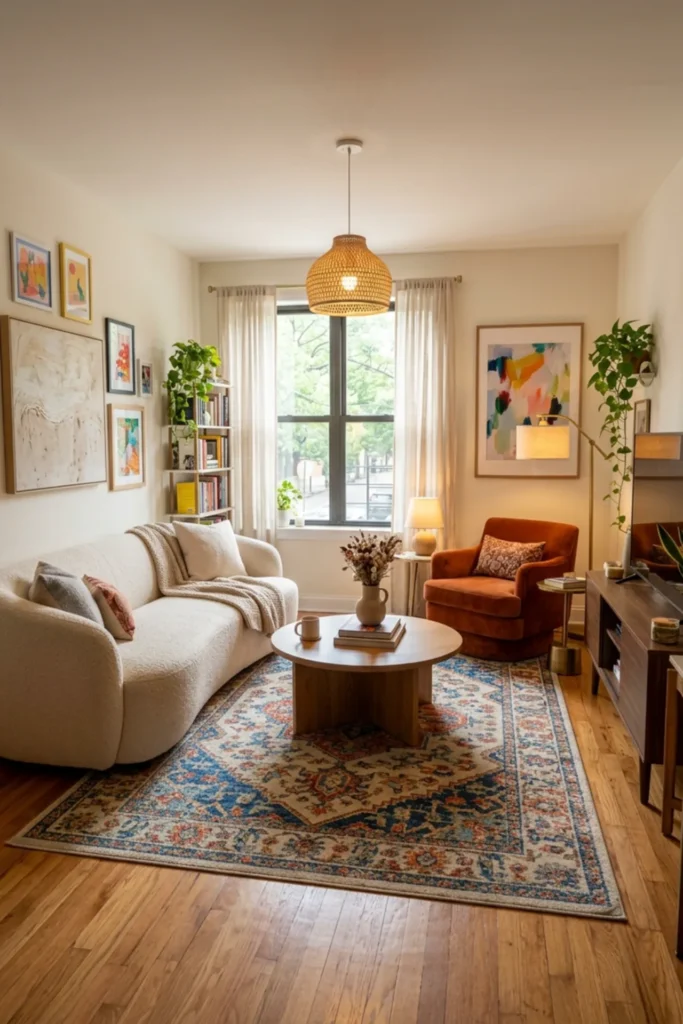
This is where most good rooms become better.
Once you have the rug, sofa, coffee table, lighting, and a few accents, stop adding. The room needs visible air around the furniture to feel vibey instead of overdecorated.
Color needs space. Curves need space. Lighting works better when surfaces are not overloaded.
Size and requirements: Keep the main walking path clear. Try to leave at least 25%–35% of major surfaces visually open, including the coffee table and media console. Do not block windows with too much furniture.
Method and cost: Remove three things from the room and see if it looks better. Usually it does. This step costs $0.
Pros: Makes the room feel bigger; lets the best pieces stand out; easier cleaning and better flow.
Cons: Editing can make a collector feel like the room is less “fun”; it does not solve poor layout or bad lighting on its own.
A Practical 10-Step Vibey Apartment Living Room Plan
If I were decorating an apartment living room from scratch, I would use this order:
- Measure the room and walkway.
- Choose the rug size first.
- Pick the main sofa or loveseat.
- Add one curved or rounded table.
- Decide where color will appear most strongly.
- Place one anchor lamp and one secondary lamp.
- Add the media console and TV wall setup.
- Choose one accent chair or one reading-corner piece.
- Layer in textiles and art.
- Remove anything that makes the room feel cramped.
That sequence helps the room feel designed without turning the shopping process chaotic.
Approximate Budget by Update Level
You can create this style at different budget levels.
Low-cost refresh: $150–$700
- New rug or pillows
- Floor lamp
- Side table
- Colorful throw
- A few renter-friendly decor updates
Mid-range update: $1,000–$4,000
- New sofa or loveseat
- Rug
- Coffee table
- Accent lighting
- Curtains
- One accent chair
Full living room makeover: $4,500–$12,000+
- Quality sofa
- Rug
- Accent chair
- Coffee table
- Media console
- Multiple lights
- Curtains
- Art
- Styling pieces
Designer furniture, custom curtains, premium rugs, and large original artwork can move the total much higher.
What I Would Spend More On
I would spend more on the sofa, rug, and lighting.
Those three choices shape the room more than most people expect.
I would spend less on small trend objects. A room usually feels better with one great lamp and one good rug than with ten sculptural accessories competing for attention.
If the budget is limited, I would focus on atmosphere first. A neutral sofa with a strong rug and layered warm light can feel more vibey than a fully re-furnished room with bad lighting.
Common Mistakes I Would Avoid
The first mistake is making the room colorful without giving it any resting space.
The second is buying oversized furniture because it looked good in a large inspiration room.
Another mistake is using one dramatic overhead bulb and wondering why the room still feels flat at night.
I would also avoid putting too many curvy pieces in a very small apartment room. One curved sofa, a round table, a wavy mirror, a mushroom lamp, and a curved chair can all be beautiful—but not always in the same compact room.
Try not to style every surface. The coffee table, console, windowsill, side table, and shelves do not all need decor.
If you use tall shelving or narrow storage furniture, the U.S. Consumer Product Safety Commission’s Anchor It! guidance is worth checking for general furniture tip-over safety.
Final Thoughts
Vibey apartment living room ideas work best when the room feels warm, soft, and a little personal.
You do not need a huge budget or a giant loft.
One good rug, a rounded coffee table, one bold color moment, layered lighting, and a few soft shapes can completely change an ordinary apartment living room.
The practical part matters just as much. Measure the walkway, keep the furniture scaled to the room, and give the best pieces enough breathing space.
When the color is controlled, the curves are intentional, and the lighting feels warm at night, even a standard apartment living room can feel collected, cozy, and genuinely fun to spend time in.
Disclosure: Some visuals are AI-assisted design concepts created for inspiration. Always confirm measurements, furniture dimensions, wall-fixing requirements, electrical details, bulb compatibility, rental restrictions, and manufacturer instructions before making changes in your home. Cost ranges are approximate U.S. planning figures and vary by location, labor, materials, shipping, and product quality.
About the Author
Ali Hamza — Founder & Editor
Hi, I’m Ali Hamza, and Styled Room Living is my personal home decor project. I don’t have a formal background in interior design. I started this website because home makeovers are something I genuinely enjoy looking at and learning about.
Most of the ideas shared here are not projects I have personally built. When I put a guide together, I try to separate an idea that only looks good in a photograph from one that could actually be useful in a normal home. Will it fit? Is it easy to clean? Does it require drilling? Can it be adjusted for a smaller budget? These are the questions I keep in mind while working on an article.
Some images on the website are AI-assisted design concepts used to explain an idea more clearly. They are meant for inspiration, not as exact construction plans. Please check measurements, materials, prices, weight limits, electrical details, and installation requirements before trying anything in your own home.
I’m still learning as the website grows, and I know every home works differently. My purpose with Styled Room Living is simply to collect useful home ideas, explain them in plain language, and help readers find something they can adapt to their own space.
Read more about Ali Hamza →