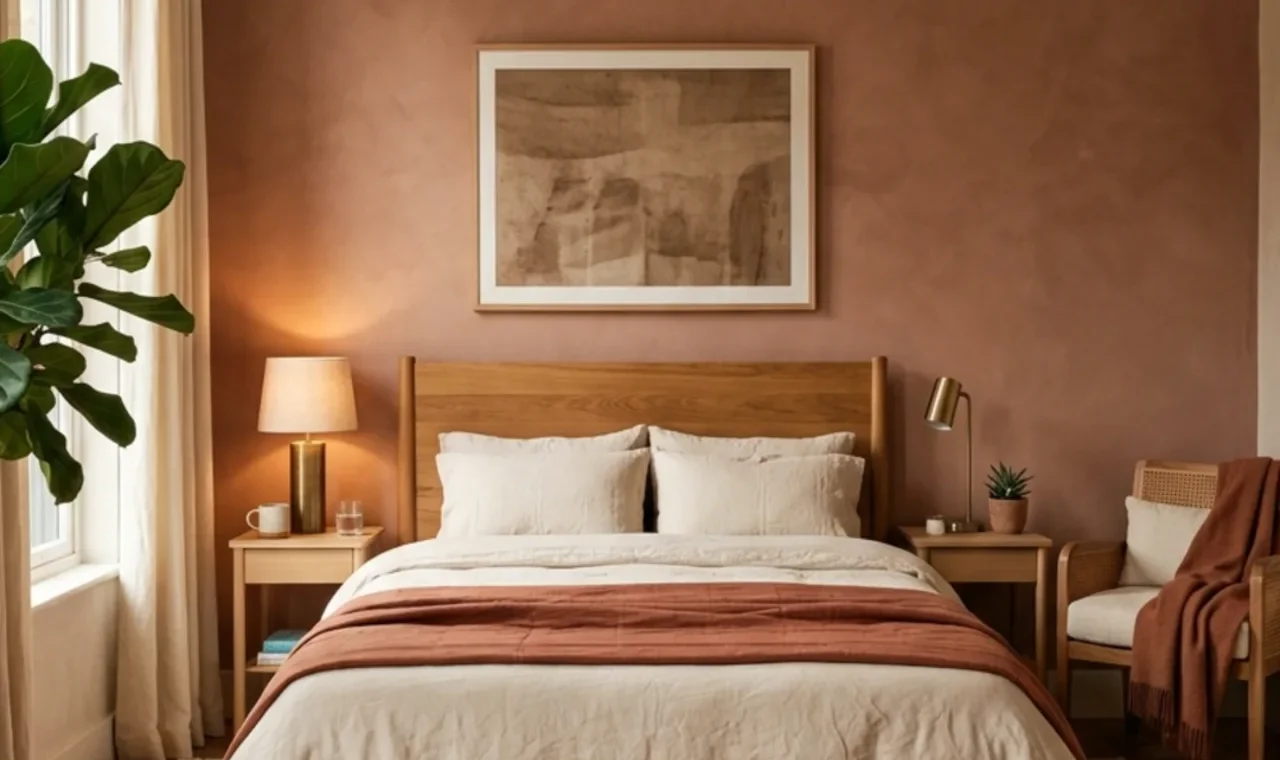
Terracotta bedroom ideas work best when the room feels warm without becoming dark or overly orange. The color already has a lot of personality, so it does not need to appear on every wall, pillow, curtain, and piece of decor.
What makes terracotta easy to live with is the way it sits beside natural materials. Warm oak, walnut, linen, jute, cane, cream wool, aged brass, black metal, stone, and handmade-looking pottery all help the color feel grounded.
I would think of terracotta as the room’s warm anchor rather than the full palette. In many bedrooms, one painted wall, a clay-colored duvet, or an upholstered headboard is enough. Cream and warm white can then keep the room bright, while wood and deeper brown give it structure.
This guide is built around practical decisions, not just inspiration photos. Each idea includes rough dimensions, a simple method, planning costs, and the pros and cons I would consider before buying anything. I have also included lighting, rug size, bedside storage, small-room options, artwork, curtains, and the details that help an earth-tone bedroom feel collected instead of themed.
Why Terracotta Works So Well in a Bedroom
Terracotta sits between orange, rust, brown, and muted red. That gives it warmth without the brightness of a clear orange.
It also changes noticeably with light. Morning daylight can make it look softer and more clay-like, while warm lamps after sunset can make it look deeper and richer.
That is why I would test the color before committing to a full room.
Benjamin Moore’s Elemental Color Palette is a useful reference for seeing terracotta beside sand, earth, and other muted natural tones.
A strong bedroom palette might look like this:
- 60% warm cream, beige, or off-white
- 20% terracotta or rust
- 15% natural wood or brown
- 5% black, brass, or greenery
It does not need to follow those numbers exactly. The point is to stop terracotta from taking over every surface.
If you like calm earthy bedrooms but want something cooler, Sage Green Bedroom Ideas gives you a softer green alternative.
Before You Decorate, Measure the Bed and Walking Space
The bed decides most of the bedroom layout, so measure it before choosing rugs, nightstands, benches, or feature walls.
A queen mattress is commonly around 60 by 80 inches, while a king is around 76 by 80 inches. The bed frame can be several inches wider and longer.
Try to preserve around 24–30 inches of walking room on the sides people actually use. More is better, but small bedrooms may need compromise.
Nightstands usually work best when the top sits close to the mattress height. A difference of a few inches is normally fine.
For a rug under a queen bed, 8 by 10 feet is a common starting point. For a king, 9 by 12 feet often gives better coverage. The room itself still decides what fits.
The measurements below are planning starting points, not strict rules. Always check the actual furniture and room before buying.
1. Paint One Terracotta Feature Wall
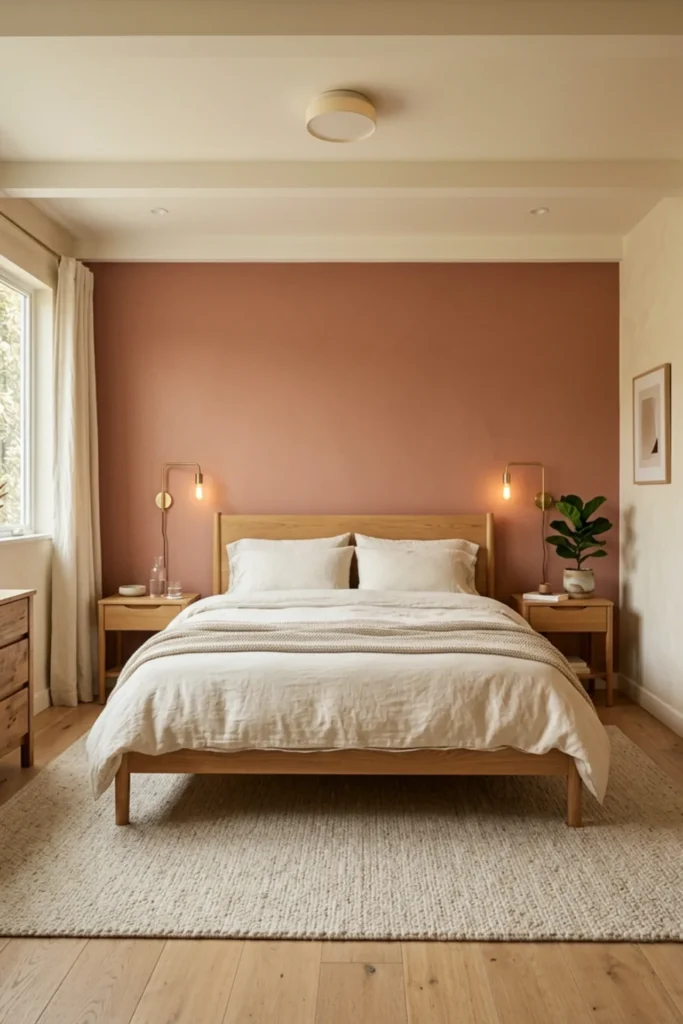
One terracotta wall gives you the warmth without turning the whole room dark.
The best wall is usually behind the bed because the bed naturally anchors the color. Keep the remaining walls warm white, sand, bone, or pale beige.
I would choose a muted clay or dusty rust rather than a bright orange-red.
Size and requirements: Keep the terracotta to one main wall or around 20%–30% of the visible wall area. Paint at least a 24-by-36-inch sample board and move it around the room before committing.
Method and cost: Clean the wall, repair holes, sand where needed, prime if required, then apply the manufacturer-recommended coats. DIY paint and supplies may cost around $60–$220. Professional painting can run roughly $300–$900+ for a feature wall depending on prep, wall height, trim, and local labor.
Pros: High visual impact for relatively little money; easy to pair with neutral bedding; easier to repaint than four walls.
Cons: Strong terracotta may reduce brightness; undertones can shift under different bulbs; the wall can overpower artwork if both are bold.
2. Use a Clay-Colored Upholstered Headboard
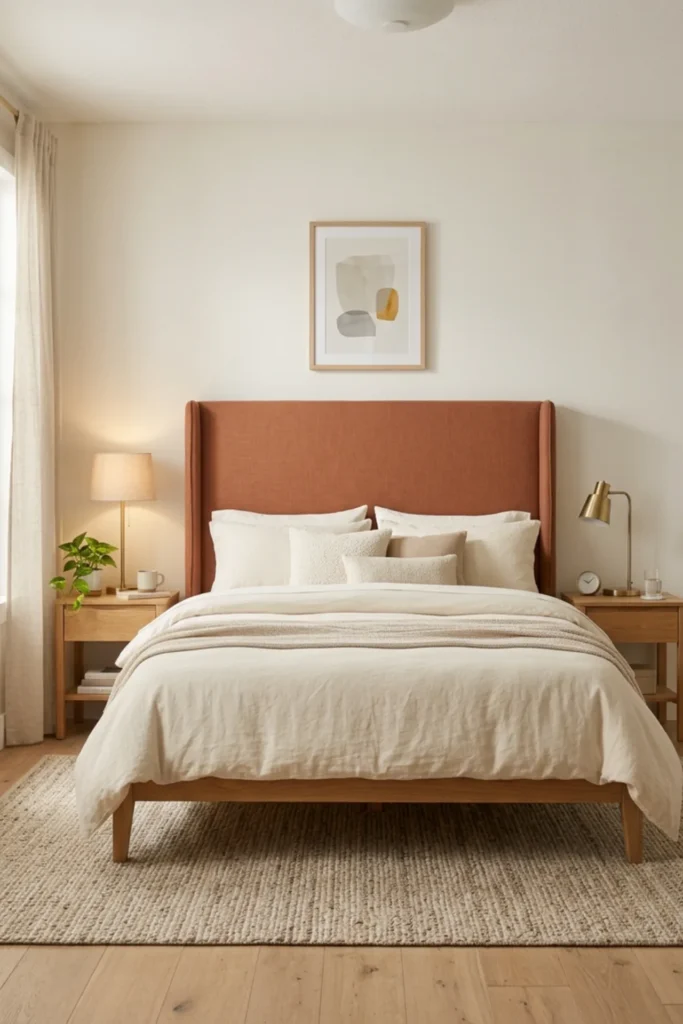
If you do not want painted walls, put terracotta on the bed instead.
A clay or rust upholstered headboard feels softer than painted drywall and gives the room warmth exactly where the eye already goes.
Textured linen-look fabric usually feels more relaxed than shiny velvet.
Size and requirements: For a queen bed, the headboard is often around 62–68 inches wide; king headboards are commonly around 78–84 inches wide. Measure the actual frame. A headboard around 48–60 inches high can feel substantial without swallowing a standard room.
Method and cost: Measure the bed frame and wall outlets first. Order a fabric sample if possible and check it beside the wall paint and bedding. Ready-made upholstered headboards may cost $250–$1,200+; custom upholstery can cost considerably more.
Pros: Adds color and softness at once; no repainting required; can improve comfort for reading in bed.
Cons: Fabric collects dust; light clay fabrics can stain; a large headboard can make a small room feel visually heavy.
3. Layer Cream Bedding Over a Terracotta Bedspread
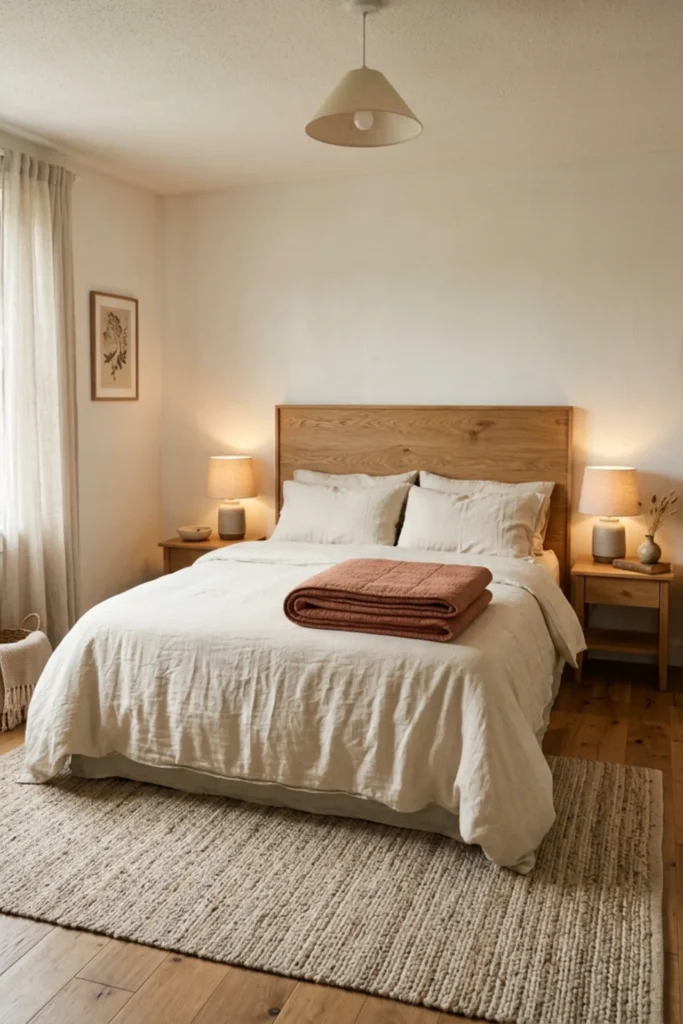
Terracotta bedding works best when it is broken up with cream.
Instead of buying a full matching rust bedding set, I would use cream sheets and duvet covers, then add a terracotta quilt, coverlet, or folded blanket.
The contrast makes the bed look softer and less color-blocked.
Size and requirements: For a queen bed, look for a coverlet roughly 90 by 90 inches or sized specifically for the mattress and frame. For a king, 108 by 90 inches is a common starting point. Check drop length before ordering if you want the sides to cover more of the bed.
Method and cost: Start with the neutral bedding you already own. Add one terracotta layer at the foot or over the lower two-thirds of the bed. A coverlet or quilt may cost $80–$350+, depending on fiber and brand.
Pros: Easy way to test the color; removable and washable; lets you change the palette seasonally.
Cons: Strong rust bedding can dominate a small room; some fabrics fade after repeated washing; too many blanket layers can become impractical every night.
4. Pair Terracotta With Natural Oak
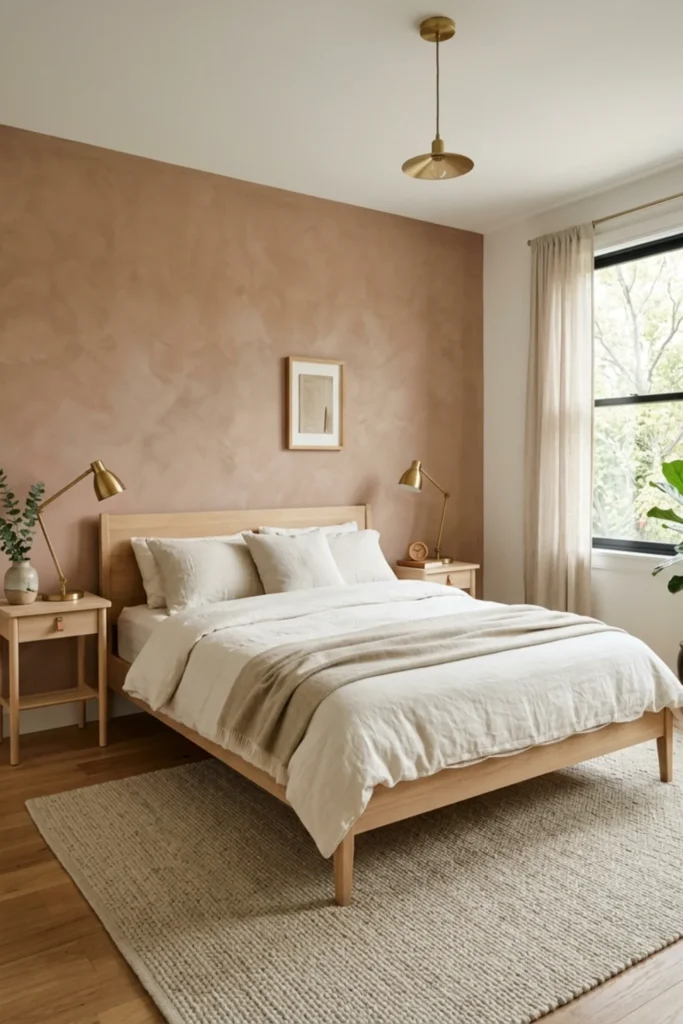
Light oak keeps terracotta from becoming too dark.
A natural oak bed, nightstand, or dresser gives the room warmth without adding another strong color.
This is a good choice for smaller rooms because pale wood reveals more detail than a large dark walnut piece.
Size and requirements: For nightstands, around 18–24 inches wide is comfortable in many bedrooms; narrow rooms may need 14–18 inches. Keep the top within a few inches of mattress height. A dresser around 48–60 inches wide and 16–20 inches deep works in many rooms if circulation remains clear.
Method and cost: Choose one main oak furniture group rather than mixing five different wood tones. A pair of oak-look nightstands may cost $250–$900. A quality oak bed or dresser can cost $700–$2,500+.
Pros: Brightens the earth-tone palette; feels natural and calm; works with cream, cane, black, and brass.
Cons: Pale wood can look too yellow beside some terracotta shades; inexpensive veneer may show damage; mixing orange-toned oak with orange terracotta can become overly warm.
5. Bring in Walnut for a Deeper Earth-Tone Look
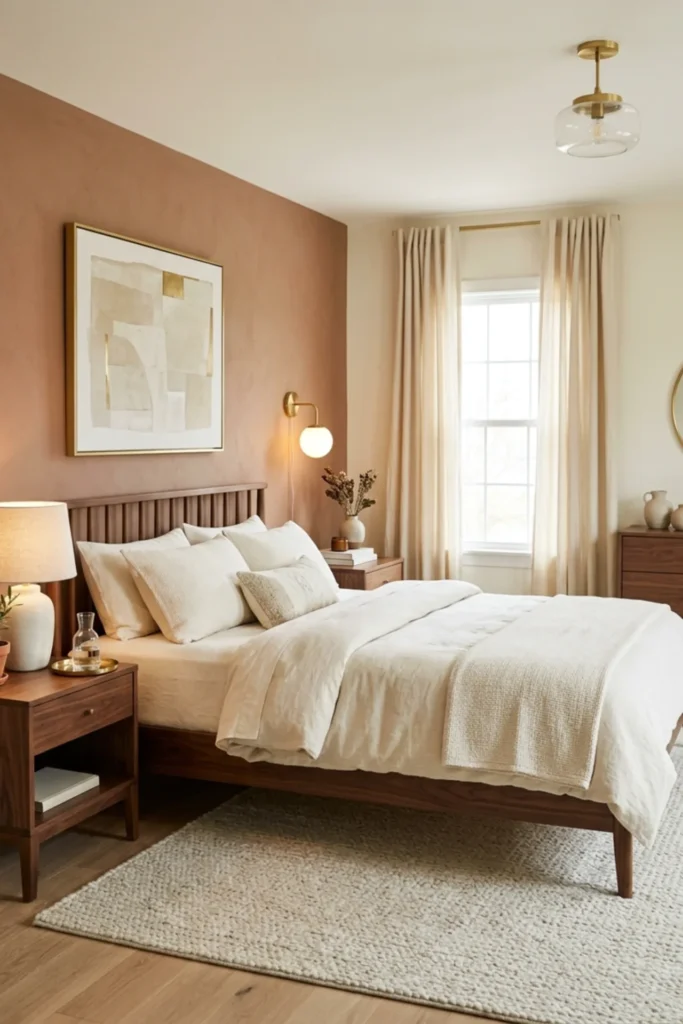
Walnut makes the room richer and more dramatic.
I would use it when the bedroom has good natural light or plenty of cream around the bed.
A walnut bed, dresser, or pair of nightstands is enough. You do not need all three.
Size and requirements: Dark furniture benefits from visible floor around it. Try to keep at least 24 inches of usable circulation near dresser drawers and bed access. For a dresser, add the open-drawer depth to your floor plan before buying.
Method and cost: Tape the furniture footprint on the floor and check it at night when the room is visually darker. Walnut-look pieces can cost $300–$1,200, while solid walnut furniture may run $1,500–$4,000+.
Pros: Gives terracotta depth; feels sophisticated; works beautifully with cream and aged brass.
Cons: Can make a small room feel heavier; genuine walnut is expensive; dark surfaces may show dust and scratches.
6. Ground the Bed With a Warm Neutral Rug
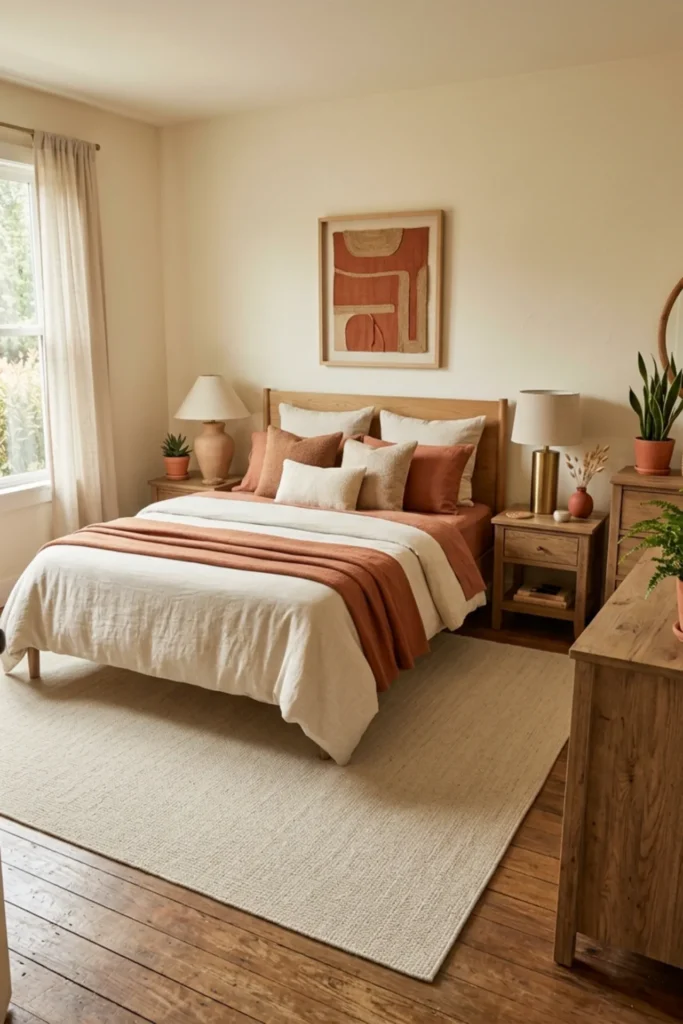
A cream, oatmeal, camel, or beige rug helps terracotta feel softer.
I would keep the rug quieter if the walls or bedding already carry strong color.
Texture matters more than pattern here.
Size and requirements: For a queen bed, 8 by 10 feet is a strong starting size. For a king, 9 by 12 feet often works better. Aim to have useful rug exposed at the sides and foot rather than hiding nearly all of it under the bed.
Method and cost: Tape the rug size on the floor before ordering. If the room is small, place the rug under the lower two-thirds of the bed rather than forcing an oversized rug into the corners. Expect roughly $180–$1,000+ for many full-size bedroom rugs.
Pros: Softens the room; warms hard flooring; makes terracotta feel less intense; improves comfort underfoot.
Cons: Light rugs show stains; thick piles make cleaning harder; undersized rugs can make the bed look disconnected.
7. Add a Cane or Rattan Accent
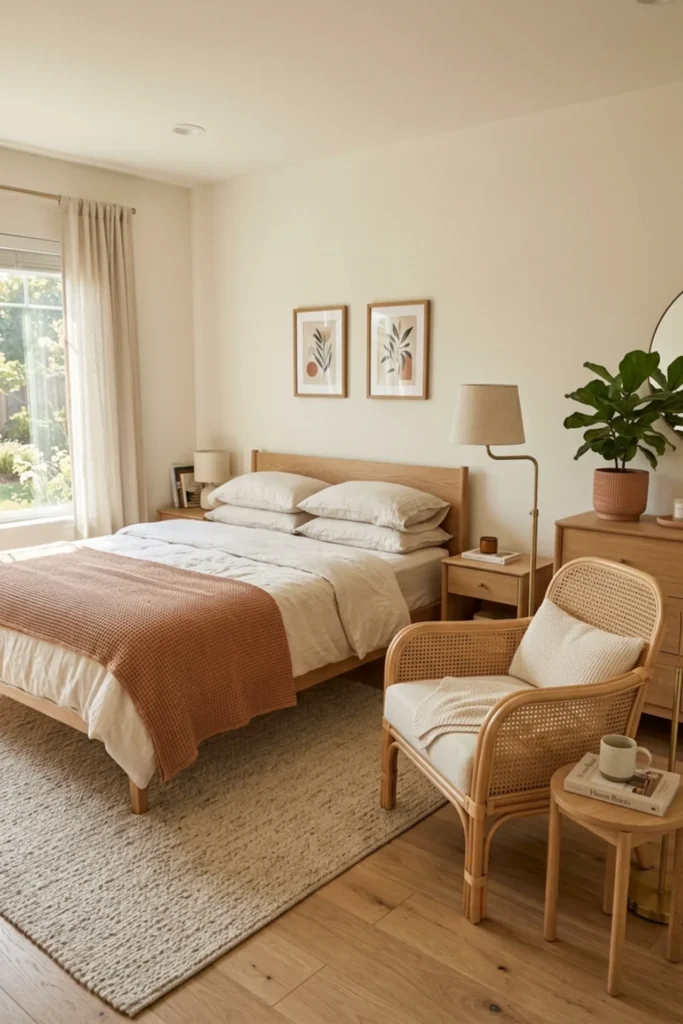
Cane and rattan work with terracotta because both already feel warm and natural.
The trick is using one or two pieces.
A cane headboard, woven chair, or small rattan-front nightstand can be enough.
Size and requirements: Keep a reading chair around 28–32 inches wide in a small-to-medium bedroom unless you have more space. Leave enough room for the chair depth and a clear path beside it. For cane-front nightstands, keep the top near mattress height.
Method and cost: Add one natural woven element, then stop before the room turns into a boho furniture set. A cane nightstand may cost $180–$600. A rattan chair can cost $250–$900+.
Pros: Adds texture without another color; lightens dark terracotta; works well with cream linen.
Cons: Woven surfaces collect dust; cheap cane can split; too much rattan can make the room feel themed.
8. Use Terracotta Curtains Only in a Bright Room
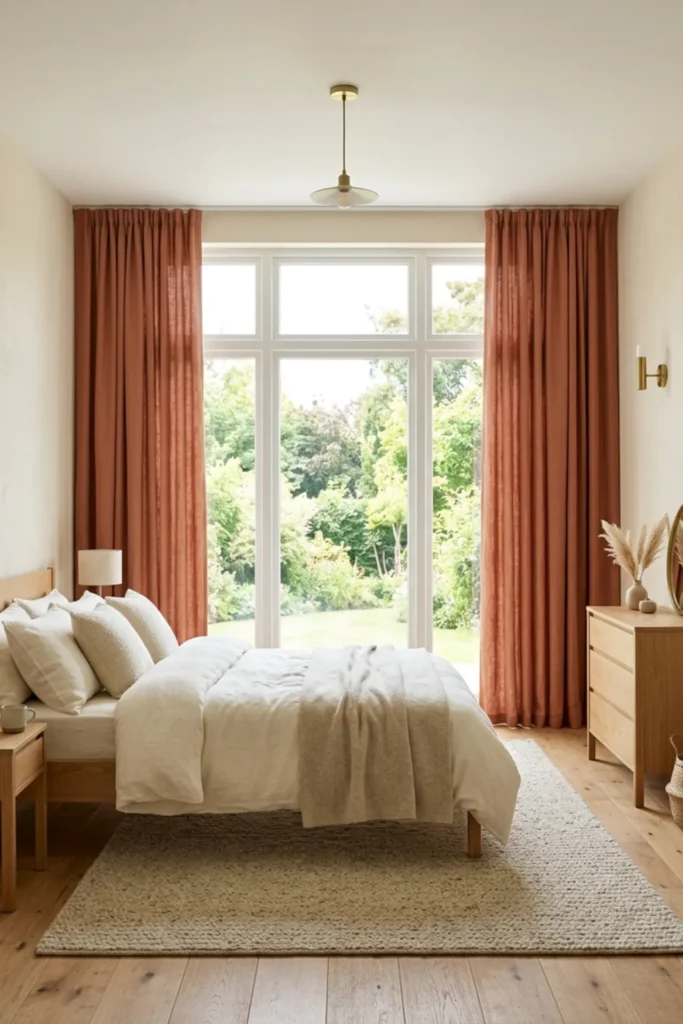
Terracotta curtains cover a large visual area, so I would use them only when the room gets enough daylight.
In darker bedrooms, cream or flax curtains usually work better.
A matte linen-look fabric gives terracotta a softer appearance than shiny fabric.
Size and requirements: Mount the rod around 4–8 inches above the window where possible and extend it around 6–12 inches beyond each side. Combined curtain width often looks fuller around 1.5–2 times the rod width.
Method and cost: Measure from the proposed rod position to just above the floor. Check radiators, vents, windows, and furniture first. Curtains and hardware may cost $150–$1,000+ per window, depending on fabric, lining, and custom sizing.
Pros: Adds warmth and softness; can make the room feel enveloping; easy to remove later.
Cons: Dark panels reduce light; fabric collects dust; terracotta curtains can overpower already-colored walls.
9. Add Brass or Bronze Bedside Lighting
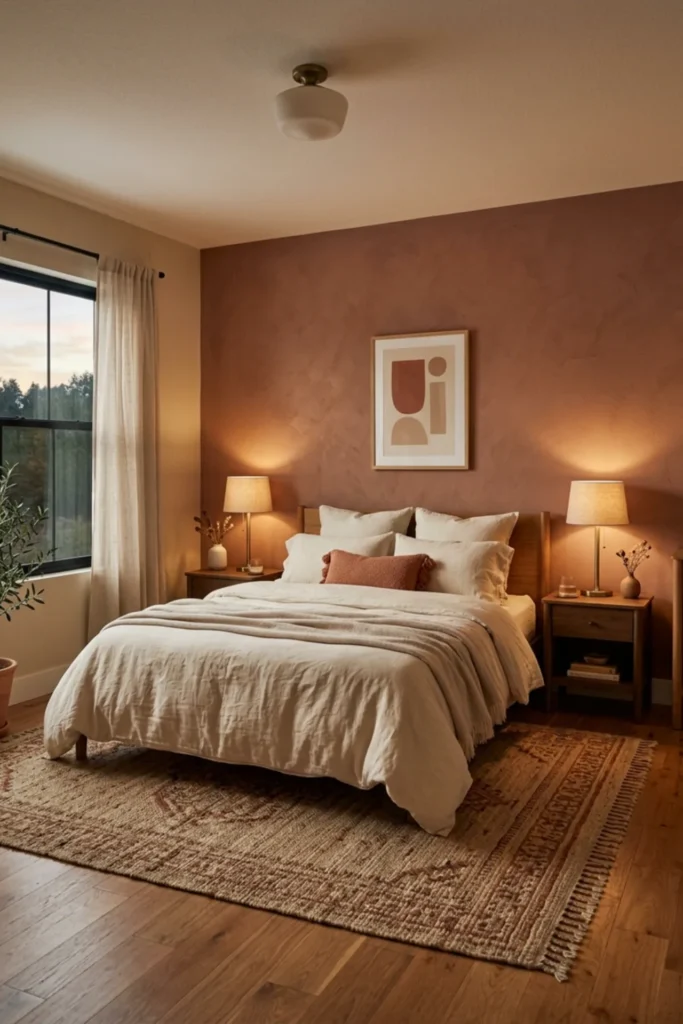
Warm metal lighting brings out the brown and red undertones in terracotta.
I would choose brushed brass, antique brass, bronze, or aged metal rather than highly polished gold.
One lamp on each nightstand is enough.
Size and requirements: A bedside lamp around 24–30 inches high overall works in many setups, but what matters most is where the light falls when you sit in bed. Keep the shade and bulb below eye glare. On small nightstands, look for bases around 6–8 inches wide.
Method and cost: Measure the free nightstand surface first. Replace bulbs before buying new lamps; warm bulbs around 2700K can change the room more than expected. Lamps may cost $80–$500+ each.
Pros: Warms terracotta after dark; useful for reading; adds a refined accent without much clutter.
Cons: Oversized lamps eat nightstand space; shiny gold can feel too glamorous; poor shade height can cause glare.
10. Style a Dresser With Handmade-Looking Pottery
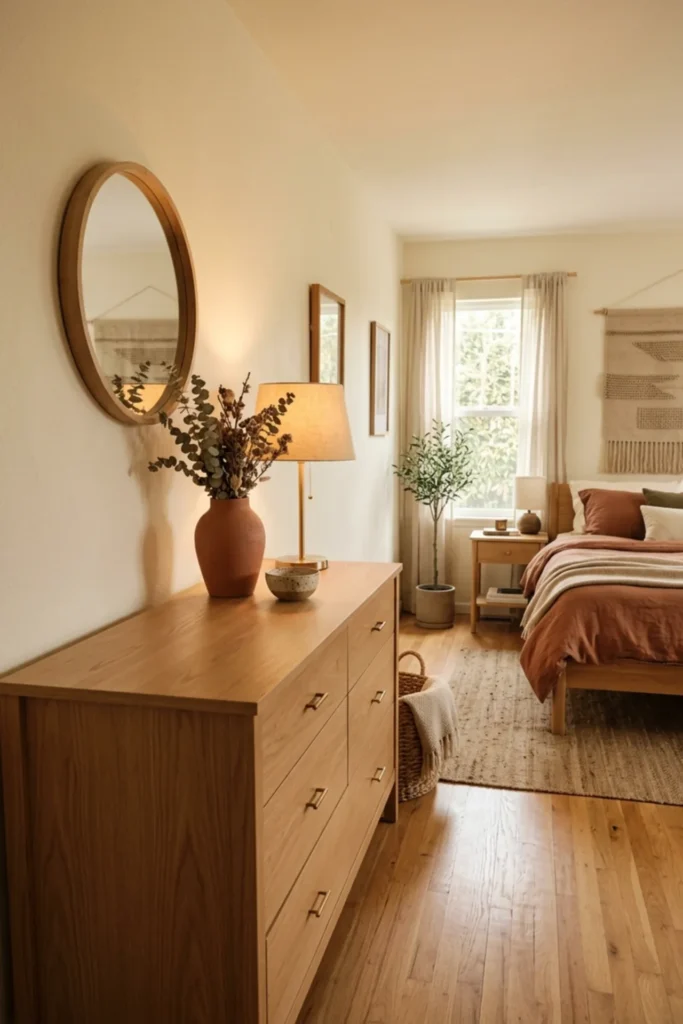
Terracotta pottery can repeat the wall or bedding color without looking forced.
The key is not using ten little pots.
One medium vessel, a tray, and a small lamp can be enough.
Size and requirements: Keep about 40%–50% of the dresser top visually clear. One vessel around 10–16 inches high plus a smaller bowl is usually plenty. Keep fragile objects away from the edge.
Method and cost: Remove everything from the dresser first. Add only three items: one useful object, one decorative piece, and one light or framed photo. Budget around $40–$250 for ceramics and a simple tray; handmade work can cost more.
Pros: Adds texture; easy to change; gives the room a collected look.
Cons: Fragile objects need safe placement; too much pottery looks staged; dusty open decor needs regular cleaning.
11. Hang One Oversized Earth-Tone Artwork Piece
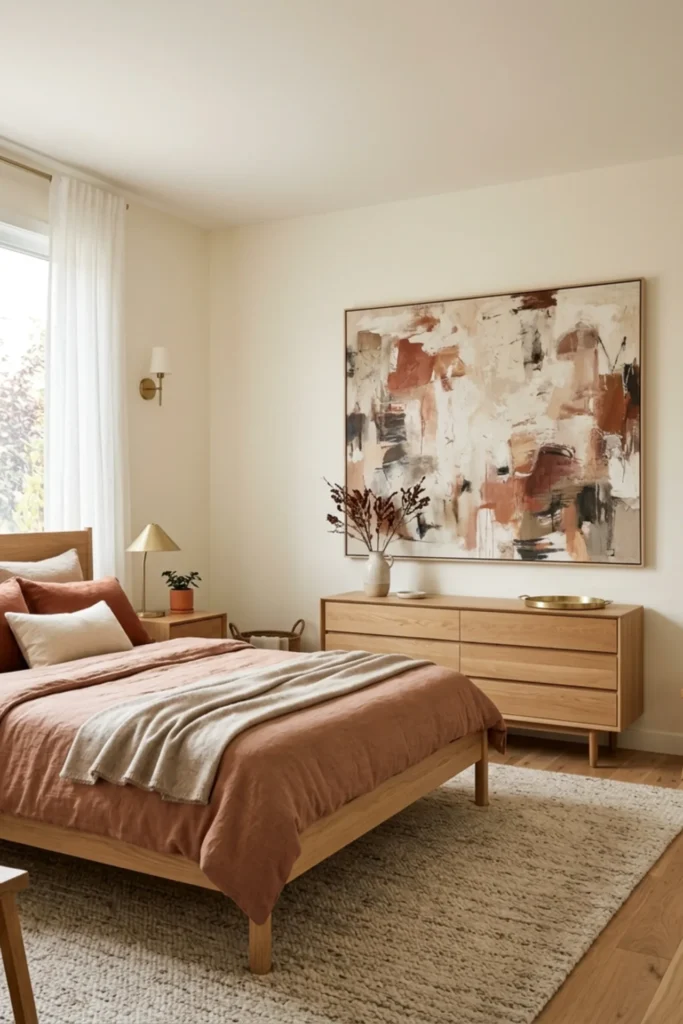
Large art can make a terracotta bedroom feel intentional without filling the wall with small frames.
Look for art that includes cream, rust, brown, charcoal, or faded green rather than matching the bedding exactly.
One large piece usually feels calmer than a busy gallery wall.
Size and requirements: A useful starting point is artwork around 60%–75% of the headboard or dresser width. Keep heavy art securely mounted. I would avoid loosely hung heavy frames directly above the pillow area.
Method and cost: Tape a paper rectangle to the wall at the planned size and live with it for a day. Use wall fixings appropriate for the frame weight and wall type. Large prints and frames may cost $120–$800+; original art varies widely.
Pros: Strong focal point; adds personality; connects several earth tones at once.
Cons: Large frames are expensive to ship; heavy art needs proper mounting; overly literal desert imagery can make the room feel themed.
12. Create a Terracotta Reading Corner
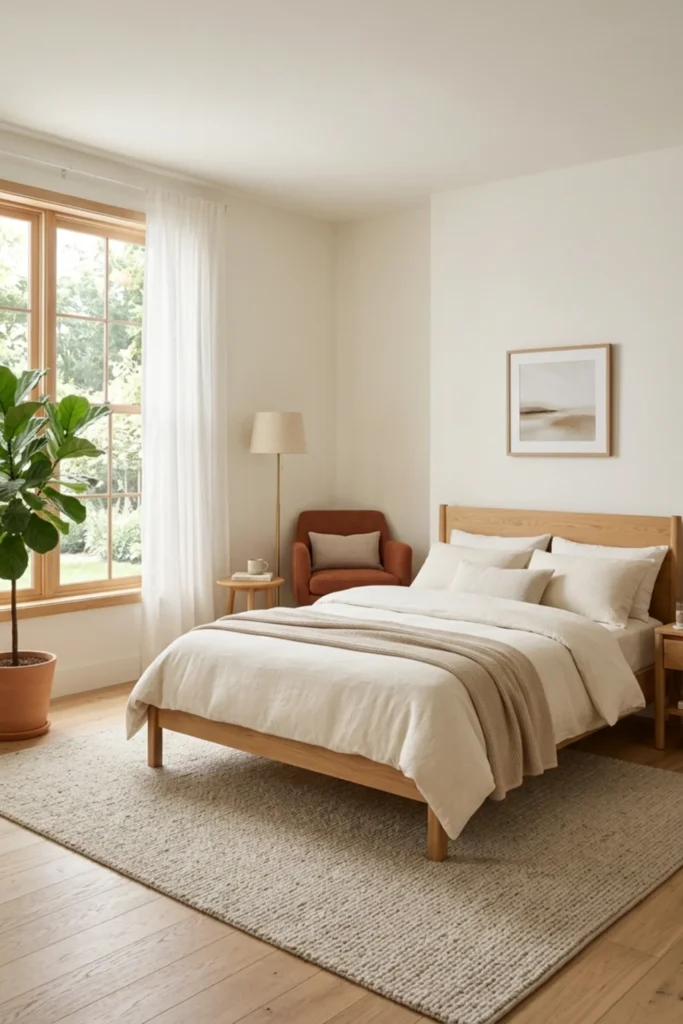
A reading corner gives you another place to use the color without adding more to the bed.
Try a terracotta accent chair beside a warm floor lamp and one small table.
This works best when the chair has room to sit naturally rather than being squeezed into a leftover gap.
Size and requirements: A compact chair may need around 28–32 inches of width and 30–36 inches of depth. Leave at least 24 inches of clear walking space beside the chair where possible. A side table around 14–18 inches wide is usually enough.
Method and cost: Tape the chair and side-table footprints on the floor. Sit in a normal chair there for a day before ordering. A chair may cost $300–$1,200+, with a lamp and side table adding $150–$700.
Pros: Adds a useful second zone; gives terracotta a clear focal point; makes a large bedroom feel more complete.
Cons: Uses valuable floor space; upholstered chairs collect dust; in a small bedroom it may become a clothes chair instead of a reading chair.
13. Add One Tall Green Plant for Contrast
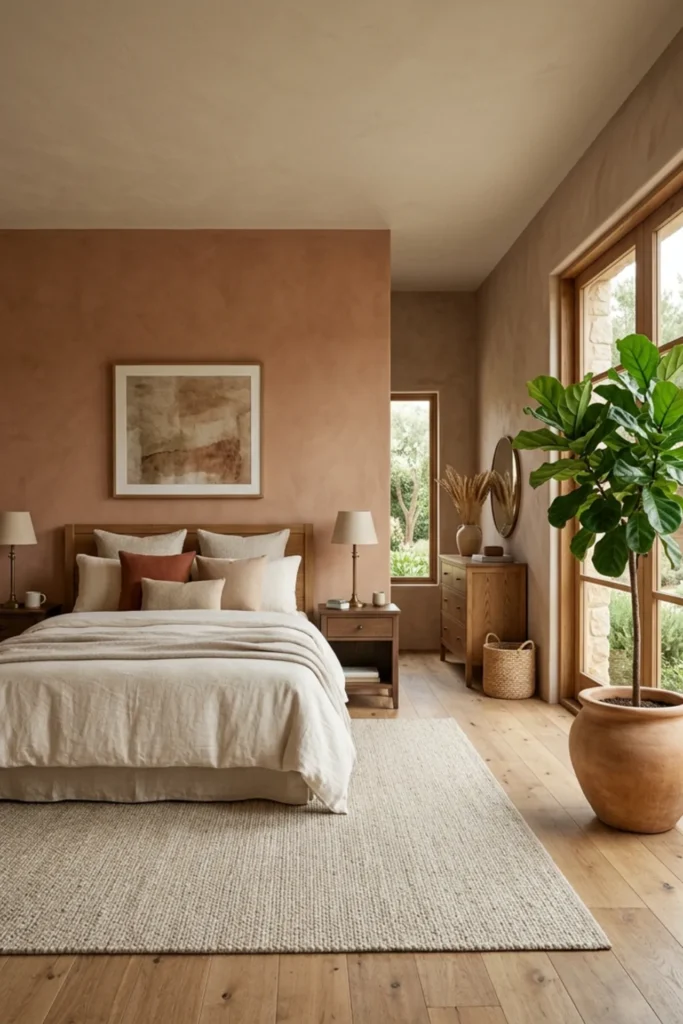
Green works because it sits opposite the red-orange side of terracotta without looking like a sharp complementary color.
One healthy plant can be enough.
I would keep it near suitable natural light rather than placing it where the photo looks best.
Size and requirements: A floor plant around 4–6 feet high can balance a standard dresser or bed corner. Keep the pot outside walking paths and away from curtains. Use a waterproof saucer or liner.
Method and cost: Check the bedroom’s actual light over the day, then choose a plant that fits those conditions. A plant and decorative pot may cost $50–$300+.
Pros: Adds fresh contrast; softens hard furniture; makes the earth-tone palette feel more natural.
Cons: Requires maintenance; water can damage floors; some plants may not be suitable around pets or children.
14. Use a Terracotta Bench at the Foot of the Bed
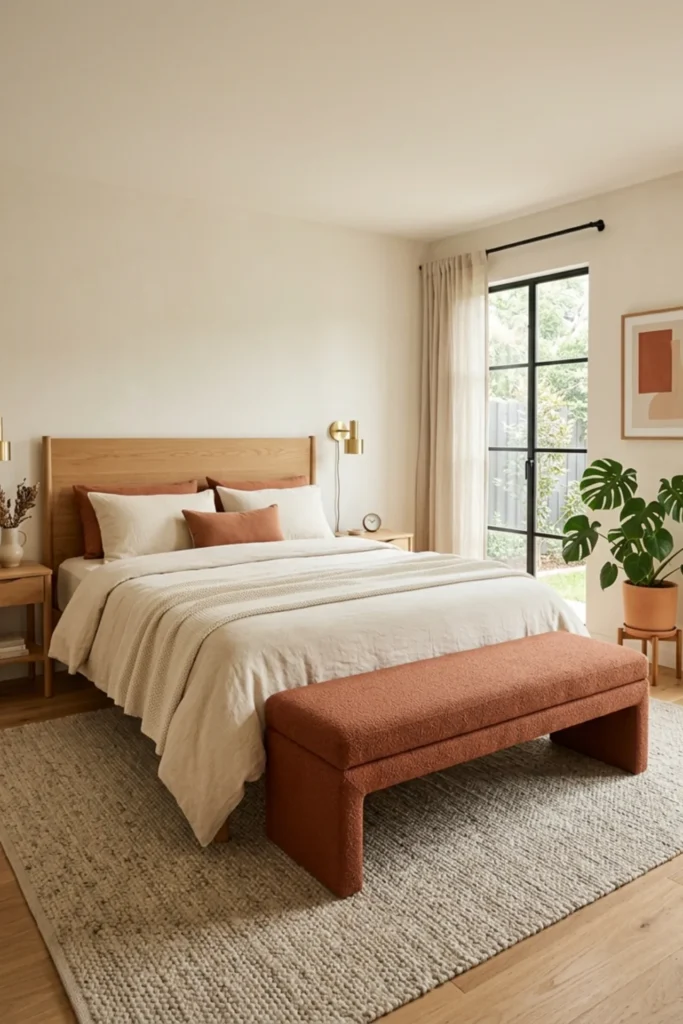
A bench can repeat the color in a large bedroom and add a useful place to sit.
I would choose a low, simple shape so it does not compete with the bed.
An upholstered clay bench looks softer; wood with a terracotta cushion feels lighter.
Size and requirements: A bench should usually be shorter than the bed width. For a queen bed, around 48–54 inches wide works in many rooms. For a king, around 54–64 inches may look better. Leave around 30–36 inches of clearance between the bench and the opposite wall or dresser if the room allows it.
Method and cost: Tape the bench size at the foot of the bed and walk around it for a day. Ready-made benches may cost $200–$900+.
Pros: Adds seating; finishes the bed visually; provides a place for a folded throw or getting dressed.
Cons: Can block circulation; easily becomes a clutter surface; unnecessary in a tight room.
15. Use Warm White Walls in a Small Terracotta Bedroom
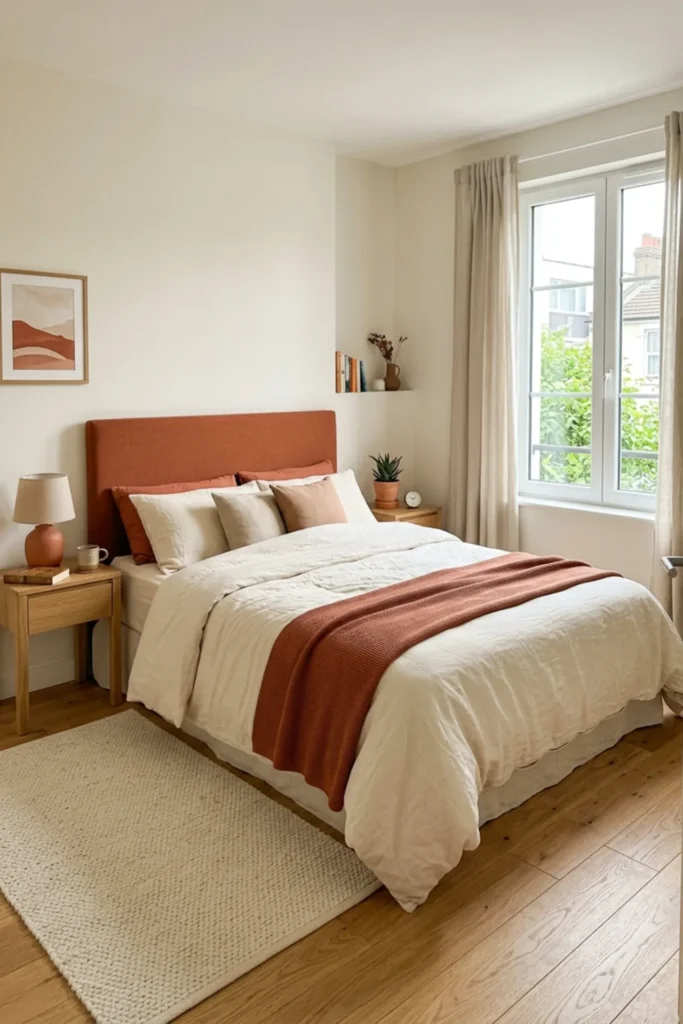
In a small bedroom, terracotta is usually stronger when it appears on bedding, the headboard, or one smaller painted area.
Warm white walls reflect more light and keep the room from closing in.
I would avoid four dark clay walls in a very small bedroom unless the room gets strong daylight and you deliberately want a cocooning look.
Size and requirements: Keep around 70% of the visible room light or neutral. Let terracotta occupy one major piece and one or two smaller repeats. Choose furniture that leaves visible floor and keep the walkway from the door to the bed clear.
Method and cost: If the walls are already warm white, start with textiles only. If repainting, DIY wall paint may cost $120–$400 for a small room; professional work may cost $600–$1,600+, depending on preparation and local labor.
Pros: Makes a small room feel brighter; flexible; cheaper than replacing major furniture.
Cons: Light walls show marks; the room may feel plain without texture; bright cool-white paint can clash with terracotta.
For more layout ideas that work in compact rooms, see Small Apartment Bedroom Ideas.
16. Edit the Room Until the Terracotta Feels Intentional
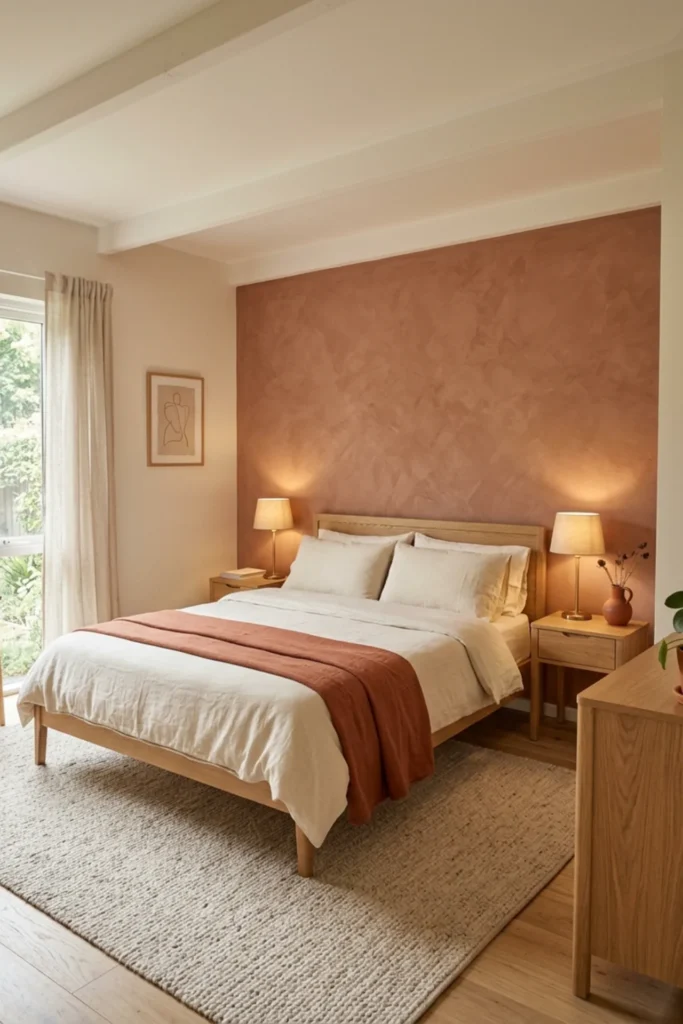
The final step is removing repeated color.
If the room already has a terracotta wall, clay bedding, rust curtains, orange cushions, red artwork, terracotta lamps, and brown pottery, the palette has probably become too literal.
Choose one major terracotta moment and two or three smaller echoes.
Size and requirements: Keep 30%–40% of nightstand and dresser surfaces clear. Limit decorative pillows to what you are willing to move every night. Keep one or two sections of wall completely quiet.
Method and cost: Remove all loose terracotta accessories from the room. Add them back one at a time until the color feels balanced. This step can cost $0 and often improves the room more than buying something new.
Pros: Makes the room calmer; costs nothing; lets the best pieces stand out.
Cons: Minimal styling can feel unfinished if the room lacks texture or art; people who enjoy collecting objects may need better storage elsewhere.
A Practical 10-Step Terracotta Bedroom Plan
If I were building the room from scratch, I would use this order:
- Measure the bed, walking paths, and dresser clearance.
- Decide whether terracotta will live on the wall, bed, or headboard.
- Test paint or fabric in the actual room.
- Choose cream or warm-white bedding as the neutral base.
- Add the main wood tone.
- Size the rug around the actual bed.
- Choose nightstands and bedside lights.
- Add curtains only after checking daylight.
- Add one artwork and one natural accent such as cane or greenery.
- Remove extra terracotta pieces before buying more decor.
This order keeps the room useful before the styling starts.
Approximate Budget by Update Level
You do not need a full makeover to use the color.
Low-cost refresh: $150–$700
- One terracotta wall
- Clay throw or coverlet
- Two pillow covers
- Warm bulbs
- Small pottery or art
Mid-range update: $1,200–$4,000
- Headboard
- Rug
- Nightstands
- Lamps
- Curtains
- Bedding
- Paint
Full bedroom update: $4,500–$12,000+
- New bed
- Upholstered headboard
- Quality rug
- Pair of nightstands
- Dresser
- Lighting
- Curtains
- Bench or chair
- Artwork
- Professional painting
Custom upholstery, designer furniture, solid wood, premium rugs, electrical work, and professional installation can move well beyond these ranges.
What I Would Spend More On
I would put more of the budget into the bed, mattress, bedding, rug, and useful lighting.
Those are the things you touch every day.
I would spend less on themed decor. A good linen duvet and one beautiful clay-colored blanket will usually improve the room more than a shelf full of terracotta objects.
If you are choosing between a large bench and better walking space, I would take the walking space. A bedroom feels more comfortable when the layout works.
Common Mistakes I Would Avoid
The first mistake is making the room too orange. Terracotta needs cream, wood, brown, or another quiet neutral around it.
The second is choosing paint before checking it in the actual room. A muted clay sample can look much brighter under a warm bulb.
Another mistake is using a rug that is too small. A tiny rug floating at the foot of the bed does not ground the room.
I would also avoid buying matching bedroom sets in one dark wood. Terracotta already adds visual weight, so some contrast helps.
Heavy wall art, shelves, and mirrors should be mounted correctly. For tall or tip-prone bedroom storage, the U.S. Consumer Product Safety Commission’s Anchor It! guidance is a useful safety reference.
Finally, do not keep adding clay-colored accessories just because the article title says terracotta. The best rooms usually use less of the main color than expected.
Final Thoughts
Terracotta bedroom ideas work because the color brings warmth before you add much else.
You can use it on one wall, a headboard, the bedding, a chair, or a bench. Pick one major place for it, then repeat the shade lightly.
Cream keeps the room bright. Oak makes it lighter. Walnut makes it richer. Cane adds texture. Brass warms the evening light. One plant can give the earth tones enough contrast.
The practical details matter just as much as the palette. Measure the rug, keep the nightstand usable, check the bed clearance, and do not add a bench or chair just because there is technically space.
A cozy earth-tone retreat should still be easy to walk through, easy to clean, and calm enough that the room works after the styling photo is finished.
Disclosure: Some visuals are AI-assisted design concepts created for inspiration. Always confirm measurements, materials, product dimensions, furniture stability, wall fixings, electrical requirements, fabric care, and manufacturer instructions before making changes in your home. Cost ranges are approximate U.S. planning figures and vary by location, labor, materials, shipping, and product quality.
About the Author
Ali Hamza — Founder & Editor
Hi, I’m Ali Hamza, and Styled Room Living is my personal home decor project. I don’t have a formal background in interior design. I started this website because home makeovers are something I genuinely enjoy looking at and learning about.
Most of the ideas shared here are not projects I have personally built. When I put a guide together, I try to separate an idea that only looks good in a photograph from one that could actually be useful in a normal home. Will it fit? Is it easy to clean? Does it require drilling? Can it be adjusted for a smaller budget? These are the questions I keep in mind while working on an article.
Some images on the website are AI-assisted design concepts used to explain an idea more clearly. They are meant for inspiration, not as exact construction plans. Please check measurements, materials, prices, weight limits, electrical details, and installation requirements before trying anything in your own home.
I’m still learning as the website grows, and I know every home works differently. My purpose with Styled Room Living is simply to collect useful home ideas, explain them in plain language, and help readers find something they can adapt to their own space.
Read more about Ali Hamza →