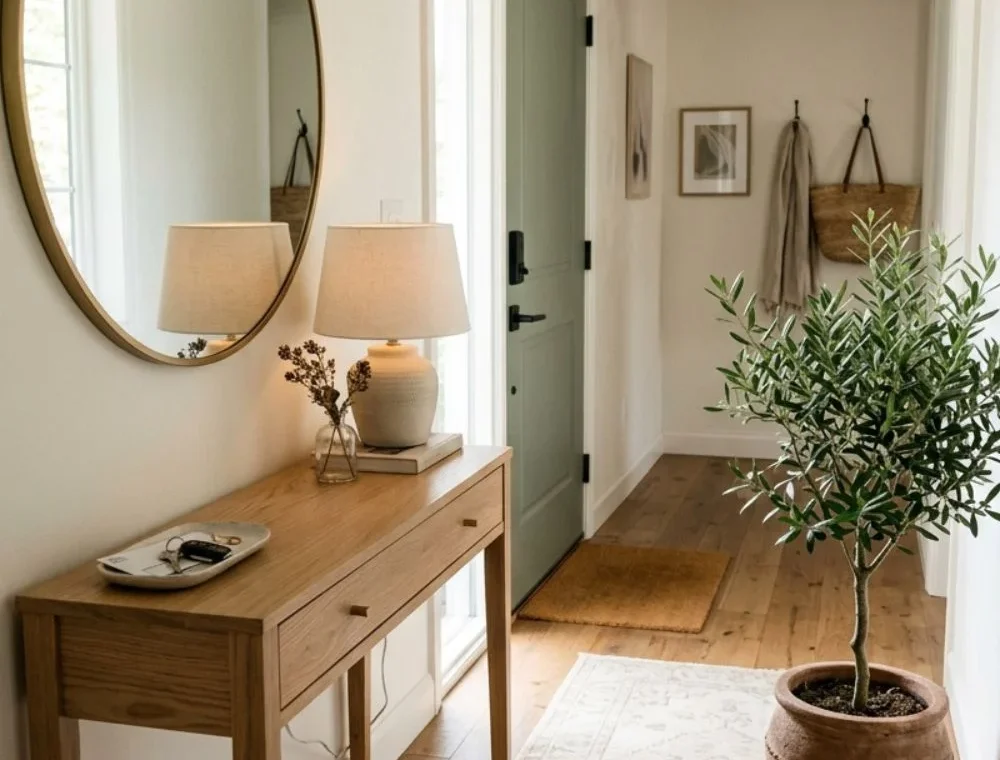
Modern Entryway Ideas work best when they solve the small problems that happen near the front door every day. Shoes need a clear home. Keys should be easy to find. The door must open freely, and nobody should have to squeeze around a beautiful but oversized table.
It is easy to love a perfect entryway photo with no school bags in sight. Real homes are different, so the design must leave room for things that arrive with us.
My three strongest ideas are a slim wood console, a large round mirror, and a bench with hidden storage. Together, they offer a landing place, reflect useful light, and make shoes easier to manage. Each piece can also work alone in a small apartment.
Two ideas need more caution. A plant will struggle in a dark or cold entrance and may be unsafe for some pets. “Rental-friendly” products are not automatically damage-free, and heavy mirrors should never depend on a weak adhesive strip. I will explain those trade-offs instead of pretending every popular idea suits every home.
This guide shares design judgement and research, not a claim that I installed every item. It uses simple English, practical sizes, and rough U.S. costs.
Plan Modern Entryway Ideas Around Real Measurements
Open the front door fully before taking any measurements. Record the free wall width, the distance from the wall to the open door, and the narrowest part of the walking path. Include skirting boards, switches, radiators, vents, and door handles in the sketch.
Mark furniture with painter’s tape, carry two bags through the space, open the closet, and ask someone to pass. This test reveals whether the plan really works.
Aim to protect a comfortable main path. Around 36 inches of clear width is a useful planning goal in many homes, but your local rules and existing layout may differ. A very tight hall may need a 10- to 12-inch-deep shelf instead of a 16-inch console.
Write down what really lands here during one normal week:
- Every day: keys, wallet, shoes, school bags, dog lead, and the coat in current use
- Sometimes: mail, parcels, umbrellas, sports gear, and reusable bags
- Seasonal: boots, heavy coats, hats, and items that can live in another closet
- Should leave quickly: rubbish, empty packaging, old receipts, and unwanted mail
The entry only needs to control the first few minutes after someone comes home. Rarely used items can move elsewhere.
Safety belongs in the first sketch, too. Tall cabinets, narrow consoles, and heavy mirrors may need suitable wall fixing. The U.S. Consumer Product Safety Commission recommends securing furniture to help prevent tip-overs, keeping heavier items low, and avoiding tempting objects where children may climb to reach them.
A Realistic Entryway Budget
Modern Entryway Ideas can improve a home without becoming a renovation. These are rough U.S. planning estimates, not quotes. Furniture quality, repairs, delivery, labor, and electrical work can change the total.
| Project level | What it may include | Rough planning cost |
|---|---|---|
| Simple reset | Paint, small shelf or used console, key tray, hooks, rug | $200–$800 |
| Comfortable upgrade | New console or storage bench, mirror, rug, lamp, secure fitting | $800–$2,500 |
| Semi-custom entry | Built-in storage, panel detail, new light, wiring, professional finish | $2,500–$7,500+ |
Keep 10% to 15% aside for delivery, assembly, wall anchors, rug pads, paint repair, or an electrical surprise. If a new pendant or wall light needs wiring, Angi’s electrician cost guide shows that even a normal fixture installation can add meaningful labor cost.
I would spend first on safe storage, the correct scale, and a good walking path. A costly vase cannot rescue a console that blocks the door.
1. Start with a Slim Wood Console
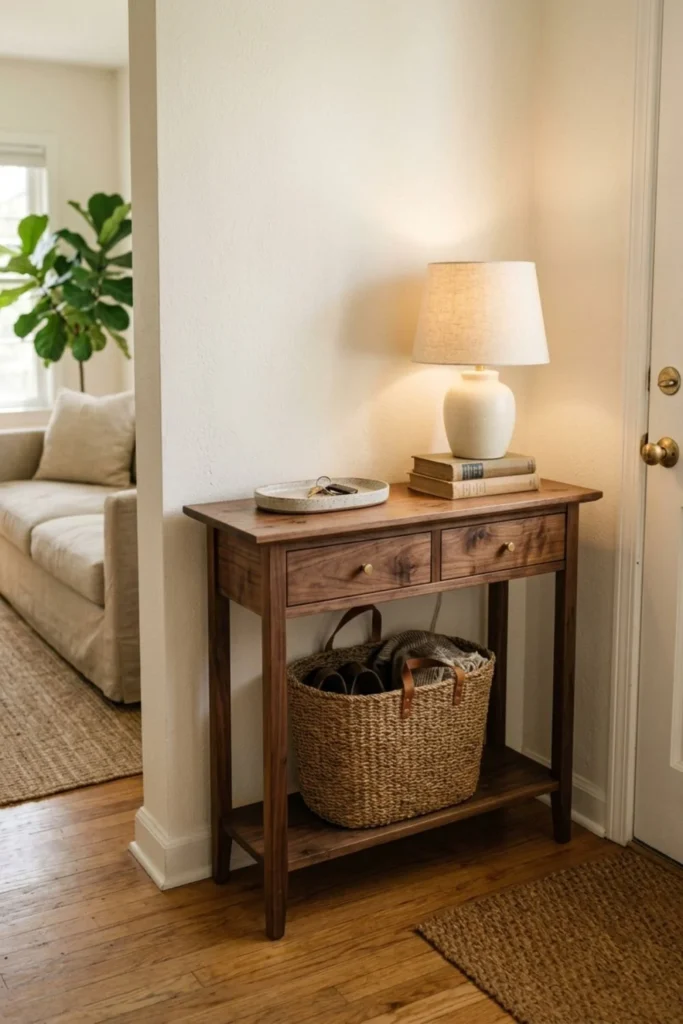
This is my first choice because it gives keys, mail, and a small lamp a clear home without requiring built-in work. A console also creates a visual center, which helps an awkward patch of wall feel intentional.
For a narrow entry, start by looking at consoles around 10 to 14 inches deep. In a wider hall, 14 to 16 inches may still leave a comfortable path. Real products vary: current console examples at Home Depot are commonly around 11 to 16 inches deep, which is a more believable reference than furniture stretched by an AI image.
A height around 29 to 34 inches is common. Width depends on the wall, but leave breathing room at both ends and keep drawers clear of the door. Tape the full depth on the floor and open every drawer before deciding.
Choose one or two shallow drawers for keys, sunglasses, and chargers. Add dividers so they do not become a junk box. On top, use a key tray, one lamp or vase, and perhaps two books. Leave at least one-third of the surface empty.
A basic console may cost $150 to $500. Solid wood, better hardware, or a handmade piece can reach $600 to $1,500+. Check the listed load limit, assembly, and anti-tip instructions. Secure a narrow or top-heavy unit, especially where children may pull a drawer.
Choose oak for lightness or walnut for deeper warmth. Useful size matters more than perfectly matched wood.
2. Add a Large Round Mirror
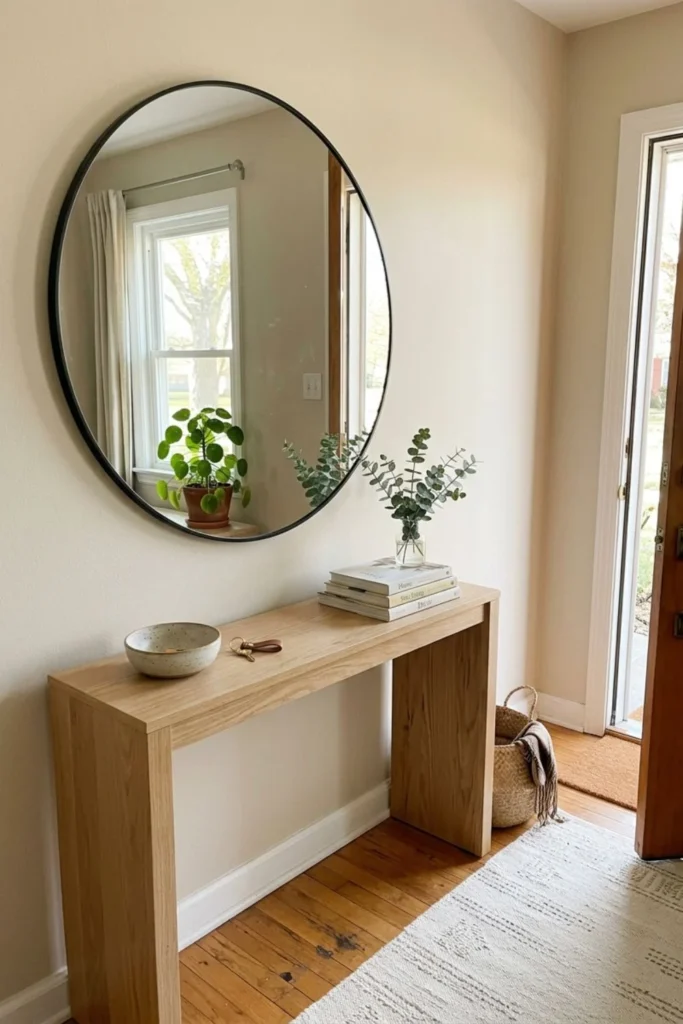
A round mirror is my second top idea. Its curve softens the door, console, and hallway lines, while the glass can move daylight deeper into the entrance. It is useful for a final check before leaving, so it earns more space than decorative art alone.
As a starting point, choose a mirror around two-thirds to three-quarters of the console width. A 48-inch console may suit a mirror around 30 to 36 inches wide. This is a visual guide, not a rule; tape two sizes on the wall and look from the front door and nearby room.
Leave roughly 6 to 10 inches between the console top and mirror bottom if that keeps the glass useful for your household. Check the reflected view before drilling. A bright window or tidy room is helpful; an open bathroom or pile of coats is not.
A ready-made round mirror may cost $100 to $500, with oversized, solid-wood, or custom frames reaching $600 to $1,500+. The price matters less than weight and fixing. Use hardware rated for the mirror and the actual wall material.
I would never leave a large mirror loosely leaning on a slim console in a busy entrance. A discreet safety fixing is worth seeing. Keep a heavy mirror away from the door swing and do not hang it where direct sun creates strong glare.
Choose a thin wood, black, or aged-brass frame. One properly sized mirror adds light and function without a crowded gallery.
3. Choose a Bench with Hidden Storage
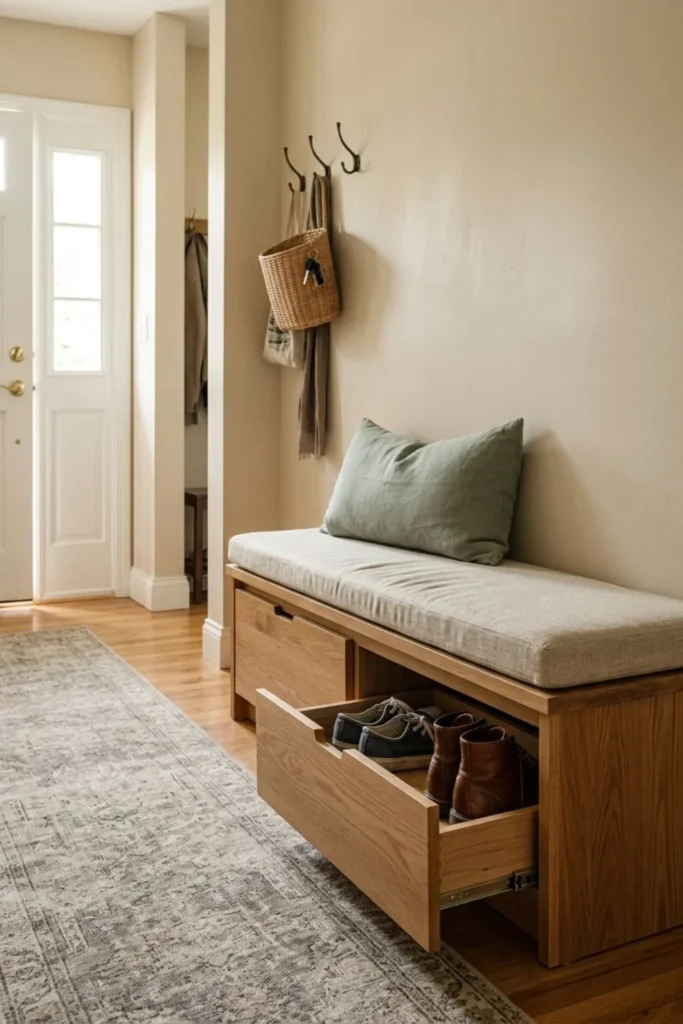
Among Modern Entryway Ideas, a storage bench is my third top choice because it offers a seat and prevents daily shoes from spreading across the floor.
For many adults, a seat around 17 to 19 inches high feels natural. A depth around 14 to 18 inches gives useful seating without becoming a sofa. A 36- to 48-inch bench may suit one or two people, but the door and walking path decide what fits.
Drawers are easy to use because the seat remains closed. Baskets are affordable and flexible, while a lift-up lid can hold more. If you choose a lid, look for soft-close support and a safe finger gap. Never let a heavy lid fall freely.
Measure the tallest shoes and count only the pairs used now. Everyday shoes can stay in the bench; special shoes belong in a bedroom closet. Add ventilation openings if damp footwear will be stored inside.
A basic shoe bench may cost $150 to $500. A stronger upholstered unit with drawers may cost $500 to $1,500, while a custom wall-to-wall bench can exceed $2,000. Washable or removable cushion covers are more useful than delicate pale fabric.
Limit pillows to one small cushion. In a narrow entry, use a stable stool or shallow shoe cabinet instead.
4. Create a Warm Neutral Color Palette
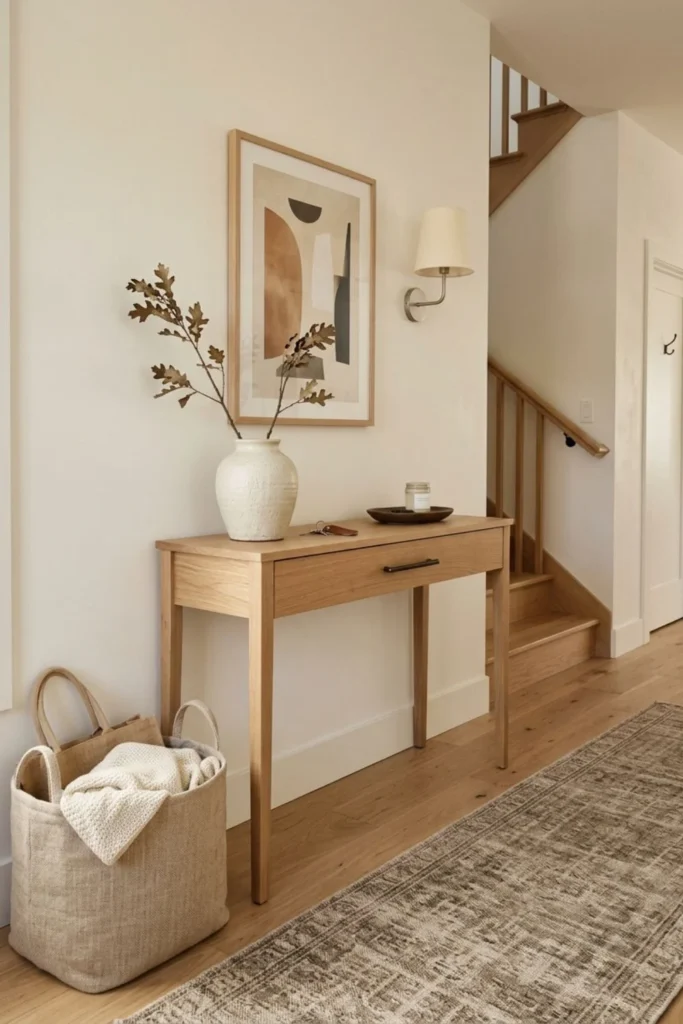
Warm neutrals make a clean entrance feel comfortable rather than cold. Start with warm white, pale mushroom, beige, or gentle greige. Add oak, walnut, woven tan, and cream fabric through pieces that already serve a purpose.
Choose one darker accent such as charcoal, olive, deep brown, or matte black. Repeat it two or three times through a frame, hook, or door handle. Too many different dark finishes can make a tiny space feel broken into pieces.
Test paint on a patch at least 2 feet square and look at it in morning and evening light. Beige can turn yellow under a warm bulb, while greige may look blue beside cool flooring.
Paint, supplies, and small decor may cost $100 to $600 for a simple feature area, depending on wall repair and labor. I would spend more on good surface preparation than on a trendy decorative finish.
Create depth with matte paint, wood grain, a low-pile rug, linen, and one ceramic piece—not extra clutter.
5. Use Fluted Wood for Gentle Texture

Fluted wood can make a low or plain entrance feel taller. Use it on one narrow wall section, the front of a cabinet, or the back of a small niche. Covering every wall usually adds dust, cost, and visual noise.
Keep the strongest texture away from wet boots and bags that hit the wall. A fine groove is easier to clean than a deep channel. Before ordering, take a sample home and run a dry cloth across it to see how much work it needs.
A small ready-made panel section may cost around $300 to $1,200. Better veneer, edge finishing, electrical cutouts, or professional fitting can move it toward $1,500 to $3,000.
Decorative panels may not hold heavy items. Fix mirrors, shelves, and hooks into suitable structure. Light oak needs no LED outline.
6. Add a Statement Pendant Light
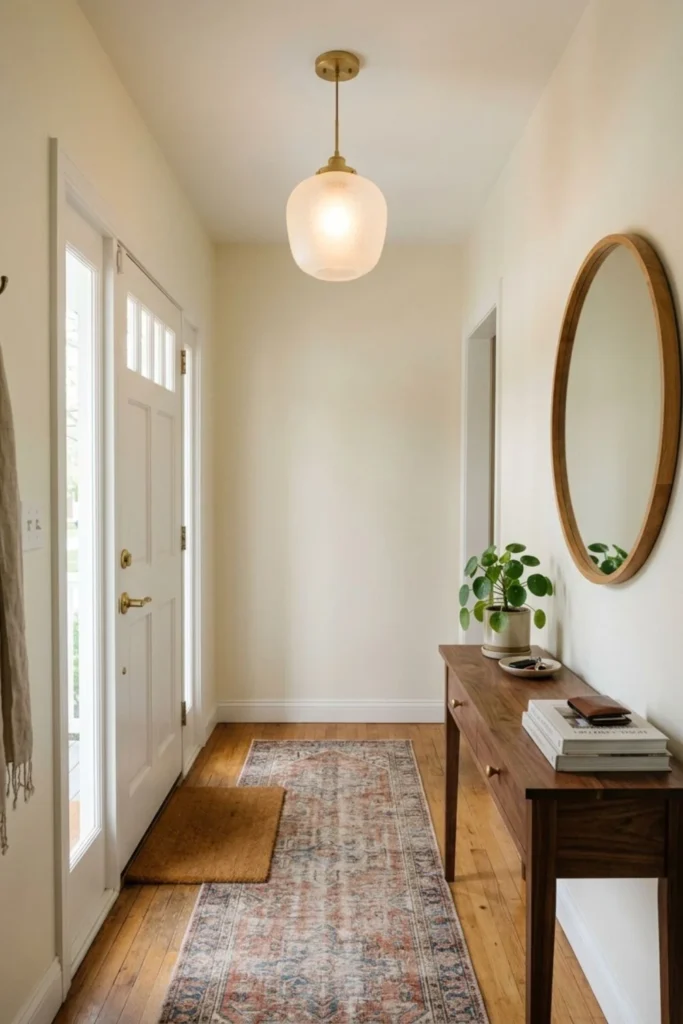
A pendant can define an open entrance, but only when the ceiling is high enough. In a low hall, a neat flush-mount is usually safer and looks more natural. The door should open without touching the fixture, and a tall visitor should not feel it hanging overhead.
Mark the bottom of the proposed light with tape or a hanging piece of string. Walk below it and view it from the adjoining room. Follow the fixture maker’s clearance and installation instructions rather than relying on one universal height.
Angi’s 2026 lighting guide lists pendant and track fixtures across a broad range, often $150 to $800 before complex custom work. New wiring, a dimmer, ceiling repair, and electrician labor can increase the cost.
Choose frosted glass, woven material, brass, or matte black. ENERGY STAR offers current efficient-lighting information. Use a qualified electrician for new wiring.
7. Ground the Space with a Runner Rug
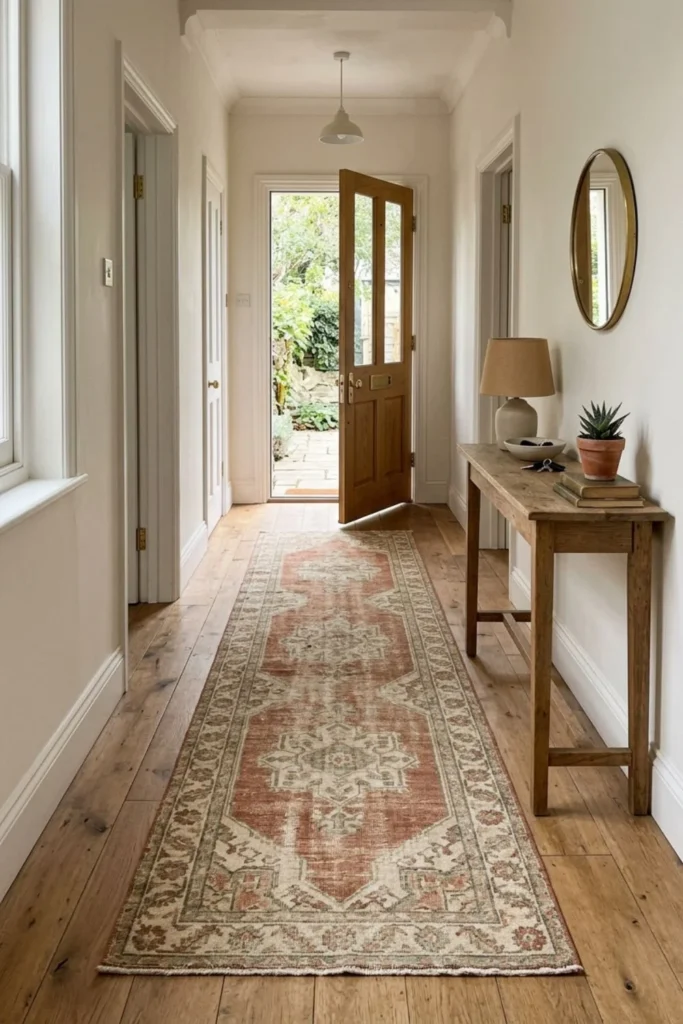
A runner can protect the floor and show people where to walk. Choose low pile so the door moves freely and nobody catches a heel. A faded pattern in beige, rust, muted sage, or soft blue hides ordinary marks better than plain white.
Measure the clear floor after the door opens, not the full hallway. Leave a balanced strip of visible floor on both sides. In a narrow hall, 3 to 6 inches per side may look tidy, but the safe door and walkway clearance comes first.
A useful runner and non-slip pad may cost $80 to $500. Handmade or oversized options can cost more. Put the pad under the entire rug, keep edges flat, and replace it when it stops gripping.
For wet shoes, choose an easy-clean fiber and add a boot tray. Do not layer rugs in the main path.
8. Build a Simple Coat and Shoe Zone
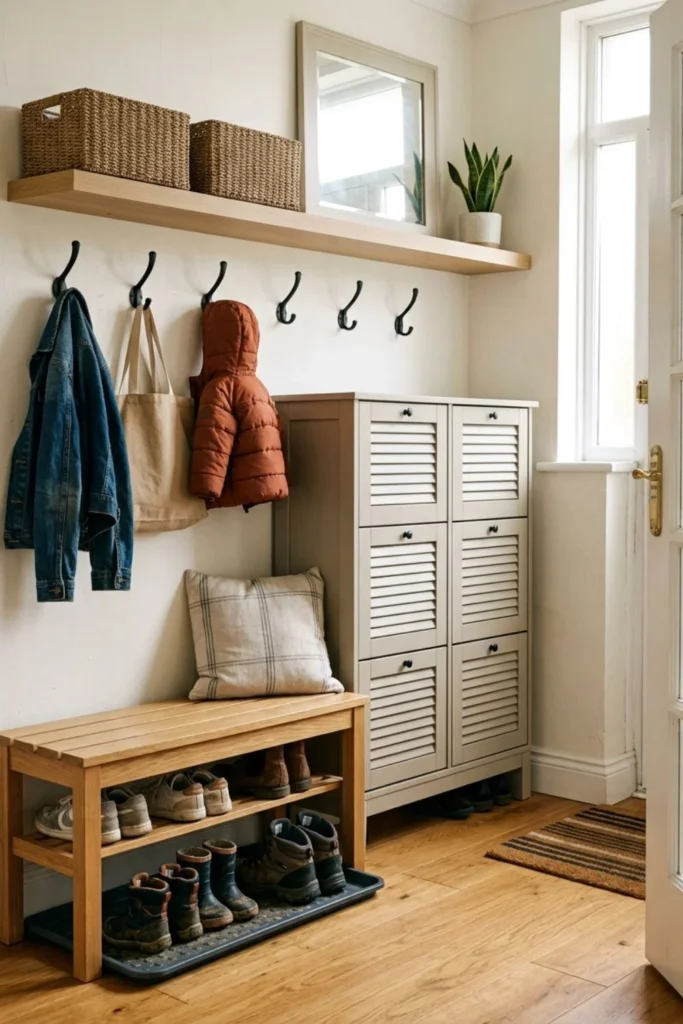
A coat-and-shoe zone works when it holds today’s items, not every coat the family owns. Use sturdy hooks, a shallow ventilated shoe cabinet, and one basket for hats or reusable bags. Move off-season items to another closet.
Place adult hooks around a comfortable shoulder level and lower hooks where children can reach them without climbing. Exact height depends on the users. Keep bags away from switches, handles, and the door edge.
A simple hook rail and shoe rack may cost $100 to $600. A closed cabinet, bench, and fitted upper shelf can reach $800 to $3,000. Check every hook’s load limit and wall fixing; a row of heavy winter coats creates more force than decor.
Give each person one hook or cubby, add a washable boot tray, and keep ventilation open.
9. Style One Large Piece of Wall Art
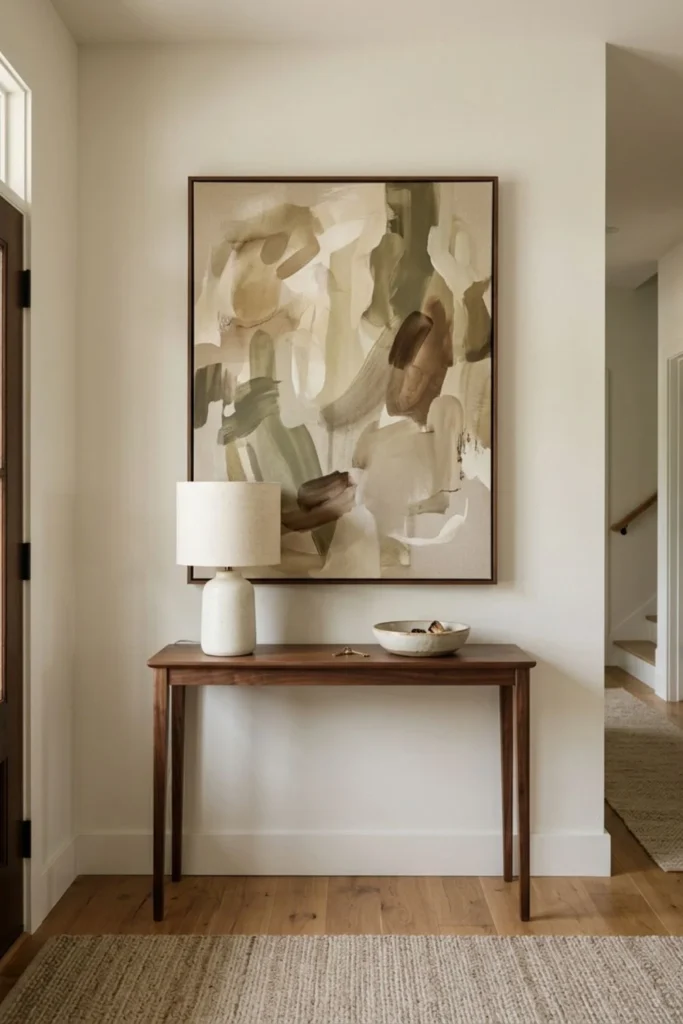
One large artwork can give a plain entrance personality without adding physical depth. Choose a calm abstract, landscape, photograph, or original piece with colors already used in the home. Personal meaning lasts longer than a random quote bought for a trend.
Above a console, art around two-thirds of the furniture width is a reasonable starting point. Leave roughly 6 to 10 inches above the console if the arrangement looks connected. Test the shape with paper before making holes.
A large print and frame may cost $100 to $800. Original art, custom framing, and protective glazing can cost much more. Use secure fixings and avoid fragile glass where bags or the front door may hit it.
Keep console decor low. One meaningful picture often feels more personal than nine matching prints.
10. Bring in a Healthy Indoor Plant
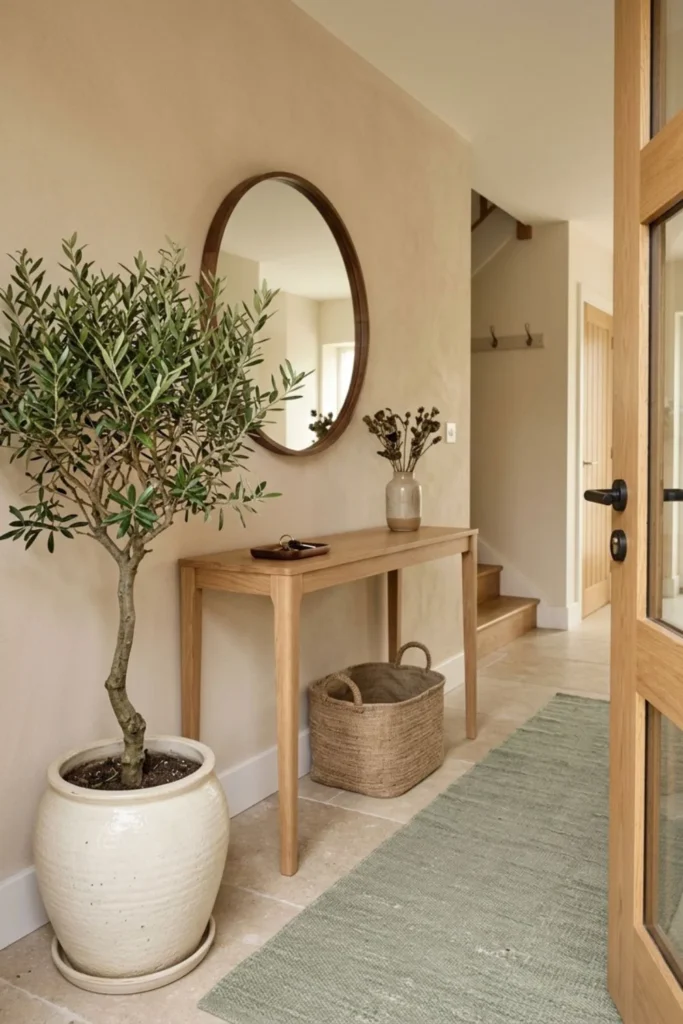
This is one of my weaker ideas because many entrances have poor light, cold drafts, and sudden temperature changes. A plant that looks healthy in a generated image may slowly fail beside a dark front door.
Watch the natural light for a full day before buying anything. Choose a plant for those real conditions and keep leaves out of the door swing. Use a waterproof saucer, protect wood and rugs, and avoid placing soil above keys or electrical items.
Pet safety matters too. The ASPCA toxic and non-toxic plant database helps owners check the correct plant name, but it also notes that even non-toxic plant material may cause stomach upset. Ask a veterinarian when you are unsure.
A healthy medium plant, pot, and saucer may cost $50 to $250. Grow lights and repeated replacement plants can raise that cost. I would use one good artificial plant only when the entry has no suitable light, and I would keep its shape slightly relaxed rather than perfectly round.
One correctly chosen plant is enough. If it weakens, move it to a brighter room.
11. Use Black Accents for Clean Contrast
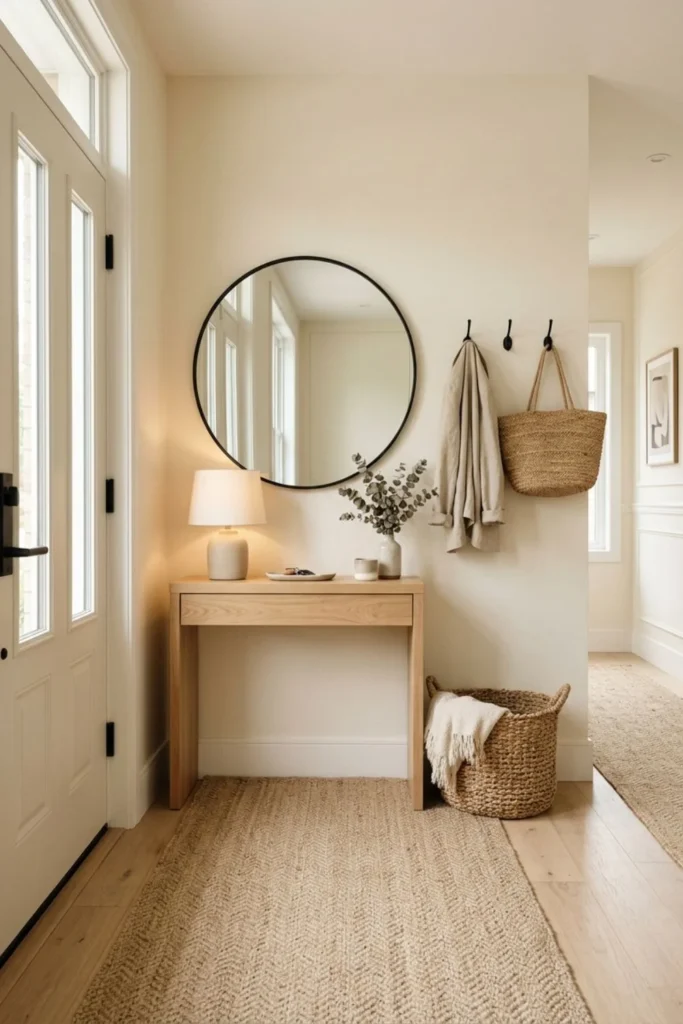
Small black details can connect a warm entry to dark door hardware or window frames. Repeat matte black through a mirror rim, three hooks, or a lamp base. The color gives beige and oak a clear edge.
Keep the largest surfaces light or medium. A black cabinet, dark rug, black wall, and black door together may make a narrow hall feel heavy. I would use only two or three dark accents and spread them through the view.
Replacing hooks or adding a lamp may cost $50 to $300. New door hardware or a larger metal mirror will cost more. Check that finishes look similar in real light; some “black” metals are blue-gray and others are soft brown-black.
Contrast should quietly frame the design, not turn it into a commercial lobby.
12. Add a Small Shelf in a Narrow Entry
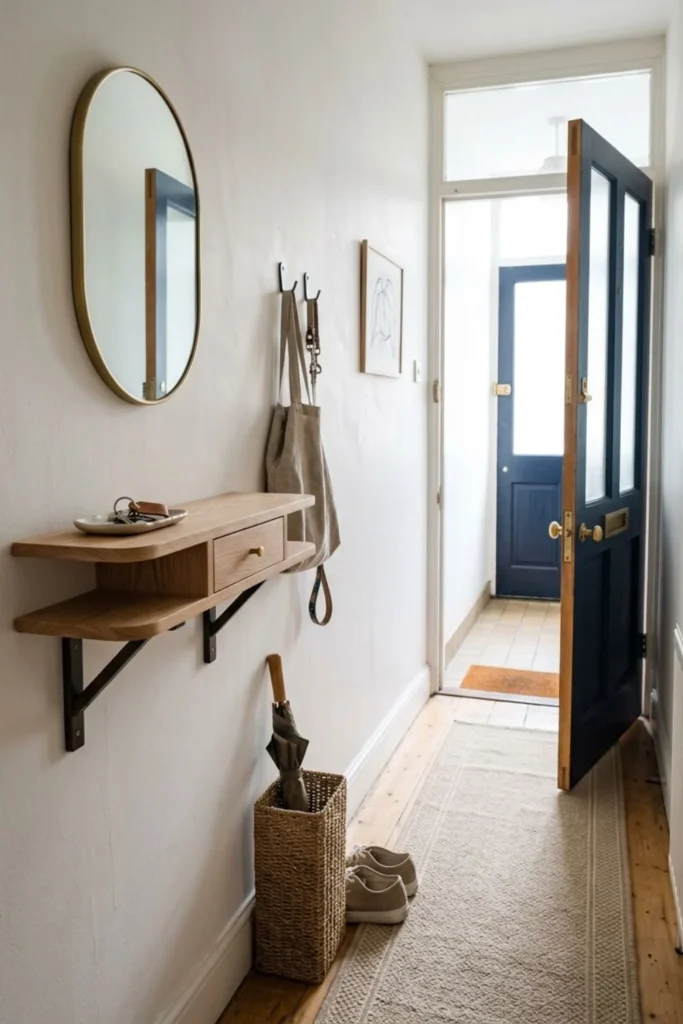
When even a slim console is too deep, a wall shelf can provide a key landing spot. A depth of 6 to 10 inches may be enough for a tray, mail, or small rechargeable lamp without taking over the path.
Choose rounded front corners and mark the shelf on the wall and floor. Make sure coats, bags, and shoulders will not catch it. A tiny drawer is useful, but its open depth must also remain inside the safe path.
A simple shelf may cost $50 to $250, while a custom drawer shelf and secure installation can reach $300 to $900. The wall bracket and fixings must suit both the shelf and everything placed on it.
Hang a modest mirror and keep the floor open. Measure a shoe cabinet with its door fully extended before buying.
13. Create a Rental-Friendly Entryway
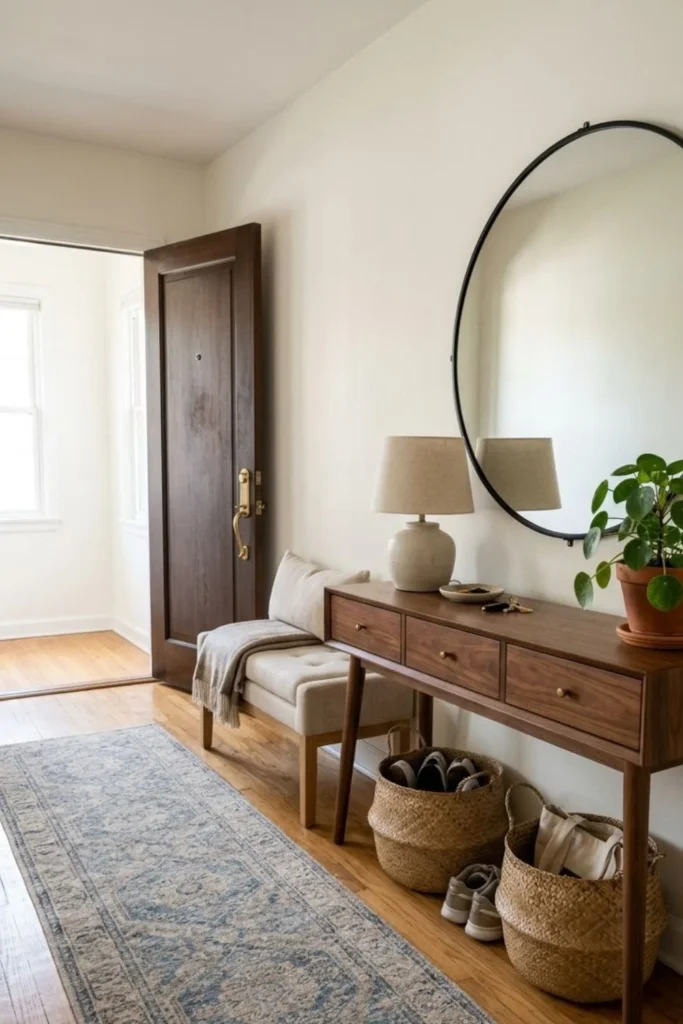
This is my other weak idea because “renter-friendly” is often used as a sales phrase. Removable hooks, film, and wallpaper can still lift paint, leave glue, or fail under weight. Results change with paint age, wall texture, humidity, product quality, and removal method.
Read the lease and ask the landlord before drilling, painting, or applying a large wall covering. Test any adhesive in a hidden spot and wait as long as the maker recommends. Photograph the wall before and after installation.
Never trust a heavy mirror, shelf, or coat collection to a product beyond its stated load and surface limits. A leaning mirror can still fall and may need an approved safety restraint. A freestanding console may also need anchoring even if that creates a small repair at move-out.
A moveable setup with console, lamp, rug, baskets, and tray may cost $300 to $1,500. Set aside money for approved fixings and paint repair. In my view, one small, properly repaired hole is often more honest than claiming a heavy item can hang safely with no trace.
Choose pieces that can work in the next home: a useful bench, rug, lamp, and baskets.
14. Make an Open Entry Feel Separate
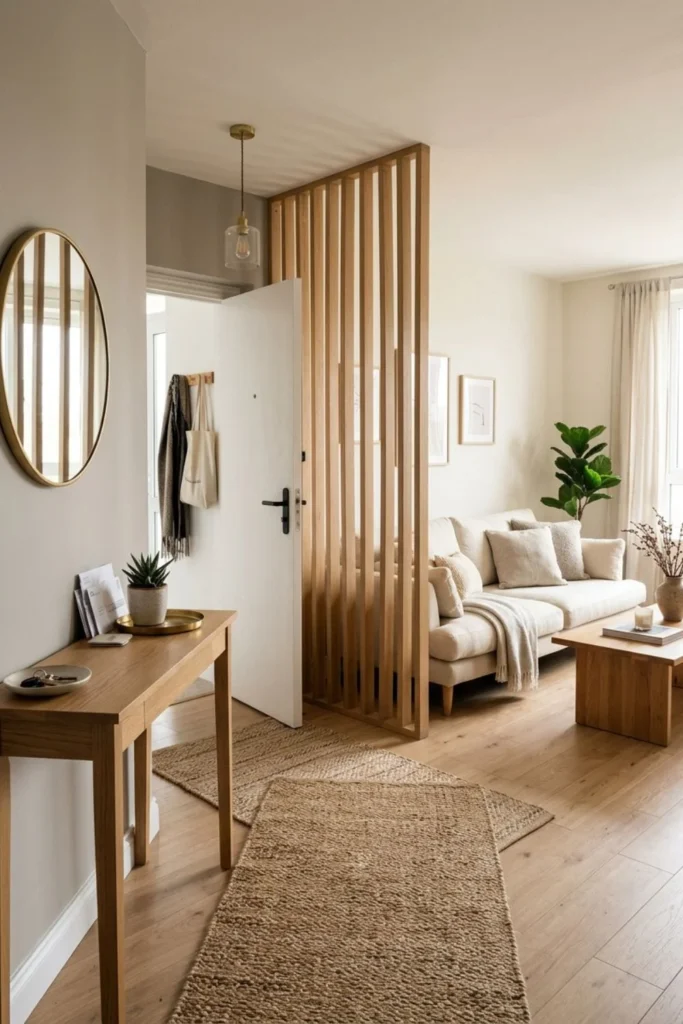
When the door opens directly into the living room, create a visual zone rather than building a wall. A runner can mark the path, while a slim console against the wall or behind the sofa creates a useful edge.
Keep any open divider stable and low enough to share daylight. Preserve the direct route from the door to the room. A divider should guide movement, not force guests through a narrow turn.
A rug-and-console solution may cost $300 to $1,500. A fixed open screen or custom storage divider may move toward $1,500 to $4,000. Check floor, ceiling, and wall fixing needs before commissioning one.
Repeat the living-room wood and main color. The entry should feel connected, not like a room inside another room.
15. Design a Family-Friendly Drop Zone
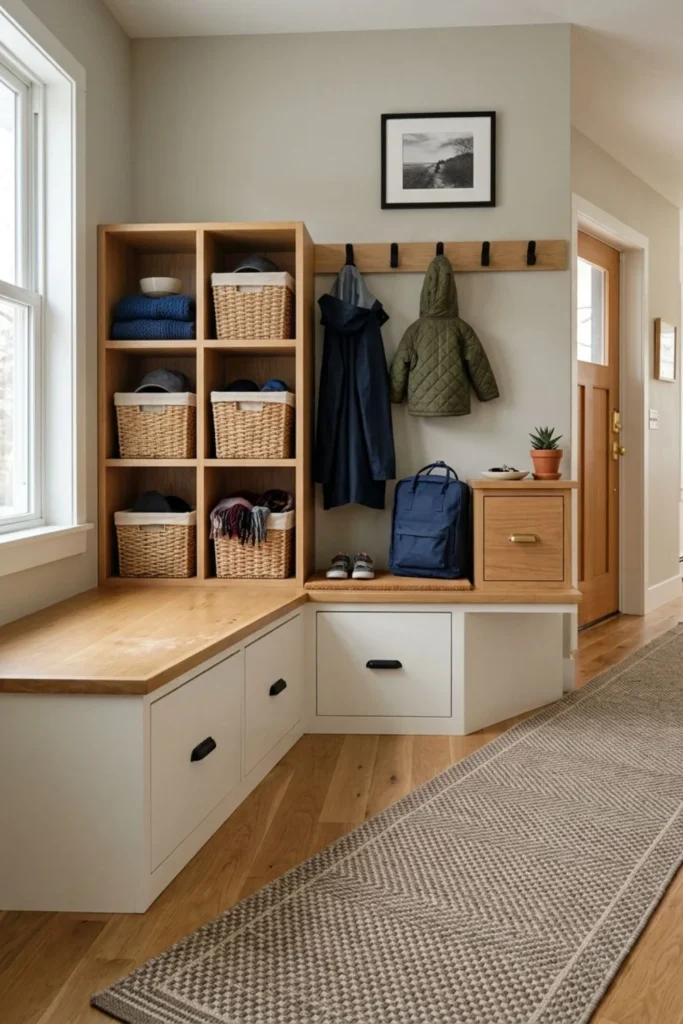
A family entrance needs a system simple enough to use while people are tired or late. Give each person one hook, one shoe area, and one small basket. Put keys and important papers in one closed drawer.
Keep heavy bags low and hooks secure. Children should reach their own storage without climbing. Use washable paint, wipeable bench surfaces, and baskets that can be lifted without scraping the wall.
A ready-made family setup may cost $500 to $2,000. Custom cubbies and bench storage may reach $2,500 to $7,500+. Before ordering, measure backpacks, helmets, and the number of daily shoes instead of accepting a pretty but tiny design drawing.
Leave one wall patch open. Consistent cabinet fronts, baskets, and hardware keep daily objects calm.
16. Add Soft Evening Lighting
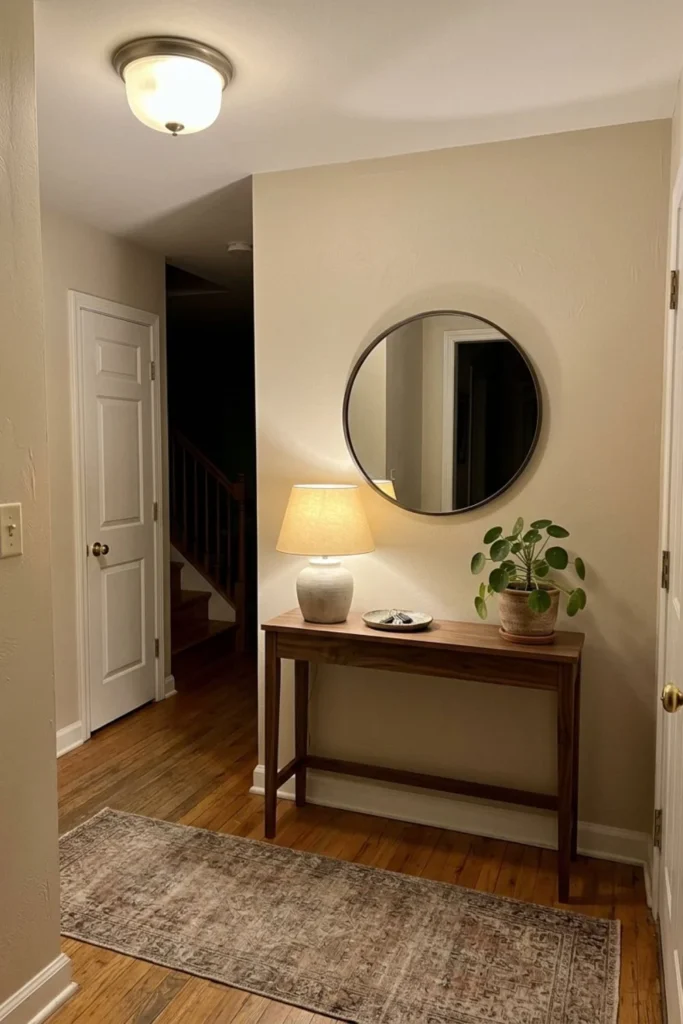
Layered light makes the entrance feel welcoming after dark. Use a ceiling fixture for safe general light, then add one shaded table lamp or wall sconce. The softer source can stay on when a bright overhead light is unnecessary.
Choose a lamp that leaves room for the key tray. On a shallow console, a compact rechargeable lamp designed for indoor use may be neater than a cord crossing the surface. Recharge it according to the maker’s directions and do not hide damaged cables in baskets.
A table lamp may cost $40 to $250. A new wall or ceiling light, dimmer, wiring, and professional labor may cost several hundred dollars or more. Get a local quote before buying a fixture that needs a new electrical point.
Avoid LED strips around every edge. One warm lamp and one ceiling light are easier to live with.
17. Create an Achievable Luxury Entryway
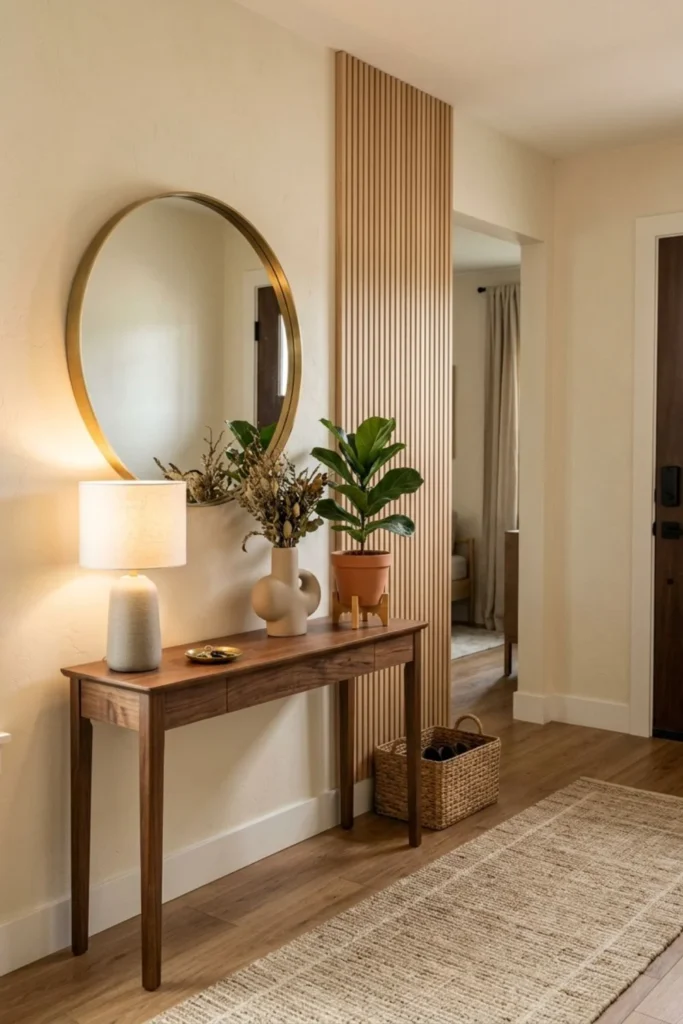
Luxury comes from correct scale, neat work, and a few honest materials. I would combine a slim walnut console, a large round mirror, a low-pile runner, one shaded lamp, and closed shoe storage. The rest of the wall can stay plain.
Choose one main feature and let it lead. If the mirror is large, keep the lamp and vase small. If the console has strong fluting, use a plain mirror. If the runner has pattern, keep the wall color quiet.
A complete semi-custom entrance may cost $1,500 to $4,000. A built-in bench, wall panel, wiring, and professional finish can push it beyond $5,000. Save by using paint instead of decorative stone and a ready-made console instead of full joinery.
Avoid giant chandeliers, marble overload, glowing curves, and unsupported floating furniture. A real entry feels special when daily clutter has a home.
What I Would Choose at Three Budget Levels
With a lower budget, I would paint the wall, add a secondhand slim console, secure it, place a non-slip runner, and use a tray for keys. One warm lamp can change the mood without electrical work.
With a middle budget, I would buy a better console or storage bench, a properly sized round mirror, and one good runner. I would pay for safe installation before adding decorative panels.
With a larger budget, I would design closed shoe storage and a bench around the family’s real items. Better drawer runners, useful ventilation, durable fabric, and neat edges will stay impressive longer than extra decoration.
My spending order would be:
- Clear door swing and walking path
- Safe mirror and furniture fixing
- Storage for daily shoes, bags, and keys
- Comfortable seating when space allows
- A durable rug and useful lighting
- Decor only after the routine works
This order creates a working home entrance.
Keep the Entryway Safe and Easy to Maintain
Reset the space for two minutes at the end of each day. Put keys in the tray, hang the current coats, close drawers, and move unwanted mail. When storage is full, remove old items instead of buying another basket.
Keep rug edges flat and the pad in good condition. Wipe wet floors quickly. Do not allow umbrellas, shoes, cords, or plant leaves to narrow the route near the door.
Check wall hooks, mirror hardware, shelves, benches, and tall furniture every few months. Tighten or repair them using the maker’s instructions. Do not assume an old plastic strap remains reliable; CPSC has issued recalls for some defective tip-restraint kits, so check current recalls and approved replacements.
Store cleaning products, pet supplies, batteries, and small choking hazards safely. Keep candles away from coats and baskets. Electrical cords should not cross the floor or become trapped under furniture.
Change storage with the seasons. Move unused coats and boots away, wash the runner, and clear the baskets.
Final Thoughts
A warm entrance does not require a huge hallway. A slim wood console, a large round mirror, and a storage bench are my strongest choices because they solve real daily problems while adding shape, texture, and light.
I would add a live plant only after checking daylight, drafts, watering, and pet safety. I would call a rental setup friendly only after checking the lease, wall finish, product limits, and safe fixing. Honest limits make advice more useful.
Start with the item that causes the most frustration. Fix the shoe pile, missing keys, dark wall, or blocked path first. When each choice makes arriving home easier, Modern Entryway Ideas begin to feel warm, personal, and genuinely welcoming.
Disclosure: Some visuals are AI-assisted design concepts created for inspiration. Always confirm measurements, materials, load limits, wall structure, mirror and furniture fixing, door swing, walking clearance, rug safety, plant and pet safety, electrical requirements, rental permissions, and installation instructions for your home. Costs are rough U.S. planning estimates and may vary by location, labor, materials, delivery, permits, and project conditions.