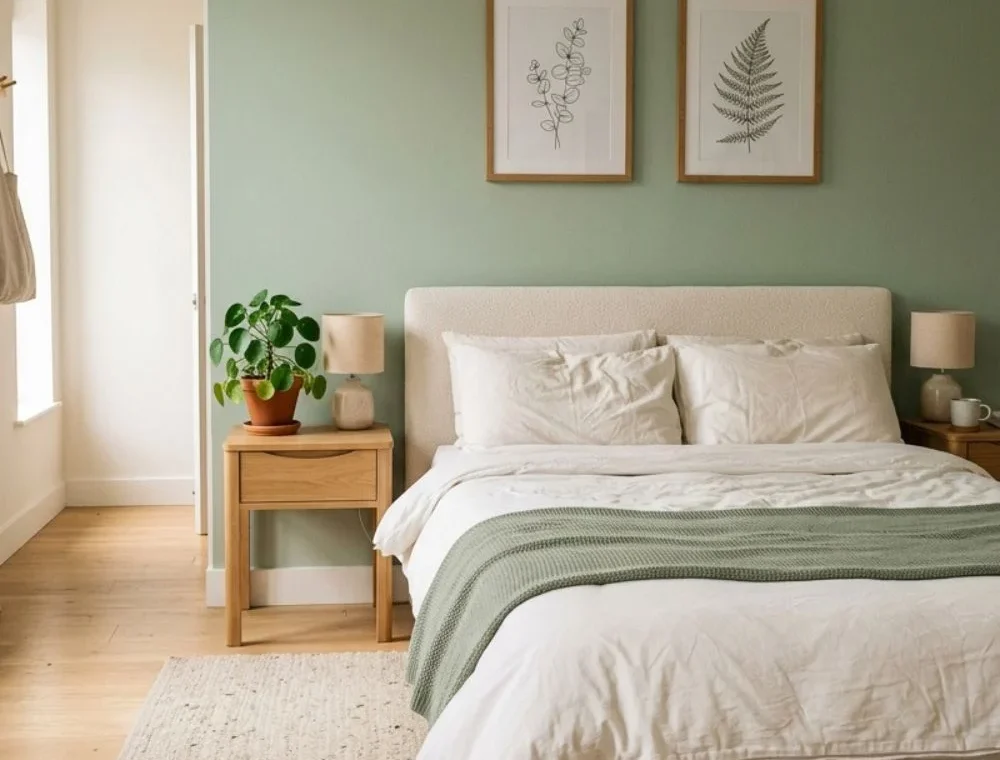
Sage green bedroom ideas can look calm, warm, and modern without turning the room into a green box. The secret is not using more sage. It is choosing the right shade, repeating it with control, and giving it warmer colors to sit beside.
Many online bedrooms look beautiful because every item was chosen for one photograph. Real bedrooms need washable bedding, useful light, enough storage, and furniture that fits the walking path. I am keeping those everyday needs at the center of this guide.
Written and reviewed by Ali Hamza | Styled Room Living
My three strongest choices are sage bedding, warm beige, and layered lighting. They are flexible, comfortable, and easier to change than a full wall treatment or expensive new furniture.
Painting every wall and building a luxury-style room are my two weaker choices. They can work, but both require more planning, money, and commitment. I will explain when I would use them and when I would stop earlier.
You do not need all 21 ideas. Start with one sage item, check it in your room’s real light, and build slowly.
Start with the Light You Already Have
Sage green changes more than many people expect. A cool gray-green sample can look fresh beside a sunny window but dull under a yellow bulb. A warmer sage may look soft in the evening and slightly muddy on a dark wall.
Before buying paint, bedding, or curtains, look at the room in morning, afternoon, and evening light. Notice whether the window faces bright open sky, a shaded building, or a covered outdoor area.
Bring home small samples where possible. Place fabric or paint cards beside the bed, flooring, wardrobe, and curtains. Do not judge a shade under store lighting or from a phone screen alone.
Ask these questions:
- Does the sage look gray, yellow, or blue in this room?
- Which existing furniture must stay?
- Does the floor feel warm or cool?
- How much daylight reaches the bed wall?
- Which bulbs are used at night?
- Do I want a fresh, earthy, or cozy result?
Keep the walking path, doors, drawers, and vents clear while planning new furniture. Tall dressers should be secured as directed by the manufacturer. The U.S. Consumer Product Safety Commission recommends anchoring furniture such as dressers and bookcases; see its official Anchor It guidance.
Build a Small Color Plan Before Shopping
A simple palette prevents random purchases. Choose one main neutral, one sage tone, one wood finish, and one small accent.
For example:
- Warm white walls
- Muted sage bedding
- Light oak furniture
- Dusty blue or terracotta in one small detail
Use the largest colors first. Walls, flooring, curtains, and bedding cover more space than cushions or art. A tiny color sample cannot repair a large combination that already feels wrong.
Take a quick phone photograph of the room in daylight. Compare every possible purchase with that image. This is not a perfect color test, but it can stop a warm beige room from slowly filling with cool gray pieces.
1. Paint Every Wall Soft Sage Green
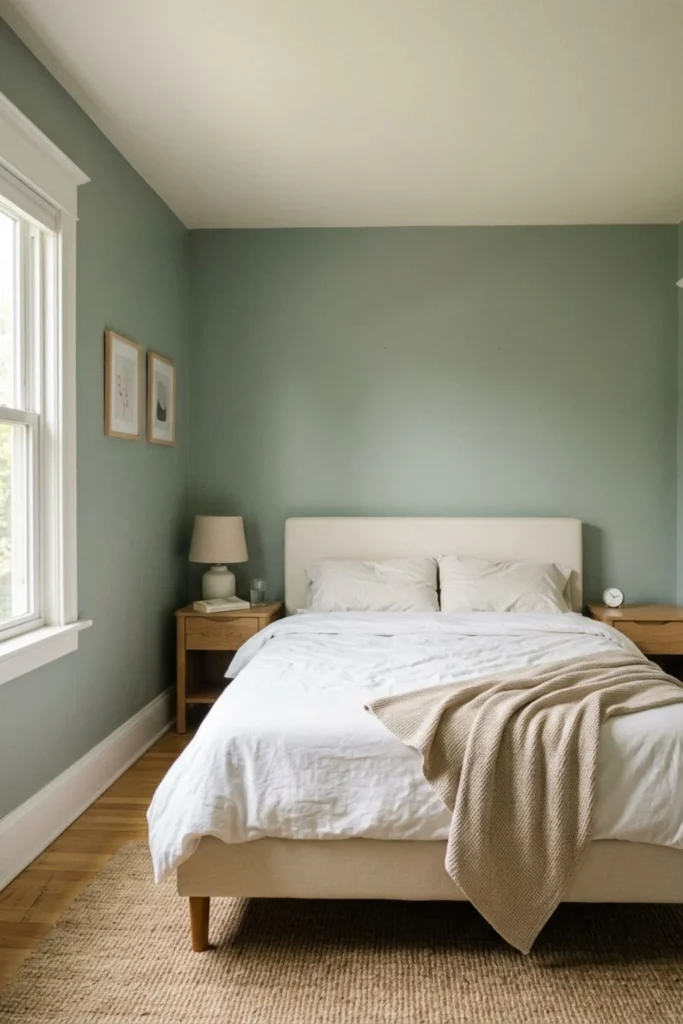
Painting every wall creates a complete color mood, but this is one of my weaker choices. In a dark or narrow room, four green walls can feel heavier than the small sample suggested.
Test a large removable board or generous paint patch on more than one wall. Look at it beside the ceiling, floor, and furniture throughout the day.
Choose a soft, muted shade instead of a highly bright or yellow green. Keep the ceiling and trim lighter if you want a cleaner edge.
If you paint, follow the product directions and ventilate the room. The U.S. EPA notes that paints and coatings can release volatile organic compounds and that low- or no-VOC options vary in performance and composition. Review the EPA paint guidance and choose a suitable product for your home.
I would use four sage walls only after testing. Bedding or one accent wall is easier when you are uncertain.
2. Create One Sage Green Accent Wall
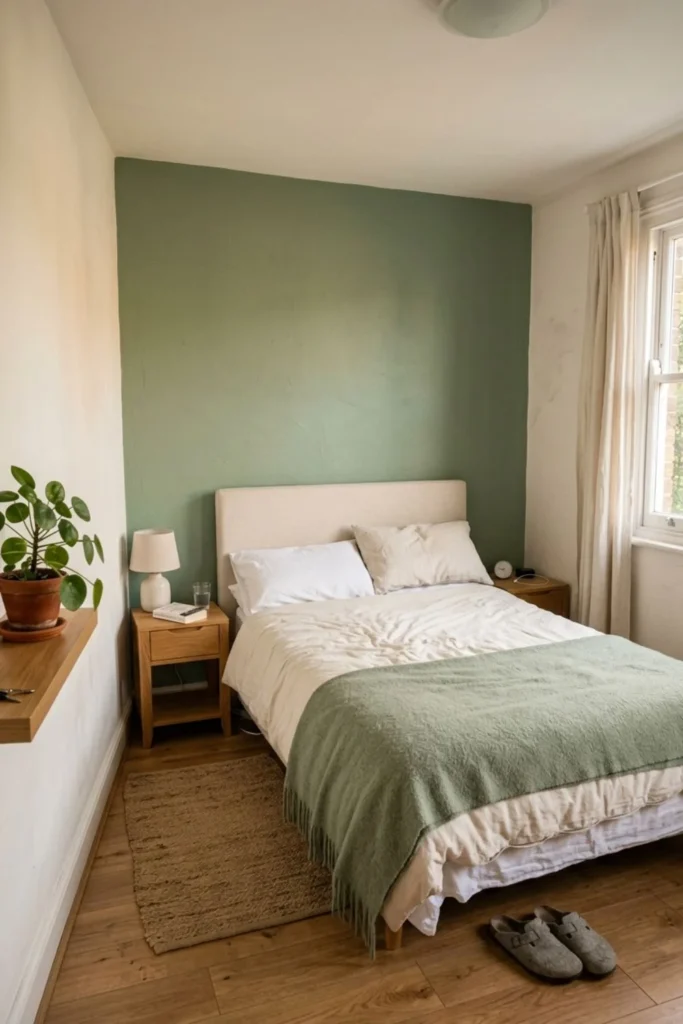
An accent wall gives the bed a clear background without changing the whole room. The wall behind the headboard is often the calmest choice because furniture already gives it a purpose.
Choose a wall without too many doors or small corners. A broken shape can make the color look busy.
Repeat the sage in one or two small items, such as a cushion or artwork, so the wall does not feel separate from the room.
Renters can create a similar effect with removable material approved for the wall, a large textile, or sage bedding. Check lease rules and test removable products in a hidden area first.
3. Choose a Sage Green Upholstered Bed
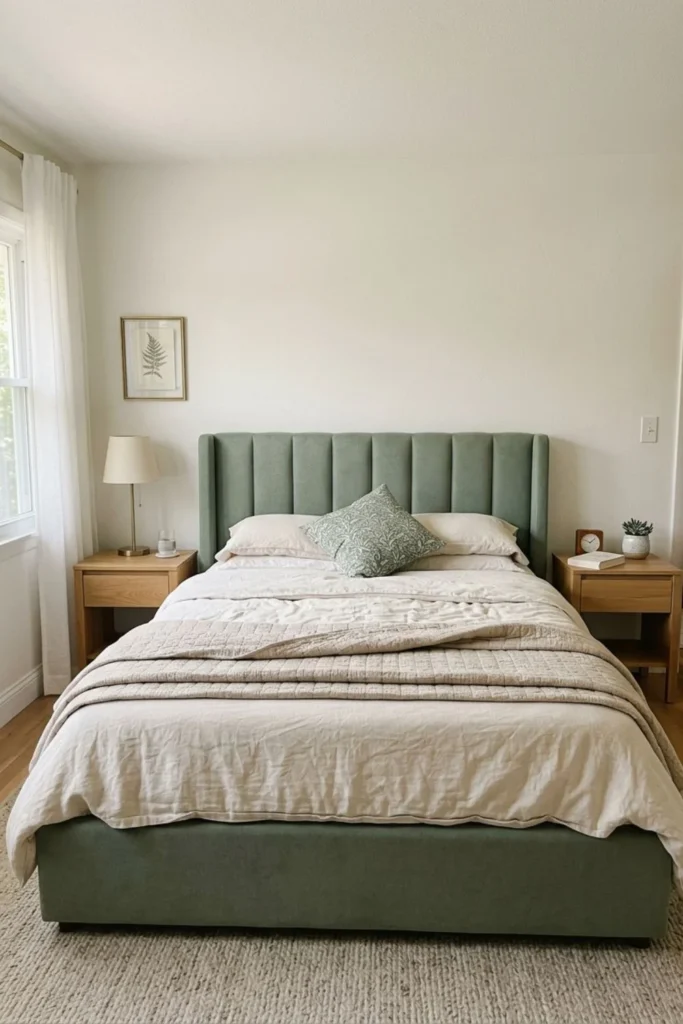
A sage upholstered bed becomes the main color statement without painting. It works well when walls and flooring are neutral.
Measure the full frame, not only the mattress. Thick padded sides and a tall headboard can take more space than expected.
Check the fabric-care instructions and request a swatch if possible. Velvet, linen-look fabric, and woven upholstery reflect light differently and may change the color.
Do not replace a comfortable, safe bed only for this trend. A fitted headboard cover or sage throw may give enough color for much less money.
4. Refresh the Room with Sage Green Bedding
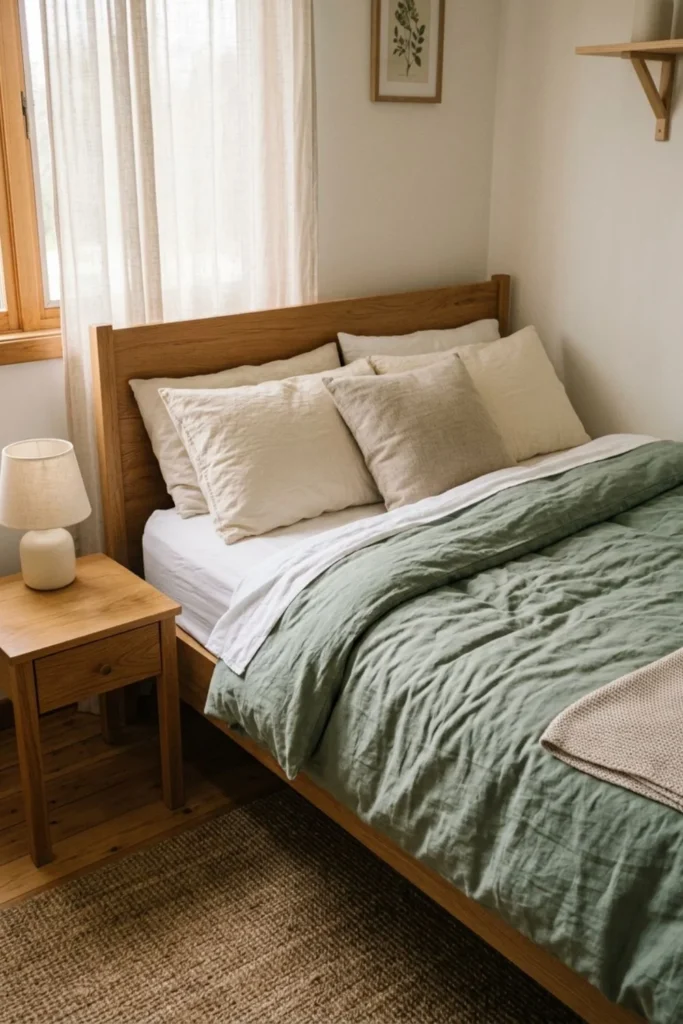
Sage bedding is my first top choice because it changes the largest visible area without a long commitment. You can try the color, wash it, move it, or replace one layer instead of repainting the room.
Begin with one main piece. A sage duvet cover, quilt, or blanket is enough. Keep sheets and sleeping pillows in warm white, cream, or another quiet neutral.
I would use this simple formula:
- Base: Warm-white sheets or a plain cover
- Main color: One muted sage duvet or quilt
- Warmth: One beige or oatmeal throw
- Small accent: One dusty-blue or terracotta cushion, if wanted
Choose useful layers rather than a pile of decorative pillows. Every piece should support sleep, warmth, or comfortable reading. If it spends each night on the floor, it probably does not need to stay.
Check the fabric before the color. Cotton, linen blends, and other washable materials may suit normal life better than a delicate fabric that needs special care. Follow the maker’s washing instructions.
Sage can vary between products. One duvet may be cool and gray, while another is warmer and more olive. Compare actual samples or keep the two greens apart with a neutral layer.
Natural wrinkles are fine. A softly used bed often looks more believable and welcoming than a smooth hotel display.
Make the bed with a quick routine: pull up the main cover, straighten the sleeping pillows, and fold the throw loosely at the foot. A simple arrangement protects the calm look without creating daily work.
This choice is especially useful for renters or anyone unsure about sage paint. Live with the bedding for a few weeks. If you still love the color in every light, then consider curtains, art, or a wall.
5. Pair Sage Green with Warm Beige
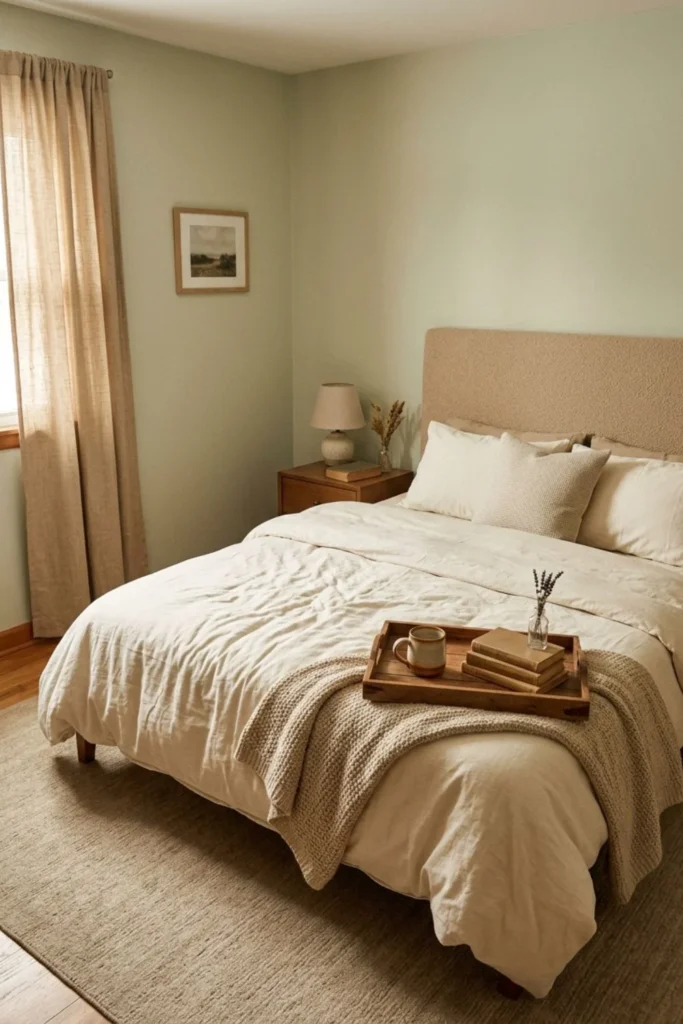
Warm beige is my second top choice because it stops sage from feeling cold or flat. Together, the colors can feel soft without making the bedroom colorless.
Use beige on large supporting areas: walls, curtains, a rug, upholstered furniture, or the main blanket. Let sage remain the clear color rather than giving both shades equal attention everywhere.
A practical balance might be:
- Warm beige walls or curtains
- Sage bedding or headboard
- Cream sheets and ceiling
- Natural wood furniture
- One darker accent for definition
Watch the undertones. A pink-beige may fight with a yellow-green sage, while a gray-beige may make a cool sage look dull. Place the samples together in the room before committing.
Texture keeps the combination from looking plain. A woven beige rug, cotton sage cover, oak table, and knitted throw create depth without adding more colors.
I would avoid filling every surface with small beige and green decorations. Repeat the palette through useful pieces first. The room will feel calmer and be easier to clean.
If the result looks washed out, add one controlled dark note: a walnut frame, black lamp base, or deeper green cushion. One or two dark edges are usually enough.
This pairing also makes later changes easier. Terracotta can warm it, dusty blue can cool it, and blush can soften it. The beige base keeps those accents connected.
6. Add Light Oak Furniture
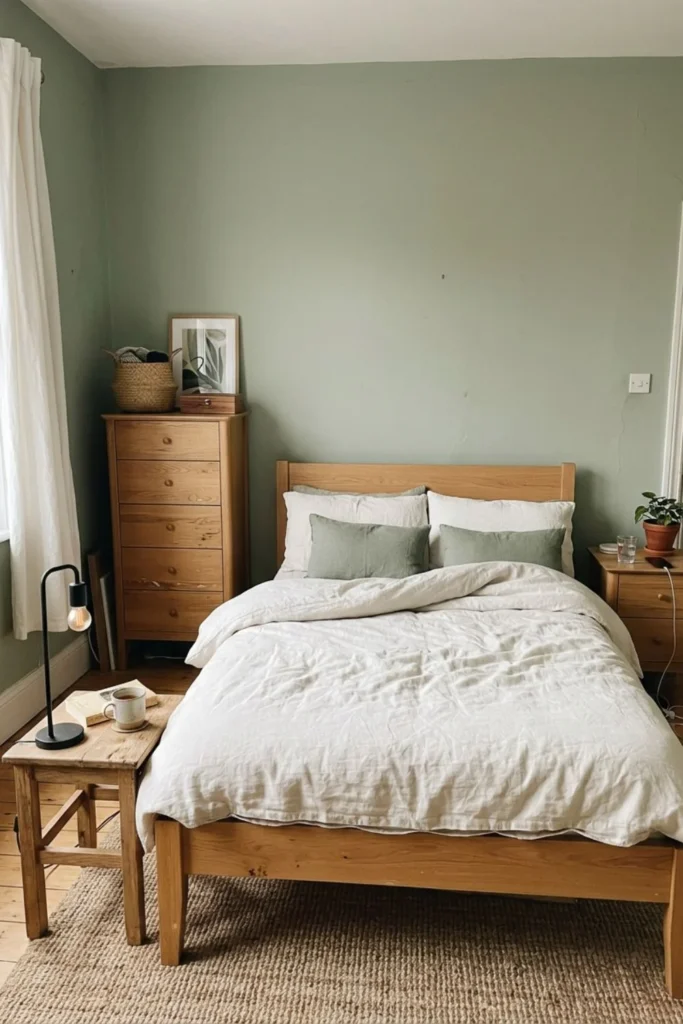
Light oak works naturally with sage because both feel soft and earthy. A simple bedside table, bed frame, or dresser can add warmth without strong contrast.
You do not need a matching furniture set. Similar wood warmth is often enough. Mixing every piece in the exact same finish can make the room feel like a showroom.
Choose furniture for size, storage, and stability before color. Leave space to open drawers and walk safely.
Real wood grain and small differences make the room feel lived in. Avoid adding wood-look pieces only because they appear in a trend image.
7. Use Dark Walnut for Rich Contrast
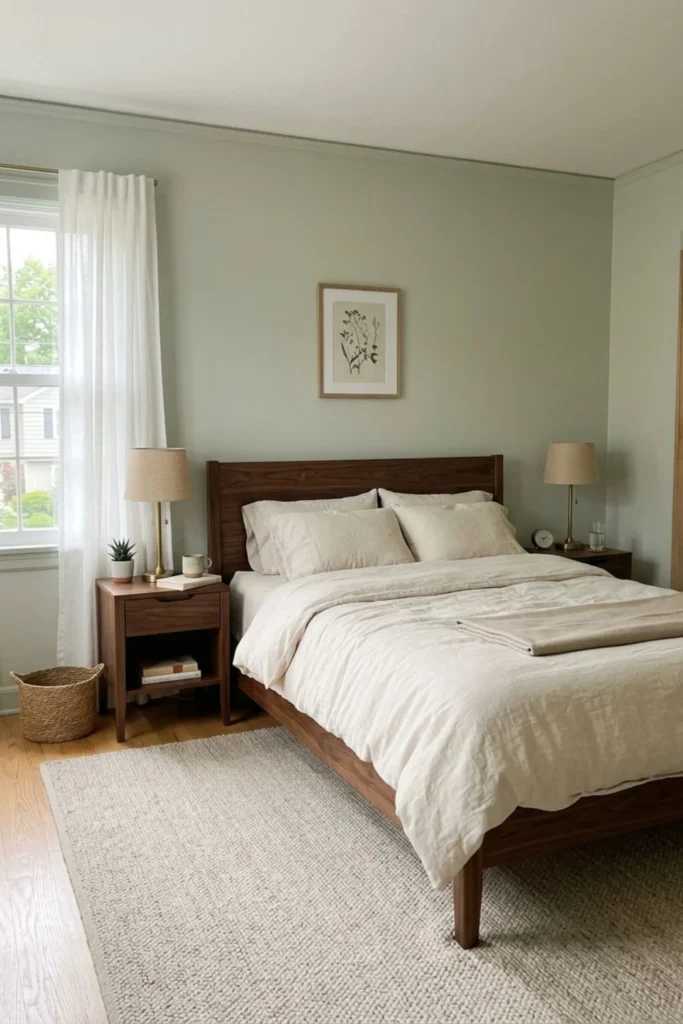
Walnut gives sage a deeper, more traditional edge. It works well in a light room where the darker furniture will not block too much visual space.
Use one or two walnut pieces rather than a full dark set. A dresser and picture frame may be enough.
Balance the dark wood with cream bedding, light curtains, and open floor. In a small bedroom, choose a walnut piece with slim lines or visible legs.
Check that tall furniture is stable and secured when required. Style should never replace safe placement.
8. Mix Sage Green with Blush Pink
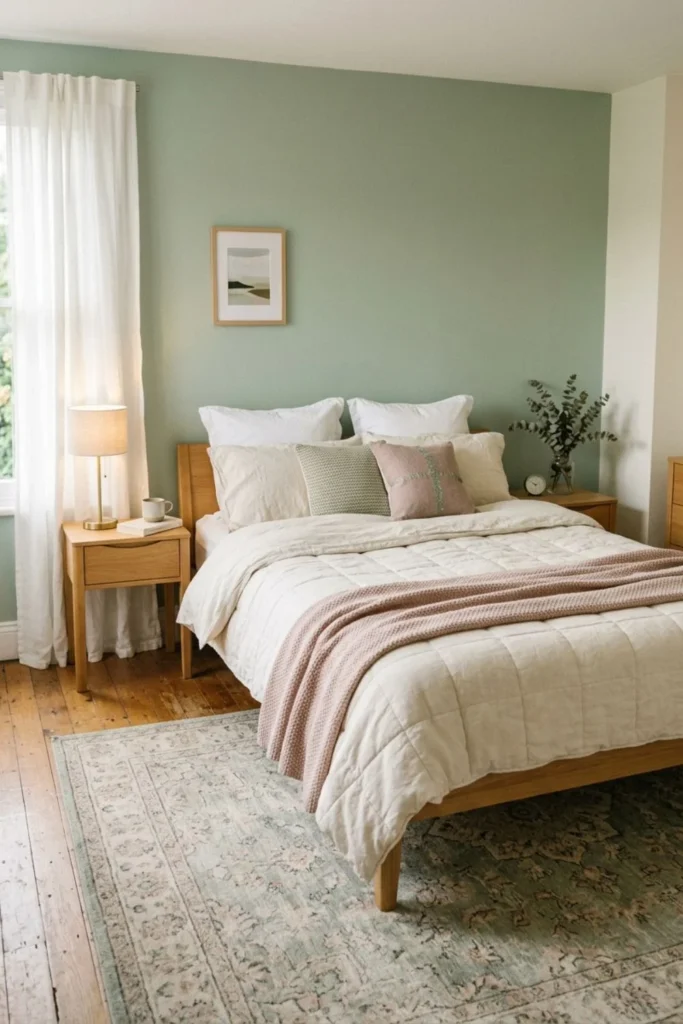
Blush pink can soften sage without creating a childish room. Choose a dusty, muted pink rather than a bright candy shade.
Use it in one small cushion, artwork, or throw. Keep larger surfaces in sage, cream, and wood.
Repeat blush only once or twice. Too many pink details can compete with the green and make the palette busy.
If the room already has warm beige, test the pink beside it. Closely related warm shades may look muddy when their undertones do not match.
9. Add Burnt Orange or Terracotta Accents
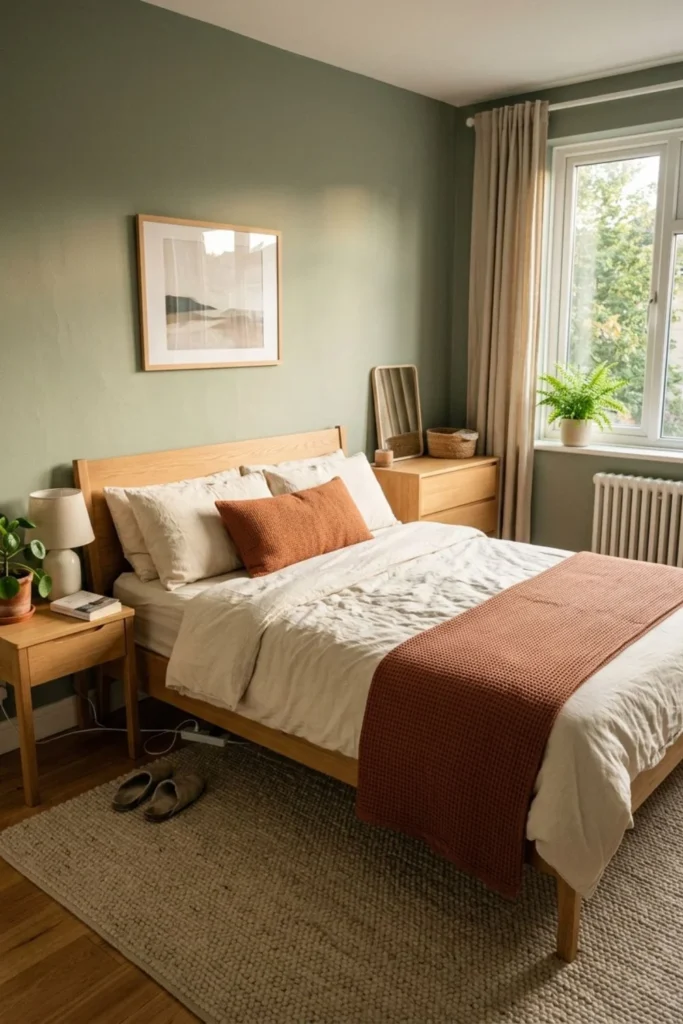
Terracotta gives sage a warm earthy contrast. It can make the room feel cozier in autumn without requiring a full seasonal makeover.
Try one lumbar cushion, small throw, or clay-colored artwork. A real terracotta pot can also work when safely placed.
Keep the accent limited. Orange across bedding, curtains, rug, and art will take attention away from sage.
This combination works especially well with oak, jute, and warm-white walls. Use texture instead of adding several more colors.
10. Bring in Dusty Blue Details
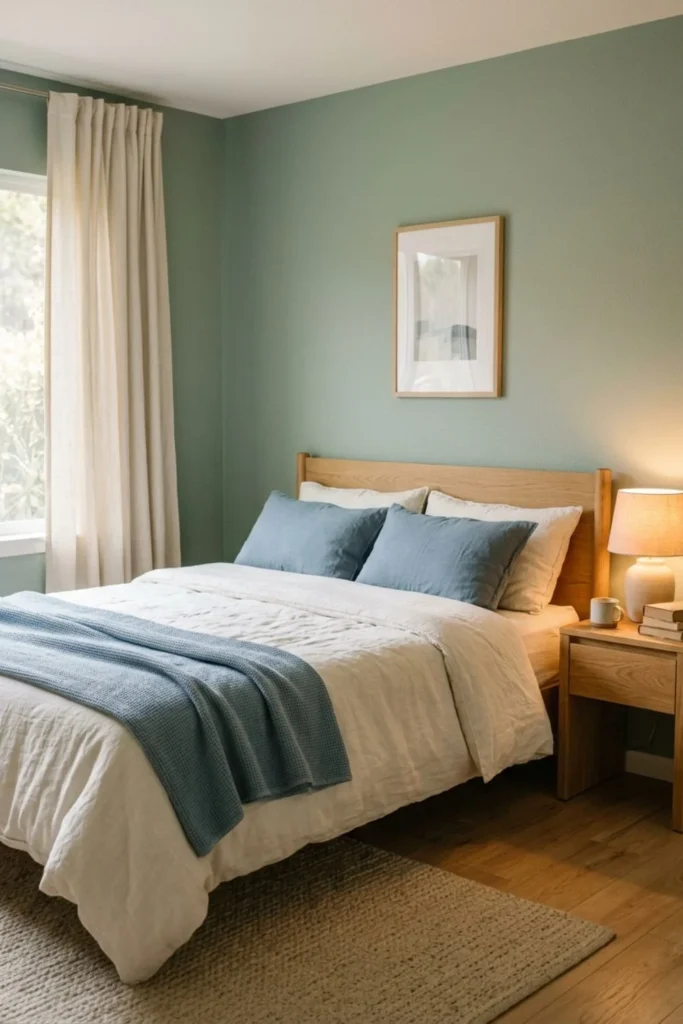
Dusty blue creates a cooler, quieter partner for sage. It suits rooms with clear daylight and warm wood that prevents the palette from feeling cold.
Add blue through pillowcases, one blanket edge, or simple art. Choose a gray-blue rather than a bright coastal blue.
Place the blue and sage fabrics together before buying. Two muted colors can still clash if one is much cleaner or brighter than the other.
Keep warm white or beige between them. The neutral break helps each color remain clear.
11. Use Small Black Accents
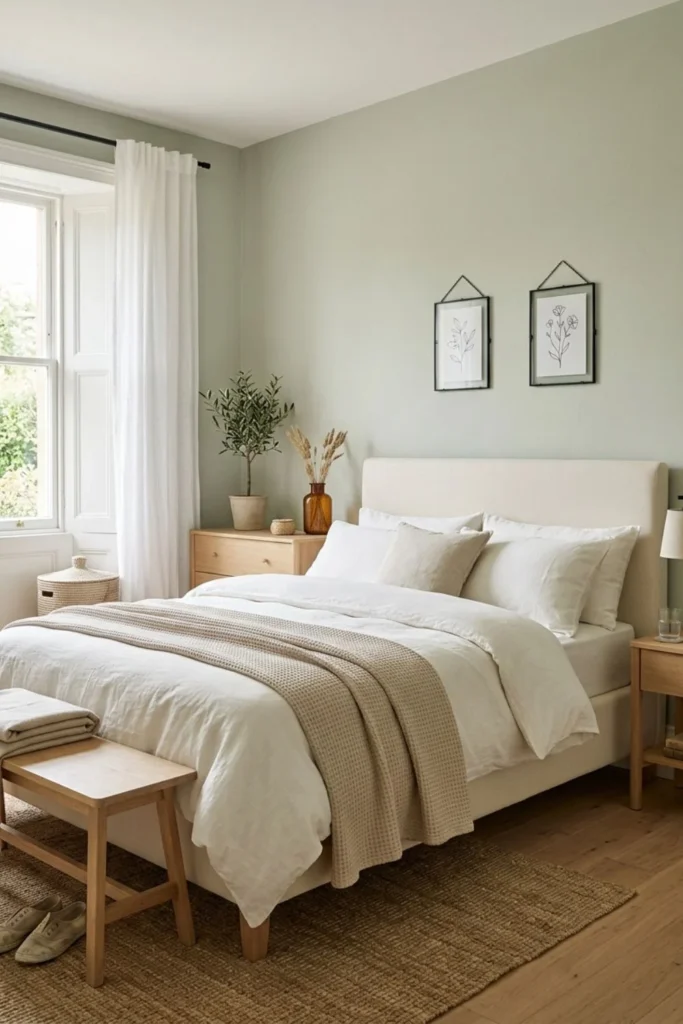
Black can give a pale bedroom enough definition. Use it in thin lines, such as a lamp base, small frame, handle, or curtain rod.
Avoid several large black pieces unless the room is bright and spacious. A dark bed, dresser, curtains, and rug can overwhelm soft sage.
Matte black usually feels quieter than a glossy finish. Repeat it two or three times so one item does not look accidental.
Keep cables and hardware neat, but do not hide safety or access for the sake of the color plan.
12. Add Brass or Soft Gold Lighting
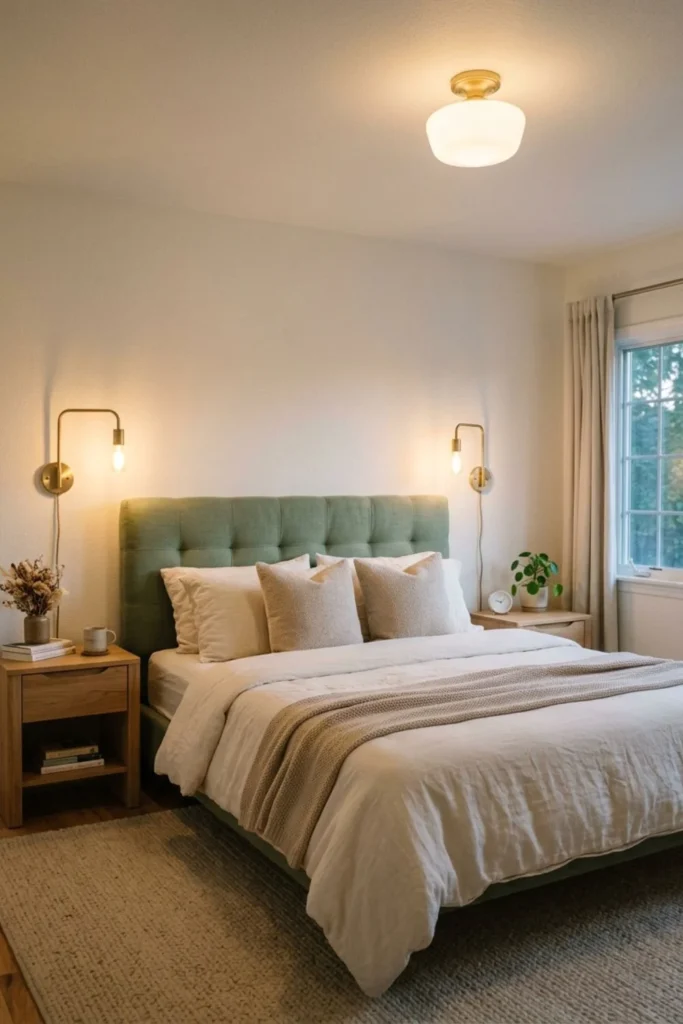
Brass and soft gold warm the gray side of sage. A small bedside lamp or pendant detail is enough to introduce the finish.
Choose brushed or aged metal rather than a highly shiny gold if you want a relaxed room. Mix it with warm bulbs and beige fabric shades.
Check the lamp’s scale and function. A beautiful lamp that gives poor reading light or takes the whole nightstand is not a good choice.
Hardwired lighting should be installed by a qualified person. Plug-in lamps need safe cords and correct bulbs.
13. Hang Simple Botanical Wall Art
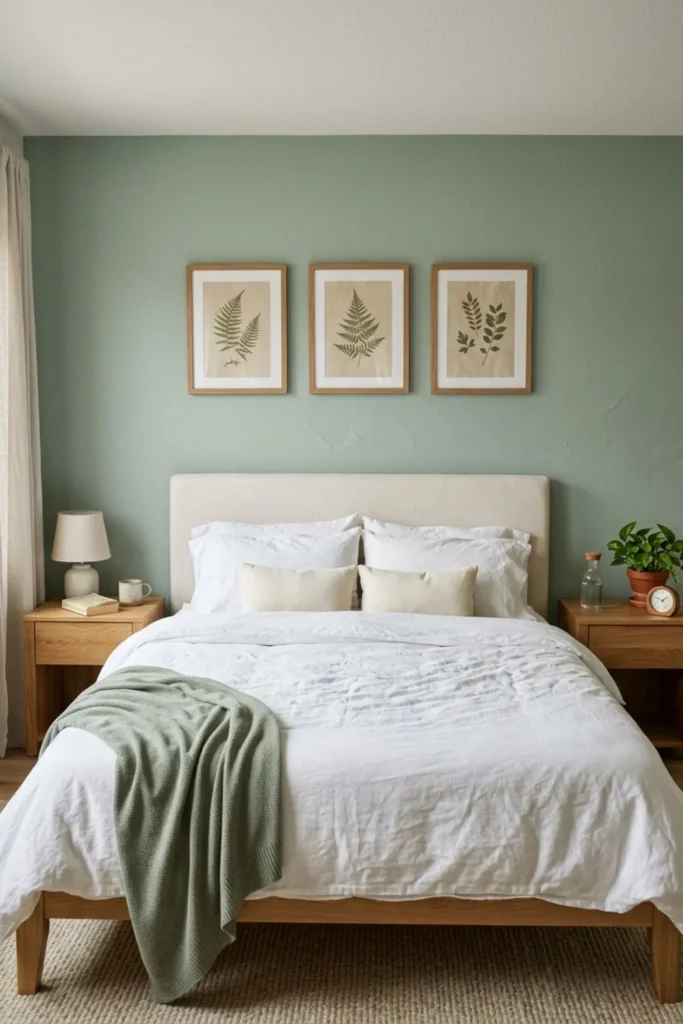
Botanical art can connect the green palette without adding another living plant. Choose one medium piece or a small pair rather than covering the wall.
The artwork does not need to match the bedding exactly. Cream paper, muted leaves, and a light wood or thin dark frame can tie the room together.
Hang heavy frames with suitable fixings and avoid insecure objects above the pillow. A side wall or dresser may be safer.
Personal art, photography, or a handmade piece can feel more meaningful than a generic leaf print.
14. Style the Room with Indoor Plants
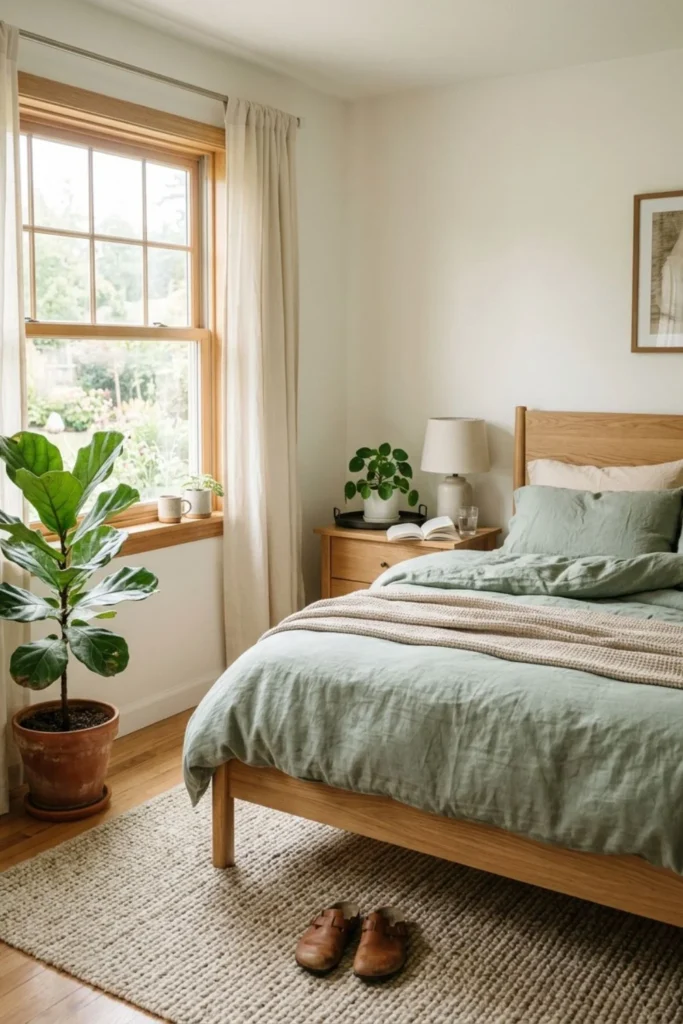
One healthy plant can add real texture, but choose it for the room’s light and your ability to care for it. A dark bedroom is not suitable for every plant.
Keep soil and water away from bedding, outlets, and wood that may stain. Use a stable pot with a protective saucer.
Check whether a plant is safe around children and pets before bringing it home. If care or safety is difficult, botanical art or a good-quality artificial stem may be simpler.
Do not turn the bedroom into a crowded indoor garden. One plant near a suitable window is often enough.
15. Layer Warm Bedroom Lighting
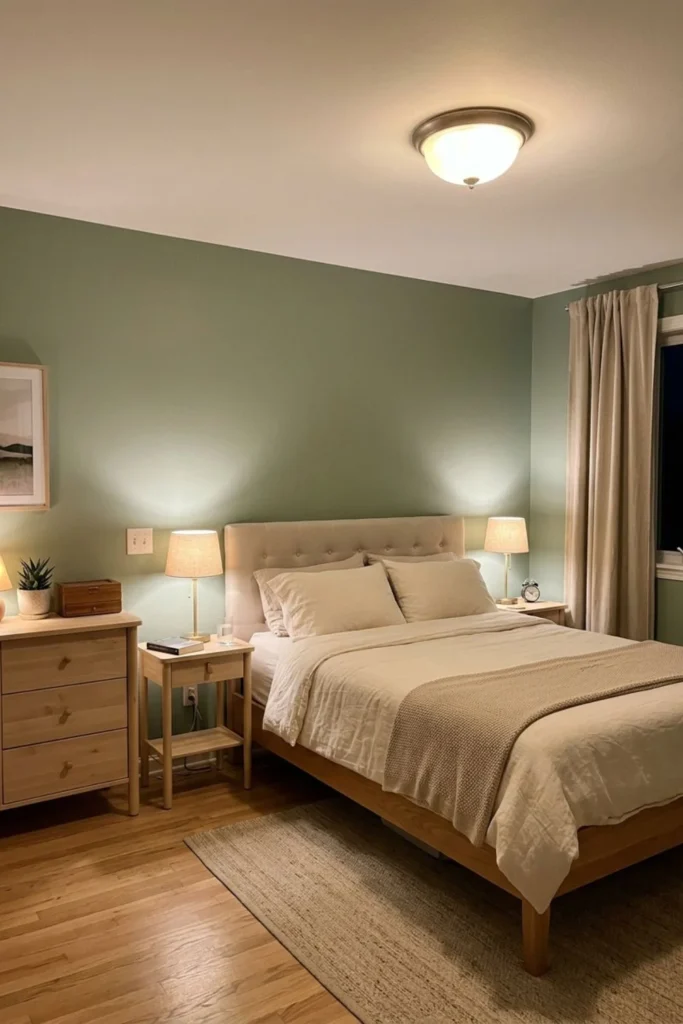
Layered lighting is my third top choice because a bedroom needs different light for dressing, reading, cleaning, and slowing down. One bright ceiling bulb rarely does all four jobs well.
Use three possible levels:
- General light: A ceiling fixture for full-room tasks
- Task light: A bedside or dresser lamp for reading and care
- Low evening light: One warm lamp used before sleep
You may not need three new fixtures. The main light and one useful bedside lamp can already create two layers. Add another only if a dark area remains.
Choose bulbs with a similar warm appearance so the sage does not look yellow in one corner and blue in another. Follow fixture wattage and bulb instructions.
Place switches where they are easy to reach and keep cords away from walking paths, bedding, and furniture movement. Ask a qualified professional to handle hardwired work.
A fabric shade can soften the light, while an adjustable arm helps with reading. The lamp should light the page without shining directly into the eyes.
CDC/NIOSH guidance says a dark, quiet, cool, and comfortable sleep environment can support sleep. It also recommends keeping the path clear and reducing light sources. Read the official CDC sleep-environment guidance.
At night, turn off decorative lighting that is no longer useful. Layering gives you control; it does not mean every lamp stays on.
I would spend more attention on practical light than on a luxury feature wall. The right lamp changes how the room works every evening, while an expensive design detail may only change the photograph.
16. Frame the Window with Sage Curtains
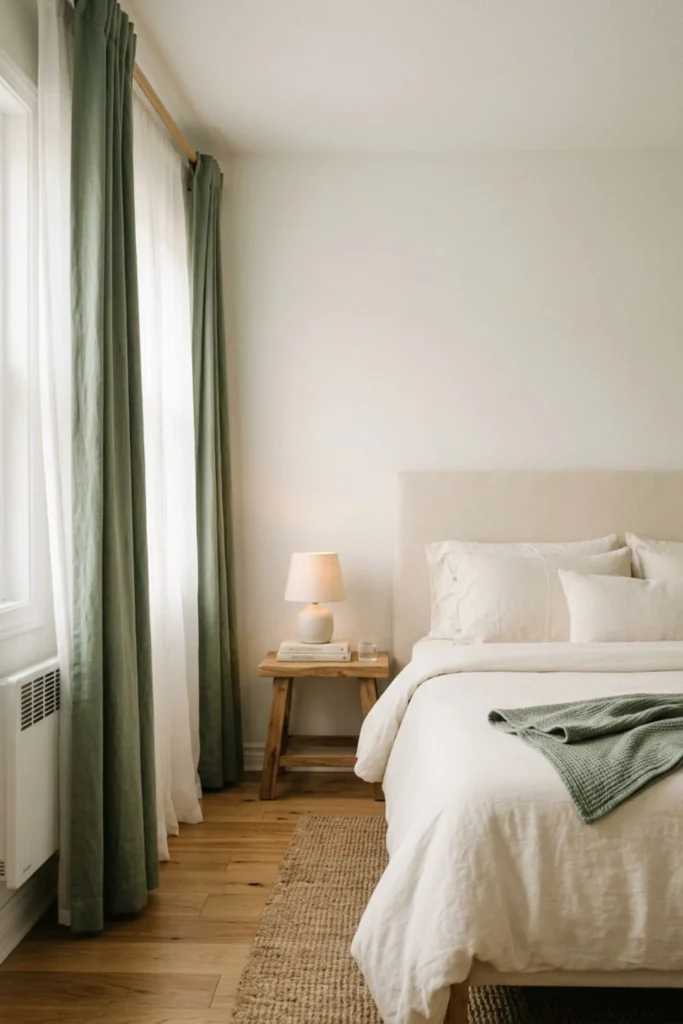
Sage curtains can repeat the color on a large vertical surface. Choose them only after checking the bedding, or the two greens may look accidentally mismatched.
Hang curtains high and wide when the wall and hardware allow. Open panels should rest beside the glass so daylight can enter.
Choose the fabric for privacy and sleep needs. A light-filtering panel gives softness, while a separate blind or lining may control unwanted light.
Keep fabric away from heaters and use secure supports for the loaded rod.
17. Ground the Room with a Soft Rug
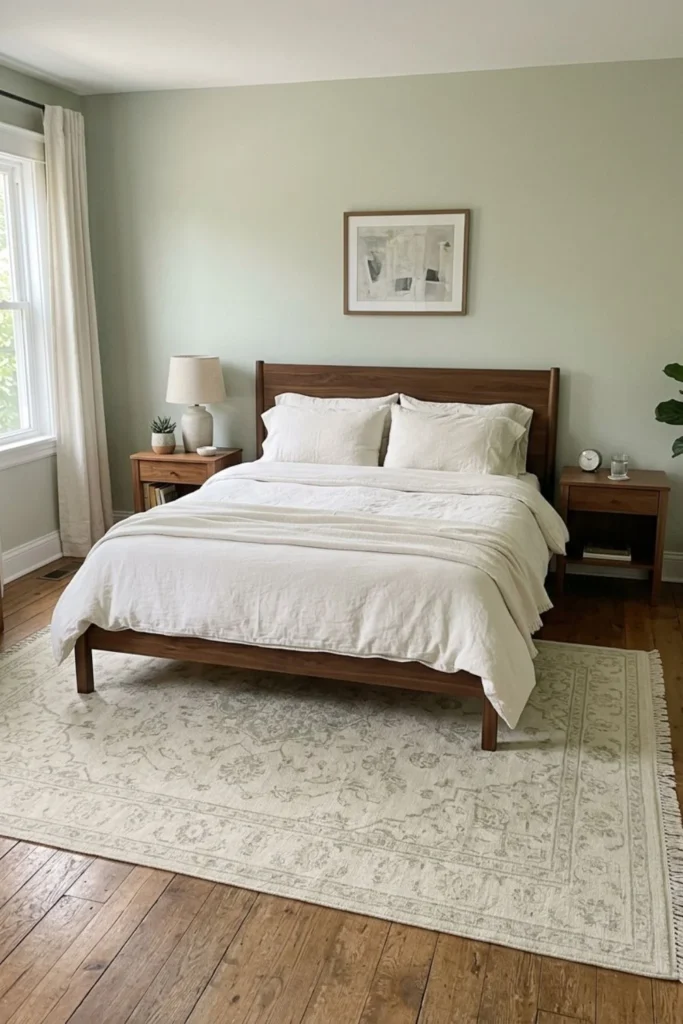
A rug can connect sage, beige, and wood while adding warmth underfoot. Choose one large enough to extend beyond the bed or use two suitable runners.
Keep the pattern quiet if the bedding already carries the main color. Cream, beige, faded sage, and a small warm accent are enough.
Use a non-slip pad and keep edges flat. Check door clearance before ordering.
If the bedroom already has soft carpet, another rug may add more visual weight than comfort.
18. Make a Small Sage Green Bedroom Feel Bigger
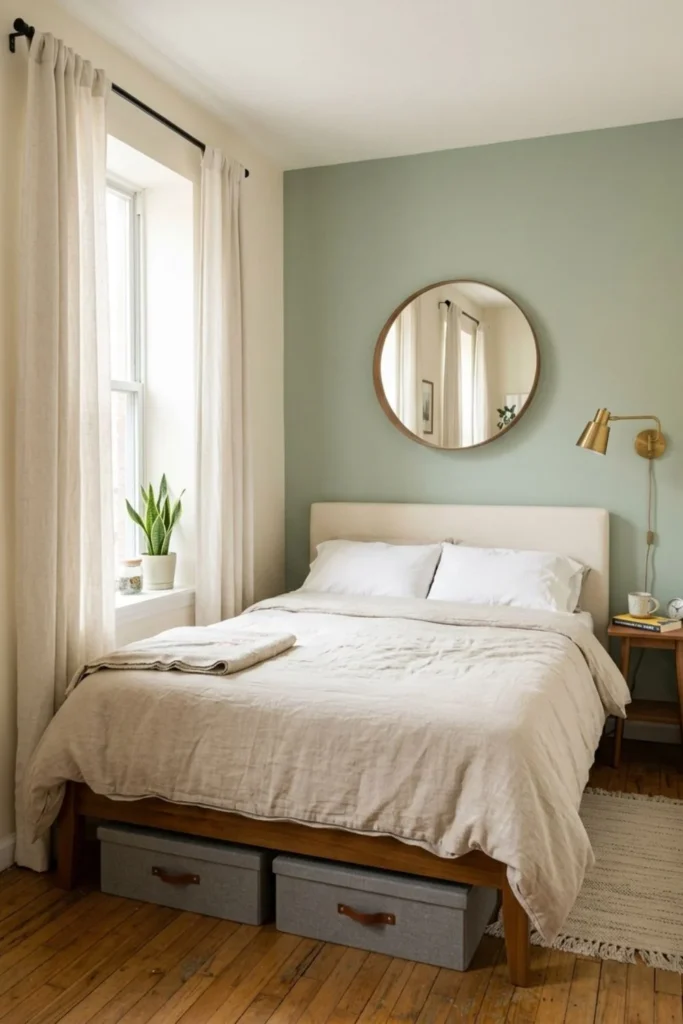
Use sage on one main surface and keep the rest light. Sage bedding with warm-white walls often feels more open than four painted walls.
Choose furniture that fits the room and leave a clear path from the door. A mirror can reflect daylight when it is securely placed and the reflection is not cluttered.
Keep curtains close to the wall color and avoid several tiny decorations. One medium artwork and a few useful objects create less visual noise.
The room does not need to be pale everywhere. One darker edge can give the design shape without making it smaller.
19. Try a Rental-Friendly Sage Green Makeover
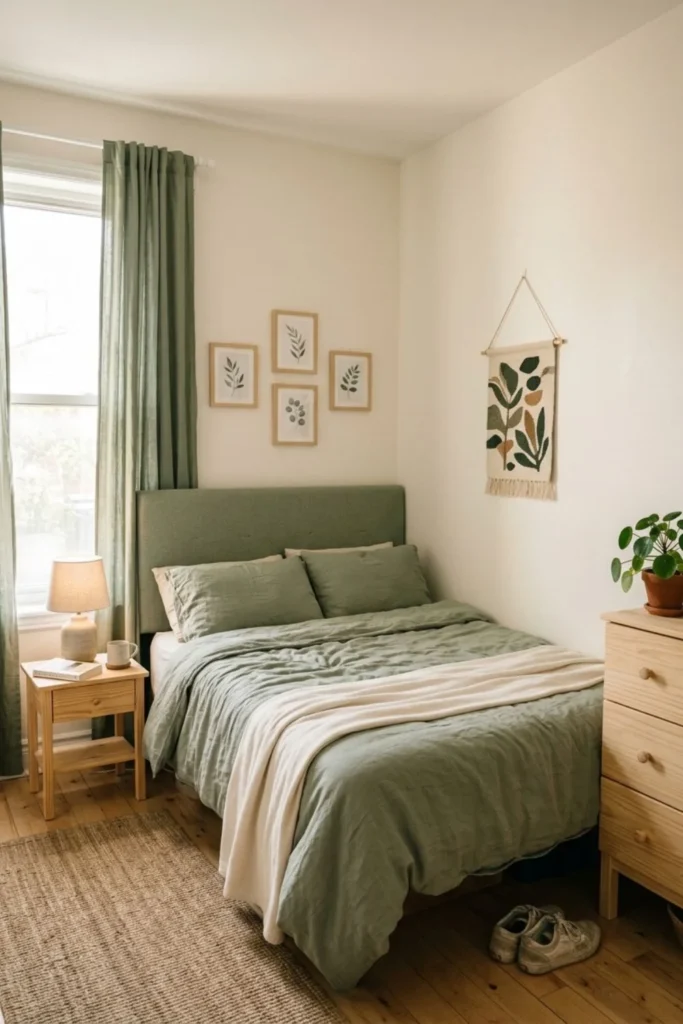
Renters can use bedding, curtains, a throw, art, and removable covers to bring in sage. These pieces also move to the next home.
Check lease rules before drilling or applying removable wall products. “Removable” materials can still mark weak paint, so test a hidden area.
Use the existing wall and floor colors as part of the palette. Warm beige rental walls can work beautifully with muted sage and oak.
Store original fittings carefully if you change permitted handles or shades, and restore them when required.
20. Create a Cozy Sage Green Boho Bedroom
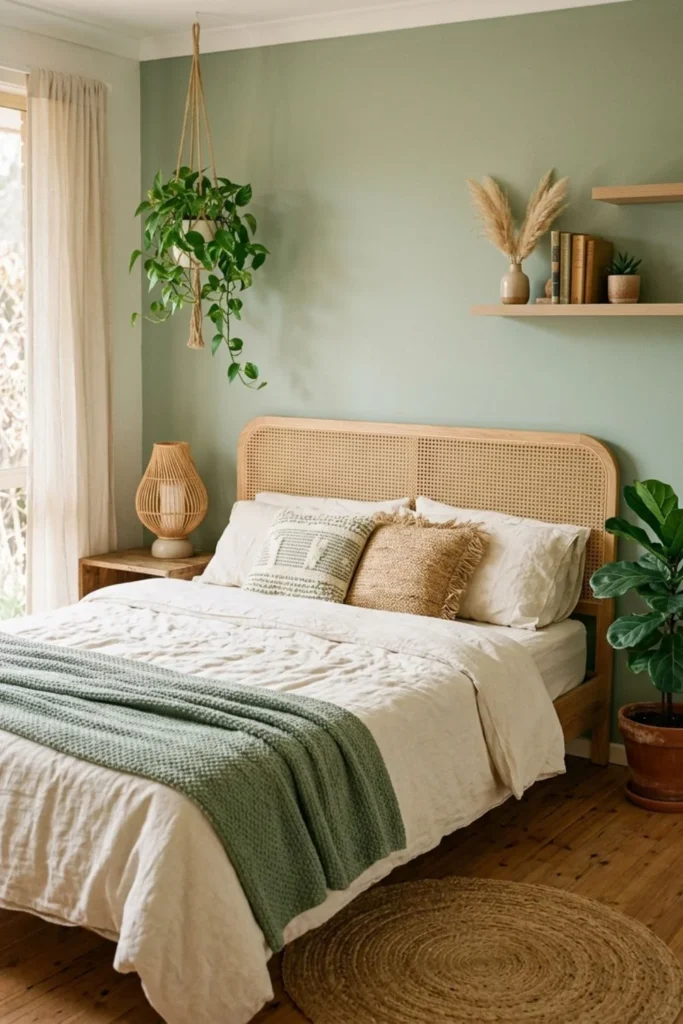
A boho version can combine sage with natural wood, woven texture, one plant, and a limited warm accent.
Choose two or three textures rather than every boho symbol. A woven rug, cotton bedding, and one rattan detail may be enough.
Keep wall hangings and shelves securely installed. Avoid loose heavy objects above the bed.
The room should still have open floor and easy cleaning. Cozy does not require covering every surface.
21. Design a Modern Luxury Sage Green Bedroom
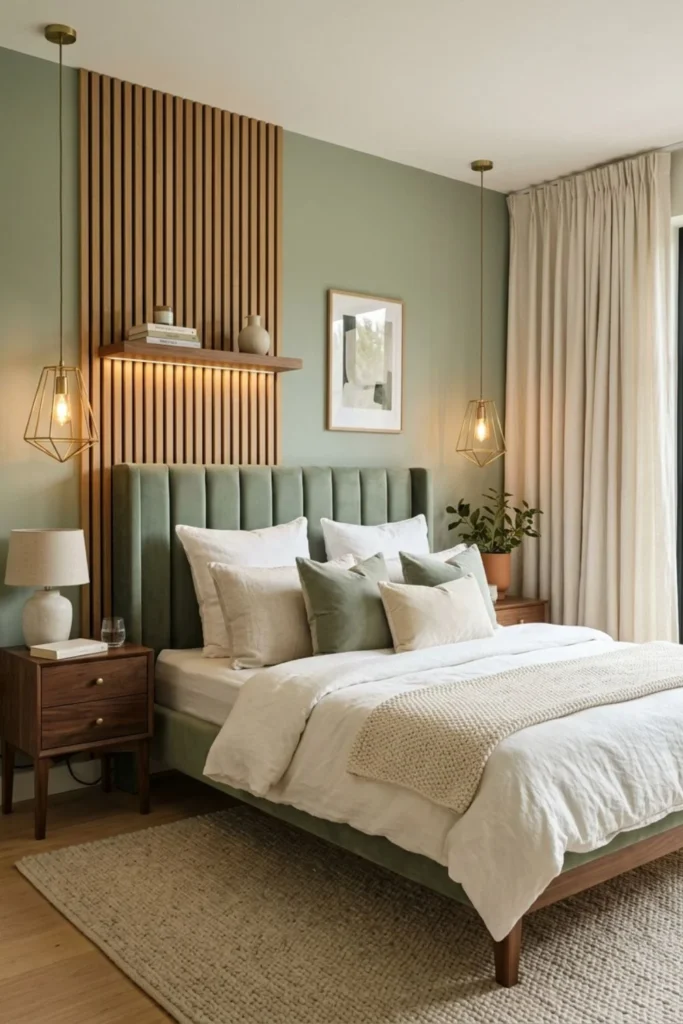
A luxury look is my second weaker choice because online examples often depend on a large room, custom wall panels, hidden lighting, and expensive furniture. Copying every feature can make a normal bedroom feel crowded or artificial.
Instead, borrow one polished detail: a well-sized upholstered headboard, a neat pair of lamps, better curtains, or carefully finished paint.
Avoid installing LED curves, deep wall panels, or floating furniture only because they look dramatic. They need correct planning, wiring, access, and skilled installation.
I would choose comfort, safe furniture, and useful lighting before “luxury.” A genuine room with good materials usually feels better than a forced showroom copy.
The Three Changes I Would Make First
If I wanted a noticeable result without rebuilding the bedroom, I would start with the bed, palette, and light.
First, I would add sage bedding. One washable main layer would test the color across the room’s largest surface.
Second, I would connect it with warm beige. Existing beige walls may already do the job; otherwise, curtains, a rug, or throw could add warmth.
Third, I would improve the lighting. A useful warm bedside lamp would make the room more comfortable after dark.
These choices work together and remain easy to change. After living with them, I would decide whether the room truly needs paint, a new headboard, or more decor.
Two Ideas I Would Treat as Optional
Four painted walls and a modern luxury makeover can produce a strong look, but neither is the best starting point.
Full-room paint makes sense after a large sample has worked in every light and the room has enough brightness. It becomes risky when the shade is chosen from a screen or one tiny card.
A luxury direction makes sense when the budget, room, and skilled installation support it. It becomes wasteful when decorative construction replaces comfort and function.
I would borrow one part of either idea and stop. One painted wall or one polished lamp can give the room character without the full cost.
Keep the Bedroom Calm After the Makeover
Repeat sage in only a few places. When the bedding, curtains, rug, art, lamps, and decorations are all green, the color loses its quiet effect.
Use a short weekly reset:
- Straighten the useful bedding layers.
- Clear clothes and cups from surfaces.
- Dust lamps and check cords.
- Water plants only as needed.
- Open curtains during suitable daylight.
Review new purchases against the color plan. A bedroom can slowly become busy when each item looks good alone but does not support the full room.
Leave some wall, floor, and surface space open. Calm comes partly from what you decide not to add.
Final Thoughts
A sage bedroom does not need green walls, custom panels, or expensive furniture. Start with one washable bedding layer, add warm beige, and make the evening lighting comfortable.
Use the remaining sage green bedroom ideas when they solve a clear design problem. Oak can add warmth, walnut can add contrast, and one small accent can bring personality.
Test colors in the real room, choose useful pieces, and let the bedroom look lived in. A calm home is more valuable than a perfect advertisement.
Disclosure: Some visuals are AI-assisted design concepts created for inspiration. Always confirm measurements, materials, paint directions, load limits, building rules, electrical safety, furniture stability, child and pet safety, and installation requirements for your home.